
Types of Peppers, 5 Heat Bands and 5 Crop Species
Every entry with its heat range, species, origin and uses, in one list you can filter.
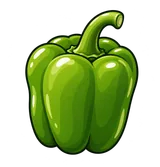 Bell pepperMild
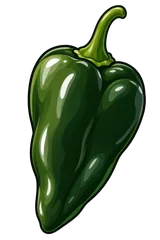 PoblanoMild
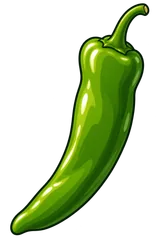 AnaheimMedium
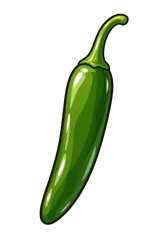 SerranoMedium
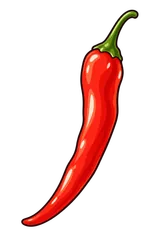 CayenneHot
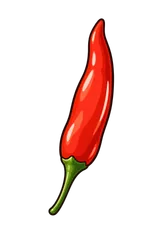 Thai chiliHot
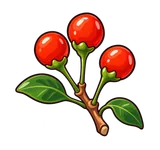 ChiltepinExtra-hot
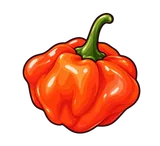 Scotch bonnetExtra-hot
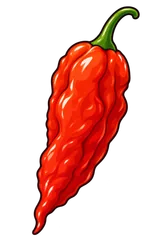 Ghost pepperSuper-hot
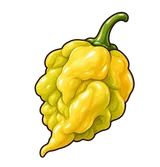 Pepper XSuper-hot
Every pepper in the index
-
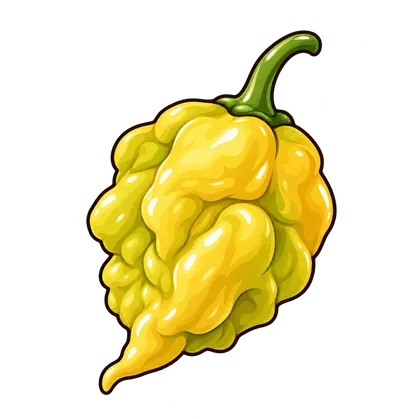
Pepper X
Super-hot2,693,000 SHU average -
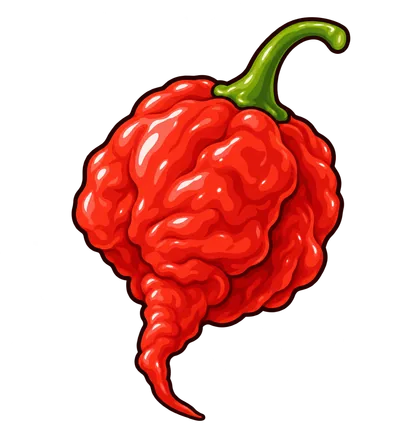
Carolina Reaper
Super-hot1,641,183 SHU average Capsicum chinense -
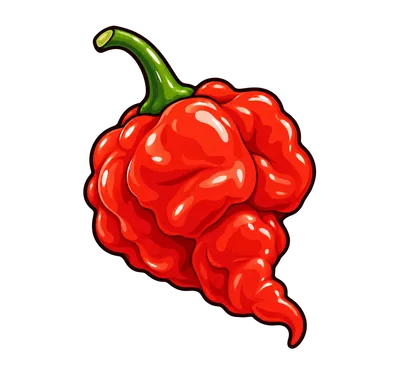
Trinidad Moruga Scorpion
Super-hot1,200,000–2,000,000 SHU Capsicum chinense -
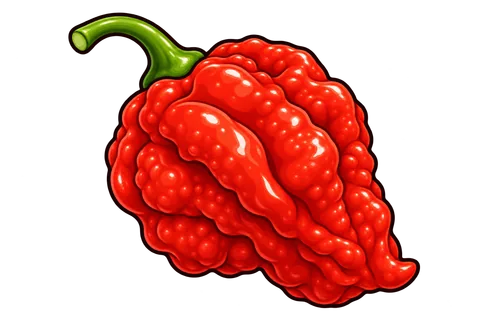
Komodo Dragon pepper
Super-hot1,400,000 SHU Capsicum chinense -
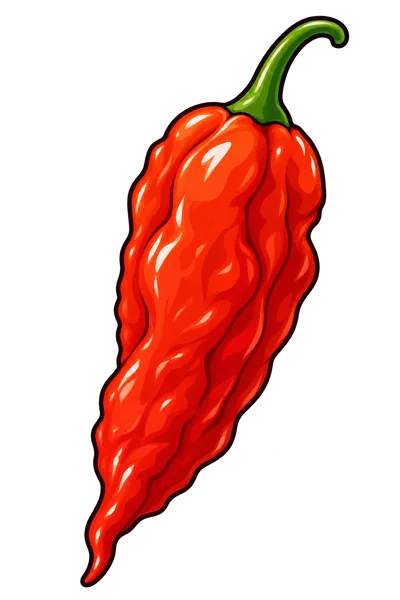
Ghost pepper
Super-hot1,001,304 SHU average Capsicum chinense -
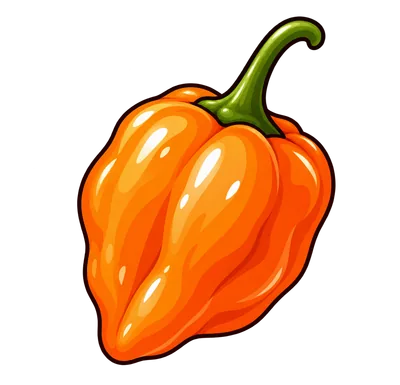
Habanero
Extra-hot100,000–350,000 SHU Capsicum chinense -
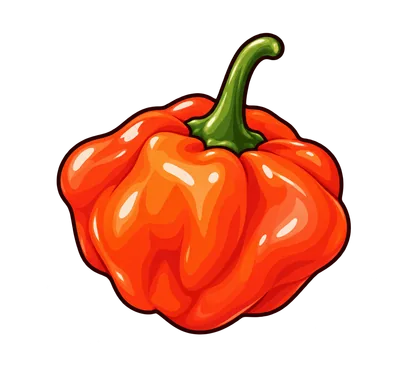
Scotch bonnet
Extra-hot100,000–350,000 SHU Capsicum chinense -
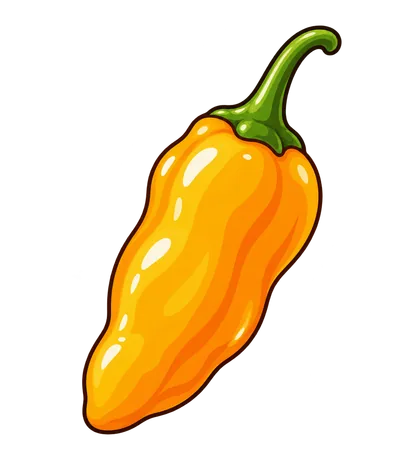
Datil
Extra-hot100,000–300,000 SHU Capsicum chinense -
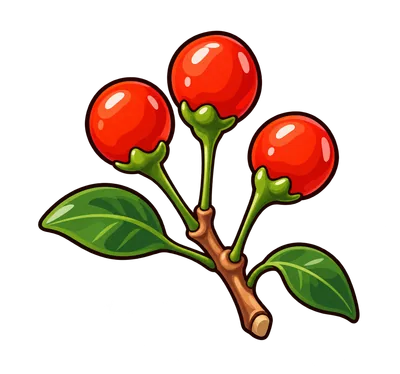
Chiltepin
Extra-hot70,000–160,000 SHU Capsicum annuum -
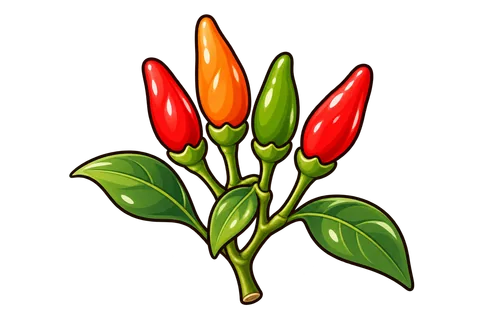
Bird's eye chili
Hot50,000–100,000 SHU Capsicum annuum -
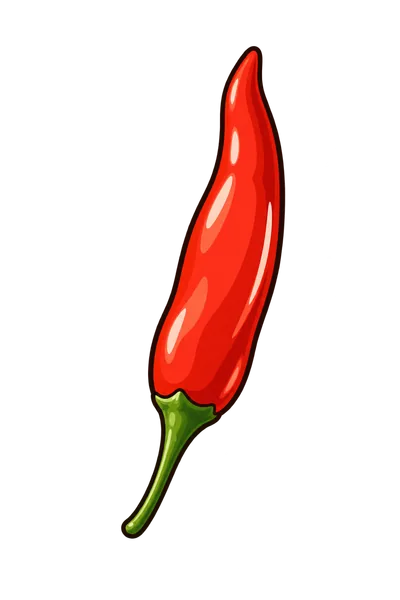
Thai chili
Hot50,000–100,000 SHU Capsicum annuum -
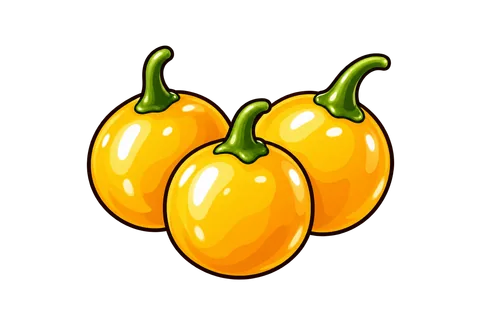
Ají charapita
Hot30,000–50,000 SHU Capsicum chinense -
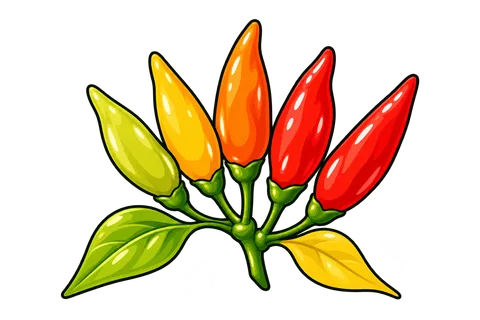
Tabasco pepper
Hot30,000–50,000 SHU Capsicum frutescens -
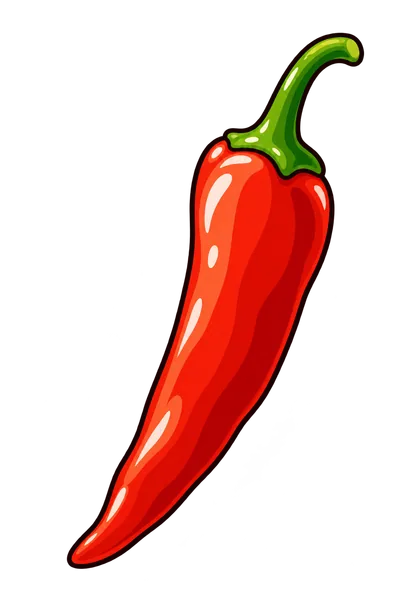
Calabrian chili
Hot5,000–70,000 SHU Capsicum annuum -
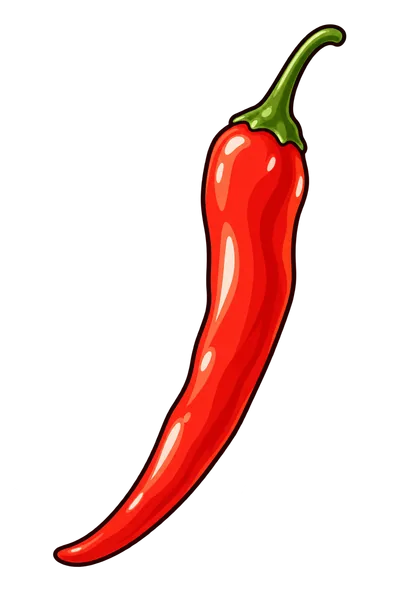
Cayenne
Hot25,000–50,000 SHU Capsicum annuum -
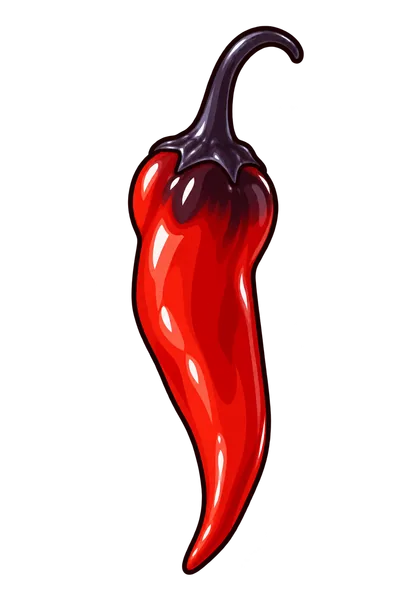
Count dracula
Hot25,000–50,000 SHU Capsicum annuum -
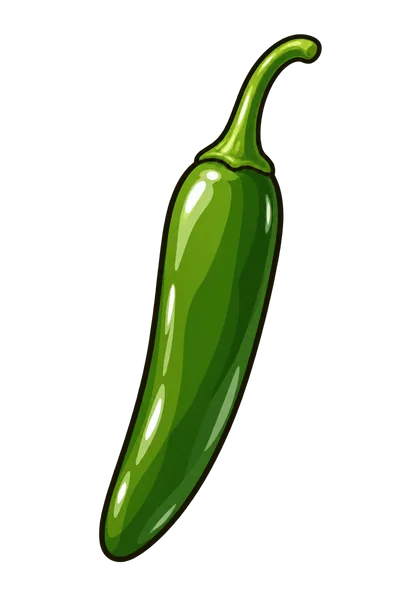
Serrano
Medium10,000–25,000 SHU Capsicum annuum -
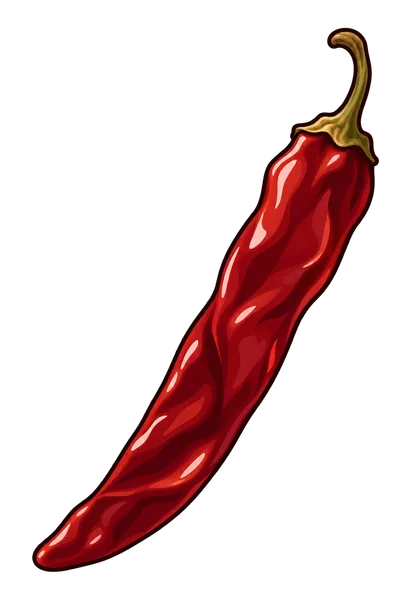
Guajillo
Medium13,705 SHU average Capsicum annuum -
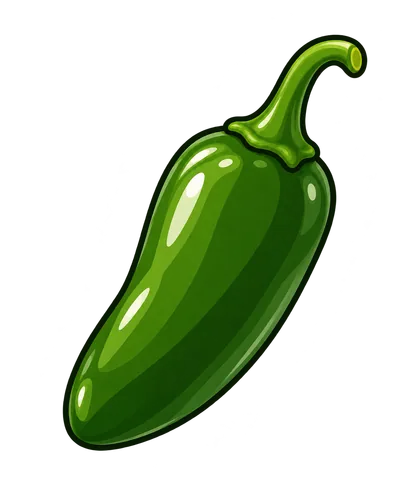
Jalapeño
Medium2,000–8,000 SHU Capsicum annuum -
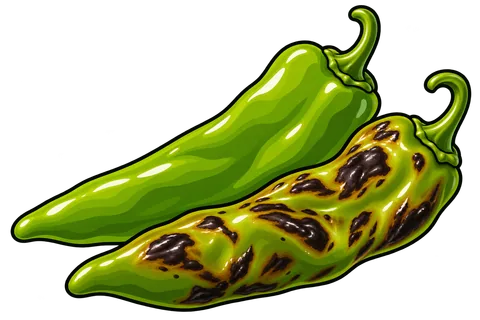
Hatch chile
Medium300–9,000 SHU Capsicum annuum -
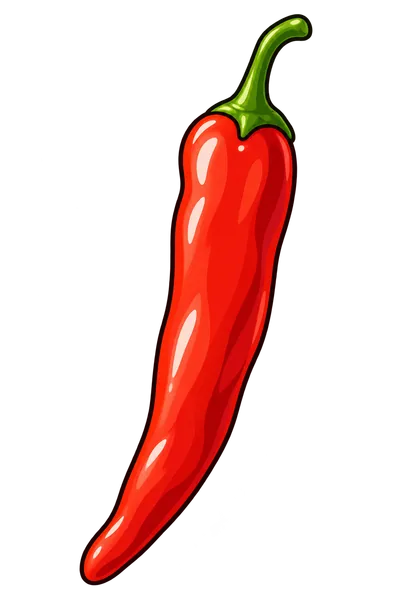
Mirasol
Medium2,500–5,000 SHU Capsicum annuum -
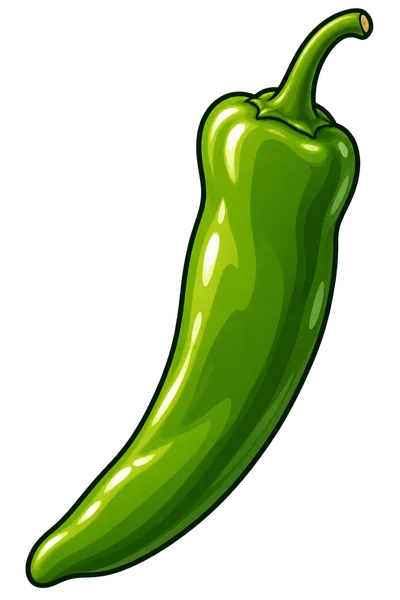
Anaheim
Medium1,000–5,000 SHU Capsicum annuum -
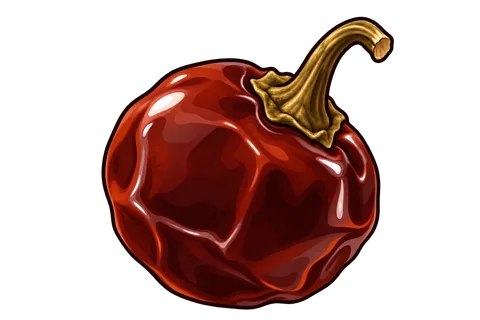
Cascabel
Mild1,500–2,500 SHU Capsicum annuum -
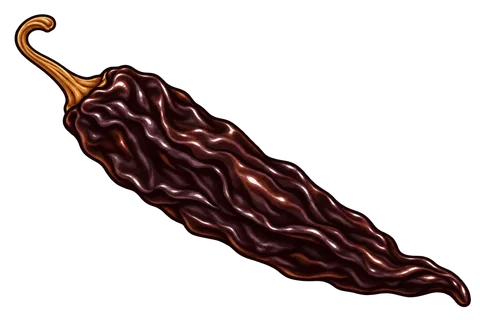
Pasilla
Mild1,000–2,000 SHU Capsicum annuum -
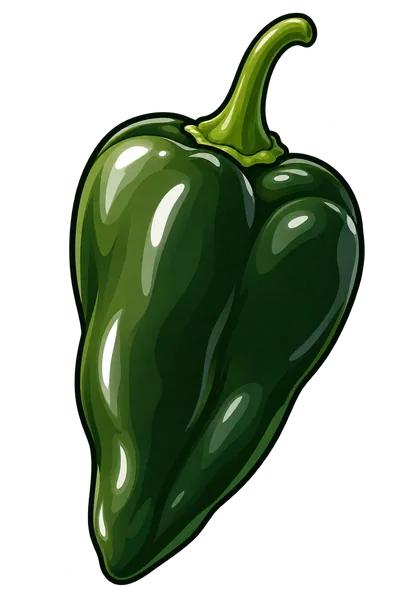
Poblano
Mild1,000–2,000 SHU Capsicum annuum -
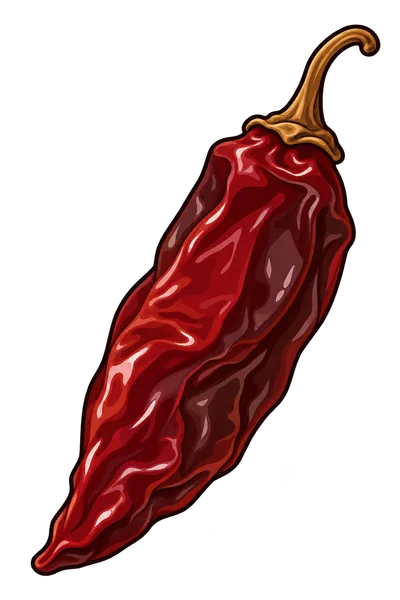
Aji panca
Mild500–1,500 SHU Capsicum chinense -
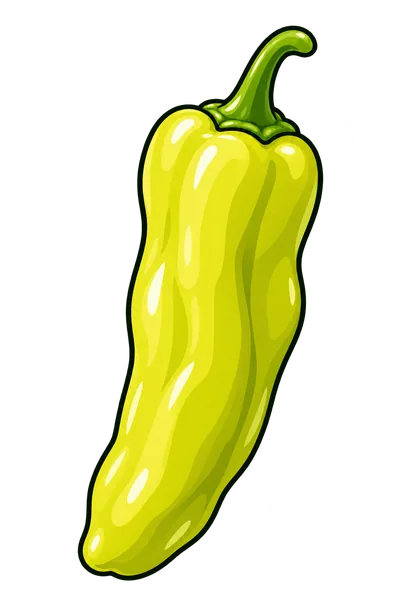
Cubanelle
Mild1,000 SHU Capsicum annuum -
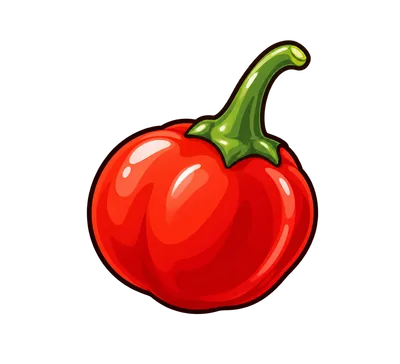
Peppadew
Mild650 SHU Capsicum baccatum -
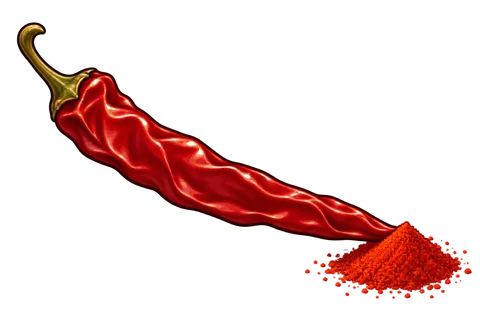
Paprika
Mild500 SHU Capsicum annuum -
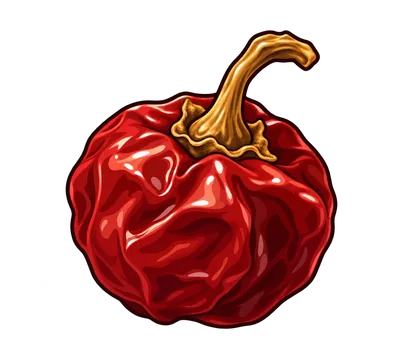
Nora
Mild480 SHU Capsicum annuum -
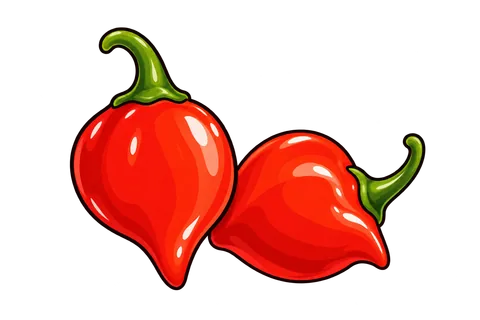
Biquinho
Mild0 SHU average Capsicum chinense -
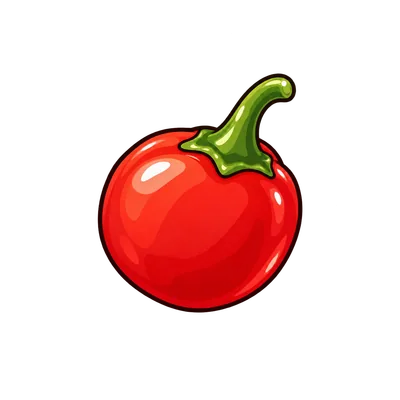
Cherry
Mild0 SHU average Capsicum annuum -
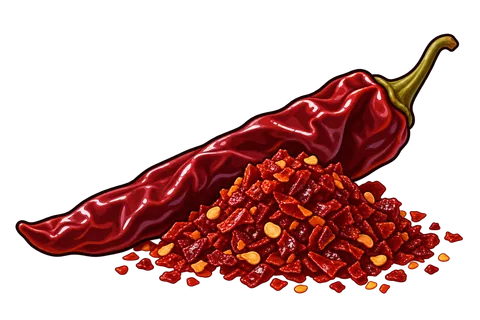
Aleppo pepper
Heat range not sourced yet Capsicum annuum -
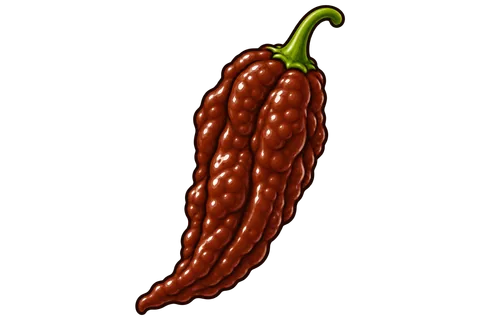
Chocolate Bhutlah
Heat range not sourced yet Capsicum chinense -
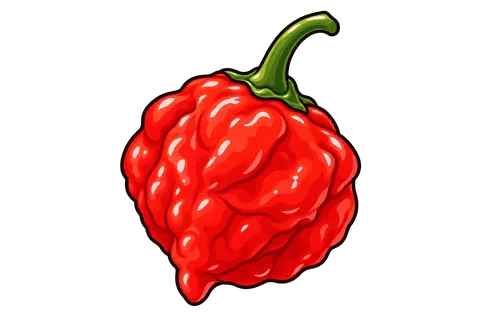
Dragon's Breath pepper
Heat range not sourced yet Capsicum chinense -
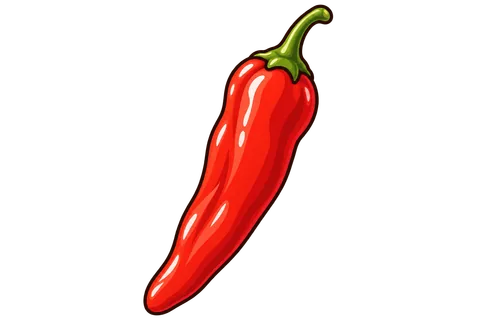
Espelette pepper
Heat range not sourced yet Capsicum annuum -
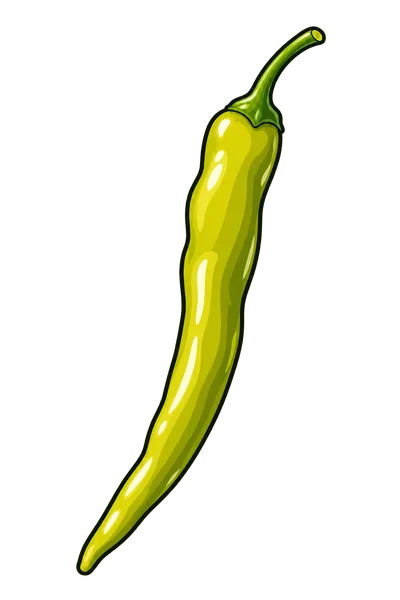
Guindilla
Heat range not sourced yet -
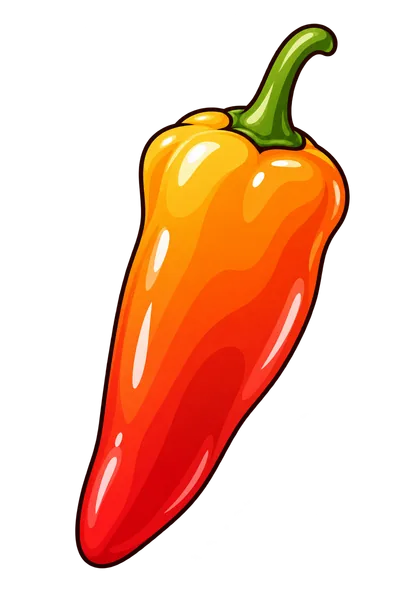
Gypsy
Heat range not sourced yet Capsicum annuum -
Jwala pepper
Heat range not sourced yet Capsicum annuum -
Peperoncino
Heat range not sourced yet Capsicum annuum -
Peter pepper
Heat range not sourced yet Capsicum annuum -
Piquillo pepper
Heat range not sourced yet Capsicum annuum -
Piri piri
Heat range not sourced yet Capsicum frutescens -
Siling labuyo
Heat range not sourced yet Capsicum frutescens
No entry matches those filters yet. Clear one filter to see more peppers.
Heat ranges as their sources publish them. Sources on each entry page.
Browse by
-
 Origin
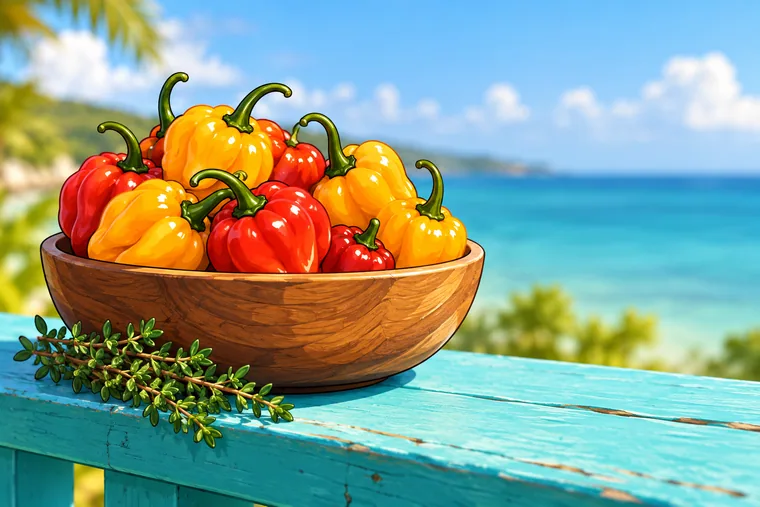
9 Caribbean Peppers, From Scotch Bonnet to Scorpion
Mostly Capsicum chinense, and mostly bonnet-shaped or wrinkled.5 min read -
 Origin
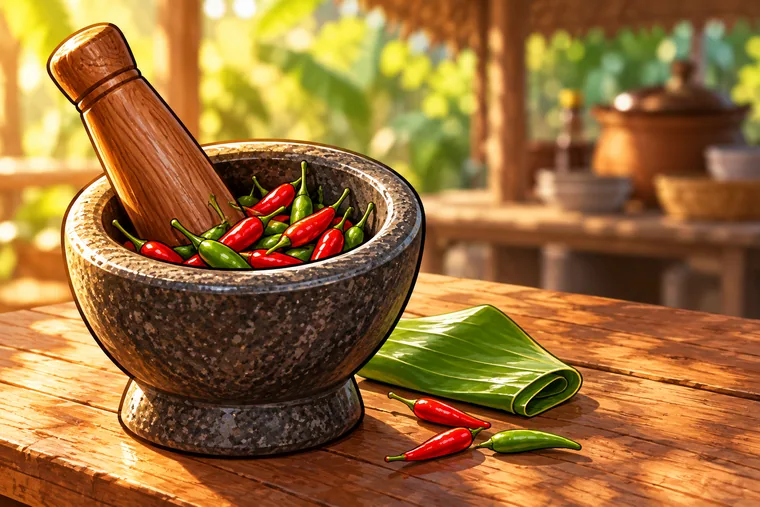
Thai Peppers and the 50 Local Chili Lines Thailand Grows
Small, upright and hot, in two species at once.5 min read -
 Origin
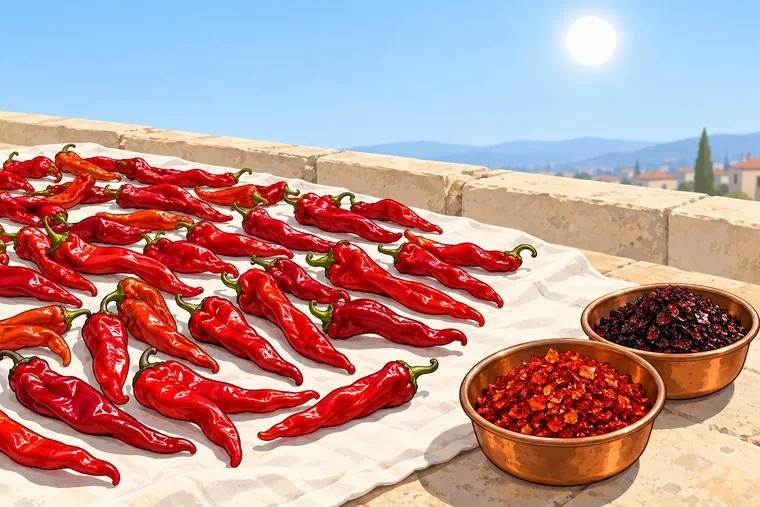
5 Turkish Pepper Types, From Maraş to Urfa Isot
Fresh sivri on the table, sun-dried red flakes in the spice jar.5 min read

All Pepper Index topics
- Super hotThe top band of the index: 1,000,000 Scoville heat units and above.5 pages
- CaribbeanMostly Capsicum chinense, and mostly bonnet-shaped or wrinkled.3 pages
- For chiliA mild dried base for body, a smoky one for depth, a small hot one for the burn.
- For picklingThick walls, waxy skins and a tested brine: the peppers extension cooks put in jars.
- MildThe bottom band of the index: 0 to 2,499 Scoville heat units.10 pages
- OriginOne continent of origin, many second homes.3 pages
- SpeciesFive crop species, one key you can run on your own plant.
- ThaiSmall, upright and hot, in two species at once.2 pages
- TurkishFresh sivri on the table, sun-dried red flakes in the spice jar.1 page
- UseChoose the job first, then the pepper.2 pages
On this page
What are the main types of peppers?
Peppers sort two ways, and the index uses both. By heat, they run from a bell pepper at zero Scoville heat units1 to Pepper X at an average of 2,693,000 SHU2. By species, nearly every pepper you can buy comes from one of five crop species in the genus Capsicum3.
Inside each species sit pod types, which the NMSU Chile Pepper Institute defines as horticultural divisions of a species, such as jalapeño, bell or New Mexican4. A pod type is what you ask for at your market. The species is what tells you how your plant grows and roughly how hot it can get.
How do you read an entry in the index?
Every row in the index is one pepper, and every number in it links to the page we read it on, so you can check any figure yourself. The columns stay the same for every pepper, so you can compare any two rows directly.
| Column | What it tells you | Habanero example |
|---|---|---|
| Heat | The published Scoville range, or one average when the source gives only that | 100,000–350,000 SHU |
| Band | Which of the five heat bands holds the middle of that range | Extra-hot |
| Species | The Capsicum species, from a taxonomic or extension source | C. chinense |
| Origin | Where the pepper or its species first grew, with the source's wording | North-central Amazon Basin |
| Flavor | The flavor words the source uses, shown as tags | Fruity, citrus, floral |
| Uses | What the source says people make with it | Hot sauce, spicy food |
| Days to harvest | Days from transplanting to ripe fruit, where a source gives it | 90–120 |
A blank cell means we have not read that fact on a primary source yet. We leave it empty instead of filling it from a seed packet or a forum.
How hot is each type of pepper?
The index splits heat into five bands. Each band starts where the one below it ends, and the jump between them grows fast: the super-hot band starts 400 times higher than the medium band.
| Band | Scoville range | Peppers in it | Their published heat |
|---|---|---|---|
| Mild | 0–2,499 SHU | Bell pepper, poblano | 0 SHU; 1,000–2,000 SHU |
| Medium | 2,500–29,999 SHU | Jalapeño, serrano | 2,000–8,000 SHU; 10,000–25,000 SHU |
| Hot | 30,000–99,999 SHU | Cayenne, Thai chili | 25,000–50,000 SHU; 50,000–100,000 SHU |
| Extra-hot | 100,000–999,999 SHU | Habanero, Scotch bonnet | 100,000–350,000 SHU each |
| Super-hot | 1,000,000 SHU and up | Ghost pepper, Carolina Reaper, Pepper X | 1,001,304; 1,641,183; 2,693,000 SHU (averages) |
The bands get wider as you climb: the hot band spans about 70,000 SHU, the extra-hot band 900,000. The numbers themselves come from a lab test, and the Scoville heat unit page shows how a reading in parts per million becomes SHU.
Why does a pepper sit in one band when its range crosses two?
Because the index files each pepper by the middle of its range, so you always know which rule put it there. Cayenne runs 25,000 to 50,000 SHU1, so it starts in the medium band and ends in the hot band. Its midpoint is (25,000 + 50,000) ÷ 2 = 37,500 SHU, which lands in hot.
The jalapeño works the same way. Its range of 2,000 to 8,000 SHU starts in mild, but its midpoint of 5,000 matches the average UF/IFAS gives for it1, so it sits in medium. For peppers with a single published average, such as the ghost pepper, the average decides the band.
The filter uses the band, while the range chart on each entry shows the full spread. If you're cooking for someone who is sensitive to heat, look at the top of the range. That's the pod that surprises people.
Which species does a pepper belong to?
Farmers grow five species as crops. Three of them, C. annuum, C. chinense and C. frutescens, grow all over the world, while farms raise C. baccatum and C. pubescens mostly in South America3.
| Species | Where it grows | What to look for | Pod types |
|---|---|---|---|
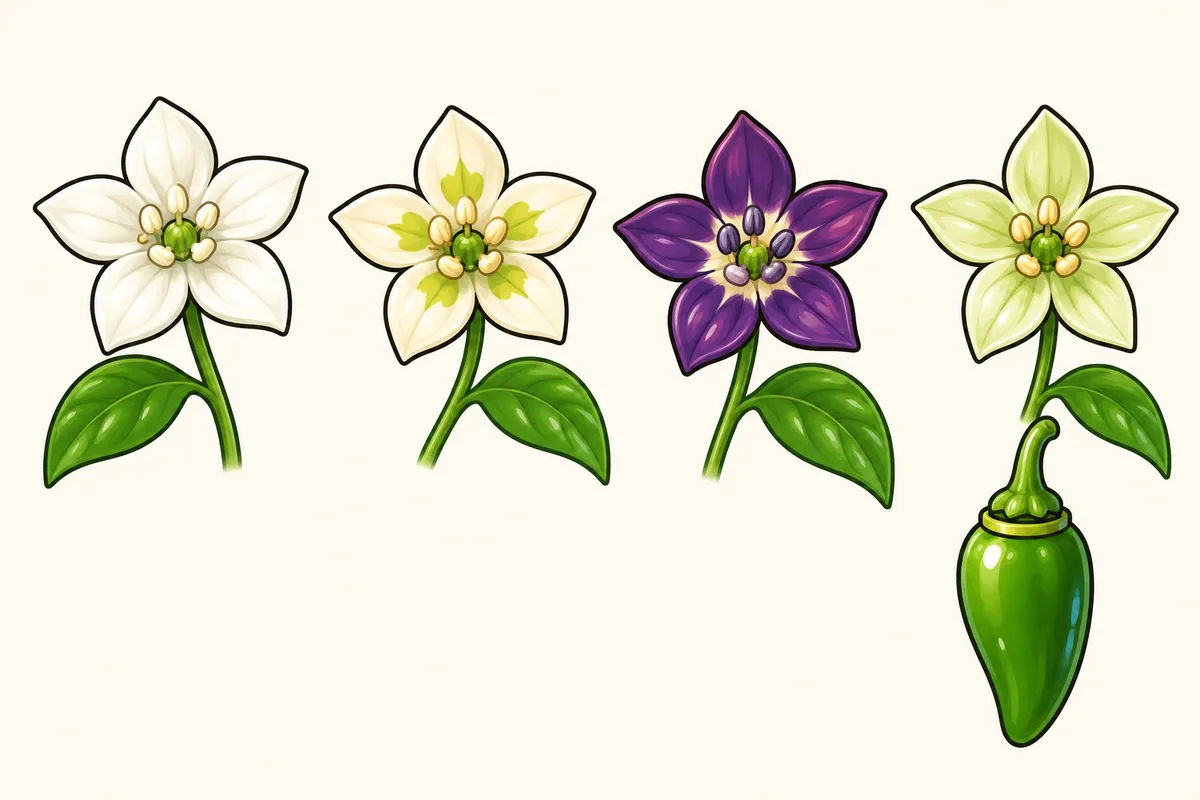
| C. annuum | Worldwide; the most widely grown pepper | White flowers, usually one per node; pale yellow seeds | Bell, wax, cayenne, jalapeño, bird |
| C. chinense | Worldwide; wild forms first grew in the north-central Amazon Basin | Dull white or greenish-white flowers; a ring-shaped narrowing where the calyx meets the stem | Habanero, Scotch bonnet, ghost, scorpion |
| C. frutescens | Worldwide; native to lowland tropical America | Greenish-white flowers; a deep cup-shaped calyx with no narrowing | Tabasco, Thai, malagueta |
| C. baccatum | Mostly South America | White flowers with greenish-yellow spots inside | Ají types, such as ají amarillo |
| C. pubescens | Mostly South America | Dark purple or violet flowers; brownish-black to black seeds | Rocoto |
The pod-type column follows the University of Guam Extension's species table6. One row on it is disputed: UF/IFAS Extension files the Thai pepper under C. annuum1, and the Thai chili entry walks through why.
How can you tell a habanero's species from a jalapeño's?
Look at the cap. The monograph on the genus calls the ring-shaped narrowing between the calyx and the stem the key trait for spotting C. chinense3. A habanero shows you that ring on every pod, while a jalapeño, being C. annuum, never has it.
This matters past botany. C. chinense holds the habanero, the Scotch bonnet and nearly every record holder, and the New Mexico researchers who tested the ghost pepper noted that the hottest chile peppers have belonged to C. chinense5. If a pod has that ring and you don't know what it is, handle it like a hot one.
Why do two sources print different numbers for one pepper?
They measure different things, and once you know which kind of figure you're reading, the gap stops looking like an error. Some sources give a range across many plants, some give a lab average from one harvest, and some round to a single friendly figure.
The ghost pepper shows you the problem well: a replicated New Mexico field trial measured an average of 1,001,304 SHU5. UF/IFAS prints 1,041,427 SHU7, and the Chile Pepper Institute rounds it to about 1 million8. All three are honest numbers for different samples, so each entry prints the source and the kind of figure beside it.
How many peppers are in the index, and can you filter them?
The index holds 45 peppers today, and the list above shows every one of them as a plain row you can read without scripts. Filter by heat band, species or origin, sort by heat or name, or search by any name a pepper sells under.
We add a pepper only when we can source at least four of its fields, such as heat, species, origin and uses. A color line or cultivar with less behind it becomes a row in its family's table instead: you'll find the NuMex habaneros on the habanero entry and the ghost pepper colors on the ghost entry. That keeps every page you open worth the click, and it's why the count grows slowly.
Quick answers
How many types of peppers are there?
The genus Capsicum holds 43 species, and five of them are grown as crops. Inside those five sit hundreds of pod types and cultivars, from bell and jalapeño to habanero and tabasco. The index lists each one that has enough sourced data to stand on its own.3
Is a bell pepper a chili pepper?
Yes, botanically. The bell pepper is Capsicum annuum, the same species as the jalapeño and the cayenne, and UF/IFAS Extension rates it at zero Scoville units. It has the shape and the species of a chile with none of the heat.1
Is a chili pepper a fruit or a vegetable?
Botanically it is a fruit: the monograph on the genus describes the pepper pod as a berry, usually with two chambers. In the kitchen you cook it like a vegetable, or dry and grind it into a spice.3
What plant family are peppers in?
The nightshade family, Solanaceae. UC Master Gardeners list it there with the note that peppers need at least 6 hours of sun, and the genus monograph places Capsicum in the tribe Capsiceae of that family.39
What makes a chili pepper hot?
Capsaicinoids, of which capsaicin is the most abundant. The genus monograph places them in cells of the placenta and the walls between the seed chambers, which is why the white ribs carry most of the burn. A bell pepper has the same ribs, and UF/IFAS rates it at zero SHU.13
Is it chile, chili or pepper?
All three are in use. The NMSU Chile Pepper Institute uses chile for the plant and its fruit and keeps chili for the dish of chile powder, beans, tomato and beef. Pepper is the everyday English word for the same fruit.4
What is the hottest type of pepper?
Pepper X holds the Guinness record at an average of 2,693,000 SHU, confirmed in October 2023. It took the title from the Carolina Reaper, which averages about 1.64 million SHU.2
Sources
· 11
- 1University of Florida IFAS Extension HS-859/TR010: Pepper Production in Miami-Dade County, Florida
- 2Guinness World Records Pepper X dethrones Carolina Reaper as world's hottest chilli pepper
- 3PhytoKeys 200:1-423 (Pensoft) Monograph of wild and cultivated chili peppers (Capsicum L., Solanaceae)
- 4New Mexico State University, Chile Pepper Institute Chile Terminology
- 5HortScience 42(2):222-224 'Bhut Jolokia', the world's hottest known chile pepper, is a putative naturally occurring interspecific hybrid
- 6University of Guam, College of Natural and Applied Sciences, Cooperative Extension and Outreach FPP-05: Hot Pepper (Capsicum spp.), Important Crop on Guam (Tuquero, Chargualaf, Marutani)
- 7UF/IFAS Gardening Solutions Peppers by Scoville Units
- 8New Mexico State University, Chile Pepper Institute Heat
- 9University of California Agriculture and Natural Resources, UC Master Gardeners of Ventura County Ventura Garden to Table Series: Peppers
- 10University of Maryland Extension Growing Peppers in a Home Garden
- 11National Capital Poison Center (Poison Control) Capsaicin: When the chili is too hot (Amanda McDaniel-Price, RN)
Your pocket pepper index.
Built from the same index as this site.
- Every entry offline
- Compare any two peppers
- Keep a list of peppers you have tried