
Aji Charapita, the Pea-Sized Amazon Chile at 30K–50K SHU
A tiny yellow chile from Iquitos and Pucallpa with a citrus aroma and a heat seed sellers compare to cayenne.
 Hot
30,000–50,000 SHU in its seed seller's listing, about cayenne heat; no lab figure published
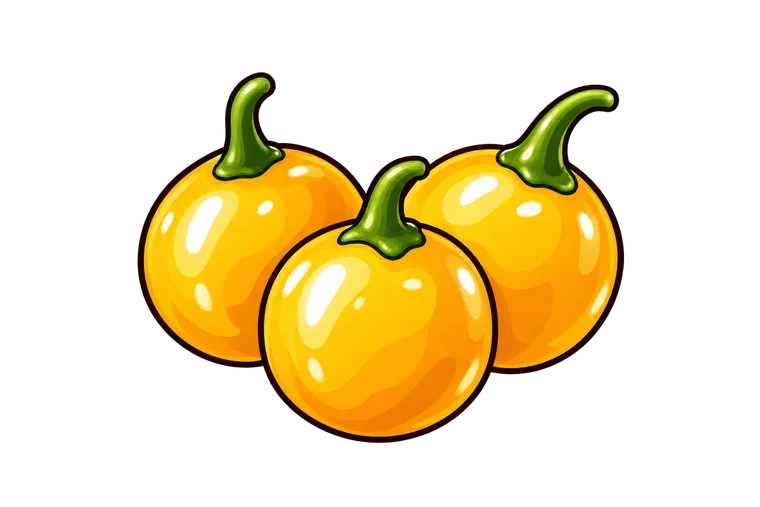
- Pods about 1/4 inch across, usually yellow, on a bush up to 1 m tall
- Fruits 60–120 days after transplant and stays productive for up to six years
On this page
- 1How hot is ají charapita without a lab test?
- 2Why did Slow Food put charapita in its Ark of Taste?
- 3Which species is charapita, really?
- 4What does a charapita plant look like?
- 5How do Amazonian cooks use charapita?
- 6How many charapitas replace a cayenne or a habanero?
- 7How do you keep a harvest of tiny charapitas?
- 8How does charapita compare with tepín and biquinho?
- 9Can you grow charapita outside the Amazon?
- 10What to do with a bowl of tiny charapitas
How hot is ají charapita without a lab test?
About as hot as cayenne, by the only numbers in print. Pepper Joe's lists its charapita seed at 30,000 to 50,000 SHU1, and Baker Creek says it's equal in heat to a cayenne pepper3. Both companies sell the seed they describe, so you should read those numbers as labels, not lab results.
Those two seller claims agree with each other. UF/IFAS puts cayenne at 25,000 to 50,000 SHU5, which overlaps almost exactly with Pepper Joe's range. In Peru, the Slow Food Ark of Taste calls charapita high in capsaicin and one of the country's hottest chilies, without giving a figure4.
Expect a sharp, fast bite from one tiny pod, not habanero-level heat. Pepper Joe's notes that the heat hits right away1, which matters when you bite one whole: there's no slow build to warn you.
A Peruvian university thesis did measure capsaicin in charapita, but in lab extracts rather than in the fruit itself6. That makes its numbers useless for a Scoville rating, so we leave them out.
Why did Slow Food put charapita in its Ark of Taste?
Because outside a few Amazonian provinces, almost nobody can get it. The Slow Food Foundation's Ark of Taste lists charapita as originating in the cities of Iquitos and Pucallpa and now grown mainly in the departments of Ucayali, Loreto and Madre de Dios4. It's one of five chili varieties of Peru's northern forest.
The Ark entry also notes that the rest of Peru barely knows it, partly because it's hard to find4. That's the opposite of the Andean peppers you meet in Lima markets, like the dried ají panca that colors so many Peruvian stews.
Names drift, too. The genus monograph lists an Iquitos sample as "Charapita" and another as "Aji Charapa"2, so if you see either name on a jar from Iquitos, you're looking at the same family of tiny chilies.
- Citrus
- Fruity
- Sharp heat
Which species is charapita, really?
Nobody agrees, and you'll want to know that before you buy seed. The sources we read file it under three different species:
| Species given | What they examined |
|---|---|
| C. chinense | A name list citing a 2000 Iquitos sample as 'Charapita' 2 |
| C. annuum (wild form) | A Ucayali herbarium specimen labelled 'ají charapita' 2 |
| C. frutescens | Fruit grown in the San Martín region 6 |
| Capsicum sp. | A 1959 seed sample from Peru named 'Charapita or Charapilla' 7 |
| C. chinense | Their own seed lines 3 |
The likely story is that "charapita" names a type of fruit, small, round and hot, rather than one species. Several wild and semi-wild Amazon peppers fit that description, and local people give them similar names. The genus monograph shows how common the pattern is, listing many small Peruvian chilies with names built on charapa2.
For you, the practical answer is simple. The seed you can buy from US sellers is sold as C. chinense, the same species as the habanero, and it grows like one: slow to sprout, fond of heat and humidity.
What does a charapita plant look like?
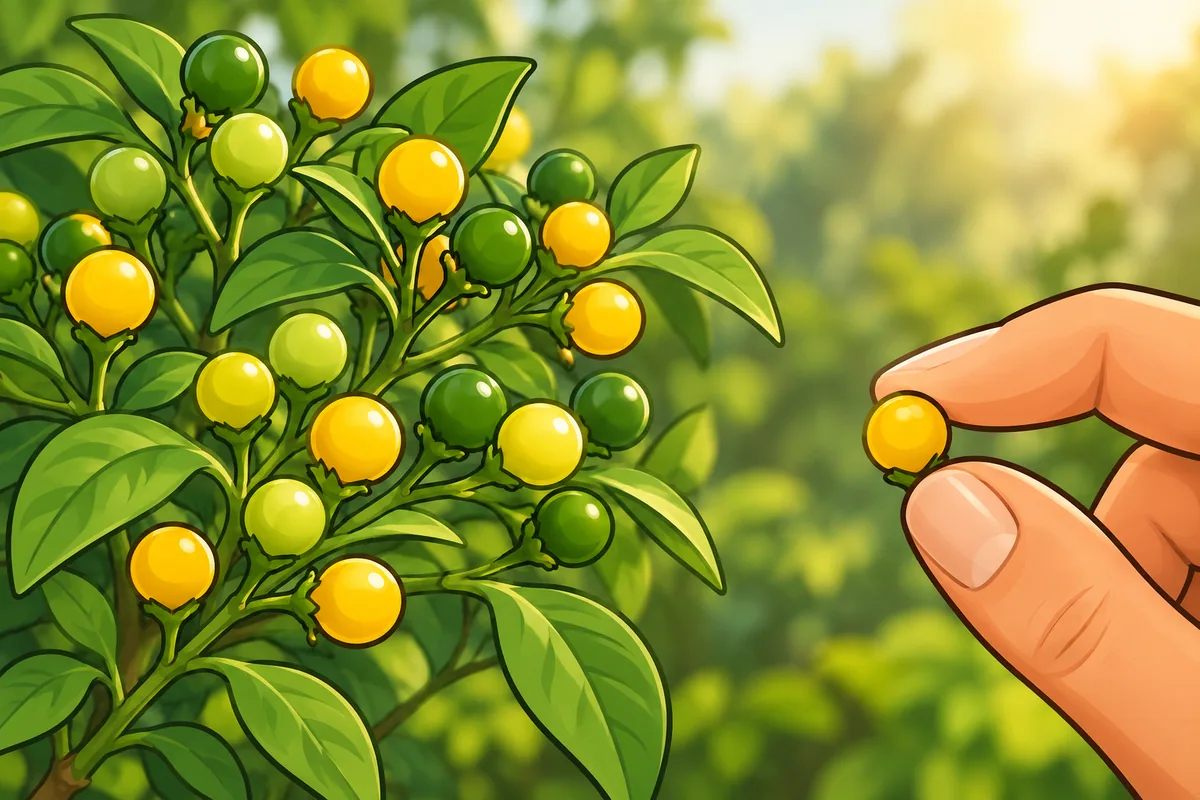
A bushy shrub covered in what look like yellow peas, and you'll need patience to pick it. The Ark of Taste describes small round fruit that looks like a small yellow pea, usually yellow but sometimes green depending on the type, on a plant that reaches about one meter with light green oval leaves4.
That last number may surprise you. The Ark entry says a plant stays productive for six years, though yields fall over time4. So in its home climate, charapita behaves like a small perennial bush, not a one-summer vegetable.
Baker Creek calls its plant a wild, bushy type with small, round, tepín-like peppers3, and Pepper Joe's says one plant can carry hundreds of pods that ripen from green to yellow1. Pick them when they're fully yellow for the brightest citrus.
How do Amazonian cooks use charapita?
Four ways, and each one helps you keep the tiny pods longer. The Ark of Taste lists fresh, fermented, dried and preserved in oil or vinegar, and names three dishes where charapita is a basic ingredient: ají de cocona, patarashca (fish cooked in leaves over embers) and juane (chicken and rice wrapped in leaves)4.
| Method | What you get | Home version |
|---|---|---|
| Fresh | Bright citrus and a sharp bite | Crush 2–3 pods into a bowl of salsa or on grilled fish |
| Fermented | A sour, rounded hot sauce | Mash with salt, ferment, then blend |
| Dried | Whole pods that keep for months | Air-dry or dehydrate whole; crush as needed |
| In oil or vinegar | A table condiment | Pods in vinegar in the fridge; oil versions belong in the fridge and get used fast |
Ají de cocona is the dish to look for if you ever eat in Pucallpa or Iquitos. At home, a fresh table sauce is the easiest way in: two crushed pods per cup of sauce is a sensible first try, then adjust to your taste.
For the fermented version, the steps and salt ratios for any small hot pepper are in the fermented hot sauce guide. Charapita pods are so small that you don't need to chop them; a light crush before salting is enough.
How many charapitas replace a cayenne or a habanero?
Count by weight, not by pod, because a charapita is so much smaller than either. Using the published midpoints, you can work out a swap in a few seconds:
| You have | Midpoint heat | Charapita for the same heat |
|---|---|---|
| 1 g cayenne15 | 37,500 SHU (25,000–50,000) | about 1 g charapita |
| 1 g habanero15 | 225,000 SHU (100,000–350,000) | about 5–6 g charapita |
| 1 g charapita1 | 40,000 SHU (30,000–50,000) | – |
Here's the habanero math: 225,000 ÷ 40,000 = 5.6, so you'd need between five and six grams of charapita to match one gram of habanero. That's handy if you're adapting a Caribbean recipe and only have a jar of charapitas; you get more citrus and less of the habanero's floral fruit.
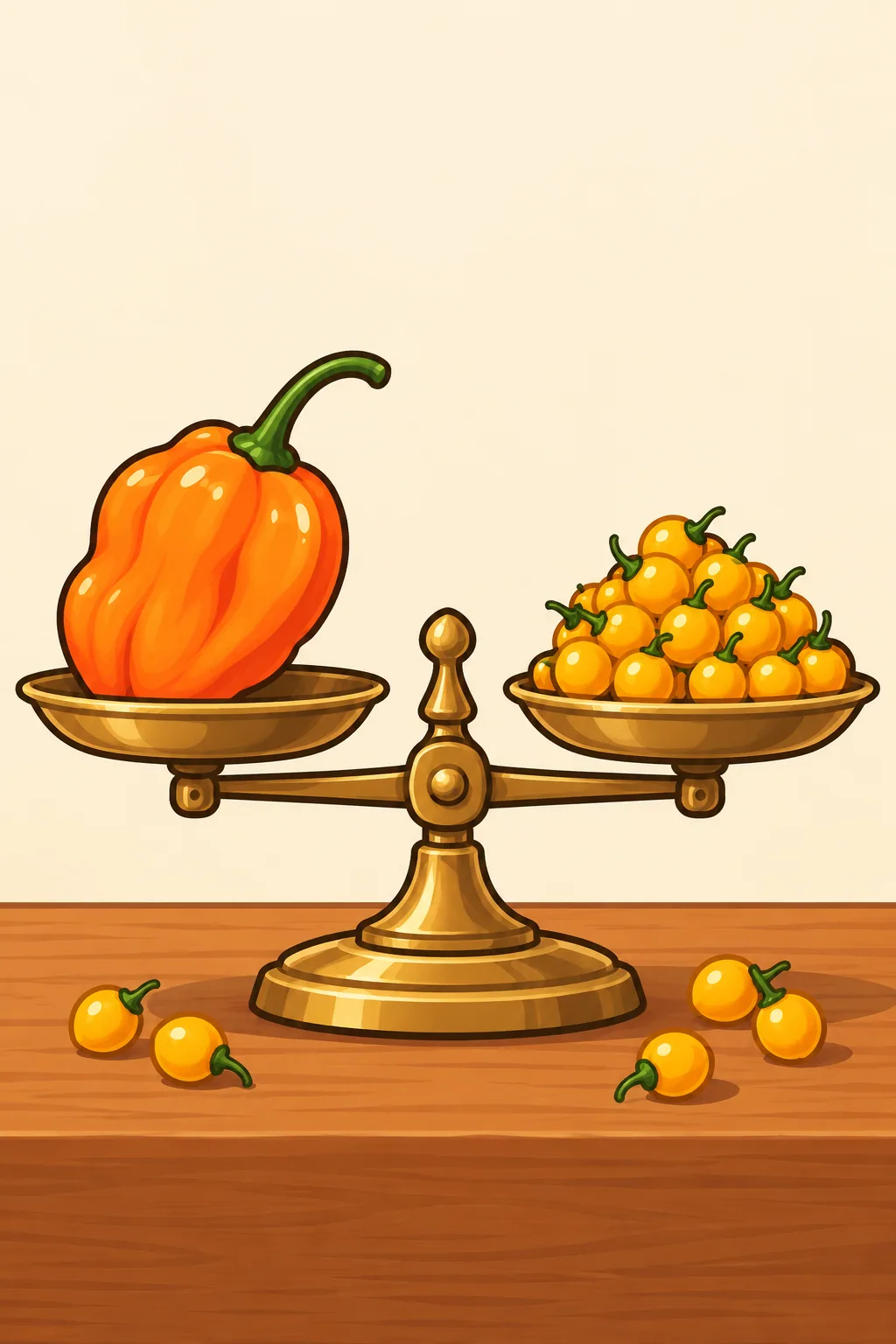
Cayenne goes the other way. With midpoints of 37,500 and 40,000 SHU, gram for gram the two land almost level, so you can swap them straight across in a sauce. Your dish will taste brighter with charapita, because cayenne is mostly sold dry and ground while you'll usually have charapita whole.
How do you keep a harvest of tiny charapitas?
Dry most of them whole. Pepper Joe's calls charapita great for drying1, and the Ark of Taste lists dried pods among the traditional ways to keep it4. A pod this small dries quickly, so you don't need to slice it.
Spread the pods in a single layer on a rack in a warm, airy room, or use a dehydrator on a low setting until they snap. Then store them whole in a sealed jar and crush a few as you cook; whole pods hold their aroma longer than flakes do. The pepper drying guide gives you temperatures and times for both methods.
Freeze the rest. Small whole pods freeze well in a zip bag and go straight from the freezer into a pan or blender, which keeps your fingers away from cut pods.
How does charapita compare with tepín and biquinho?
All three are small and round, and that's where the similarity ends. You can use this table when a seed packet or a jar just says "tiny round chile":
| Pepper | Species | Heat | Where it's from |
|---|---|---|---|
| Ají charapita1 | C. chinense (disputed) | 30,000–50,000 SHU, seller figure | Peruvian Amazon |
| Chiltepín (tepín)8 | Wild C. annuum | 70,000–160,000 SHU, measured | Northern Mexico and the US Southwest |
| Biquinho (BRS Moema)9 | C. chinense | 0 SHU, bred without heat | Brazil |
So if a recipe calls for charapita and you only have the wild chiltepin, use about half as many pods, because tepín runs hotter. If you have biquinho, you'll get the cute shape and a sweet, fruity taste but none of the heat.
Can you grow charapita outside the Amazon?
Yes, if you can give it a long, warm season, and a pot lets you bring it indoors for winter. The Ark of Taste says it grows best in hot, humid places with soil rich in organic matter4.
- 1
Start early, indoors
In its home region, people sow in winter and harvest in summer; in a cooler climate, start seeds indoors about 8–10 weeks before your last frost.4
- 2
Feed the soil
Mix compost into the bed or potting mix, since the plant likes soil rich in organic matter.4
- 3
Space it like a shrub
Baker Creek suggests 14–18 inches between plants for its compact, bushy type.3
- 4
- 5
Keep it for next year
Because a plant stays productive for years, bring a potted charapita indoors before frost and grow it on next spring.4
The start date in the first step is our own suggestion for a temperate garden, not a figure from the sources. Pepper Joe's lists a plant of about 3 feet1, so a 3- to 5-gallon pot is plenty; the container size guide explains how pot size changes watering and yield.
Humidity matters more than you'd expect for a plant from a rainforest edge. In a dry summer, mulch the pot and water before the soil dries out completely, and set it where it gets morning sun and some shade in the hottest afternoon hours.
What to do with a bowl of tiny charapitas
Start fresh: crush two pods into a squeeze of lime with salt and taste it on rice or fish. That shows you the citrus the seed catalogs describe before any cooking changes it.
Then turn the rest into a bottle. The hot sauce making hub walks you through fresh, fermented and cooked styles, and a citrusy pepper like this one shines in a simple vinegar sauce. For more of the Andean and Amazonian peppers that fill Peruvian kitchens, compare it with the fruity ají amarillo swaps the next time a Peruvian recipe calls for heat you can't find.
Related peppers
 Aji pancaMild500–1,500 SHU
 ChiltepinExtra-hot70,000–160,000 SHUBiquinhoMild0 SHU average
 HabaneroExtra-hot100,000–350,000 SHU
Published ranges.Sources for this line5. University of Florida IFAS Extension8. Revista Mexicana de Ingeniería Química 9(2):197-207 (CIAD)9. Embrapa, Agência de Informação Tecnológica (Ribeiro, Amaro, Carvalho, Reifschneider)10. PRODERNA (J.H. Lüttge GmbH), ingredient supplier, spec for its own product
Related in Peppers
-
Cayenne Pepper Scoville, 25,000–50,000 SHU
The long red chile behind most ground red pepper and a lot of vinegar hot sauce.6 min read -
Thai Chili Pepper Scoville, 50,000–100,000 SHU
A small, sharp chile about an inch long, also sold as bird's eye.6 min read -
Bird's Eye Chili Heat and Names, 50,000–100,000 SHU
A tiny upright chile whose name points to the animals that plant it.6 min read -
Cherry Pepper Scoville, 0 SHU Sweet to Hot
A small round pepper, sweet or hot, grown for jars and stuffing.6 min read -
Jalapeño Scoville, 2,000–8,000 SHU and Chipotle
The medium-heat chile most heat comparisons start from.6 min read -
Serrano Pepper Scoville, 10,000–25,000 SHU
A slim, fleshy chile one clear step above the jalapeño.5 min read
Sources
· 10
- 1Pepper Joe's (seed seller's product page for its own seed) Aji Charapita Pepper Seeds
- 2PhytoKeys 200:1-423 (Pensoft) Monograph of wild and cultivated chili peppers (Capsicum L., Solanaceae)
- 3Baker Creek Heirloom Seeds (seed seller's product page for its own seed) Aji Charapita Hot Pepper Seeds
- 4Slow Food Foundation for Biodiversity, Ark of Taste Charapita chili pepper
- 5University of Florida IFAS Extension HS-859/TR010: Pepper Production in Miami-Dade County, Florida
- 6Universidad Nacional de San Martín, Tarapoto (undergraduate thesis) Extracción de capsaicinoides del Capsicum frutescens (ají charapita) por ultrasonido y ultra-turrax (Castillo Grández)
- 7USDA Agricultural Research Service, GRIN-Global Accession PI 260498, Capsicum sp., Charapita or Charapilla, collected in Peru
- 8Revista Mexicana de Ingeniería Química 9(2):197-207 (CIAD) Capsaicinoides y color en chiltepín (Capsicum annuum var. aviculare). Efecto del proceso sobre salsas y encurtidos (Montoya-Ballesteros et al.)
- 9Embrapa, Agência de Informação Tecnológica (Ribeiro, Amaro, Carvalho, Reifschneider) BRS Moema
- 10PRODERNA (J.H. Lüttge GmbH), ingredient supplier, spec for its own product Panca (whole and powder)