
5 Turkish Pepper Types, From Maraş to Urfa Isot
Fresh sivri on the table, sun-dried red flakes in the spice jar.
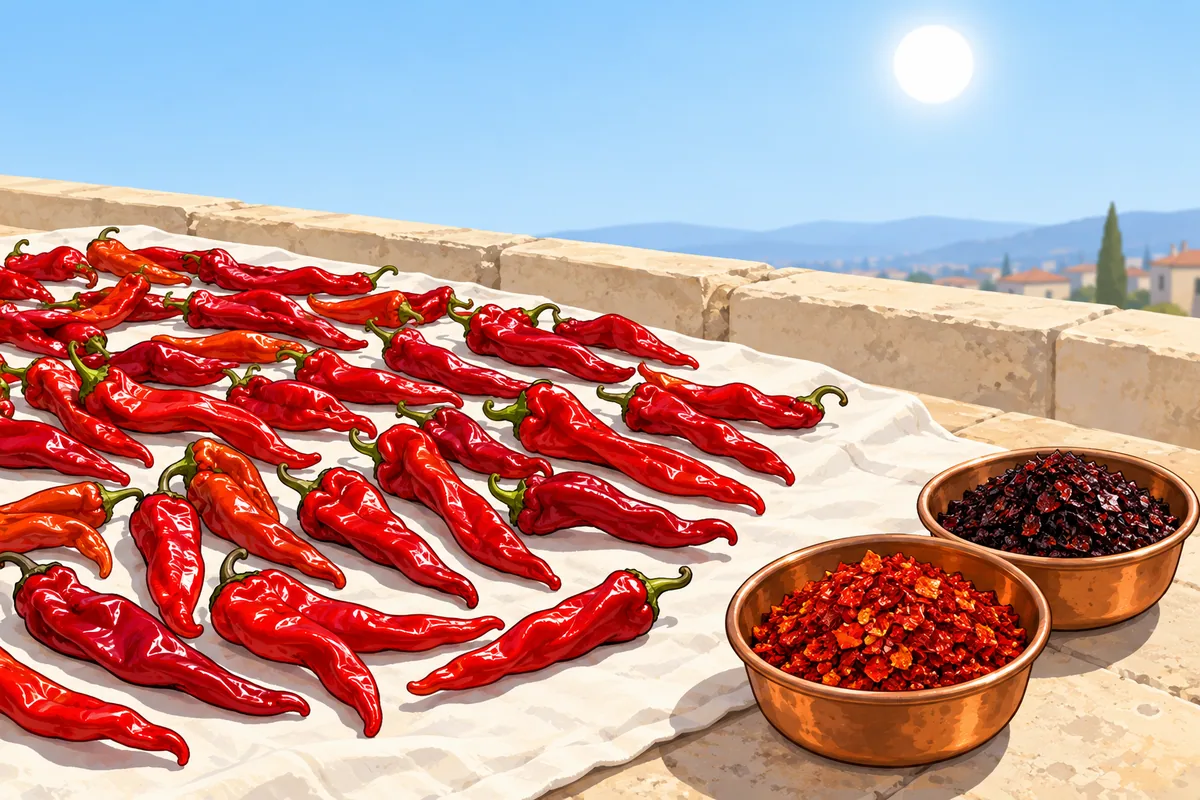
Turkish peppers are local lines of Capsicum annuum, eaten fresh in huge amounts and dried into flakes such as Maraş pul biber and dark Urfa isot.
- Over 2 million tonnes of green peppers and 16,139 t of dry peppers a year
- Maraş peppers lose 75–80 % of their weight as they dry
The flake corner
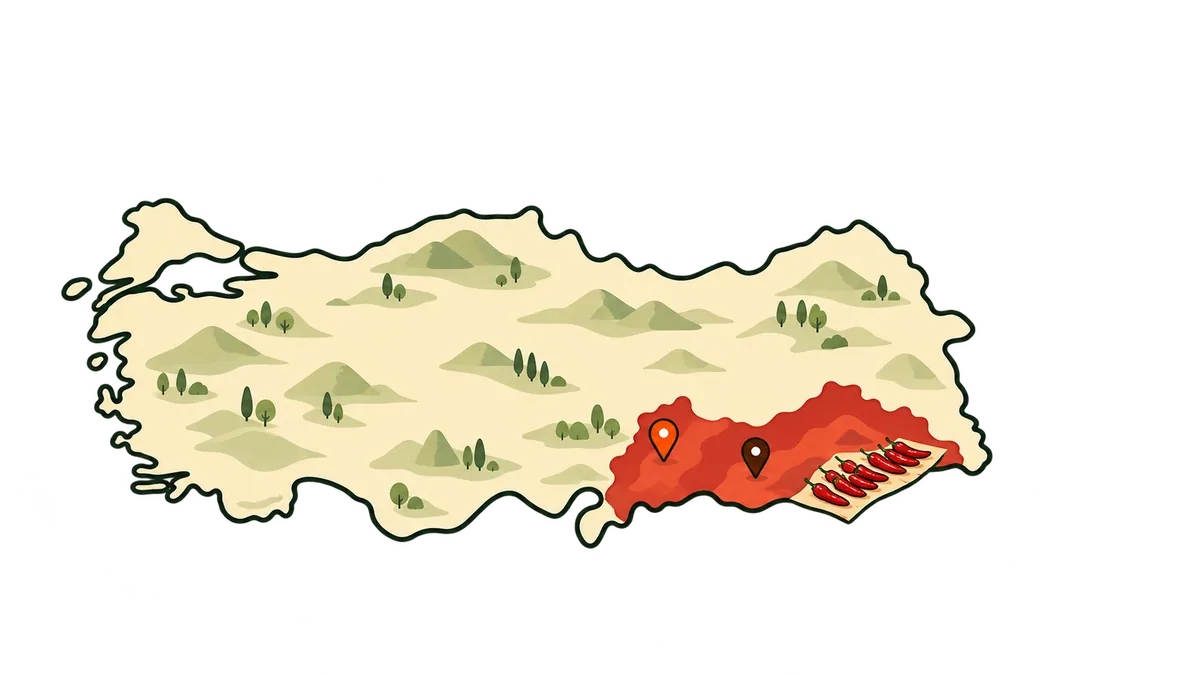
Two protected names, both in the south-east.
From field to jar
No primary source prints a Scoville figure for the register types, so this strip follows the pepper instead: the dates, days and weights in the Maraş register.
Nothing matches this filter yet.
Published heat ranges. Sources on each entry page.
Flakes to fresh pods
The register puts the water a pepper loses in drying at 75–80 % of its fresh weight.2
Peppers from around the world
On this page
- 1What are Turkish peppers?
- 2Which peppers does Turkey grow?
- 3How did peppers reach Turkey?
- 4How are Turkish pepper flakes made?
- 5What does a Maraş pepper look like fresh and dried?
- 6What is isot, and why is it black?
- 7How much fresh pepper makes a jar of flakes?
- 8Pul biber or isot, which should you buy?
- 9How hot are Turkish peppers?
What are Turkish peppers?
Local lines of Capsicum annuum, grown in amounts you'd hardly guess from the spice shelf. A 2018 study of Turkish pepper genotypes puts the country's yearly harvest at more than 2 million tonnes of green peppers and 16,139 t of dry ones, and calls Turkey one of the most important areas for pepper genetic resources1.
The same study lists the pepper types its accessions came from: Sivri, Kapia, Charleston, Şanlıurfa, Hatay and Kahramanmaraş types1. You'll notice the last three are place names, and two of those places turned their peppers into protected products. So the jar of flakes in your cupboard and the long green peppers Turks eat fresh, pickled or grilled1 come from the same species, bred in different directions.
Which peppers does Turkey grow?
The table sorts the types by what you'll do with them. Turkey's patent office registers the Maraş pepper as a designation of origin2, and its register for Urfa dishes names Şanlıurfa pepper as a geographical indication of its own3.
| Type | Main use | Region or note |
|---|---|---|
| Maraş pepper (Maraş biberi)2 | Dried into red powder, red flakes (pul) and black flakes (isot) | Kahramanmaraş, Hatay, Gaziantep, Adıyaman, Kilis and Şanlıurfa |
| Şanlıurfa pepper (isot)34 | Fresh red pepper and dark flakes in Urfa dishes | Şanlıurfa; its own geographical indication, no. C2000/005 |
| Sivri1 | Fresh-market type, the largest group in the 2018 study (about 20 accessions) | Accessions from across Turkey |
| Kapia, Charleston1 | Fresh-market types sampled in the 2018 genotype study | Accessions from across Turkey |
| Small hot peppers1 | Spices and condiments | Used mainly for spice |
Pul biber means red pepper flakes, and Maraş biberi is the protected name for flakes from the six provinces in its register. The register also fixes what the fresh fruit looks like: conical, smooth, thin-fleshed, 60 to 115 mm long and 8 to 14 g each2.
The 2018 study shows you how mixed the national pool is. Of its 71 accessions, 64 were C. annuum, six C. frutescens and one C. chinense, and the C. annuum lines did not cluster by region or by fruit shape1. In plain terms, you can't tell a pepper's province from its DNA, which is one reason Turkey protects its peppers by place name instead.
How did peppers reach Turkey?
By trade, some time after Columbus. The 2018 study says nobody fully knows how Turkey first met the pepper, and that the most accepted idea has Portuguese traders on their way to Asia bringing it to Istanbul as a commercial product in the fifteenth and sixteenth centuries1. Like the Caribbean peppers you may know, Turkey's go back to American species; our peppers by country page traces the whole route.
How are Turkish pepper flakes made?
In the sun, mostly, and you could follow the same route at home. The Maraş pepper's register describes it from field to jar2:
- 1
Pick the ripe red pods from August
Growers sow straight into the field in February or March and get two or three pickings, 2 to 3 tonnes of fresh fruit per decare.2
- 2
Dry them in the sun
Whole pods on a tarp or drying cloth take about 8 to 12 days; washed and chopped pods on concrete or mesh take 1 to 3 days. Fan ovens do it in 3 to 4 hours, or 1 to 1.5 hours with microwave help. For a small batch of your own, the tarp method is the one you can copy.2
- 3
Crush them to size
The dried pods go through a cracking machine set to the flake size the maker wants.2
- 4
Temper with oil and salt
For red flakes (pul), makers work the crushed pepper under a millstone with vegetable oil and salt in Turkish Food Codex amounts, then sieve it by size.2
- 5
Or ferment it for isot
For black flakes, makers let the crushed red pepper heat and ferment until it turns dark, then give it the same oil, salt and sieving.2
The thin flesh is what makes your flakes possible. The register says the Maraş pepper suits drying because its skin is thin, and it measures the flesh at only 1.2 to 1.6 mm2. One dried pod goes three ways, and the diagram shows you where each jar comes from.
- millRed powder (toz)Stems removed, milled to flour, blended with vegetable oil
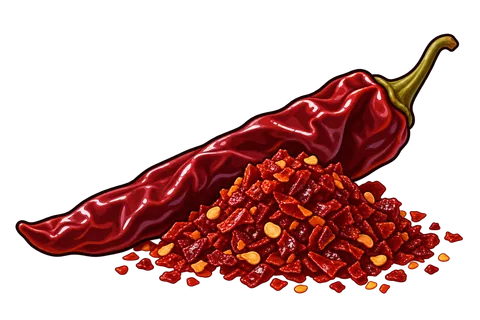
- crackRed flakes (pul)Cracked to size, tempered with oil and salt under a millstone
- crack and fermentBlack flakes (isot)Cracked, sweated and fermented until dark, then oil and salt
What does a Maraş pepper look like fresh and dried?
Long, conical and mostly water when fresh; dark red, light and dry once it's done. The register gives you a range for each stage, so you can see what the drying changes2.
Fresh red Maraş pepper
Dried red Maraş pepper
Your plant will stay small, about 60 cm tall, with white flowers and pods that turn from green to red as they ripen2. If you grow a Maraş line at home, wait for full red before you pick for drying.
What is isot, and why is it black?
The isot in your jar is red pepper that makers sweat and ferment until it darkens. The Maraş register explains that crushed red peppers go through heating and fermentation that turns their natural red into a natural black, and that people call the result isot2.
In Şanlıurfa you won't find these dishes without it. The register entry for Urfa liver kebab uses one tablespoon of Şanlıurfa pepper for 1 kg of lamb liver, sprinkled with salt over the coals, and serves more of it on the side3. The entry for Urfa isot çömleği, a lamb dish slow-cooked in a clay pot, names the fresh red Şanlıurfa pepper as its main distinguishing feature4.
Urfa's egg köfte shows you how much isot a home cook there uses. Its register recipe for six people kneads 230 g of Şanlıurfa pepper into 500 g of bulgur, with tomato paste, onion, black pepper, cinnamon and salt, for about 5 minutes and then 20 to 25 more before the fried eggs go in5. That's nearly half the bulgur's weight in pepper, far more than you'd use of a hot flake, which suggests isot sits at the mild end of the heat scale. The cooking with hot peppers pages cover the techniques you'll need for dishes like these.
How much fresh pepper makes a jar of flakes?
About four to five times what you end up with. The Maraş register says a pepper loses the water that makes up 75 to 80 % of its fresh weight as it dries2.
The converter above runs the same sum for any jar you name. Worked through: 1,000 g × (1 − 0.80) = 200 g, and 1,000 g × (1 − 0.75) = 250 g. So your 100 g jar of flakes started as roughly 400 to 500 g of fresh red pods, before the oil and salt go in.
Run the köfte through the same sum and you see the scale of Urfa cooking: 230 g of isot for one batch started as roughly 920 to 1,150 g of fresh red pods25. That's a kilo of peppers for one dinner you'd serve six people.
Pul biber or isot, which should you buy?
Choose by the color you want and by your dish. Red pul keeps the pepper's red for your dish and gets only oil and salt after cracking; isot goes through the extra fermenting step that turns it near-black2. The Urfa register dishes, liver kebab and egg köfte, call for the Şanlıurfa pepper35, so if you're cooking from an Urfa recipe, isot is your match. If you can't find either, the Urfa biber substitute page lists what stands in.
Reading a jar of Turkish flakes
- "Maraş biberi" on your label means pepper from Kahramanmaraş, Hatay, Gaziantep, Adıyaman, Kilis or Şanlıurfa2
- Pul or yaprak means red flakes; isot means the black, fermented kind2
- Vegetable oil and salt in the ingredients are normal for pul and isot, in Turkish Food Codex amounts2
- A three-person board from the Kahramanmaraş chamber of commerce, the provincial agriculture office and the Maraş pepper cluster association inspects producers once a year2
How hot are Turkish peppers?
We haven't found a primary heat figure for the Maraş or Şanlıurfa types. The register describes fruit size, color, moisture and the drying method2, but not Scoville units, so we print none.
What we can tell you from the sources is that the small hot peppers mostly go to spice and condiment use1. The Urfa biber and Maraş pepper entries add a heat range once we read one on a primary source. Until then, your best guide is the köfte amount above: cooks who knead 230 g into one bowl aren't working with a superhot.
Quick answers
Is Aleppo pepper Turkish?
It comes from just across the border. The UC Master Gardeners place Aleppo, also called Halaby pepper, in the Middle East and describe it as sweet, fruity and slightly tangy, used dried and crushed.6
When did peppers reach Turkey?
No one knows the date. A 2018 study of Turkish pepper genotypes says it is not fully known how peppers first came to Turkey; the most accepted idea is that they arrived in Istanbul as a trade good.1
Do Turks eat peppers fresh too?
Far more fresh than dried. The 2018 study lists fresh, pickled, grilled, paste, sauce and cooked dishes, and the green crop outweighs the dry one more than a hundred times over.1
More in Pepper Index
The newest from Pepper Index
-
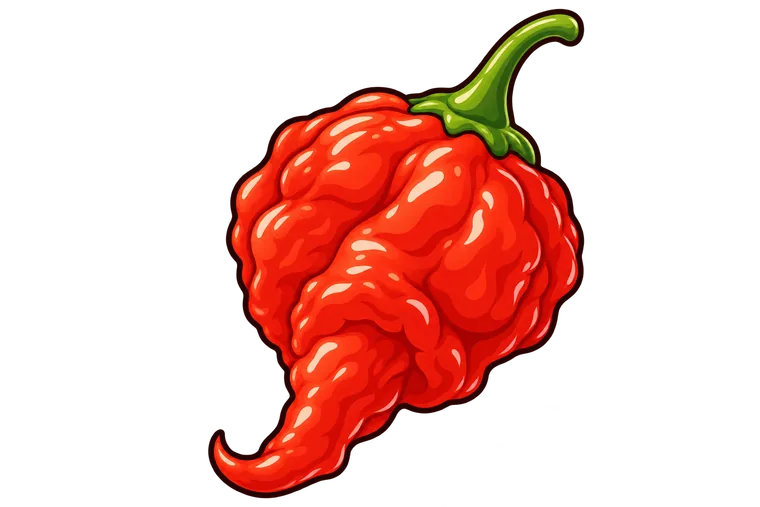
Carolina Reaper Scoville, 1.64 Million SHU
A fruity, sweet superhot from South Carolina, bred from a habanero and a Naga Viper.Oct 18, 2026 · Pepper -
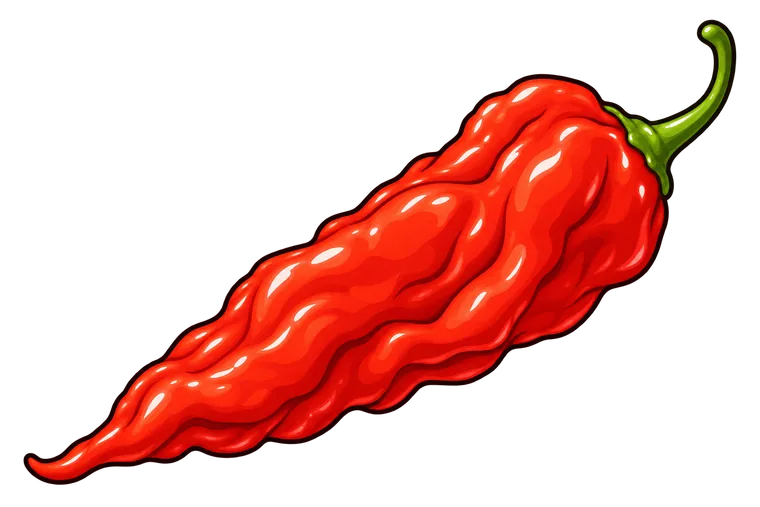
Ghost Pepper Scoville, About 1 Million SHU
The Bhut Jolokia of Assam, India: the first pepper measured at a million SHU.Oct 18, 2026 · Pepper -
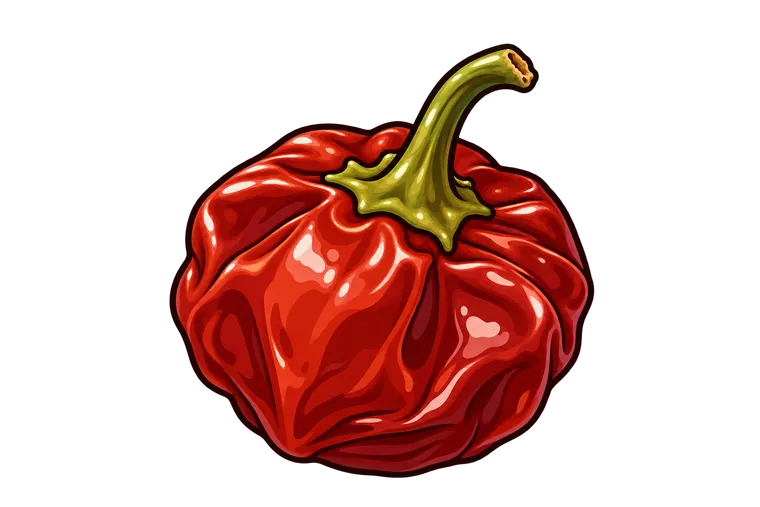
Ñora Pepper, Sweet Pimentón Pod Under 480 SHU
The small round sweet pepper behind Murcia's pimentón.Oct 18, 2026 · Pepper -
Pepper X Scoville, 2.69 Million SHU and Record
Ed Currie's record pepper from South Carolina, at an average of 2.69 million SHU.Oct 18, 2026 · Pepper -
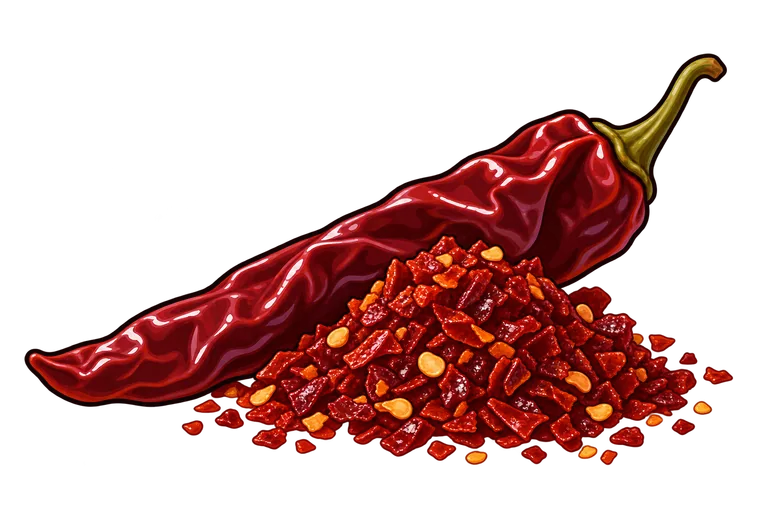
Aleppo Pepper, the Halaby Flake Cured With Oil and Salt
A burgundy flake from the old Silk Road city of Aleppo, sweet and fruity first, with a moderate heat behind it.Oct 18, 2026 · Pepper -
Calabrian Chili Heat, 5,000–70,000 SHU by EU Rule
Peperoncino di Calabria: the protected chili of Italy's toe, sold fresh, on strings, as flakes and as powder.Oct 18, 2026 · Pepper
Sources
· 6
- 13 Biotech 8(8):355 (Springer) Exploring the genetic variations and population structure of Turkish pepper (Capsicum annuum L.) genotypes based on peroxidase gene markers (Akyavuz, Taskin, Koçak, Yildiz)
- 2Turkish Patent and Trademark Office (TÜRKPATENT), geographical indication register No. 43, Maraş Biberi (designation of origin), amended 2020
- 3Turkish Patent and Trademark Office (TÜRKPATENT), geographical indication register No. 323, Urfa Ciğer Kebabı (geographical indication)
- 4Turkish Patent and Trademark Office (TÜRKPATENT), geographical indication register No. 254, Urfa (Şanlıurfa) İsot Çömleği (geographical indication)
- 5Turkish Patent and Trademark Office (TÜRKPATENT), geographical indication register No. 318, Urfa Yumurtalı Köfte (geographical indication)
- 6University of California Agriculture and Natural Resources, UC Master Gardeners of Ventura County Ventura Garden to Table Series: Peppers
Your pocket pepper index.
Built from the same index as this site.
- Every entry offline
- Compare any two peppers
- Keep a list of peppers you have tried