


Pepper Plant Care by Stage, 1–2 Inches of Water a Week
What the plant needs changes as it grows, so the jobs do too.
Short answer
Keep the soil evenly moist, feed lightly with nitrogen once fruit sets, and give the plant full sun and room.
- Water 1–2 inches a week, deep and not often
- Side-dress nitrogen 4 and 8 weeks after transplanting, or after the first fruits set
Care at a glance
The care calendar
Read down a column for what to do at the stage your plant is in, or across a row for one job through the season.
Water
Feed
Mulch
Stake
Pinch
Watch
Pick
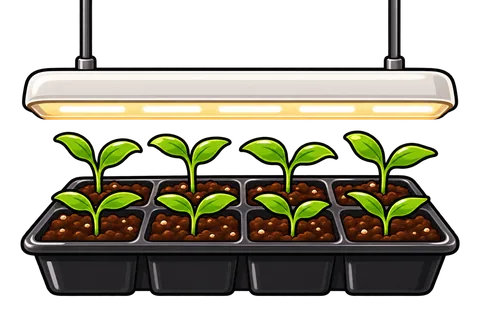 Seedling indoors
FeedHalf-strength soluble feed once a week5
PinchPinch off any flower buds2
WatchStretched, leaning stems mean too little light2
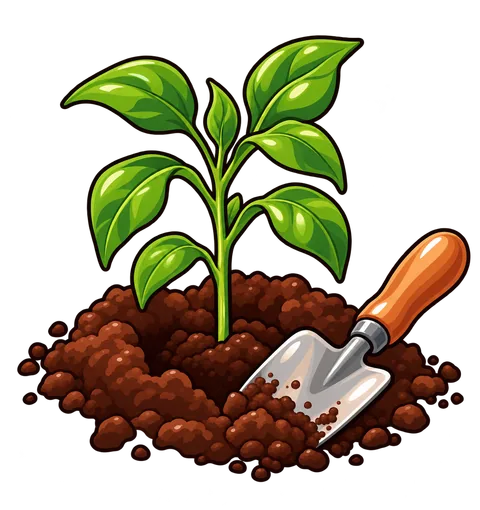 Planting out
WaterWater before and after; once or twice in the first month2
PinchRemove flowers and fruit on transplants5
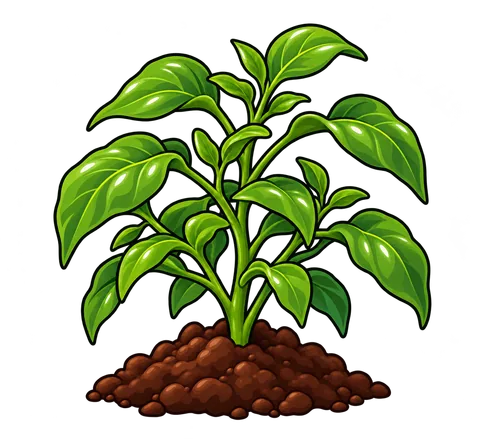 Growing
Water1–2 inches a week, deep and not often5
MulchStraw or clippings once the soil passes 75°F5
WatchWeeds: hoe shallow so you miss the roots2
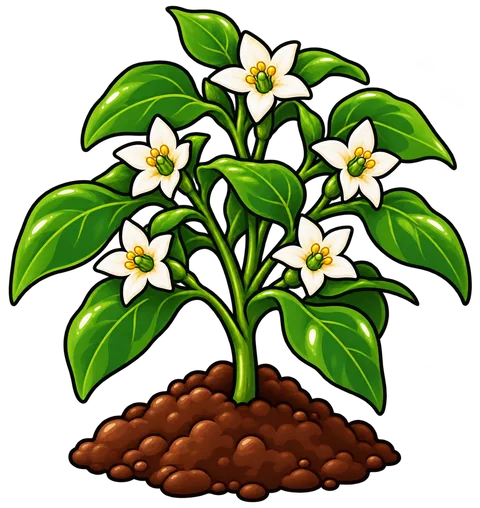 Flowering
WaterKeep moisture even; stress now cuts fruit set1
PinchPinch the first buds for a stronger plant4
WatchNights above 75°F slow or stop pods4
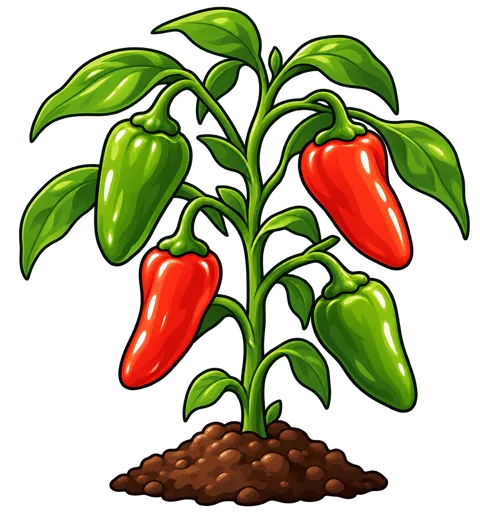 Fruiting
WaterEven moisture against blossom-end rot5
FeedSecond side-dress at 8 weeks, then ease off nitrogenSources for this line3. UF/IFAS Gardening Solutions4. University of Maryland Extension5. Utah State University Extension
WatchSunscald on fruit with little leaf cover2
PickCut pods at full size; the plant keeps flowering2
-
 Care
Best Fertilizer for Peppers and the 4- and 8-Week Feeds
A soil test, a starter feed and two light side-dressings.9 min read -
 Care
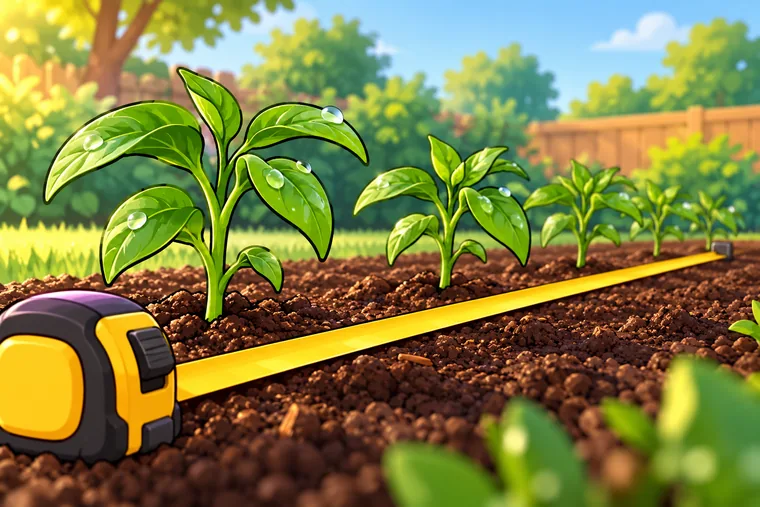
Pepper Plant Spacing, 18 Inches Apart in Rows and Beds
18 inches is the middle; your bed, your summer and your variety move it.8 min read -
 Care
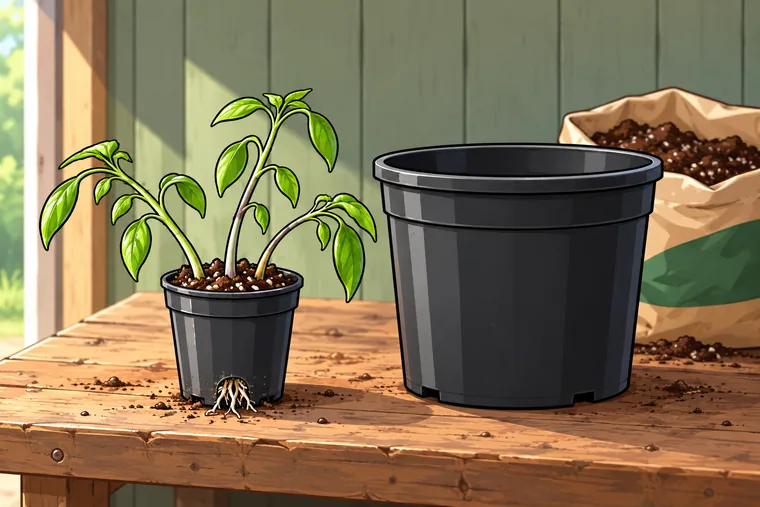
Pepper Growing Mistakes, 17 Fixes From Seed to Harvest
Most of them happen in spring, weeks before the first pepper shows.9 min read -
 Care
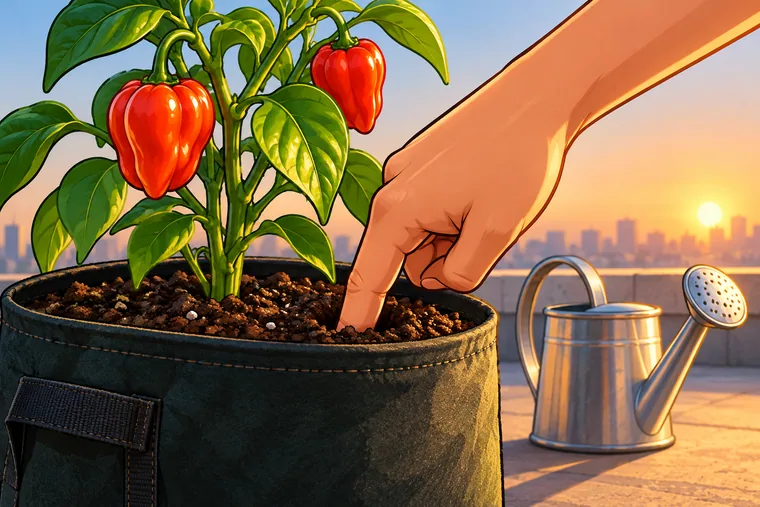
How Often to Water Pepper Plants, 1–2 Inches a Week
Deep and not often in a bed, every day in a summer pot, and always by the feel of the soil.8 min read
Nothing matches this filter yet.
Every week
Your weekly walk
Ten minutes once a week catches most trouble while it is small.
- Push a finger into the soil; if the top is dry and no inch of rain fell this week, give it a deep soak.2
- Turn over a few leaves and look underneath for aphids, which cluster there and leave leaves sticky.25
- Pull or hoe small weeds, cutting just below the surface.2
- Check for pods at full size and cut them with shears; the plant keeps flowering as you pick.2
- Look at any spotted, curled or yellow leaves and match them against the problem pages before you spray.2
On this page
- 1What does a pepper plant need at each stage?
- 2How do you water peppers?
- 3How much fertilizer do pepper plants need?
- 4Do you need to mulch peppers?
- 5Do pepper plants need staking or pruning?
- 6Which plants can grow next to peppers?
- 7What goes wrong when care slips?
- 8What should you change in your care when the weather turns?
- 9What do you do with pepper plants when the season ends?
- 10Which care jobs matter most if you are short on time?
What does a pepper plant need at each stage?
Warmth and light while it is a seedling, steady water once it is in the ground, and a light feed of nitrogen once fruit sets. The care calendar at the top of the page lays out the season; find the column your plant is in today and read down it.
Your jobs change because the plant changes. Your seedling on a shelf needs light close to its leaves and a mix that never dries out; your transplant needs one or two good soaks in its first month while its roots spread1; a plant in full flower needs even moisture above all, because UC IPM says water stress during bloom can cut fruit set a lot1. By the time pods hang, you mostly water, pick and watch.
The feeding row is the one you are most likely to overdo. Too much nitrogen gives a big leafy plant that sets fruit late2, and UF/IFAS tells you to cut the nitrogen once fruit starts3. The fertilizer guide has the amounts for each kind of bag.
Spacing has more to it than one number. Maryland alone gives a range of 12 to 24 inches in the row4, and the guide to pepper plant spacing explains which gap fits your bed, your row or a cool summer.
How do you water peppers?
Deeply, about once a week, and more often in sandy soil or a pot. UMN Extension says to soak the soil at least once a week when rain falls short of an inch2, and Utah State puts the total at 1 to 2 inches a week, given deeply and not often5.
Quick sprinkles do more harm than they look: they keep the roots near the surface, where the first hot week dries them out. Peppers root to about 2 feet, so your water has to get down there1.
- A quick sprinkle every eveningOnly the top of the soil gets wet
- Roots stay near the surfaceThey follow the water
- The first hot week dries that layerThe plant has nothing deeper to draw on
- Flowers drop, pods get blossom-end rotUneven water causes both
- A deep soak once a week1 to 2 inches, down to the root zone
- Roots reach about 2 feetThey find water between soaks
- Moisture stays even through bloomFruit set holds up
Sources for this line1. UC Statewide IPM Program, University of California2. University of Minnesota Extension5. Utah State University Extension
How you deliver the water matters as much as how much you give. Maryland calls drip lines and soaker hoses excellent for peppers4, UC IPM steers you away from lawn sprinklers1, and UMN adds that wet leaves catch disease more easily2. If you must water from above, Utah State says to skip late-day overhead watering and let the soil dry a little between rounds, which slows leaf blights5.
| Where it grows | How often |
|---|---|
| Just planted, any bed12 | Water before and after planting, then once or twice in the first month |
| Garden bed, loam or clay25 | A deep soak once a week when rain falls short of an inch; 1–2 inches a week in all |
| Garden bed, sandy soil2 | More often than once a week; sand drains fast |
| Pot of 5 gallons or more6 | Little while small; every day once the plant is big and fruiting |
The finger test settles most days for you. Push your finger into the soil beside the stem: dry at the first knuckle with no inch of rain that week means it is time for a soak2.
How much fertilizer do pepper plants need?
Less than you probably think. Utah State starts with a soil test and works any fertilizer the report calls for into the top 6 inches of soil5. If you use compost, it caps the amount at 1 inch of well-rotted compost per 100 square feet5.
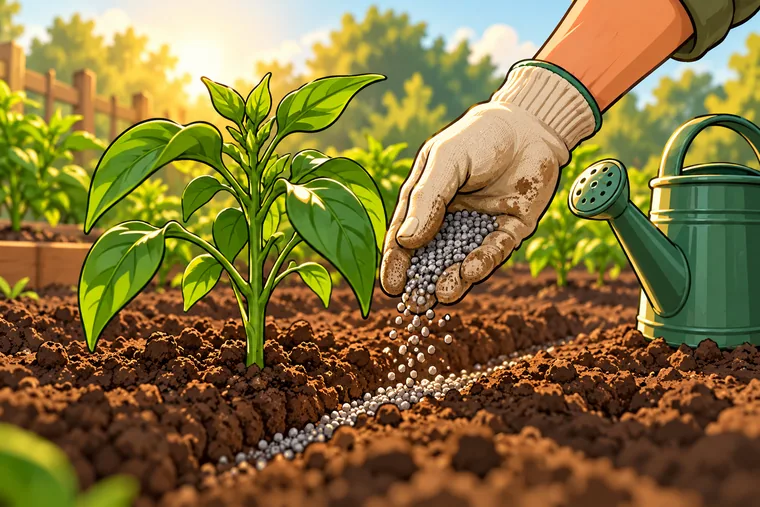
After planting, the feed is small and timed. Utah State side-dresses each plant with 1/4 tablespoon of 21-0-0 at 4 weeks and again at 8 weeks after transplanting, placed 6 inches from the stem and watered in5. If you grow 12 plants, that comes to 3 tablespoons for your whole bed each time, which shows how little a pepper wants.
- 1
Measure the feed
1/4 tablespoon of 21-0-0 per plant, 4 weeks after transplanting and again at 8 weeks.5
- 2
- 3
Water it in
Irrigate right after, so the nitrogen moves down to the roots.5
- 4
Ease off once pods set
Cut back the nitrogen once fruit forms, so the plant puts its effort into pods.3
Other services time your feeds a little differently. Maryland side-dresses after the first fruits set4, and UC IPM prefers light, frequent nitrogen every 3 to 4 weeks1. Pick one rhythm and keep the doses small; the bed tells you when you went too far, because the plant turns dark, bushy and late.
Do you need to mulch peppers?
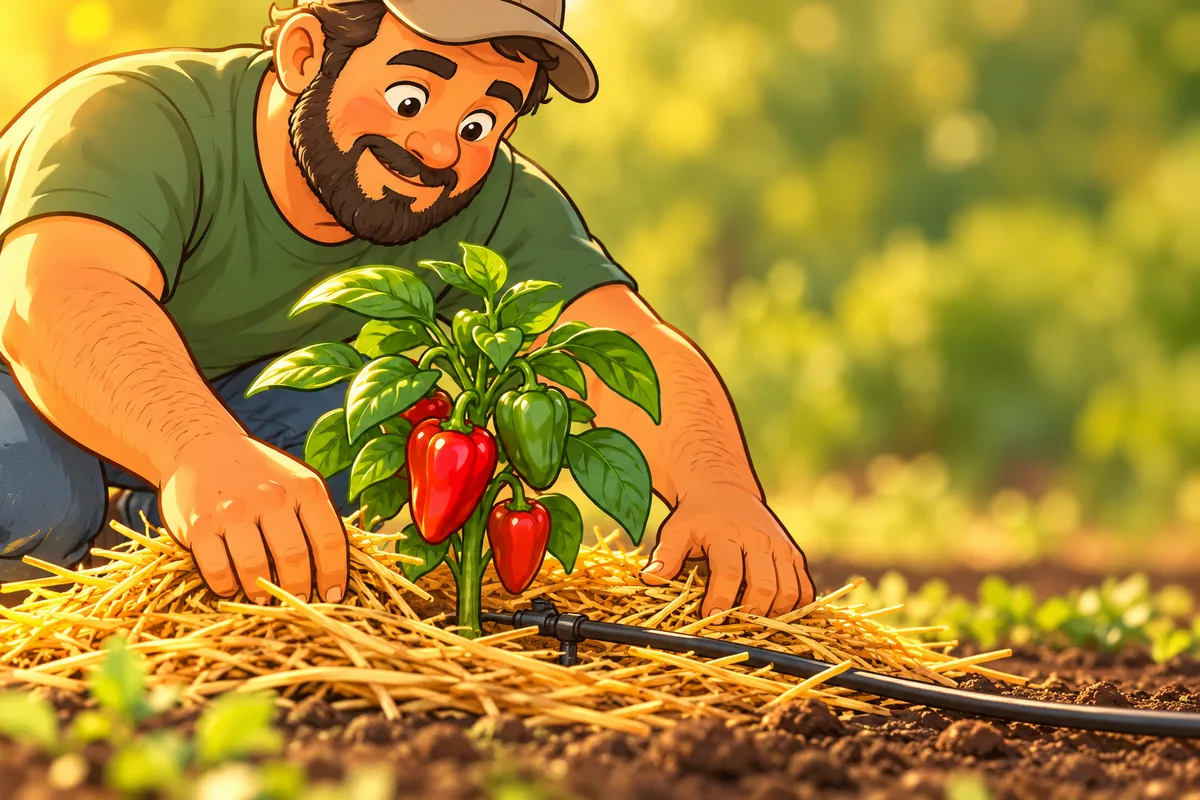
It helps you, once the soil is warm. Utah State Extension says to hold off on straw, grass clippings or newspaper until the soil passes 75°F5; spread it earlier and it keeps your soil cold. UMN suggests 3 to 4 inches of herbicide-free clippings or weed-free straw2, and Maryland adds raked fall leaves to the list4.
Plastic mulch works the other way: you lay it before planting to warm the soil. Utah State warns that the stem should not touch the plastic, or the heat injures the transplant5. If you use a row cover early in the season, open it when the air passes 80°F, the point where Utah State vents its covers5.
Do pepper plants need staking or pruning?
Your plants need support, yes; pruning, barely. UMD Extension says peppers grow into bushy plants up to 3 or 4 feet tall whose stems turn brittle, and it holds them up with cages or short trellises4. Put the cage or stake in at planting, while you can still see where the roots are, because a stake pushed in later can split the root ball.
A cage, a stake with ties and a short trellis all hold a plant up, and here is what each one suits.
Supports for a pepper plant
Stems turn brittle and plants reach 3 to 4 feet, so something has to hold them up.
Plant cage
Our pickYou set it over the plant at planting so branches do not break under the weight of the pods.
- Size
- Plants reach 3 to 4 feet
- Best for
- Bushy plants with heavy pod loads
Garden stake with soft plant ties
You tie each plant loosely to a stake so heavy branches do not snap.
- Size
- Plants reach 3 to 4 feet
Short trellis
You stand it beside the row when you want one support for several plants.
- Size
- Plants reach 3 to 4 feet
2 sources
As an Amazon Associate we earn from qualifying purchases. We choose product types from what their labels and extension sources say; the commission does not change what we recommend. Our affiliate disclosure
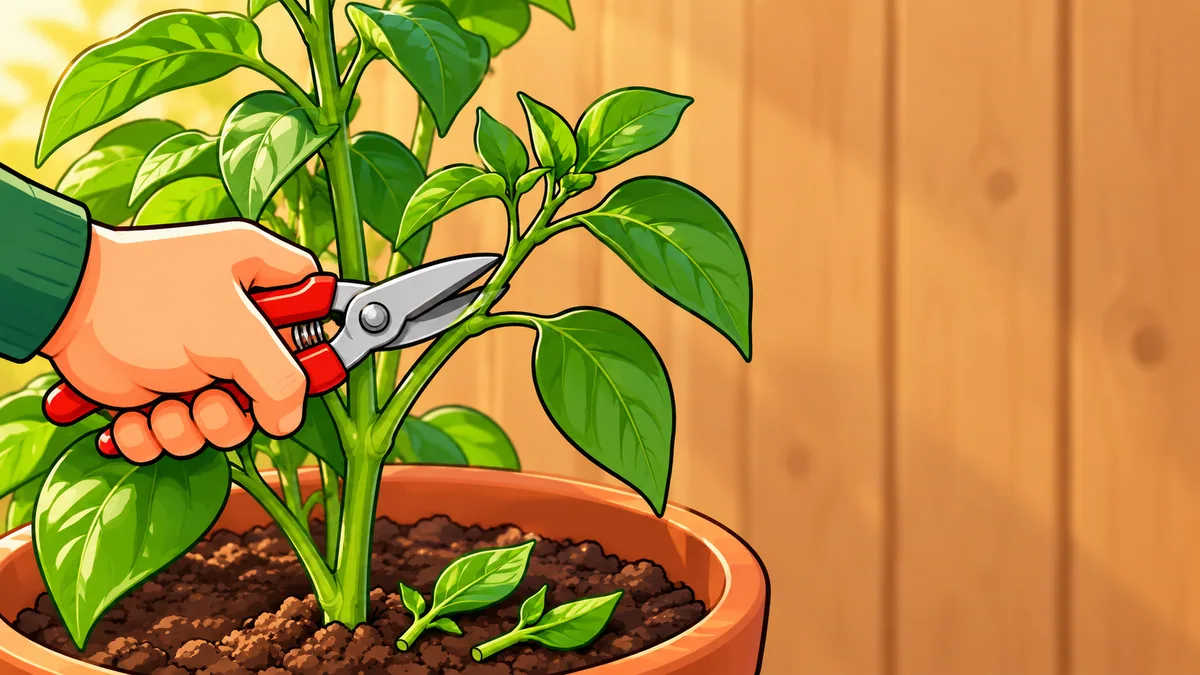
The one cut most guides ask of you comes early. UMD pinches out the first flower buds and small fruits to get stronger plants that bear more4, and Utah State removes any flowers or fruit on transplants because they establish slowly and yield poorly otherwise5. After that, the pruning guide covers what else, if anything, to cut.
Pepper Geek shows how to prune pepper plants for bigger harvests; the sources on this page only ask for the early flower pinch, so treat any other cut you watch as one grower's choice.
Which plants can grow next to peppers?
Most of your garden plants can, with one group to keep away. Penn State tells you not to plant peppers next to onions, garlic or cereals, where very large numbers of thrips can build up and move across7. The pepper companion plants page goes through the rest of the bed.
You can also stop worrying about mixing heat levels. Maryland says sweet peppers planted next to hot ones do not turn hot4; only the seeds you save can carry a cross into next year.
What goes wrong when care slips?
Most of your trouble traces back to one job done too much or too little. Read the symptom on the left, then fix the job on the right before you reach for a spray.
| What you see | The care job behind it | What to change |
|---|---|---|
| Big dark plant, few or late pods2 | Too much nitrogen | Stop side-dressing until pods set |
| Flowers fall off45 | Uneven water, or hot nights above 75°F | Water deeply on a schedule; add late-afternoon shade |
| Dark leathery spot at the bottom of pods5 | Blossom-end rot from irregular watering | Keep moisture even, above all while it flowers |
| Tan, papery patch on the sunny side of a pod29 | Sunscald after leaves wilted or were stripped | Feed and water for full leaf cover; leave the shading leaves |
| New transplants just sit for weeks45 | Planted into soil below 65°F | Wait for warmer soil next time; mulch only after 75°F |
| Branches split under the pods4 | No support | Cage or stake at planting |
If a leaf looks wrong and none of these fit, the pepper plant problems hub sorts the rest by what you see. For a plant that flowers and flowers without setting, the guide to peppers with no fruit goes through the causes one by one.
What should you change in your care when the weather turns?
Change one job per weather problem: shade and a water spray in a heat wave, a cover in the cold, a deeper soak in a dry wind, and no soak at all after a good rain. The table pairs each kind of weather with the job it changes.
| The weather | What to change |
|---|---|
| Nights above 75°F, or days above 90°F45 | Add late-afternoon shade and cool the plants with a water spray; pods slow or stop until the heat breaks |
| Nights below 50–55°F510 | Expect slow growth, yellowing leaves and dropped flowers; a row cover or hotcap takes the edge off |
| A frost advisory (lows of 33–36°F)11 | Cover the plants before sunset and water the soil, because wet soil holds heat better |
| Hot, dry wind10 | Check the soil more often; wind and dry soil can stop fruit set or make small fruit drop |
| An inch of rain this week2 | Skip the weekly soak; you water only when rain falls short of an inch |
The temperatures in the table come from several services that draw their lines a few degrees apart. The climate hub puts every threshold side by side, and its cover table shows how many degrees each kind of cover buys you.
What do you do with pepper plants when the season ends?
Pick every full-size pod before the first frost, then pull the plants and clear the bed. Frost injures the top growth of a pepper plant4, so the last week is a short list rather than a long job.
The week before your first fall frost
- Watch the forecast for a frost advisory, which means lows of 33 to 36°F. Cover the plants before the sun sets and water the soil.11
- Pick all the mature green and slightly colored pods. Utah State stores them at 55°F; the harvest hub sorts the last pick by what each pod will become.5
- Pull whole plants just before a killing frost and hang them upside down in a garage to ripen the pods, or in a basement or outbuilding to dry chiles.410
- Clear fallen fruit and spent plants. Flea beetles overwinter in plant debris, so remove it or dig it deep into the soil.712
- Write down where the peppers grew. UMN keeps peppers, tomatoes, potatoes, eggplants and tomatillos out of a spot for three or four years.2
Next spring the bed hosts something else, and a three-year gap between peppers keeps soil-borne trouble from building up12.
Which care jobs matter most if you are short on time?
Even water first, everything else after, if your week runs short. Here is the order we rank them in when a week gets busy, with the reason for each.
- Water deeply on a fixed day. Uneven watering causes both flower drop and blossom-end rot, so a missed soak costs you pods5.
- Put the cage in at planting. Brittle stems break under a full load of pods, and a cage is easiest to place before the roots spread4.
- Feed small and on time. A 1/4 tablespoon dose twice a season keeps the plant fed without pushing leaves over fruit5.
- Mulch once the soil passes 75°F. It holds the moisture you already gave and cuts weeding5.
- Pick as pods mature. A plant left unpicked slows its flower and fruit production13.
The weekly walk on this page folds all five into one short visit you make to your plants.
Quick answers
Quick answers
How often should you water pepper plants?
About once a week, deeply, whenever rain falls short of an inch. Sandy soil and pots dry faster, so they need water more often.2
When should you fertilize pepper plants?
Work fertilizer into the bed before planting, then side-dress with nitrogen about 4 weeks after transplanting and again at 8 weeks or once the first fruits set.45
Should you pinch off the first pepper flowers?
Maryland Extension pinches out the first flower buds and small fruits for a stronger plant that bears more, and Utah State strips flowers and fruit off transplants before they go in.45
How much sun do pepper plants need?
At least 6 hours of direct sun a day, and 8 to 10 is better. In very hot summers, Maryland adds late-afternoon shade when nights stay above 75°F.4
More in Grow
The newest from Grow
-
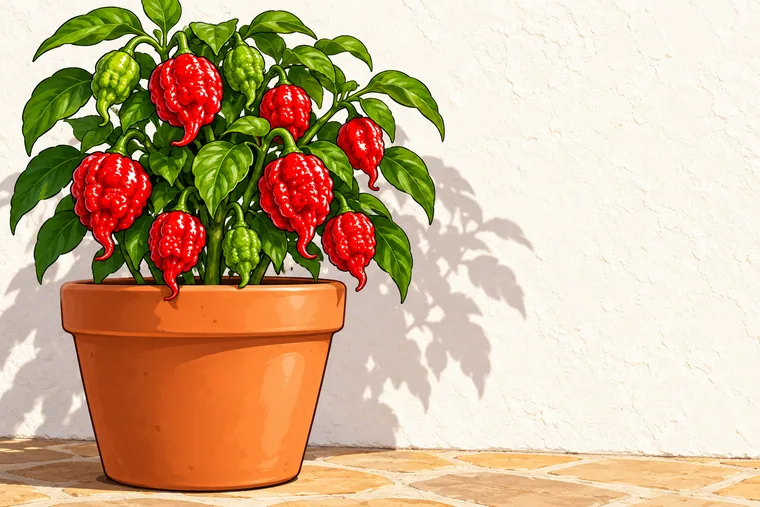
How to Grow Carolina Reapers, Seed to Ripe Pod
A C. chinense on the longest clock in the garden.Oct 18, 2026 · Guide -
Best Fertilizer for Peppers and the 4- and 8-Week Feeds
A soil test, a starter feed and two light side-dressings.Oct 18, 2026 · Guide -
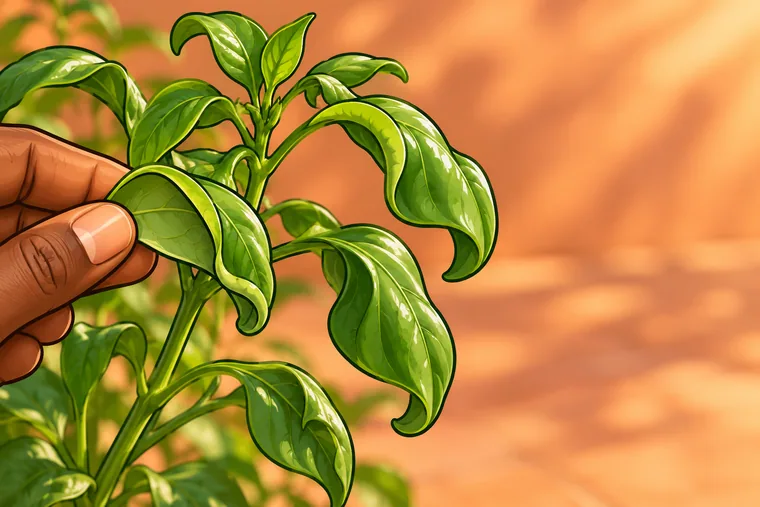
Pepper Plant Leaves Curling? 6 Causes and the Fix
Which way the leaf curls, and what sits under it, tells you the cause.Oct 18, 2026 · Guide -
Pepper Plant Spacing, 18 Inches Apart in Rows and Beds
18 inches is the middle; your bed, your summer and your variety move it.Oct 18, 2026 · Guide -
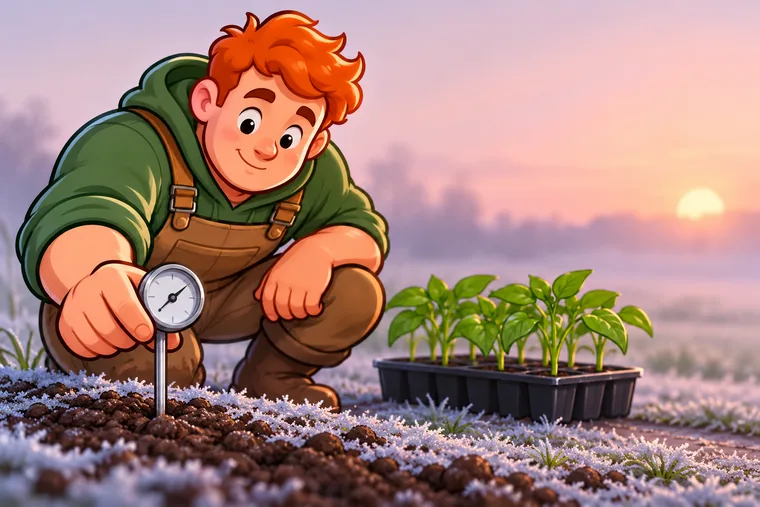
When to Plant Peppers, 2–3 Weeks After Your Last Frost
Three checks, one date to count from.Oct 18, 2026 · Guide -
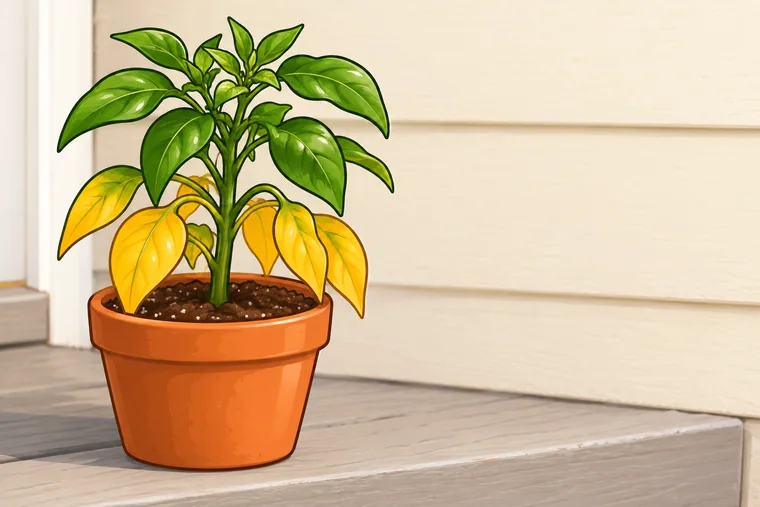
Pepper Plant Leaves Turning Yellow? 8 Causes and Fixes
Where the yellow starts tells you more than the yellow itself.Oct 18, 2026 · Guide
Sources
· 13
- 1UC Statewide IPM Program, University of California Cultural Tips for Growing Peppers
- 2University of Minnesota Extension Growing peppers (Marissa Schuh, Cindy Tong)
- 3UF/IFAS Gardening Solutions Peppers
- 4University of Maryland Extension Growing Peppers in a Home Garden
- 5Utah State University Extension How to Grow Peppers in Your Garden
- 6University of Wisconsin–Madison Extension Growing Vegetables in Containers (Patti Nagai, Vijai Pandian), XHT1278
- 7PlantVillage, Penn State University Chilli Pepper
- 8Pepper Geek Pruning Pepper Plants - How To Prune Peppers For Bigger Harvests
- 9UC Statewide IPM Program, University of California Sunburn on Peppers and Eggplants
- 10University of Illinois Extension Peppers (Home Vegetable Gardening)
- 11National Weather Service, Charleston West Virginia forecast office Frost/Freeze Information
- 12University of Wisconsin-Extension, Cooperative Extension A3687: Growing Tomatoes, Peppers, and Eggplants in Wisconsin (K. A. Delahaut, A. C. Newenhouse)
- 13University of Maryland Extension Poor Blossom and Fruit Set in Vegetables
Coming soon
Your pocket pepper index.
Built from the same index as this site.
- Every entry offline
- Compare any two peppers
- Keep a list of peppers you have tried