On this page
- 1What are the most common pepper growing mistakes?
- 2Which mistakes cost you the most?
- 3Why do so many mistakes happen in spring?
- 4Do the days to maturity count from sowing or from planting out?
- 5What goes wrong in the seed tray?
- 6How do you pick the wrong spot without knowing it?
- 7What goes wrong on transplant day?
- 8Which mulch mistakes burn stems or chill roots?
- 9How much room and sun does a pepper plant need?
- 10What goes wrong with watering and feeding?
- 11Which pest and disease habits make things worse?
- 12How many pepper plants should you grow?
- 13Does a pepper plant need a stake, and when does it go in?
- 14What goes wrong at harvest and in storage?
- 15Your pre-season check
- 16Sources
What are the most common pepper growing mistakes?
The ones below, roughly in the order the season brings them. Each row gives what the mistake does to your plant and the fix the extension guides give, so you can find the stage you are in and read across.
| Stage | Mistake | What it does | Fix |
|---|---|---|---|
| Seed starting1 | Sowing too early | Tall, root-bound plants by planting day | Sow 8–10 weeks before planting out |
| Seed starting1 | Keeping the mix wet | Damping off can kill a whole tray | Water when the top of the mix is nearly dry |
| Planting out23 | Planting into cold soil | Below 65°F soil, plants just sit there | Wait for soil of 60–65°F, after the last frost |
| Planting out3 | Planting transplants in flower | Slow to settle in, poor yield | Pinch off flowers and fruit before planting |
| Planting out24 | A shady spot | Poor flower and fruit set | At least 6 hours of direct sun, 8–10 preferred |
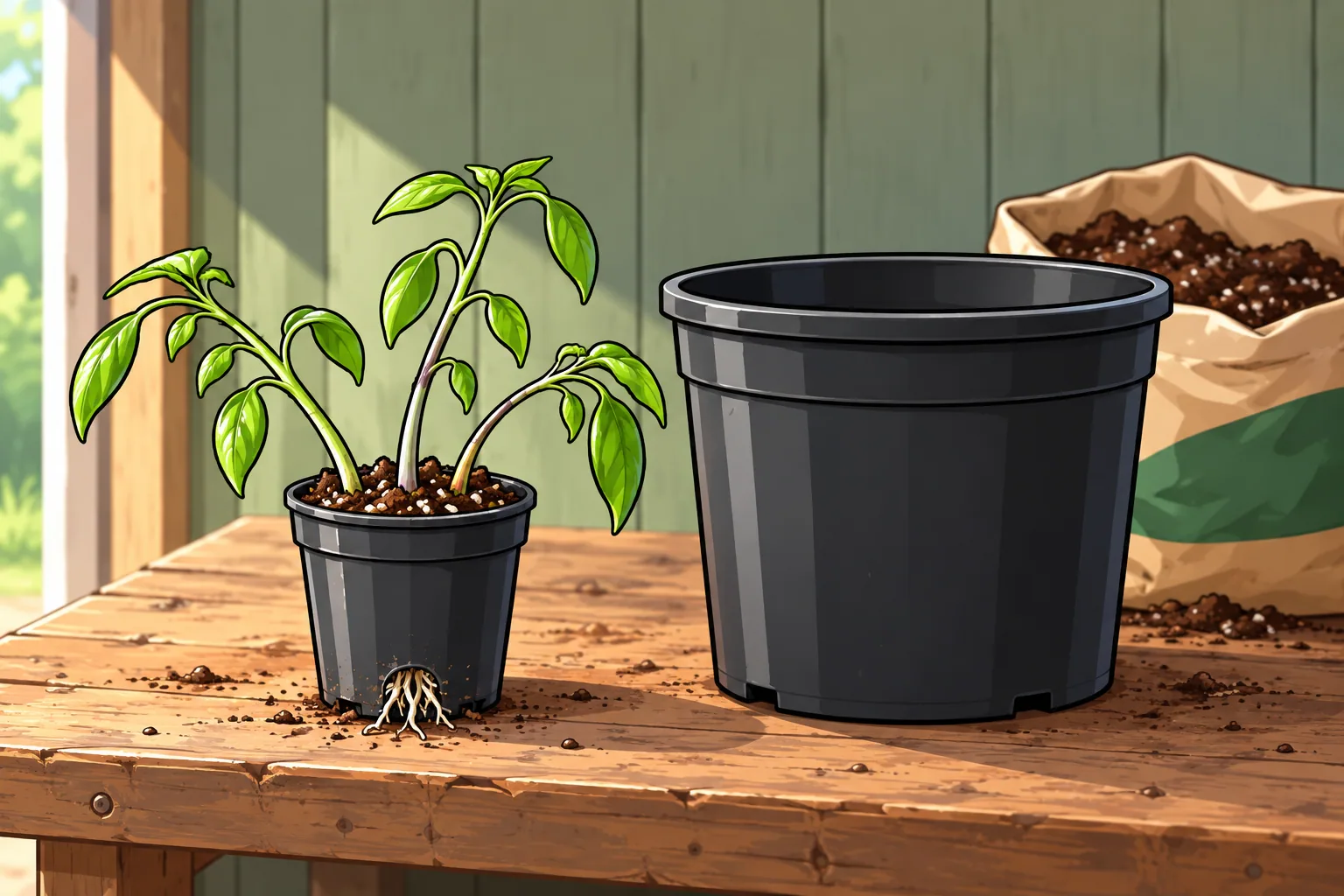
| Planting out25 | A small pot | Smaller than the minimum both guides set | At least 5 gallons, 12–18 inches deep |
| Planting out5 | Rocks or shards in the bottom of the pot | Slows drainage | Fill the pot with mix all the way down |
| Planting out36 | Heavy, wet ground | Peppers do poorly; root rot risk | A raised bed with well-drained soil |
| Early summer3 | Organic mulch on cold soil | Covers soil that is still too cool for peppers | Wait until the soil reaches 75°F |
| Early summer3 | Plastic mulch against the stem | Heat injury to the transplant | Keep the stem off the plastic |
| Early summer3 | Row covers left closed in heat | Heat under the cover can cost flowers | Vent once the air passes 80°F; remove when weather settles |
| Growing37 | Too much nitrogen | Big leafy plants, few early fruits, late harvest | Light side-dressings; ease off once fruit sets |
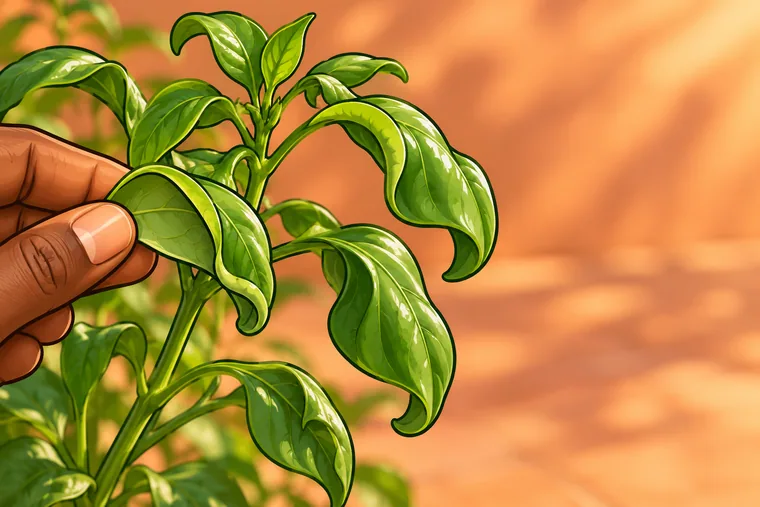
| Growing3 | Weed killer drift near peppers | Twisted, cupped leaves | Keep 2,4-D and similar sprays away from the garden |
| Growing38 | Watering too much or unevenly | Flower drop, blossom-end rot, root rot | 1–2 inches a week, deep and not often |
| Harvest2 | Pulling pods off | Breaks the brittle branches | Cut pods with snips |
| Harvest4 | Leaving ripe pods on | The plant slows flower and fruit production | Pick as pods mature |
| Harvest3 | Long storage in the fridge | Chilling injury | Keep at 50–55°F for 1–2 weeks |
Several rows grow into problems with their own pages: a stalled plant is covered in pepper plant not producing fruit, and a drooping one in a wet pot in overwatering pepper plants.
Which mistakes cost you the most?
The ones you cannot take back later in the season. A shady spot or a missed feed you can still fix in July; these four you cannot, so guard against them first.
- A plant with a virus left in the bed. Nothing cures a pepper virus, and aphids carry it to the next plant, so Utah State tells you to destroy infected plants and the weeds around them3.
- Wet, heavy soil with no way out for the water. UC IPM says soil saturated for as little as 5 to 6 hours can start Phytophthora root rot6, and New Mexico State says that rot wilts and kills plants suddenly8.
- Peppers planted where peppers grew last year. Clemson wants a gap of three years before peppers, tomatoes, eggplant or potatoes go back in the same spot9; the diseases wait in the soil for you.
- Planting into cold soil. You lose weeks you cannot get back at the end of the season, because the plant just sits there below 65°F2.
The cheap mistakes can also stack up into a costly one. Here is a chain the sources describe step by step, starting with one generous handful of fertilizer.
- Too much nitrogenExtra side-dressings or a high-nitrogen feed after fruit set
- Soft, leafy growthLarge plants with few early fruits (NMSU H-230)
- Aphids and whiteflies move inExcess nitrogen makes plants more inviting to them (UF/IFAS)
- Aphids spread a mosaic virusCucumber mosaic and potato virus Y travel with aphids (Penn State)
- The plant comes outNo cure; destroy infected plants and nearby weeds (Utah State)
Sources for this line3. Utah State University Extension7. New Mexico State University Cooperative Extension Service10. UF/IFAS Extension (EDIS)11. PlantVillage, Penn State University
You break that chain at the first link. Keep each feed light, and you avoid three of the four problems after it10.
Why do so many mistakes happen in spring?
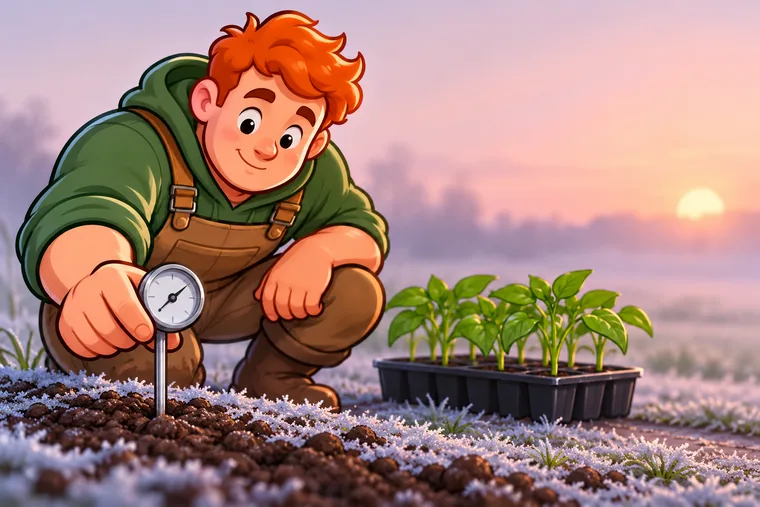
Because peppers need warmth before they grow, and spring tempts you to hurry. Maryland Extension warns that planting before the soil reaches 65°F makes plants just sit there2, and Utah State holds organic mulch until the soil hits 75°F3.
The same hurry starts indoors. Maryland calls sowing too early a common mistake, because the plants come out tall and root-bound1; the seed starting calendar counts the 8–10 weeks back from your frost date. Waiting a week for warm soil costs you less than a month of plants that refuse to grow.
Even then the weather can undo your work. Utah State lists nights below 55°F and days above 90°F as the times peppers drop their flowers3, and no fix of yours prevents that. You can only give the plant a good start, so it has flowers ready when the weather turns.
Do the days to maturity count from sowing or from planting out?
It depends on who printed the number, and the gap can run to six weeks. Maryland counts most sweet and hot peppers at 70 to 85 days from transplanting, and habanero at 90 to 1202. UF/IFAS counts cayenne at about 100 days and tabasco at about 80 days after germination12. Read the unit before you count back from your first frost, because the packet you hold may use either one.
| Pepper | Days | Counted from |
|---|---|---|
| Most sweet and hot types2 | 70–85 | Transplanting |
| Bell, mature green2 | 70–80, then 2–3 weeks to ripen fully | Transplanting |
| Habanero2 | 90–120 | Transplanting |
| Cayenne12 | About 100 | Germination |
| Tabasco12 | About 80 | Germination |
| Poblano12 | 75–80 | Not stated |
| Anaheim12 | About 80 to green, more than 120 to red | Not stated |
Work one pepper through. Say your cayenne sprouted about 10 days after sowing and sat in the tray for 8 weeks, inside the 8 to 10 weeks Maryland sows ahead1. It is 46 days past germination on planting day, so UF/IFAS's 100 days leave about 54 days, or 8 weeks, in the garden. Read the same "about 100" as days from transplanting and you would plan for 14 weeks. That arithmetic is ours, and your sprouting time will differ.
Color is the second half of the mistake. A pod that is green at 80 days is not red at 80 days: Maryland adds 2 to 3 weeks for a bell pepper to ripen after mature green, and UF/IFAS puts the Anaheim at 120 days for red against 80 for green. Pick the color you want, then count to it on your calendar. The planting calendar works the dates back from your frost.
What goes wrong in the seed tray?
Mostly heat, light and water, each in the wrong amount for your seedlings. Utah State germinates pepper seed at 80°F until the roots show, then grows the seedlings on at 65–75°F3. Here is how that compares with the habits that give you weak plants.
The common slip
What the extension guides do
- The tray sits on a cool windowsill, so seeds take weeks or rot in the mix11HeatSoil at 70–85°F for germination; seedlings show in 8–25 days11
- A window or a light far above the tray, and the seedlings stretch and lean3LightLights 2–3 inches above the plants, 14–16 hours a day3
- The mix stays wet all the time, and seedlings collapse at the soil line1WaterWater when the top of the mix is nearly dry1
- Seeds pushed in deep, so they spend their energy reaching the surface11DepthSeeds about 1/2 inch deep, watered lightly11
Feed your tray too. Utah State gives seedlings a half-strength soluble complete fertilizer once a week until planting out3, which keeps them dark green and stocky without a big jump in growth.
How do you pick the wrong spot without knowing it?
By skipping the soil test and the garden notebook. UC IPM keeps pepper soil at pH 6.0 to 6.513, and Clemson asks for the same range, set by a soil test before you plant9. Guess wrong and you can feed all summer without fixing the real problem.
Drainage is your second blind spot. A bed that holds a puddle for hours after a storm is a bed for root rot, and Utah State moves peppers into a raised bed wherever the ground drains poorly3. Compost helps, but Utah State caps it at about 1 inch per 100 square feet3, so a thick layer is not the answer to heavy clay either.
What goes wrong on transplant day?
Small things you do in one afternoon that cost you a slow start. The extension guides agree on most of them, and each one takes you no extra time to get right.
- Planting an old, flowering transplant. Utah State pulls flowers and fruit off transplants first, because plants that carry them establish slowly and yield poorly3. Maryland pinches out early flower buds and small fruits too2.
- Picking the tallest plant at the store. Utah State wants transplants stocky and dark green, 5 to 8 inches tall with 6 to 9 leaves3. UC IPM goes younger still: plants about 3 weeks old with 4 to 6 true leaves, wider than tall13.
- Setting out plants that never went outside. UC IPM uses transplants slightly hardened to outdoor conditions13; a seedling straight from a grow light to full sun and wind stalls while it adjusts.
- Planting in the heat of the day in summer. UC IPM shades summer transplants at midday for the first week, or covers them with floating row cover13.
- Skipping the first waterings. UC IPM gives one or two waterings in the first month to settle the plant in, then keeps the root zone moist13.
Clemson sets out transplants 6 to 8 weeks old once the soil has warmed9, the same window most guides use. If your store plants look older than that, with roots circling the pot, they will still grow, but expect them to sit for a while before they move.
Which mulch mistakes burn stems or chill roots?
Mulching too early chills the soil, and plastic against the stem cooks it. Utah State holds organic mulch back until the soil reaches 75°F and keeps plastic away from the transplant's stem3. Two more extension pages put numbers on the plastic side:
| Mulch | What it does | When it fits peppers |
|---|---|---|
| Black plastic1415 | Warms the soil 4–9°F at 2 inches | Up to mid-May for warm-season crops; in hot, clear weather the surface can pass 140°F |
| White-on-black plastic1415 | White plastic runs 10–20°F cooler than black | Common for peppers; Delaware switches to white from mid-June |
| Straw, dry grass or raked leaves23 | Slows the warming of cold spring soil; newspaper underneath improves weed control | After the soil reaches 75°F |
Stem heat necrosis is the plastic mistake. Delaware's Gordon Johnson and Emmalea Ernest say late-spring peppers are very susceptible to it on black plastic, because on days of 90°F or higher with clear skies they have measured over 140°F at the surface, and the plants collapse15. If your plants went in on plastic in June, check the stems at soil level first when one of yours drops.
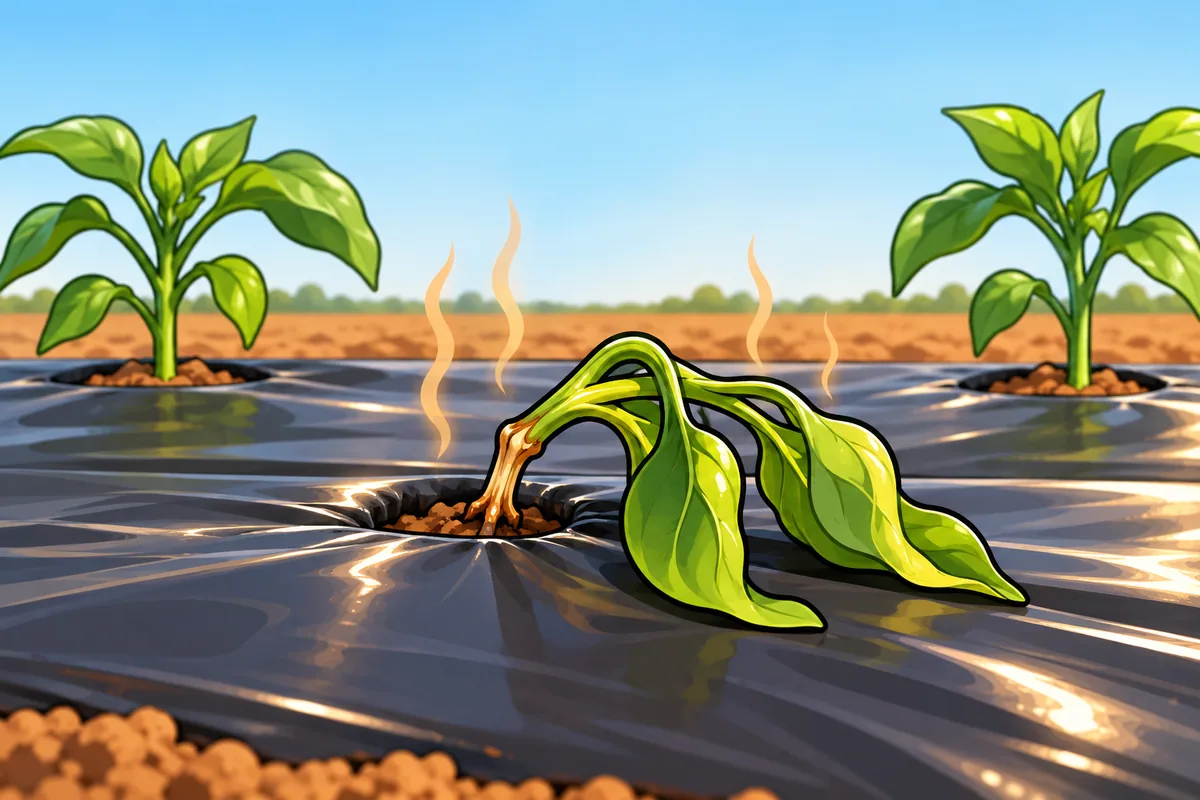
Keeping a transplant's stem alive on plastic
- Choose larger transplants with thicker stems.15
- Dig a larger planting hole, and keep the plastic away from the stem.15
- Put a small mound of clean sand around the stem.15
- Paint white particle film (clay- or lime-based) on the base of the plant.15
- Add 30% shade cloth at transplanting: in a 2022 Delaware trial it raised pepper stands to 97% at 49 days, against 64% without it.15
How much room and sun does a pepper plant need?
More than you probably planned to give it. These four numbers cover the spacing, shade and small-pot questions of the table.
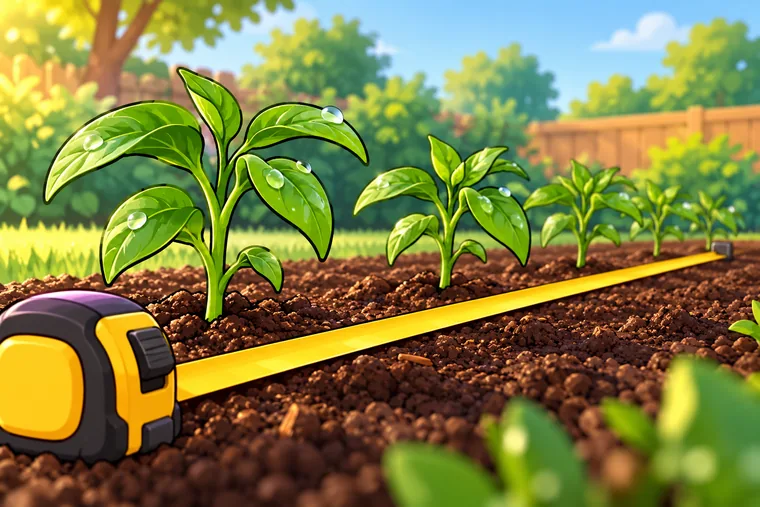
Spacing has a range behind it. Maryland plants 12 to 24 inches apart in the row, or in double staggered rows in a 2-foot bed2, and the pepper plant spacing guide works out which gap fits your bed. Too wide is a mistake too: sparse plants leave pods out in the sun, and Utah State ties sunscald to fruit exposed to hot, dry sun without good leaf cover3.
What goes wrong with watering and feeding?
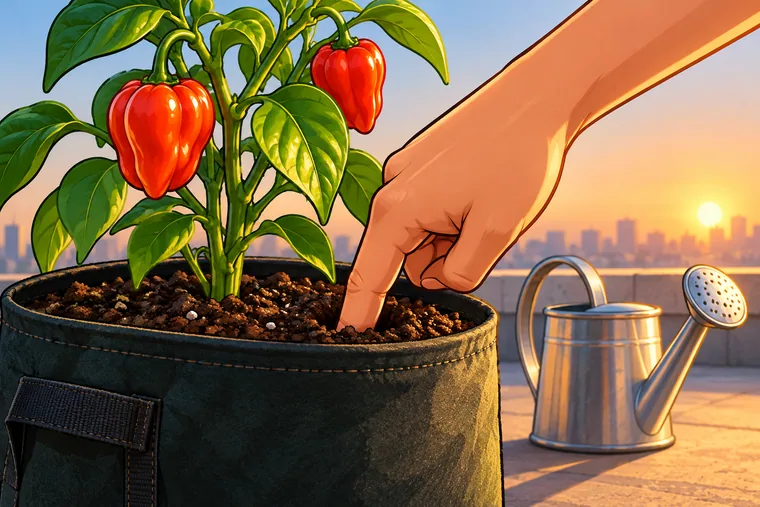
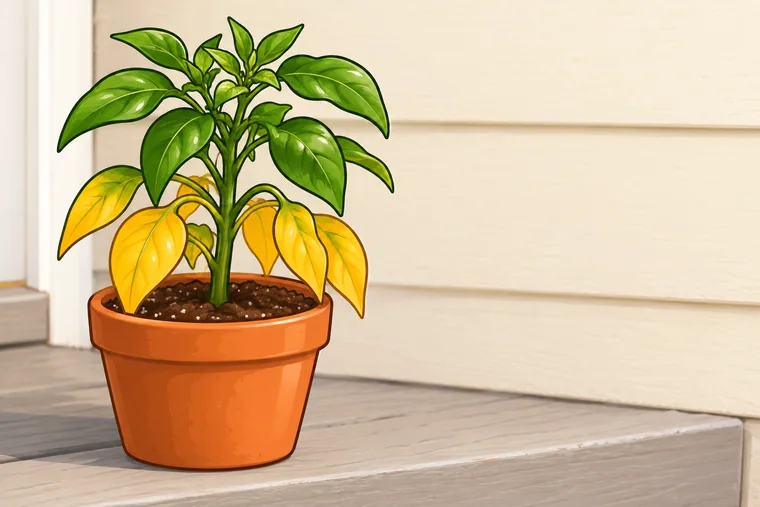
Too much of each. Utah State waters peppers 1–2 inches a week, deep and infrequent, and says irregular watering, over or under, can drop flowers and cause blossom-end rot3. New Mexico State adds that overwatering can bring on Phytophthora root rot, which wilts and kills plants suddenly8. A steady watering schedule protects you from both.
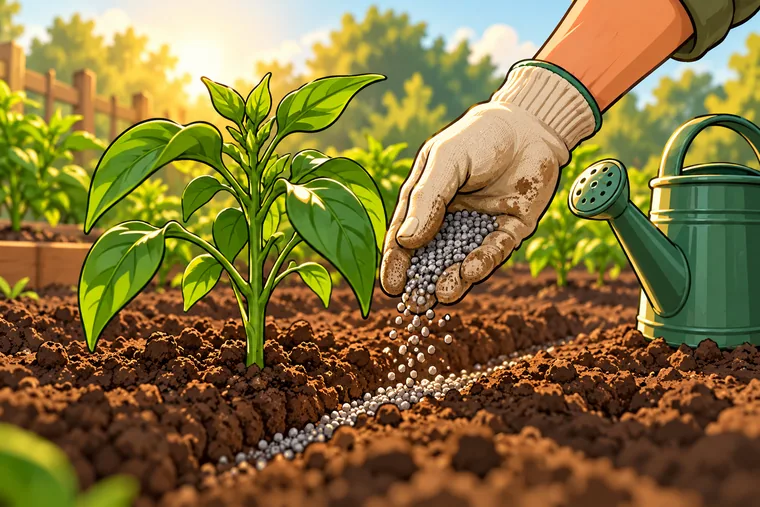
Feeding goes wrong in one direction. New Mexico State says too much nitrogen gives large plants with few early fruits7, and Clemson reads lots of leaves with few blossoms the same way9. Utah State side-dresses only 1/4 tablespoon of 21-0-0 per plant, twice3.
Put that in kitchen terms. Six plants at 1/4 tablespoon each take 1 1/2 tablespoons of fertilizer per feed, about one heaped spoonful from the bag for the whole row. If you find yourself pouring from the bag, you are well past the dose. The fertilizer guide lays out amounts and timing.
Which pest and disease habits make things worse?
The ones you do out of worry. Most of these cost you nothing to change, and each one spares your plants a problem you would fix later.
- Spraying at the first aphid. Penn State says plants tolerate low and medium aphid numbers, and a strong jet of water or insecticidal soap is the first step.11
- Watering over the leaves late in the day. Utah State avoids overhead watering in the evening and lets the soil dry between waterings to keep leaf spots down.3
- Smoking or using tobacco while you handle plants. Utah State lists it among the ways to spread pepper viruses.3
- Mulching with clippings from a lawn treated with weed killer. Utah State says to check the clippings before they go near peppers.3
- Leaving a virus plant in place to see if it recovers. It will not, and it feeds the aphids that carry the virus on.311
If your leaves have already twisted or turned yellow, match what you see to its cause before you spray or feed anything.
How many pepper plants should you grow?
Fewer than the seed packet suggests, unless you preserve. Utah State plans on 3 to 4 plants per person for fresh eating and 5 to 10 more if you want to can, freeze or dry peppers3. It expects about 75 pounds of fruit from 100 feet of row3, while Maryland gives a range of 2 to 8 pounds per 10-foot row2.
A worked example for a household of four
Four people at 3 to 4 plants each need 12 to 16 plants for fresh use. Add 5 more for a batch of hot sauce or dried flakes, and you have 17 to 21 plants. At 18 inches apart, that is about three 10-foot rows of 6 plants, or a mix of rows and 5-gallon pots on a patio.
Grow far more than that and the usual result is ripe pods left on the plant. Maryland says a plant left loaded with ripe fruit slows down its flowering4, so too many plants can mean fewer peppers per plant.
Does a pepper plant need a stake, and when does it go in?
Yes, once the plant is tall or loaded with pods. Maryland says pepper stems turn brittle, so you support them with cages or short trellises2, and NC State says peppers may benefit from caging or staking16. Illinois Extension adds the wind risk: Capsicum annuum types such as bells and jalapeños grow taller and fall over more easily in wind17.
- In a bed: set a cage or a short stake at planting. A stake driven in after the roots spread can hit them, which is our reasoning and not a source's.
- In a pot: Maryland says peppers benefit from vertical support in containers18. A stake tied to a railing also keeps a top-heavy plant from tipping with the pot.
- On a super-hot: Illinois removes only 6 to 8 inches of lower foliage on a C. chinense such as a habanero or Reaper, which prolongs good top growth and air circulation17.
The mistake is waiting until your first branch snaps. A branch loaded with ripe pods can break at the joint, and you lose every flower on it, the same loss as a pulled pod in the section below.
What goes wrong at harvest and in storage?
Your hands and your fridge. Pepper stems turn brittle as the plant grows, so Maryland cuts pods off rather than pulling them2. A pulled pod often takes the branch with it, along with every flower on that branch.
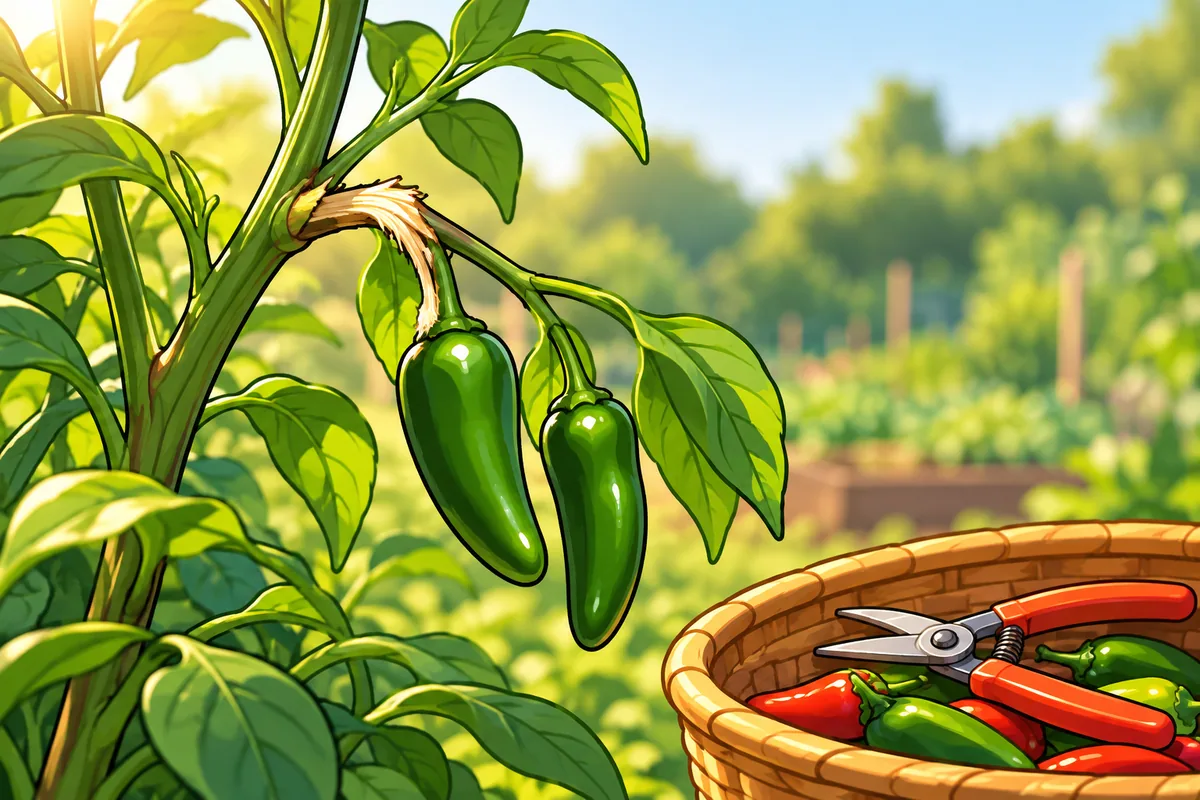
Your storage is the other trap. Utah State keeps peppers at 50–55°F for 1 to 2 weeks and warns that long storage in the fridge causes chilling injury3. UC IPM also keeps peppers away from apples and bananas, because the ethylene gas they give off injures peppers in storage13.
Then there are your hands. Maryland tells you to wear rubber gloves when you process chiles or clean out the seeds2; capsaicin on your fingers ends up in your eyes sooner or later.
Your pre-season check
Run through this list once, a week or two before planting day.
- Count back from your frost date: seeds sown 8–10 weeks ahead, not more.1
- Check the soil temperature: 60–65°F before planting, 75°F before organic mulch.23
- Test the soil, or check last year's test: pH 6.0–6.5 for peppers.913
- Pick a spot with no peppers, tomatoes, eggplant or potatoes in the past three years.9
- Pick the sunniest spot you have, with at least 6 hours of direct sun.2
- Mark plants 18 inches apart, or set out one pot of 5 gallons or more per plant.35
- Pinch any flowers or small fruit off the transplants before they go in.3
- Put snips and gloves in the garden basket so nobody pulls pods off later.2
Tick the last box in July, when the first pods size up. By then the spring mistakes are behind you, and the jobs left are steady water, light feeding and picking often.