


Growing Peppers in Pots of 5 Gallons or More
A 5-gallon pot, a bag of mix and a sunny spot.
Short answer
Yes. Use a pot of at least 5 gallons and 12–18 inches deep, with a drainage hole, filled with potting mix.
- A 2.8 cubic foot bag holds 21 gallons, enough for four 5-gallon pots
- Expect to water every day once the plant is big and carrying fruit
Containers at a glance
Pot size by pepper type
Each pot is drawn in proportion to its volume. The sources differ a little, so every size names its own.
 3gallons
Any pepper, the smallest potNC State's minimum; long, thin peppers are easier in pots than big bells7
-
4–6gallons
Dwarf varieties8–12 inches deepMaryland's medium-container group3
-
5gallons
Most peppers12–18 inches deepThe minimum in Maryland's and UW–Madison's pepper advice12
-
8–10gallons
Full-size peppers12–16 inches deepOne plant per pot, in Maryland's large-container group3
-
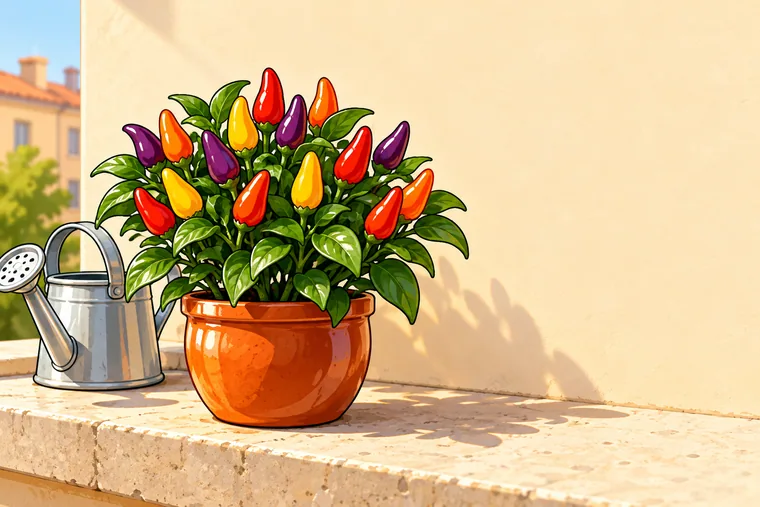 Containers
Best Peppers to Grow in Containers, 11 Compact Picks
Small plant, upright habit, slim pods: the three things that make a pepper easy in a pot.8 min read -
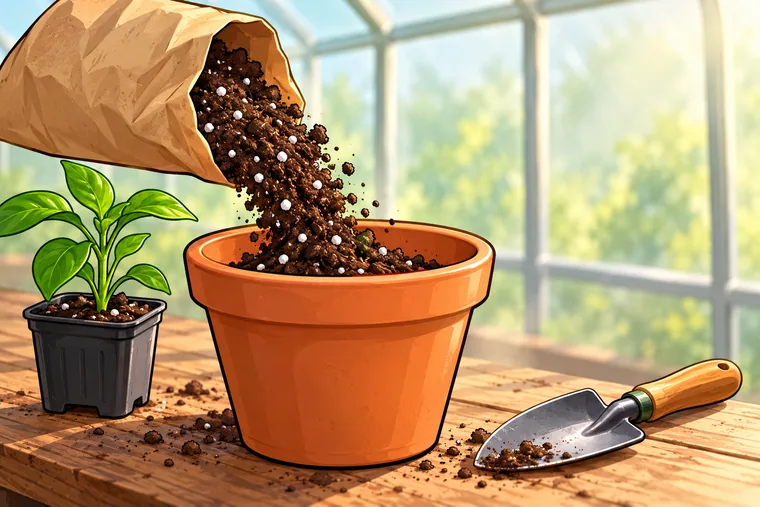 Containers
Best Soil for Pepper Plants, pH 6.0–7.0 and a Mix by Spot
Light mix in a pot, raised and amended in heavy ground, tested before you lime.9 min read -
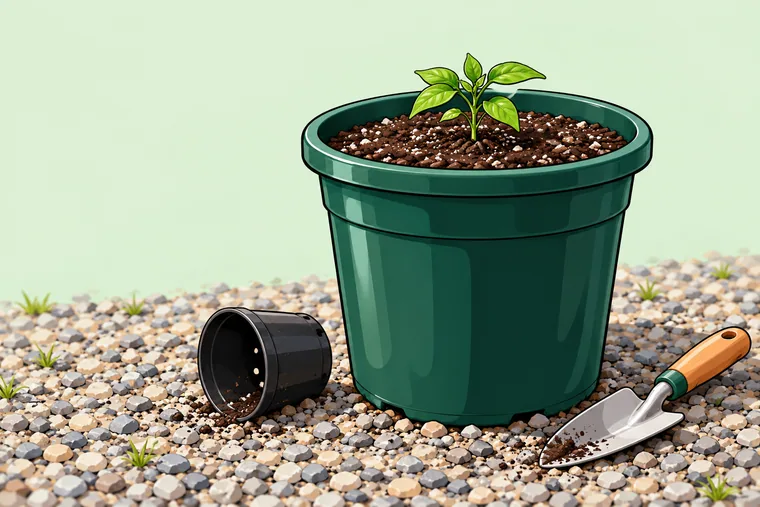 Containers
Container Size for Pepper Plants, 3 to 10 Gallons by Type
Match the pot to the grown plant, not to the seedling you bring home.9 min read
Nothing matches this filter yet.
At the store
How many pots one bag fills
Bag sizes as UW–Madison gives them, divided into 5-gallon pots.
- 1 cubic footholds 7.5 gallons
 1 pot2.5 gallons left
- 2 cubic feetholds 15 gallons3 pots
- 2.8 cubic feetholds 21 gallons4 pots1 gallon left
Bag volumes1; pot counts are the volume divided by 5.
Compact varieties
Peppers bred for pots
The 13 peppers UW–Madison Extension lists for containers.
- Cajun Belle
- Cayennetta
- Cherry Stuffer
- Cute Stuff Red
- Gypsy
- Just Sweet
- Lady Belle
- Mariachi
- New Ace
- Orange Blaze
- Red Chili
- Sweet Golden Baby Belle
- Tangerine Dream
List from UW–Madison Extension6.
On this page
- 1What size pot does a pepper need?
- 2Which kind of pot should you pick?
- 3How much potting mix do you need?
- 4How heavy is a filled pot on your balcony?
- 5Which peppers grow best in containers?
- 6How often do you water peppers in pots?
- 7Can mulch cut how often you water a pot?
- 8How do you feed peppers in pots?
- 9Why do potted peppers run out of food between feeds?
- 10Where should the pot go?
- 11What goes wrong with peppers in pots?
- 12Setting up your first pepper pot
What size pot does a pepper need?
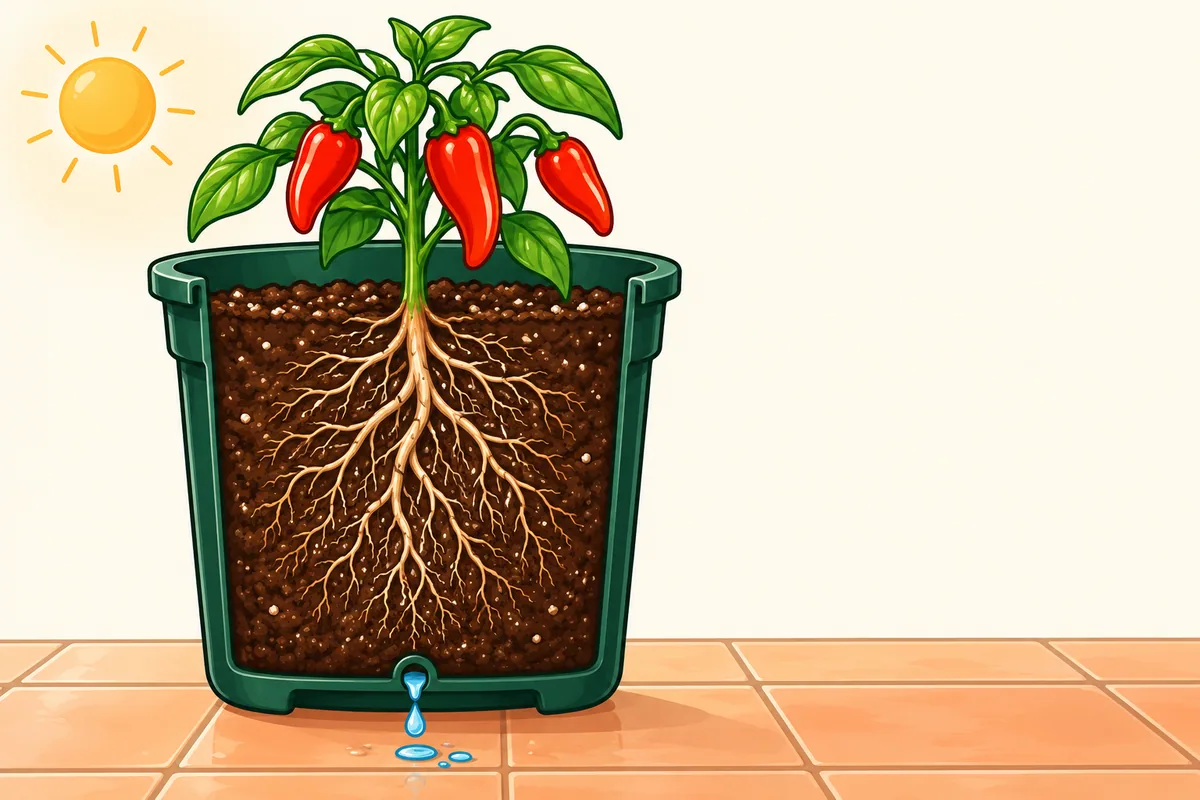
Give each of your plants a pot of at least 5 gallons, 12 to 18 inches deep, with a hole in the bottom. UW–Madison Extension puts peppers with tomatoes and eggplants in that size class1, and UMD Extension sets 5 gallons as the minimum for peppers2. The pot band at the top of this page shows how the sizes step up: a dwarf variety can live in 4 to 6 gallons, and Maryland gives a full-size plant 8 to 10 gallons on its own3.
Size matters to you because the pot is your plant's whole water tank. A small pot holds less water, so your plant runs dry sooner on a hot afternoon.
The bottom of the pot is where you can go wrong without knowing it. Fill the whole pot with mix and skip the gravel layer: water drains best through one continuous column of mix. UW–Madison cites research showing that layers in a container hold water back instead of letting it out1, and Maryland says rocks, gravel or pot shards in the bottom do not improve drainage3.
If you reuse a pot, it can carry root rot from last year. The same UW–Madison guide rinses old pots, soaks them 30 minutes in 10 % bleach and rinses again, and warns that this does not always work on plastic1.
Which kind of pot should you pick?
The one with a hole, in a light color, that you can lift. UW–Madison lists 5-gallon buckets, plastic pots, plastic storage boxes, clay, ceramic, wooden barrels and grow bags as fine for vegetables1; each one changes how often you water.
| Pot | What to know |
|---|---|
| Plastic pot or 5-gallon bucket13 | Holds water longest; drill holes in a bucket, and pick plastic made for outdoor use, since indoor plastic turns brittle in the sun |
| Clay, ceramic, concrete or wood3 | Porous, so the mix dries out faster and you water more often |
| Fabric grow bag1 | On UW–Madison's list of containers that work, as long as it drains |
| Any dark-colored pot3 | Runs hotter in the sun, which can injure young roots |
| A pot with no hole3 | Roots drown and rot; set a plastic pot with holes inside it instead |
For a sunny balcony, a light-colored plastic pot or a bucket gives you the most slack between waterings. On a cool, shaded patio, a clay pot that dries faster can suit you better.
Here are the three pots from that table, each with what to expect at the tap.
Pots that work for a pepper
Each material changes how often you water.
Plastic pot with drainage holes
Our pickYou pick this when you want the most time between waterings on a sunny balcony.
- Size
- 5 gallons minimum
- Depth
- 12 to 18 inches
Fabric grow bag
You pick this when you want a light container that stores flat in winter.
- Size
- 5 gallons minimum
- Depth
- 12 to 18 inches
Clay or ceramic pot
You pick this for a cool, shaded patio, where a pot that dries faster suits you.
- Best for
- Cool, shaded spots
3 sources
As an Amazon Associate we earn from qualifying purchases. We choose product types from what their labels and extension sources say; the commission does not change what we recommend. Our affiliate disclosure
How much potting mix do you need?
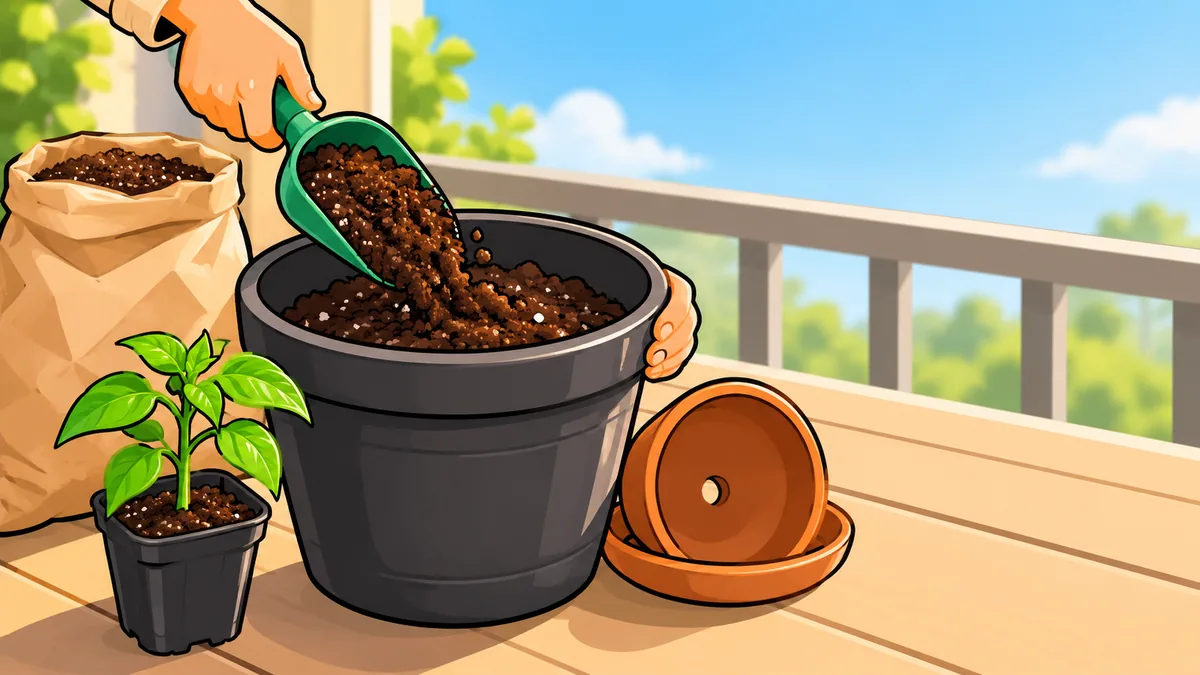
A 5-gallon pot takes about two thirds of a cubic foot of mix. UW–Madison gives the bag sizes as 1, 2 and 2.8 cubic feet, which hold 7.5, 15 and 21 gallons1; the bag chart on this page divides that volume by 5.
Here is the sum for two setups you might have. Four 5-gallon pots need 20 gallons, which one 2.8 cubic foot bag covers with a gallon to spare; six pots need 30 gallons, which is exactly two 2-cubic-foot bags1. Buy for the pots you have.
For every pot you fill, use potting mix, not garden soil. Commercial mixes are light, high in organic matter and drain well, and a pasteurized one lowers the risk of soil-borne disease1. If the label lists no fertilizer, UW–Madison suggests adding a slow-release one when you fill the pot.
The Millennial Gardener walks through growing peppers in containers in five steps, so you see the whole job in one sitting before you buy a pot, while the sizes and watering on this page stay the sourced ones.
How heavy is a filled pot on your balcony?
Light if you fill it with potting mix, and about seven times heavier if you fill it with garden soil. UMD Extension puts high-quality soilless mix at about 10 pounds per cubic foot and garden soil at about 755. A 5-gallon pot holds about two thirds of a cubic foot, so it weighs roughly 7 pounds with dry mix and 50 with soil.
| Pot size | Volume | Dry potting mix | Garden soil |
|---|---|---|---|
| 3 gallons | 0.4 cubic feet | 4 pounds | 30 pounds |
| 5 gallons | 0.67 cubic feet | 7 pounds | 50 pounds |
| 8 gallons | 1.07 cubic feet | 11 pounds | 80 pounds |
| 10 gallons | 1.33 cubic feet | 13 pounds | 100 pounds |
Water adds to every figure in the table, because the mix holds it, so treat these as the lowest weight your pot reaches. If you plan to line up several pots on a balcony, ask your landlord or building manager what load the floor carries.
Which peppers grow best in containers?
The compact and dwarf varieties fit your pots best. UW–Madison Extension names thirteen of them for containers6, shown as chips in the variety band on this page; three of them are hot: Cayennetta, Mariachi and Red Chili.
For your first pot, shape counts as much as size. NC State's Onslow County office says long, thin peppers are easier to grow in pots than big bell types7, so a cayenne or a slim chile is the easier first pot if you want heat. The hot pepper plants hub gives each variety's season and height before you choose.
Ornamental peppers give you another route. UF/IFAS says they stay 10 to 20 inches tall and fruit from May through fall, and some are edible but very hot8.
How often do you water peppers in pots?
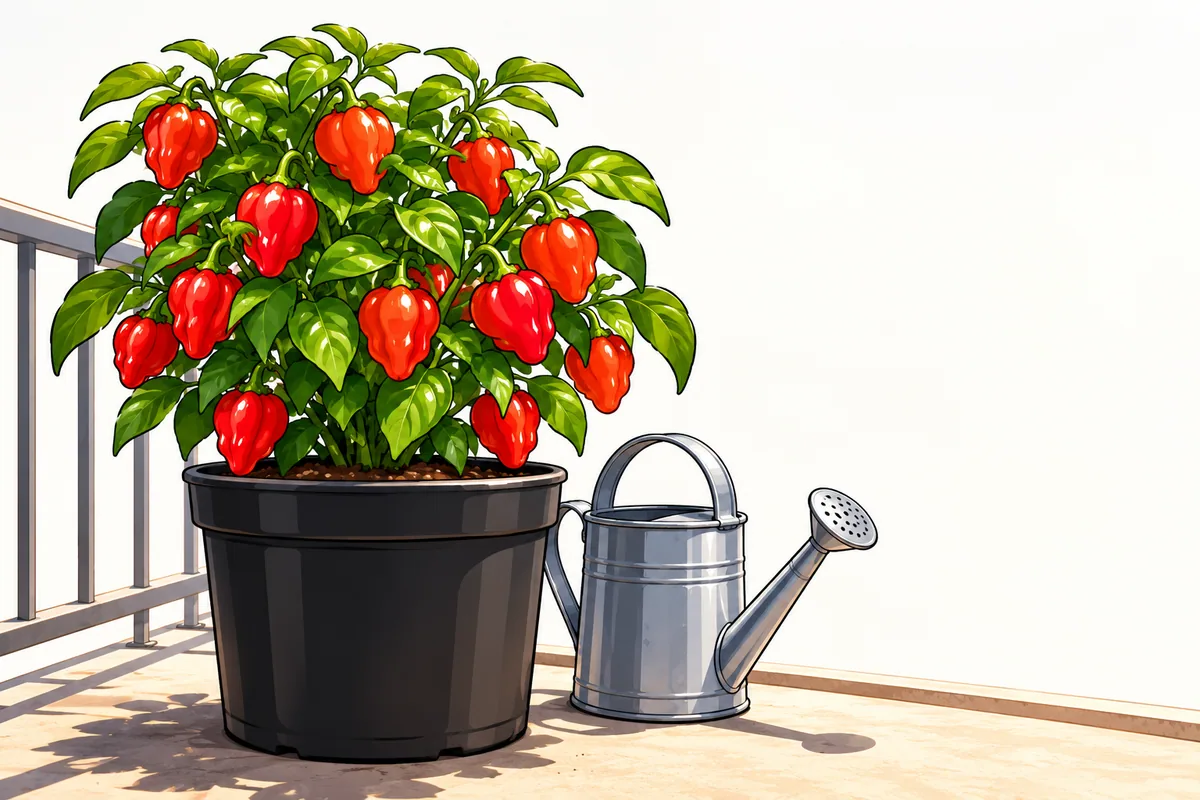
Little at first, then every day in summer. UW–Madison Extension says small plants need little water, but once they grow, the weather warms and the fruit sets, container peppers need watering daily1. A 5-gallon pot holds a fraction of the water a garden bed does, which is why your fruiting plant on a sunny balcony in July can need the hose every day.
- Feel the top of the mixDry on top means it is time
- Soak until water runs from the holeDeep and even, never a splash
- Empty the saucerStanding water drowns roots
- The plant drinks through the hot hoursDaily once it is big and fruiting
- Back to Feel the top of the mix
Sources for this line1. University of Wisconsin–Madison Extension3. University of Maryland Extension9. Utah State University Extension
Two small habits help your drainage. Maryland raises pots on pot feet or a brick, and empties the saucer after every watering3.
Can mulch cut how often you water a pot?
It takes some pressure off, but it will not end the daily soak. UMN Extension says that, depending on the pot's size and material, you may water more than once a day in hot, dry weather, and that you usually water at least daily10.
Mulch slows evaporation, keeps the roots a little cooler in hot sun and stops soil from splashing onto the leaves, where splash can carry plant pathogens up from the soil10. UMN suggests herbicide-free grass clippings or burlap, or straw or hay if your pots are large, and says shredded newspaper or coconut coir may also work. It adds that mulch does not suit every pot, so try it on one pot first. The watering guide covers how mulch changes the schedule in a garden bed.
How do you feed peppers in pots?
Start with food in your mix, then feed lightly and often. If your bag lists no fertilizer, UW–Madison mixes in a slow-release one at filling time1. Penn State's PlantVillage feeds peppers a liquid fertilizer at planting and every two weeks after11, a rhythm that suits a pot because you water it so often.
Ease off the nitrogen once your pods form. UF/IFAS cuts the nitrogen when fruit starts8, and a pot plant that keeps getting leaf food turns into a tall green bush that sets fruit late12.
Why do potted peppers run out of food between feeds?
Because every watering washes some of it out of the bottom. UMN Extension says repeated watering leaches nutrients even from a mix that holds slow-release fertilizer, and it starts regular feeding between two and six weeks after planting, depending on the mix, how often you water and how fast the plant grows10.
Two habits cut the loss. A soluble fertilizer dissolves at once, which UMN calls a good fit for pots where root room is tight and frequent watering carries nutrients away. And you can split the dose:
The saucer matters too. A saucer that stays full leaves the mix waterlogged, and UMN says saturated soil loses nitrogen to bacteria that turn it into gas, so dump the saucer after you water10. A mix that stays soggy has bigger problems than lost nitrogen, and the overwatered peppers page shows them.
Where should the pot go?
In full sun, where you can move it when you need to. UW–Madison puts container plants in at least 6 hours of sun a day and points out that pots can move to follow the weather1. That makes a pot the safest home for your slowest peppers: on a cold spring night you carry it in, and UMN Extension brings seedlings inside when nights drop below 55°F12.
Your peppers can also live indoors under lights or in a bright window, which the guide to growing peppers indoors covers.
What goes wrong with peppers in pots?
Most of your pot problems come back to water: too little room for it, or no way out for it. Find what you see on the left.
| What you see | Likely cause | Fix |
|---|---|---|
| Mix stays soggy, plant wilts and yellows13 | No hole, a blocked hole or a gravel layer | Repot into a pot with holes, mix all the way down |
| Plant wilts every afternoon even after a morning soak23 | Pot too small, or porous clay drying fast | Move up to 5 gallons or more, or switch to plastic |
| Dark leathery spot on the bottom of pods9 | Blossom-end rot from uneven watering | Water on a schedule, deep every time |
| A cracked or crumbling plastic pot3 | Indoor plastic left in the sun | Use plastic made for outdoor use |
| Disease shows up in a fresh plant1 | A reused pot carried it over | Soak old pots 30 minutes in 10 % bleach, or use a new pot |
Setting up your first pepper pot
Get these six things right before planting day.
- A pot of 5 gallons or more, 12–18 inches deep.12
- A drainage hole in the bottom, and nothing layered under the mix.1
- Fresh, pasteurized potting mix, with slow-release fertilizer if the bag has none.1
- A spot with at least 6 hours of sun and a hose or tap close by.1
- A compact variety from the UW–Madison list, or an ornamental type.68
- A short stake or small cage pushed in at planting; UMD says pepper stems can turn brittle.2
Your potted plant still runs on the outdoor calendar. Keep it inside or under cover until nights stay warm, then move it out on the date the guide to when to plant peppers gives for your frost date; from then on, the daily soak is the job that decides your harvest.
Quick answers
Quick answers
What size pot do pepper plants need?
Five gallons, 12 to 18 inches deep, suits most peppers. Dwarf varieties manage in 4 to 6 gallons, and Maryland gives a full-size plant 8 to 10.Sources for this line1. University of Wisconsin–Madison Extension2. University of Maryland Extension3. University of Maryland Extension
Are grow bags good for peppers?
Yes. UW–Madison lists grow bags beside clay, ceramic, plastic and wooden barrels, and asks only that the container drains.1
Do peppers in pots need fertilizer?
If the potting mix lists none on the label, UW–Madison suggests adding a slow-release fertilizer when you fill the pot.1
Can you put gravel in the bottom of a pepper pot?
Skip it. Water drains best through one continuous column of mix; research UW–Madison cites shows layers hold water back.1
More in Grow
The newest from Grow
-
How to Grow Carolina Reapers, Seed to Ripe Pod
A C. chinense on the longest clock in the garden.Oct 18, 2026 · Guide -
Best Fertilizer for Peppers and the 4- and 8-Week Feeds
A soil test, a starter feed and two light side-dressings.Oct 18, 2026 · Guide -
Pepper Plant Leaves Curling? 6 Causes and the Fix
Which way the leaf curls, and what sits under it, tells you the cause.Oct 18, 2026 · Guide -
Pepper Plant Spacing, 18 Inches Apart in Rows and Beds
18 inches is the middle; your bed, your summer and your variety move it.Oct 18, 2026 · Guide -
When to Plant Peppers, 2–3 Weeks After Your Last Frost
Three checks, one date to count from.Oct 18, 2026 · Guide -
Pepper Plant Leaves Turning Yellow? 8 Causes and Fixes
Where the yellow starts tells you more than the yellow itself.Oct 18, 2026 · Guide
Sources
· 12
- 1University of Wisconsin–Madison Extension Growing Vegetables in Containers (Patti Nagai, Vijai Pandian), XHT1278
- 2University of Maryland Extension Growing Peppers in a Home Garden
- 3University of Maryland Extension Types of Containers for Growing Vegetables
- 4The Millennial Gardener Grow The BEST Peppers In Containers In 5 Easy Steps
- 5University of Maryland Extension Starting Vegetable Seeds Indoors
- 6University of Wisconsin–Madison Extension Vegetable Varieties for Containers, XHT1273
- 7N.C. Cooperative Extension, Onslow County Center (Emoni Burgess) Easy Container Vegetables And How to Grow Them
- 8UF/IFAS Gardening Solutions Peppers
- 9Utah State University Extension How to Grow Peppers in Your Garden
- 10University of Minnesota Extension (Anne Sawyer) Fertilizing and watering container plants
- 11PlantVillage, Penn State University Chilli Pepper
- 12University of Minnesota Extension Growing peppers (Marissa Schuh, Cindy Tong)
Coming soon
Your pocket pepper index.
Built from the same index as this site.
- Every entry offline
- Compare any two peppers
- Keep a list of peppers you have tried