
9 Caribbean Peppers, From Scotch Bonnet to Scorpion
Mostly Capsicum chinense, and mostly bonnet-shaped or wrinkled.
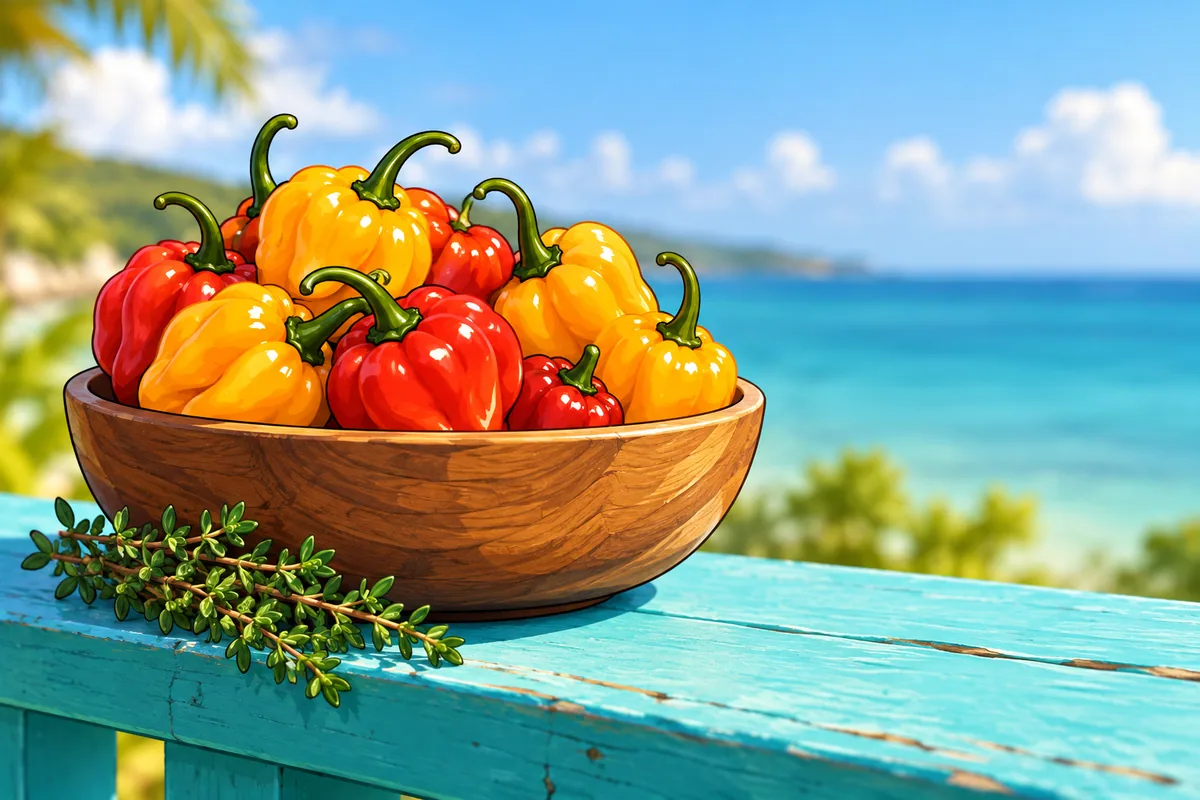
Most Caribbean peppers are Capsicum chinense, the habanero's species, and they span from sweet to the hottest ever measured.
- Ají dulce rates 500–1,500 SHU; a Scotch bonnet 100,000–350,000
- Trinidad's Moruga Scorpion averaged over 1.2 million SHU in NMSU tests
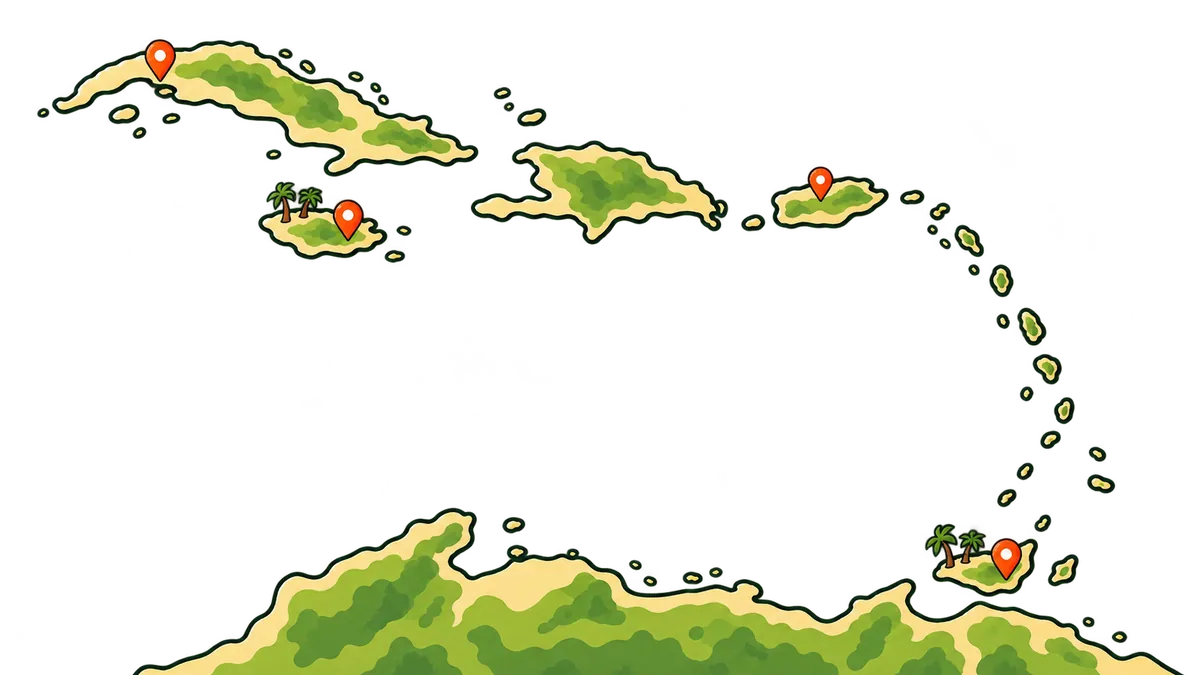
Island by island
Each pin is a pepper our sources tie to that island.
Caribbean peppers on the Scoville scale
Every Caribbean pepper with a published figure, mildest to hottest, under its heat band.
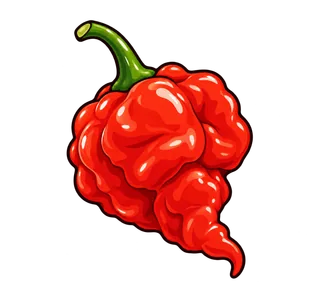
-
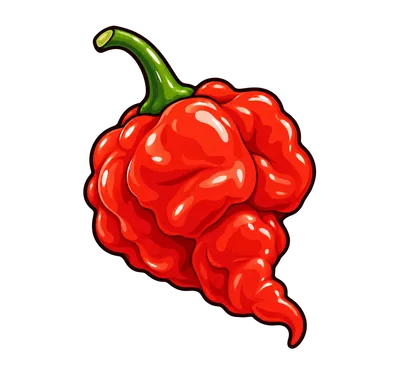
Trinidad Moruga Scorpion
Super-hot1,200,000–2,000,000 SHU Capsicum chinense -
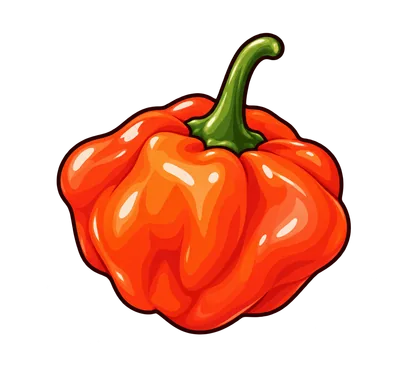
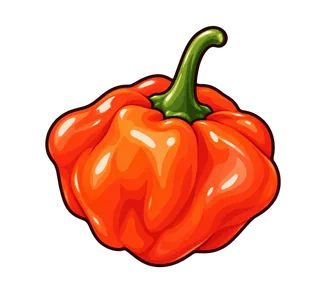
Scotch bonnet
Extra-hot100,000–350,000 SHU Capsicum chinense -
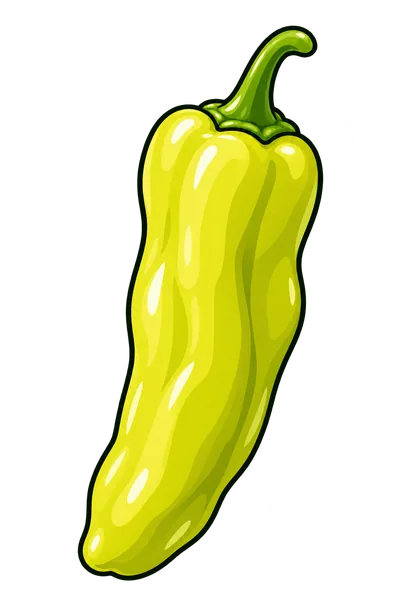
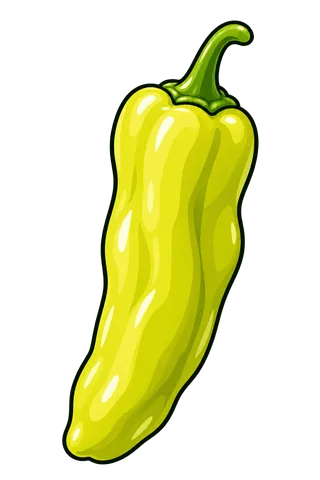
Cubanelle
Mild1,000 SHU Capsicum annuum
Nothing matches this filter yet.
Published heat ranges. Sources on each entry page.
How Caribbean cooks use them
Compare them
By the midpoints of the published ranges, so a pair's real gap swings with the pods you buy.
Open the compare tool| Pepper pair | Bar | How much hotter |
|---|---|---|
| Trinidad Moruga Scorpion vs Scotch bonnet | 7.1× hotter | |
| Scotch bonnet vs Cubanelle | 225× hotter | |
| Trinidad Moruga Scorpion vs Cubanelle | 1,600× hotter |
Log scale. Ranges and their sources are on each entry page.
Peppers from around the world
On this page
- 1What are Caribbean peppers?
- 2Which peppers grow in the Caribbean?
- 3How hot are Caribbean peppers?
- 4How do you tell a Scotch bonnet from a habanero?
- 5Where did Caribbean peppers come from?
- 6How do Caribbean cooks use their peppers?
- 7Is a Caribbean pepper always hot?
- 8How do you pick and keep fresh Scotch bonnets?
- 9Can you grow Caribbean peppers away from the tropics?
What are Caribbean peppers?
Mostly Capsicum chinense, the habanero's species, in shapes and heats you won't find anywhere else. UWI researchers in Trinidad group the region's own varieties, Scotch bonnet, Congo, Seven Pot, Scorpion and Pimento among them, under C. chinense, and their DNA work found a distinct Caribbean gene pool1.
A few non-chinense peppers matter to you here too. USDA lists C. frutescens, the bird pepper, as native to Cuba, Haiti, Jamaica, Guadeloupe and Grenada5, and the cubanelle, a sweet C. annuum, turns up in Cuban, Dominican and Puerto Rican cooking2. So when your recipe from the islands just says "pepper", ask which island it came from before you reach for the hot one.
Which peppers grow in the Caribbean?
The table gives you each one beside its species, its heat and its job in your kitchen. Where no primary source gives a heat figure, the cell says so, and we leave it blank on the chart too.
| Pepper | Species | Heat | Where | How it is used |
|---|---|---|---|---|
| Ají dulce (cachucha)23 | C. chinense | 500–1,500 SHU | Native to the Caribbean region | Mild spice, sweet flavor |
| Cubanelle2 | C. annuum | about 1,000 SHU | Cuba, Dominican Republic, Puerto Rico | Frying and cooking |
| Scotch bonnet26 | C. chinense | 100,000–350,000 SHU | Caribbean; the name is Jamaica's | Jerk sauce and marinade |
| Congo pepper6 | C. chinense | No primary figure found | Trinidad and Tobago | Local name for the species |
| Rocotillo6 | C. chinense | No primary figure found | Puerto Rico | Local name for the species |
| Bird pepper56 | C. frutescens | No primary figure found | Native to Cuba, Haiti, Jamaica, Guadeloupe, Grenada | Wild and garden pepper |
| Seven Pot (7-pot)14 | C. chinense | more than 1,060,000 SHU mean | West Indies | Superhot |
| Trinidad Scorpion4 | C. chinense | almost 1,030,000 SHU mean | Trinidad | Superhot |
| Trinidad Moruga Scorpion4 | C. chinense | more than 1,200,000 SHU mean | Trinidad | Hot sauce |
Seven of the nine peppers in the table are C. chinense, so treat a Caribbean pepper you don't recognise with habanero-level care.
Your market may carry names the table lacks. UWI also names Tiger Teeth, Bonda Majaque and Bazouka among the West Indian varieties1, and an FAO handbook from the Bahamas pictures Bahamian goat pepper, finger pepper and West Indian Red beside the habanero and Scotch bonnet as the hot peppers you'll meet in the region's markets7. None of those has a published heat figure we could read, so you won't see them on the chart yet.
How hot are Caribbean peppers?
From barely warm to among the hottest ever measured, a spread of more than a thousand times. The chart lets you see the region's entries on one log-scale axis.
Log scale; bars are published ranges.Sources for this line2. University of Florida IFAS Extension3. UF/IFAS Gardening Solutions4. New Mexico State University News Center
The habanero sits in the chart so you have a scale; it's the same species as the Scotch bonnet, but UF/IFAS places most of its farming on Mexico's Yucatán Peninsula2. The two Trinidad scorpions changed hands as record holders: Guinness listed the Butch T at 1,463,700 SHU in March 20118, and NMSU named the Moruga the hottest it had measured in 20124.
Put in kitchen terms, a cubanelle at about 1,000 SHU and a Moruga mean of more than 1,200,000 SHU sit over a thousand times apart. One scorpion pod carries roughly the heat of a thousand cubanelles, so you cut it with gloves on and add it a sliver at a time.
How do you tell a Scotch bonnet from a habanero?
Look at the shoulders of the pod in your hand. Both carry the same 100,000 to 350,000 SHU range3, so heat won't tell you; the shape and the place it grew will.
Scotch bonnet
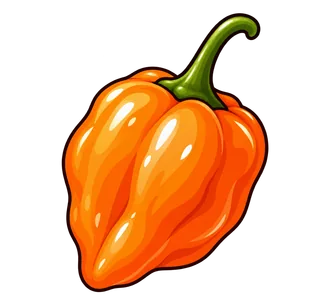
Habanero
- Three or four lobes in a squat cup-and-saucer shape; Jamaica's top export grade is at least 3.5 cm wide9ShapeA lantern with thin, waxy flesh2
- Slightly smaller than a habanero2SizeAbout 0.8 to 2.4 inches long2
- Red or yellow2Ripe colorYellow, orange or red, with white, brown and pink types2
- The Caribbean, Guyana and the Maldives2Grown mainly inMexico's Yucatán Peninsula2
In a recipe, you can swap one for the other at the same weight and expect the same burn. The habanero entry gives its full range if you want to check the numbers yourself.
Where did Caribbean peppers come from?
From the Amazon, long before Columbus. UWI's DNA work traces the Caribbean gene pool to the Upper Amazon, and the university's history department supplied the archaeology that maps two routes onto the islands1.
- Upper Amazon gene poolPeru, Bolivia, Ecuador, Colombia, the Guianas and Venezuela
- Through the Guianas and VenezuelaCarried by early migrating peoples
- Trinidad, Tobago and the Lesser AntillesScorpions, Seven Pots and Congo peppers today
- North through PanamaInto Central America
- The Greater AntillesJamaica, Cuba, Hispaniola, Puerto Rico
The written record starts much later, and you'll find the islands on its first page.
- 1494
Hispaniola
Columbus's physician Diego Álvarez Chanca writes of 'agi', the spice the island's people used, the first written record of chiles.6
- 1776
Martinique
Jacquin describes Capsicum chinense from plants grown on the island, naming it for China by mistake.6
- March 2011
Trinidad Scorpion Butch T
Listed by Guinness as the hottest chilli at 1,463,700 SHU.8
- February 2012
Trinidad Moruga Scorpion
NMSU's study puts its mean above 1.2 million SHU, the highest of five superhots.4
The monograph backs the UWI finding: it cites work suggesting that Central American and Caribbean C. chinense came from Upper Amazon progenitors and diverged through isolation6. That's why you'll hear a different name on each island for the same species, and why a "Congo pepper" in Trinidad and a "rocotillo" in Puerto Rico can both be C. chinense.
How do Caribbean cooks use their peppers?
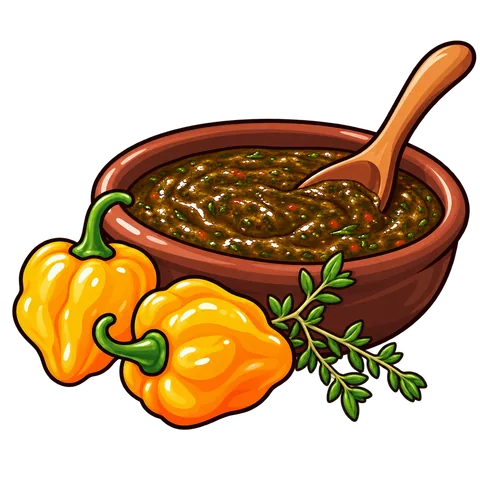
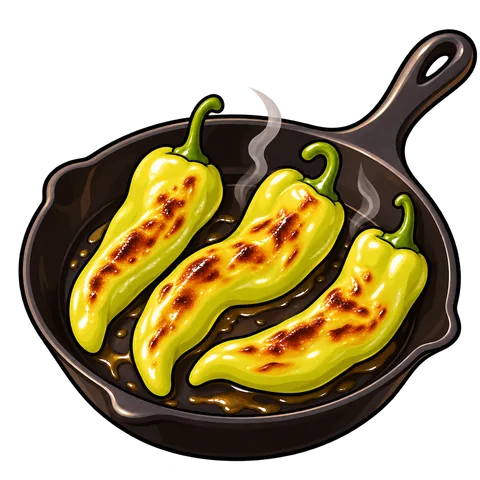
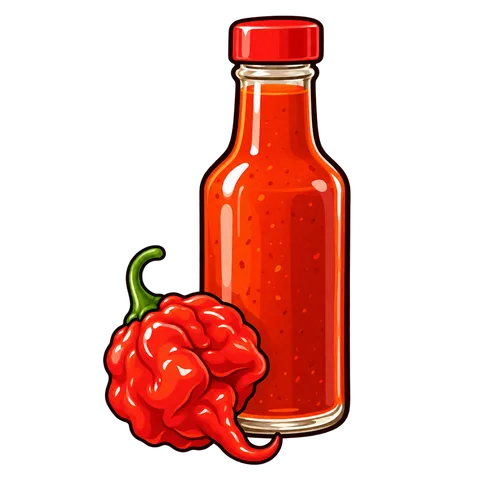
Jerk, sofrito, frying and bottled sauce cover most of what you'll cook. The kitchen tiles above show three of those jobs; the checklist adds the rest, each from a source.
Which pepper goes where
- Scotch bonnet in jerk sauce and marinade, its best-known job2
- Ají dulce in Puerto Rican sofrito, for pepper flavor without the burn10
- Seasoning peppers (pimentos) all over the islands, each with its own local variety10
- Cubanelles fried and cooked in Cuban, Dominican and Puerto Rican dishes2
- Hot peppers in the region's pepper sauces, from home jars to restaurant batches10
The UC Master Gardeners call the Scotch bonnet a staple of Caribbean and West African cooking, for fiery heat with a fruity flavor11. If you want that heat in a bottle, the Caribbean hot sauce style page covers the sauces built on it. The techniques behind the dishes, from roasting to taming a pot that came out too hot, live on the cooking with hot peppers pages.
Is a Caribbean pepper always hot?
No, and the sweet one catches you out if you expect fire. Ají dulce, which UF/IFAS calls native to the Caribbean, shares the Scotch bonnet's species but rates only 500 to 1,500 SHU, with a sweet flavor2. At the midpoints that's about 225 times milder than a Scotch bonnet3, and close to a cubanelle.
It even looks like a hot pepper to your eye: UF/IFAS describes a spinning-top shape like a habanero's, with semi-wrinkled skin that goes from dark green to light green or yellow and then orange-red2. UF/IFAS also notes that some fully sweet Scotch bonnet types grow on the islands2.
How do you pick and keep fresh Scotch bonnets?
You can judge a pod by its skin and its stalk. Jamaica's growing handbook describes what a mature, export-grade pod looks like, and how long it lasts once picked9.
At the stall and at home
- A waxy shine; Jamaica's exporters pick at full green or with a yellow-orange blush, and immature pods look dull and shrivel9
- A green stalk and green cap, and a pod that feels fresh and firm9
- No spots, bruises or soft patches on the skin9
- About 2 to 5 days at 25–27 °C (77–80 °F); cooler storage stretches that to about 10 days9
- Kept away from ripening mangoes, papayas and tomatoes, which make the pods ripen and spoil faster9
The Brooklyn growers who sell them found the pods hold well between 45 and 50 °F10, which is a cool pantry or the warmest drawer of your fridge.
Can you grow Caribbean peppers away from the tropics?
Yes, if you start early and put some heat under your seed tray. A Northeast SARE trial in Brooklyn (USDA zone 7b) got 13 to 15 weeks of picking from C. chinense plants set out around June 110; the Jamaican handbook supplies the timings from seed to first pod9.
- 1
- 2
Transplant at 5–6 weeks
Seedlings are ready at about 12–15 cm tall, after 5 to 7 days of hardening off outdoors.9
- 3
Give each plant room
Set plants at least 24 inches apart, 30–36 inches if you can. They can reach 36 inches or more, so stake or cage them.10
- 4
Expect flowers at about 40 days
Your plants flower about 40 days after transplanting, and picking usually starts about 12 weeks after transplanting.9
- 5
Pick the first round green if you want more
If you take the first pods green, you raise the plant's total yield, though most buyers prefer fully ripe ones.10
Plants that big need the spacing: at 30 inches apart, a 10-foot row holds four of them, and four healthy plants give a family more Scotch bonnets than most of us can use fresh.
Quick answers
What is the most popular Caribbean pepper?
The Scotch bonnet. The genus monograph says Capsicum chinense goes by Scotch bonnet across the Caribbean islands, and Jamaica's agriculture ministry calls it one of the country's competitive export crops.69
Is a Scotch bonnet the same as a habanero?
Same species and same 100,000 to 350,000 SHU range, different shape. The Scotch bonnet is squat with three or four lobes, and slightly smaller than a habanero.Sources for this line2. University of Florida IFAS Extension3. UF/IFAS Gardening Solutions9. Ministry of Agriculture, Jamaica, and the Food and Agriculture Organization of the United Nations
What is a Congo pepper?
A name for Capsicum chinense in Trinidad and Tobago, recorded in the genus monograph alongside Scotch bonnet in Jamaica and rocotillo in Puerto Rico. We have not found a primary heat figure for it yet.6
More in Pepper Index
The newest from Pepper Index
-
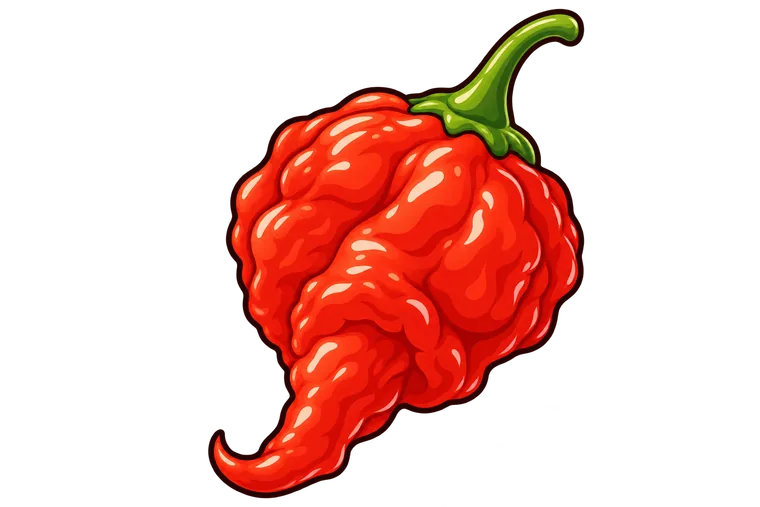
Carolina Reaper Scoville, 1.64 Million SHU
A fruity, sweet superhot from South Carolina, bred from a habanero and a Naga Viper.Oct 18, 2026 · Pepper -
Ghost Pepper Scoville, About 1 Million SHU
The Bhut Jolokia of Assam, India: the first pepper measured at a million SHU.Oct 18, 2026 · Pepper -
Ñora Pepper, Sweet Pimentón Pod Under 480 SHU
The small round sweet pepper behind Murcia's pimentón.Oct 18, 2026 · Pepper -
Pepper X Scoville, 2.69 Million SHU and Record
Ed Currie's record pepper from South Carolina, at an average of 2.69 million SHU.Oct 18, 2026 · Pepper -
Aleppo Pepper, the Halaby Flake Cured With Oil and Salt
A burgundy flake from the old Silk Road city of Aleppo, sweet and fruity first, with a moderate heat behind it.Oct 18, 2026 · Pepper -
Calabrian Chili Heat, 5,000–70,000 SHU by EU Rule
Peperoncino di Calabria: the protected chili of Italy's toe, sold fresh, on strings, as flakes and as powder.Oct 18, 2026 · Pepper
Sources
· 11
- 1The University of the West Indies, St. Augustine (UWI Today, September 2012) Hot peppers: research from the Department of Life Sciences (Marissa Moses)
- 2University of Florida IFAS Extension HS-859/TR010: Pepper Production in Miami-Dade County, Florida
- 3UF/IFAS Gardening Solutions Peppers by Scoville Units
- 4New Mexico State University News Center NMSU's Chile Pepper Institute names the Trinidad Moruga Scorpion hottest pepper on earth (Justin Bannister)
- 5USDA Agricultural Research Service, Germplasm Resources Information Network (GRIN) Taxon: Capsicum frutescens L.
- 6PhytoKeys 200:1-423 (Pensoft) Monograph of wild and cultivated chili peppers (Capsicum L., Solanaceae)
- 7Food and Agriculture Organization of the United Nations Hot pepper seed and crop production in the Bahamas: different types of marketed hot pepper in the Caribbean region
- 8Guinness World Records Confirmed: Smokin Ed's Carolina Reaper sets new record for hottest chilli
- 9Ministry of Agriculture, Jamaica, and the Food and Agriculture Organization of the United Nations Growing Scotch Bonnet Pepper in Jamaica (McGlashan, De Bac, Goldsmith, Williamson, Protz)
- 10East New York Farms! (United Community Centers), research funded by Northeast SARE (USDA) Growing Hot Peppers for the Caribbean Market
- 11University of California Agriculture and Natural Resources, UC Master Gardeners of Ventura County Ventura Garden to Table Series: Peppers
Your pocket pepper index.
Built from the same index as this site.
- Every entry offline
- Compare any two peppers
- Keep a list of peppers you have tried