
Red Pepper Flakes, Made From 25,000–50,000 SHU Cayenne
Crushed red pepper, chili flakes and the pods behind them.
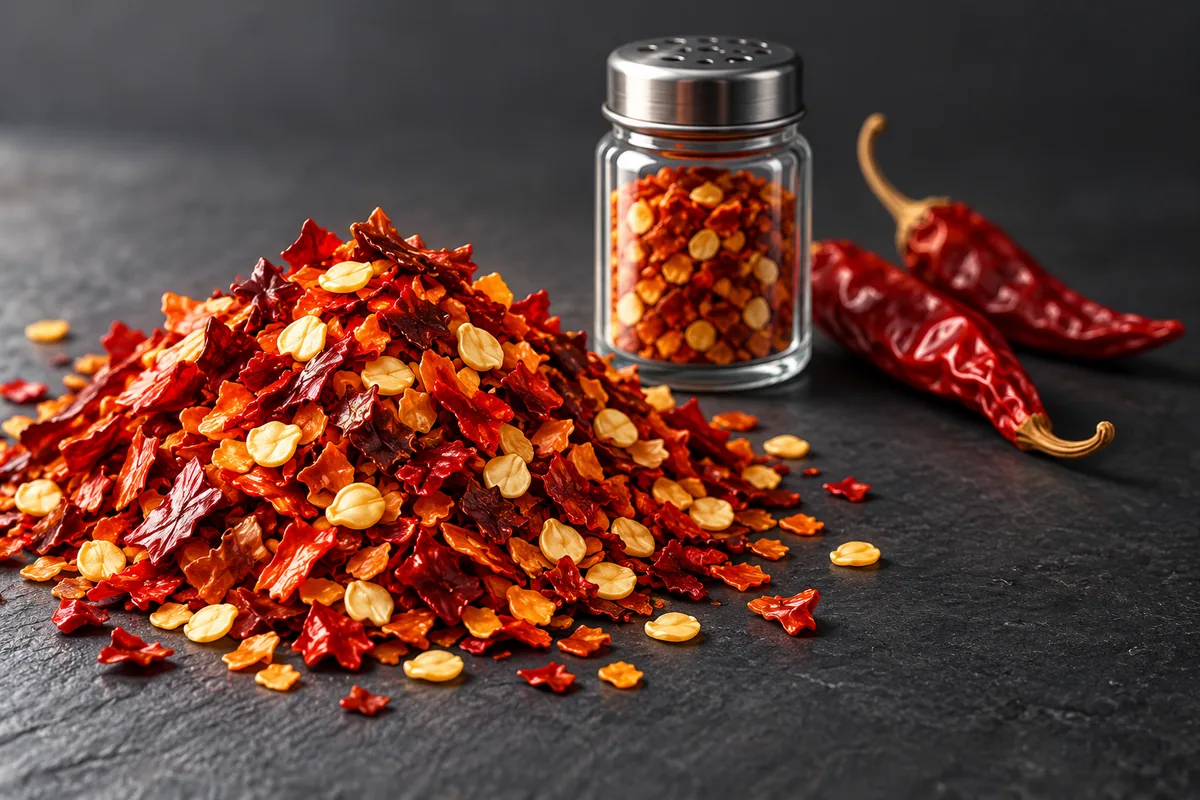
Red pepper flakes come from dried, crushed red peppers, typically cayenne.
- Cayenne pods rate 25,000–50,000 SHU before anyone crushes them
- Homemade flakes start from pods dried at 140°F, then 130°F
- Stored airtight and dark, they keep 6–12 months
Which pepper is in the shaker?
Read the pepper first; it sets the heat. These are the flakes whose source pepper we could confirm.
| Pod | Flakes | Made from | Heat of the source pepper | Heat band |
|---|---|---|---|---|
 | Crushed red pepper | Dried red peppers, typically cayenne | 25,000–50,000 SHU (cayenne)13 | Hot |
| Cayenne flakes | Dried cayenne | 25,000–50,000 SHU3 | Hot |
 | Habanero flakes | Dried habanero | 100,000–350,000 SHU6 | Extra-hot |
| Homemade flakes | Any dried hot pepper you crush | The heat of that pepper8 | ||
Log scale, 100 to 3.2 million SHU. Each bar is the published range of the pepper the flakes are made from, not a test of a jar.
Crushed, flaked or ground?
McCormick describes its own three jars like this. All three start as dried red pepper.
-
Crushed red pepper
- Texture
- Coarse, deep red with flecks of yellow seeds
- Made from
- Dehydrated, crushed red peppers, typically cayenne
- Swap it for
- Red pepper flakes or ground cayenne1
-
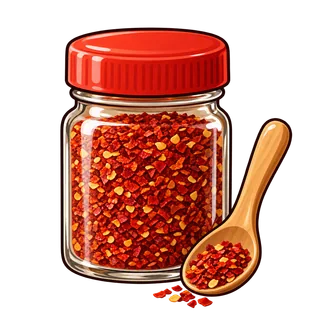
Red pepper flakes
- Texture
- Finer than crushed red pepper
- Made from
- Dried red peppers
- Swap it for
- Crushed red pepper1
-
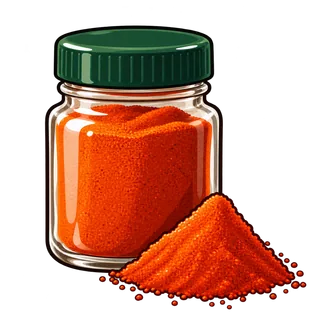
Ground red pepper
- Texture
- A fine powder; USDA weighs 1 tsp at 1.8 g
- Made from
- The same chile, ground
On this page
- 1What goes into red pepper flakes?
- 2Do crushed red pepper and red pepper flakes differ?
- 3What types of chile flakes can you buy?
- 4How hot do red pepper flakes run?
- 5What is pizza pepper?
- 6How do you make your own flakes?
- 7How long do red pepper flakes last?
- 8What goes wrong with a jar of flakes?
- 9Which flakes should you reach for?
What goes into red pepper flakes?
Dried red chiles, crushed with their seeds. McCormick says its crushed red pepper comes from dehydrated and crushed red peppers, typically cayenne1, and that it starts with whole, ripe peppers and uses set levels of seeds and pods2.
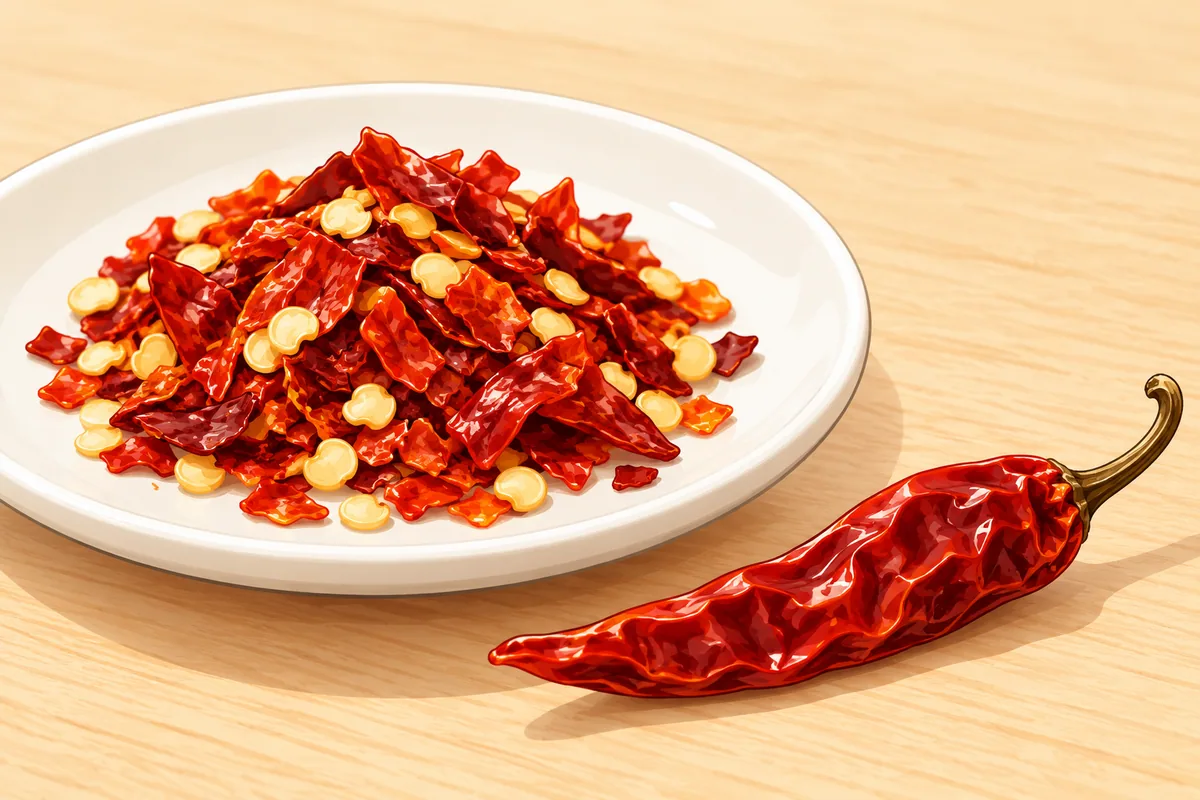
That fits how growers use cayenne: UF/IFAS says growers usually dry cayenne and use it as a ground powder or flakes3. Ground, the same pepper goes on the shelf as ground red pepper, which McCormick says also goes by the name cayenne1.
So when you pick up a jar that says "red pepper flakes" or "crushed red pepper", both names mean one thing: a red chile, dried and broken into pieces. The USDA spec that government buyers use to order spices lists red pepper in ground, crushed and flake forms, with at most 10 % moisture4. That dryness is why the pieces snap between your fingers instead of bending, and why your jar keeps for months.
Do crushed red pepper and red pepper flakes differ?
Barely. McCormick, describing its own jars, calls red pepper flakes visually similar to crushed red pepper, with a finer texture, and says the flakes typically pack more heat1. It gives no number for that extra heat, so we treat the two as the same pepper at two grinds.
Crushed red pepper
Red pepper flakes
Which one should you call hotter? Your own jar decides, and you find out by tasting a few flakes on your tongue, because brands crush to their own size and mix in their own share of seeds. McCormick says it tests each new crop for color, flavor, aroma and heat1, which keeps one jar close to the last one from the same brand, not to a jar from another brand.
You can swap them one for one in your cooking. McCormick says crushed red pepper and ground cayenne come from the same chile, so you can trade one for the other1. Powder packs tighter than flakes, so a level spoon of it carries more pepper: if a recipe asks for 1 teaspoon of flakes and you only have ground cayenne, start with half a teaspoon, taste, and add more.
What types of chile flakes can you buy?
Chile flakes is the wider name you will meet: any dried chile, crushed. Red pepper flakes usually means the cayenne kind from the pizza counter. NMSU's Chile Pepper Institute spells the plant and its fruit chile5, so "chile flakes" on a jar just points to the pod, and the label should tell you which one.
- the common jarCrushed red pepperTypically cayenne, the pizza-counter shaker
- one pepperSingle-pepper flakesOne named pod, such as habanero
- a named local pepperRegional flakesAleppo, Urfa, gochugaru: each its own pepper
- chile plus spicesFlake blendsChile mixed with other spices, such as shichimi togarashi
- your own podsHomemade flakesWhatever pod you dried yourself
The pepper in your jar sets the heat, and the jump between branches can catch you out. A spoon of habanero flakes can carry 2 to 14 times the heat of the same spoon of crushed red pepper. Worked from the ranges: habanero runs 100,000–350,000 SHU and cayenne 25,000–50,000 SHU, so 100,000 ÷ 50,000 = 2 and 350,000 ÷ 25,000 = 1436.
Regional flakes come from their own peppers. Aleppo and gochugaru each have an index entry with the pod behind them, and Urfa flakes come from a pepper of their own too.
Shichimi togarashi mixes chile with other seasonings, so the page on shichimi togarashi treats it as a blend, not a single pepper.
How hot do red pepper flakes run?
As hot as the pepper in them, and the jar may not say how hot that is: McCormick's crushed red pepper page calls it consistently spicy and gives no number2. Even the USDA purchase spec for red pepper leaves its Scoville cell empty4.
Log scale; bars are published ranges.6
So the cayenne range, 25,000 to 50,000 SHU3, gives you the best guide for a plain jar. If you like numbers you can feel, you can turn that range into a weight of capsaicin. The USDA spec sets 1 ppm of capsaicin equal to 15 Scoville units4, so cayenne at 25,000–50,000 SHU holds about 1,700 to 3,300 ppm, or 1.7 to 3.3 mg of capsaicin per gram.
A level teaspoon of ground cayenne weighs 1.8 g in USDA's data7, so it carries roughly 3 to 6 mg. A shake of flakes over your slice of pizza holds far less than that teaspoon, which is why a few pinches feel warm to you and a spoonful stirred into your pot of sauce feels hot.
What is pizza pepper?
Pizza pepper is the shaker of crushed red pepper you find on a pizzeria counter. McCormick names pizza, soups, salads and sauces as the foods it suits1. Pizza seasoning is a different jar: the USDA spec builds it from parmesan, garlic, onion, red pepper, thyme, basil and oregano4, so it tastes of herbs and cheese first and heat second.
How do you make your own flakes?
Dry your hot peppers until they turn brittle, then crush them coarsely. Penn State's dehydrator method and grinding advice cover both halves8.
- 1
Glove up and cut
Wear plastic gloves, then cut the peppers into 3/8-inch pieces or slices; you do not need to blanch them.8
- 2
Dry at 140°F, then 130°F
Start the dehydrator at 140°F for 2 hours, then lower it to 130°F until the pieces feel tough to brittle.8
- 3
Cool and condition
Cool the pieces, then keep them in a loosely covered jar two-thirds full for 4–10 days, shaking it daily. Beads of moisture inside mean the batch goes back on the trays.9
- 4
Crush and jar
Pulse the dried pieces briefly in a blender for flakes; keep going for powder. Store airtight and dark.8
No dehydrator? Penn State says you can slit small hot peppers, thread them through the stems with a large needle and heavy thread, and hang the string where air moves freely; a string takes 3 to 4 weeks to dry8.
A blender and two jars carry a batch from dried pods to a shaker, and here is what each one does.
Gear for homemade pepper flakes
A blender and two kinds of jar cover the grinding, the conditioning and the storing.
Blender
You blend whole dried pods into powder, or stop early for coarser flakes.
- Penn State: whole pods of dried hot peppers can be blended to a powder
- How often: Used once per batch after drying and conditioning
- View on Amazon: Large glass jar for conditioning
Large glass jar for conditioning
You fill it two-thirds full with cooled, dried pieces, cover it loosely and shake it daily so you catch leftover moisture.
- View on Amazon: Airtight jar for the finished flakes
Airtight jar for the finished flakes
You keep the flakes in the dark, because light makes dried peppers fade quickly.


As an Amazon Associate we earn from qualifying purchases. We choose product types from what their labels and extension sources say; the commission does not change what we recommend. Our affiliate disclosure
The full method, with which peppers make the best flakes, sits on the page for making red pepper flakes.
How long do red pepper flakes last?
About 6 to 12 months for homemade flakes stored airtight in a cool, dry, dark place; Colorado State gives that shelf life for well-stored dried vegetables9. For store-bought jars, McCormick says dried herbs and spices typically last 1 to 2 years1, and Kansas State's pantry chart gives ground spices 2 to 3 years at 70°F10.
Those dates measure flavor, so your old jar rarely turns unsafe; it just tastes of less. Kansas State tells you to check the aroma and replace a spice once it fades, and notes that the freezer extends shelf life10. Light fades dried peppers quickly, and the fridge or freezer keeps their color best8. Heat shortens the clock too: the National Center for Home Food Preservation says the warmer you store dried food, the shorter it keeps11.
What goes wrong with a jar of flakes?
Most problems come from light, heat or steam. Here is what each one looks like in your jar and what you can do about it.
- The flakes turned orange-brown. Light did it; dried peppers fade quickly in it8. They still work, with less color and aroma. Move the next jar into a dark cupboard.
- The flakes stuck together in clumps. They took in moisture, often from shaking the jar over a steaming pot. Dried food that picks up water again can spoil11, so pour from the jar into your palm, away from the stove.
- They smell of nothing. The aroma has gone, and Kansas State's rule is to replace a faded spice10. The first whiff of a fresh jar sets your nose tingling1.
- You see fuzz, or the jar smells musty. Throw it out; NDSU says to discard dried food that smells off or shows mold12.
- Your homemade flakes went soft in the jar. They went in before they dried through. Dry until tough to brittle and condition them for 4–10 days first89.
Which flakes should you reach for?
Match the jar to your dish and to how much heat your table likes. These are the calls we make from the source pepper's range.
- Pizza, pasta, a pan of greens: plain crushed red pepper, cayenne at 25,000–50,000 SHU, a pinch at a time.13
- A sauce that needs heat with no visible bits: ground cayenne, the same chile as a fine powder.1
- Heat-lovers only: habanero flakes, which start 2 to 14 times hotter than cayenne.36
- A garden glut of hot peppers: dry and crush your own, and write the pepper and the date on your jar.89
More in Products
The newest from Products
-
Dried Pepper Names, 15 Chiles Matched to Their Fresh Pod
Fresh name on the left, dried name on the right, and the reason some pods change their name in the bag.Oct 18, 2026 · Guide -
Does Chili Powder Go Bad? 2–3 Years, Then It Fades
Color goes first, smell second, heat last. Here is the timeline, the numbers and the jar test.Oct 18, 2026 · Guide -
Shichimi Togarashi, 7 Spices and What Each One Adds
Two old Japanese makers, two slightly different sets of seven, and one chile doing the heavy lifting.Oct 18, 2026 · Guide
Sources
· 12
- 1McCormick (manufacturer, own products) About Red Pepper Uses, Pairings and Recipes
- 2McCormick (manufacturer, own product) McCormick Crushed Red Pepper, 1.5 oz
- 3UF/IFAS Gardening Solutions Peppers by Scoville Units
- 4USDA Agricultural Marketing Service Commercial Item Description A-A-20001C: Spices and Spice Blends (August 28, 2023)
- 5New Mexico State University, Chile Pepper Institute Chile Terminology
- 6University of Florida IFAS Extension HS-859/TR010: Pepper Production in Miami-Dade County, Florida
- 7USDA Agricultural Research Service, FoodData Central (SR Legacy) Spices, pepper, red or cayenne (FDC ID 170932)
- 8Penn State Extension Preserving Those Colorful Garden Peppers (Martha Zepp)
- 9Colorado State University Extension, PreserveSmart Drying Peppers-Hot
- 10Kansas State University Research and Extension MF3131: Safe Food Storage: The Cupboard (revised by Karen Blakeslee, June 2026)
- 11National Center for Home Food Preservation, University of Georgia Packaging and Storing Dried Foods (from So Easy to Preserve, 6th ed.; Andress and Harrison)
- 12NDSU Extension FN1588: Food Preservation: Drying Vegetables (Julie Garden-Robinson), reviewed August 2022
Your pocket pepper index.
Built from the same index as this site.
- Every entry offline
- Compare any two peppers
- Keep a list of peppers you have tried