On this page
- 1Which dried chiles change their name from the fresh pod?
- 2How the 15 names sort into three groups
- 3What do you call a dried poblano, and why are there two answers?
- 4Which dried name hides a jalapeño?
- 5Why pasilla and guajillo have no fresh name you'll find
- 6How one New Mexico pod ends up with three dried names
- 7Peruvian ajíes and their dried names
- 8Which of the 15 dried names bring the most heat?
- 9What the word chile or chili on your bag tells you
- 10Can you swap a dried chile for the fresh one with the same name?
- 11Name mix-ups to check before you buy
- 12Find the pod you need next
- 13Sources
Which dried chiles change their name from the fresh pod?
Five of the fifteen below. A ripened, dried poblano becomes an ancho1, and a red jalapeño dried over smoke becomes a chipotle2. The other ten either keep their name or almost never reach a market fresh.
| Dried name | Fresh pod | Name changes? | Heat |
|---|---|---|---|
| AnchoSources for this line1. UF/IFAS Gardening Solutions2. New Mexico State University, Chile Pepper Institute3. Iowa State University Extension | Poblano, ripened red | Yes | 1,000–1,500 SHU |
| Mulato2 | Poblano type, brown at maturity | Yes | Not in our sources |
| Chipotle12 | Jalapeño, ripe red, smoke-dried | Yes | 2,000–8,000 SHU (the jalapeño) |
| Chile pasado24 | Green New Mexico chile, dehydrated | Yes | 500–2,500 SHU (New Mexico chiles) |
| Ají mirasol5 | Ají amarillo (escabeche) | Yes | Not in our sources |
| Red New Mexico chile24 | New Mexico chile, ripened red | No | 500–2,500 SHU |
| Ají panca5 | Ají panca | No, eaten mainly dried | Not in our sources |
| Chile de árbol3 | Chile de árbol | No | 15,000–30,000 SHU |
| Cascabel3 | Cascabel | No | 1,500–2,500 SHU |
| Chiltepín23 | Chiltepín, a wild piquin | No | 50,000–100,000 SHU |
| Cayenne1 | Cayenne | No, sold as flakes or powder | 25,000–50,000 SHU |
| Pasilla (chile negro)46 | Grown mainly as a dried landrace | Rarely sold fresh | 1,000–1,500 SHU |
| Guajillo6 | Grown mainly as a dried landrace | Rarely sold fresh | Not in our sources |
| Puya6 | Grown as a dried chile | Rarely sold fresh | Not in our sources |
| Paprika2 | Any non-pungent red chile | A spice name, not one pod | Not one range |
If the dried name differs from the fresh one, the pod still tastes like the pepper it started as, only deeper and denser. The tree below sorts the same fifteen so you can see which group a bag belongs to before you read its label closely.
How the 15 names sort into three groups
Each dried name falls into one of three groups: renamed when it dries, the same name either way, or a type farmers grow mainly to dry.
- Renamed when driedAncho, mulato, chipotle, chile pasado, ají mirasol
- Same name fresh or driedRed New Mexico, ají panca, árbol, cascabel, chiltepín, cayenne
- Grown mainly to dryPasilla, guajillo, puya
- A spice name for many podsPaprika
Sources for this line1. UF/IFAS Gardening Solutions2. New Mexico State University, Chile Pepper Institute3. Iowa State University Extension5. Bioversity International6. Economic Botany 64(4):318-328
The renamed branch is the one that trips you up in a recipe. If your recipe says ancho and your store only has fresh poblanos, you already have the right pepper; it just needs months of ripening and drying to earn the other name.
What do you call a dried poblano, and why are there two answers?
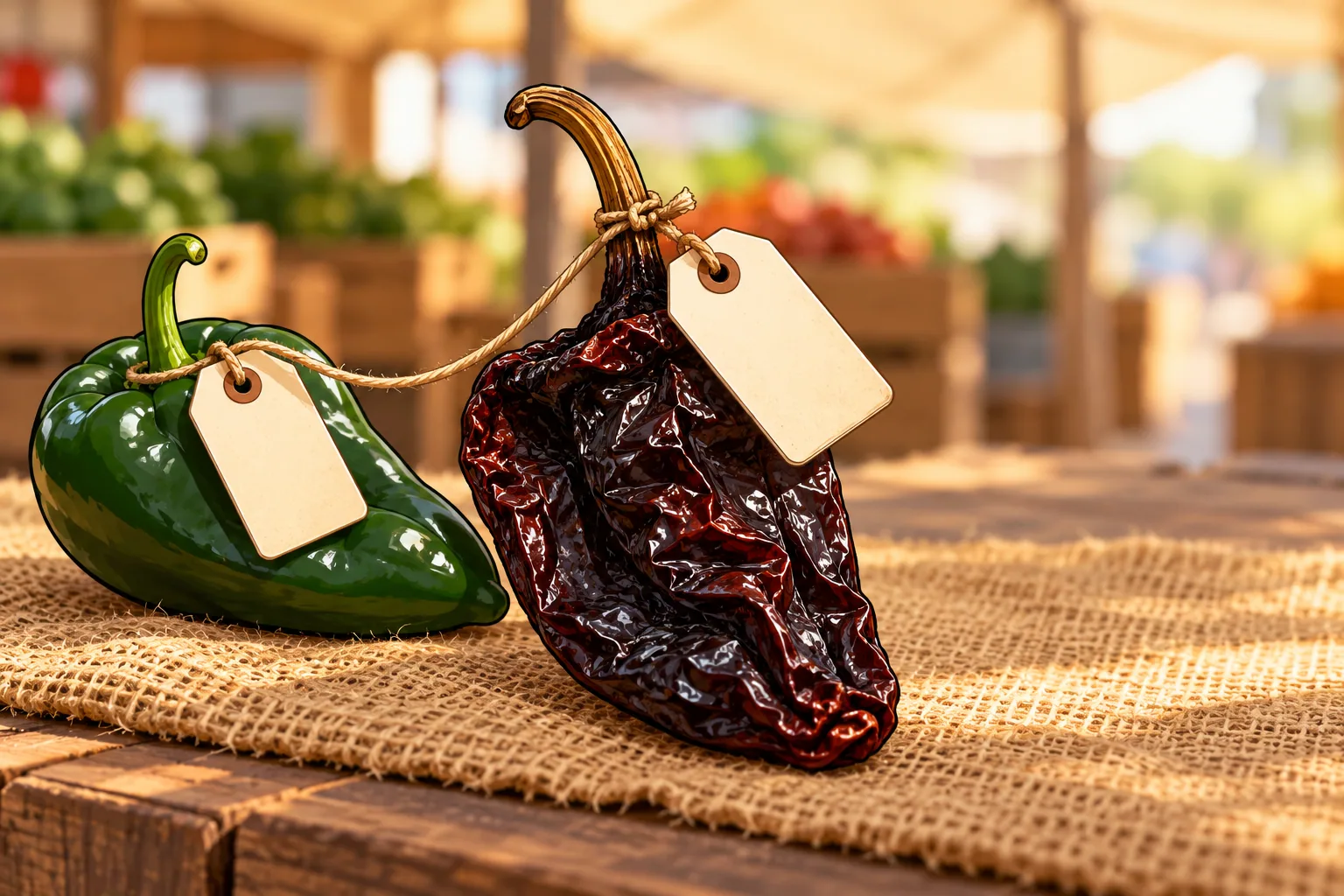
Usually ancho, sometimes mulato. NMSU's Chile Pepper Institute defines the ancho as a pre-Columbian Mexican pod type that matures to red and appears in its dried form, and the mulato as "similar to the ancho but brown at maturity"2.
Two dried forms of the poblano type
Ancho
The fresh side has its own twist. NMSU notes that the poblano in US produce markets is a green ancho or mulato, sold fresh2. So the ancho and the mulato are not two different plants you need to hunt down; they are the same green pod you roast in summer, left on the plant until it turns red or brown. If you grow poblanos yourself, the pods you leave on the plant past the green stage are your future anchos.
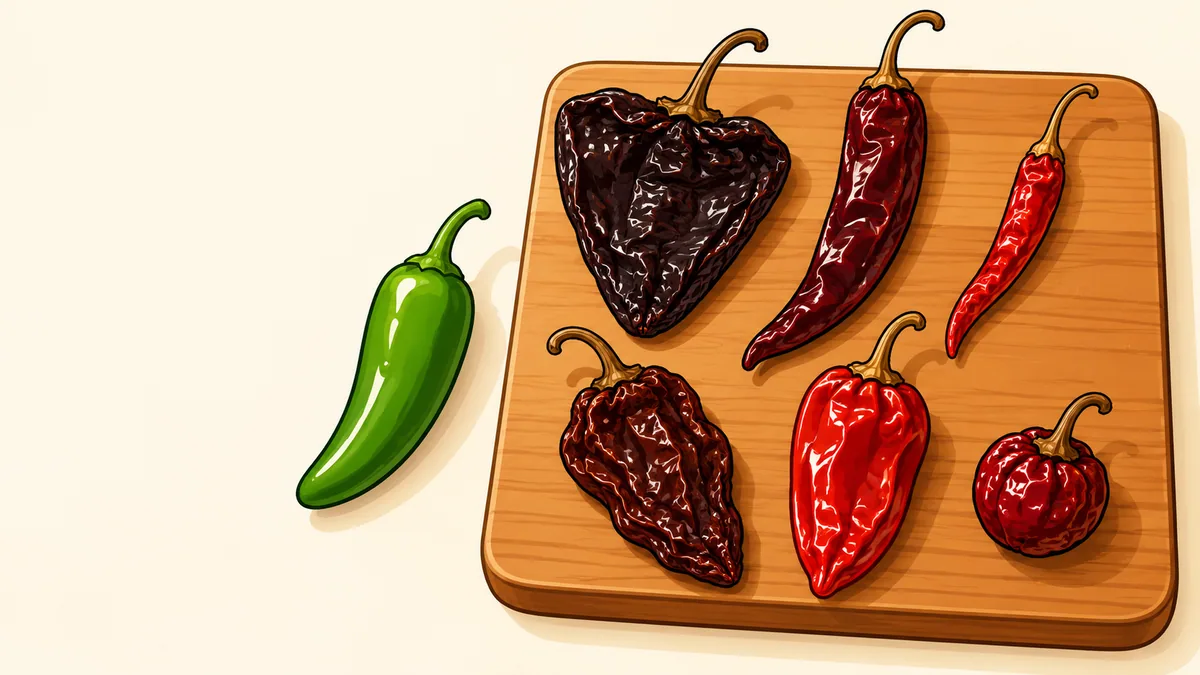
America's Test Kitchen made this short guide to dried chiles, so you can see common dried pods side by side and match the names in the table to what you find in a bag at the shop.
Which dried name hides a jalapeño?
Chipotle. NMSU defines it as a smoke-dried red jalapeño2, and UF/IFAS says chipotles are ripe jalapeños that have been wood smoked1. The smoke, not a different pepper, gives a chipotle its flavor.
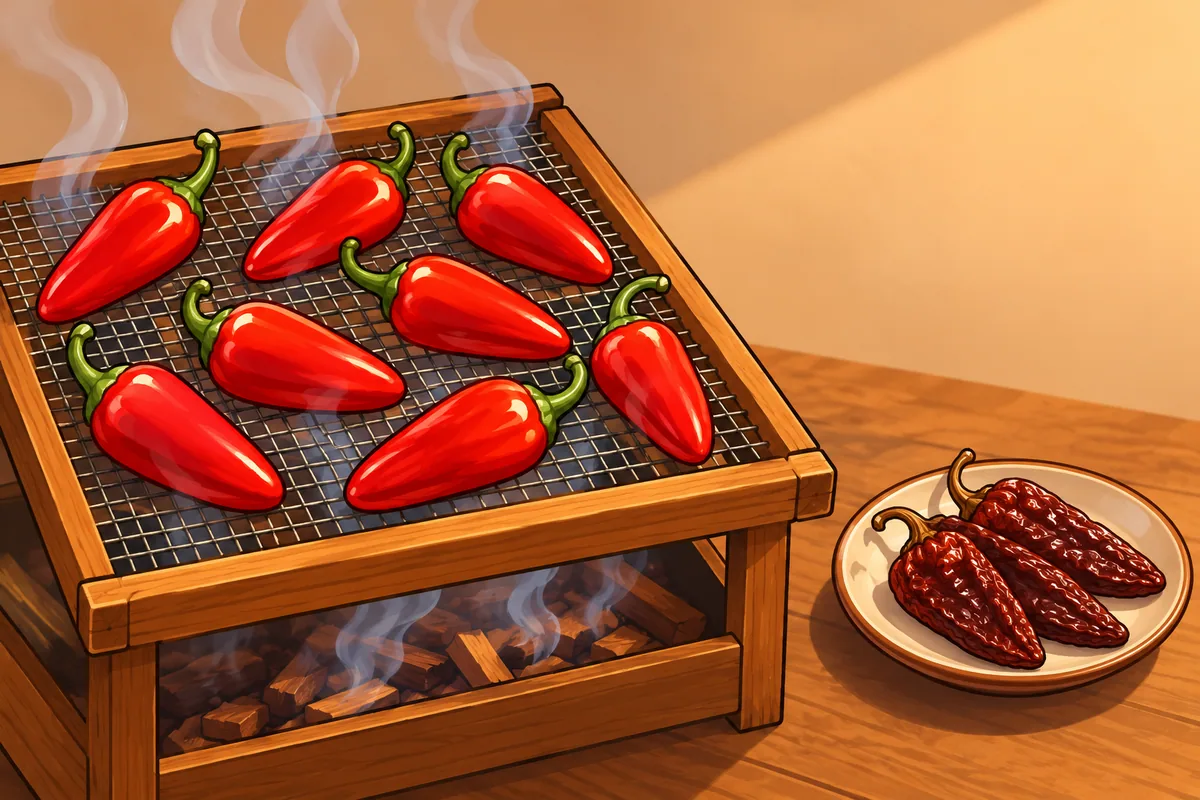
That tells you its heat, too. The jalapeño runs 2,000 to 8,000 SHU1, and drying removes water rather than heat, so a chipotle sits in that same band per gram of solids. If you swap a chipotle into a recipe that called for a fresh jalapeño, expect smoke you didn't have before and more heat per spoonful.
Why pasilla and guajillo have no fresh name you'll find
Because farmers grow them to dry. A 2010 survey of 68 chile farmers in Aguascalientes, Mexico, found that dried types made up most of the chiles they grew, led by two landraces6.
The same study explains why one dried name can cover several pods. Farmers knew three different genotypes as "Querétaro," "Queréndaro" and "Negro," yet bulked them all and sold them as pasilla6. Shape and color matter less for a chile you sell dry, the authors note, so more kinds pass under one name.
Arizona's extension guide adds the label you will see on some bags: the pasilla has dark brown pods, sometimes goes by chile negro, and its name means "little raisin"4.
The guajillo and puya both sit on the survey's list of dried chiles, which farmers dry in the sun or in a gas-powered commercial dryer and then sell as whole pods or ground to powder6.
The seed tells the rest of the story. In Mexico, the survey found, chiles for the fresh market come mostly from hybrid seed, while the types people eat dry are landraces that farmers keep from their own harvests6. That is why a dried name like guajillo can stay the same for generations: you are buying a local line of seed, not a commercial variety with a fresh-market twin.
How one New Mexico pod ends up with three dried names
One long pod type gives you three different things on the shelf, depending on when the grower picks it and how they keep it.
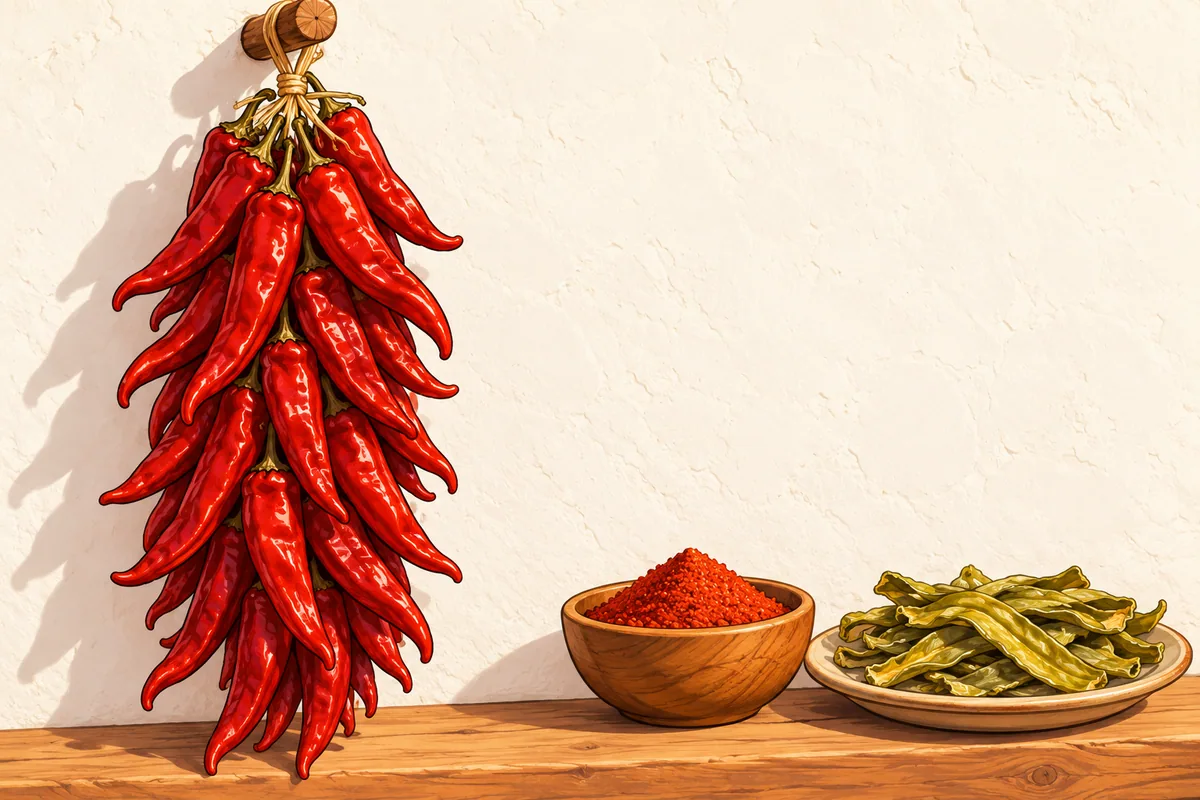
- Red chile. Pods ripened red, then dried and ground into chile powder4. New Mexico chiles such as NuMex Big Jim and Sandia run 500 to 2,500 SHU4.
- Chile pasado. Green chiles dehydrated so you can reconstitute them for cooking2.
- Ristra. A long string of New Mexican chiles kept for storage and decoration2; the pods stay whole and come off one by one.
The fresh pod has a naming catch of its own. NMSU says the New Mexican pod type, which Fabian Garcia developed at NMSU in the 1880s, is sometimes mislabeled as "Anaheim," and that the Anaheim is one cultivar of it2. A bag of dried "Anaheim" pods is, botanically, dried New Mexico chile.
Peruvian ajíes and their dried names
Peru gives you one renamed chile and one that barely exists fresh in shops. Bioversity International's market guide says the ají amarillo, also called escabeche, goes into dishes fresh or dried, and dried it takes the name ají mirasol5. The same guide says ají panca is generally eaten dehydrated, with low heat and an intense color5.
If you shop in Lima you mostly buy fresh. The guide found that fresh ajíes made up 49 % of supermarket chile sales, sauces and pastes 46 %, and dried products only 4 %5. Outside Peru the balance flips, so the ají amarillo you find abroad often arrives as a paste or a dried ají mirasol pod.
Which of the 15 dried names bring the most heat?
The small ones. Using the published ranges in the table, the order from hottest to mildest runs chiltepín, cayenne, chile de árbol, then a big drop to chipotle, cascabel and the mild ancho, pasilla and New Mexico podsSources for this line1. UF/IFAS Gardening Solutions3. Iowa State University Extension4. University of Arizona Cooperative Extension.
- Chiltepín, 50,000–100,000 SHU. A wild piquin, usually round2; you crush one or two chiltepín pods into a pot, never a handful.
- Cayenne, 25,000–50,000 SHU, and árbol, 15,000–30,000 SHU. Thin, bright pods; one or two dried cayenne or árbol pods season your whole pot13.
- Chipotle, 2,000–8,000 SHU. The jalapeño's own range, with smoke on top1.
- Ancho, pasilla, cascabel and New Mexico red, about 500–2,500 SHU. The pods you use by the dozen for a pot of sauce34.
When you plan a dish, read the pod size as a first hint: in this list the smallest dried chiles sit at the top and the big, leathery ones at the bottom.
What the word chile or chili on your bag tells you
NMSU's Chile Pepper Institute draws a clear line. Chile means anything from the Capsicum plant or its fruit, while chili is the dish of chile powder, beans, tomato and ground beef2. So a bag of "dried chiles" holds pods, and a jar of "chili powder" may hold a seasoning blend for that dish rather than ground pods alone.
That one letter matters when you shop for a recipe. If your recipe asks for ground ancho and you pick up a jar labelled chili powder, read the ingredient list before you use it, because you may be adding salt, cumin and garlic you did not plan for. The chili powder types page sorts single-chile powders from blends.
Can you swap a dried chile for the fresh one with the same name?
Yes for cooked sauces, rarely for raw dishes. A dried pod has lost its crunch and most of its water: USDA lists fresh poblano at 92.8 % water and dried ancho at 22.6 %79, so each gram of ancho carries about ten times the solids of fresh poblano.
| Your dish | Use the dried pod? | Why |
|---|---|---|
| Simmered sauce, mole, stew | Yes, soaked and blended | Soaking returns water; the long cook hides texture |
| Chili or soup | Yes, ground or soaked | Measure by weight; dried carries far more solids per gram |
| Stuffed peppers, rellenos | No | A dried pod splits and has no crisp wall to stuff |
| Fresh salsa, pico de gallo | Rarely | You lose the crunch and the green flavor |
| Pickles | No | Pickling needs the fresh pod's texture |
For a soaked pod, think in pods, not grams, because you have added the water back. The dried chiles hub walks you through the soak, from stem to purée.
Name mix-ups to check before you buy
Most confusion at the shelf comes from one of these.
Read the bag twice
- A recipe asks for ancho and you see only poblanos. They are the same pod type, picked at different stages.12
- A bag says Anaheim but the pods are long and red. Anaheim is one cultivar of the New Mexican pod type, so either name can apply.2
- A pasilla bag holds pods of slightly different shapes. Farmers bulk several genotypes under that one name.6
- A recipe from Peru says ají mirasol and you hold fresh ají amarillo. Mirasol is the dried form of the same chile.5
- A jar says paprika with no pepper named. NMSU uses paprika for any non-pungent red chile used as a spice or for color.2
- Your dried pasilla bends like leather. USDA's dried pasilla still holds 14.8 % water, so some give is normal.10
Find the pod you need next
If your recipe calls for the three chiles behind most moles, ancho, guajillo and pasilla compares them side by side. To keep your bags in good shape until you use them, storing dried chiles covers jars, light and the freezer.