On this page
- 1What is shichimi togarashi made of?
- 2Why do two shichimi jars list different ingredients?
- 3How hot is shichimi togarashi?
- 4Why does shichimi make your lips tingle?
- 5What does togarashi taste like?
- 6What do you use shichimi togarashi for?
- 7How do you make a shichimi-style blend at home?
- 8Which jar should you open, shichimi, ichimi or plain chili flakes?
- 9How long does your jar of shichimi stay worth using?
- 10What goes wrong with a jar of shichimi
- 11Your next jar after shichimi
- 12Sources
What is shichimi togarashi made of?
Red chile plus six other dry ingredients, ground or chopped together into a coarse, speckled spice. The name means "seven-flavor chile," and the chile does all the burning while the other six bring aroma, crunch and a tingle. Yawataya Isogoro, which has sold the blend since 1736, lists chile, dried citrus peel, sesame, hemp seed, perilla, sansho and ginger1.
The maker calls the roasted red chile "the most important ingredient," roasted to bring out its heat and flavor2. Here are the seven from that jar, each set apart around the finished blend.
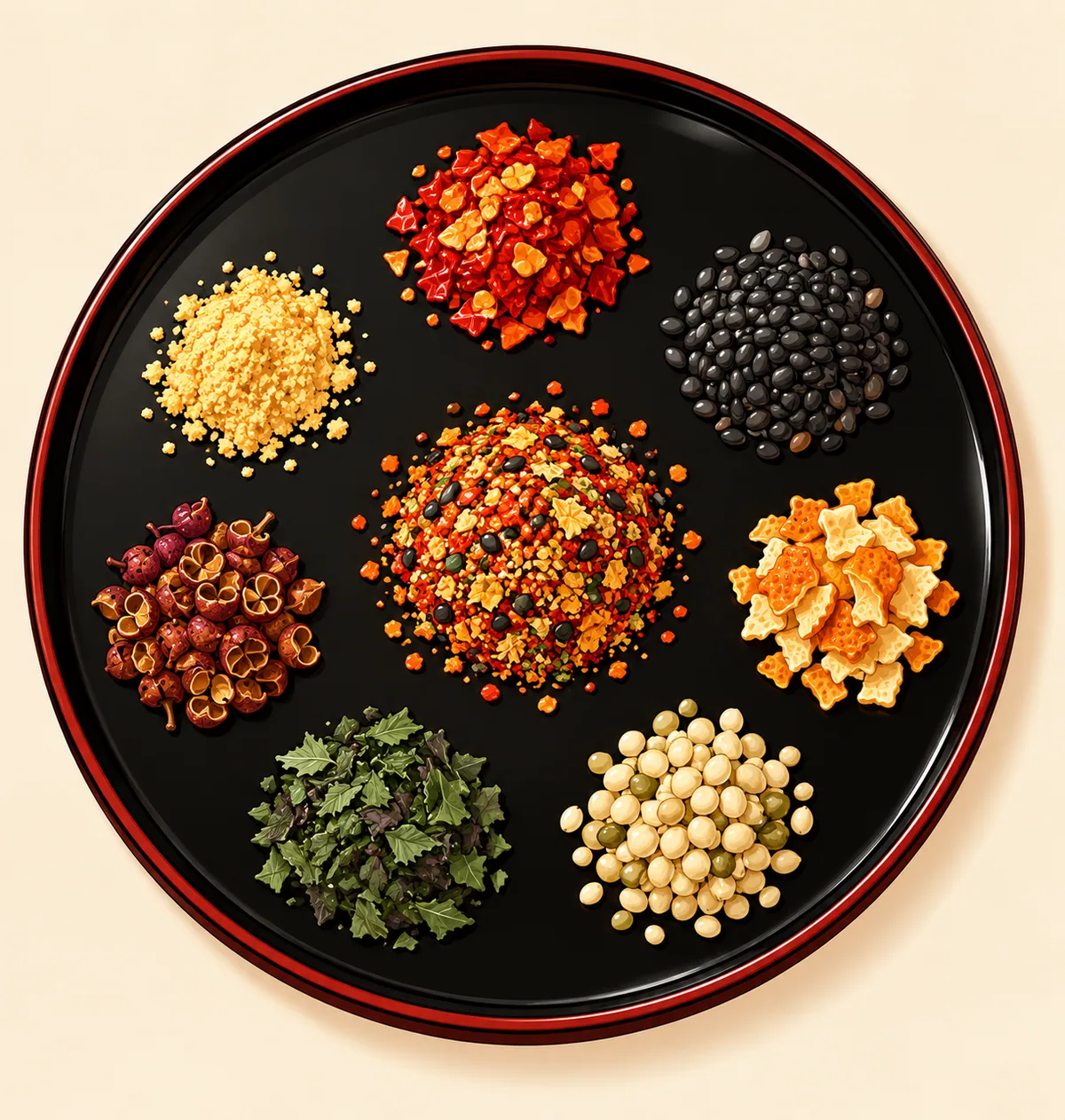
Six of the seven are there for smell and texture, which is why shichimi seasons a bowl without taking it over.
Why do two shichimi jars list different ingredients?
Because each maker keeps its own seven. Yagenbori, founded in Tokyo in 16253, lists chile, roasted chile, poppy seed, hemp seed, ground sansho, black sesame and dried citrus peel4. Put that beside Yawataya's list and five ingredients match.
| Ingredient | Yawataya Isogoro (Nagano, 1736) | Yagenbori (Tokyo, 1625) |
|---|---|---|
| Red chile | Yes, roasted | Yes, plus a second roasted chile |
| Sansho (Japanese pepper) | Yes | Yes, ground |
| Black sesame | Yes | Yes |
| Dried citrus peel | Yes, Unshu mandarin | Yes, Satsuma mandarin |
| Hemp seed | Yes | Yes |
| Ginger | Yes | No |
| Perilla (shiso) | Yes | No |
| Poppy seed | No | Yes |
The shared core, the part you can count on in any jar you buy, is chile, sansho, sesame, citrus peel and hemp. Yagenbori spends its other two slots on roasted chile and poppy seed, so its blend leans toastier, while Yawataya's ginger and perilla push its jar toward fresh and green24. When you compare jars from a store, the last two ingredients are where most of the difference sits.
Why your imported jar may have no hemp seed
Yawataya says it does not use hemp seed in products for overseas markets2. So the jar you buy outside Japan can hold a slightly different seven from the one sold at the temple shop, even under the same name. Read the ingredient line on yours rather than trusting a list online.
One blend under three regional names
Yagenbori notes that shichimi togarashi is the Kamigata (Kyoto and Osaka) name, while around Edo, today's Tokyo, people called it nanairo togarashi or nanakusa togarashi4. Yagenbori also blends to order at its shop, letting customers pick the heat and color they want3. That old habit is a good hint for you at home: the blend is meant to be adjusted, not fixed.
How hot is shichimi togarashi?
Milder than the chile on its own, and neither maker gives a Scoville number. The heat comes from one ingredient out of seven, and the other six dilute it with aroma and seed1. This tree sorts the seven by the job each does.
- HeatRed chile, roastedHot
- Numbing tingleSansho
- AromaCitrus peel, ginger, perilla
- Nutty crunchBlack sesame, hemp seed
If you want the heat alone, ask for ichimi togarashi. Yagenbori describes plain chile as what people generally call ichimi togarashi, the one you reach for when you want pure heat4. The chile behind both belongs to the Japanese peppers of the index.
Yawataya also says black sesame's aroma softens the chile's heat2. So a teaspoon of shichimi feels gentler than a teaspoon of the plain red pepper flakes in a pizza shaker, even before you count how much of the spoon is seed and peel.
Why does shichimi make your lips tingle?
Sansho. Yawataya describes its Japanese pepper as the ingredient that makes your tongue numb2, and Yagenbori names sanshool as its tingling compound4. Research on the same compound comes from Szechuan peppercorns and other Xanthoxylum preparations, where hydroxy-alpha-sanshool is the compound most responsible for the tingling, buzzing feeling5.
The tingle works on touch nerves, not on the heat sensor chile hits. In a 2013 study, people matched the tingle on their lips to a mechanical vibration of around 50 Hz6, and a 2016 study found sanshool on a fingertip blunted the sense of 30 Hz vibration while leaving 240 Hz untouched7. Bautista's team showed the compound excites nerve cells by blocking certain potassium channels5. So the buzz you feel after shichimi is a different sensation from the chile's burn, arriving at the same time.
What does togarashi taste like?
Warm, citrusy and nutty first, hot second. When you taste a pinch on its own, you notice the peel and sesame before the chile arrives. The two makers describe their ingredients this way:
- Red chile: the heat, with a roasted flavor from the roasting step2.
- Roasted chile: milder heat and a mellow, toasty aroma, in Yagenbori's blend4.
- Ginger: a sharp taste and a fresh aroma2.
- Perilla: a fresh aroma that brings out fish, meat, vegetables and rice2.
- Sansho: a numbing feel and a spicy aroma Yawataya compares to mountain air2.
- Mandarin peel: the citrus note, from dried ripe Unshu mandarin2.
- Black sesame and hemp seed: nutty aroma and crunch; Yawataya says hemp matches sesame in flavor2.
Your first impression depends on which two ingredients your maker chose. A jar with ginger and perilla reads brighter; a jar with roasted chile and poppy reads rounder and toastier.
What do you use shichimi togarashi for?
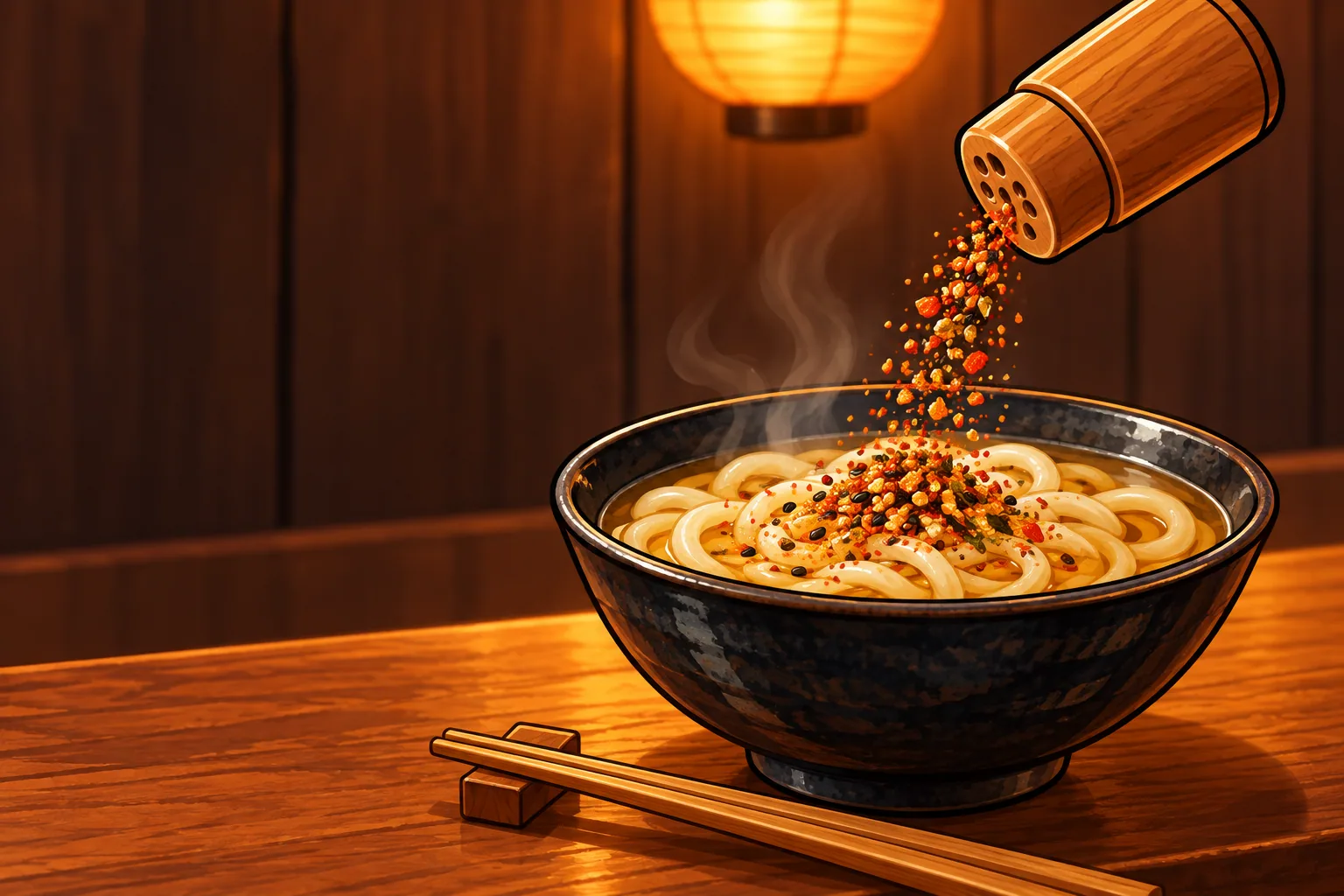
Mostly as a finishing spice you shake on at the table, onto hot food. Yawataya's own recipe pages put it into miso soup with tofu and snow peas, a dry curry and kenchin soup, a vegetable soup1, and the hero picture above shows the classic move: a shake over a bowl of noodles just before you eat.
Add it late, right before you eat. The peel, perilla and ginger are aroma ingredients, and their smell is the reason the blend exists, so a long simmer spends what you paid for. Heat-and-serve dishes give you the most from each shake.
Good places for a shake of shichimi
How do you make a shichimi-style blend at home?
Build it by role, starting with the chile and adding one aroma at a time. Neither maker publishes its proportions, so these steps give you the order and the checks rather than a ratio we cannot source.
- 1
Start with the heat
Crush dried red chile into coarse flakes. Roast it lightly first if you want the toasty note Yawataya roasts for.2
- 2
Add the numbing part
Grind sansho and add a little. It carries the tingle, so a small amount goes a long way.2
- 3
- 4
- 5
- 6
Taste on plain rice and adjust
Sprinkle a pinch on a spoon of rice. Too hot means more seeds and peel; too flat means more peel or sansho.
If you dry your own chile for step one, the homemade flakes method covers drying and crushing.
Which jar should you open, shichimi, ichimi or plain chili flakes?
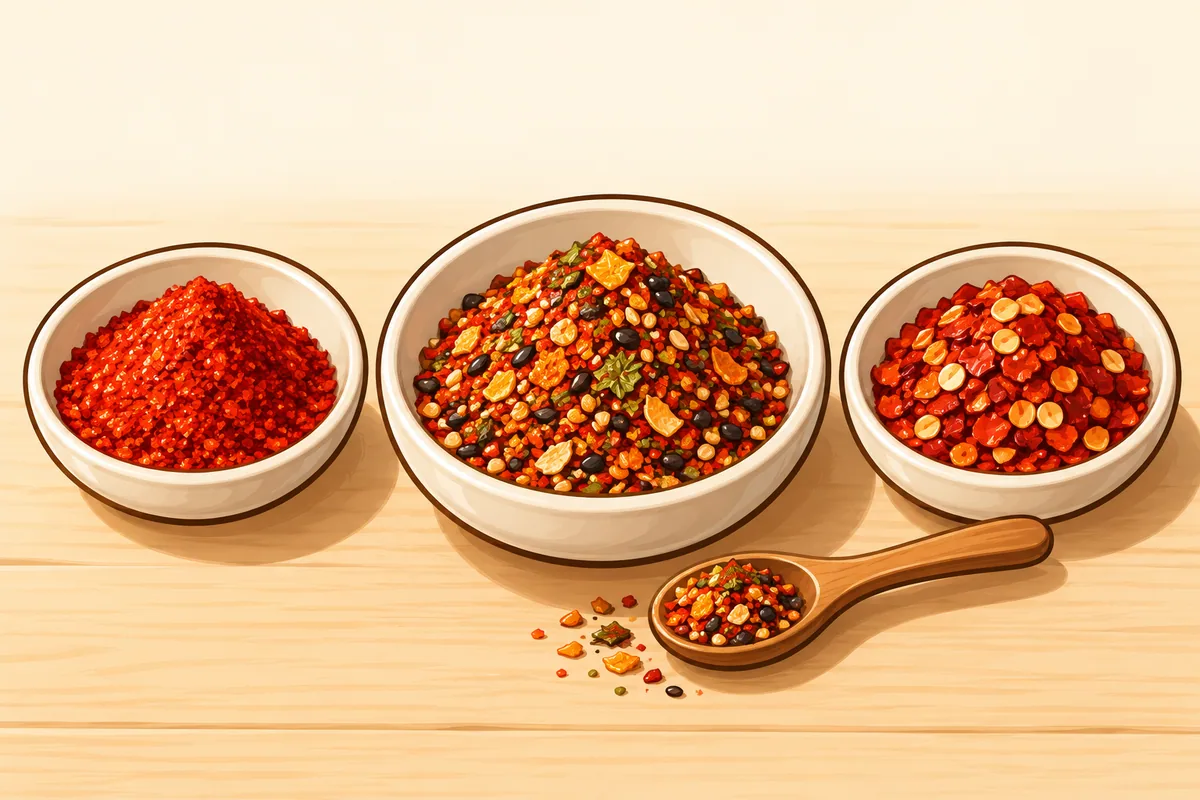
Open the jar whose job matches your dish, and you will rarely need more than one shake.
| Jar | What is in it | Reach for it when |
|---|---|---|
| Shichimi togarashi | Chile plus six aromatics and seeds | You want aroma and a little heat on soup, noodles or rice |
| Ichimi togarashi | Chile alone | You want clean heat with no citrus or sesame |
| Red pepper flakes | Crushed dried chile, often with seeds | You cook pizza, pasta or a long simmer |
A single-chile powder behaves differently again; the chili powder types page sorts single chiles from blends, so you can see where shichimi sits among them.
How long does your jar of shichimi stay worth using?
Longer than it stays fragrant. Kansas State's cupboard chart gives herb and spice blends 2 to 3 years at 70 °F and tells you to check the aroma and replace a jar whose smell has faded8. With shichimi, your nose gives the verdict well before the calendar does, because six of the seven ingredients are there for smell.
So buy the small size if you only shake it on soup now and then. Keep your jar closed, away from the stove and out of sunlight, as the same chart advises for every spice8, and you will get more months of citrus and sansho out of it. If you open it and smell mostly chile and dust, your blend has turned into an expensive ichimi; use it up in cooking and buy a fresh one for the table. The chili powder shelf life page has the storage times by form if you keep several chile jars.
What goes wrong with a jar of shichimi
Most problems come from age and moisture, and a few from too much chile at once.
Check your jar
- It smells of dust, not citrus. The aroma ingredients have faded; replace the jar, since aroma is the point of the blend.2
- Clumps or condensation in the jar. Dried foods can pull moisture back in; use them soon or dry them again.9
- White fuzz or a musty smell. Moldy dried food goes in the bin.9
- The jar has no hemp seed. Yawataya leaves hemp out of products sold overseas.2
Your next jar after shichimi
Pick your next jar by the job in front of you. If you want to know how blended chili powders differ from single chiles, what goes into chili powder breaks down a typical jar.