
Hot Sauce Styles, Heat and How to Make Your Own
Pepper, salt, acid and time: the four choices behind every bottle.
All hot sauce guides
-
 Guides
Hot Sauce Guide to Storage, Safety and the pH 4.6 Line
The questions people ask about the bottle, answered with a number each.4 min read -
 Make
How to Make Hot Sauce at Home, 3 Safe Routes
Pick a route by how long you want the bottle to last.4 min read -
 Scoville chart
Hot Sauce Scoville Scale, 600 to 49,000 SHU by Maker
Every bottle on one heat axis, each number with its source.4 min read -
 Hot Sauce
Does Hot Sauce Go Bad? Shelf Life for 7 Kinds of Sauce
What changes in the bottle, how fast, and when to let it go.7 min read -
 Styles
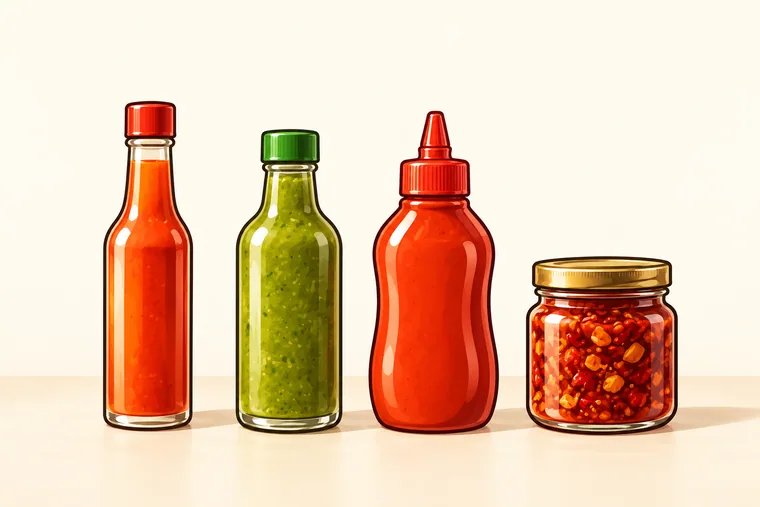
13 Types of Hot Sauce by Pepper, Acid and Heat
Every style we could source, placed by heat and texture, each cell from the maker or a university.4 min read -
 Styles
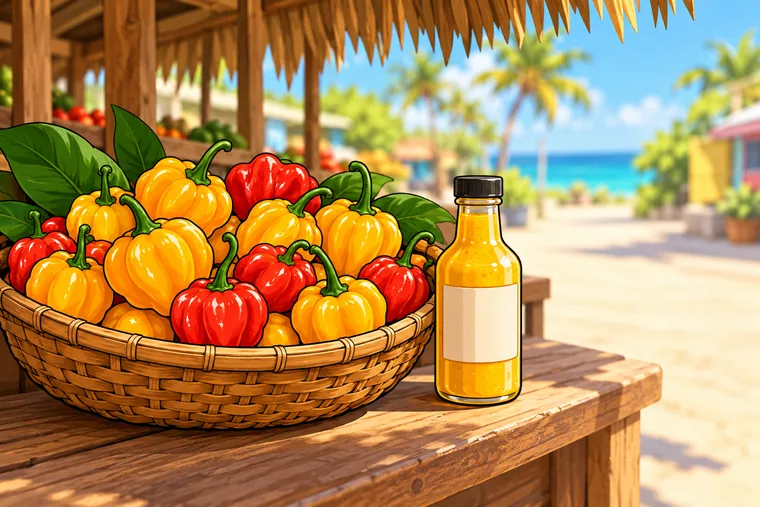
Caribbean Hot Sauce and the 350,000 SHU Scotch Bonnet
Scotch bonnet heat, softened with vinegar, onion and island herbs.6 min read -
 Make
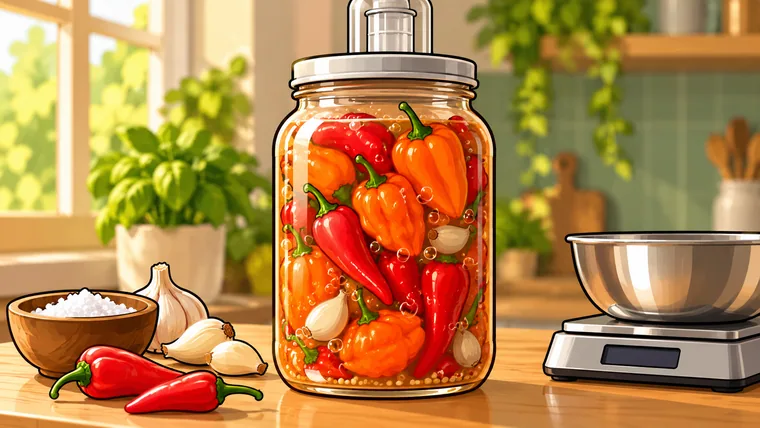
Fermented Hot Sauce in 7 Steps, With a 3 % Salt Brine
Salt ratio, timing and the signs it is done.9 min read -
 Styles
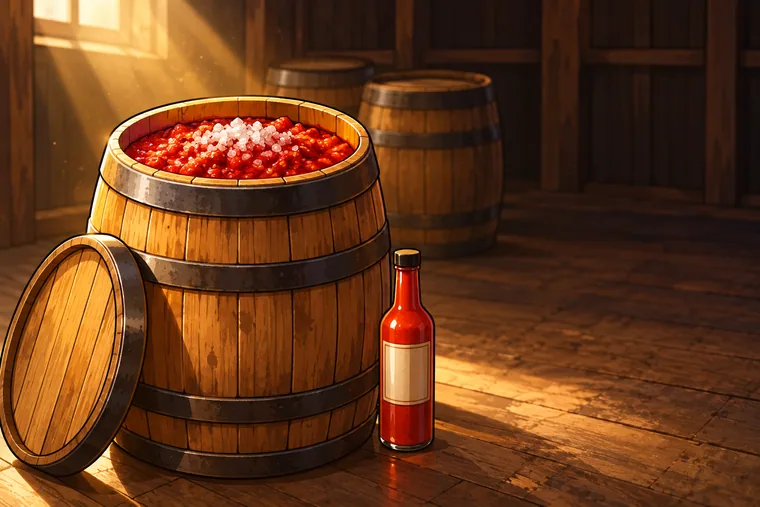
Louisiana-Style Hot Sauce, 3 Ingredients
Three ingredients, a long wait and a thin, sharp pour.6 min read -
 Styles
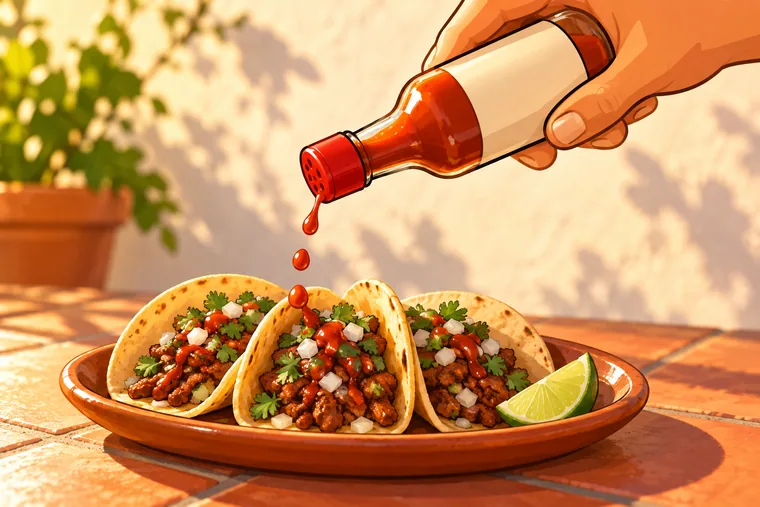
Mexican Hot Sauce, 5 Bottles by Chile and Heat
The bottle on every taquería table, read off its makers' own pages.7 min read -
 Styles
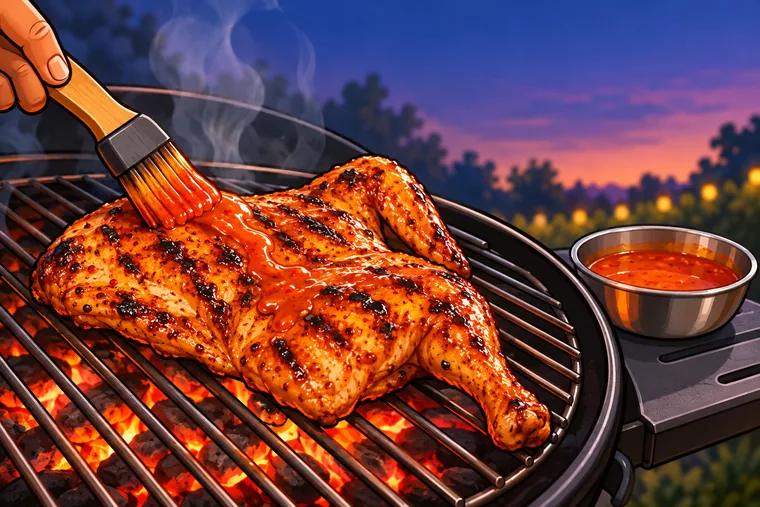
Peri Peri Sauce, What It Is and a 10-Chilli Base Recipe
Bird's eye chillies, lemon and garlic, brushed on over the coals.6 min read -
 Styles
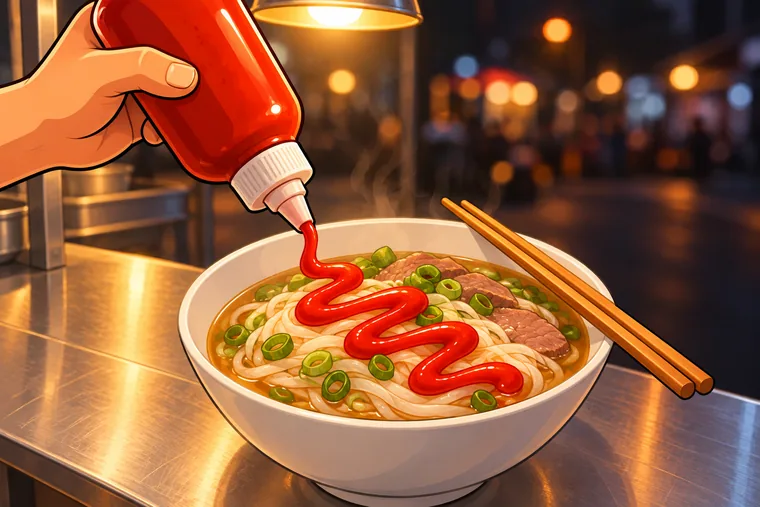
What Is Sriracha? Ingredients, Heat and 3 Colors
A squeeze-bottle chili paste, read off the makers' own labels.7 min read
Nothing matches this filter yet.
Styles
Every style we could source, placed by heat and texture, each cell from the maker or a university.
See all-
Styles
Caribbean Hot Sauce and the 350,000 SHU Scotch Bonnet
Scotch bonnet heat, softened with vinegar, onion and island herbs.6 min read -
Styles
Louisiana-Style Hot Sauce, 3 Ingredients
Three ingredients, a long wait and a thin, sharp pour.6 min read -
Styles
Mexican Hot Sauce, 5 Bottles by Chile and Heat
The bottle on every taquería table, read off its makers' own pages.7 min read -
Styles
Peri Peri Sauce, What It Is and a 10-Chilli Base Recipe
Bird's eye chillies, lemon and garlic, brushed on over the coals.6 min read
All Hot Sauce topics
- GuidesThe questions people ask about the bottle, answered with a number each.1 page
- MakePick a route by how long you want the bottle to last.1 page
- Scoville chartEvery bottle on one heat axis, each number with its source.
- StylesEvery style we could source, placed by heat and texture, each cell from the maker or a university.5 pages
Salt for a pepper mash.
Weigh the chiles and use 2 to 2.5 % of that weight in salt.1
For a mash of chiles and salt with no water. A brine for whole pods is worked on the water instead. Salt for every method
On this page
- 1What makes a hot sauce hot?
- 2What is hot sauce?
- 3Where did hot sauce come from?
- 4How do hot sauce styles differ?
- 5Which pepper should your sauce start from?
- 6How are hot sauces rated?
- 7Should you make a fermented or a fresh sauce first?
- 8How should you store hot sauce?
- 9What goes wrong with homemade hot sauce?
What makes a hot sauce hot?
Capsaicin does, and almost all of the capsaicin you taste comes from the white ribs inside the pod. The cells that make capsaicinoids sit in the placenta and the cross walls2, which hold about 89 % of the capsaicin3.
Leave the ribs in and your sauce comes out hotter than one from the same pods with the ribs cut out. The seeds carry little in most chiles, though some C. chinense types, the habanero's species, carry more in the seeds and flesh2. So if you scrape out only the seeds and keep the ribs, you remove very little heat.
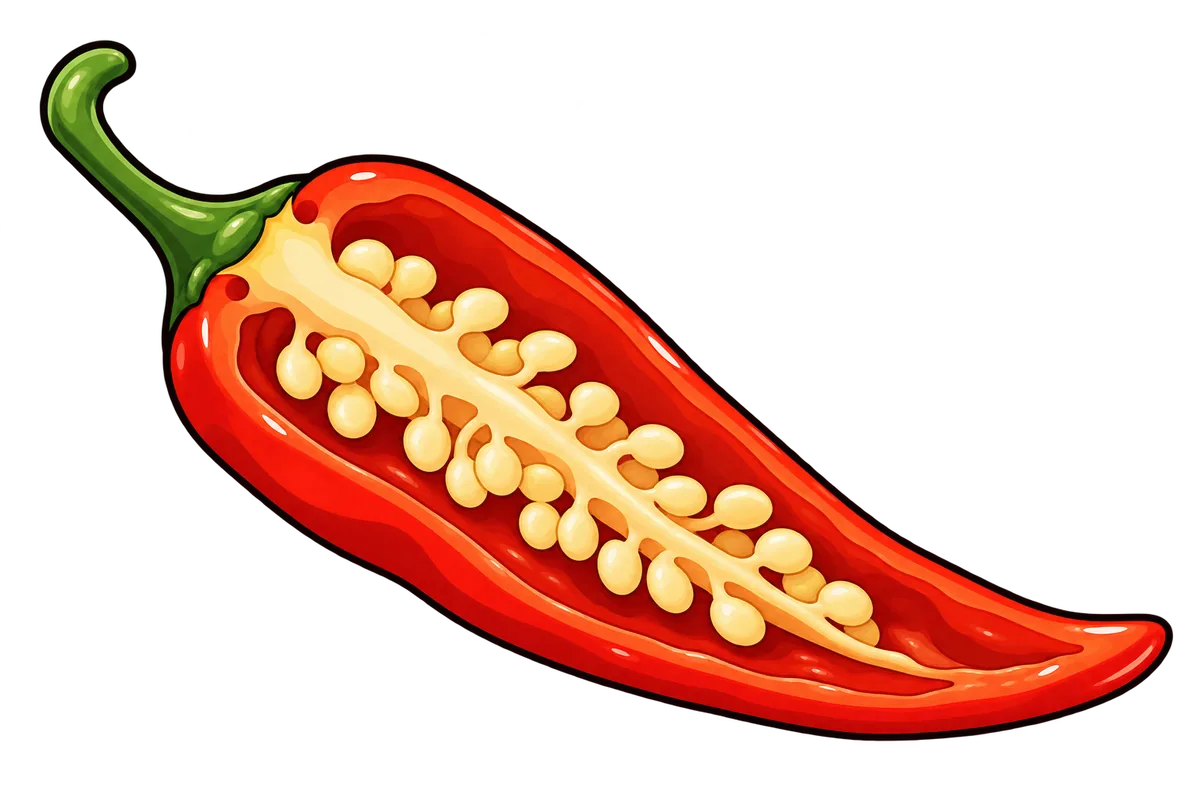
That gives you a dial you can turn at the cutting board. Keep every rib for the full heat of the pod, or slice them out of half the pods and your batch lands somewhere in between, with the same fruit flavor from the flesh.
What is hot sauce?
Hot sauce is chiles plus an acid, usually with salt, brought to a pH of 4.6 or below. SDSU Extension lists what you can put into one4:
- Peppers, for the heat
- Acids such as vinegar or lime juice
- Spices and seasonings
- Vegetables
- Preservatives
- Bulking agents such as maltodextrin
Some bottles stop at three ingredients: turn a Tabasco Original Red around and you read aged red peppers, salt and distilled vinegar5. Federal rules call a low-acid food with added acid and a finished pH of 4.6 or below an acidified food6; a fermented sauce reaches the same pH through lactic acid bacteria instead1.
Why does that one number matter so much to you at home? Clostridium botulinum cannot grow below pH 4.6, and a sealed bottle is the airless place where it would4. Every route on this page, fresh or fermented, store-bought or homemade, ends at that line.
Salt and sugar cannot do the job alone in a pourable sauce. SDSU Extension treats hot sauces as having a water activity above 0.85, too wet for water activity to hold back pathogens, so the acid carries the safety and the salt mostly carries flavor4.
Where did hot sauce come from?
From Mexico, where people first grew the chile itself. If you trace your bottle back far enough, you reach that valley. A 2014 study that combined genetics, ancient plant remains, language history and habitat models placed the domestication of Capsicum annuum in central-east Mexico7.
- About 9,000–7,000 years ago
Chile remains from the Tehuacán valley and Ocampo caves date roughly to this span.7
- About 2,500 years ago
The Mexican city of Cholula, which gave Cholula hot sauce its name, already stood.8
- 1868
Edmund McIlhenny mixed his own pepper sauce recipe on Avery Island, the start of TABASCO.5
- Today
TABASCO still ages its pepper mash in white oak barrels for up to three years before it meets the vinegar.9
The chile traveled the world long before bottled sauce did, so each region built its sauce on the pod it grew. That is why your Caribbean bottle tastes of Scotch bonnet and your Louisiana one of tabasco or cayenne, as the next table shows.
You can still read that history on a label today. A Louisiana bottle that lists aged peppers first carries a barrel method from the 1860s, and a Mexican table sauce that lists water first carries the thinner, vinegar-light style of its home region.
How do hot sauce styles differ?
Hot sauce styles differ first by the pepper and then by the acid. We list a style here only when a primary source names both for it.
| Style | Example | Base pepper | Acid |
|---|---|---|---|
| Louisiana, barrel-aged mashSources for this line2. PhytoKeys 200:1-423 (Pensoft)5. McIlhenny Company (manufacturer, own product)9. McIlhenny Company (manufacturer, own product) | Tabasco Original Red | Tabasco pepper (C. frutescens), mashed with salt and aged up to 3 years in white oak | Distilled vinegar, blended in for 28 days |
| Mexican table sauce10 | Cholula Original | Árbol and piquín chiles, 5.0 % of the ingredients | Spirit vinegar and cider vinegar |
| Peppered vinegar11 | No single brand; a home and table staple | Tabasco pepper | Vinegar |
Caribbean sauces build on the Scotch bonnet, and UF/IFAS calls Scotch bonnet hot sauce very popular11. We leave that style out of the table until we can read its acid on a primary source, and the same goes for sriracha-style and peri-peri sauces. Their own pages, Caribbean pepper sauce and sriracha, show what their makers print.
Which pepper should your sauce start from?
Start from a pepper you already like eating, because the pod sets the ceiling. If a jalapeño on your nachos feels right, a jalapeño or serrano sauce will too. A habanero pod runs 20 to 70 times hotter than an average jalapeño, so the same recipe made with each lands in a different world.
| Pepper | Heat | What it brings |
|---|---|---|
| Jalapeño11 | 2,000–8,000 SHU, about 5,000 on average | Salsa and Mexican food |
| Serrano11 | 10,000–25,000 SHU | Pico de gallo and salsa; much hotter than a jalapeño of the same look |
| Cayenne11 | 25,000–50,000 SHU | Mostly dried and ground as powder or flakes |
| Tabasco11 | 30,000–50,000 SHU | Tabasco sauce and peppered vinegar |
| Habanero11 | 100,000–350,000 SHU | Fruity, citrus-like flavor and a floral aroma; popular in hot sauce |
| Scotch bonnet11 | 100,000–350,000 SHU | Caribbean jerk sauce and marinade |
The heat in your pods moves, too. New Mexico State University found that a mild cultivar gets hotter under any kind of stress in the field, while a hot one grown in ideal conditions comes out only moderately hot12. So if you grow your own, two batches from the same seed packet, one from a dry August and one from a wet June, can taste quite different.
The practical move: taste a sliver of one raw pod before you weigh out the whole basket. If it already makes your eyes water, cut the ribs from half the batch, as the chile diagram above shows.
How are hot sauces rated?
A hot sauce rates far below the pepper in it, because water, vinegar and salt dilute the capsaicin.
Worked out, your bottle of Tabasco keeps about a tenth of its pepper's heat: 30,000 ÷ 10 = 3,000 and 50,000 ÷ 10 = 5,000, both inside the bottle's range. Labs today measure capsaicinoids by HPLC and multiply the parts per million by 16 to get SHU13.
The old way used people, and it explains why you still see wide ranges. Tasters sipped a chile extract diluted again and again until they no longer felt the heat, and NMSU notes that the result depends on each taster's palate and that a taster can only handle so many samples in a sitting12. The lab method dries and grinds the fruit first, then reads each capsaicinoid on its own12.
The Tabasco rating you see is its maker's own figure, which is why the hot sauce Scoville index names the source next to every number. Many bottles print no number at all, so you will often shop by the pepper on the label instead.
Should you make a fermented or a fresh sauce first?
Make a fresh vinegar sauce if you want it this week, and a ferment if you can wait a month. Both are safe once they reach pH 4.6 or below; they differ in the time you wait, the salt you weigh and where the acid comes from.
Fresh vinegar sauce
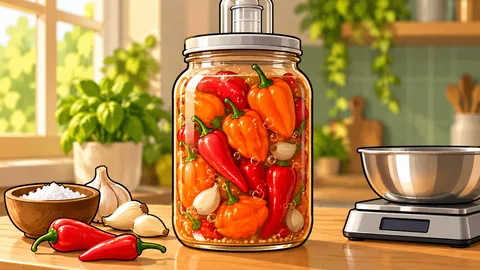
A worked batch for the ferment: 500 g of stemmed chiles takes 10–12.5 g of salt, which is 2.0–2.5 % of 500 g1. Weigh it on a kitchen scale rather than measuring by the spoon, because a spoonful of fine salt and a spoonful of flaky salt hold different grams, and your ferment depends on the grams.
Pick the fresh route when you want sauce for Saturday's tacos, or when you plan to can it, because the tested canning recipe from Ohio State is a vinegar recipe14. Pick the ferment when you have a cool cupboard, a month and a taste for the sour, deeper flavor that lactic acid gives. The hot sauce making hub walks through all three routes with their timings.
How should you store hot sauce?
Keep your fermented sauce in the fridge, and only keep a homemade bottle on your shelf if it has enough acid and a tested heat process.
- Fermented sauce goes in the fridge. Left at room temperature it keeps fermenting and turns very sour; chilled, fermented vegetables stay fresh for many months.15
- A fresh sauce needs a pH below 4.6 from added vinegar or lime juice, and you bring it to a boil.4
- Canning a sauce in a water bath seals it airtight, so use only tested recipes, such as those from the National Center for Home Food Preservation.4
- A bought bottle may not need the fridge at all: Cholula says its sauce does not need to stay cool and tastes best within 6 months of opening.8
- Some bottles build up gas. Huy Fong tells buyers to open the cap facing away from themselves and others.16
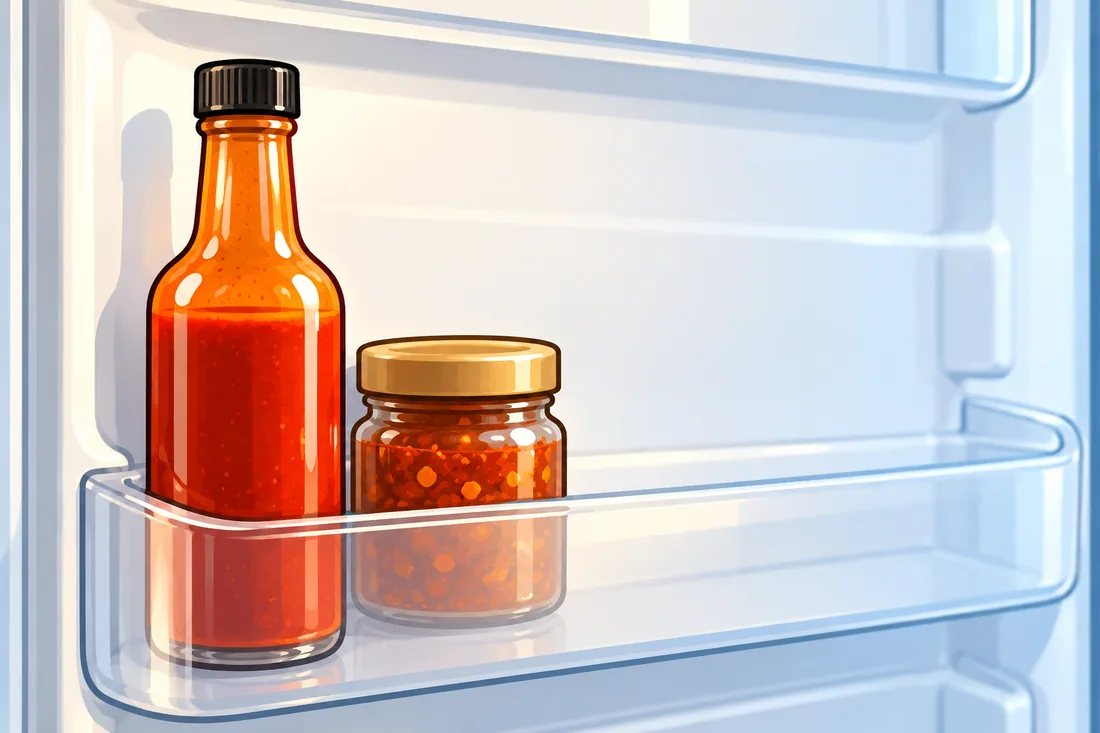
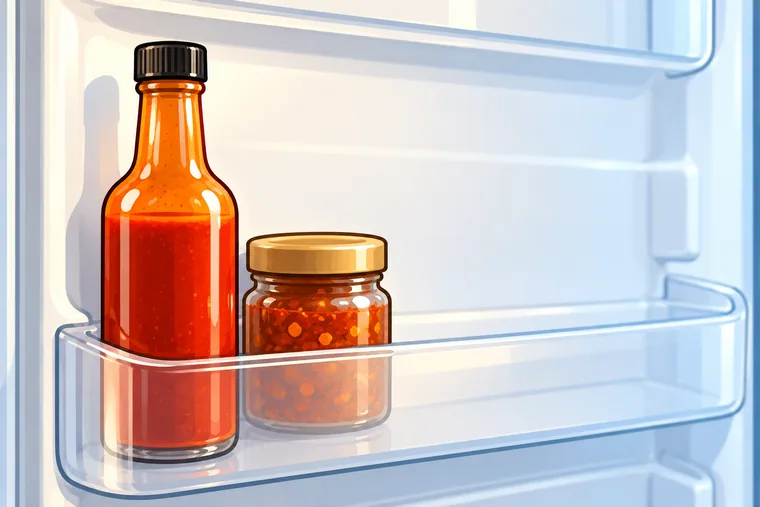
In your fridge door, a bought bottle mostly keeps its flavor longer. Oxygen from every opening slowly dulls the color and taste, and Cholula says that change carries no health risk8. Sriracha, chili garlic and the other common sauces each keep on their own clock, and the shelf-life table gives every kind its own row.
What goes wrong with homemade hot sauce?
Most first-batch problems show up as something you can see, smell or hear before you ever taste the sauce. The table pairs each sign with its usual cause and the move you make.
| What you notice | Usual cause | What to do |
|---|---|---|
| Fuzzy mold on top of a ferment, or a rotten smell17 | Spoilage organisms took hold | Throw the whole batch out |
| The ferment tastes sharper every week15 | It sat warm and kept fermenting | Blend it once the taste suits you and move it to the fridge |
| The cap hisses or the sauce sprays16 | Gas built up in the bottle | Open it slowly, pointed away from people |
| A canned jar's lid bulges, liquid spurts or the jar smells odd18 | The seal failed or the food spoiled | Do not taste it; follow NCHFP's disposal steps |
| Bright red turned brick brown8 | Oxygen after opening | Fine to eat if nothing else changed; store it cold to slow it |
| Far hotter than you wanted3 | The ribs stayed in | Cut the ribs from part of the next batch |
The one problem you cannot see is a sauce that never reached pH 4.6. SDSU Extension asks for tested recipes and a pH test before anyone sells a sauce4, and the same habit protects you at home. Bulging lids and spurting liquid are warning signs, yet NCHFP also warns that spoiled low-acid foods, tomatoes included, may show very little evidence, so a jar you doubt goes out untasted18. If one did leak, NCHFP has you wipe the counter and tools with 1 part unscented household bleach to 5 parts water and let it stand for 30 minutes18.
For a ferment, the fermented hot sauce steps show how to tell a flat film of kahm yeast from fuzzy mold. For a canned batch, our habit is simple: label each jar with the date and the recipe you followed, so you always know which tested process it went through.
Quick answers
Do I need to ferment my hot sauce?
No. A fresh sauce gets its acid from vinegar or lime juice and you bring it to a boil, so you can bottle it the same day. A fermented sauce gets its acid from lactic acid bacteria over weeks. Either way, the finished sauce has to sit at pH 4.6 or below.Sources for this line1. Food Protection Trends 40(4):251-263 (International Association for Food Protection, peer-reviewed)4. SDSU Extension15. K-State Research and Extension
How long does homemade hot sauce last?
A fermented sauce kept in the fridge stays fresh for many months, K-State Extension says. Left at room temperature it keeps fermenting and turns very sour. Bought bottles and fresh sauces keep on other clocks, and the shelf-life table gives each kind its own row.15
What is the best pepper for hot sauce?
Pick by heat and flavor. UF/IFAS Extension names the habanero as a popular hot sauce pepper (100,000 to 350,000 SHU, fruity and floral), says Scotch bonnet hot sauce is very popular, and notes that people know the tabasco pepper (30,000 to 50,000 SHU) from Tabasco sauce and peppered vinegar.11
Why is a hot sauce milder than the pepper in it?
Water, vinegar and salt dilute the pepper. A tabasco pepper rates 30,000 to 50,000 SHU, while Tabasco Original Red sauce is rated 2,500 to 5,000 SHU by its maker. In Cholula Original the chiles are 5.0 % of the ingredients; water, vinegar and salt make up most of the rest.Sources for this line5. McIlhenny Company (manufacturer, own product)10. Cholula (manufacturer, own product; Singapore product page)11. University of Florida IFAS Extension
Sources
· 18
- 1Food Protection Trends 40(4):251-263 (International Association for Food Protection, peer-reviewed) Manufacture of Traditionally Fermented Vegetable Products: Best Practice for Small Businesses and Retail Food Establishments (Snyder, Breidt, Andress, Ingham)
- 2PhytoKeys 200:1-423 (Pensoft) Monograph of wild and cultivated chili peppers (Capsicum L., Solanaceae)
- 3Heliyon (Cell Press) A comprehensive review of capsaicin: Biosynthesis, industrial productions, processing to applications, and clinical uses
- 4SDSU Extension How to Make a Safe Hot Sauce (Curtis Braun)
- 5McIlhenny Company (manufacturer, own product) TABASCO Original Red Sauce
- 6U.S. Code of Federal Regulations, 21 CFR 114.3 (via Cornell LII) Acidified foods: definitions
- 7PNAS 111(17):6165-6170 (peer-reviewed) Multiple lines of evidence for the origin of domesticated chili pepper, Capsicum annuum, in Mexico (Kraft et al.)
- 8Cholula (manufacturer, own product) FAQ
- 9McIlhenny Company (manufacturer, own product) About Our Barrels
- 10Cholula (manufacturer, own product; Singapore product page) Cholula Original
- 11University of Florida IFAS Extension HS-859/TR010: Pepper Production in Miami-Dade County, Florida
- 12New Mexico State University, College of ACES Cooperative Extension Service Guide H-237: Measuring Chile Pepper Heat
- 13HortScience 42(2):222-224 'Bhut Jolokia', the world's hottest known chile pepper, is a putative naturally occurring interspecific hybrid
- 14Ohio State University Extension (CFAES) HYG-5365: Food Preservation: Making and Preserving Barbecue and Hot Sauces
- 15K-State Research and Extension MF3491: Taking a New Look at Fermented Foods (Donna Krug)
- 16Huy Fong Foods (manufacturer, own product) Products
- 17University of Illinois Extension Fill Your Pantry: Fermenting Foods
- 18National Center for Home Food Preservation (University of Georgia) Identifying and Handling Spoiled Canned Food

Your pocket pepper index.
Built from the same index as this site.
- Every entry offline
- Compare any two peppers
- Keep a list of peppers you have tried