On this page
- 1What is Mexican hot sauce?
- 2Which bottles define Mexican hot sauce?
- 3How do the two branches split?
- 4Which chiles go into Mexican hot sauce?
- 5Valentina or Cholula?
- 6How hot is Mexican hot sauce?
- 7Is salsa picante the same as salsa?
- 8What do you put Mexican hot sauce on?
- 9Does Mexican hot sauce need the fridge?
- 10Can you make Mexican hot sauce at home?
- 11What should you check on a Mexican hot sauce label?
- 12Choosing between a table sauce and a habanero sauce
- 13Sources
What is Mexican hot sauce?
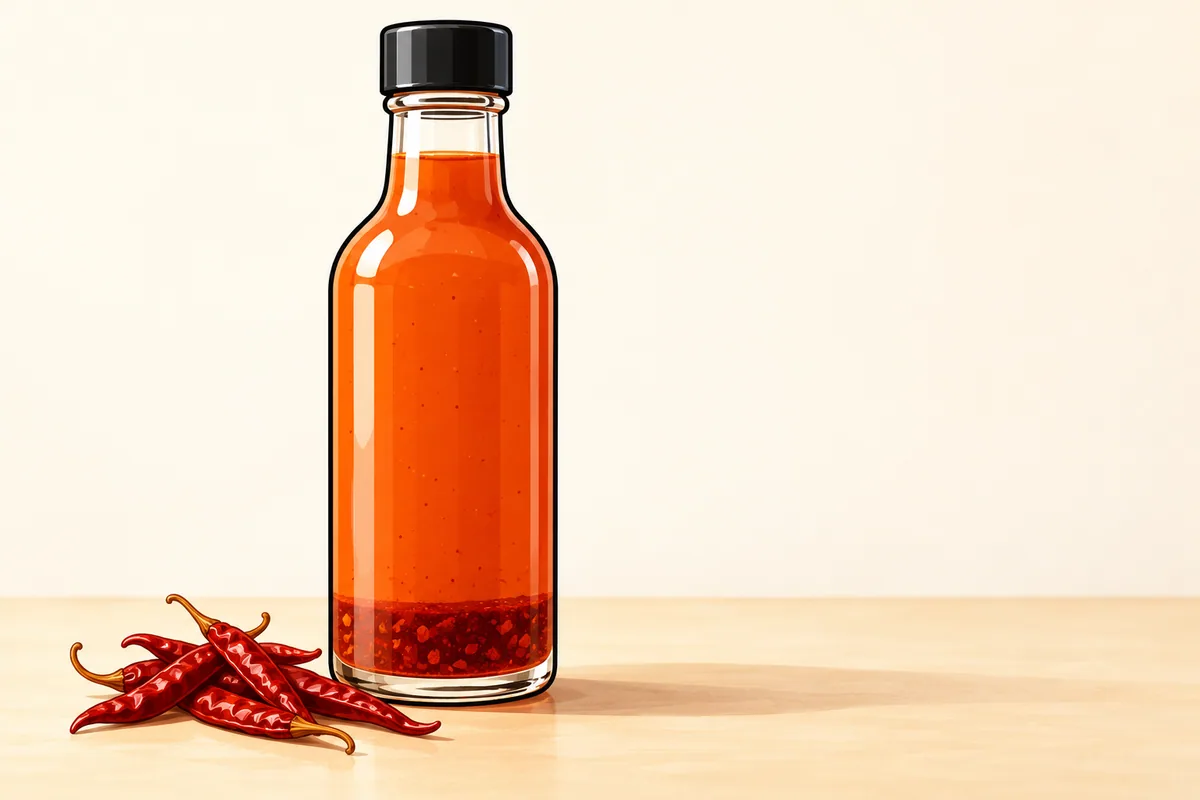
In a bottle, it is mostly salsa picante: dried red chiles blended with water, vinegar and salt into a sauce thin enough to shake. Cholula is the clearest example, because its maker prints the share: chiles make up 5.0 % of the bottle, after water1.
The second branch comes from the Yucatán, where the sauce starts from habanero instead. UF/IFAS notes that most habanero production today sits on Mexico's Yucatán Peninsula, where the pod belongs to the local cooking2, and El Yucateco builds its classic red and green sauces on that pepper3.
So when you say "Mexican hot sauce", you usually mean one of two bottles. One is a mild, tangy red table sauce you shake over tacos with a free hand. The other is a habanero sauce you add by the drop, with a fruity smell and far more fire.
Which bottles define Mexican hot sauce?
Five bottles cover both branches. Here is what each maker tells you on its own site, gaps included, so you know which facts come from the label and which from nowhere.
| Bottle | Maker and place | Chile the maker names | Maker's heat figure |
|---|---|---|---|
| Cholula Original14 | Cholula, made in Mexico | Árbol and piquín, 5.0 % of the ingredients | 1,000–2,000 SHU |
| Valentina (Red Label, Black Label)56 | Salsa Tamazula, Guadalajara | Not named on the site | Not published |
| Tapatío7 | Tapatío, family-owned since 1971 | Not named on the site | Not published |
| El Yucateco Salsa Picante Habanera Roja3 | El Yucateco, Mexico | Habanero, with tomato and spices | Not published |
| El Yucateco Salsa Picante Habanera Verde3 | El Yucateco, Mexico | Habanero, with garlic and spices | Not published |
Only Cholula prints both its chiles and a heat figure; for the rest, the label on your bottle knows more than the maker's website. El Yucateco says it has more than 50 years behind it8, and Salsa Tamazula dates its story to 1960, when founder Don Manuel Maciel Mendez introduced the Tamazula brand6.
The company launched Valentina soon after, and it now fills bottles at a Guadalajara factory of more than 279,000 square feet6. Tapatío calls itself family-owned since 1971 and says its recipe has passed down through generations, but its site lists no ingredients7. Cholula takes its name from a Mexican city it describes as 2,500 years old4.
How do the two branches split?
Think of salsa picante as one root with two branches. The chile you start from decides which branch a bottle sits on, and the heat follows from there.
- dried red chilesTable sauceDried red chiles; Cholula Original rates 1,000–2,000 SHU
- chiles namedCholula OriginalÁrbol and piquín, 5.0 % of the bottle
- chiles named
- habaneroHabanero sauceHabanero from the Yucatán; the pod runs 100,000–350,000 SHU
- chiles namedEl Yucateco Roja and VerdeHabanero with tomato, or with garlic
- chiles named
Salsa picante and its two branches, with the bottles whose makers name the chile
Valentina and Tapatío sit on the table-sauce branch by look and use: thin, red and meant for tacos. We leave them off the diagram because neither maker names its chile on its site67.
Which chiles go into Mexican hot sauce?
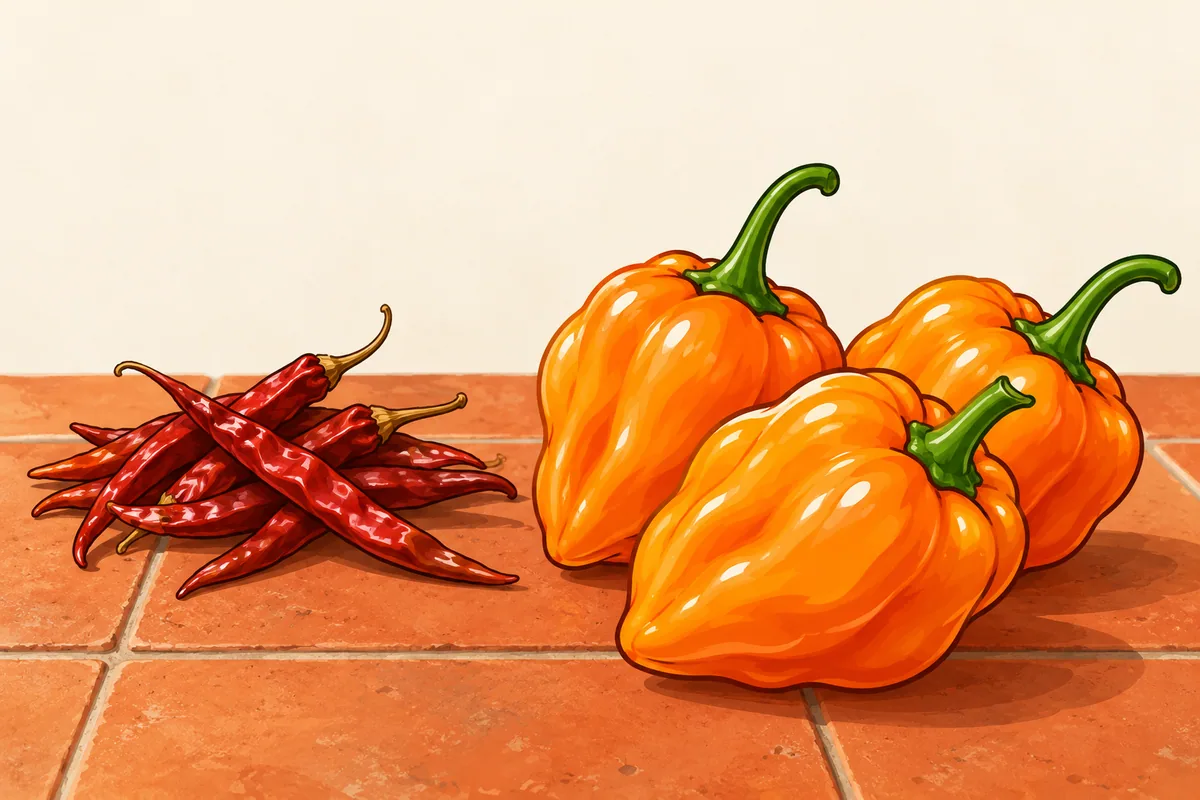
The ones the makers name are árbol, piquín and habanero. Cholula calls its árbol and piquín native chiles, blended with regional spices4; the chile de árbol entry has that pod's heat and shape.
Habanero runs far hotter. UF/IFAS puts the pod at 100,000–350,000 SHU and notes its citrus-like fruitiness and floral aroma2, which is why El Yucateco pairs the habanero with tomato in the red sauce and garlic in the green3.
Valentina and Tapatío do not name a chile on their sites67, so we leave their chile column empty rather than repeat a guess. You will read online that Valentina uses puya and that some table sauces use guajillo; until a maker prints that, treat it as a guess and trust the label in your hand.
Valentina or Cholula?
Both are thin red table sauces you shake over tacos, eggs or fruit. What their makers tell you differs more than the sauces do.
Cholula Original
If you want a number before you buy, Cholula has one and Valentina does not. Valentina sells a Red Label and a Black Label5 but prints no heat for either, so compare the two bottles' labels side by side at the store.
The sizes tell you how each sauce gets used. Valentina comes in a 34 fl oz bottle and a 1.1 gallon jug5, sizes you buy when you pour it over chips, fruit and street snacks every day. Cholula's standard bottle holds 150 ml1, and its wooden cap is part of the brand4.
How hot is Mexican hot sauce?
The table sauces are mild enough that you can shake them freely. The habanero branch is where the heat climbs, though no maker prints a figure for it.
Cholula Original rates 1,000–2,000 SHU4, below a Louisiana vinegar sauce like TABASCO Original Red at 2,500–5,0009. That fits the label: at 5.0 % chile, most of what you shake out is water and vinegar1. Every rated bottle sits on the hot sauce Scoville chart.
El Yucateco prints no SHU, but it does rank its own sauces in words, from mildest to hottest3. Read it as one maker's order, useful when you stand in front of its shelf:
- Salsa Jalapeño, which the maker calls the mildest of its sauces, for people new to spicy food.
- Salsa Picante Habanera Caribbean, orange habanero with carrot, sold as a gentle heat.
- Salsa Picante Habanera Roja and Verde, the classic habanero pair, labeled picante.
- Salsa XXXTRA Picante Habanera Kutbil-Ik, from a Mayan recipe, the one the maker marks extra hot.
Is salsa picante the same as salsa?
No. Salsa picante means "spicy sauce", and on a bottle it names the smooth, thin table sauce, not the chunky tomato and onion salsa you scoop with chips.
You can see the label use on El Yucateco's bottles, which read Salsa Picante Habanera3, and even on TABASCO's own Salsa Picante9. When your bottle says salsa picante, you shake it over food; you do not spoon it.
What do you put Mexican hot sauce on?
Start with what the makers themselves suggest, then follow your own plate:
- Cholula Original: pizza, rice and eggs, by its maker's own list1.
- Valentina Marisquera (Blue Label): seafood, the one job its maker built it for5.
- Valentina dry seasoning: fruit and snacks, so you get the flavor without a wet sauce5.
- El Yucateco Chipotle: a marinade for chicken fajitas, sweet, sour and smoky3.
The thin table sauces work best where you want a sour lift and a little heat in every bite: tacos, eggs, popcorn, a bowl of soup. The habanero bottles suit food that can stand up to fruit and fire, like grilled pork or black beans, a few drops at a time.
Does Mexican hot sauce need the fridge?
Not for the store bottles. A sealed, shelf-stable hot sauce is an acidified food made to sit at pH 4.6 or below10, and Cholula says you can keep its sauce in the cupboard4.
The same logic covers your other bottles: the acid keeps them, and time dulls them. If you wonder how long an open bottle keeps, the signs to watch are color, smell and anything growing at the neck.
Can you make Mexican hot sauce at home?
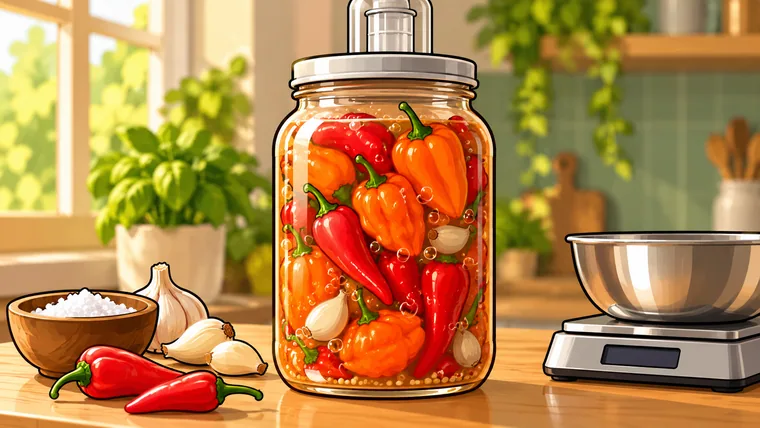
Yes. A table-style sauce comes down to a few parts and two safety rules:
- Dried red chiles for the base; Cholula's share is only 5.0 %, so a little goes a long way.1
- Vinegar of 5 % acidity, the strength Ohio State and NCHFP ask for; you may know it as 50 grain.1112
- Salt and your own spices, kept to a tested recipe's amounts; NCHFP says not to change the vinegar, food or water in a recipe.12
- A finished pH below 4.6, the line below which botulism bacteria cannot grow.13
- A spot in your fridge or freezer, unless you process the sauce by a tested canning recipe.11
SDSU Extension asks you to stick to tested recipes and points to the National Center for Home Food Preservation for them13. The hot sauce making hub has the full recipes and amounts.
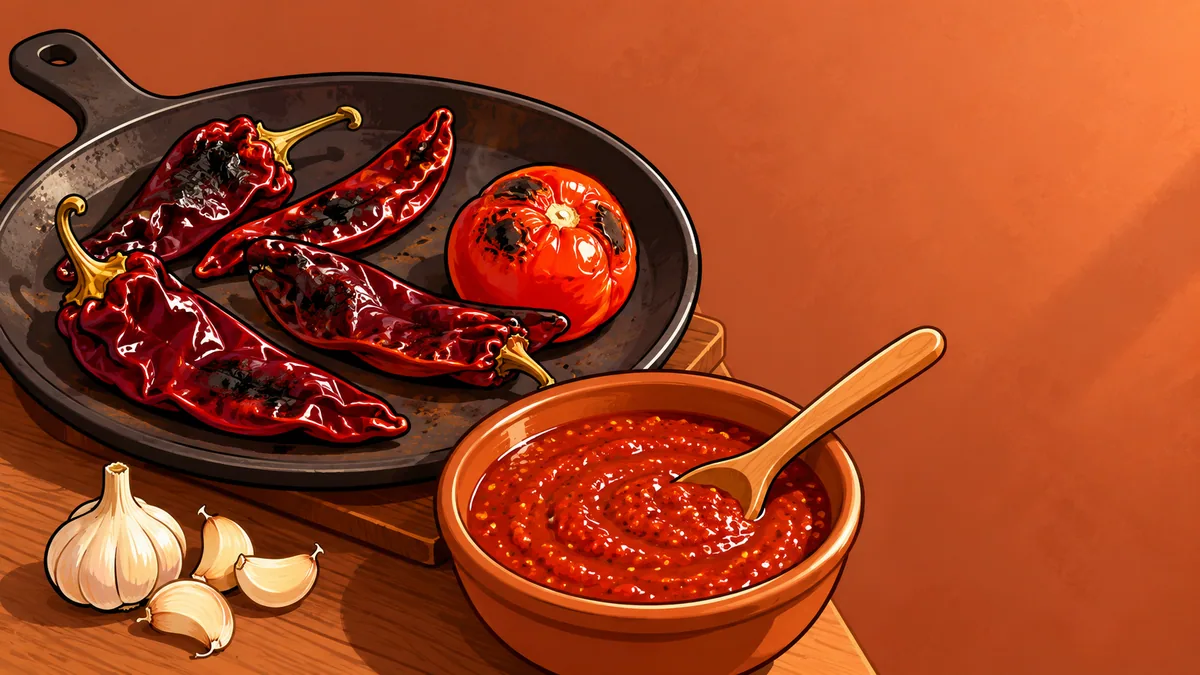
Chef Rick Bayless makes a red chile salsa from dried chiles, a table salsa and not a bottled shelf sauce, so you can watch how a dried-chile base comes together, while the acid and pH rules above still decide any bottle you keep.
What should you check on a Mexican hot sauce label?
Turn your bottle around before you buy it. Federal rules make makers list ingredients from most to least by weight15, so the first two or three words tell you most of what you are paying for.
- What comes first: Cholula lists water first and chiles second1. If your bottle leads with chiles, expect more body and more heat per drop.
- A chile share: Cholula prints its 5.0 %1; few makers do, so when you see a number, you can compare it bottle to bottle.
- Which chile: Árbol and piquín point you to a mild table sauce, habanero to the hot branch13.
- Tomato, garlic or carrot: El Yucateco adds tomato to its Roja, garlic to its Verde and carrot to its Caribbean3. Each one changes the color and the flavor you get.
If the label names no chile at all, as on the Valentina and Tapatío sites67, you judge it by taste and by the label color the maker gives you.
Choosing between a table sauce and a habanero sauce
Pick by how much heat you want in each drop on your plate. A table sauce like Cholula, at 1,000–2,000 SHU4, goes on with a free hand; a habanero sauce starts from a pod up to 350,000 SHU2, so try two drops first.
For tacos al pastor or eggs, the table sauce is the classic. For a plate that needs fruit and real fire, reach for the habanero bottle and keep a lime wedge nearby.