On this page
- 1What is peri-peri sauce?
- 2What goes into peri-peri sauce?
- 3Should you cook peri-peri sauce or blend it raw?
- 4Where do peri-peri chillies come from?
- 5How hot is peri-peri sauce?
- 6Which chilli can you use instead of African bird's eye?
- 7How do you use peri-peri sauce on chicken?
- 8What goes wrong with homemade peri-peri?
- 9How long does homemade peri-peri sauce keep?
- 10Your first peri-peri chicken
- 11Sources
What is peri-peri sauce?
It is a blend of small, hot red chillies with lemon, garlic, onion, an acid and oil, used to marinate and baste grilled chicken. Nando's, the chain that made the sauce famous outside southern Africa and now trades in over 20 countries, names its chilli as the African Bird's Eye Chilli, grown in Mozambique12.
The story Nando's tells is that Portuguese explorers in Mozambique added lemon and garlic to that local chilli1, and that the sauce reached Rosettenville, Johannesburg, where two friends found it at a Portuguese eatery in 19872. Peri-peri and piri-piri are two spellings of the same word; the pepper itself has its own piri-piri entry.
Set it beside the bottles you already know and the difference is the oil and the lemon. A Louisiana sauce is aged mash and vinegar, and sriracha is a sweet paste; peri-peri is closer to a loose marinade that you brush on, so expect it to look glossy and to split a little in the jar.
What goes into peri-peri sauce?
Chillies for heat, lemon for sourness, garlic and onion for body. Nando's lists the same four for its own sauces3, with a pinch of spices.
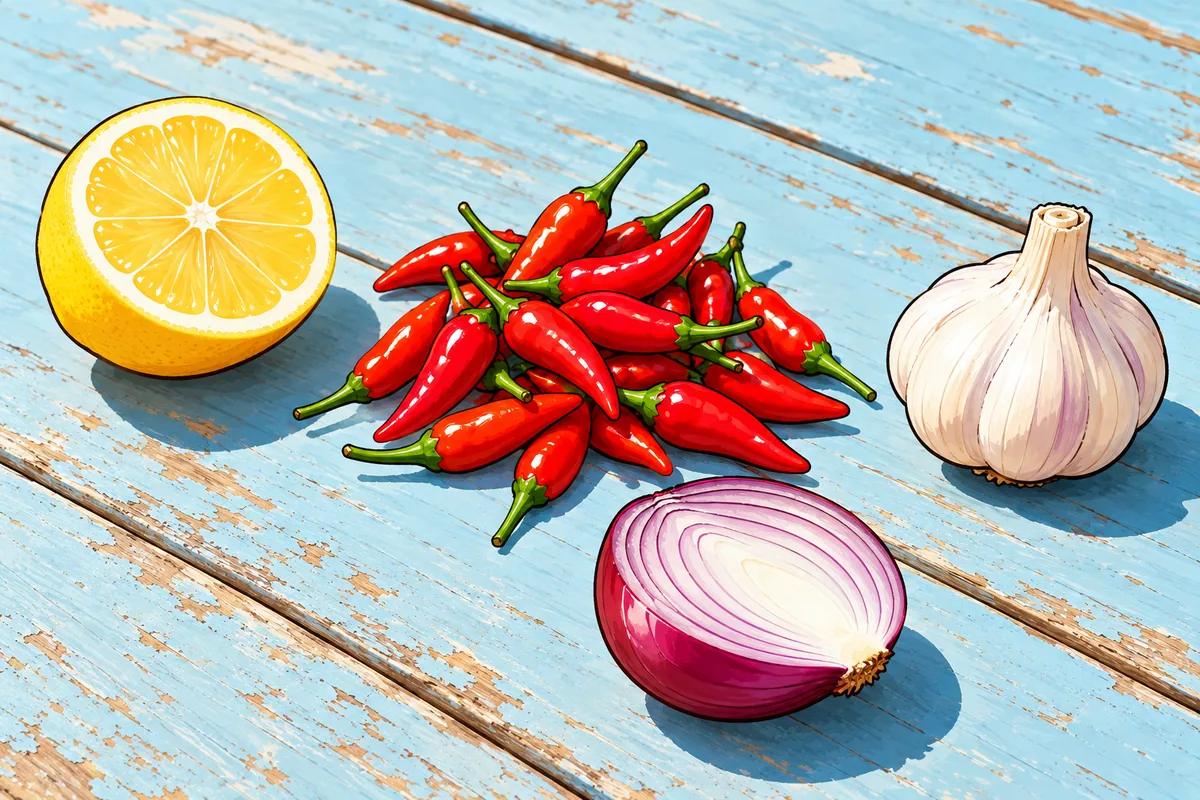
For amounts, the clearest public recipe we found comes from Worcestershire County Council's Food Savvy kitchen. It makes about 400 ml, blitzed raw in a blender until smooth4.
| Ingredient | Amount | What it does |
|---|---|---|
| Red bird's eye chillies4 | 10 | The heat; the council notes African ones have the right flavor, but any will do |
| Roasted red peppers4 | 2 (jarred is fine) | Body and sweetness without more heat |
| Red onion4 | 1 | Body |
| Lemon4 | 1, juice and zest | Sourness and aroma |
| Garlic4 | 5 cloves | Savory bite |
| Smoked paprika4 | 2 teaspoons | Color and a smoky note |
| Sea salt4 | 5 teaspoons | Seasoning |
| Black pepper, cracked4 | 1 teaspoon | Seasoning |
| Dried rosemary4 | ½ teaspoon (or fresh, finely chopped) | Herb note |
| White wine vinegar4 | 50 ml (red wine vinegar also works) | Sharpness |
| Vegetable or olive oil4 | 100 ml | Carries the flavor onto the meat |
Change the chilli count and you change the heat; everything else in the table is there for flavor. If ten bird's eyes sounds like a lot, start with four and taste. Five teaspoons of salt is a lot for 400 ml too, but remember that most of this sauce ends up as a marinade, not a dip.
If you only need enough for two chicken breasts, halve everything: 5 chillies, 1 roasted pepper, half an onion, half a lemon, 2 or 3 garlic cloves, 25 ml of vinegar and 50 ml of oil give you about 200 ml4. Your blender may struggle with a batch that small, so a stick blender in a tall jug does the job better.
Should you cook peri-peri sauce or blend it raw?
The council recipe blends everything raw4, and plenty of home cooks simmer theirs first. A boil does change some things, and you should know which ones before you pick.
Blended raw
Brought to a boil
SDSU Extension says a boil to 212 °F destroys salmonella and E. coli in a hot sauce, but the botulism spores survive it5. That is why cooking your peri-peri does not buy you a longer fridge life: the oil still shuts out air around the garlic and chilli. Pick raw or cooked for your own taste, and keep the same storage rule either way. If you do simmer it, let the sauce cool before you pour it over raw chicken, so your marinade stays fridge-cold.
Where do peri-peri chillies come from?
Mostly small farms in southern Africa. Nando's runs its own sourcing programme and publishes these figures for it:
These are one buyer's numbers, not a national harvest figure, and Nando's itself adds "or thereabouts" to the tonnage7. They do tell you the chilli in a bottle of Nando's sauce is grown in southern Africa, hand-picked3 and bought dried7. In a UK or US supermarket you will mostly find fresh Thai-type bird's eyes instead, which is why the swap section below matters.
How hot is peri-peri sauce?
No maker we read prints a Scoville figure, so we will not invent one. Nando's grades its sauces on its own on-pack scale, the PERi-ometer, instead3, and lets you pick the level. If you buy a bottle, that scale on the pack is your guide; if you make your own, your chilli count is.
The chilli name is loose, too. USDA's GRIN database files "piri-piri pepper" as a common name of Capsicum chinense, the habanero species8, while Nando's names its chilli only as African Bird's Eye1. For a sense of scale, UF/IFAS rates the small Thai bird's eye chili at 50,000–100,000 SHU9; a sauce with lemon, onion and oil in it lands well below its pod.
Which chilli can you use instead of African bird's eye?
The council says any red chilli will do4. What changes is how many you need, so pick by heat:
| Chilli | Heat (SHU) | How it changes the sauce |
|---|---|---|
| Thai bird's eye9 | 50,000–100,000 | Closest look and size; about 1 inch long |
| Cayenne9 | 25,000–50,000 | About half the heat; use more pods |
| Habanero9 | 100,000–350,000 | Much hotter and fruity; use far fewer |
| Jalapeño9 | 2,000–8,000 | Mild; adds body more than heat |
Here is a worked count. The council's 10 chillies4 are small bird's eyes; if you use Thai chilies at 50,000–100,000 SHU, keep the count at 10. With cayenne at 25,000–50,000 SHU, roughly half as hot per gram9, you would reach for more pods, but cayennes are bigger, so start with three or four and taste. A habanero can run up to 350,000 SHU9; one or two replace the whole pile.
How do you use peri-peri sauce on chicken?
Marinate first, then baste. Nando's marinates its chicken in peri-peri for 24 hours1; the council recipe asks for at least 44.
- 1
- 2
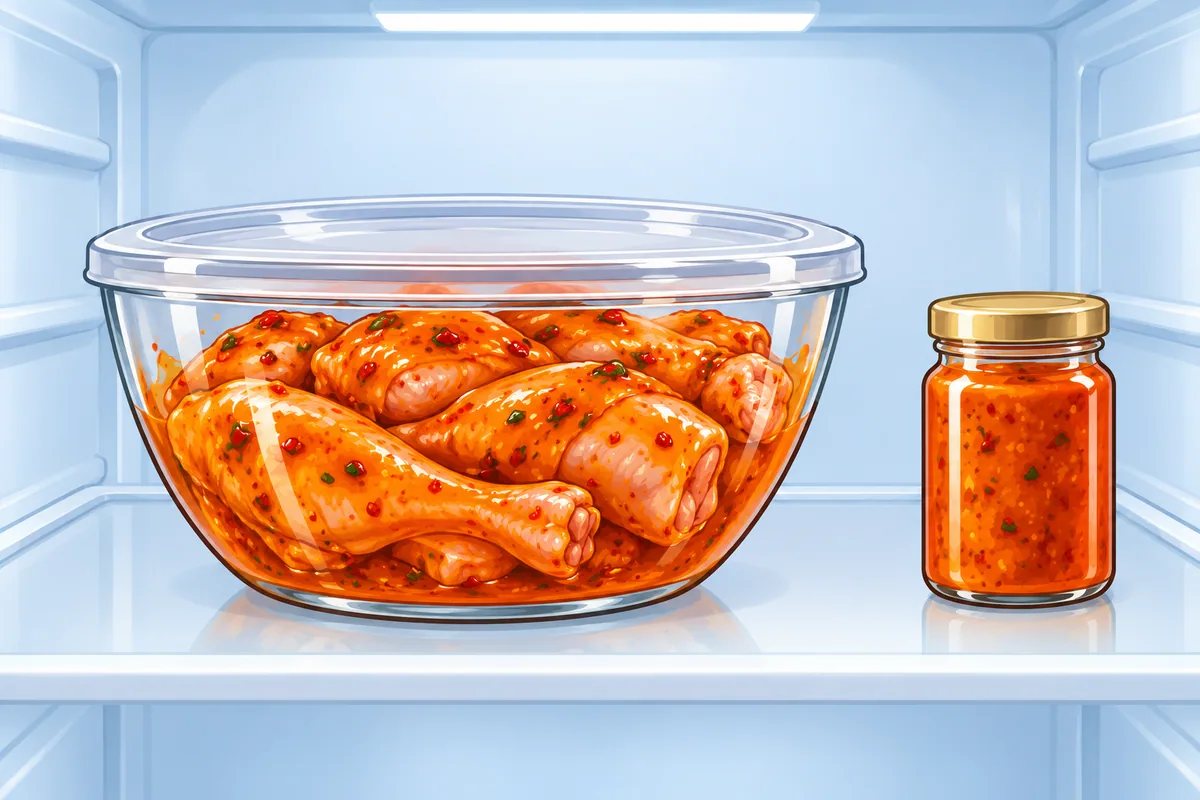
Marinate in the fridge
Coat the chicken, cover it and chill it for at least 4 hours; Nando's goes 24. AgriLife says to marinate in the fridge, and raw poultry keeps up to 2 days that way.Sources for this line1. Nando's (restaurant group, own food)4. Worcestershire County Council (Food Savvy programme)10. Texas A&M AgriLife Extension (Dinner Tonight)
- 3
Grill and baste
Cook over the coals, brushing on sauce from the clean jar as it cooks; Nando's describes peri-peri as most often used to baste chicken.1
- 4
Check the temperature
Cook until the thickest part reads 165 °F. Nebraska Extension says color is not a good way to tell, so a dark skin tells you nothing about the middle.11
- 5
The same sauce works on vegetables and fish; the council suggests both4, and Nando's says you can dip, dollop or squeeze its bottled sauces onto almost anything3.
Chef John of Food Wishes cooks a peri-peri chicken with his own peri-peri sauce, so you can watch one cook's version at work, while the safe-handling steps and the 4-day fridge limit on this page stay the rules.
What goes wrong with homemade peri-peri?
Most failures show up at the grill or in the jar. Here is what you are likely to meet:
- Your hands sting after chopping. Ohio State suggests gloves for hot peppers, then soap and water, and keeping your hands away from your eyes13.
- The sauce splits into oil and pulp. That is normal for a sauce that is a quarter oil (100 ml of 400 ml4). Shake or stir before you brush it on.
- The skin burns before the meat is done. Move the chicken to the cooler side and trust the thermometer, not the color11.
- Somebody dipped bread in the marinade bowl. That sauce has touched raw chicken; boil it before anyone eats it, or throw it out10.
- It came out far too hot. Blend in a third roasted red pepper or more lemon, then note a lower chilli count for next time.
How long does homemade peri-peri sauce keep?
Four days in the fridge, or freeze it. The council recipe says at least a week4, but this sauce holds raw garlic and chilli in oil, and Oregon State Extension gives a shorter limit for exactly that mix.
The lemon and vinegar help, but a home kitchen cannot check that they bring the whole batch to a safe acidity. Oregon State's tip fits peri-peri well: freeze it in ice cube trays, then keep the cubes in an airtight box, and write the date you made it and the date four days later on the fridge jar6. Split each batch the day you make it:
- a quarterClean jar, fridgeTable sauce; use within 4 days
- the rest you will not use this weekIce cube trayFreeze, then an airtight box
- enough to coat the birdMarinade bowlTouches raw chicken; up to 2 days in the fridge
- After cookingThrow it out, or boil it before reuse
Where one 400 ml batch goes, and how long each part lasts Sources for this line4. Worcestershire County Council (Food Savvy programme)6. Oregon State University Extension Service10. Texas A&M AgriLife Extension (Dinner Tonight)
Your first peri-peri chicken
Here is a weekend plan built from the numbers above, so you can see how the timing fits together:
- Friday, 7 pm
- Friday, 8 pm
- Saturday, late afternoon
- Saturday, at the table
- By Tuesday
Finish or freeze the jar; four days is the limit for garlic in oil.6
Next time you want peri-peri, take a few cubes out of the freezer. They thaw in about the time it takes your coals to heat.