
Piri Piri Pepper, the 5 cm African Bird's Eye Chile
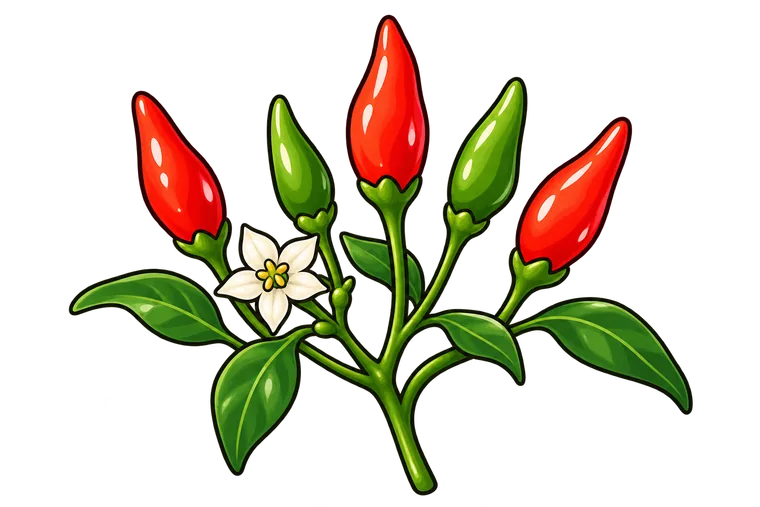
A small, fiery red chile known in Portugal and Mozambique, and sold abroad as African bird's eye.
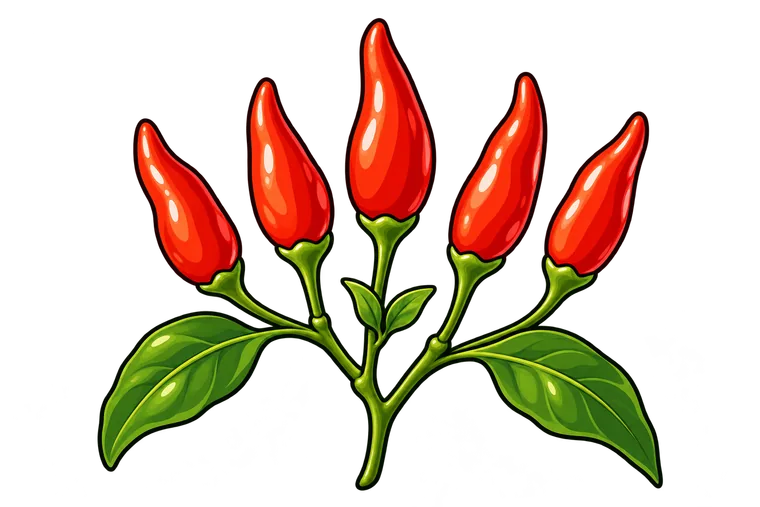
Very hot, per UC Master Gardeners; no primary source we read prints a Scoville figure.
- Small malagueta pods about 5 cm long, green ripening red
- Capsaicinoids rose 2.6 times between day 12 and day 33 in one study
On this page
- 1What is a piri piri pepper?
- 2How hot is piri piri, and why is there no Scoville number?
- 3How did a chile from the Americas end up named piri piri?
- 4What does piri piri taste like?
- 5How do you make a piri piri marinade at home?
- 6Is piri piri the same as bird's eye or tabasco?
- 7Is it piri piri or peri peri?
- 8How do you keep fresh piri piri?
- 9Can you grow piri piri?
- 10What goes wrong with piri piri?
- 11Where to go next with piri piri
What is a piri piri pepper?
A small, hot Capsicum frutescens chile: the little pods of the malagueta. A 2017 study from the University of Cádiz describes the malagueta as a small, tapered green pepper about 5 cm long that turns red as it ripens, and notes that the smaller pods are called piri piri in Portugal and Mozambique, while the larger ones go by malagueta in Brazil and Portugal1.
So when you buy a bag of piri piri, you're buying a small pepper from the same family as Brazil's malagueta. Abroad you'll also see it sold as African bird's eye; UC Master Gardeners in Ventura County list Peri-Peri and Piri-Piri under that name, with Africa and Portugal as its home3.
How hot is piri piri, and why is there no Scoville number?
It's very hot, but none of the primary sources we read prints a Scoville figure for it. UC Master Gardeners describe it as very hot with a subtle fruity flavor3, and that's the honest summary. Sites that quote a precise SHU for piri piri rarely say who measured it, so this entry shows no number rather than repeat one we can't trace.
What we can show you is a measured heat curve. The Cádiz team grew malagueta plants in a greenhouse and measured total capsaicinoids, the compounds behind the burn, in milligrams per gram of fresh pod as the fruit ripened1.
| Days after the pod appeared | Capsaicinoids | What happened |
|---|---|---|
| 12 | 0.829 mg/g | First harvest point, green pod |
| 33 | 2.119 mg/g | Steep rise ends |
| 33 to 40 | 3.3 % lower | A small dip |
| 54 | 2.328 mg/g | Slow rise resumes |
| Past 68 | Highest | Over-ripe pods lose water, so the heat concentrates |
What does that curve mean for your kitchen?
Most of the heat arrives early. Between day 12 and day 33 the capsaicinoid content rose about 2.6 times (2.119 ÷ 0.829), and after that it changed only a little1. Capsaicin itself was the largest single compound throughout1.
For you, that means a red piri piri isn't much hotter than a fully grown green one picked a few weeks earlier, but a tiny young pod is far milder. Over-ripe pods that have started to shrivel pack the most heat per gram, because they've lost water1. If your recipe needs a predictable burn, use pods at the same stage every time.
How did a chile from the Americas end up named piri piri?
All chiles began in the Americas. The genus monograph says domesticated chili peppers spread after Columbus's voyages, first to Europe and then to Africa and Asia2, and it gives lowland tropical America, from Brazil to Central America and the West Indies, as the natural range of C. frutescens2.
- Lowland tropical AmericaNative range of C. frutescens, Brazil to the West Indies
- EuropeChiles arrive after Columbus
- AfricaC. frutescens becomes established, wild and cultivated
- Piri piriName for the small pods in Portugal and Mozambique
In Africa the species spread well beyond gardens; the monograph lists it among plants that became established there and escaped from cultivation2. The Cádiz study adds that the malagueta is widely eaten in Portugal, Angola and Mozambique1. You'll find more peppers with roots on the continent on the African peppers page.
What does piri piri taste like?
Sharp heat first, then a little fruit, and you'll notice the order in your first bite. UC Master Gardeners call the flavor subtly fruity under a very hot burn3. Thin walls and small pods mean little sweetness, so in a sauce the pepper reads clean and bright rather than rich. You taste it best against lemon, garlic and the char of a grill.
- Fruity
- Sharp
- Very hot
How do you make a piri piri marinade at home?
Pound the chiles with garlic, acid and oil. The Cádiz study notes that the pepper seasons many regional dishes and sauces, including poultry dishes in Portugal1. For one chicken, start with four to six pods, three cloves of garlic, the juice of half a lemon and about four tablespoons of olive oil. That's a kitchen starting point, not a sourced recipe, so adjust it after your first batch.
- 1
Glove up
Put on rubber, latex or nitrile gloves, as Poison Control advises for hot peppers.4
- 2
Pound the chiles
Crush the pods with a pinch of coarse salt in a mortar until you have a rough red paste.
- 3
Add garlic and lemon
Work in the garlic, then the lemon juice, a little at a time.
- 4
Loosen with oil
Stir in the olive oil and a little paprika for color until the paste coats a spoon.
- 5
Marinate and grill
Rub it over a spatchcocked chicken, leave it in the fridge for a few hours, then grill and baste with the rest.
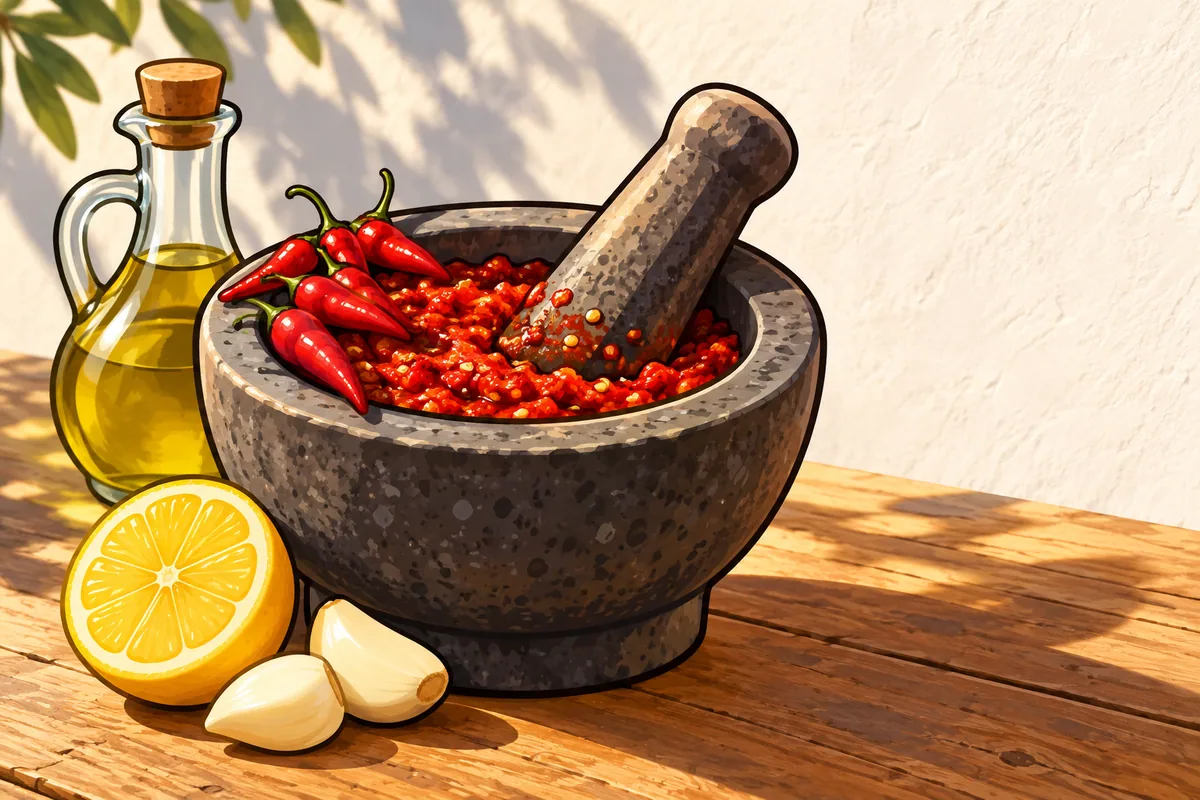
Taste a dab of the paste on a piece of bread before it goes on the chicken. If it's too fierce, add more oil and lemon rather than more garlic. The finished bottled style has its own page, the peri peri sauce, with how it's made and kept.
Is piri piri the same as bird's eye or tabasco?
Related, but not the same pod. All three are small, hot and easy to mix up on a market stall.
Piri piri and tabasco share a species, so they behave alike in a sauce. The Thai pod sold as bird's eye chili is smaller and belongs to C. annuum. If a recipe names piri piri and you only have one of the others, use about the same number of pods and taste as you go.
Is it piri piri or peri peri?
Both, and you'll see a few more spellings on bottles too. UC Master Gardeners list the pepper as "Peri-Peri/Piri-Piri"3, and the Cádiz study uses "piri piri" for the small pods in Portugal and Mozambique1. On a menu or a sauce label the spelling tells you nothing about the pepper inside, so read the ingredient list. A label may name the sauce style rather than the pepper. If the ingredients list cayenne or just "chili," you're tasting the style, not the pod; if you want the real thing, buy whole fresh or dried piri piri and make your own paste. You'll also get to control the salt and the lemon, which bottled versions decide for you.
How do you keep fresh piri piri?
Freeze whatever you won't use within a few days. NMSU's chile guide says chile keeps up to 12 months in the freezer, and that packs deeper than 2 inches freeze too slowly and turn mushy6. Small pods like these freeze fast in a flat bag, and you can crush them straight into a marinade while they're still frozen.
Drying works too, and it suits a pepper this small. String the pods on a thread or spread them on a tray somewhere warm and airy until they rattle, then keep them whole in a jar and crumble them as you cook. Remember the Cádiz finding: as pods lose water their heat per gram goes up1, so a dried pod hits harder than the fresh one you started with. Use fewer of them in your marinade.
Can you grow piri piri?
Yes, in a warm spot or a big pot. Like other C. frutescens plants, it holds its pods up5, which makes red ones easy for you to spot and pick. Birds don't feel capsaicin7, so in an open garden they may take the ripe pods before you do; a light net over the plant once fruit colors keeps your harvest for you. Pick at a consistent stage, since the Cádiz curve shows heat climbing fast in the first month of each pod's life1.
What goes wrong with piri piri?
Most problems you'll run into come from bare hands or too many pods.
Problems and fixes
- Your fingers burn after pounding the paste: Poison Control lists warm water flushes, vegetable oil or diluted vinegar soaks for skin.4
- Paste in an eye: rinse with plenty of warm water for 15 minutes.4
- The marinade is too fierce: add oil and lemon, or use fewer pods next time; young green pods carry far less heat.1
- Shriveled pods taste hotter than fresh ones: they lost water, which concentrates capsaicinoids.1
If anyone has trouble breathing or chest discomfort after eating very hot peppers, call 911; Poison Control in the US is at 1-800-222-12224.
Where to go next with piri piri
Make the marinade once and you'll know how hot your batch runs. If you can't find piri piri, the piri piri swap list gives you other small chiles and amounts. And if you're wondering whether cayenne powder can stand in, the cayenne and piri piri comparison answers that with both peppers' data.
Related peppers
 CayenneHot25,000–50,000 SHU
Published ranges.5
Related in Peppers
-
Peter Pepper, the Heirloom That Gets Hotter for 90 Days
A red heirloom chile with an odd shape, a seed-bank record and heat that builds right up to harvest.5 min read -
Thai Chili Pepper Scoville, 50,000–100,000 SHU
A small, sharp chile about an inch long, also sold as bird's eye.6 min read -
Chiltepin Heat, 70,000–160,000 SHU in a Pea-Sized Wild Pod
The wild bird pepper of Sonora, Arizona and Texas, picked from shrubs that grow under desert trees.6 min read -
Count Dracula Pepper Heat, 25,000–50,000 SHU on Black Leaves
A compact hot pepper grown for its near-black foliage, with pods that ripen from black to blood red.5 min read -
Jwala Pepper, the Indian Cayenne-Type Chile at 85 Days
A long, thin, hot green chile from India that turns red and dries well.5 min read -
Siling Labuyo, the Philippine Wild Chili Sold at ₱800 a Kilo
The Philippines' everyday wild chili: soaked in cane vinegar, cooked into stews, and even eaten as a leaf.6 min read
Sources
· 7
- 1Molecules 22(5):736 (MDPI) Ontogenetic Variation of Individual and Total Capsaicinoids in Malagueta Peppers (Capsicum frutescens) during Fruit Maturation (Fayos, de Aguiar, Jiménez-Cantizano and others)
- 2PhytoKeys 200:1-423 (Pensoft) Monograph of wild and cultivated chili peppers (Capsicum L., Solanaceae)
- 3University of California Agriculture and Natural Resources, UC Master Gardeners of Ventura County Ventura Garden to Table Series: Peppers
- 4National Capital Poison Center (Poison Control) Capsaicin: when the chili is too hot
- 5University of Florida IFAS Extension HS-859/TR010: Pepper Production in Miami-Dade County, Florida
- 6New Mexico State University Cooperative Extension (Guide E-324) Processing Fresh Chile Peppers (revised by Nancy C. Flores and Cindy Schlenker Davies)
- 7Cell 108(3):421-430 Molecular basis for species-specific sensitivity to "hot" chili peppers (Jordt and Julius)