
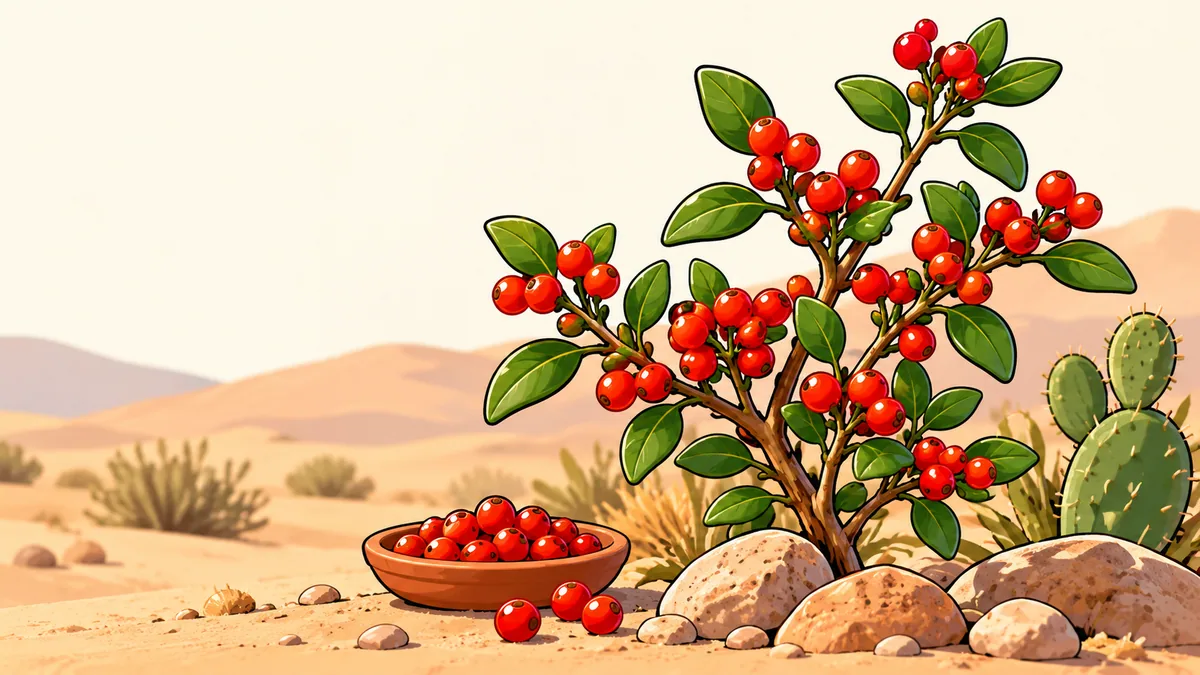
Chiltepin Heat, 70,000–160,000 SHU in a Pea-Sized Wild Pod
The wild bird pepper of Sonora, Arizona and Texas, picked from shrubs that grow under desert trees.
 Extra-hot
Short answer
70,000–160,000 SHU, red hotter than green
- A Sonora lab test found 70,000 SHU in green pods and 160,000 SHU in red ones
- Wild pods only 3–8.5 mm across, picked September to December and sun-dried in 3–4 days
On this page
- 1How hot is a chiltepin, green or red?
- 2What does a chiltepin look like, and how small is it?
- 3Is chiltepin the same as piquin or bird's eye?
- 4Where does the chiltepin grow wild?
- 5Why do birds eat chiltepins and people sow none?
- 6Can you grow a chiltepin in your own yard?
- 7How do Sonorans pick, dry and store chiltepin?
- 8Should you buy green or red chiltepin?
- 9What goes wrong with chiltepin in your kitchen?
How hot is a chiltepin, green or red?
Very hot, and the redder your pod, the hotter it gets. A CIAD study of wild chiltepín from Mazocahui, Sonora, measured 70,000 SHU in green fruit and 160,000 SHU in red fruit, with capsaicin rising from 4.24 to 8.22 mg per gram as the pods ripened1. So the same bush gives you two peppers: a sharp green one in September and one about twice as hot by October.
Set beside an average jalapeño of about 5,000 SHU5, a green chiltepin runs about 14 times hotter and a red one about 32 times. A single red chiltepin, smaller than a pea, carries the heat of a whole spoonful of jalapeño. That's why a Sonoran cook crushes two or three pods over a bowl of beans and stops there.
Why do some sources print almost 500,000 SHU?
Because they quote a lab result on dry weight. A 2013 HPLC study from Durango gave chiltepin 483,089 SHU, the highest of its varieties6, but it weighed the pods after drying, which removes the water and pushes every figure up. The same lab put a field jalapeño at about 303,602 SHU, far above any fresh-pod range you'll see.
| Figure | What the lab measured | Ratio to a jalapeño |
|---|---|---|
| 70,000 SHU1 | Green wild fruit, Sonora, HPLC | About 14 × |
| 160,000 SHU1 | Red wild fruit, Sonora, HPLC | About 32 × |
| 483,089 SHU6 | Dried pods, dry-weight basis, Durango | About 1.6 × that lab's jalapeño (303,602) |
| 50,000–100,000 SHU7 | A heat-chart band in an extension guide, no lab test | 10–20 × |
Iowa State's extension heat chart, adapted from a University of California guide, files chiltepin in a 50,000–100,000 SHU band7, close to the green-pod figure. Our advice: trust the ratio, not the big number. In both studies the chiltepin comes out on top, and in your mouth the red pod stays roughly twice as hot as the green one.
How many chiltepins match one jalapeño?
Fewer than you'd guess. Take the INIFAP weight of about 0.211 g per wild pod8 and the red-pod heat of 160,000 SHU1: one pod brings you the heat of roughly 6.8 g of an average 5,000 SHU jalapeño, since 0.211 × 32 ≈ 6.8. The table works it out for you at three counts.
| Red chiltepin pods | Their weight | Jalapeño with the same heat |
|---|---|---|
| 1 | About 0.2 g | About 7 g |
| 3 | About 0.6 g | About 20 g |
| 5 | About 1 g | About 34 g |
So if your recipe asks for one fresh jalapeño and you reach for dried chiltepín, start with two or three crushed pods and taste as you go. Green pods carry less than half that heat, so you can use about twice as many of them, and you'll get a brighter, grassier bite in your salsa.
What does a chiltepin look like, and how small is it?
Tiny and round, and on the bush you'll see each one pointing up at the sky. The genus monograph describes a globose berry 6–8.5 mm across, or an egg-shaped one 9–13 mm long, green when young and bright red-orange or red when ripe, on stalks that stand erect and rigid2. Most cultivated peppers hang down; the Forest Service notes that wild chiles hold their small bright red fruit upright on the branches instead3.
At about a fifth of a gram per pod8, you need roughly 50 pods for 10 grams. That's worth knowing before you pay by the gram, and it explains why a small jar costs what it does: someone picked every one of those berries by hand off a wild shrub.
Is chiltepin the same as piquin or bird's eye?
Close kin, and the names overlap. NMSU's Chile Pepper Institute calls the chiltepin a wild kind of piquin, usually round, and also sold as bird pepper or birdseye pepper, while it describes the piquin as a wild red pepper of bullet shape9. The full shape and heat match-up sits on the chiltepin and piquin pair page.
Names you'll meet on a chiltepin label
- Chiltepín, chiltepec, chiltepillo, chilpaya, chile de monte and chile parado: Sonoran and Mexican names for the same wild berry.4
- Chile piquín: used for chiltepin in Sonora, while NMSU reserves piquin for the bullet-shaped wild pod.49
- Bird pepper or wild bird pepper: the US and Caribbean name, because birds eat the fruit.23
- Birdseye pepper: NMSU lists it for chiltepin too, but most Asian bird's eye chilies are a different, longer pod.9
When a bag just says piquín, look at the pods: round berries mean chiltepin, a pointed bullet means piquin in NMSU's sense. That last line of the list matters at the shop too. A bag of Thai bird's eye chilies holds slim pointed pods, not round berries, so check the shape before you swap one for the other.
Where does the chiltepin grow wild?
Across a huge range: the monograph calls this variety the most widely distributed member of the genus, wild from the southern United States to northern Bolivia and northern Brazil, from sea level to about 2,500 m, and not under threat for now2. It also treats it as the wild ancestor of the cultivated C. annuum you grow, which is why the chiltepin sits at the root of the peppers by country story.
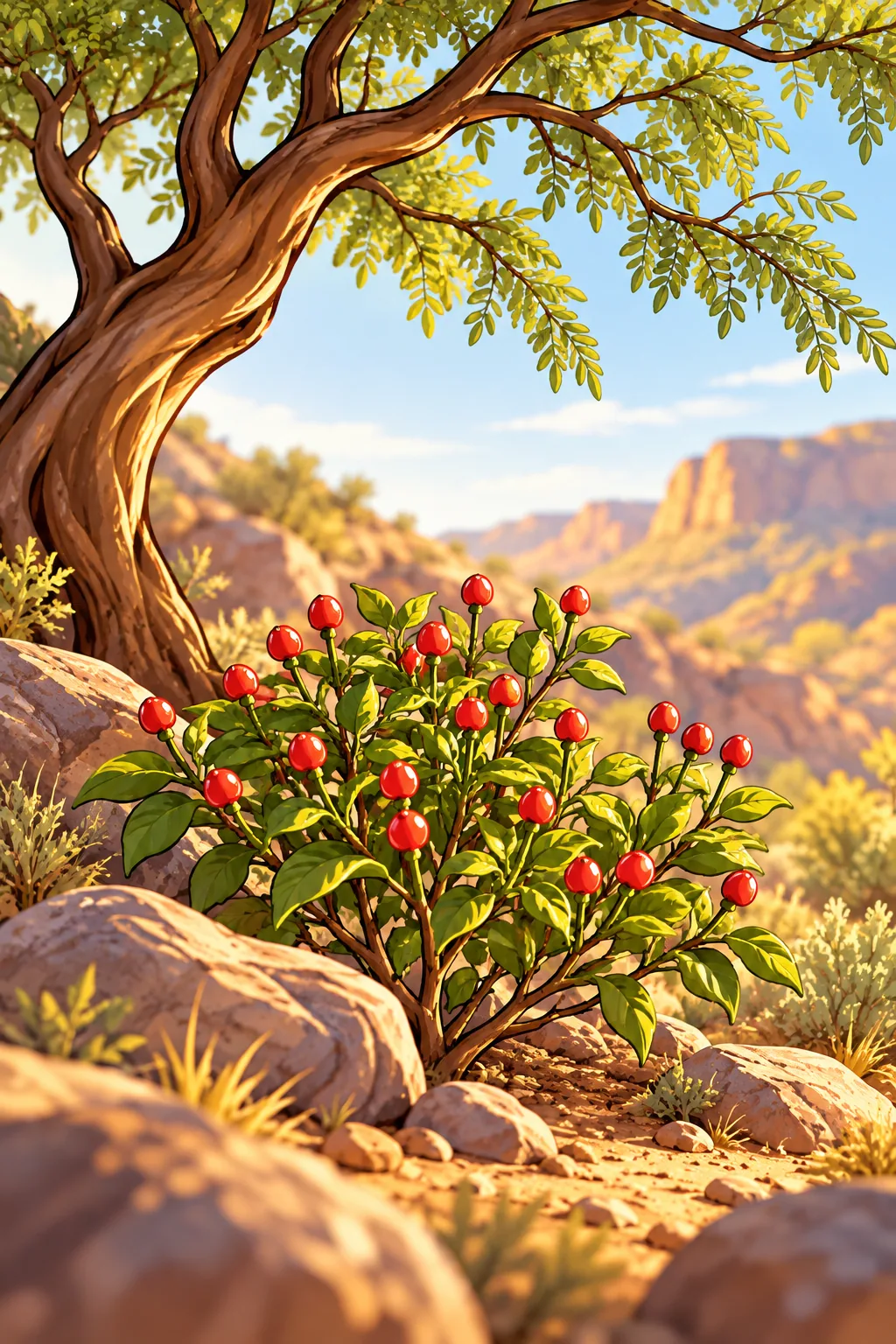
In Sonora it grows under trees in hill country, near stream banks and canyons4. The study names four main nurse plants there: tepeguaje, mesquite, cúmaro and garambullo4. The Forest Service adds the practical reason: the small shrubs sit under bigger shrubs or near rocks, where they get some protection from frost3.
The US edge of that range has its own protection. In 1999 the Coronado National Forest designated the 2,500-acre Wild Chile Reserve around Rock Corral Canyon in Arizona's Tumacacori Mountains, home to the largest of only about 10 known wild populations in the state3. Texas went further in 1997 and named the chiltepin its official State Native Pepper10.
RareSeeds, a seed company, made this short film on the wild chiltepin of the Arizona and Sonora borderlands, so you can see the small bush and its pods where they grow and hear why it counts as an ancestor of the peppers in your garden.
Why do birds eat chiltepins and people sow none?
Because birds do the planting. The red fruit draws birds, and as they eat the pods they spread the seeds4; the Forest Service says the plant takes its name, bird pepper, from that habit3. Even the Texas resolution notes that the mockingbird, the state bird, goes for the pod10.
- May to August: flowersSmall white flowers on the shrub
- June to October: fruitGreen berries ripen to red, held upright
- Birds eat the red podsThey carry the seeds away
- Seedlings under nurse treesShade and shelter from frost
- First fruit at 6 to 10 monthsA new shrub joins the stand
- September to December: people pickSeason set by the summer rains
- Back to May to August: flowers
Almost all chiltepín still comes from wild harvests8, so the crop you buy depends on rain. Plants reach fruiting age at six to ten months, flower from May to August and carry fruit from June to October4. If you'd like a mild relative that behaves better in a garden bed, look at the cayenne instead.
Can you grow a chiltepin in your own yard?
You can, but plan for a slow, wild-tempered shrub. Your plant needs six to ten months before it gives its first fruit4, far longer than a garden jalapeño, so in a cold-winter area you'd start it indoors and keep it in a pot you can carry in.
Copy what the wild plant likes. In the desert it lives under the canopy of a bigger shrub or beside rocks that shield it from frost3, so your pot does best with bright light and some afternoon shade, tucked against a warm wall when nights turn cold. And expect visitors: if birds can reach your bush, they'll take the red pods before you do4.
How do Sonorans pick, dry and store chiltepin?
By hand, in the sun, and fast. The Sonoran picking season starts in September and runs to December, depending on the rains4. The steps below follow the ethnobotany study and the CIAD processing trial.
- 1
- 2
Move the green ones quickly
Green chiltepín turns black and spoils if it doesn't sell fast, so it goes straight into brine or vinegar.4
- 3
Sun-dry the red ones
Spread the red pods in the sun for about three to four days. When you shake them and hear a rattle like a little bell, they are fully dry.4
- 4
Store dry and sealed
The CIAD trial dried pods to about 4 % moisture and kept them in sealed polyethylene bags, some at 5°C and some at 25°C.1
That rattle test is the one detail worth keeping. A pod that still feels leathery has water left in it, and you won't be able to crush it into flakes between your fingers.
Should you buy green or red chiltepin?
Buy by the dish. The CIAD team found the unripe fruit goes into home-made salsas and pickles, while the ripe fruit gets sun-dried as a seasoning1; the heat difference you already know.
Green chiltepin
Red chiltepin
A jar of pickled green pods is the gentler start for you. The dried red ones are the classic table pepper: crush them between your thumb and finger straight over the plate, which is also how a Mexican hot sauce cook judges how many to add to a batch.
What goes wrong with chiltepin in your kitchen?
Most of your trouble will come from the size of the pod, which makes the heat easy for you to misjudge.
Chiltepin problems and their fixes
- Green pods went black in the fridge: green chiltepín spoils fast fresh. Pickle them in vinegar or brine the day you get them.4
- The pods bend instead of crumbling: they still hold water. Give them more sun until they rattle when shaken.4
- The salsa came out far too hot: you used red pods where the recipe meant green. Red pods carry about twice the heat, so halve the count.1
- Your fingers burn after crushing pods: capsaicin stays on skin. Crush them with the back of a spoon or wear gloves, and keep your hands away from your eyes.
If your store has no chiltepín at all, our pepper swap finder lets you pick a drier, easier pod by heat. Your next step: open the Pepper Index, sort it by heat and find the chiltepin, the smallest pod near the top, with its wild cousins around it.
Related peppers
Published ranges.5
Related in Peppers
-
Aji Charapita, the Pea-Sized Amazon Chile at 30K–50K SHU
A tiny yellow chile from Iquitos and Pucallpa with a citrus aroma and a heat seed sellers compare to cayenne.6 min read -
Count Dracula Pepper Heat, 25,000–50,000 SHU on Black Leaves
A compact hot pepper grown for its near-black foliage, with pods that ripen from black to blood red.5 min read -
Jalapeño Scoville, 2,000–8,000 SHU and Chipotle
The medium-heat chile most heat comparisons start from.6 min read -
Thai Chili Pepper Scoville, 50,000–100,000 SHU
A small, sharp chile about an inch long, also sold as bird's eye.6 min read -
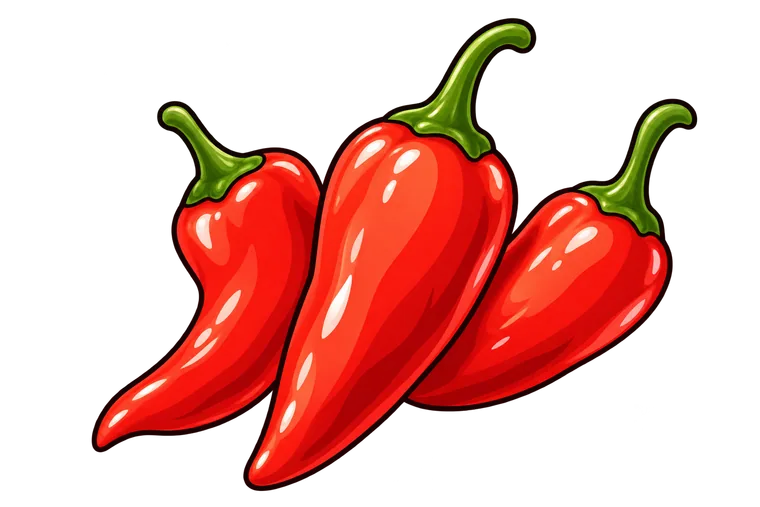
Calabrian Chili Heat, 5,000–70,000 SHU by EU Rule
Peperoncino di Calabria: the protected chili of Italy's toe, sold fresh, on strings, as flakes and as powder.7 min read -
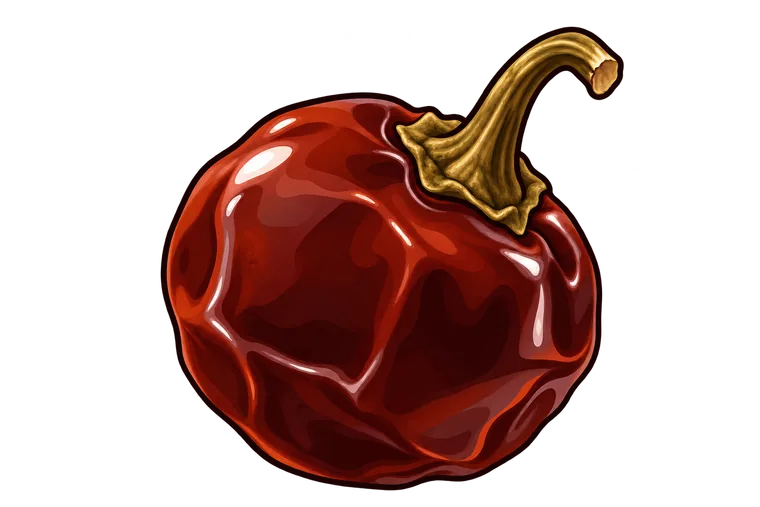
Cascabel Chile, Two Official Heat Scores for One Round Pod
A reddish-brown dried globe with a nutty, woody taste, named for the little bell it sounds like.6 min read
Sources
· 11
- 1Revista Mexicana de Ingeniería Química 9(2):197-207 (CIAD) Capsaicinoides y color en chiltepín (Capsicum annuum var. aviculare). Efecto del proceso sobre salsas y encurtidos (Montoya-Ballesteros et al.)
- 2PhytoKeys 200:1-423 (Pensoft) Monograph of wild and cultivated chili peppers (Capsicum L., Solanaceae)
- 3USDA Forest Service, Celebrating Wildflowers Chiltepine or Bird Pepper (Capsicum annuum var. glabriusculum)
- 4Estudios Sociales 16(32), Centro de Investigación en Alimentación y Desarrollo (CIAD) Etnobotánica del chiltepín. Pequeño gran señor en la cultura de los sonorenses (Bañuelos, Salido and Gardea)
- 5University of Florida IFAS Extension HS-859/TR010: Pepper Production in Miami-Dade County, Florida
- 6Molecules 18(11):13471-13486 (MDPI) Characterization of Different Capsicum Varieties by Evaluation of Their Capsaicinoids Content by High Performance Liquid Chromatography, Determination of Pungency and Effect of High Temperature (González-Zamora et al.)
- 7Iowa State University Extension PM 1888(S): Guía de Horticultura, El huerto doméstico, Chiles (Everhart, Haynes, Jauron)
- 8Revista Mexicana de Ciencias Agrícolas 17(1) e4005 (INIFAP) Effect of weeds on the yield of chiltepin pepper (Vera-Mendoza et al.)
- 9New Mexico State University, Chile Pepper Institute Chile Terminology
- 10Texas Legislature, 75th Session H.C.R. No. 82: the chiltepin as the official State Native Pepper of Texas
- 11RareSeeds SEED STORIES | Chiltepin Pepper: Wild Chile of the Borderlands