
Cayenne Pepper Scoville, 25,000–50,000 SHU
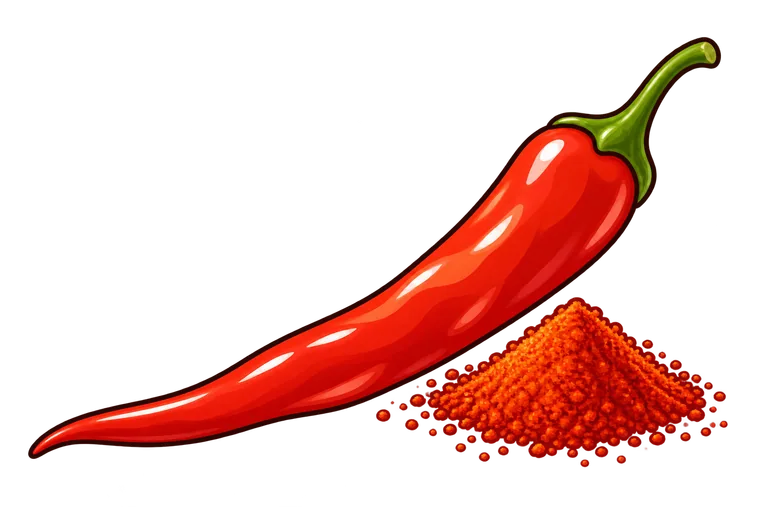
The long red chile behind most ground red pepper and a lot of vinegar hot sauce.
 Hot
25,000–50,000 SHU
- About 5 to 10 times the heat of an average jalapeño
- Ripe 70–85 days after transplanting, like most hot peppers
- Dries in about 4–8 hours in an oven at 140–150 °F
On this page
- 1How hot is a cayenne pepper?
- 2Why is it called cayenne?
- 3What does a cayenne plant and pod look like?
- 4How is cayenne used?
- 5How do you pick and store fresh cayenne?
- 6How do you dry and grind your own cayenne?
- 7What goes wrong with homemade cayenne?
- 8What can you use instead of cayenne?
- 9Can you grow cayenne?
How hot is a cayenne pepper?
A cayenne rates 25,000 to 50,000 Scoville heat units, the range UF/IFAS Extension publishes1 and repeats on its Scoville list2. The range starts in the medium band and ends in the hot band; its midpoint of 37,500 SHU is why you see it under hot in our index.
Log scale; bars are published ranges.1
Gram for gram, a cayenne brings 5 to 10 times a jalapeño's heat, so cut the amount when you swap one for the other.
How far does cayenne sit above a jalapeño or a serrano?
Divide by the published figures and the ratios come out as below. All the numbers come from the same UF/IFAS publication, so you can compare them directly.
| Against | Its heat | Cayenne is | How we got it |
|---|---|---|---|
| Jalapeño (average) | about 5,000 SHU | 5–10 times hotter | 25,000 ÷ 5,000 and 50,000 ÷ 5,000 |
| Serrano | 10,000–25,000 SHU | 1–5 times hotter | 25,000 ÷ 25,000 and 50,000 ÷ 10,000 |
| Thai chili | 50,000–100,000 SHU | 1–4 times milder | 50,000 ÷ 50,000 and 100,000 ÷ 25,000 |
| Habanero | 100,000–350,000 SHU | 2–14 times milder | 100,000 ÷ 50,000 and 350,000 ÷ 25,000 |
The serrano row surprises people. A mild cayenne and a hot serrano both rate 25,000 SHU, so if you're swapping one for the other, the serrano against cayenne page shows where they overlap. Most of you will hold a cayenne up against a jalapeño, and the cayenne and jalapeño pairing works through that gap in a recipe.
Why do lab tests of cayenne give such different numbers?
Because labs measure different pods, grown in different places, on a different basis. Two recent studies tested cayennes and landed far apart, and you'll find both numbers quoted online:
| Figure | What the lab or source tested |
|---|---|
| 25,000–50,000 SHU | Extension range for the pepper type |
| 26,391 SHU | One fresh cayenne paste, figure tied to dry weight |
| 50,279 SHU | The same paste after 21 days of fermentation |
| 91,907 SHU | Backyard-grown cayenne, dry weight, North Carolina |
| 15,000 and 17,400 SHU | NMSU's two cayenne releases, averages |
Species also shapes the mix of heat compounds. The North Carolina team found C. annuum peppers like cayenne averaged a 64:30:6 ratio of capsaicin, dihydrocapsaicin and nordihydrocapsaicin, against a more capsaicin-heavy 73:25:2 in C. chinense types such as the habanero6. Two peppers with the same SHU can still feel a little different in your mouth.
Dry-weight figures read high because a fresh pod is mostly water. The North Carolina cayennes held about 81 to 82 % water6, so 91,907 SHU on dry weight works out to roughly 17,000 to 18,000 SHU in the fresh pod you'd bite. That's our arithmetic on their numbers, and it lands right beside NMSU's two releases. Trust the extension range for cooking, and expect your own pods to vary by variety, weather and field.7
Why is it called cayenne?
It's named for the city of Cayenne in French Guiana1. The plant is a cultivar of Capsicum annuum, so it's family to the bell pepper, the jalapeño and paprika1. The University of Guam lists cayenne under the same species, beside bell, wax, jalapeño and bird types8.
You'll also hear gardeners use "cayenne" for a shape. Virginia Cooperative Extension describes a hot cayenne group of slim, pointed, slightly twisted fruits and puts Anaheim, cayenne, serrano and jalapeño in it9. So when your old seed catalog says "cayenne type", it means the long thin pod, not a heat level.
That's why you'll find a mild Anaheim in the same pod group as a pepper 25 to 50 times hotter.
What does a cayenne plant and pod look like?
A long, narrow red pod on a plant 2 to 4 feet tall, about waist high on you. UF/IFAS gives plant height and color, and its variety list describes a typical cayenne pod.
UF/IFAS describes Arapaho as a cayenne type with early maturity on a medium-sized plant and fruit with medium-high pungency with great flavor and aroma10. University of Maryland Extension names cayenne among its hot varieties and gives most hot types 70 to 85 days from transplanting4. Red is the usual ripe color, but the UC Master Gardeners of Ventura County note yellow and purple cayennes too3.
Your pod size depends on the variety and the year. The backyard cayennes in the North Carolina study measured about 66 to 76 millimeters long, under 3 inches, and about 12 to 13 millimeters wide6, far shorter than Arapaho.
Which cayenne varieties can you grow?
Extension and university breeders publish pod size, and NMSU also publishes heat for its two releases. Both NMSU figures sit below the UF/IFAS range, a reminder that heat varies a lot by variety7.
| Variety | Pod | Heat |
|---|---|---|
| Arapaho | 8–9 inches, early, medium-sized plant | Medium-high pungency, no SHU given |
| NuMex Nematador (2003) | 5.8 inches long, 0.6 inch wide; resists root-knot nematodes | 15,000 SHU |
| NuMex Las Cruces (2010) | 6.7 inches, ripens scarlet; high yield, bred for cayenne mash | 17,400 SHU |
Pick Nematador if root-knot nematodes have hit your beds before; NMSU calls that pest a major problem for cayenne growers7. Pick Las Cruces if you want volume for sauce, since NMSU bred it for the cayenne mash that hot sauce makers ferment7.
How is cayenne used?
Mostly dry, and that's how most of us buy it. UF/IFAS says cayenne is generally dried and used as ground powder or dried flakes1. The other big use is sauce: Frank's RedHot Original lists aged cayenne red peppers first, then distilled vinegar, water, salt and garlic powder5.
- dryDried wholeShrunken, dark red
- grindGround powderFine grind
- crushFlakesCoarse crush
- grind
- fermentMashed and agedTurns sour as it ferments
- blend with vinegarVinegar hot saucePepper, vinegar, salt, garlic
- blend with vinegar
Sources for this line1. University of Florida IFAS Extension4. University of Maryland Extension5. McCormick (maker of Frank's RedHot, own product)11. New Mexico State University, Cooperative Extension Service (Guide E-322, Flores and Davies)12. Plants 11(8):1080 (MDPI)
- 1
Ripen on the plant
Let the pods turn fully red. Peppers don't ripen further once picked.4
- 2
Dry the pods
Dry the ripe pods whole; dried cayenne is the starting point for both powder and flakes.1
- 3
Grind or crush
Grind fine for cayenne powder or crush coarse for flakes.1
- 4
Or age it into sauce
Aged cayenne blended with vinegar, salt and garlic is the formula on a Frank's RedHot label.5
That aged-pepper-and-vinegar build is the same family as Louisiana-style hot sauce, and the cayenne hot sauce recipe scales it down to one jar. Fermenting doesn't cost you any heat: in the 2022 study, a cayenne paste fermented for 21 days at 20 °C kept its capsaicinoids while lactic acid built up12.
How do you pick and store fresh cayenne?
Cut the pods off red, keep them cool and moist, and use them within a few weeks. Clemson and Virginia Extension both cover the harvest end of the season:
Picking and storing fresh cayenne
- Cut the stems with snips instead of pulling; pepper stems snap easily.
- Pick red for powder; hot peppers can come off green, but only red pods give you red cayenne.
- Just before the first fall frost, pull whole plants and hang them up.
- Store fresh pods at 45–50 °F with high humidity; they keep about two to three weeks.
- Freeze, pickle or dry what you can't use in that window.
Clemson puts fridge humidity at 80 to 90 % and Virginia at 95 %913, so a loosely closed bag in the crisper drawer works better for you than an open shelf. Whole pods also freeze well: NMSU keeps frozen chiles up to 12 months at 0 °F or below, in packs no deeper than 2 inches14.
How do you dry and grind your own cayenne?
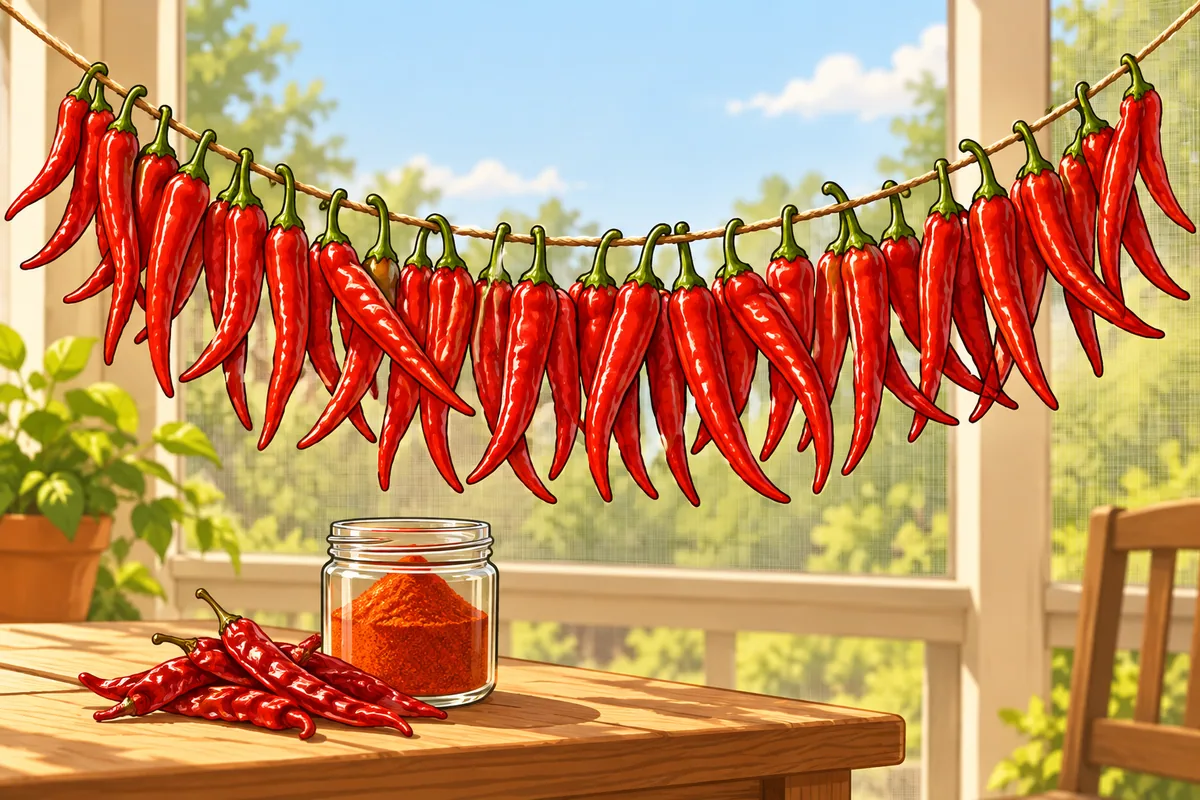
Dry your red pods whole, condition them for a week, then grind. NMSU's food drying guide says ripe red chiles need no blanching and dry in about 4 to 8 hours in an oven or dehydrator11.
- 1
Wash and leave whole
Wash the ripe red pods and leave them whole, stems on. Red chiles need no blanching.11
- 2
String or tray them
Thread whole pods on a cord with a needle and hang them in a well-aired spot, or lay them in a thin layer on trays. NMSU doesn't recommend sun drying for vegetables.11
- 3
Oven or dehydrator
Set the oven to its lowest setting but no lower than 140–150 °F, keep an electric oven door open at least an inch, and swap the trays top to bottom halfway. Expect about 4 to 8 hours.11
- 4
Check for doneness
Dried red chiles look shrunken and dark red and still bend a little; NMSU expects red pods to stay flexible, unlike dried green chile, which turns brittle.11
- 5
Condition for a week
Keep the dried pods in a cloth sack or a clear covered jar for a week, shaking a sack daily. Beads of moisture on the jar mean they need more drying.11
- 6
If you want a milder powder, pull the ribs before you grind; they hold about 89 % of the capsaicin16. Grind them in and you get the hottest powder your pods can give.
| Where you keep them | Use within |
|---|---|
| Room temperature, sealed11 | About 1 month |
| Refrigerator11 | Up to 3 months |
| Freezer11 | 3 months to 1 year |
What goes wrong with homemade cayenne?
Most problems you'll run into trace back to moisture, ribs or dust:
- Mold or a musty smell in the jar. The pods went in before they fully dried. That week of conditioning catches it: moisture beads on the jar mean back to the oven11.
- Pods scorched brown in the oven. Your oven ran too hot. NMSU sets the floor at 140–150 °F, and you want drying, not roasting11.
- The powder is hotter than store cayenne. You ground the ribs in, and your pods may simply run hot; heat shifts with weather and growing conditions7. Blend with a milder dried chile, or pull ribs next time16.
- Water doesn't stop the burn after a cayenne-heavy dish. Capsaicin dissolves in fat, not water16, so a sip of milk helps you more than a glass of water15.
- Powder in your eyes or a coughing fit. Poison Control advises flushing an eye with plenty of warm water for 15 minutes, and warns that breathing capsaicin can trigger asthma in some people15.
What can you use instead of cayenne?
The tabasco pepper is the closest match on heat, at 30,000 to 50,000 SHU against cayenne's 25,000 to 50,0001; you can line up the tabasco and cayenne pair for flavor and use. It's a different species, C. frutescens, so you'll taste a small shift in flavor.
Which one you reach for depends on your dish. Here are the swaps, with the amounts worked from the UF/IFAS ranges:
| Swap | Heat | How much for one cayenne |
|---|---|---|
| Tabasco pepper1 | 30,000–50,000 SHU | About one for one |
| Thai chili1 | 50,000–100,000 SHU | Half to one, since it can run up to 4 times hotter |
| Serrano1 | 10,000–25,000 SHU | One to five, so start with two and taste |
| Jalapeño1 | 2,000–8,000 SHU | Five to ten for the same heat, with far more pepper flavor |
For your dry rub or chili, a hotter dried chile in a smaller amount keeps the texture right. For a fresh salsa, a serrano or two gives you heat without a powdery taste. Milder and drier options, with amounts for powder and fresh pods, are in the cayenne substitute guide.
Can you grow cayenne?
Yes, and it's one of the easier hot peppers to fit into your season: most hot types ripen 70 to 85 days after transplanting4, against 90 to 120 for habaneros. Virginia Extension notes cayenne-group peppers can come off the plant green or red9, though only the red ones make red powder.
In your bed, Clemson spaces plants 12 inches apart in rows 3 feet apart and waits for the last frost to pass before planting13. If nematodes knot your tomato roots every year, a resistant line such as NuMex Nematador can save you a season7. Start your seed indoors 6 to 8 weeks before you plan to set plants out, since Virginia Extension sets out transplants of that age once the soil has warmed9. If your flowers drop in July, look at your night temperatures before you blame the plant: nights above 75 °F cause blossom drop, and fruit sets again when they cool9. The cayenne growing guide picks it up from there.
Related peppers
Published ranges.1
Related in Peppers
-
Cherry Pepper Scoville, 0 SHU Sweet to Hot
A small round pepper, sweet or hot, grown for jars and stuffing.6 min read -
Habanero Pepper Scoville, 100,000–350,000 SHU
A fruity, floral chile in the extra-hot band.7 min read -
Jalapeño Scoville, 2,000–8,000 SHU and Chipotle
The medium-heat chile most heat comparisons start from.6 min read -
Serrano Pepper Scoville, 10,000–25,000 SHU
A slim, fleshy chile one clear step above the jalapeño.5 min read -
Bird's Eye Chili Heat and Names, 50,000–100,000 SHU
A tiny upright chile whose name points to the animals that plant it.6 min read -
Calabrian Chili Heat, 5,000–70,000 SHU by EU Rule
Peperoncino di Calabria: the protected chili of Italy's toe, sold fresh, on strings, as flakes and as powder.7 min read
Sources
· 16
- 1University of Florida IFAS Extension HS-859/TR010: Pepper Production in Miami-Dade County, Florida
- 2UF/IFAS Gardening Solutions Peppers by Scoville Units
- 3University of California Agriculture and Natural Resources, UC Master Gardeners of Ventura County Ventura Garden to Table Series: Peppers
- 4University of Maryland Extension Growing Peppers in a Home Garden
- 5McCormick (maker of Frank's RedHot, own product) Frank's RedHot Original Cayenne Pepper Hot Sauce
- 6International Journal of Molecular Sciences 26(10):4916 (MDPI) Capsaicinoid Profiles, Phenolic Content, and Antioxidant Properties of Chili Peppers Grown in Urban Settings (Alghamdi, Rathinasabapathy, Komarnytsky)
- 7New Mexico State University, Agricultural Experiment Station (Research Report 792) The Chile Cultivars of New Mexico State University Released from 1913 to 2016 (Coon and Bosland)
- 8University of Guam, College of Natural and Applied Sciences, Cooperative Extension and Outreach FPP-05: Hot Pepper (Capsicum spp.), Important Crop on Guam (Tuquero, Chargualaf, Marutani)
- 9Virginia Cooperative Extension (Relf, McDaniel; reviewed by Olsen) SPES-684: Peppers
- 10University of Florida IFAS Extension HS732/CV130: Chapter 13. Pepper Production (Frey, McAvoy, Desaeger, Vallad, Qureshi, Boyd)
- 11New Mexico State University, Cooperative Extension Service (Guide E-322, Flores and Davies) Drying Foods
- 12Plants 11(8):1080 (MDPI) Dynamics of Bioactive Compounds during Spontaneous Fermentation of Paste Obtained from Capsicum ssp. (Kádár et al.)
- 13Clemson Cooperative Extension, Home & Garden Information Center HGIC 1316: Pepper
- 14New Mexico State University, Cooperative Extension Service (Guide E-324, Nancy C. Flores) Processing Fresh Chile Peppers
- 15National Capital Poison Center (Poison Control) Capsaicin: When the chili is too hot (Amanda McDaniel-Price, RN)
- 16Heliyon (Cell Press) A comprehensive review of capsaicin: Biosynthesis, industrial productions, processing to applications, and clinical uses