
Serrano vs Cayenne Pepper, Cayenne Runs About 2× Hotter
One you chop fresh, one you shake from a jar.
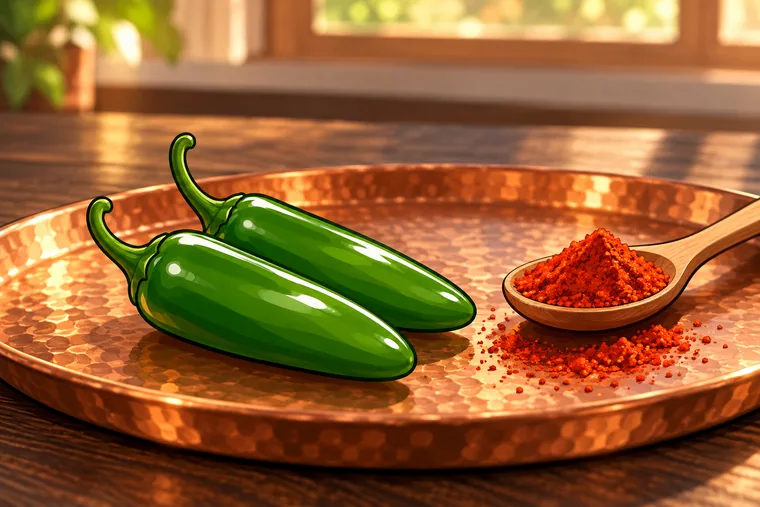
Cayenne is hotter, about 2 times a serrano by midpoint; the two ranges touch at 25,000 SHU.
- Serrano 10,000–25,000 SHU; cayenne 25,000–50,000 SHU
- Serrano is a fresh pepper for salsa; cayenne mostly ends up dried and ground
- About 1.4 g of cayenne powder stands in for 20 g of fresh serrano (estimate)
Log scale; bars are published ranges.1
On this page
- 1Is cayenne hotter than a serrano?
- 2Why does dried cayenne taste hotter than its number?
- 3How much cayenne powder replaces a fresh serrano?
- 4What does a serrano bring that cayenne powder can't?
- 5Are serrano and cayenne related?
- 6Can you make your own cayenne-style powder from serranos?
- 7How long do fresh serranos keep next to a jar of cayenne?
- 8Why can the same serrano test three times hotter?
- 9Which grows better for you, serrano or cayenne?
- 10Serrano or cayenne for salsa, chili or a vinegar sauce?
Is cayenne hotter than a serrano?
Yes, about twice as hot in the middle of each range. UF/IFAS gives the serrano 10,000 to 25,000 SHU and the cayenne 25,000 to 50,0001. Notice the edge: the hottest serrano and the mildest cayenne land on the same number.
Log scale; bars are published ranges.1
A hot serrano and a mild cayenne taste about the same; the gap only opens as you move toward the middles.
How do we get 2.1 times?
The serrano's midpoint is (10,000 + 25,000) ÷ 2 = 17,500 SHU and the cayenne's is (25,000 + 50,000) ÷ 2 = 37,500. Divide the two and you get 37,500 ÷ 17,500, about 2.1. Iowa State's older chart sets the serrano at 5,000 to 23,000 SHU2, which would widen the gap a little, so treat "about twice" as the fair answer.
What does twice feel like for you at the table? If one chopped serrano makes your salsa pleasantly hot, the same weight of fresh cayenne would make it about as hot as two serranos. You would notice it, but you would not need a glass of milk. The real jump comes from the powder, which the next section works out for you in grams.
Why does dried cayenne taste hotter than its number?
Because you almost never eat cayenne fresh. UF/IFAS says the red cayenne is generally dried and used as ground powder or flakes1, while the serrano usually goes into your food raw1. Drying takes the water out and leaves the capsaicin behind, so every gram of powder carries the heat of several grams of fresh pod.
How many grams? A Mexican HPLC study dried its chiles in an oven at 65°C for 72 hours and recorded 85 % moisture loss3. That means one gram of dry pepper came from about 6.7 grams of fresh fruit (1 ÷ 0.15). If your cayenne loses about the same, a gram of powder holds the heat of about 6.7 grams of fresh cayenne.
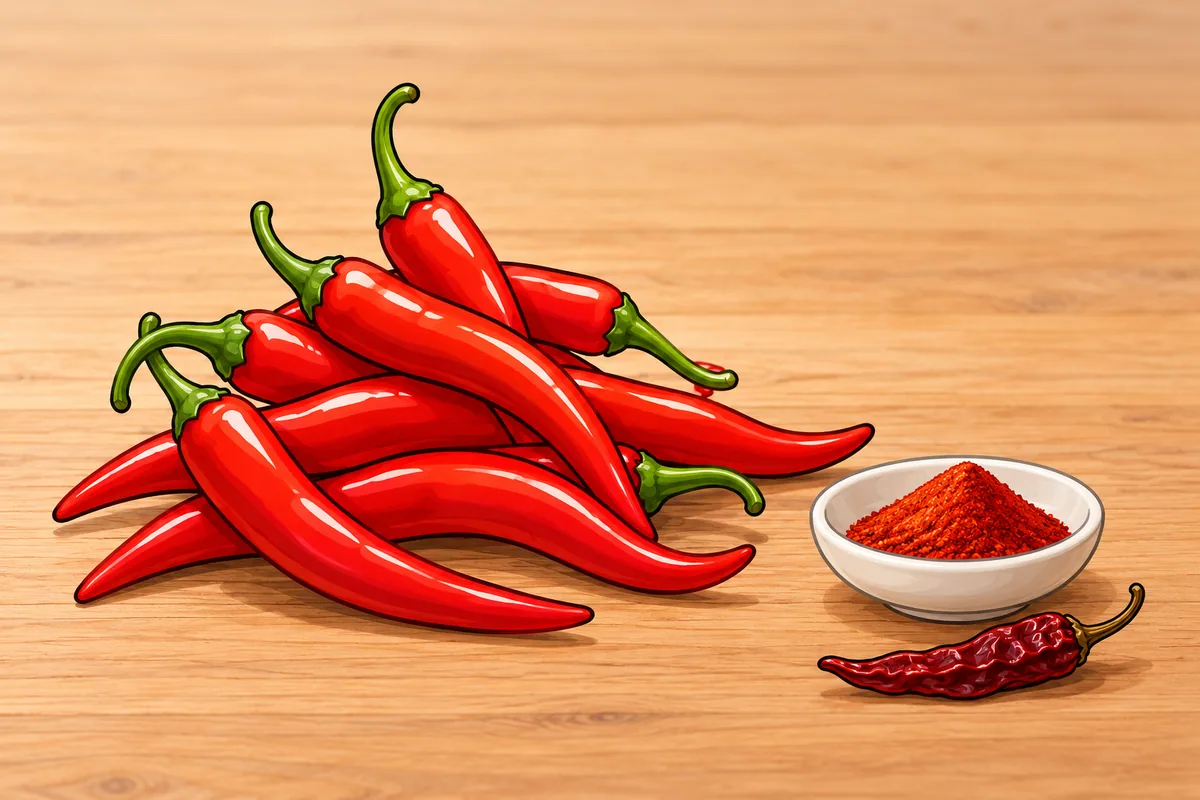
Now put the two together. Per gram, fresh serrano carries 17,500 SHU at its midpoint, and powder carries 6.7 × 37,500, about 250,000 fresh-gram equivalents. That makes your powder roughly 14 times stronger than fresh serrano, gram for gram. It is an estimate built on two sources, and it explains why a quarter teaspoon of cayenne can outrun a whole chopped serrano.
| Form | Midpoint | Fresh grams per gram | Heat per gram | Against fresh serrano |
|---|---|---|---|---|
| Fresh serrano | 17,500 SHU | 1 | 17,500 | 1× |
| Fresh cayenne | 37,500 SHU | 1 | 37,500 | about 2.1× |
| Dried cayenne powder | 37,500 SHU | about 6.7 | about 250,000 | about 14× |
How much cayenne powder replaces a fresh serrano?
Use about 1 g of cayenne powder for every 14 g of fresh serrano, the ratio from the table above. Weigh the powder if you can; a pinch varies a lot between hands.
| Your dish | Fresh serrano it calls for | Cayenne powder instead | What changes |
|---|---|---|---|
| Pico de gallo for 4 | 20 g | do not swap | Pico needs the crunch and juice of a fresh pod |
| Pot of chili for 8 | 40 g | about 3 g | Same heat, none of the green flavor |
| Rub for 1 kg of chicken | 20 g, minced | about 1.4 g | Powder sticks better and burns less on the grill |
| Blended salsa verde | 30 g | about 2 g plus a green bell for body | The powder turns the sauce orange-red |
Swapping the other way, a recipe that wants a teaspoon of cayenne needs a lot of fresh serrano and brings its juice and green flavor with it. If the dish only needs heat, a hotter dried chile does the job; the cayenne swap list lines up the options with their amounts.
What does a serrano bring that cayenne powder can't?
Crunch, juice and a green, biting flavor. The UC Master Gardeners describe the serrano as bright and biting, with a hint of sweetness and earthiness and particularly thick flesh, and the cayenne as strong and pungent4.
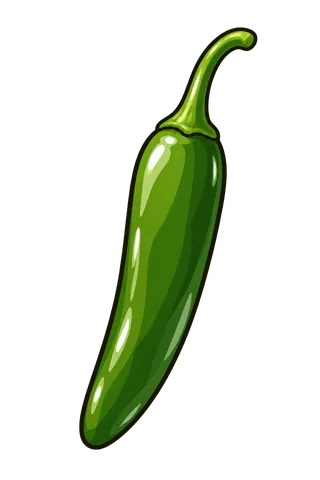
Serrano
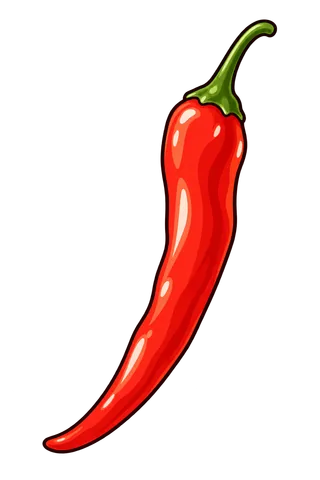
Cayenne
Hotter- Bright, biting, a hint of sweetness and earthiness14FlavorStrong and pungent4
- Particularly thick4FleshThin wall; very slender, tapered pod2
- About 2 inches long1PodSlim, pointed, slightly twisted5
- Green, red, brown, orange or yellow1Colors at maturityMostly red, also yellow and purple4
- Raw, in pico de gallo and hot salsas16How you use itDried, as ground powder or flakes1
That thin cayenne wall is part of why it dries so well, and the serrano's thick flesh is why it stays crisp in a salsa. You pick between them by the texture your dish needs before you think about heat.
Are serrano and cayenne related?
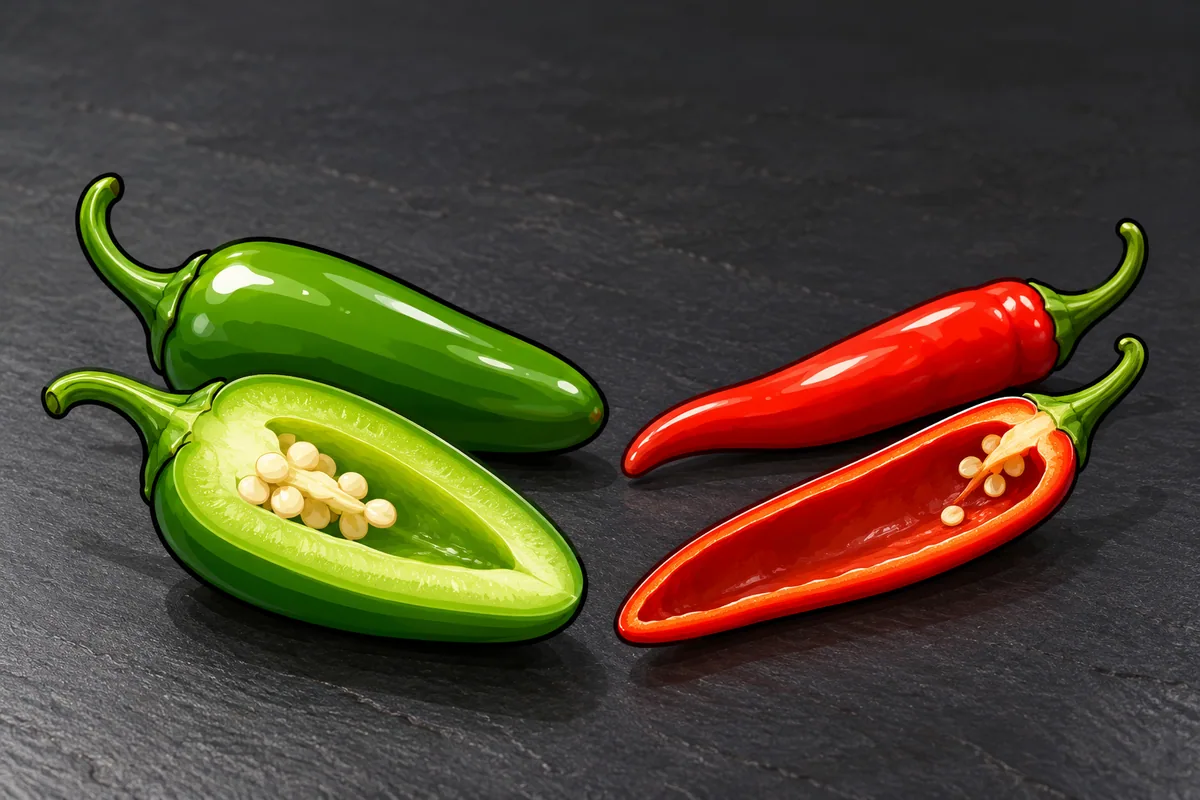
Closely enough that one extension guide files them together. Virginia Cooperative Extension groups slim, pointed, slightly twisted pods as the hot cayenne group and puts the Anaheim, cayenne, serrano and jalapeño in it5. Both are Capsicum annuum, the species of most garden peppers.
So the difference between the two sits in pod size, wall and heat, not in the family tree. That is also why you can grow them in the same bed with the same care.
Can you make your own cayenne-style powder from serranos?
You can, and you will get serrano heat in powder form, about half the strength of a cayenne powder. The UC Master Gardeners say hot peppers meant for drying should ripen fully on the plant4, and NMSU says you can let mature red pods dry on the plant or pick them fully ripe and hang them by the stems6.
- 1
Let the serranos turn red
Leave them on the plant until the color is full; green pods dry dull and grassy.4
- 2
Dry them whole
Hang the ripe pods by their stems in a dry, airy spot, or string them the way New Mexico growers string red chile into ristras.6
- 3
Grind only when brittle
A pod that snaps cleanly is ready; one that bends still holds water and will cake in the jar.
- 4
Weigh what you get
At the 85 % moisture loss the Durango lab recorded, 100 g of fresh pods gives you about 15 g of powder.3
Here is the heat you end up with. Your serrano powder carries 6.7 × 17,500, about 117,000 fresh-gram equivalents per gram, against about 250,000 for cayenne powder from the table above. So when a recipe asks for 1 g of cayenne and you have only your homemade serrano powder, use a little over 2 g. Wear gloves and grind with the window open; Poison Control notes that inhaled capsaicin can set off asthma in people prone to it7.
How long do fresh serranos keep next to a jar of cayenne?
Days in the fridge against months in the cupboard, which is a big part of why cayenne lives in your spice rack. The UC Master Gardeners say fresh peppers keep best refrigerated at 45 to 55°F with 90 to 95 % humidity, and that you should freeze them for long storage4. They also warn you to keep peppers away from apples and bananas, whose ethylene gas harms them.
In practice, that means you buy serranos for this week's salsa and keep cayenne for everything else. If your serranos start to soften before you use them, freeze them whole; they lose their crunch but keep their heat for chili and sauces. A dried, ground cayenne never had crunch to lose, so it covers the months between grocery runs.
Why can the same serrano test three times hotter?
Because hot weather pushed its capsaicin up. In the Durango study, serrano plants grown in an open field tested at about 86,400 SHU by dry weight, and plants of the same cultivar in a greenhouse that reached 40 to 48°C tested at about 262,900 SHU3.
These dry-weight figures run much higher than the fresh ranges above, and the authors point out that their values ran higher than other studies for every variety3. Read them for the direction, not the size. NMSU's garden guide makes the same point in plain words: water stress and temperatures that are too cool or too hot change pungency6. A serrano from a scorching August can sit near the cayenne line, and that is when the "about twice" rule bends.
Which grows better for you, serrano or cayenne?
Both like heat; the serrano grows taller and pickier about soil. UF/IFAS gives these numbers for south Florida:
| Serrano | Cayenne | |
|---|---|---|
| Plant height | Up to 5 feet | 2–4 feet |
| Soil | pH 7.0–8.5 | Adapts to hot, humid conditions |
| Temperature | Above 75°F; no frost | Handles hot, humid weather |
| Time to fruit | Not given | About 100 days from germination |
If your garden has acidic soil, the serrano's preference for pH 7.0 to 8.5 matters; lime the bed or grow it in a pot of neutral mix. If space is short, the cayenne's 2 to 4 feet fits a patio container, and you can string the ripe red pods to dry.
Serrano or cayenne for salsa, chili or a vinegar sauce?
- Fresh crunch and juiceSalsa, pico, a garnish
- Serrano10,000–25,000 SHU, eaten rawMedium
- want more heatUse bothFresh serrano for flavor, a pinch of cayenne for depth of heat
- Heat that keeps in a jarRubs, chili, a pantry spice
- Cayenne powder25,000–50,000 SHU, dried and ground
Bars show published heat ranges. 1
For a vinegar sauce, either works: a fresh red serrano gives you a brighter bottle, and dried cayenne a deeper red one. Wear gloves while you cut serranos, since capsaicin burns skin and eyes, and rinse an eye with plenty of warm water for 15 minutes if it gets in7.
Your next step: if you already have cayenne in the cupboard and want to know how it stacks against a jalapeño, the cayenne and jalapeño pair works that gap.
If you want to climb above both, the serrano next to the habanero shows the jump to the extra-hot tier, and the chile de árbol against the serrano covers the dried chile that sits between them.
Related in Compare
-
Chile de Árbol vs Serrano, Árbol Leads by About 1.6×
A slim dried red against a fresh green, close in heat and far apart in the pan.7 min read -
Cayenne vs Jalapeño, 7.5× the Heat and Swaps
One usually ends up in a jar of powder, the other in a fresh salsa.6 min read -
Árbol vs Cayenne Pepper, Cayenne Is About 1.7× Hotter
Two skinny red Capsicum annuum chiles, one sold whole, one mostly ground.5 min read -
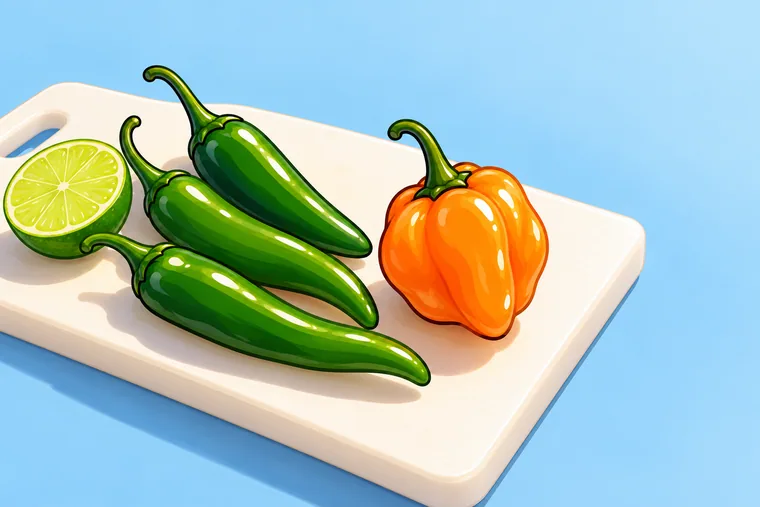
Serrano vs Habanero, the Habanero Is About 13× Hotter
A salsa chile against a hot sauce chile.6 min read -
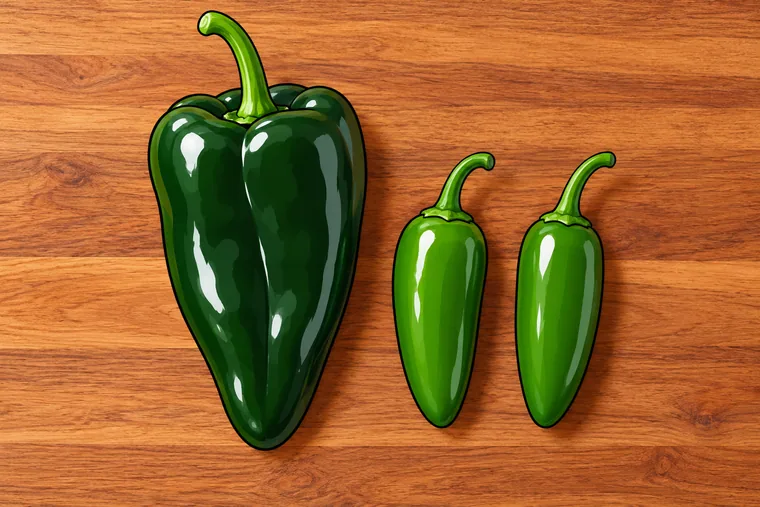
Poblano vs Jalapeño, 3.3× the Heat and When to Use Each
The big mild one and the small hot one.5 min read -
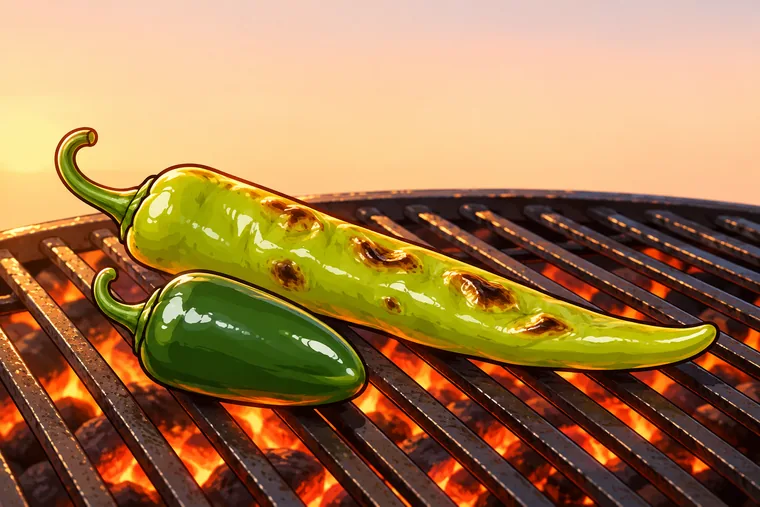
Anaheim Pepper vs Jalapeño, the 5× Heat Gap
Two Capsicum annuum pod types whose heat ranges overlap.5 min read
Sources
· 7
- 1University of Florida IFAS Extension HS-859/TR010: Pepper Production in Miami-Dade County, Florida
- 2Iowa State University Extension PM 1888(S): Guía de Horticultura, El huerto doméstico, Chiles (Everhart, Haynes, Jauron)
- 3Molecules 18(11):13471 (MDPI) Characterization of different Capsicum varieties by evaluation of their capsaicinoids content by high performance liquid chromatography, determination of pungency and effect of high temperature (González-Zamora et al.)
- 4University of California Agriculture and Natural Resources, UC Master Gardeners of Ventura County Ventura Garden to Table Series: Peppers
- 5Virginia Cooperative Extension (Relf, McDaniel; reviewed by Olsen) SPES-684: Peppers
- 6New Mexico State University Cooperative Extension Service Guide H-240: Growing Chile Peppers in New Mexico Gardens (Walker, Bosland)
- 7National Capital Poison Center (poison.org) Capsaicin: When the Chili Is Too Hot (Amanda McDaniel-Price, RN)