
Árbol vs Cayenne Pepper, Cayenne Is About 1.7× Hotter
Two skinny red Capsicum annuum chiles, one sold whole, one mostly ground.
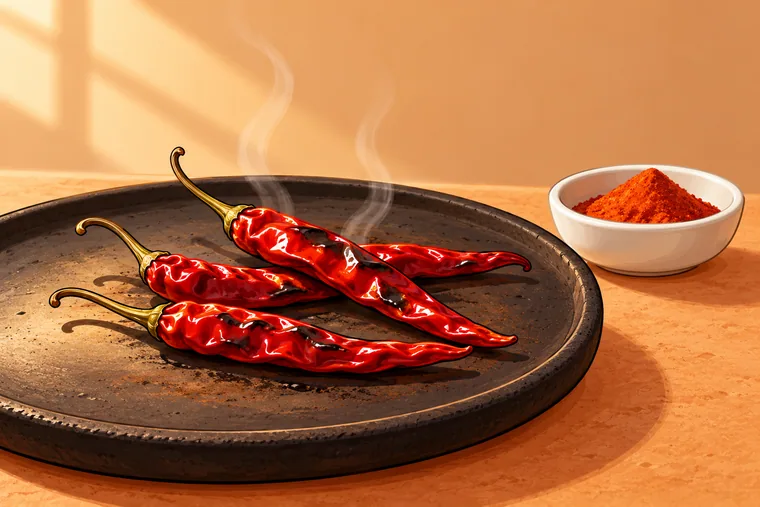
Cayenne is hotter: 25,000–50,000 SHU against 15,000–30,000 for chile de árbol, about 1.7 times by midpoint.
- They are different pod types of one species, Capsicum annuum, not two names for one pepper
- Swap about 6 g of cayenne for 10 g of árbol, an estimate by heat
- Árbol usually goes in whole or ground fresh from the pod; cayenne mostly comes as powder or flakes
On this page
- 1Is chile de árbol hotter than cayenne?
- 2Where do árbol and cayenne sit among other Mexican and red chiles?
- 3Is chile de árbol the same pepper as cayenne?
- 4Why did a lab measure árbol near 195,000 SHU?
- 5How do you swap cayenne powder for whole árbol chiles?
- 6Should you reach for whole árbol pods or a jar of cayenne?
- 7How do you turn dried árbol pods into a sauce?
- 8What goes wrong when you cook with árbol and cayenne?
- 9Can you grow your own árbol or cayenne?
Is chile de árbol hotter than cayenne?
No, cayenne is the hotter one. Iowa State Extension puts chile de árbol at 15,000 to 30,000 SHU1, and UF/IFAS gives cayenne 25,000 to 50,0002. By midpoint that is 37,500 against 22,500, so cayenne runs about 1.7 times hotter.
The bars overlap between 25,000 and 30,000 SHU, so your hottest árbol can match your mildest cayenne. On average, though, you get more heat per gram from the cayenne. Here is how the ratio moves with each source:
| Chile de árbol | Cayenne | Cayenne ÷ árbol |
|---|---|---|
| 15,000–30,000 SHU1 | 50,000–70,000 SHU (top band) | about 2.7× (60,000 ÷ 22,500) |
| 15,000–30,000 SHU12 | 25,000–50,000 SHU | about 1.7× (37,500 ÷ 22,500) |
| 15,000–30,000 SHU14 | 35,000 SHU average | about 1.6× (35,000 ÷ 22,500) |
Iowa State's heat thermometer prints cayenne twice, once at 50,000 to 70,000 SHU and once in the 30,000 to 50,000 group with piquín and tabasco1. Either way, árbol sits below it. Every source we read rates the cayenne above the árbol; only the size of the gap changes.
Where do árbol and cayenne sit among other Mexican and red chiles?
In the middle of the ladder. Iowa State's thermometer, adapted from a University of California guide, ranks the chiles from mild to hot on one scale1, which makes it a fair single-source ruler for both:
| Chile | Heat |
|---|---|
| Ancho, poblano | 1,000–1,500 SHU |
| Cascabel | 1,500–2,500 SHU |
| Jalapeño, mirasol | 2,500–5,000 SHU |
| Serrano | 5,000–23,000 SHU |
| Chile de árbol | 15,000–30,000 SHU |
| Piquín, tabasco, cayenne | 30,000–50,000 SHU |
| Cayenne, Charleston Hot | 50,000–70,000 SHU |
| Chiltepín, Santaka, Thai | 50,000–100,000 SHU |
Read it as a staircase. Árbol sits one step above the serrano and one step below the piquín, which shares Cholula's bottle with it5.
If you are weighing árbol against a milder dried chile for a red sauce, the árbol against the guajillo works through that pair. Guajillo is the dried mirasol6, down in the jalapeño band, so you would need several times more of it for the same burn.
Is chile de árbol the same pepper as cayenne?
No. Both belong to Capsicum annuum37, but they are separate pod types with their own names and their own ways to reach your kitchen. The genus monograph records "chile de árbol" as a common name in Michoacán and Veracruz, Mexico7; cayenne takes its name from the city of Cayenne in French Guiana3.
Chile de árbol
Cayenne
The shapes look alike in a bag of dried chiles, which is where the mix-up starts. Iowa State describes cayenne as a medium, very slender, tapered pod with a thin wall, used fresh, dried or processed1, and UC Master Gardeners add that it is mostly red but also comes in yellow and purple6. You will rarely find árbol sold as a powder in a supermarket jar, and you will rarely find whole cayenne pods there. That difference matters more to your cooking than the heat gap.
Neither source we read describes árbol's flavor, so we will not guess at it. You can still compare the two yourself: toast one árbol pod, grind it, and taste a pinch beside a pinch of your cayenne.
Why did a lab measure árbol near 195,000 SHU?
Because that test measured dried pods per gram of dry weight. In a 2013 HPLC study of eight Mexican chiles, field-grown árbol came out at about 194,600 SHU dry weight, and the same chile grown under greenhouse heat stress dropped to about 141,1008.
Drying removes water, so the same capsaicinoids sit in fewer grams and the number climbs. Read it against the other chiles in the trial, not against fresh-scale ranges: árbol tested about ten times hotter than ancho (194,592 ÷ 19,336)8. The authors also found most of árbol's heat came from capsaicin itself, and they note cooks use it mainly dry and ground8.
The heat-stress drop tells you something practical too. A hot, dry summer can take more than a quarter off the heat of a crop (141,073 ÷ 194,592 is about 0.72)8, so two bags of árbol from two harvests may not taste the same. Taste a pinch from each new bag.
How do you swap cayenne powder for whole árbol chiles?
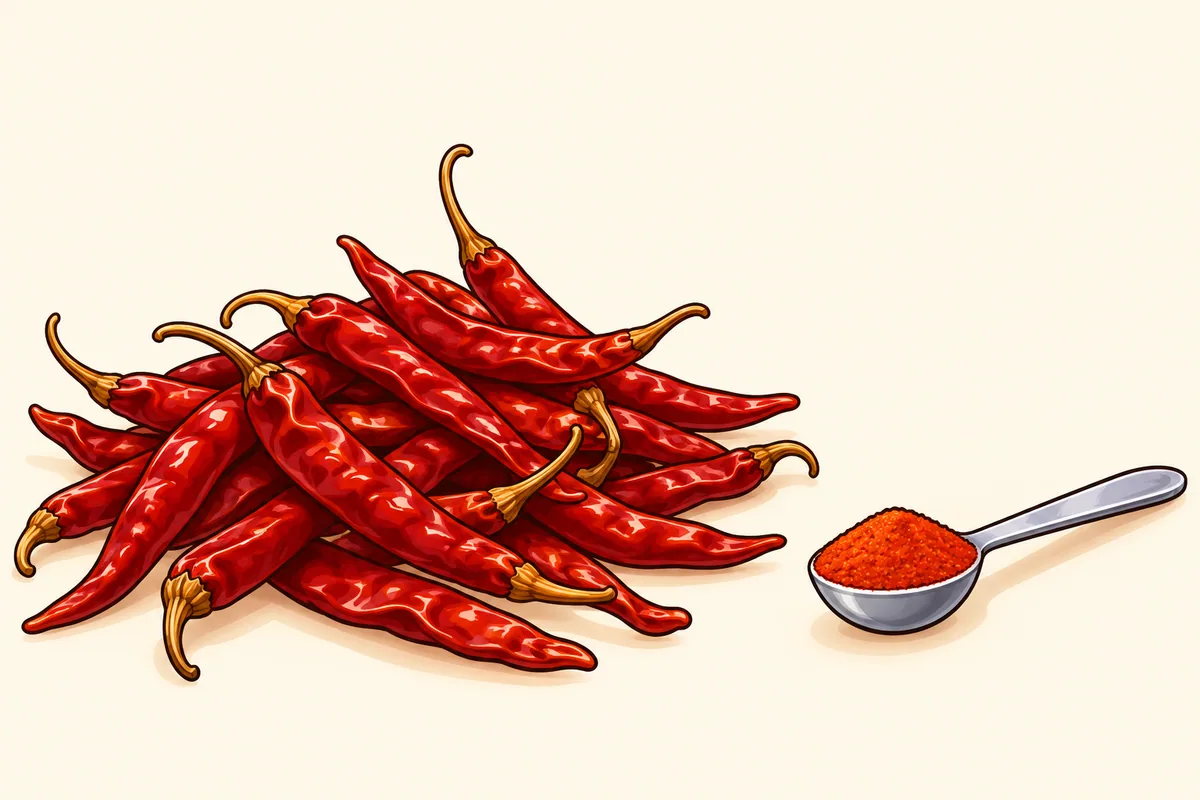
Use about 60 % of the weight. At the midpoints you just saw, 22,500 ÷ 37,500 is 0.6, so 6 g of cayenne carries roughly the heat of 10 g of árbol. USDA weighs a teaspoon of ground cayenne at 1.8 g and a tablespoon at 5.3 g9, which turns the grams into spoons.
| Recipe calls for | Cayenne powder | In spoons | How we got it |
|---|---|---|---|
| 5 g dried árbol | 3 g | about 1⅔ teaspoons | 5 × 0.6; 3 ÷ 1.8 |
| 10 g dried árbol | 6 g | about 1 tablespoon | 10 × 0.6; 6 ÷ 5.3 |
| 1 teaspoon cayenne (1.8 g) | 3 g dried árbol | grind the pods first | 1.8 ÷ 0.6 |
Going the other way, from cayenne to árbol, you need more pods than you might expect: about 1.7 grams of árbol for each gram of cayenne. If your pantry only has fresh peppers, the cayenne against the jalapeño works out how many fresh pods replace a spoon of powder.
Should you reach for whole árbol pods or a jar of cayenne?
Let the form your recipe names decide. Árbol comes whole and dry, so it suits recipes you toast, soak or grind fresh; cayenne comes as powder or flakes2, so it suits recipes that stir heat in at the end.
Dish to chile
- A Mexican table sauceárbolCholula Original lists árbol and piquín as 5.0 % of its ingredients.5
- A dry rub or a pinch in soupcayennethe powder spreads evenly and you can measure it in teaspoons.29
- Chile oil or a toasted salsaárbolwhole dried pods you toast and grind yourself.8
- Hot sauce from fresh podscayenneIowa State lists it for fresh and processed use as well as dried.1
If you cook from both kitchens, keep both. A bag of árbol keeps whole, and a jar of cayenne saves you the grinder on a weeknight.
How do you turn dried árbol pods into a sauce?
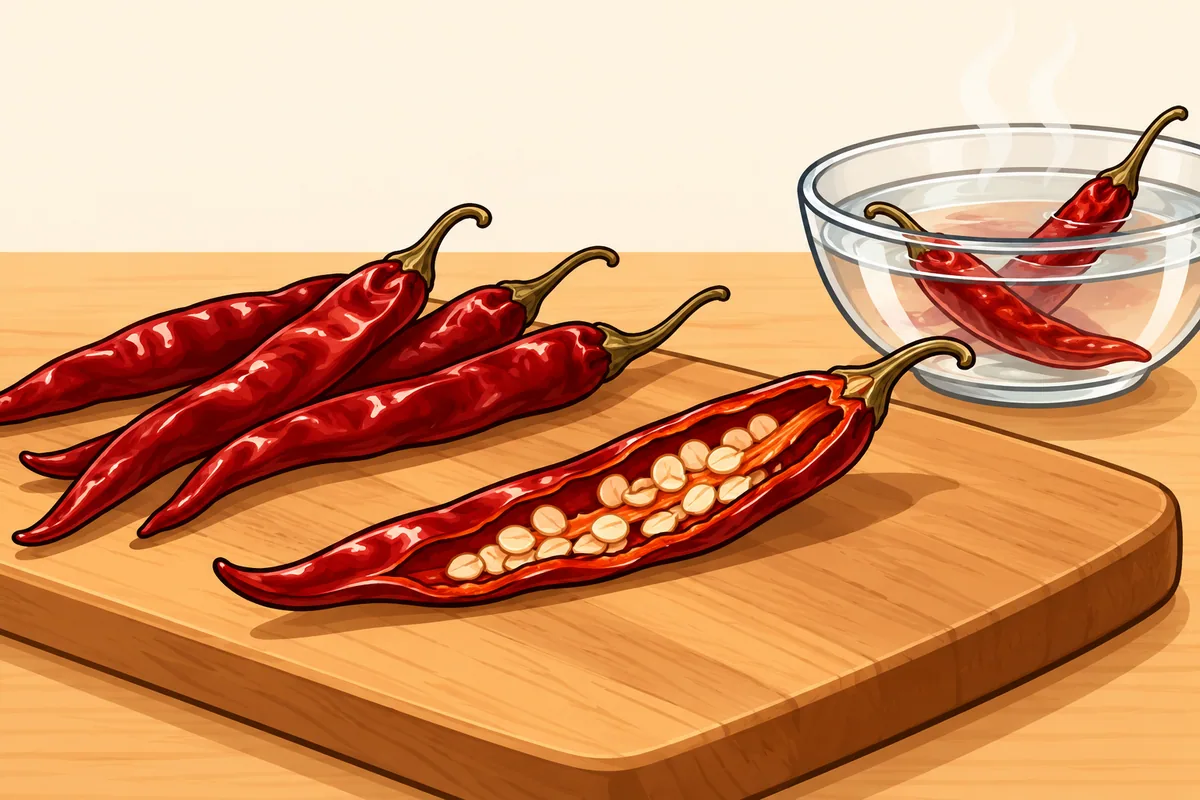
NMSU's method for dried red chile pods works for árbol too, as long as you remember the heat: a pint of árbol purée runs far hotter than one made from mild New Mexico pods. Halve the pods and make up the rest with a milder dried chile if you want a table sauce rather than a fire.
- 1
Sort the pods
Skip any pod with mold, insects, disease or decay, and never cook pods sprayed for decoration.10
- 2
Stem, seed and rinse
Pull off the stems, shake out the seeds and wash the pods in warm water, changing it a few times.10
- 3
Soak for 30 minutes
Cover the pods with boiling water and let them sit until the flesh is soft and separates from the skin.10
- 4
Blend, strain and simmer
Blend with fresh hot water until smooth, strain out the skin if you like, then simmer 10 minutes. Use or freeze within 3 days.10
NMSU uses 12 to 14 large dried pods for about a pint of purée10. Árbol pods are far smaller, so weigh rather than count. NMSU turns 1 cup of that purée into 2 cups of enchilada sauce with a cup of water, a garlic clove, half a teaspoon of salt and 2 tablespoons of oil10; with árbol, start with a quarter cup of purée and make up the rest with a mild one, then taste before you add more.
What goes wrong when you cook with árbol and cayenne?
Most mistakes come from treating the two as one jar. Check these before your pot goes on:
Mistakes and the fix
- Swapping cayenne for árbol gram for gram: the dish runs about 1.7 times hotter. Use 60 % of the weight.12
- Buying decorative pods for the pot: NMSU says sprayed pods are for display only.10
- Cutting or grinding bare-handed: wear rubber gloves or rub a thin layer of fat on your hands, and keep them away from your eyes.11
- Leaving leftover purée out: refrigerate it promptly and use or freeze within 3 days.10
If your hands sting after handling the pods, NMSU suggests a soak in plain vinegar11.
Can you grow your own árbol or cayenne?
Yes, and they grow alike. Both are C. annuum hot types37, and Maryland Extension gives most hot types 70 to 85 days from transplanting, spaced 12 to 24 inches apart in rows 30 to 36 inches apart12. Leave the pods on the plant until they turn red if you want to dry them, because Maryland notes that pepper fruit does not ripen further once you pick it12.
If you save seed, keep the two apart. Maryland warns that insects cross pepper plants, and that seed only comes true when you screen the plants or separate them by 500 feet12. Two rows of árbol and cayenne side by side will still give you true pods this year; the surprise only shows up in next year's seedlings.
Your next step: weigh the árbol your recipe calls for, multiply by 0.6 for cayenne, and taste before the last half goes in. If you are choosing between árbol and a fresh green chile instead, the árbol against the serrano works through that swap.
Related in Compare
-
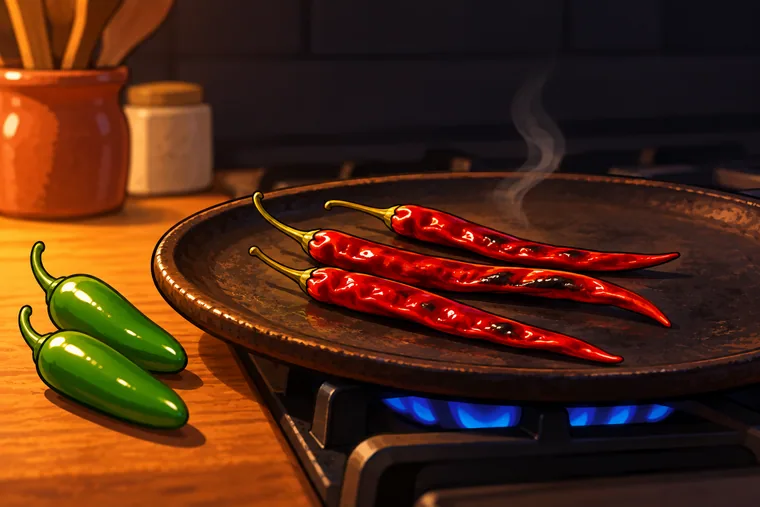
Chile de Árbol vs Serrano, Árbol Leads by About 1.6×
A slim dried red against a fresh green, close in heat and far apart in the pan.7 min read -
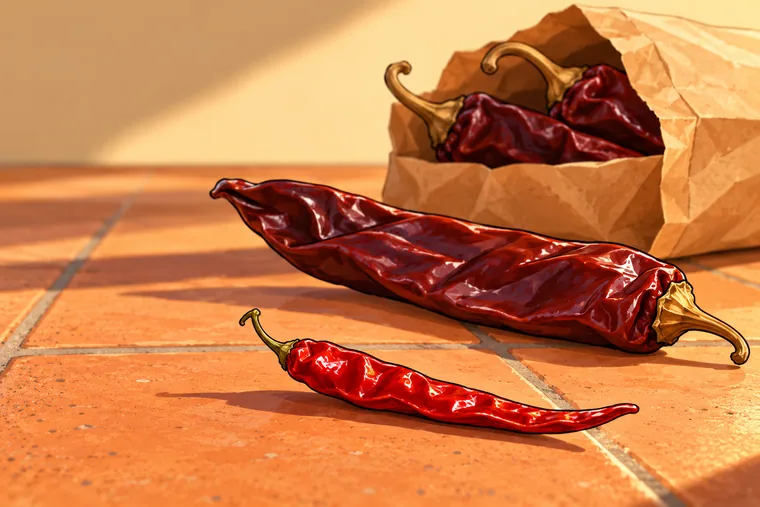
Arbol vs Guajillo Chiles, 14× Apart in One Field Trial
Two red dried chiles from the same bag aisle, one for heat and one for body.6 min read -
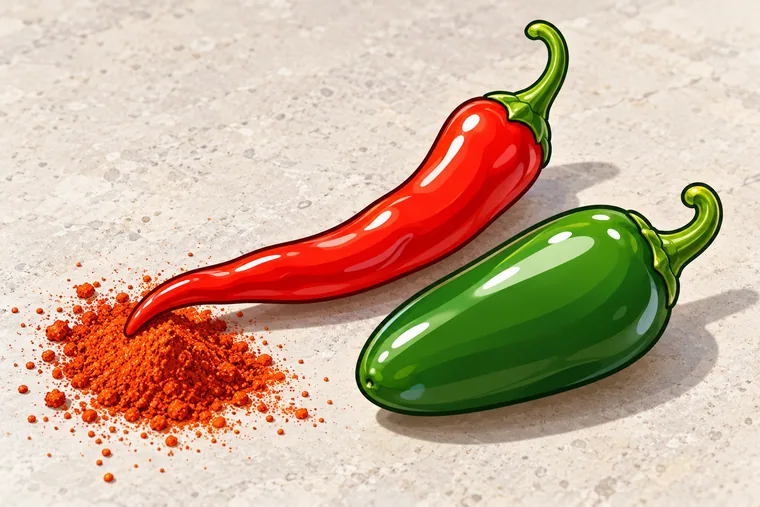
Cayenne vs Jalapeño, 7.5× the Heat and Swaps
One usually ends up in a jar of powder, the other in a fresh salsa.6 min read -
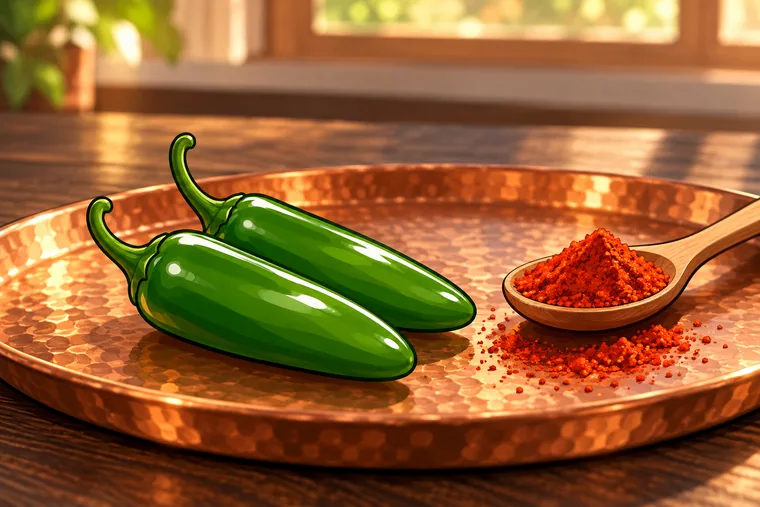
Serrano vs Cayenne Pepper, Cayenne Runs About 2× Hotter
One you chop fresh, one you shake from a jar.6 min read -
Pimento vs Cherry Pepper, 0 SHU Against Up to 500 or More
Two red peppers people mix up, one always sweet and one that can surprise you.6 min read -
Poblano vs Jalapeño, 3.3× the Heat and When to Use Each
The big mild one and the small hot one.5 min read
Sources
· 12
- 1Iowa State University Extension PM 1888(S): Guía de Horticultura, El huerto doméstico, Chiles (Everhart, Haynes, Jauron)
- 2UF/IFAS Gardening Solutions Peppers by Scoville Units
- 3University of Florida IFAS Extension HS-859/TR010: Pepper Production in Miami-Dade County, Florida
- 4Texas AgriLife Extension Service (Joe Masabni) Jalapeño & Other Hot Peppers
- 5Cholula (manufacturer, own product; Singapore product page) Cholula Original
- 6University of California Agriculture and Natural Resources, UC Master Gardeners of Ventura County Ventura Garden to Table Series: Peppers
- 7PhytoKeys 200:1-423 (Pensoft) Monograph of wild and cultivated chili peppers (Capsicum L., Solanaceae)
- 8Molecules 18(11):13471 (MDPI) Characterization of different Capsicum varieties by evaluation of their capsaicinoids content by high performance liquid chromatography, determination of pungency and effect of high temperature (González-Zamora et al.)
- 9USDA Agricultural Research Service, FoodData Central (SR Legacy) Spices, pepper, red or cayenne (FDC ID 170932)
- 10New Mexico State University Cooperative Extension Service (Guide E-327) Making Red Chile Purée and Sauce from Dried Pods
- 11New Mexico State University Cooperative Extension Service (Guide E-324) Processing Fresh Chile Peppers (revised by Nancy C. Flores)
- 12University of Maryland Extension Growing Peppers in a Home Garden