
Arbol vs Guajillo Chiles, 14× Apart in One Field Trial
Two red dried chiles from the same bag aisle, one for heat and one for body.
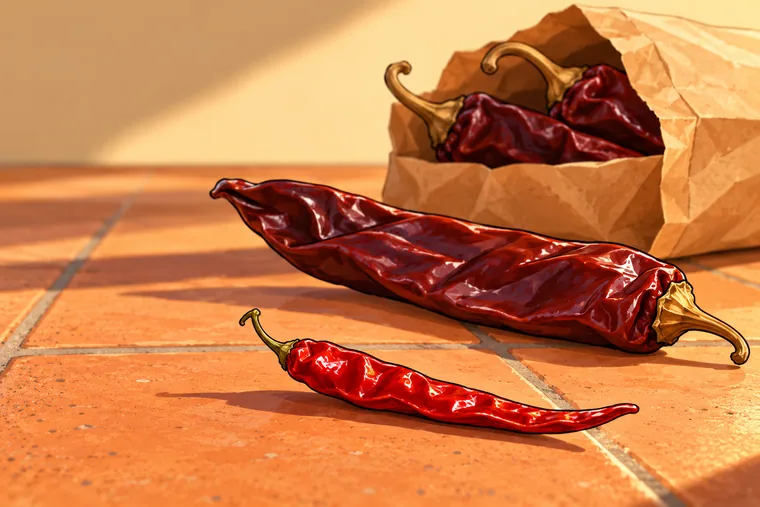
Chile de árbol is far hotter: about 14 times the guajillo in a same-field lab test, and still twice as hot when a hot greenhouse pushed the guajillo up.
- Árbol 194,592 SHU, guajillo 13,705 SHU, same trial, same lab, dried pods
- Guajillo: 4–6 inch reddish-brown pods with a smoky-sweet, berry note; árbol: small, bright red, related to cayenne
- Swap by job, not by count: one árbol pod brings heat, a guajillo brings color and body to a sauce
On this page
- 1Which is hotter, chile de árbol or guajillo?
- 2Why do the trial numbers look so much higher than a chart's?
- 3Does a hot summer close the gap between árbol and guajillo?
- 4If you grow your own, will your guajillos come out hotter?
- 5How do you tell an árbol from a guajillo in the bag?
- 6What does each one taste like in a sauce?
- 7How many árbol chiles replace a guajillo?
- 8Which one does your dish need?
- 9How do you handle árbol pods without burning your hands?
- 10Is chile de árbol just a Mexican cayenne?
- 11Where to go from here
Which is hotter, chile de árbol or guajillo?
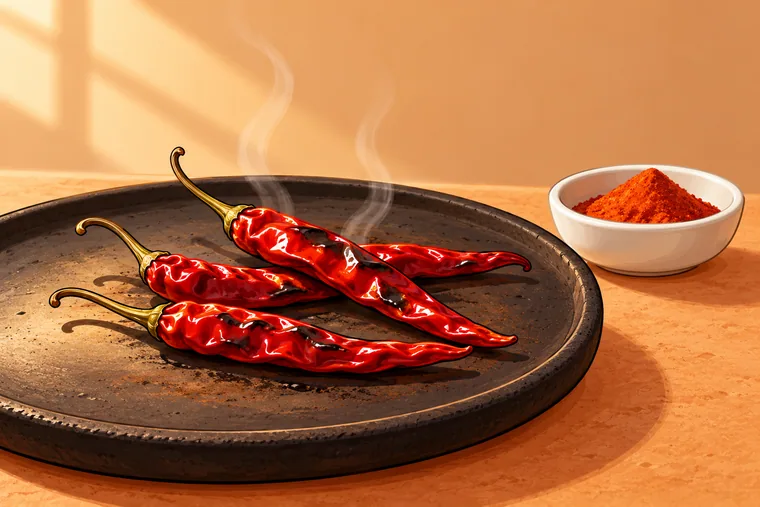
The árbol, by a mile. A 2013 study grew both chiles in the same field in northern Mexico, dried the pods and tested them in one lab: the chile de árbol came out at 194,592 SHU and the guajillo at 13,7051. That puts the árbol about 14 times hotter.
Chile de árbol
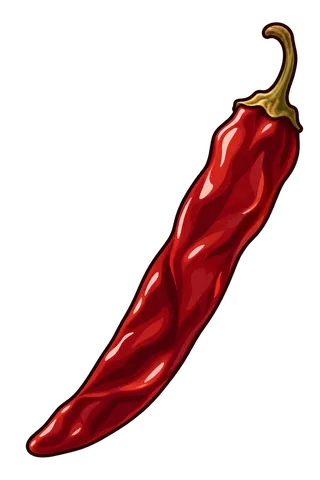
Same field, same lab, same drying: the árbol carried about 14 times the guajillo's heat.
The guajillo still bites a little. McCormick sells it as a relatively mild chile and the árbol as an intense one, and the lab numbers back that up23.
Why do the trial numbers look so much higher than a chart's?
Because the lab measured dried, powdered pods. The team oven-dried mature green fruit at 65 °C for 72 hours, ground it, and converted the capsaicinoids it found into Scoville units at 16.1 SHU per part per million1. Water is gone, so every gram holds more heat than a gram of fresh pod.
You can see the effect on a pepper you already know. The same paper put its jalapeño at 303,603 SHU1, while UF/IFAS gives the fresh jalapeño 2,000 to 8,000 SHU4. So read this page's figures as a ratio between two chiles grown side by side, and you will get the useful part out of them. The raw number tells you little about the pod in your hand.
That ratio is also how NMSU's heat guide wants you to think about any figure: it calls HPLC the most accurate way to measure heat, and it says field stress changes heat, so a mild cultivar can turn hotter in a hard season5.
Does a hot summer close the gap between árbol and guajillo?
Yes, a lot. The same study grew a second set of plants in an unheated greenhouse that ran 40 to 48 °C, against 33 to 40 °C in the field1. The guajillo got about five times hotter there, while the árbol dropped a little.
| Where it grew | Chile de árbol | Guajillo | Árbol is |
|---|---|---|---|
| Field, 33–40 °C | 194,592 SHU | 13,705 SHU | about 14× hotter (194,592 ÷ 13,705) |
| Greenhouse, 40–48 °C | 141,073 SHU | 69,211 SHU | about 2× hotter (141,073 ÷ 69,211) |
So a bag of guajillos from a scorching year can carry real heat, and you taste that in a sauce that uses eight or ten pods. The árbol stays the hotter chile in both rows. Taste one strip of guajillo from a new bag before you commit the whole batch.
If you grow your own, will your guajillos come out hotter?
They can, and the trial shows you why. In the open field the guajillo plants got drip water to field capacity and stayed at 13,705 SHU; in the unheated greenhouse, where the air reached 48 °C, the pods jumped to 69,211 SHU1. Heat stress alone took your mild sauce chile close to the field serrano in that lab, which tested 86,427 SHU1.
NMSU's heat guide says the same thing in plain words: stress from temperature and water in the field can make a mild cultivar hotter, and a hot cultivar grown in ideal conditions may turn out only moderately hot5. So if you want gentle guajillos for a big pot of sauce, keep the plants watered evenly through a heat wave. If you want your árbols to stay fierce, the trial suggests the open field suited them better than the hot house, since they dropped from 194,592 to 141,073 SHU under glass1.
Pick and dry a few pods from each plant and taste them before you string up the whole harvest. Your own plot, your own summer and your own watering set the number, which is exactly what the two rows of the trial table show.
How do you tell an árbol from a guajillo in the bag?
Size first, then skin. Both are red and dried, so color alone misleads you in a dim store aisle, and a loose bin with a lost sign leaves you guessing. Check these four things and you will know which one you hold.
- Length. A guajillo runs 4 to 6 inches long3; an árbol is a small chile, so even a big one looks thin and short beside it2.
- Color. The árbol stays bright red after drying; the guajillo turns a deeper reddish-brown23.
- Skin. Guajillo skin feels leathery and smooth, almost like a thin strap3.
- Use on the label. Árbol packs say extra-spicy salsa and chili; guajillo packs say salsas, chile sauce, stews and rubs23.
If you see a long red chile that looks like a slim cayenne, that is the árbol side of the family. El Guapo describes árbol as related to cayenne and sharing its intense heat2.
What does each one taste like in a sauce?
The guajillo brings flavor you can name. McCormick describes a smoky-sweet taste with hints of berries and tea, and calls it one of the more versatile dried chiles in Mexico3. That is why a guajillo sauce uses whole handfuls of pods: you want the color and that fruity depth.
The árbol's maker says little about flavor beyond its intense heat2. So you treat it as your heat dial, and you let other chiles carry the flavor. A guajillo chile sauce with two or three árbol pods added gets the guajillo's body and the árbol's burn, and you control the burn by how many árbols you drop in.
How many árbol chiles replace a guajillo?
Fewer than you think, and never as a full swap. Here is the heat arithmetic with the field numbers, worked for a sauce that calls for 30 g of dried guajillo, about six to eight pods. These are estimates; your bag may run hotter or milder.
| Step | Arithmetic | Result |
|---|---|---|
| Heat ratio | 194,592 ÷ 13,705 | árbol about 14× hotter |
| Árbol that matches 30 g of guajillo | 30 g ÷ 14 | about 2 g of árbol |
| If your guajillo grew hot (greenhouse ratio) | 30 g ÷ 2 | about 15 g of árbol |
Two grams of árbol gives you the guajillo's heat but none of its color or berry note. So the real swap runs the other way: keep a few guajillos for body, and add árbol only for burn.
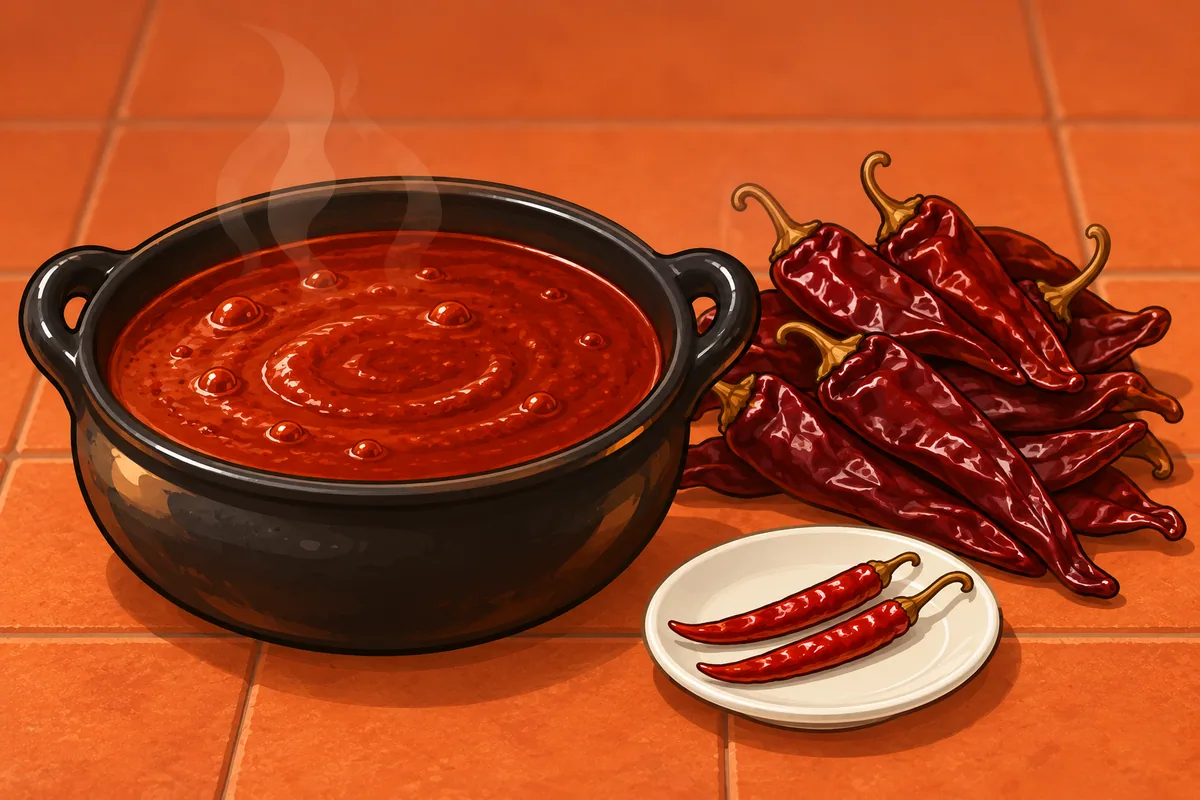
Which one does your dish need?
Start from what the dish asks of the chile. A red enchilada sauce needs body and color; a salsa de árbol needs heat; a mole needs both from several chiles.
- sauce, stew, rubColor and bodyGuajillo: 4–6 inch pods, smoky-sweet with berry notes
- table salsa, chili oilHeat with little bulkÁrbol: about 14× the guajillo in one field trial
- red chile sauce with a kickBothGuajillo base, árbol added one pod at a time
For a pot of red chili, you can lean on guajillo for most of the chile weight and finish with árbol. The maker lists chili among the árbol's uses, and lists stews and chile sauce for the guajillo23, so each one does the part it is good at.
How do you handle árbol pods without burning your hands?
Glove up for the árbol: its maker calls the heat intense2, and grinding a handful of pods throws fine chile dust into the air. The same habits cost you nothing with a hot batch of guajillo.
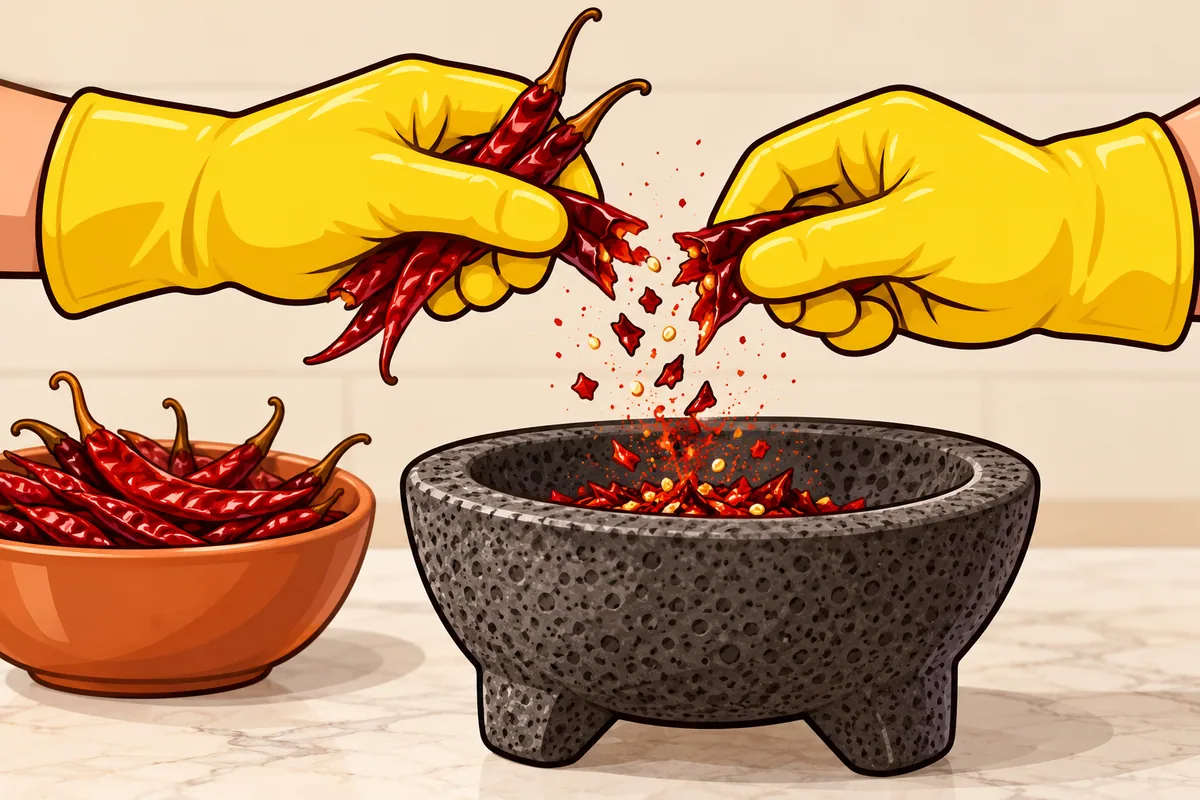
Before you stem, seed or grind
- Put on rubber, latex or nitrile gloves, and keep them on until the pods are in the pot.6
- Grind árbol near an open window; capsaicin in the air can set off asthma in people prone to it.6
- Rub an eye by accident? Rinse it with lots of warm water for 15 minutes.6
- Stinging fingers respond to warm water, vegetable oil or a diluted vinegar soak.6
- Trouble breathing or chest discomfort means 911; for other questions, Poison Control answers at 1-800-222-1222.6
Is chile de árbol just a Mexican cayenne?
Close kin, not the same label. El Guapo calls árbol related to cayenne and says it shares cayenne's intense heat2, and UF/IFAS describes cayenne as a Capsicum annuum chile that people mostly dry and grind into powder or flakes4. The 2013 study notes that cooks in Mexico also use árbol mainly dried and ground1.
So if your recipe wants ground árbol and you only have cayenne, you are swapping one dried red annuum heat chile for another. The guajillo cannot fill that role: you would need about 14 times the weight for the same burn in the field figures, and the sauce would turn thick and brick-red.
Where to go from here
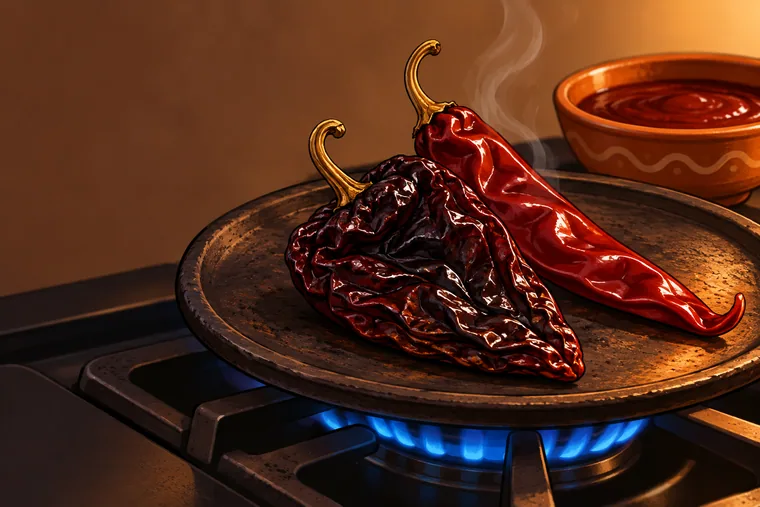
If the árbol is your heat chile, the next useful comparison puts árbol beside cayenne with both heat figures side by side. If you came for the guajillo, hold it up against the ancho and its sweeter, darker sauce before you plan a mole.
Out of guajillos entirely? The guajillo swaps rank the stand-ins with amounts, so you can still make the sauce tonight.
Related in Compare
-
Árbol vs Cayenne Pepper, Cayenne Is About 1.7× Hotter
Two skinny red Capsicum annuum chiles, one sold whole, one mostly ground.5 min read -
Ancho Pepper vs Guajillo, Heat That Flips With the Summer
The two dried chiles most red sauces start with, and the weather that decides their heat.6 min read -
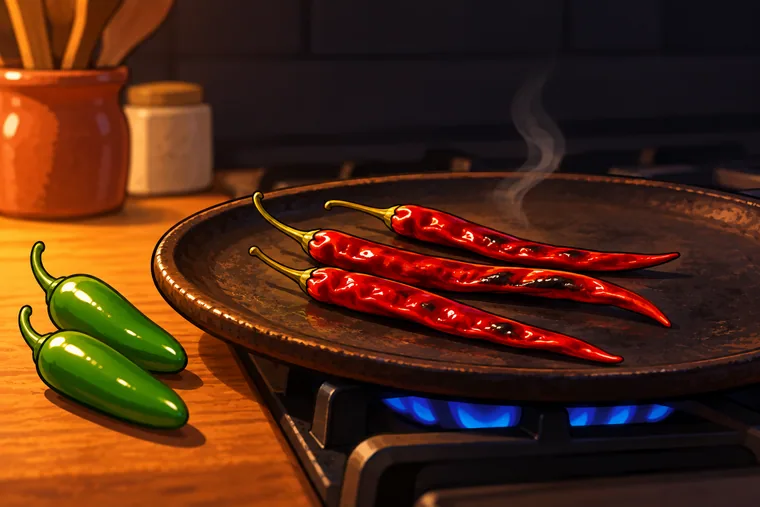
Chile de Árbol vs Serrano, Árbol Leads by About 1.6×
A slim dried red against a fresh green, close in heat and far apart in the pan.7 min read -
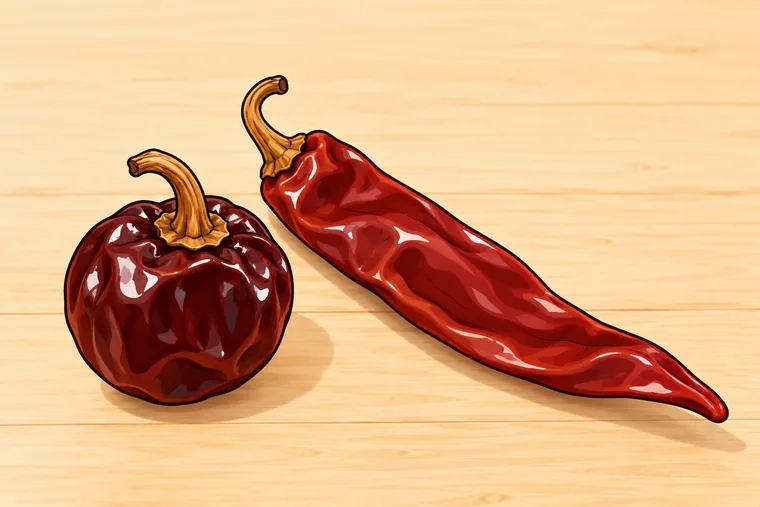
Chile Cascabel vs Guajillo, a Rattle at Half the Heat
A small round rattle chile and a long smooth red one, both dried, both from Mexican kitchens.5 min read -
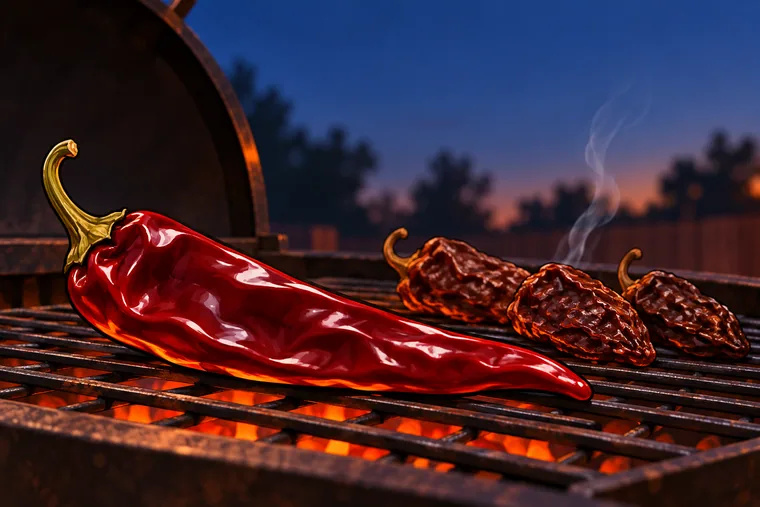
Guajillo vs Chipotle, Same Chart Band, 22× Apart in the Lab
One dried in the sun, one dried in smoke.6 min read -
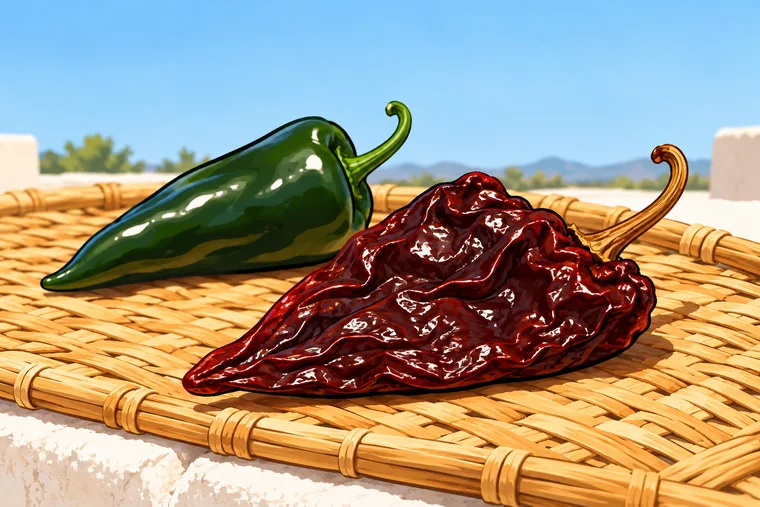
Ancho vs Poblano, One Pepper Picked Green or Dried Red
Fresh green, ripe red, then dried: one plant, three stages, two names.6 min read
Sources
· 6
- 1Molecules 18(11):13471-13486 Characterization of Different Capsicum Varieties by Evaluation of Their Capsaicinoids Content by High Performance Liquid Chromatography, Determination of Pungency and Effect of High Temperature (González-Zamora et al.)
- 2McCormick & Company (El Guapo), manufacturer page for its own product El Guapo Whole Arbol Chili Pods (Chile de Arbol Entero), 2 oz
- 3McCormick & Company (El Guapo), manufacturer page for its own product El Guapo Whole Premium Guajillo Chili Pods (Chile Guajillo Entero), 5.5 oz
- 4University of Florida IFAS Extension HS-859/TR010: Pepper Production in Miami-Dade County, Florida
- 5New Mexico State University Cooperative Extension Service (Guide H-237) Measuring Chile Pepper Heat (Bosland, Walker)
- 6National Capital Poison Center (poison.org) Capsaicin: When the Chili Is Too Hot (Amanda McDaniel-Price, RN)