
Guajillo vs Chipotle, Same Chart Band, 22× Apart in the Lab
One dried in the sun, one dried in smoke.
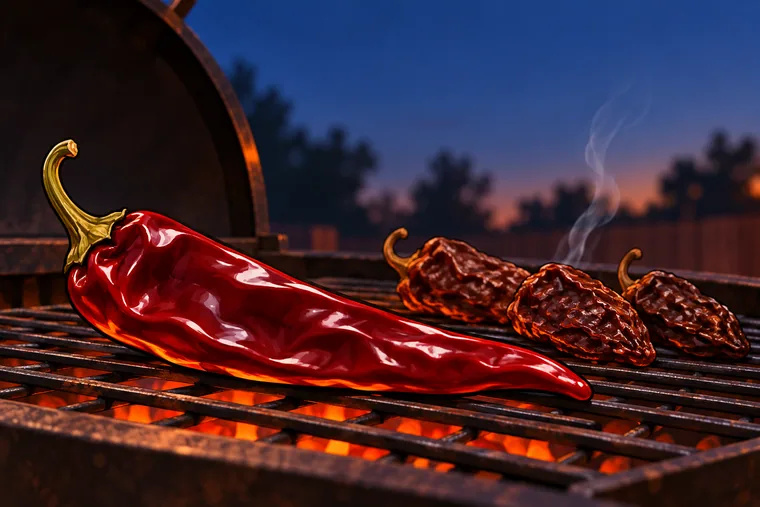
Chipotle is usually the hotter and always the smokier one; guajillo brings color and fruit with milder heat.
- Chipotle is a smoke-dried red jalapeño, 2,000–8,000 SHU fresh
- Guajillo is dried mirasol; dried jalapeño out-tested it about 22 to 1 in one HPLC field trial
- Swap by job: smoke for smoke, color for color, then fix the heat
On this page
- 1What is the difference between guajillo and chipotle?
- 2Is chipotle hotter than guajillo?
- 3Why does the gap shrink in a hot summer?
- 4Can you grow your own guajillo and chipotle?
- 5How do you tell a guajillo from a chipotle in the bag?
- 6What do guajillo and chipotle each do to a sauce?
- 7Can you swap guajillo and chipotle in a recipe?
- 8Why did your guajillo sauce come out gritty or bitter?
- 9How long do guajillo and chipotle keep in your pantry?
- 10Guajillo or chipotle for your enchiladas, adobo or salsa?
What is the difference between guajillo and chipotle?
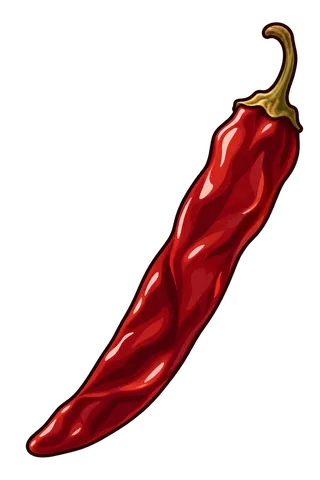
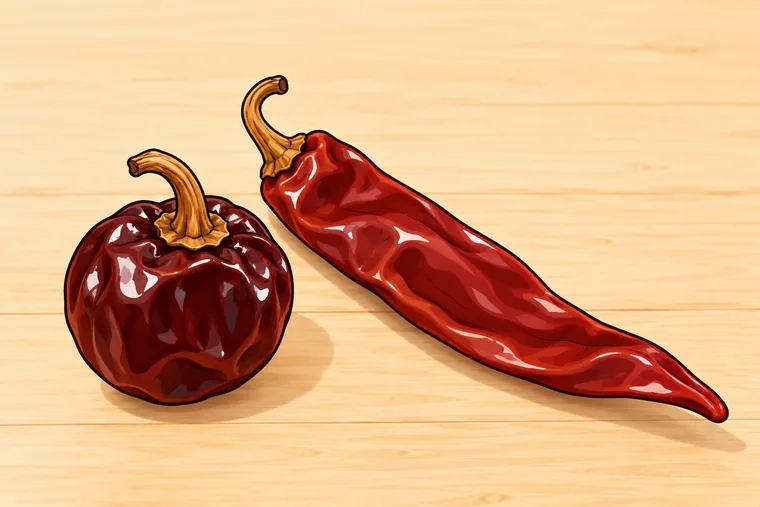
They start as two different fresh chiles and dry in two different ways. The UC Master Gardeners describe guajillo as dried mirasol chiles, sweet, fruity and slightly smoky, with mild to medium heat1.
NMSU's Chile Pepper Institute defines chipotle as a smoke-dried red jalapeño2.
- Mirasol podThe fresh chile behind guajillo
- driedGuajilloDried; sweet, fruity, slightly smokyMedium
- dried
- Ripe red jalapeñoThe fresh chile behind chipotle
- smoke-driedChipotleDried in smoke
- smoke-dried
Bars show published heat ranges. Sources for this line1. University of California Agriculture and Natural Resources, UC Master Gardeners of Ventura County2. New Mexico State University, Chile Pepper Institute3. Molecules 18(11):13471-13486 (MDPI)
So the smoke you taste in a chipotle comes from the fire, and the slight smokiness in a guajillo comes from the pepper itself. That one fact explains most of how they behave in your cooking. UF/IFAS says the same about chipotle from the grower's side: ripe jalapeños that get smoked become chipotle4.
Is chipotle hotter than guajillo?
Usually, yes, though the charts make them look closer than they are. Iowa State's heat chart lists mirasol, the fresh guajillo, in the same 2,500 to 5,000 SHU band as jalapeño5. UF/IFAS puts the jalapeño, chipotle's fresh pod, at 2,000 to 8,000 SHU6.
Mirasol from Iowa State's chart; jalapeño from its index entry (UF/IFAS). Dried pods carry this heat in less weight. Log scale; bars are published ranges.56
A lab test tells a different story. A 2013 HPLC study in Durango, Mexico, dried and measured eight chiles grown in the same field, guajillo and jalapeño among them3:
That 22 to 1 comes from 303,603 ÷ 13,705. The study measured dried jalapeño, not smoked chipotle, and its dry-weight figures run higher than other studies for every variety, as the authors say themselves3. Smoking dries the pod; nothing in it adds capsaicin, so the jalapeño figure is the closest lab stand-in you have for chipotle heat.
On the chart the two look alike; in the lab, the jalapeño behind chipotle carried far more heat than guajillo.
What should you believe? Both, for different jobs. The chart tells you neither chile is a scorcher. The lab tells you that when you swap one for the other at equal weight, the chipotle side will usually taste hotter, sometimes a lot hotter.
Here is what that means on your scale. Say your sauce calls for 20 g of dried guajillo and you only want to match its heat with a dried jalapeño or chipotle. By the field ratio you would need about 1 g (20 ÷ 22). By the heat-stress ratio in the next section, about 12 g (20 ÷ 1.7). That spread is why the swap table further down starts small and asks you to taste.
Why does the gap shrink in a hot summer?
Because heat stress moved the two peppers in opposite directions. The Durango team also grew the same cultivars in a greenhouse that reached 40 to 48°C. Guajillo heat rose about fivefold, while jalapeño heat fell, losing 61.5 % of its capsaicinoids3.
| Field (33–40°C) | Greenhouse (40–48°C) | Change | |
|---|---|---|---|
| Guajillo | 13,705 SHU | 69,211 SHU | about 5× higher |
| Jalapeño | 303,603 SHU | 116,159 SHU | 61.5 % of capsaicinoids lost |
| Jalapeño over guajillo | about 22× | about 1.7× | the gap shrinks |
In practice, this means two bags of the same chile can taste different from year to year. If your new bag of guajillo seems to bite more than the last one, the crop behind it may have had a scorching season. Taste a soaked piece before you commit the whole batch.
Can you grow your own guajillo and chipotle?
You can, from two plants and one long summer. Grow mirasol for guajillo and jalapeño for chipotle; both need their pods fully red before you dry them. UF/IFAS describes chipotle as made from ripe jalapeños4, and jalapeños start green and turn red after maturity6, so you leave them on the plant well past the usual green harvest.
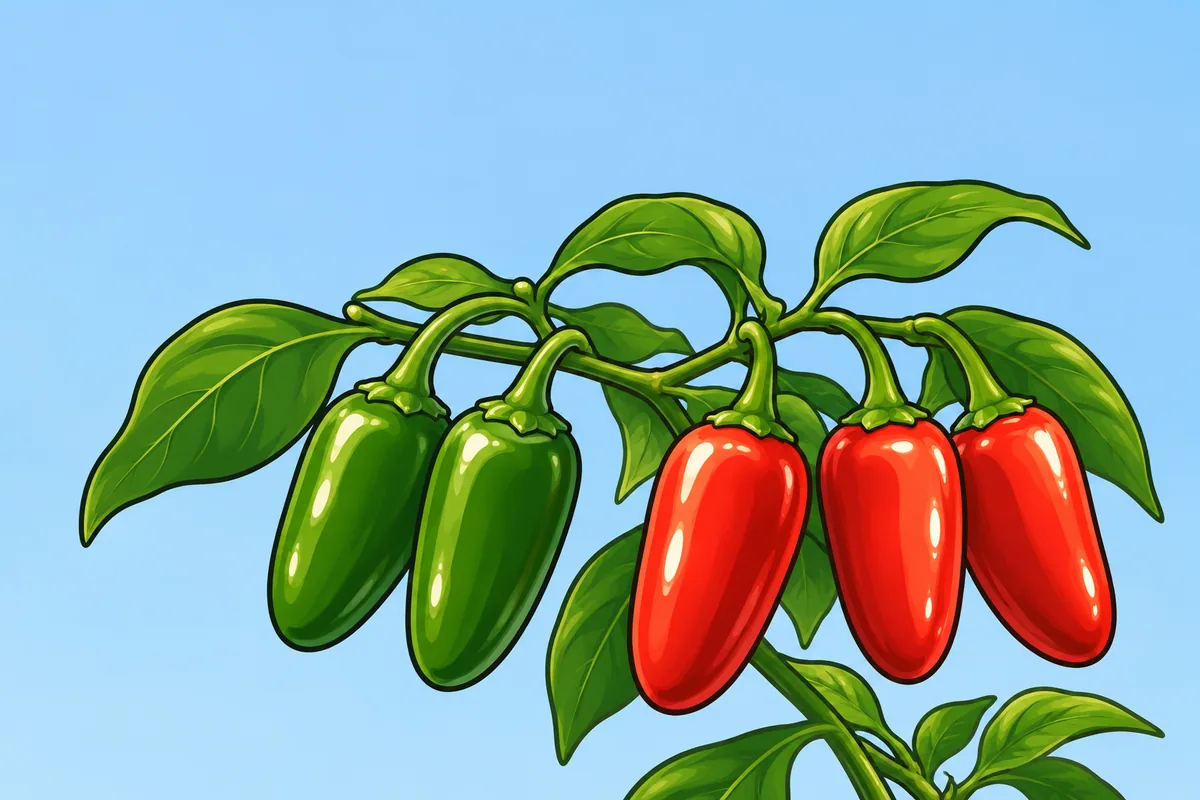
The drying is where the two part ways. Your mirasol pods dry plainly, in warm, dry, moving air, until they bend without feeling soft. Your red jalapeños need smoke as they dry, which takes a smoker and a long, low fire; they hold far more water than a slim pod, so they take much longer. If you have no smoker, dry the jalapeños plain and you get a dried red jalapeño, which carries chipotle's heat without its smoke.
How do you tell a guajillo from a chipotle in the bag?
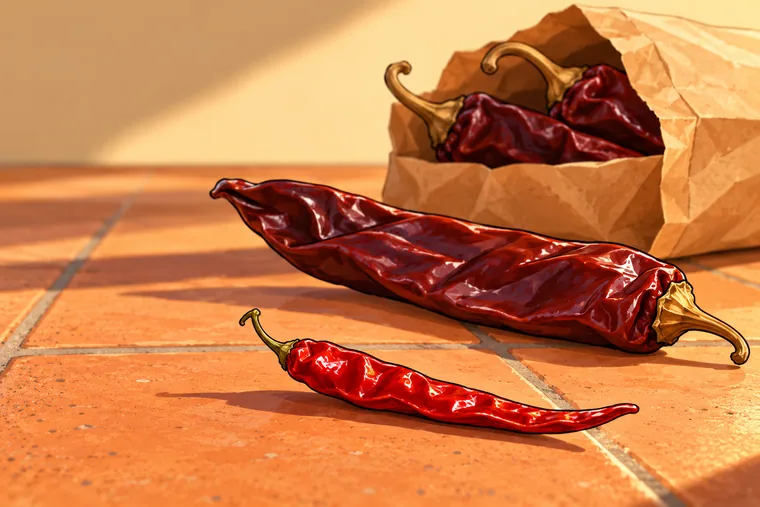
By length and by skin. A guajillo is a long dried pod, and a chipotle is a short, wrinkled one, since it started as a jalapeño, which UF/IFAS gives as 2 to 3 inches long6.
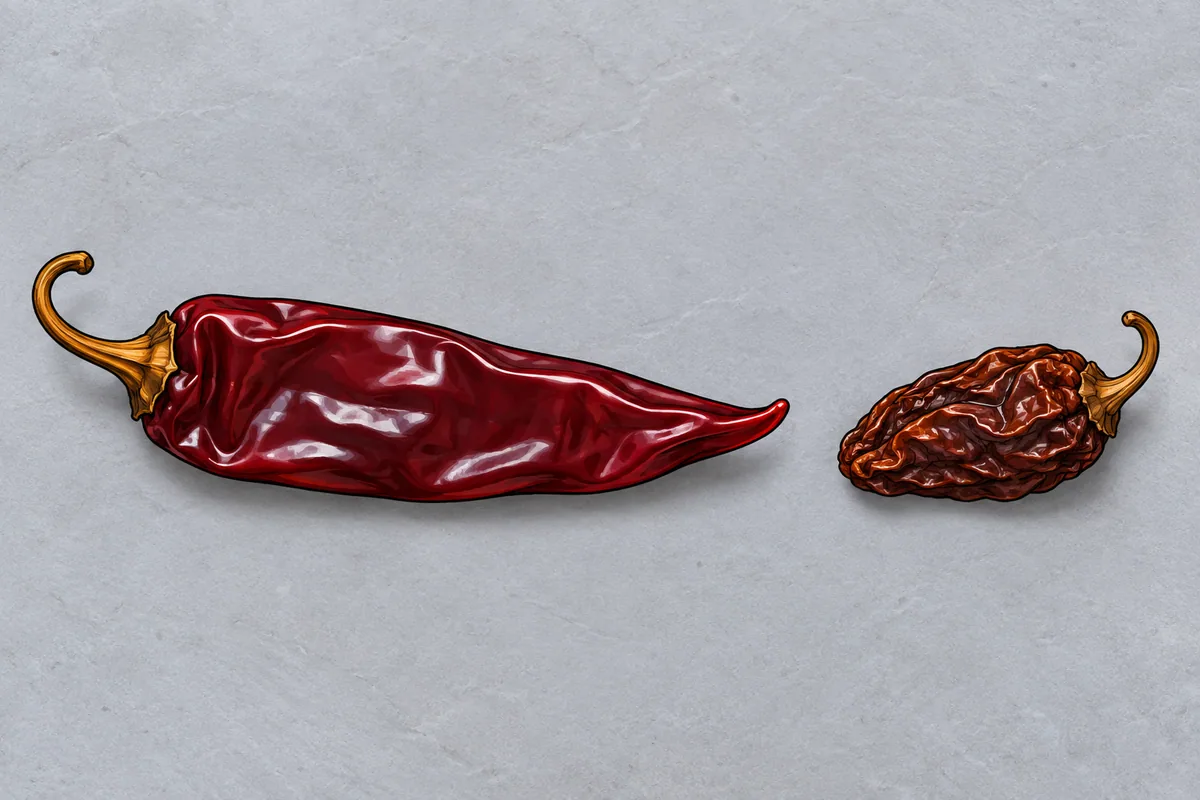
Smell settles it if you are unsure. A chipotle smells of wood smoke the moment you open the bag; a guajillo smells of dried fruit. Color can mislead you, since both are dark reds that drift toward brown with age.
What do guajillo and chipotle each do to a sauce?
Guajillo gives you color and fruit; chipotle gives you smoke and heat. The UC Master Gardeners describe guajillo as sweet, fruity and slightly smoky, and the jalapeño behind chipotle as vibrant and grassy1.
Guajillo
Chipotle
That split gives you a simple rule. If a recipe names guajillo, it wants a red sauce with fruit in it. If it names chipotle, it wants smoke, and you will notice when the smoke is missing.
Can you swap guajillo and chipotle in a recipe?
Yes, if you replace what the missing chile was doing. Neither is a clean stand-in for the other, so each row below adds a small fix. The amounts follow the lab gap above and are estimates to taste against, not measurements.
| Recipe calls for | Use instead | Amount | Fix what is missing |
|---|---|---|---|
| 4 guajillos in a red enchilada sauce | Chipotle | 1 chipotle | Add a sweet paprika or ancho for the lost red color and fruit |
| 2 chipotles in a marinade | Guajillo | 4–6 guajillos | Add a pinch of smoked salt or smoked paprika for the smoke |
| 1 chipotle in a pot of beans | Guajillo | 2 guajillos | Accept less smoke, or add a strip of bacon |
| Guajillo in a pozole broth | Chipotle | do not swap | The broth is about color; chipotle smoke would take over |
When you need a closer match on one side, use a dedicated list. The guajillo swap list ranks chiles that bring the same color and fruit. For the smoky side, the chipotle swap list covers smoked stand-ins.
Why did your guajillo sauce come out gritty or bitter?
Dried chile sauces fail in a few predictable ways, and the fixes are quick:
- Gritty texture. Guajillo skins are tough. Blend longer, then push the sauce through a fine sieve with the back of a spoon, and you will feel the difference at once.
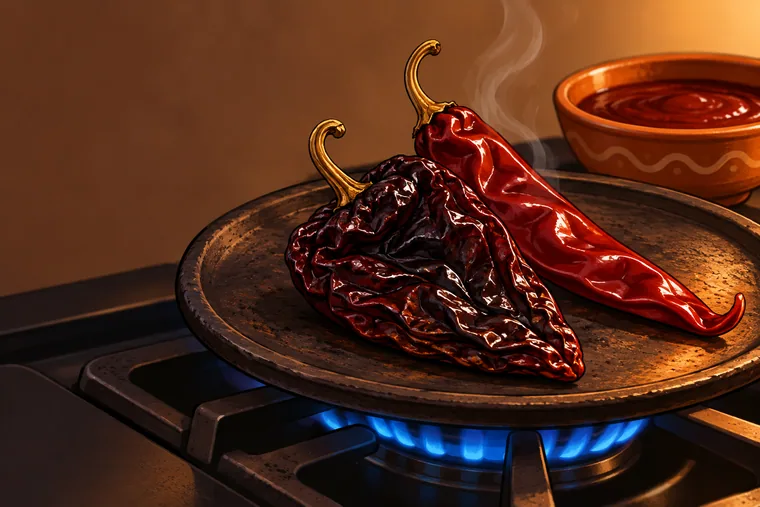
- Bitter taste. You toasted the pods too long. Warm dried chiles in a dry pan only until they soften and smell fragrant, a matter of seconds per side.
- Flat, dusty flavor. The pods were old. Fresh guajillos bend without cracking; brittle, faded ones give you color but little flavor.
- Too much smoke. Chipotle took over. Use one less pod next time, or balance the sauce with a fruity guajillo or two.
- Stinging hands or eyes. Capsaicin from seeding the pods. Wear rubber, latex or nitrile gloves, and if any reaches your eyes, rinse with plenty of warm water for 15 minutes7.
Soaking matters as much as toasting. The rehydrating steps give the water temperature and timing that keep both chiles from turning bitter.
How long do guajillo and chipotle keep in your pantry?
Months, if you keep them dry, dark and cool. The National Center for Home Food Preservation says dried foods keep from about 4 months to a year, that higher temperatures shorten that, and that dried vegetables keep about half as long as dried fruit, which lasts about a year at 60°F and 6 months at 80°F8.
Store both chiles in clean, dry glass jars or freezer bags with the air pressed out, in a dark cupboard away from the stove8. Check them now and then: the same source warns that dried food can take moisture back from the air. If your pods feel soft or sticky, use them right away; if you see mold, throw them out. A chipotle's smoke fades with time too, so buy the amount you will use in a season.
Guajillo or chipotle for your enchiladas, adobo or salsa?
Reach for guajillo when
- You want a bright red sauce: enchiladas, pozole, a red table salsa
- The dish needs fruit more than smoke
- Your crowd prefers mild to medium heat
Reach for chipotle when
- Smoke is the point: adobo, a smoky salsa, a braise or chili
- You want jalapeño heat in dried form
- A small amount needs to carry a big flavor
Many cooks use both in one pot: guajillo for the red body and fruit, a single chipotle for the smoke underneath. Start with three guajillos and one chipotle in a sauce for four, taste, and adjust from there.
Your next step: if you want to see how guajillo sits against the hotter dried chile on the same shelf, the árbol and guajillo pair lines them up. For a guajillo against its other close neighbor, the cascabel next to the guajillo covers the round rattle chile.
Related in Compare
-
Chile Cascabel vs Guajillo, a Rattle at Half the Heat
A small round rattle chile and a long smooth red one, both dried, both from Mexican kitchens.5 min read -
Arbol vs Guajillo Chiles, 14× Apart in One Field Trial
Two red dried chiles from the same bag aisle, one for heat and one for body.6 min read -
Ancho Pepper vs Guajillo, Heat That Flips With the Summer
The two dried chiles most red sauces start with, and the weather that decides their heat.6 min read -
Chile de Árbol vs Serrano, Árbol Leads by About 1.6×
A slim dried red against a fresh green, close in heat and far apart in the pan.7 min read -
Árbol vs Cayenne Pepper, Cayenne Is About 1.7× Hotter
Two skinny red Capsicum annuum chiles, one sold whole, one mostly ground.5 min read -
Cayenne vs Jalapeño, 7.5× the Heat and Swaps
One usually ends up in a jar of powder, the other in a fresh salsa.6 min read
Sources
· 8
- 1University of California Agriculture and Natural Resources, UC Master Gardeners of Ventura County Ventura Garden to Table Series: Peppers
- 2New Mexico State University, Chile Pepper Institute Chile Terminology
- 3Molecules 18(11):13471-13486 (MDPI) Characterization of Different Capsicum Varieties by Evaluation of Their Capsaicinoids Content by High Performance Liquid Chromatography, Determination of Pungency and Effect of High Temperature (González-Zamora et al.)
- 4UF/IFAS Gardening Solutions Peppers by Scoville Units
- 5Iowa State University Extension PM 1888(S): Guía de Horticultura, El huerto doméstico, Chiles (Everhart, Haynes, Jauron)
- 6University of Florida IFAS Extension HS-859/TR010: Pepper Production in Miami-Dade County, Florida
- 7National Capital Poison Center (poison.org) Capsaicin: When the Chili Is Too Hot (Amanda McDaniel-Price, RN)
- 8National Center for Home Food Preservation, University of Georgia Packaging and Storing Dried Foods