
Mirasol Chile, 2,500–5,000 SHU Before It Dries to Guajillo
The fresh name of the chile that Mexico dries into guajillo, and two namesakes from Peru and New Mexico.
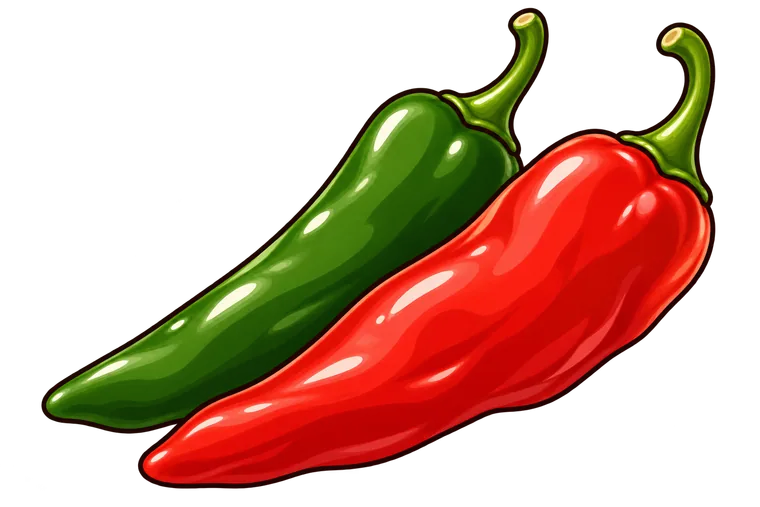 Medium
2,500–5,000 SHU, jalapeño-level heat
- The same chile as guajillo: mirasol in the field, guajillo once dried
- Not the Peruvian ají mirasol, and not NMSU's upright 'NuMex Mirasol'
On this page
- 1Which mirasol is this page about?
- 2How hot is a fresh mirasol?
- 3Is mirasol the same chile as guajillo?
- 4Why does the name mean looking at the sun?
- 5What is 'NuMex Mirasol', the upright one?
- 6Which mirasol does your recipe mean?
- 7Where does Mexico grow mirasol?
- 8Can you grow mirasol and make your own guajillos?
- 9How do you cook a fresh mirasol if you find one?
- 10What mix-ups cost you a mirasol dish?
Which mirasol is this page about?
The Mexican one: the fresh chile that farmers in Zacatecas and Durango ripen red and dry into guajillo. INIFAP's researchers write it as "guajillo chili (mirasol)", one chile under two names2. Two other peppers carry the same word, though, and you'll meet all three if you shop for seed, Peruvian paste and Mexican dried chiles in the same week.
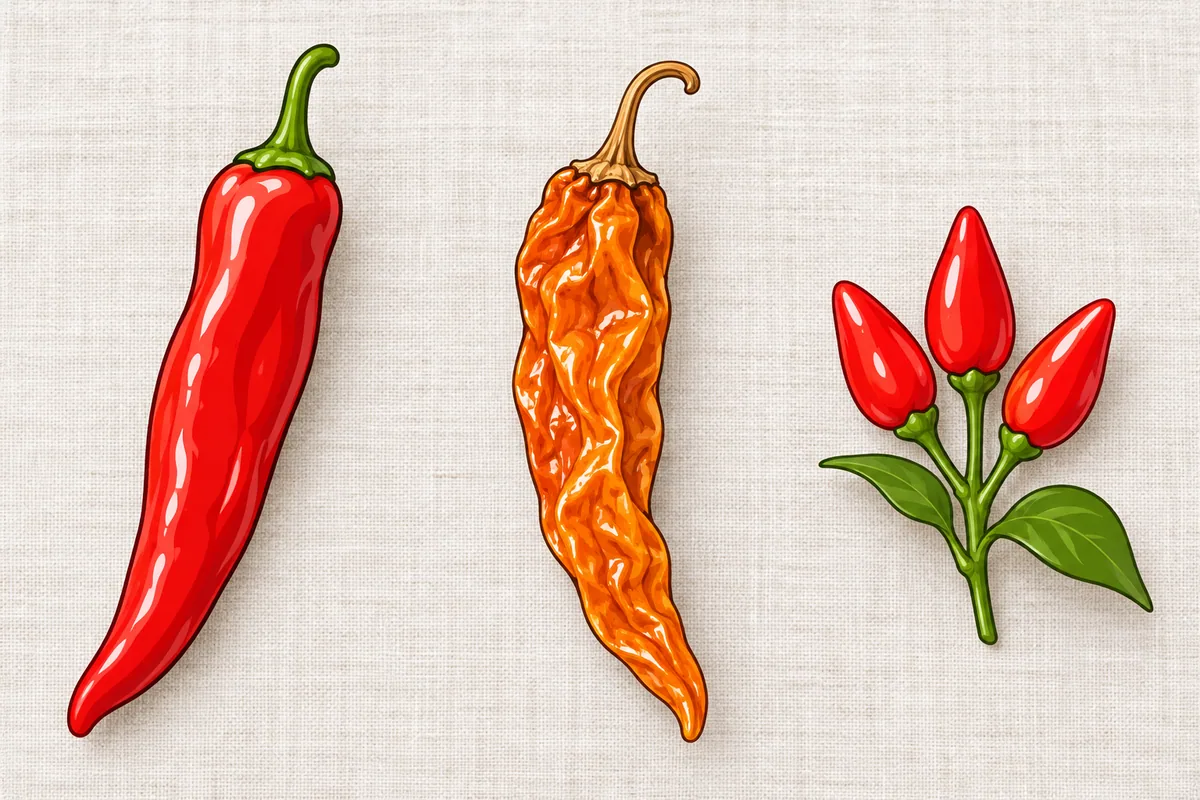 Mexican mirasol: the fresh pod of guajillo, C. annuum2Peruvian ají mirasol: the dried form of ají amarillo3'NuMex Mirasol': an upright New Mexico cultivar for wreaths and powder4
- Mexican mirasol: the fresh pod of guajillo, C. annuum2
- Peruvian ají mirasol: the dried form of ají amarillo3
- 'NuMex Mirasol': an upright New Mexico cultivar for wreaths and powder4
So the first thing you check is where your recipe comes from. A Mexican mole that asks for mirasol means guajillo; a Peruvian stew that asks for ají mirasol means a dried yellow ají, a different pepper with its own ají mirasol entry.
How hot is a fresh mirasol?
Medium, about like a jalapeño. Iowa State's extension heat chart places mirasol in the 2,500–5,000 SHU band, the same row it gives the jalapeño1. UF/IFAS puts the jalapeño at 2,000–8,000 SHU with an average around 5,0005, so you can treat a ripe mirasol as a slightly gentler jalapeño.
Set beside a poblano at 1,000–2,000 SHU5, a mirasol runs about 2.5 times hotter at the low ends. Think of the mirasol as a jalapeño-strength chile that people almost never eat fresh, because its real job is to dry.
The weather can move that figure a long way. When a Durango trial grew the same chile, as guajillo, in a greenhouse that reached 40–48 °C, its heat rose about five times over the field crop6. A scorching summer can give you mirasols far above the chart's band.
Is mirasol the same chile as guajillo?
Yes: mirasol is the plant and the fresh pod, guajillo is what the dried pod is called in the trade. The INIFAP team dried its collections of "guajillo chili (mirasol)" naturally at 32 °C before testing2, and Zacatecas extension work lists Mirasol by name among the main dried chile types of the state, beside Ancho, Mulato, Pasilla, Puya and árbol7.
Mirasol, fresh
Guajillo, dried
- The ripening pod on the plant, green turning red2What it isThe ripe red pod after natural drying2
- 2,500–5,000 SHU on an extension heat chart1Heat13,705 SHU in one lab test, measured on dry weight6
- About 5 kg of fresh dried-chile crop for every 1 kg of dried7WeightAbout a fifth of the fresh weight7
- In the field in north-central Mexico2Where you meet itIn bags on any Mexican grocery shelf2
We worked the weight row out from the 2001 Zacatecas harvest, when 284,187 tonnes of fresh chile for drying became 56,837 tonnes dried7. That's a 5-to-1 loss, and it's why you'll rarely find fresh mirasols for sale: the chile earns its keep once it's dry and light enough to ship. You'll find the shopping, sauce and storage detail on the dried pod's own entry, linked at the end of this page.
Why does the name mean looking at the sun?
Mira sol is Spanish for "looks at the sun". NMSU explains the name on its own cultivar: 'NuMex Mirasol' got it because its fruit stand erect and point upward4.
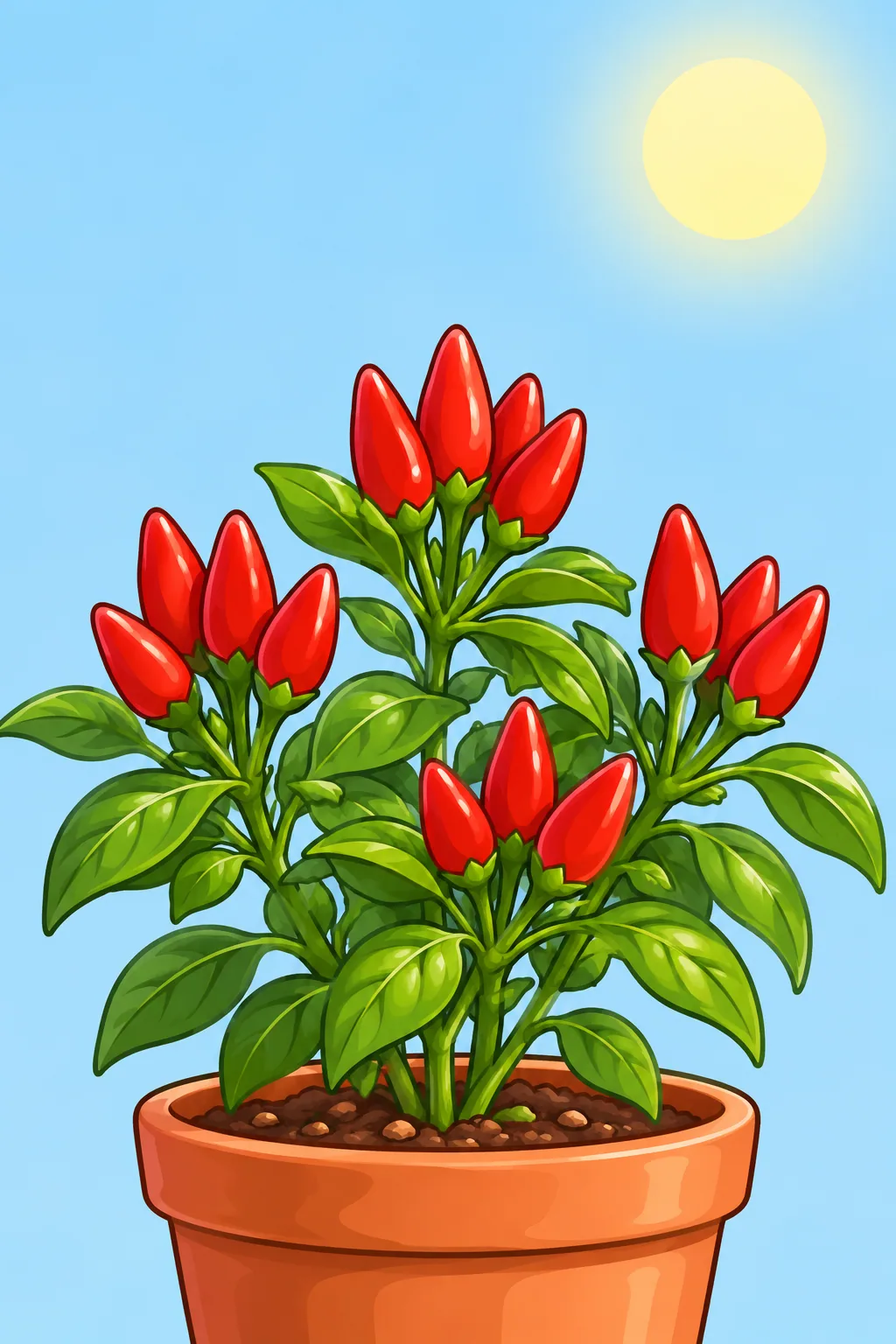
Whether the Mexican landraces hold their pods up the same way, we couldn't confirm in a primary source, so we don't print it as fact. The Zacatecas landrace survey does tell you how much the pods vary, mainly in size, weight, shape, color, wrinkling and the shape of the stalk8. If you grow a few plants from Mexican seed, expect them not to match one another.
What is 'NuMex Mirasol', the upright one?
A New Mexico State University cultivar released in 1993 by Paul Bosland and Mary Gonzalez, bred more for looks than for the kitchen4. It's the mirasol you'll most likely find in a US seed catalog, and it isn't the source of guajillo.
| Trait | Published value |
|---|---|
| Released | 1993, NMSU |
| Pod size | 2.17 inches long, 0.75 inch wide |
| Pod shape | Cone-shaped, two locules, pointing upward |
| Color | Green, turning red at maturity |
| Plant | Multi-stemmed bush, 23.8 inches tall and 15.3 inches wide |
| Fruit set | About 16 clusters of 4 fruits |
| Heat | Hot; not measured in SHU |
| Uses | Ornamental wreaths, floral work; dried red pods ground to powder |
So if you plant 'NuMex Mirasol' hoping for long guajillo pods, you'll get small hot cones in tidy clusters instead. They're good for drying and grinding at home4, just not for a guajillo sauce where you need big smooth pods.
Which mirasol does your recipe mean?
Ask where the recipe comes from; that answers it in one step.
- A Mexican recipeBuy dried guajillo, the dried mirasol
- A Peruvian recipeBuy ají mirasol, the dried ají amarillo
- A seed catalog or wreathThat is 'NuMex Mirasol', an NMSU cultivar
For the Peruvian branch, Bioversity's market guide to native Peruvian ajíes describes ají mirasol as the dried form of ají amarillo3, so a jar of ají amarillo paste is the closer stand-in than any Mexican chile. For the Mexican branch, any bag labelled guajillo will do.
Where does Mexico grow mirasol?
On the dry plateau of the north-center. As guajillo, 83.7 % of production comes from four states: Chihuahua, Durango, San Luis Potosí and Zacatecas2.
In Zacatecas it's the chile the local economy depends on most, supplied mainly by native populations that farmers keep from their own seed8. That's why the pods in your bag vary so much: they come from many local lines, not one uniform variety, which is also why your guajillo sauce may taste a little different from one bag to the next.
Can you grow mirasol and make your own guajillos?
You can, and the hard part comes at the end of the season, not the start. Iowa State's garden guide gives the basics for any chile: start seed indoors 6 to 8 weeks before you plan to plant out, move plants outside once frost is no longer a worry, and space them 18 inches apart in rows 24 to 30 inches apart1. Warm, well-drained soil of moderate fertility suits them, with the best results at pH 6.0 to 6.81.
The color is where your guajillo is won or lost. The same guide says red pigment develops best between 65 and 75 °F; above that the red turns yellowish, below it color slows sharply, and below 55 °F it stops altogether1. Since guajillo buyers grade on deep even red2, a cold autumn that strands your pods half-colored costs you the whole point of growing them.
- 1
Start early
Sow indoors 6 to 8 weeks before your planting date and set plants out after the last frost, 18 inches apart.1
- 2
Let the pods turn fully red
Leave them on the plant until they are deep red all over; red color develops best at 65–75 °F and stops below 55 °F.1
- 3
Dry them whole
Dry the ripe pods in a warm, airy spot until they snap; INIFAP dried its guajillo collections naturally at 32 °C.2
- 4
Handle with gloves
Wear gloves and work in a ventilated room when you cut hot chiles, and keep your hands away from your eyes.1
If you pick some pods early, you can eat them fresh. Iowa State notes that hot chiles can come off green or fully ripe, and go raw into salsas, into pickles, into the freezer or into the dryer1. Fresh pods keep 2 to 3 weeks at 45–50 °F and 85–90 % humidity1, which in your kitchen means the crisper drawer, loosely bagged.
How do you cook a fresh mirasol if you find one?
Cook it like a jalapeño-strength roasting chile. NMSU's guide to fresh chiles tells you what to pick: pods that are mature, heavy for their size, smooth, firm and crisp, with no shriveled skin, mold or soft spots9.
For a roasted salsa, slit each pod so steam can escape, then blister it under a broiler or on a grill heated to 400–450 °F for 6 to 8 minutes, turning it now and then until the skin pulls away9. Cover the hot pods so they steam, and the skins slip off once they cool. Wear rubber gloves for the peeling; if your hands still burn afterwards, NMSU suggests soaking them in plain vinegar to ease the sting9. Refrigerate what you roast within 2 hours and use it within 3 days, or freeze it in packs no deeper than 2 inches, where it keeps up to 12 months9.
What mix-ups cost you a mirasol dish?
Nearly all of them come from the shared name, and each one has a quick fix.
Mirasol mix-ups and their fixes
- Your Mexican sauce came out yellow and fruity: you bought Peruvian ají mirasol. For a Mexican recipe, buy guajillo.23
- Your 'mirasol' plants gave tiny upright cones: the seed was 'NuMex Mirasol'. Look for Mexican guajillo or mirasol landrace seed instead.4
- This year's crop came out much hotter: a very hot summer can raise the heat of this chile about five times.6
- You can't find fresh mirasols anywhere: almost all of the crop gets dried. Buy dried guajillos and soak them.7
Your next step is the dried pod itself: the guajillo entry walks you through picking a good bag, soaking it into a sauce base and storing what's left.
Related peppers
Related in Peppers
-
Pasilla Chile, the Dried Chilaca at 1,000–2,000 SHU
A long, nearly black dried chile with a raisin skin and a smoky, fruity taste.6 min read -
Poblano Pepper Scoville, 1,000–2,000 SHU
A big, thick-walled, mild chile from the valley of Puebla.5 min read -
Aji Panca Heat, 500–1,500 SHU, Peru's Great Dried Ají
Peru's dark, mild, berry-scented dried pepper: almost never eaten fresh, always there for color.6 min read -
Peppadew Pepper Heat, Under 650 SHU in a Sweet Brine
The small round red pepper from South Africa, hand-cored, pickled sweet and sold under one trademark.6 min read -
Anaheim Pepper Scoville, 1,000–5,000 SHU
A long, mild green chile with a New Mexican family tree.6 min read -
Serrano Pepper Scoville, 10,000–25,000 SHU
A slim, fleshy chile one clear step above the jalapeño.5 min read
Sources
· 9
- 1Iowa State University Extension PM 1888(S): Guía de Horticultura, El huerto doméstico, Chiles (Everhart, Haynes, Jauron)
- 2Revista Mexicana de Ciencias Agrícolas 10(1) (INIFAP) Intensity of color and bioactive compounds in collections of guajillo chili from Northern Mexico (Martínez-Damián, Cruz-Álvarez, Moreno-Pérez, Valle-Guadarrama)
- 3Bioversity International, with INIA and Peru's Ministry of Agriculture and Irrigation Guía de oportunidades de mercado para los ajíes nativos de Perú (Jäger, Jiménez, Amaya, compilers)
- 4New Mexico State University Circular 706: The Chile Cultivars of New Mexico State University, 1913–2022 (Coon, Walker, Lozada, Guzman, Bosland)
- 5University of Florida IFAS Extension HS-859/TR010: Pepper Production in Miami-Dade County, Florida
- 6Molecules 18(11):13471-13486 (MDPI) Characterization of Different Capsicum Varieties by Evaluation of Their Capsaicinoids Content by High Performance Liquid Chromatography, Determination of Pungency and Effect of High Temperature (González-Zamora et al.)
- 7Convergencia 14(43) (Universidad Autónoma del Estado de México) El servicio de asistencia técnica a los productores de chile seco en Zacatecas (Galindo González, INIFAP)
- 8Emirates Journal of Food and Agriculture 31(6) Morphological diversity of Zacatecas Guajillo chile landraces is broad and is given mainly by fruit traits (Moreno-Ramírez et al.)
- 9New Mexico State University Cooperative Extension (Guide E-324) Processing Fresh Chile Peppers (revised by Nancy C. Flores and Cindy Schlenker Davies), revised January 2016