
Serrano Pepper Scoville, 10,000–25,000 SHU
A slim, fleshy chile one clear step above the jalapeño.
 Medium
10,000–25,000 SHU
- 2 to 5 times the heat of an average jalapeño
- First grown in the mountains of Puebla and Hidalgo, Mexico
On this page
- 1How hot is a serrano?
- 2What does a serrano taste like?
- 3How do you use serranos in salsa and pico de gallo?
- 4How do you roast serranos for a cooked salsa?
- 5What color is a ripe serrano?
- 6Where does the serrano come from?
- 7Which serrano should you plant?
- 8Which should you pick, a serrano, a jalapeño or a Thai chili?
- 9What goes wrong with serranos?
- 10How do you keep a big serrano harvest?
- 11Is a habanero much hotter than a serrano?
- 12How many jalapeños match one serrano?
How hot is a serrano?
A serrano rates 10,000 to 25,000 Scoville heat units, the range UF/IFAS Extension publishes1 and repeats on its Scoville list4. It looks a lot like a jalapeño and is much hotter, so you can't judge it by eye.
Log scale; bars are published ranges.1
The two extension figures you'll find agree at the top and part ways at the bottom. Texas AgriLife starts lower, at 7,000, so a mild serrano can land close to a hot jalapeño5.
How many times hotter than a jalapeño?
It depends on which jalapeño you hold it against. UF/IFAS puts the average jalapeño at about 5,000 SHU inside a range of 2,000 to 8,0001. The ratios below compare heat per gram, worked straight from those published numbers.
| Against | Its heat | Serrano is | How we got it |
|---|---|---|---|
| Jalapeño (average) | about 5,000 SHU | 2–5 times hotter | 10,000 ÷ 5,000 and 25,000 ÷ 5,000 |
| Jalapeño (full range) | 2,000–8,000 SHU | 1.25–12.5 times hotter | 10,000 ÷ 8,000 and 25,000 ÷ 2,000 |
| Cayenne | 25,000–50,000 SHU | up to 5 times milder | 50,000 ÷ 10,000; at best they tie at 25,000 |
A mild serrano is barely hotter than a hot jalapeño; a hot serrano beside a mild jalapeño is more than twelve times hotter. That spread is why one serrano in a salsa can be fine one week and too much the next; the jalapeño and serrano side by side adds size and flavor to the numbers.
What does a serrano taste like?
UF/IFAS describes a bright and biting flavor, notably hotter than a jalapeño1. You'll usually eat it raw. The UC Master Gardeners of Ventura County add a hint of sweetness and earthiness under the bite6.
The pod is fleshy for its size, which UF/IFAS says makes it ideal for pico de gallo and salsa1. The UC Master Gardeners also note its flesh is particularly thick6, so a fine dice stays crisp in your bowl instead of turning to mush.
- Bright
- Biting
- Fleshy
How do you use serranos in salsa and pico de gallo?
Dice them fine and add them a little at a time. A serrano's heat varies more than twofold from pod to pod1, so the safe way to season a bowl is to add half, taste, then add the rest.
- 1
Glove up
The National Center for Home Food Preservation says to wear rubber gloves when you cut hot peppers, because they irritate skin badly, and to keep your hands away from your eyes.7
- 2
Skip the peeling
The same guidance notes that finely chopped peppers don't need skinning; hot peppers such as the jalapeño are not peeled, though the seeds are often removed.7
- 3
Decide on the ribs
Leave the ribs and seeds in for full heat, or scrape them out for a milder bowl.
- 4
Start with one pod per bowl
For a bowl of pico de gallo made with about four tomatoes, one serrano is a good start. Taste after five minutes, once the juice has spread, then add more.
- 5
Add cilantro last
For a stronger cilantro flavor, stir it in just before you serve.7
That swap rule matters more than it looks. Changing the amount of low-acid vegetables like peppers changes the acidity of the jar, and the tested times depend on it. Your extra heat has to come from the type of pepper, not the quantity.
How do you roast serranos for a cooked salsa?
Blister them hot and fast, then you decide whether to peel. The food preservation center's salsa guidance says you can put chiles in a 400°F oven or under the broiler for 6 to 8 minutes until the skins blister, or set them on a burner covered with heavy wire mesh for a few minutes7. Slit each pod first so steam can escape7.
For a serrano you can usually skip the peel: the same guidance notes that finely chopped peppers don't need skinning7, and the charred bits add a smoky edge to a blended salsa. Roast them in a single layer and turn them often, since a 2-inch pod scorches in the time a big poblano is just starting to blister. Expect your serranos to be done in the first few minutes of that 6-to-8-minute window, and pull each one as its skin blackens in patches.
Roasting doesn't remove heat. If your roasted salsa still comes out too hot, the fix is the same as for a fresh one: more tomato, more onion, and fewer pods next batch. Open a window while you roast: Poison Control notes that breathing capsaicin can set off asthma or breathing trouble in people prone to it8.
What color is a ripe serrano?
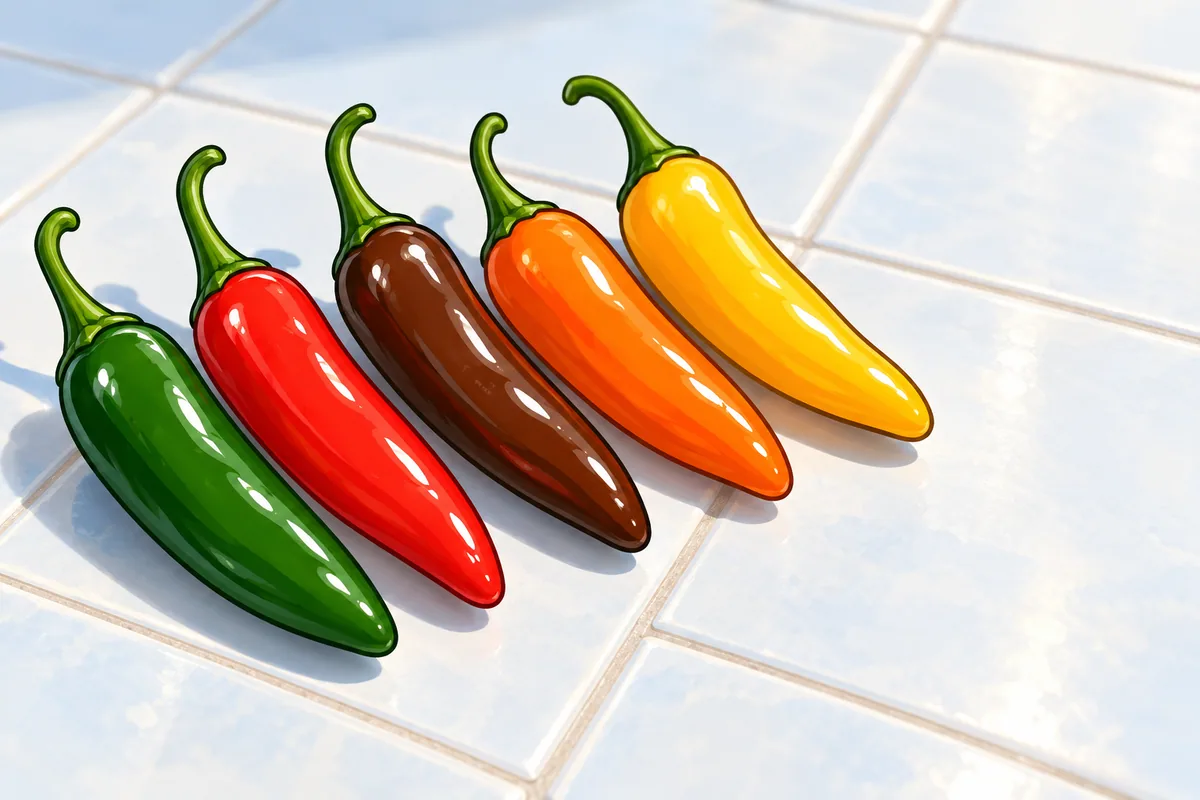
Green is only where it starts. You can pick a serrano unripe or ripe, and the mature color varies: green, red, brown, orange or yellow1.
Where does the serrano come from?
The serrano you buy started out in the mountains of Puebla and Hidalgo in Mexico1. It belongs to Capsicum annuum; the genus monograph lists "Serrano" and "Pimenta-serrano" among the common names of C. annuum var. annuum2.
The plant still likes it warm, which matters if you want to grow one:
| What | Figure |
|---|---|
| Temperature | Grows well above 75°F; no frost tolerance |
| Soil pH | 7.0–8.5 |
| Plant height | Up to 5 feet |
| Fruit length | About 2 inches |
| First harvest | 70–85 days from transplanting for most hot peppers |
It grows well in hot, humid climates, and UF/IFAS calls it an ideal pepper for Miami-Dade County for that reason1. Starting seeds, spacing and pots are in the guide to growing serrano plants.
Which serrano should you plant?
Pick by the pod size you want and your climate, then by how much leaf cover your summer needs. Florida and Texas extension services name these cultivars for growers, each with the trait they're known for59.
| Cultivar | What it offers |
|---|---|
| Altiplano9 | Vigorous plant, uniform glossy green fruit |
| Camino Real9 | Medium maturity, large green fruit |
| Devil Serrano9 | Early, large, dark-green glossy fruit; semi-indeterminate bush |
| Pathfinder9 | Good leaf cover; fruit averages 4.5–5 inches long |
| Don Picoso9 | Dark-green fruit with thick walls |
| Hidalgo5 | Listed for Texas growers |
| Serrano del Sol5 | Listed for Texas growers |
| TAM Serrano Hidalgo5 | Listed for Texas growers |
| Serrano Tampinqueno5 | Listed for Texas growers |
Pathfinder stands out if you want long pods: at 4.5 to 5 inches, its fruit runs more than twice the 2-inch pod UF/IFAS describes for the classic serrano19. For a hot summer, a cultivar with good leaf cover shades the fruit from sun.
Which should you pick, a serrano, a jalapeño or a Thai chili?
Pick the serrano when you want sharp heat in a fresh dish, the jalapeño when you want more pepper and less burn, and a Thai chili when a few drops of heat must flavor a whole wok.
| Your dish | Pick | Why |
|---|---|---|
| Pico de gallo or a fresh table salsa | Serrano | Bright, biting, fleshy pod; 10,000–25,000 SHU 1 |
| Nachos, poppers or a mild salsa for a crowd | Jalapeño | About 5,000 SHU on average 1 |
| A stir-fry or curry paste | Thai chili | 50,000–100,000 SHU, so a few go a long way 1 |
| A canned salsa that should be hotter | Serrano in place of jalapeño | Swap types, never the total amount 7 |
What goes wrong with serranos?
Most trouble comes from treating a serrano like a jalapeño.
Problems and their fixes
- Your fingers sting hours after dicing: capsaicin oil on the skin. Wear gloves next time; Poison Control suggests warm water flushes or a little vegetable oil now.8
- The salsa came out too hot: stretch it with more tomato and onion, and serve milk on the side, which cut the burn most in a 72-person Penn State study.10
- You can't tell the serranos from the jalapeños in your bag: a serrano is slimmer, about 2 inches long, and much hotter. Taste a sliver first.1
- Your plants drop their flowers in midsummer: Texas AgriLife notes that excessively high temperatures reduce fruit size and cause bloom drop. Keep the water steady and wait for cooler nights.5
Fresh serranos keep for the same short window as other hot peppers. Texas AgriLife gives 45 to 55°F at 80 % humidity, for 2 to 3 weeks at most5, so use your crisper drawer and cook the oldest pods first.
How do you keep a big serrano harvest?
Freeze what you can't use in two weeks, or dry the red ones. New Mexico State University's chile guide says you can freeze whole chiles unpeeled, pack them flat in containers no deeper than 2 inches so they freeze fast, and keep them up to 12 months11. A frozen serrano goes limp when it thaws, so use it in cooked salsas and sauces rather than pico de gallo.
Pods you leave on the plant until they ripen red are the ones to dry; you can dry them in an oven or dehydrator, or on a string in a dry, airy room. You can also turn a glut into a bottle with the recipe below.
Is a habanero much hotter than a serrano?
Yes, by a wide margin. A habanero runs 100,000 to 350,000 SHU1, so it is 4 to 35 times hotter depending on the pods. The serrano and habanero side by side lines up both ranges and flavors.
How many jalapeños match one serrano?
Other swaps with amounts are in the serrano swap list, and a full batch with ratios is in the serrano hot sauce recipe if your plants outgrow your salsa bowl.
Related peppers
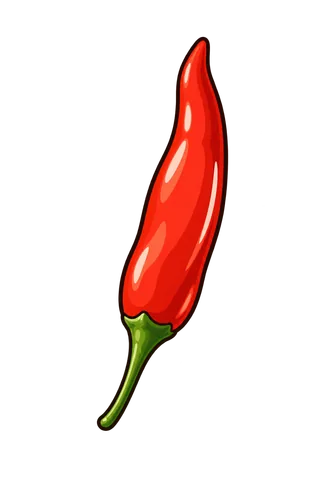
Published ranges.1
Related in Peppers
-
Habanero Pepper Scoville, 100,000–350,000 SHU
A fruity, floral chile in the extra-hot band.7 min read -
Cherry Pepper Scoville, 0 SHU Sweet to Hot
A small round pepper, sweet or hot, grown for jars and stuffing.6 min read -
Poblano Pepper Scoville, 1,000–2,000 SHU
A big, thick-walled, mild chile from the valley of Puebla.5 min read -
Calabrian Chili Heat, 5,000–70,000 SHU by EU Rule
Peperoncino di Calabria: the protected chili of Italy's toe, sold fresh, on strings, as flakes and as powder.7 min read -
Aji Panca Heat, 500–1,500 SHU, Peru's Great Dried Ají
Peru's dark, mild, berry-scented dried pepper: almost never eaten fresh, always there for color.6 min read -
Bird's Eye Chili Heat and Names, 50,000–100,000 SHU
A tiny upright chile whose name points to the animals that plant it.6 min read
Sources
· 11
- 1University of Florida IFAS Extension HS-859/TR010: Pepper Production in Miami-Dade County, Florida
- 2PhytoKeys 200:1-423 (Pensoft) Monograph of wild and cultivated chili peppers (Capsicum L., Solanaceae)
- 3University of Maryland Extension Growing Peppers in a Home Garden
- 4UF/IFAS Gardening Solutions Peppers by Scoville Units
- 5Texas AgriLife Extension Service (Joe Masabni) Jalapeño & Other Hot Peppers
- 6University of California Agriculture and Natural Resources, UC Master Gardeners of Ventura County Ventura Garden to Table Series: Peppers
- 7National Center for Home Food Preservation, University of Georgia Ingredients for Salsa Recipes
- 8National Capital Poison Center (Poison Control) Capsaicin: when the chili is too hot (Amanda McDaniel-Price, RN)
- 9University of Florida IFAS Extension HS732/CV130: Chapter 13. Pepper Production (Vegetable Production Handbook of Florida)
- 10Physiology & Behavior 208:112557 Putting out the fire: efficacy of common beverages in reducing oral burn from capsaicin (Nolden, Lenart and Hayes)
- 11New Mexico State University Cooperative Extension (Guide E-324) Processing Fresh Chile Peppers (revised by Nancy C. Flores and Cindy Schlenker Davies)