
When to Pick Peppers, 35–45 Days From Flower to Color
Full size and firm is ready. Color is your choice, and it costs you weeks.
Short answer
A pepper is ready once it reaches full size and feels firm; pick it green then, or leave it on the plant to turn its ripe color.
- Ripening from flower to full color takes 35–45 days; a bell needs 2–3 weeks more after mature green
- Cut the stem with snips instead of pulling, so the branch does not break
Harvest at a glance
Ripe colors, pepper by pepper
Each strip runs from the unripe color to the colors the pod can ripen to. Full size and firm is ready at any color.
 Jalapeño75–85 days from transplantsGreen → redMature green, firm, 2–2.5 inches long69
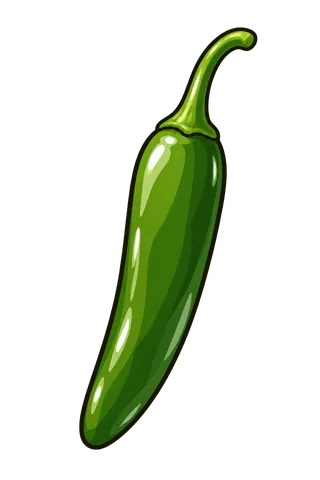 Serrano70–85 days from transplanting (most hot types)Green → red, brown, orange or yellowGreen or ripe46
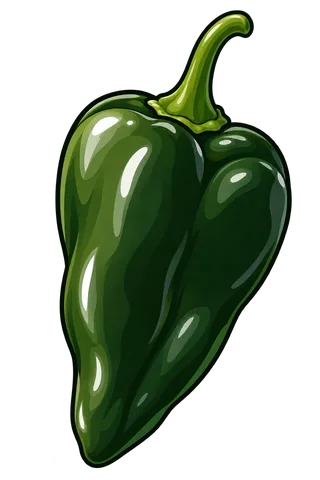 PoblanoAbout 75–80 daysGreen → redGreen, or red to dry as ancho6
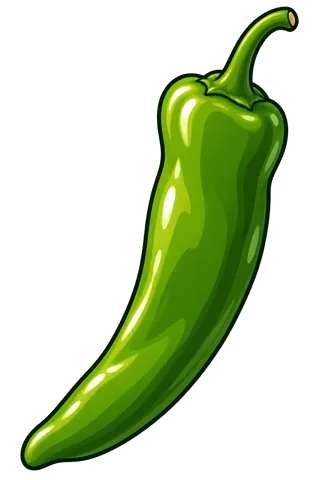 AnaheimAbout 80 days to green, 120+ to redGreen → redGreen or red6
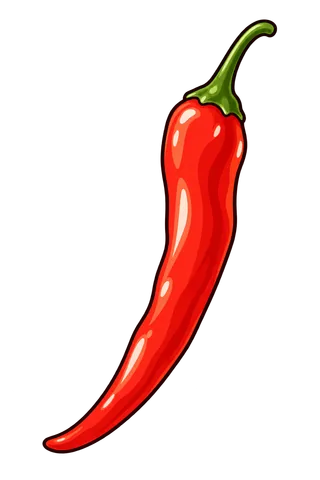 CayenneAbout 100 days after germinationRedRed, mostly for drying6
- TabascoAbout 80 days after germinationPale yellowish-green → yellow → orange → redRed, for sauce6
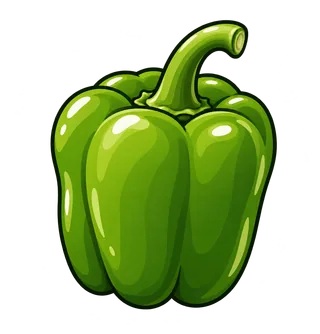 Bell70–80 days to green, then 2–3 weeks moreGreen → red, orange or yellowGreen or full color46
- Hungarian waxNot given in the sourcesYellow → orange → redYellow or red6
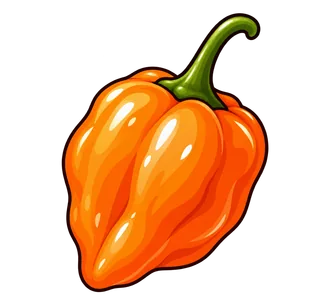 Habanero90–120 days from transplantingGreen → yellow, orange, red, white, brown or pinkFully colored and still firmSources for this line1. Utah State University Extension4. University of Maryland Extension6. UF/IFAS Extension (EDIS)
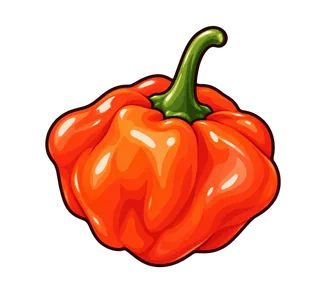 Scotch bonnetNot given in the sourcesRed or yellowFully colored and still firm16
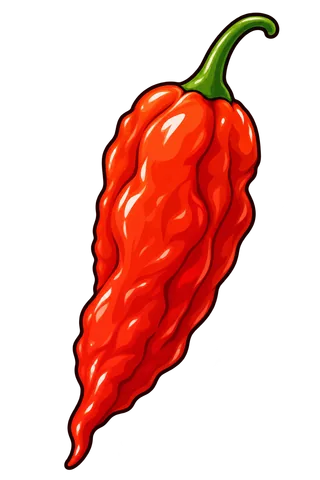 Ghost pepperNot given in the sourcesRed, yellow, orange or chocolateFully colored and still firm16
Timing
How long the wait runs
Figures for peppers in general. Cool weather stretches every one.
At the plant
Picking without breaking branches
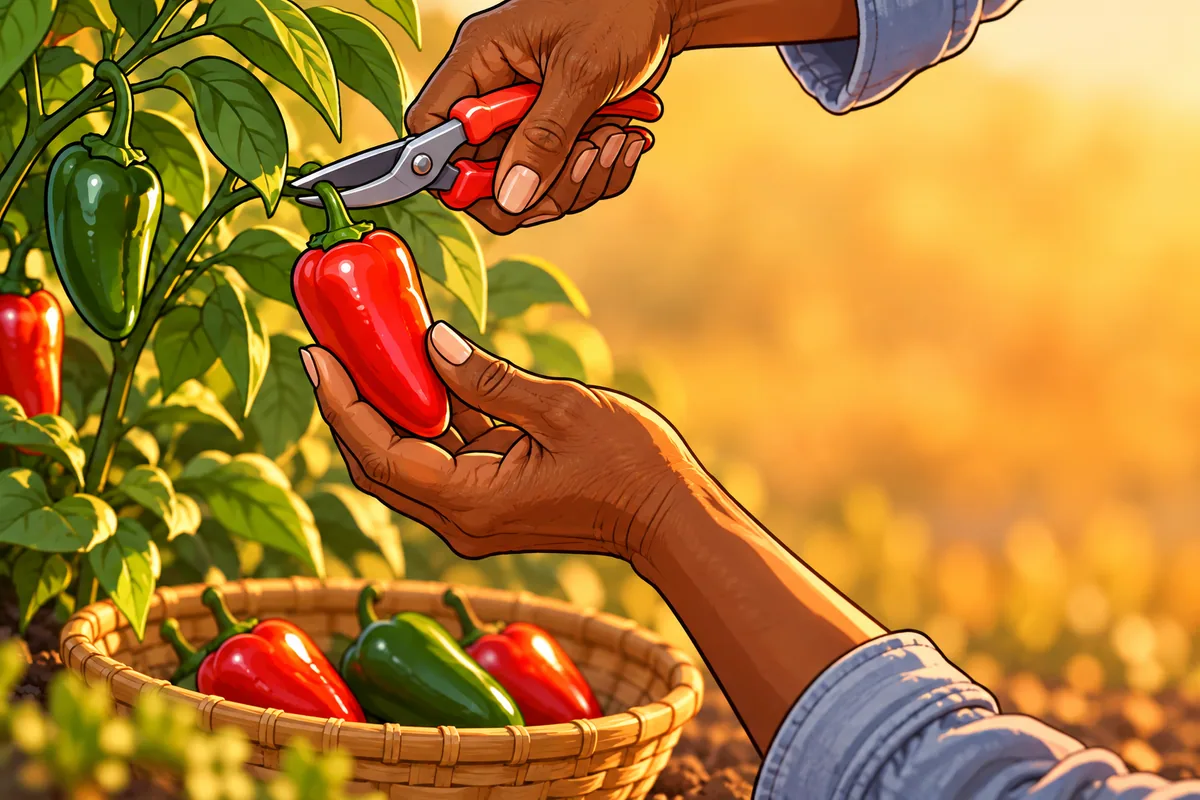
Pepper branches are brittle: cut the stem, do not pull.
- 1Check size and feelPick pods at full size that feel firm, plump and smooth.1
- 2Cut the stemUse snips or pruners on the stem instead of pulling the pod.4
- 3Pick as they maturePick fruits as they mature instead of leaving ripe ones on the plant.1
- 4Handle hot types with careThe heat in hot peppers also irritates eyes and skin.3
On this page
- 1When are peppers ready to pick?
- 2How do color, corking, and firmness change by variety?
- 3What do the signs look like on the pod?
- 4Do peppers get hotter as they ripen?
- 5Should peppers be picked green or fully ripe?
- 6Why do your peppers stay green late in the season?
- 7How do you pick peppers without hurting the plant?
- 8How many peppers will you get?
- 9How do you store fresh peppers?
- 10Which storage temperature should you trust for fresh peppers?
- 11What do you do with the last peppers before frost?
- 12What goes wrong at harvest?
When are peppers ready to pick?
When the pod reaches full size and feels firm. Utah State picks peppers either green (immature) or fully colored, and wants them firm, plump and smooth-skinned1. New Mexico State squeezes a green chile and looks for one that is firm and crisp2. If your pod gives under your thumb, or the skin has started to wrinkle, it has waited too long for fresh use.
Size comes first, and the calendar gives you a rough date for it. UF/IFAS puts most peppers at 60 to 80 days after transplanting, or 80 to 100 days from seed3. Color takes time on top of size: the timing band on this page gives 35–45 days from flower to full color1, and 70–85 days from transplanting for most sweet and hot types against 90–120 for habanero types4.
Cool weather stretches every one of those numbers for you; New Mexico State says it delays maturity2. Keep picking once your first pods are ready, because Maryland notes that a plant left unharvested slows its flower and fruit production5.
How do color, corking, and firmness change by variety?
Every pepper you grow starts green (Tabasco starts a pale yellowish-green) and ripens to its own color, at its own pace. Firmness is the constant: full size and firm means ready, whatever the color1. The ripeness strip at the top of the page gives each pepper's days and colors as UF/IFAS, Maryland and Texas extension list them, so you can find your plant and read across.
Some colors take far longer than others. An Anaheim needs about 80 days to reach mature green and more than 120 to turn red6, and a serrano can finish red, brown, orange or yellow depending on the variety6. If your seed packet names a ripe color, wait for that color, not for red.
What corking means
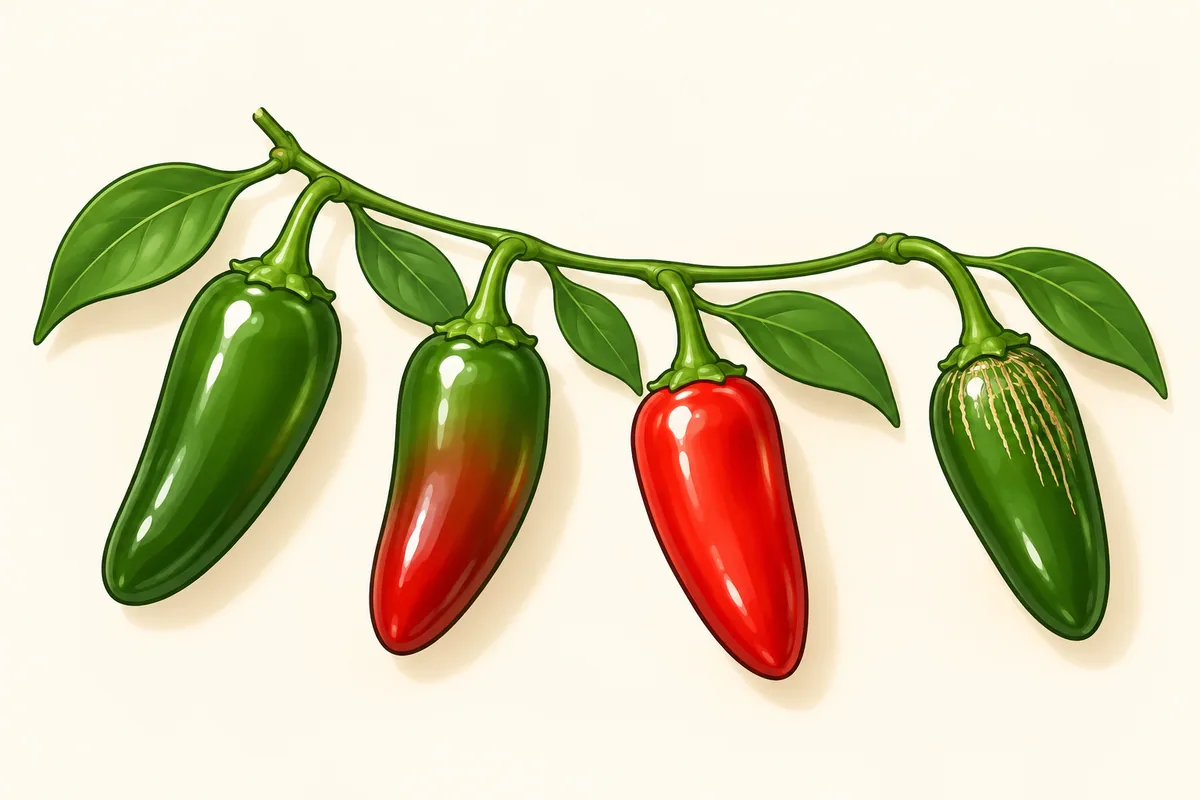
Corking is the set of small brown to white lines on the skin, often on the shoulder, that look like stretch marks. Iowa State ties it to swings in moisture and temperature, says it mainly changes the look, not the taste, and names older jalapeño varieties as prone to it7. Steady watering and mulch reduce it, and so do crack-resistant varieties, so you can treat a corked pod as ready like any other.
What do the signs look like on the pod?
Four stages show up on most chile-shaped pods you will grow. Here they are on one branch, so you can match your own.
A soft or wrinkled pod on your plant has gone past its best for fresh use. A red chile you want to dry is the exception: New Mexico State lets those dry on the plant, or picks them fully ripe and hangs them by the stems2.
Do peppers get hotter as they ripen?
Often, but not always; it depends on the variety you grow. In a 2019 study of pepper cultivars grown in Rocky Ford, Colorado, capsaicin rose from the green to the ripe stage in some and fell in others8. Here are a few of the measured pairs.
| Cultivar | Green | Ripe | Change |
|---|---|---|---|
| Habanero | 3,636 | 4,820 (yellow) | Hotter ripe |
| NuMex Joe E. Parker | 99 | 177 (red) | Hotter ripe |
| Serrano Mild | 26 | 49 (red) | Hotter ripe |
| Fresno | 848 | 735 (red) | A little milder ripe |
| NuMex Big Jim | 398 | 222 (red) | Milder ripe |
| Pueblo Chile | 108 | 47 (red) | Milder ripe |
Ripe pods are sweeter every time, but hotter only for some varieties. UF/IFAS confirms the sweetness3, and New Mexico State adds that stress also changes heat: water stress, too much or too little, and temperatures that run too cool or too hot all affect how pungent a pod turns out2. So the same variety can taste hotter or milder from one summer to the next.
Should peppers be picked green or fully ripe?
Either is right; you trade weeks for flavor and color, and the choice is yours. UF/IFAS says fully ripened peppers are sweeter than green ones3, and the wait is real: an Anaheim needs about 80 days to mature green and more than 120 to turn red6.
Pick it green
You can also split it: pick your first pods green, then let later ones color. Texas AgriLife gives a commercial version of the same idea for jalapeños, holding the first harvest until 5 to 10 % of the pods show red, then picking every 2 to 3 weeks9. If your season is short, pick green; if you want dried chiles or a red sauce, give your plant the extra weeks.
Why do your peppers stay green late in the season?
Usually because your nights run too cool for the color to develop. Wisconsin Extension says color change depends on the fruit reaching the right stage of ripening while temperatures run between 65 and 75°F, and that temperatures below 56°F stop the coloring10. Illinois Extension adds that in a short northern season many sweet peppers never reach full ripeness11.
A pod you pick fully green stays green. Maryland says peppers do not ripen further after harvest4, and Wisconsin says the carotenoid that makes red, capsanthin, is absent from peppers you pick green10. A pod that already shows color can finish in a warm spot, and Maryland says you can pull whole plants just before a killing frost and hang them upside down in a warm place such as a garage4. The ripening guide goes through your options.
Which colors do you pick before they turn red?
Some bell colors form while your fruit is still immature. Illinois Extension names white, light yellow, lilac and purple types, and picks them before they turn red11. Green bells go at full size, 3 to 4 inches long, firm and green; the red, yellow, orange and brown types stay on the plant to ripen fully and develop their flavor11.
How do you pick peppers without hurting the plant?
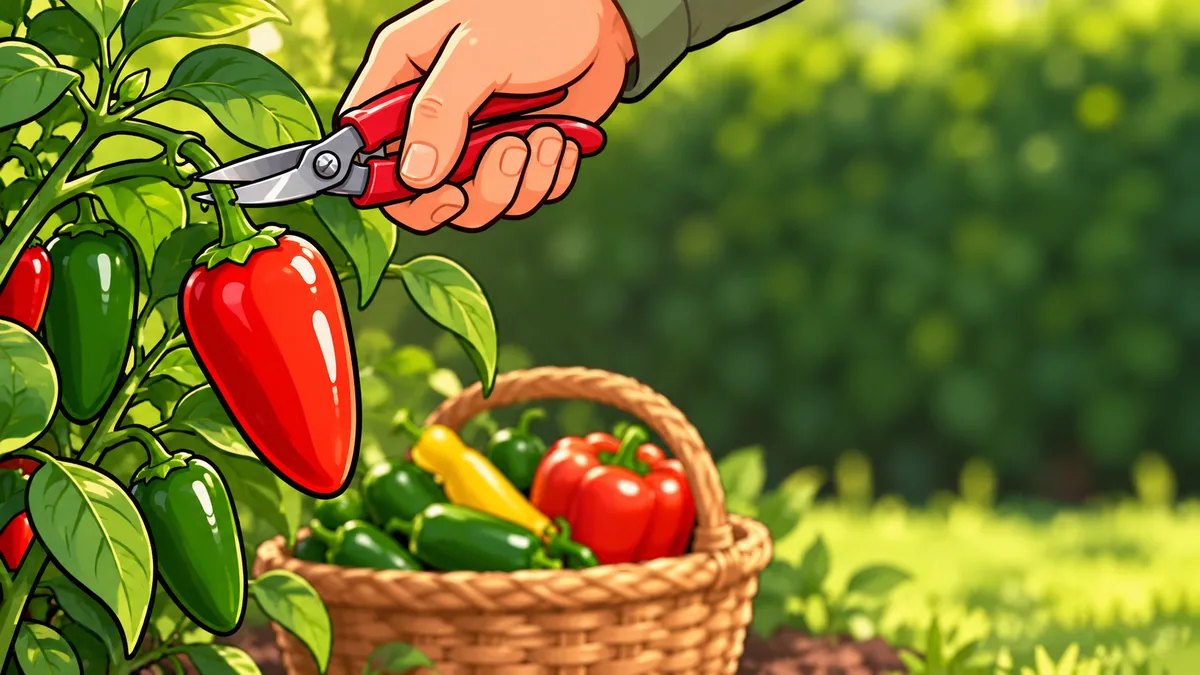
Cut, do not pull. Pepper branches are brittle, and Maryland Extension cuts pods off to avoid breaking them4. The picking steps on this page run through the routine, from the size check to the gloves.
Wear gloves for anything hot. UMN Extension says even sweet peppers can carry enough capsaicin to irritate skin, and you should wash your hands before touching your eyes13. A pair of snips and a basket you can hold in one hand make the job quick.
Specific peppers have their own tells. The guide to when to pick jalapeños covers the most asked one, and picking habaneros covers the slow chinense types.
Pepper Geek shows when to pick jalapeños, bells, bananas, ghosts and more, a quick way to see those pods at the stages this page describes, while the size-and-firmness rule above stays the sourced one.
How many peppers will you get?
More than you might expect, once your plants hit their stride. Utah State expects about 75 pounds of fruit per 100 feet of row, depending on variety1, while Maryland's home-garden figure is 2 to 8 pounds per 10-foot row4.
- For fresh eating, Utah State plants 3 or 4 peppers per person1.
- To pickle, can, dry or freeze, it adds 5 to 10 more plants1.
- So a household of four that eats them fresh needs 12 to 16 plants, and one that also preserves needs about 17 to 261.
Your own number moves with the season. A cool summer delays maturity2, and hot nights above 75°F slow or stop pod production4, so a planting that gives a lot one year can give half the next.
How do you store fresh peppers?
Cool, but not cold. Fresh peppers keep for 1 to 2 weeks at 50 to 55°F; Utah State warns that long spells in the refrigerator cause chilling injury1. UC IPM gives a refrigerator range of 45 to 55°F15, so the warmest shelf or the crisper suits your peppers better than the back of a cold fridge.
For more than two weeks' worth, drying the peppers or freezing them keeps them for months. New Mexico State strings red chiles into long ristras to dry2.
Which storage temperature should you trust for fresh peppers?
Start your pods at 45 to 50°F and treat anything colder as a risk. Six sources print different ranges, and they cover different peppers and different storage times.
| Temperature | Humidity | How long |
|---|---|---|
| 45°F is best; 41°F works for 2 weeks | Above 95% | 3–5 weeks at 45°F |
| 45–50°F | 95% | 2–3 weeks |
| 45–50°F | 90–95% | Up to 2 weeks |
| 50–55°F | Not given | 1–2 weeks |
| 45–55°F in refrigeration | Not given | Not given |
| A refrigerator | Not given | A week or more |
The cold end has a limit. UC Davis finds that bells held at 41°F start to show chilling injury after about 2 weeks, and that ripe, colored peppers tolerate the cold better than green ones12. UW–Extension warns that anything under 45°F can cause the same injury10, and UMN notes that skins may pit after too long in the refrigerator13.
Chilling injury shows up as pitting, water-soaked patches, a discolored seed cavity and decay, and black Alternaria rot at the stem end is a sign of it12. Humidity matters as much as temperature for your pods: UC Davis says firmness tracks water loss, which is why the ranges pair a cool shelf with humid air12. That UC Davis page covers bell peppers only, so hot pods may tolerate the cold differently.
What do you do with the last peppers before frost?
Pick everything before the first frost. Peppers are highly susceptible to frost damage2, so Utah State harvests all the mature green and slightly colored fruit at the end of the season1.
A pod from the last harvestPick it before the first frost
- Is it full size and firm?Green or colored both count
- yesIs it fully red and meant for drying?Chile types for red chile or powder
- yesHang it to dryBy the stem, or strung into a ristra
- noStore it cool and use it soon50 to 55°F for 1 to 2 weeks
- yes
- noUse it nowSmall or soft pods do not keep
- yes
Your leftover small green pods are still worth picking: frost damages any pod left on the plant2, and a firm green pod can go straight into your kitchen.
What goes wrong at harvest?
Most of your harvest problems will be timing or handling. Here is what each looks like and what changes it next time.
| What you see | Likely cause | What to change |
|---|---|---|
| A branch snapped off with the pod4 | Pod pulled by hand | Cut the stem with snips |
| Soft or wrinkled pods1 | Left on the plant past ripe | Pick as pods mature |
| Tan lines on the shoulder7 | Corking from swings in water and heat | Water evenly; the pod is still fine to eat |
| Pods stay green into fall12 | Cool weather delays maturity | Pick them green before frost; start earlier next year |
| Pods spoil fast after a long spell in a cold fridge1 | Chilling injury | Store at 50–55°F, not in the coldest part of the fridge |
| Few new flowers in late summer5 | Ripe pods left on the plant | Keep picking so the plant keeps setting |
Quick answers
Quick answers
Can you pick peppers when they are green?
Yes. Once a pod reaches full size and feels firm and crisp, it is ready green; leave it on the plant only if you want its ripe color and the sweeter taste that comes with it.Sources for this line1. Utah State University Extension2. New Mexico State University Cooperative Extension Service3. UF/IFAS Gardening Solutions
Does picking peppers make the plant grow more?
It keeps the plant setting fruit. Maryland Extension notes that a plant left unharvested slows its flower and fruit production.5
How long do fresh peppers keep after picking?
One to 2 weeks at 50 to 55°F. Long spells in a colder refrigerator cause chilling injury.1
More in Grow
The newest from Grow
-
How to Grow Carolina Reapers, Seed to Ripe Pod
A C. chinense on the longest clock in the garden.Oct 18, 2026 · Guide -
Best Fertilizer for Peppers and the 4- and 8-Week Feeds
A soil test, a starter feed and two light side-dressings.Oct 18, 2026 · Guide -
Pepper Plant Leaves Curling? 6 Causes and the Fix
Which way the leaf curls, and what sits under it, tells you the cause.Oct 18, 2026 · Guide -
Pepper Plant Spacing, 18 Inches Apart in Rows and Beds
18 inches is the middle; your bed, your summer and your variety move it.Oct 18, 2026 · Guide -
When to Plant Peppers, 2–3 Weeks After Your Last Frost
Three checks, one date to count from.Oct 18, 2026 · Guide -
Pepper Plant Leaves Turning Yellow? 8 Causes and Fixes
Where the yellow starts tells you more than the yellow itself.Oct 18, 2026 · Guide
Sources
· 15
- 1Utah State University Extension How to Grow Peppers in Your Garden
- 2New Mexico State University Cooperative Extension Service Guide H-240: Growing Chile Peppers in New Mexico Gardens
- 3UF/IFAS Gardening Solutions Peppers
- 4University of Maryland Extension Growing Peppers in a Home Garden
- 5University of Maryland Extension Poor Blossom and Fruit Set in Vegetables
- 6UF/IFAS Extension (EDIS) HS-859/TR010: Pepper Production in Miami-Dade County, Florida (Wang, Zhang, Li, Seal, Klassen, Olczyk)
- 7Iowa State University Extension and Outreach, Yard and Garden Why do my peppers have brown lines on them?
- 8Antioxidants 8(9): 364 (MDPI, peer-reviewed) Capsaicinoids, Polyphenols and Antioxidant Activities of Capsicum annuum: Comparative Study of the Effect of Ripening Stage and Cooking Methods (Hamed, Kalita, Bartolo, Jayanty)
- 9Texas AgriLife Extension Service Jalapeño & Other Hot Peppers (Joe Masabni)
- 10University of Wisconsin-Extension, Cooperative Extension A3687: Growing Tomatoes, Peppers, and Eggplants in Wisconsin (K. A. Delahaut, A. C. Newenhouse)
- 11University of Illinois Extension Peppers (Home Vegetable Gardening)
- 12UC Davis Postharvest Research and Extension Center (Marita Cantwell) Bell Pepper, Postharvest Handling and Storage
- 13University of Minnesota Extension Growing peppers (Marissa Schuh, Cindy Tong)
- 14Pepper Geek Harvesting Peppers - When To Pick Peppers (Jalapenos, Bell, Banana, Ghost & More)
- 15UC Statewide IPM Program, University of California Cultural Tips for Growing Peppers
Coming soon
Your pocket pepper index.
Built from the same index as this site.
- Every entry offline
- Compare any two peppers
- Keep a list of peppers you have tried