
Ghost Pepper Scoville, About 1 Million SHU
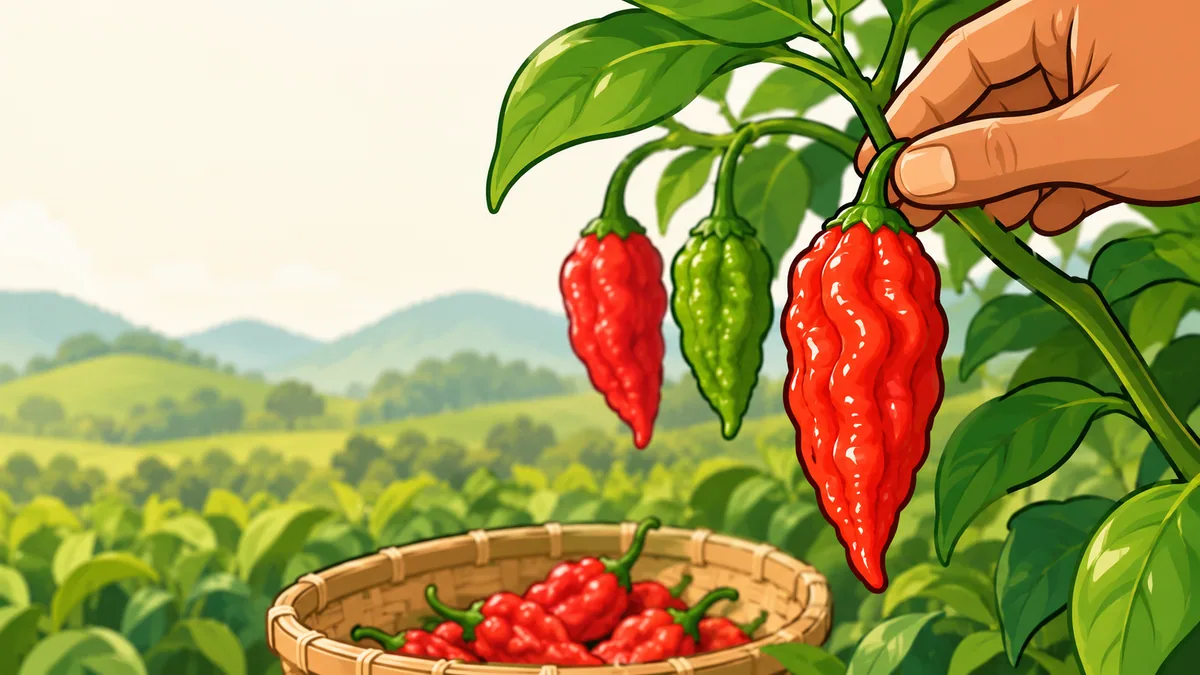
The Bhut Jolokia of Assam, India: the first pepper measured at a million SHU.
 Super-hot
Short answer
About 1,001,304 SHU on average
- About 2.8 times the orange habanero grown in the same trial
- From Assam, India; also called Bhut Jolokia, Naga Jolokia and Bih Jolokia
On this page
- 1How hot is a ghost pepper?
- 2Why do ghost pepper numbers differ?
- 3Where does the ghost pepper come from?
- 4Why is it called the ghost pepper?
- 5What does a ghost pepper taste like?
- 6What colors do ghost peppers come in?
- 7Is the ghost pepper a chinense or a hybrid?
- 8What is the ghost pepper used for?
- 9What does eating a ghost pepper feel like, and how long does it last?
- 10Can a ghost pepper hurt you?
- 11How do you handle and cook ghost peppers safely?
- 12Which should you pick, a ghost, a habanero or a Reaper?
- 13How does it compare, and can you grow it?
How hot is a ghost pepper?
A ghost pepper averages 1,001,304 Scoville heat units, the HPLC mean from a replicated field trial at Las Cruces, New Mexico, in 20051. That's barely over the 1,000,000 line, so it sits at the bottom of the super-hot band.
Log scale; bars are published ranges.Sources for this line1. HortScience 42(2):222-2242. University of Florida IFAS Extension5. PhytoKeys 200:1-423 (Pensoft)6. Guinness World Records
The fairest comparison you can make comes from that same trial. An orange habanero grown next to it measured 357,729 SHU, so the ghost pepper came out about 2.8 times hotter than a habanero from the same field and season. The working is 1,001,304 ÷ 357,729 = 2.80.
Why do ghost pepper numbers differ?
Because each figure comes from a different sample and a different kind of report. The 2005 trial even sent its own ground pods to two commercial labs, and they came back lower than the university's result1.
| Figure | Kind of figure |
|---|---|
| 1,001,304 SHU | HPLC mean, 25 fruits from at least 10 plants per replication, Las Cruces 2005 |
| 927,199 SHU | Same ground sample, commercial lab (Southwest Bio-Laboratories) |
| 879,953 SHU | Same ground sample, commercial lab (Ag-Biotech) |
| almost 1,020,000 SHU | Field-trial mean, NMSU superhot study, 2012 |
| 1,041,427 SHU | Single figure, given as the Guinness certification |
| about 1,000,000 SHU | Rounded figure |
Which number should you trust?
Use the 1,001,304 mean for your own planning. It comes from a published, replicated trial that also grew a habanero as a control, so you can see how the two compare under the same sun. The others land within about 12 % of it, which is normal for chiles: two labs testing one ground sample still disagreed by 47,000 SHU.
Guinness's own 2013 article put the former Bhut Jolokia record at just over 800,000 SHU7, lower than all of these. Older and newer tests rarely match on a pepper this variable.
Where does the ghost pepper come from?
From Assam, in northeastern India1. Farmers there grow several local landraces, and the names in use include Naga Jolokia, Bhut Jolokia and Bih Jolokia; in Assamese, jolokia simply means the chile pepper1.
The seed that started the New Mexico trial reached the Chile Pepper Institute in 2001 from a member who collected it in India. Poor fruit and seed set meant it took until 2005 to have enough seed for a full trial1.
AP Archive made this news clip of farmers in Assam picking Bhut Jolokia, so you can watch the plant and the pods in the field, but remember that its "India holds the world record" line is old, because the record has changed hands since.
Why is it called the ghost pepper?
"Ghost pepper" is the English rendering of Bhut Jolokia, one of its Assamese names. The New Mexico paper that measured it explains only the second word: jolokia means the Capsicum pepper in Assamese1.
What bhut means is less settled. The popular story reads it as "ghost," and other writers tie it to Bhutan; we haven't found a primary source that decides between them, so we don't print either story as fact. What you can rely on is that Bhut Jolokia, Naga Jolokia and Bih Jolokia all name landraces from the same corner of northeastern India1.
What does a ghost pepper taste like?
Smoky and fruity, with a little sweetness before the heat takes over. That's how the UC Master Gardeners of Ventura County describe it3, and it is the one flavor description we found on a primary source.
You get that flavor only in the first second or two. After that the heat covers almost everything, so most cooks use the ghost pepper in a sauce or a stew where a small amount spreads through a big pot and the fruit and smoke come through at a level you can taste.
- Smoky
- Fruity
- Sweet
What colors do ghost peppers come in?
UF/IFAS Extension lists the ghost pepper in red, yellow, orange and chocolate2. In the index these share one entry, because no primary source we've read publishes separate heat figures for them.
| Color | Also sold as | What we can source |
|---|---|---|
| Red | Bhut Jolokia, ghost pepper | The form tested in the 2005 trial: green ripening to bright red, 1,001,304 SHU mean |
| Yellow | Yellow Bhut Jolokia | Listed as a ghost pepper color by UF/IFAS; no separate heat figure |
| Orange | Orange Bhut Jolokia | Listed as a ghost pepper color by UF/IFAS; no separate heat figure |
| Chocolate | Chocolate Bhut Jolokia | Listed as a ghost pepper color by UF/IFAS; no separate heat figure |
| White | White Bhut Jolokia | No primary source found yet, so no data in this row |
If you're choosing between colors at a seed shop, treat them all as about a million SHU until someone publishes a trial. Pick your color for looks and flavor; your burn will be about the same.
Is the ghost pepper a chinense or a hybrid?
Mostly Capsicum chinense, with a little C. frutescens mixed in. The flower and pod traits put it in C. chinense, and DNA markers confirmed that, but they also turned up three markers found only in C. frutescens, a sign of gene flow from that species1.
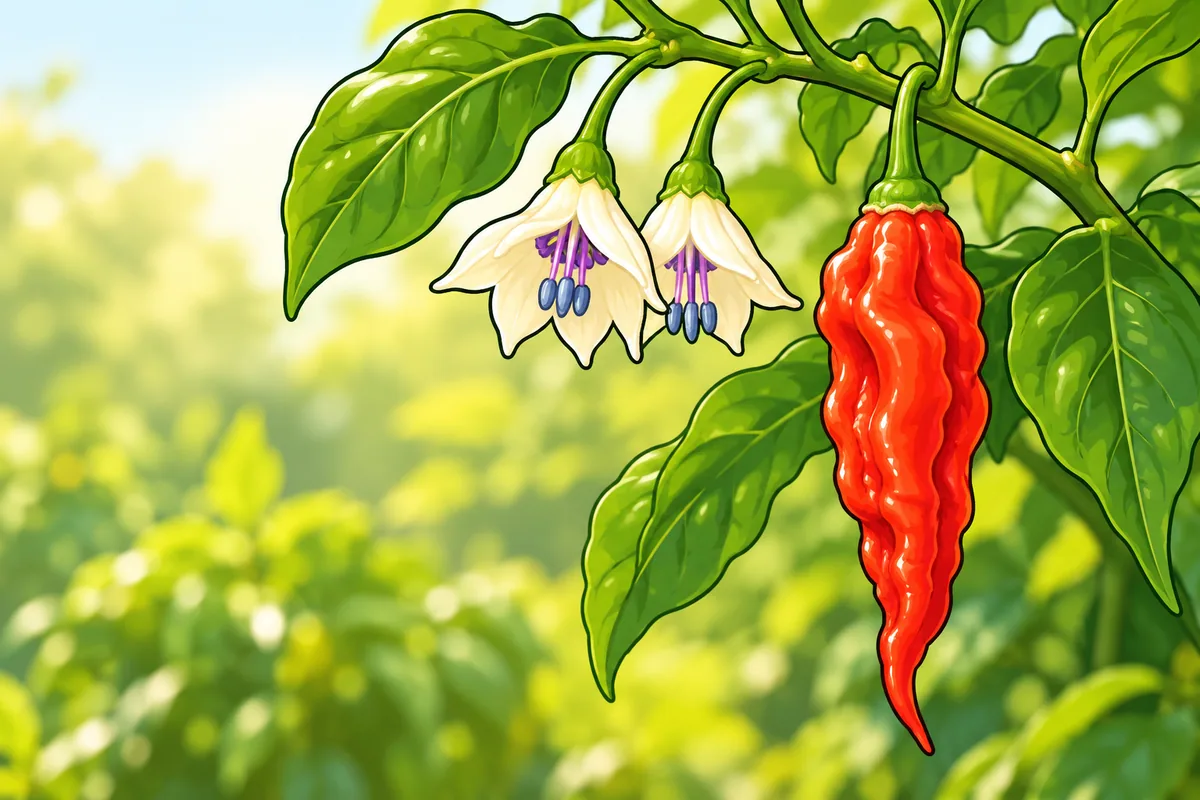
An earlier Indian report had called the Naga Jolokia a C. frutescens. The New Mexico team matched that report's fruit description to their own plants and placed it in C. chinense instead1.
What is the ghost pepper used for?
UF/IFAS Extension lists three uses2:
- An ingredient in spicy food, used fresh or dried
- A remedy for summer heat in some countries
- Dried powder developed into pepper spray for self-defense
At this heat, a little goes a long way in a pot. University of Maryland Extension's advice to wear rubber gloves when you process chiles or clean out seeds applies twice over here9.
What does eating a ghost pepper feel like, and how long does it last?
It feels like a burn because, to your nerves, it is one. Capsaicin switches on the same receptor on your sensory nerves that fires when something touches you at a painfully high temperature, so your brain reads a chemical as heat10.
- You bite the podCapsaicin leaves the white ribs and coats your mouth
- Capsaicin opens the heat receptorThe same channel that fires at painful temperatures
- Pain nerves fireThey carry the signal they use for real heat
- Your brain reads it as a burnSweat, tears and a red face follow
- Too much reaches the stomachNausea, vomiting, cramps or diarrhea
No study we found times the burn of a whole ghost pepper, so treat any minute-by-minute claim you read with care. The one timed lab study we can point you to used a far milder spicy tomato juice, and it shows the shape of the curve12:
- 0 seconds
The burn starts as you swallow
In the Penn State study, 72 people rated a spicy tomato juice between moderate and strong right after swallowing.12
- 10 seconds to 2 minutes
It fades, even with nothing to drink
The ratings dropped every 10 seconds, to just above weak by the two-minute mark.12
- After a large dose
The stomach takes over
Poison Control lists nausea, vomiting, abdominal pain and diarrhea after too much hot pepper, so the trouble can start well after your mouth calms down.11
A ghost pepper starts far higher on that curve than a tomato juice, so expect your mouth to take much longer than two minutes to settle.
Can a ghost pepper hurt you?
In normal cooking amounts, the record shows discomfort rather than harm. The best-known exception is a 2016 case report: a 47-year-old man ate ghost peppers in a contest, retched and vomited violently, and tore a 2.5 cm hole in his esophagus13. He spent 23 days in hospital. The authors wrote that, as far as they knew, no serious harm from eating ghost peppers had been reported before13.
The tear came from the force of the vomiting, a condition doctors call Boerhaave syndrome. That's the reason eating contests worry emergency doctors more than a ghost pepper sauce on your tacos.
How do you handle and cook ghost peppers safely?
Treat a ghost pepper like a kitchen chemical for the ten minutes you cut it. Most of the trouble people report comes from their hands and eyes, not from the plate.
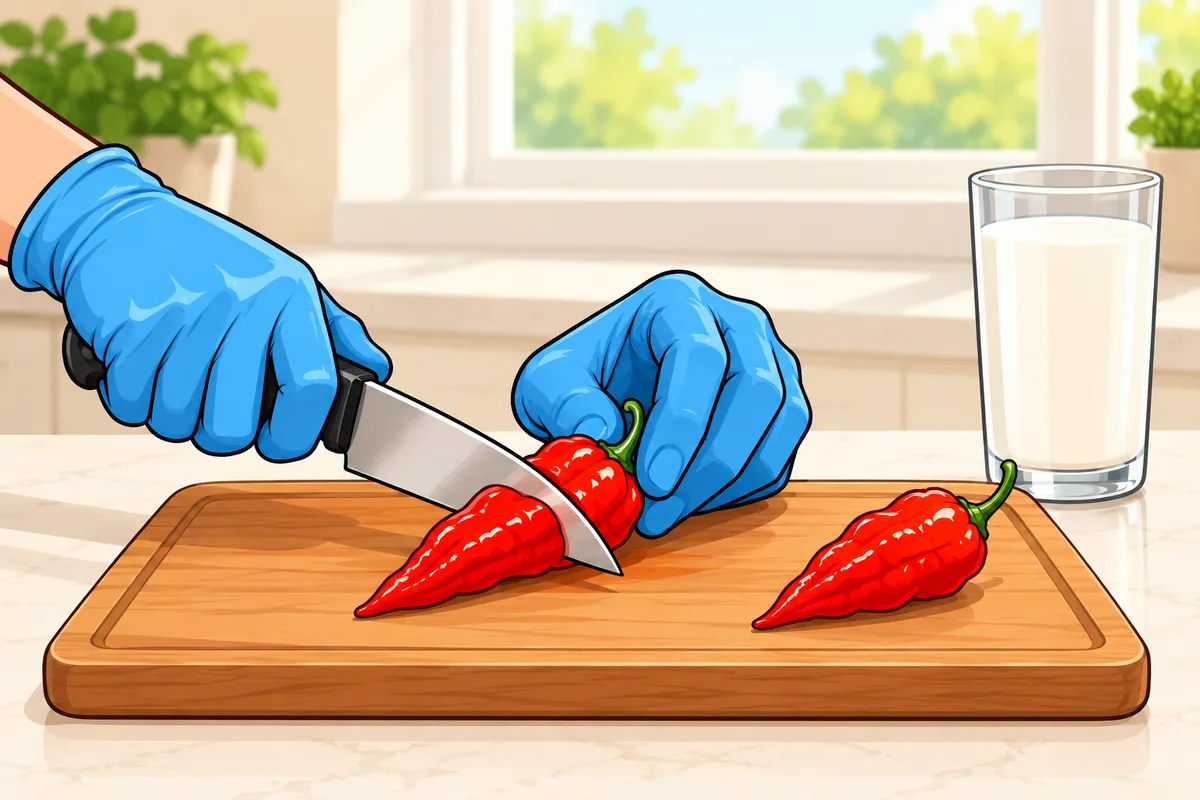
Before, during and after you cut a ghost pepper
- Wear rubber, latex or nitrile gloves, and keep them on until the board and knife go into the sink.911
- Open a window or run the hood fan; capsaicin in the air can set off coughing and, in people with asthma, an attack.11
- Keep your hands away from your face and eyes until you have washed them, even with gloves on.11
- If juice gets in your eye, rinse it with warm water for 15 minutes.11
- Start with a quarter of one pod, seeds and ribs removed, in a pot that serves four. You can add more; you can't take it out.
If your mouth is on fire, reach for milk. In the Penn State study every drink helped a little, but whole milk, skim milk and a sweetened fruit drink cut the burn the most, and skim worked about as well as whole12. Keep a glass of cold milk on your table before the first bite, not after.
72people rated the burn in the Penn State drink study12
40 mLof each test drink, sipped after the spicy juice12
Milkthe best choice, skim or whole, so protein matters more than fat12
Skip the beer. The same study found fizzy drinks among the weaker choices, and seltzer was one of them12.
Which should you pick, a ghost, a habanero or a Reaper?
Pick by how much heat your dish can carry, and remember that each step up this ladder multiplies the burn by about 1.6 to 2.8. The trial numbers make the gaps concrete16.
| If you want | Pick | Why |
|---|---|---|
| Fruit you can taste in a salsa, with strong heat | Habanero | 357,729 SHU trial mean, about a third of the ghost 1 |
| A smoky heat that spreads through a big pot of curry or chili | Ghost pepper | 1,001,304 SHU trial mean, flavor holds when you use a little 13 |
| The most heat per drop for a sauce you share by the drop | Carolina Reaper | about 1.64 times the ghost's trial mean 6 |
For most home cooks the ghost pepper is the top of the useful range. Past it, the extra heat costs you more flavor than it adds.
How does it compare, and can you grow it?
Against the habanero, the trial gap of about 2.8 times is the headline; the ghost pepper and habanero side by side adds flavor and use for your next shopping trip.
The Carolina Reaper averages about 1.64 times the ghost's trial mean6, and the Reaper against the ghost lines the two up.
If you're weighing it against a naga from the same corner of India, the Naga Morich comparison puts the two side by side.
Growing one takes patience: the original seed at NMSU set fruit and seed so poorly that it took several seasons to bulk up1. The trial itself gives you a workable recipe: seedlings in a greenhouse at 27°C by day and 18°C by night, moved outdoors at 8 to 10 true leaves, and spaced 25 cm apart in rows 1 m wide1. If you want pure seed to save, the team grew its plants under insect-proof net cages, which keep insects from bringing in pollen from other peppers. The ghost pepper growing guide covers the season, and if you'd rather buy it bottled, the ghost pepper hot sauces list starts there.
Related peppers
Related in Peppers
-
Trinidad Moruga Scorpion, 1.2–2 Million SHU
A lumpy, tailed superhot from Trinidad that topped NMSU's 2012 heat study.6 min read -
Pepper X Scoville, 2.69 Million SHU and Record
Ed Currie's record pepper from South Carolina, at an average of 2.69 million SHU.5 min read -
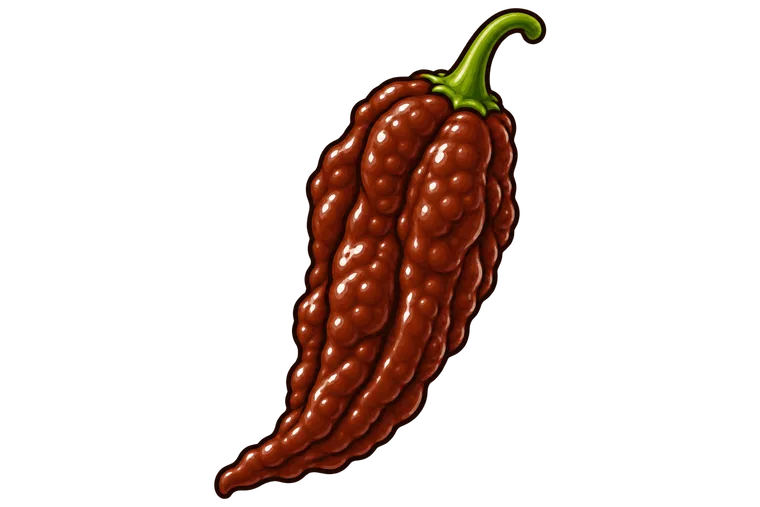
Chocolate Bhutlah Pepper, a Brown Superhot With No Lab Test
A lumpy chocolate-brown pod with smoky ghost-pepper flavor and a heat nobody has published a lab result for.6 min read -
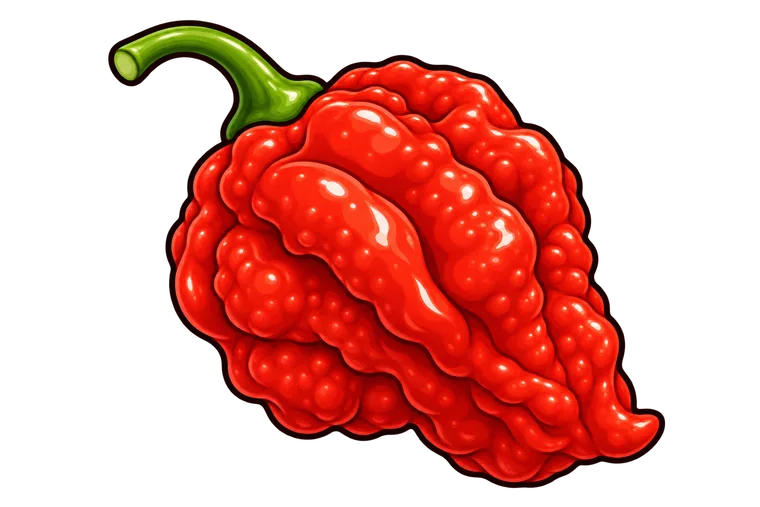
Komodo Dragon Pepper, 1.4 Million SHU With a Slow Burn
A wrinkled red superhot from England whose burn arrives after you've already swallowed.5 min read -
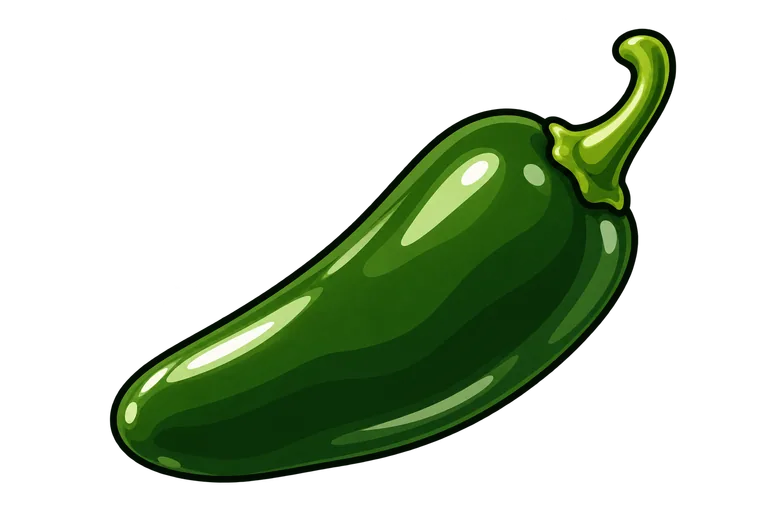
Jalapeño Scoville, 2,000–8,000 SHU and Chipotle
The medium-heat chile most heat comparisons start from.6 min read -
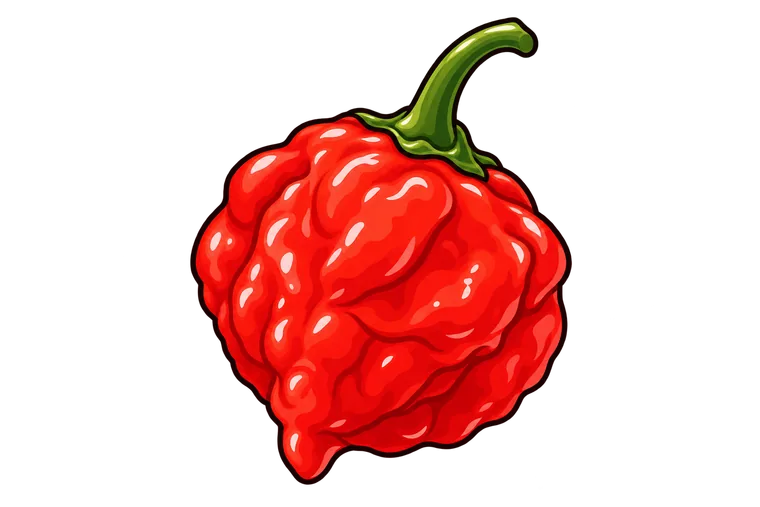
Dragon's Breath Pepper, a 2.48M SHU Claim Never Verified
A small red superhot shown at the Chelsea Flower Show in 2017, whose famous number never came with a test report.6 min read
Sources
· 13
- 1HortScience 42(2):222-224 'Bhut Jolokia', the world's hottest known chile pepper, is a putative naturally occurring interspecific hybrid (Bosland and Baral)
- 2University of Florida IFAS Extension HS-859/TR010: Pepper Production in Miami-Dade County, Florida
- 3University of California Agriculture and Natural Resources, UC Master Gardeners of Ventura County Ventura Garden to Table Series: Peppers
- 4UF/IFAS Gardening Solutions Peppers by Scoville Units
- 5PhytoKeys 200:1-423 (Pensoft) Monograph of wild and cultivated chili peppers (Capsicum L., Solanaceae)
- 6Guinness World Records Pepper X dethrones Carolina Reaper as world's hottest chilli pepper
- 7Guinness World Records Confirmed: Smokin Ed's Carolina Reaper sets new record for hottest chilli
- 8AP Archive India now holds the record for the spiciest chilli in the world
- 9University of Maryland Extension Growing Peppers in a Home Garden
- 10Nature 389:816-824 The capsaicin receptor: a heat-activated ion channel in the pain pathway (Caterina, Schumacher, Tominaga, Rosen, Levine and Julius)
- 11National Capital Poison Center (Poison Control) Capsaicin: when the chili is too hot (Amanda McDaniel-Price, RN)
- 12Physiology & Behavior 208:112557 Putting out the fire: efficacy of common beverages in reducing oral burn from capsaicin (Nolden, Lenart and Hayes)
- 13The Journal of Emergency Medicine 51(6):e141-e143 Esophageal rupture after ghost pepper ingestion (Arens, Ben-Youssef, Hayashi and Smollin)