
Scotch Bonnet vs Ghost Pepper, the Ghost Runs 2.9× Hotter
Two Capsicum chinense peppers, a Caribbean staple and an Indian record holder.
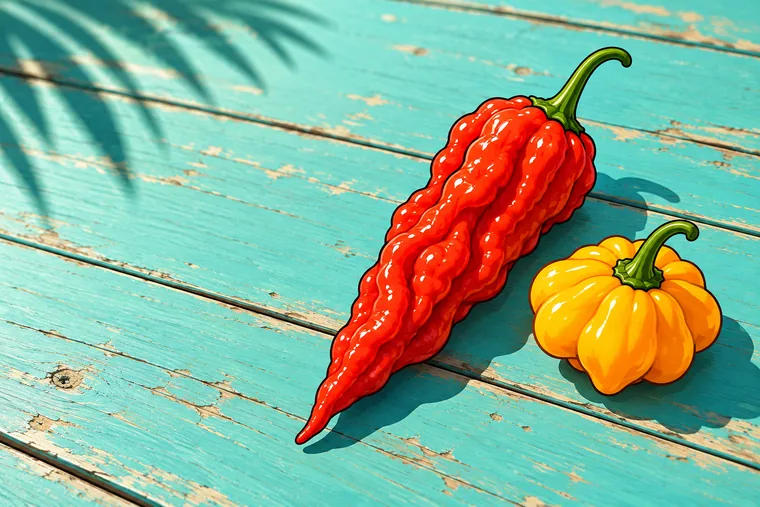
The ghost pepper is hotter: about 2.9 times a Scotch bonnet on NMSU's tested list, and 3 to 10 times against the extension range.
- Ghost pepper about 1,000,000 SHU; Scotch bonnet 100,000–350,000 SHU
- Both are Capsicum chinense; the ghost carries some C. frutescens DNA markers
- Use about a third of a ghost pepper where a recipe asks for one Scotch bonnet
On this page
- 1How much hotter is a ghost pepper than a Scotch bonnet?
- 2How can one Scotch bonnet chart say 260,000 and another 350,000?
- 3Are Scotch bonnets and ghost peppers the same species?
- 4How do you tell a Scotch bonnet from a ghost pepper by shape?
- 5Does a ghost pepper taste like a Scotch bonnet?
- 6Can you make jerk with a ghost pepper instead of Scotch bonnet?
- 7How do Jamaican growers raise Scotch bonnets, and how is the ghost different?
- 8What should you do if you bite a ghost pepper you took for a Scotch bonnet?
- 9Why do your Scotch bonnets shrivel so fast?
- 10Scotch bonnet or ghost for your pot?
How much hotter is a ghost pepper than a Scotch bonnet?
About three times, judged on one list from one institute. The NMSU Chile Pepper Institute's list of the hottest peppers it has tested puts the Bhut Jolokia, the ghost pepper, at 1 million SHU and the Scotch bonnet at 350,0003. Divide one by the other and you get about 2.9.
The hottest Scotch bonnet on any extension chart still reaches only about a third of a ghost pepper.
We lead with the NMSU list because both numbers sit side by side in one place. The chart above uses each pepper's own index figure, so you see the Scotch bonnet as a span and the ghost as a single lab mean far to the right.
What if you use the Scotch bonnet range instead?
The gap grows the further down the Scotch bonnet range you go. UF/IFAS gives it 100,000 to 350,000 SHU1, and a 2005 New Mexico field trial measured the ghost pepper at a mean of 1,001,304 SHU2. Here is the arithmetic for each end:
| Scotch bonnet | Its heat | Ghost pepper is | Arithmetic |
|---|---|---|---|
| Hottest | 350,000 SHU | about 2.9× hotter | 1,001,304 ÷ 350,000 |
| Midpoint | 225,000 SHU | about 4.5× hotter | 1,001,304 ÷ 225,000 |
| Mildest | 100,000 SHU | about 10× hotter | 1,001,304 ÷ 100,000 |
UF/IFAS also prints 1,041,427 SHU for the ghost pepper, a figure it ties to Guinness certification1. Swap that in and every ratio moves by about 4 %, which changes nothing you would taste.
How can one Scotch bonnet chart say 260,000 and another 350,000?
Each source tested different pods. Iowa State's chart gives the Scotch bonnet 80,000 to 260,000 SHU, UF/IFAS gives 100,000 to 350,000, and NMSU's tested list shows a single 350,00014.
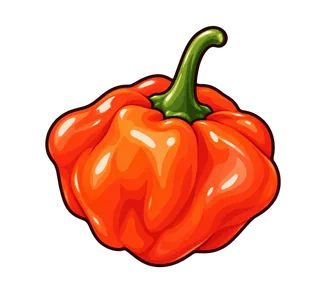
Scotch bonnet
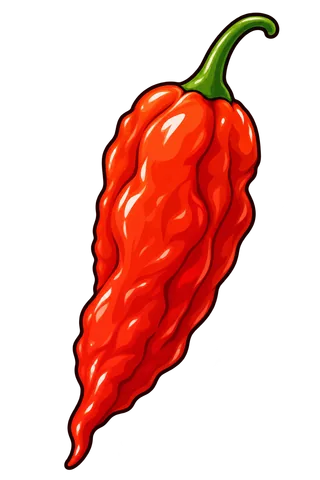
Ghost pepper
HotterRead the spread as a range of real pods you might buy, not as disagreement. A Scotch bonnet grown in a hot season sits near the top of its range, and one from a cool, wet one sits lower. UF/IFAS even notes that some Caribbean islands grow completely sweet Scotch bonnet varieties5, so a pod sold under the name can carry anything from no heat to the full 350,000.
Are Scotch bonnets and ghost peppers the same species?
Mostly, yes. Iowa State names habanero and Scotch bonnet as the hottest Capsicum chinense types on its chart4, and the NMSU field study placed the ghost pepper in C. chinense from its flowers and the ring under its cap2.
The ghost has a twist. The same study found DNA markers from C. frutescens in it, three of them beside eight from C. chinense, which is why the authors call it a likely natural hybrid2. UF/IFAS shortens that to "interspecies hybrid"1. The Scotch bonnet, by contrast, is a close relative of the habanero, similar in look but slightly smaller5.
How do you tell a Scotch bonnet from a ghost pepper by shape?
You can tell them apart from across the market. Hold one of each and these are the marks:
- Outline. The Scotch bonnet takes its name from the tam o' shanter hat it resembles, squat and flattened5. The ghost is a long, tapering pod.
- Length. A ghost pepper runs about 2.4 to 3.3 inches long and 1.0 to 1.2 inches wide5. A Scotch bonnet is a little smaller than a habanero, whose pods reach 0.8 to 2.4 inches5.
- Skin. Ghost skin is very thin and can be rough, wrinkled, dented or smooth5. The Scotch bonnet is smooth and lobed.
- Color. Scotch bonnets usually ripen red or yellow; ghost peppers come red, yellow, orange or chocolate5.
So color alone will fool you, since both come in red and yellow. Go by the outline: squat and lobed means bonnet, long and wrinkled means ghost.
Does a ghost pepper taste like a Scotch bonnet?
Both are fruity, and the ghost adds smoke. The UC Master Gardeners describe the Scotch bonnet as fiery with a fruity flavor, a staple in Caribbean and West African cooking, and the ghost as smoky, fruity and slightly sweet, with intense heat6.
Scotch bonnet
Ghost pepper
HotterThat last row says a lot about how you use each one. A Scotch bonnet is a cooking pepper that a jerk recipe uses by the pod. A ghost is a pepper you measure by the sliver.
Can you make jerk with a ghost pepper instead of Scotch bonnet?
You can, at about a third of the amount. Using NMSU's same-list ratio of 2.93, 10 g of ghost pepper carries about the heat of 29 g of Scotch bonnet. Treat these amounts as estimates; pods vary, and you can always add more.
| Batch | Scotch bonnet it calls for | Ghost pepper instead | Note |
|---|---|---|---|
| Marinade for 1 kg of chicken | 30 g | about 10 g | Blend, then taste a drop on a spoon |
| Marinade for 2 kg of pork | 60 g | about 20 g | Add the second half only after tasting |
| Small jar of jerk paste | 100 g | about 35 g | Label it; it will be hotter than any bonnet paste you know |
You lose some of the bonnet's bright fruit when you cut the pepper weight by two thirds. Blend in one sweet red pepper to give the marinade back some fruit and body without adding heat. If you need a closer match than a ghost, the Scotch bonnet next to the habanero is the swap Caribbean cooks reach for first.
How do Jamaican growers raise Scotch bonnets, and how is the ghost different?
The FAO and Jamaica's Ministry of Agriculture wrote a full handbook for Scotch bonnet growers, and its dates give you a calendar to copy8:
- Day 7–12
Seedlings emerge
One seed per cell, 0.5 cm deep, watered lightly twice a day.8
- Week 5–6
Ready to transplant
Seedlings stand 12–15 cm tall; harden them off for 5–7 days first.8
- About 40 days after transplant
First flowers
The handbook times a fertilizer feed for this stage.8
- About 12 weeks after transplant
Harvest starts
Pick pods full green or with a blush of yellow or orange, snapping the stalk upward.8
Space your plants more generously than you might expect. The handbook sets rows 90 to 150 cm apart with plants 90 cm apart in the row8, a lot more room than many gardeners give peppers.
The ghost pepper asks for more patience. NMSU received its first seed in 2001, and poor fruit and seed set meant it took several years to grow enough seed for a trial2. The trial started seed in a greenhouse at 27°C by day and 18°C at night and moved plants out at eight to ten true leaves, 25 cm apart in rows 1 m apart. If you grow both, expect your bonnets to fill a basket while the ghost is still setting its first pods.
What should you do if you bite a ghost pepper you took for a Scotch bonnet?
Stop eating, sip milk, and wait it out. The mix-up is easy with a yellow pod in a market basket, and at about three times the heat, your mouth will tell you within seconds. Poison Control says small sips of milk or water may help with the burn7, and the UC Master Gardeners explain why milk works: its proteins bind to capsaicin6.
Here is what to expect and when to act:
- The first few minutes. Your mouth burns hard, your eyes water and your nose runs. Keep sipping milk and don't rub your eyes with your fingers.
- The next hour. Too much hot pepper can bring on nausea, vomiting, belly pain and diarrhea7. You will feel miserable, but for most people it passes.
- When to get help. If you or anyone at your table has trouble breathing or chest discomfort, call 911. For other questions, your poison center answers at 1-800-222-12227.
The easiest way to avoid all of it is to check the shape before you cut, as the field marks above show. A pod that is long, narrow and wrinkled is never a Scotch bonnet, whatever color it is.
Why do your Scotch bonnets shrivel so fast?
Warm storage and picking too early. The FAO handbook says Scotch bonnets last only 2 to 5 days at 25 to 27°C (77 to 80°F) before they shrivel and decay, and up to about 10 days at lower temperatures8. It also warns against storing them with ripening fruit such as mangoes, papayas and tomatoes, which makes them ripen and spoil faster.
Immature pods cause the other half of the trouble. The handbook says unripe fruit looks dull because it lacks the waxy outer layer, and it shrivels after harvest8. Pick only glossy pods, keep them cool and away from your fruit bowl, and use or freeze them within the week.
Scotch bonnet or ghost for your pot?
Pick the Scotch bonnet when
- The recipe is Caribbean or West African and counts peppers by the pod
- You want fruit as much as heat, as in jerk or pepper sauce
- Your guests eat hot food but are not chasing records
Pick the ghost pepper when
- You want more heat from less pepper, by the gram
- A smoky note suits the dish
- Everyone at the table knows what they are getting
Your next step: if you are moving up from Scotch bonnets, try the ghost first in a sauce where you control the dose, and use the ghost pepper against the habanero to see the same jump from the habanero side. If you want to know where the record line sits beyond the ghost, the super-hot peppers line up the pods that sit past the ghost.
Related in Compare
-
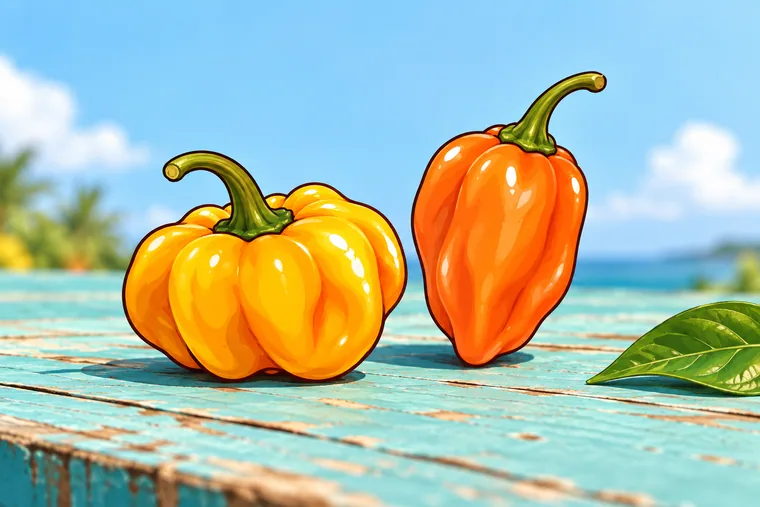
Scotch Bonnet vs Habanero, Same Range, 1.4× Lab Gap
Two Capsicum chinense pods, one heat band, two different kitchens.5 min read -
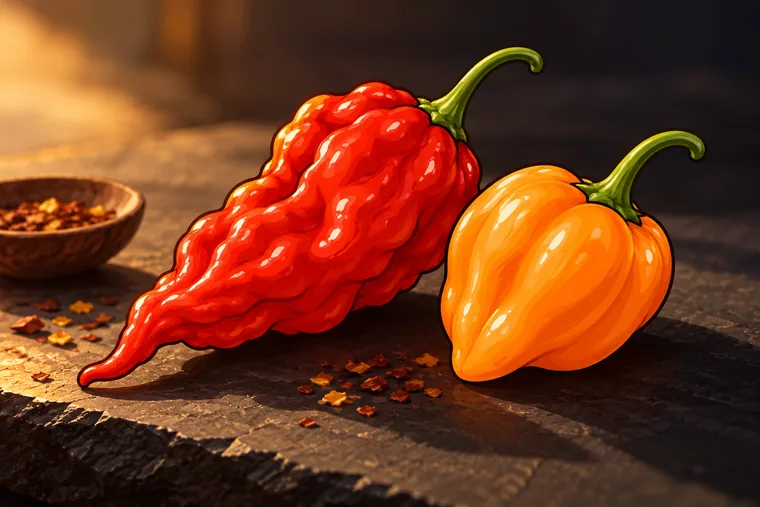
Ghost Pepper vs Habanero, Why the Ghost Is 2.8× Hotter
Same species, very different numbers.6 min read -
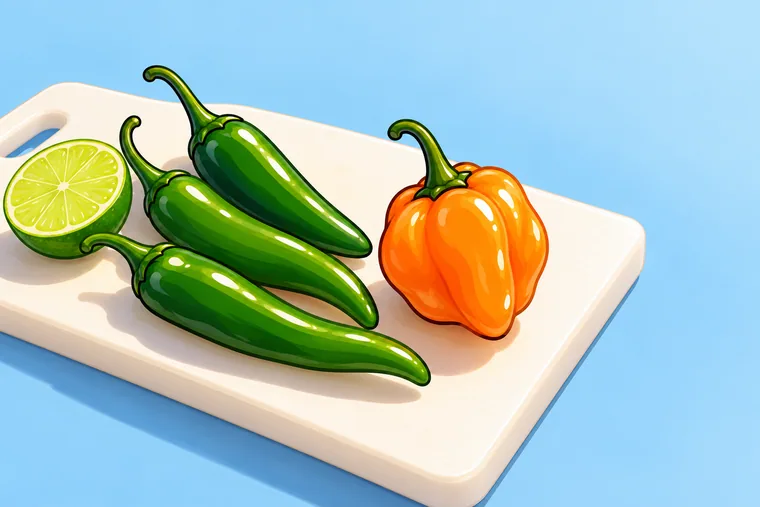
Serrano vs Habanero, the Habanero Is About 13× Hotter
A salsa chile against a hot sauce chile.6 min read -
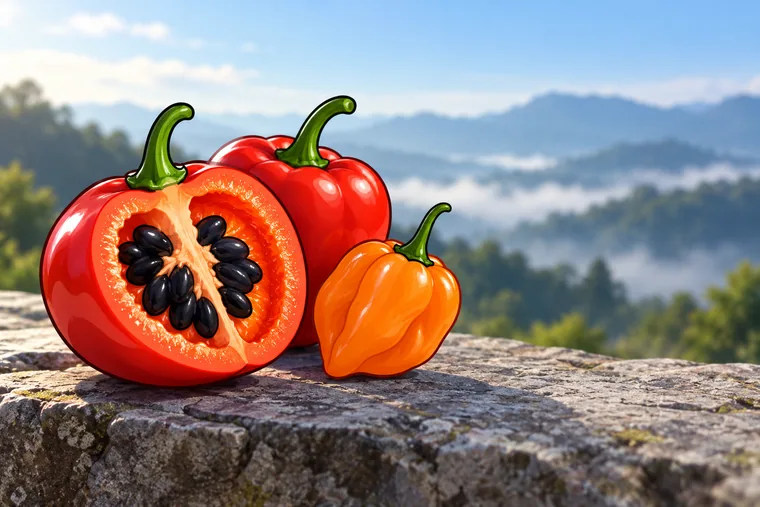
Chile Manzano vs Habanero, Close in Heat at 175,000 SHU
An apple-shaped mountain chile and a lantern-shaped lowland one, about as hot as each other.6 min read -
Habanero vs Thai Chili, Why the Habanero Is 3× Hotter
A tiny hot chili against a fruity extra-hot one.5 min read -
Habanero vs Cayenne Pepper, About 6× Hotter
Two different species, and a gap between their ranges.5 min read
Sources
· 8
- 1UF/IFAS Gardening Solutions Peppers by Scoville Units
- 2HortScience 42(2):222-224 'Bhut Jolokia', the world's hottest known chile pepper, is a putative naturally occurring interspecific hybrid (Bosland and Baral)
- 3New Mexico State University, Chile Pepper Institute Heat
- 4Iowa State University Extension PM 1888(S): Guía de Horticultura, El huerto doméstico, Chiles (Everhart, Haynes, Jauron)
- 5University of Florida IFAS Extension HS-859/TR010: Pepper Production in Miami-Dade County, Florida
- 6University of California Agriculture and Natural Resources, UC Master Gardeners of Ventura County Ventura Garden to Table Series: Peppers
- 7National Capital Poison Center (poison.org) Capsaicin: When the Chili Is Too Hot (Amanda McDaniel-Price, RN)
- 8Ministry of Agriculture, Jamaica, and the Food and Agriculture Organization of the United Nations Growing Scotch Bonnet Pepper in Jamaica (McGlashan, De Bac, Goldsmith, Williamson, Protz)