
Habanero vs Thai Chili, Why the Habanero Is 3× Hotter
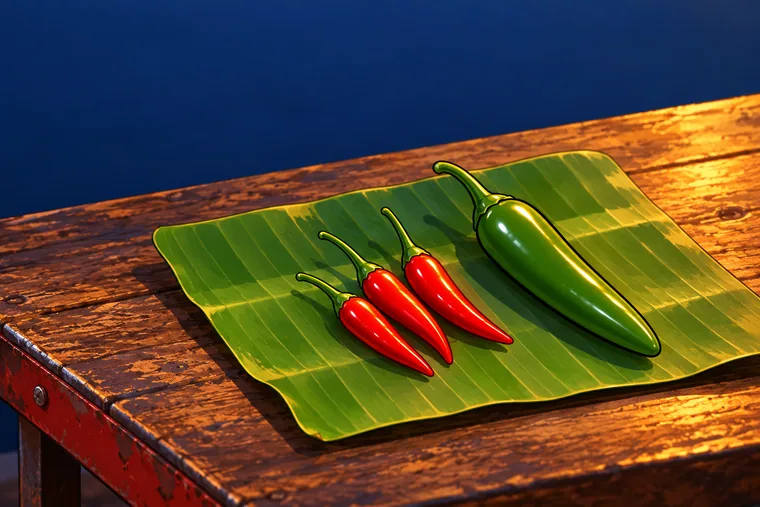
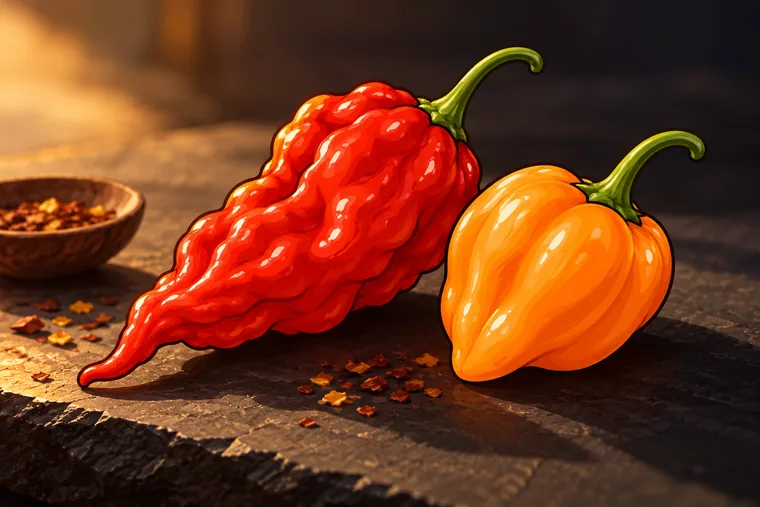
A tiny hot chili against a fruity extra-hot one.
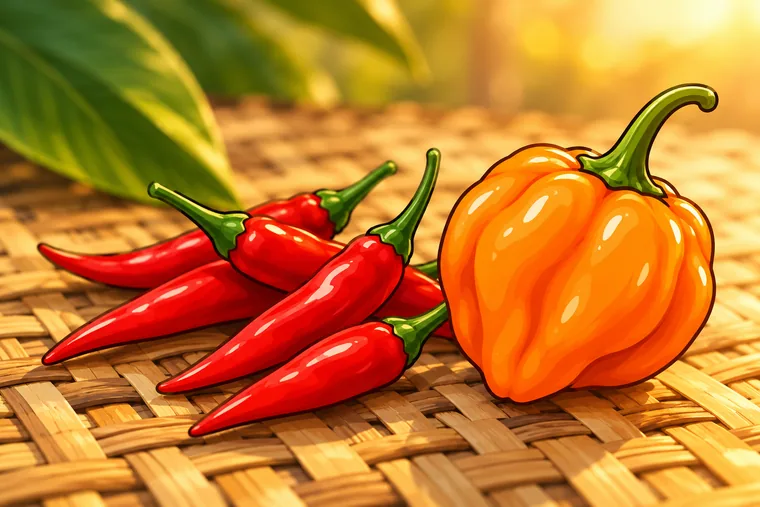
The habanero is hotter, about 3 times a Thai chili by midpoint.
- Thai chili 50,000–100,000 SHU, habanero 100,000–350,000 SHU
- The hottest Thai chili only matches the mildest habanero
- Different species: Thai chili is C. annuum, habanero is C. chinense
Log scale; bars are published ranges.1
On this page
- 1Is a habanero hotter than a Thai chili?
- 2Does a second source give the same 3×?
- 3What if you have a hotter habanero?
- 4How do you tell a Thai chili from a habanero?
- 5Are Thai chilies and habaneros related?
- 6How do they taste and get used?
- 7Do you want the habanero's fruit or the Thai chili's clean heat?
- 8Which one should you pick?
- 9When should you pick them for the most heat?
- 10Which plant suits your garden?
- 11Can you swap a Thai chili for a habanero?
- 12How can a hot bag of Thai chilies match a mild habanero?
Is a habanero hotter than a Thai chili?
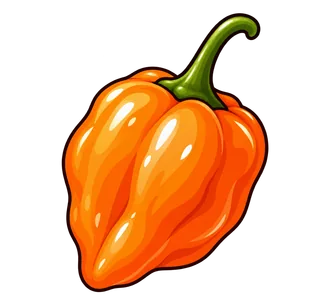
Yes. UF/IFAS gives the Thai chili 50,000 to 100,000 SHU and the habanero 100,000 to 350,000 SHU1. The Thai chili lands in our hot band and the habanero in extra-hot.
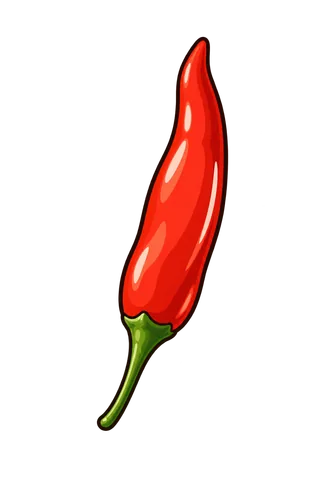
Thai chili
Log scale; bars are published ranges.1
The hottest Thai chili and the mildest habanero meet at 100,000 SHU, so a hot Thai chili can surprise you.
How many times hotter is a habanero than a Thai chili?
By midpoint the habanero sits at 225,000 SHU and the Thai chili at 75,000, so the habanero comes out 3 times hotter. Across the two ranges, that runs from even to 7 times.
| Comparison | Habanero | Thai chili | Habanero is |
|---|---|---|---|
| Midpoints | 225,000 SHU | 75,000 SHU | 3 times hotter |
| Mild habanero, hot Thai chili | 100,000 SHU | 100,000 SHU | the same |
| Hot habanero, mild Thai chili | 350,000 SHU | 50,000 SHU | 7 times hotter |
Keep the size in mind. A Thai chili is about an inch long1, and the table compares heat per gram, not per pod, so count by weight when you can.
Does a second source give the same 3×?
Close. Texas AgriLife lists habanero and Scotch bonnet together at 200,000 to 300,000 SHU3. Its midpoint, 250,000, against the Thai midpoint of 75,000 gives you about 3.3 times, so the working rule of three holds up.
What if you have a hotter habanero?
Then the rule of three stops working, and you need the variety's own figure. The NMSU Chile Pepper Institute lists Orange Habanero at 250,000 SHU, Red Savina at 500,000 and Chocolate Habanero at 700,0004. Against the Thai midpoint of 75,000 SHU1, that gives you these ratios:
If your recipe uses ten Thai chilies and you only have a chocolate habanero, one small piece may already be enough. Weigh the Thai chilies the recipe wants, divide by the ratio for the habanero type you hold, and add the last third only after tasting.
How do you tell a Thai chili from a habanero?
You can tell them apart from across the market:
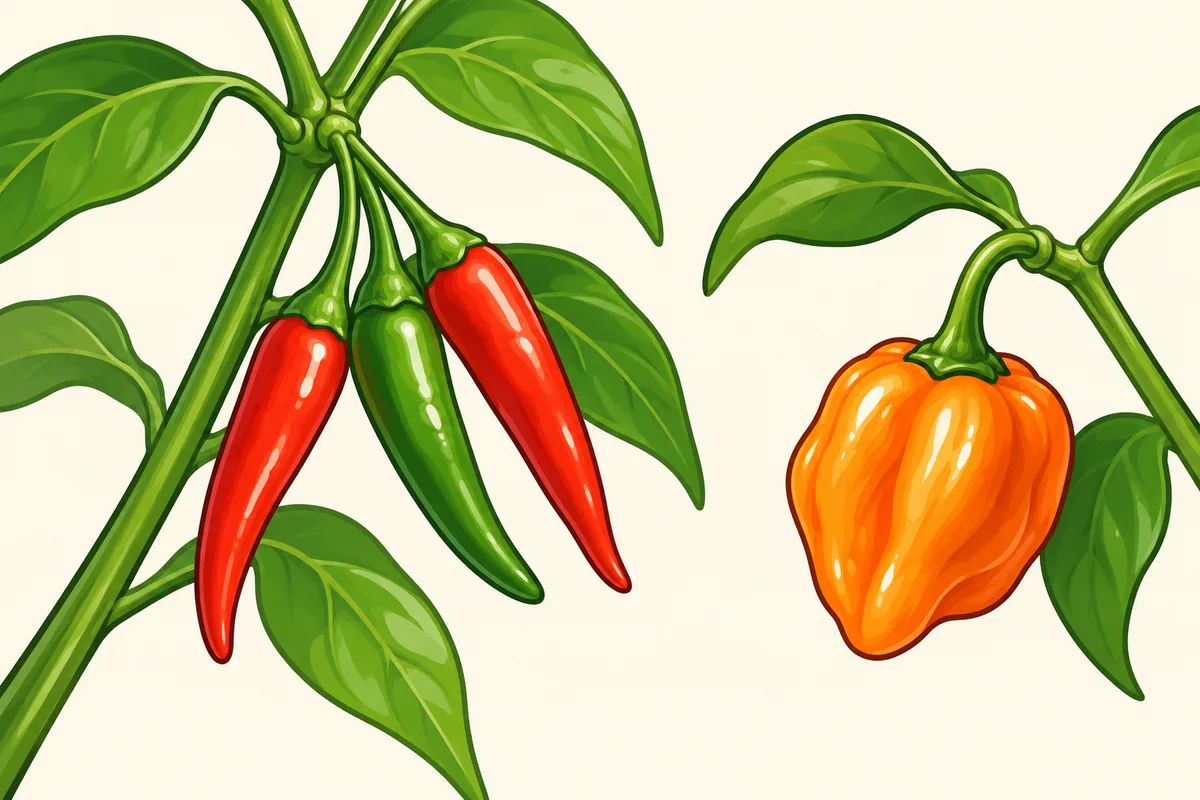
- Shape. The Thai pod is a thin spike, about 1 inch long and less than 1/5 inch wide at the shoulder; the habanero is a short, broad pod of 0.8 to 2.4 inches1.
- On the plant. Thai pods often grow two or three to a node1, so you see little clusters along the stem.
- Color. Thai pods go from green to red. Habaneros mature yellow, orange or red, and white, brown and pink ones exist too1, so an orange pod is always the habanero.
- Flesh. The habanero has thin, waxy flesh1, and the slim Thai pod is easy to slice into fine rings.
The one confusion you might hit is with names, not pods. The same Thai chili also sells as bird's eye chili, and that name can point to a wild round pepper too.
Are Thai chilies and habaneros related?
Only at the genus level. UF/IFAS describes the Thai chili as a cultivar of Capsicum annuum, the jalapeño's species, and notes that people often confuse it with C. frutescens cultivars1. The habanero belongs to C. chinense.
It also goes by bird's eye chili2, so a recipe that names either one means the same pepper on these sources.
How do they taste and get used?
The habanero's flavor is well described: fruity and citrus-like with a floral aroma, and a popular hot sauce pepper1. The extension pages give no flavor notes for the Thai chili, so we do not invent any.
What they do say is where it grows: it came from the Americas and is now grown widely across South and Southeast Asia2.
Do you want the habanero's fruit or the Thai chili's clean heat?
Start from what you want the pepper to do. If you want its taste in the dish, the habanero is the only one of the two with a documented flavor. If you want clean heat in small, countable pieces, the Thai chili fits.
- Fruit and aromaA sauce or salsa where you taste the pepper
- Habanero100,000–350,000 SHU; fruity, citrus-like, floralExtra-hot
- Heat in small dosesA dish where you add pods one at a time
- Thai chili50,000–100,000 SHU; about 1 inch longHot
- step downStill too hot?A serrano runs 10,000–25,000 SHU
- step down
Bars show published heat ranges. 1
Most of the time you will pick by the recipe's origin. A habanero sauce from the Yucatán, where most habaneros grow today1, wants that fruit; a Southeast Asian dish wants the small pod that grows widely there. Swapping one for the other works for heat, but you change the dish's flavor.
Which one should you pick?
| You want | Pick | Why |
|---|---|---|
| Fruity flavor in a sauce | Habanero | Fruity, citrus-like, floral |
| Small, sharp hits of heat you can count | Thai chili | About 1 inch, 50,000–100,000 SHU |
| The most heat per gram | Habanero | 100,000–350,000 SHU |
| A plant that keeps going year after year | Thai chili | Perennial, up to about 6 feet |
When should you pick them for the most heat?
When the pods are full size. A capsaicin review in Heliyon reports that capsaicin builds up as the fruit develops, peaks about 40 to 50 days into its growth, and can break down a little after that5. So a fully grown green pod is already near its peak, and waiting for color changes the look more than the heat.
Hot peppers can be picked at any stage you like, and most varieties mature about 60 to 110 days after planting, says the University of Guam's extension guide6. Once you pick, keep the pods at 45 to 50°F; colder than 45°F they suffer chilling injury, and warmer than 50°F they lose weight and decay sooner6.
In practice, whichever plant you grow, you pick what you will use within a few days, keep it in the crisper drawer, and freeze or dry the rest.
Both plants make picking at full size easy. Thai pods come two or three to a node1, and you can pick them green or red as you need them; habaneros give you yellow, orange or red pods at maturity, so you pick by color and by size.
Which plant suits your garden?
The Thai chili if you have a long, frost-free season and room for a big plant; the habanero if you can give it acidic soil and a hot summer. Here are the numbers:
| Need | Thai chili | Habanero |
|---|---|---|
| Life span | A perennial, up to about 6 feet | Grown as a summer crop where frost comes |
| Time to ripe pods | Most hot peppers: 60–110 days after planting | 90–120 days from transplanting |
| Soil | Not specified | Slightly acidic, about pH 6 |
| Climate | Best at 75–85°F days, 50–60°F nights | Thrives in hot weather such as south Florida |
Where you get frost, both plants die back, so you grow them as annuals or bring a potted plant inside6. A habanero needs the longer season of the two, so you start its seeds first.
Can you swap a Thai chili for a habanero?
Yes, with a change in count. The ribs inside each pod hold about 89 % of its capsaicin5, so trimming them is your second lever.
- 1
Thai chilies in place of a habanero
By midpoint a habanero is 3 times hotter per gram. Start with a few Thai chilies, taste, and add more. You get the heat but none of the habanero's fruit.1
- 2
If the Thai chili is already your limit, a serrano gives you a fresh green chile at 10,000 to 25,000 SHU1, and the serrano against the habanero shows how far below the habanero that sits.
Here is the swap with real numbers. Say your stir-fry calls for 6 g of Thai chili. At three times the heat by midpoint1, 2 g of habanero gives you the same burn; weigh it on a kitchen scale, since a habanero pod can be anywhere from 0.8 to 2.4 inches long1. Going the other way, a sauce built on 10 g of habanero needs about 30 g of Thai chilies, which brings you heat without the fruit.
How can a hot bag of Thai chilies match a mild habanero?
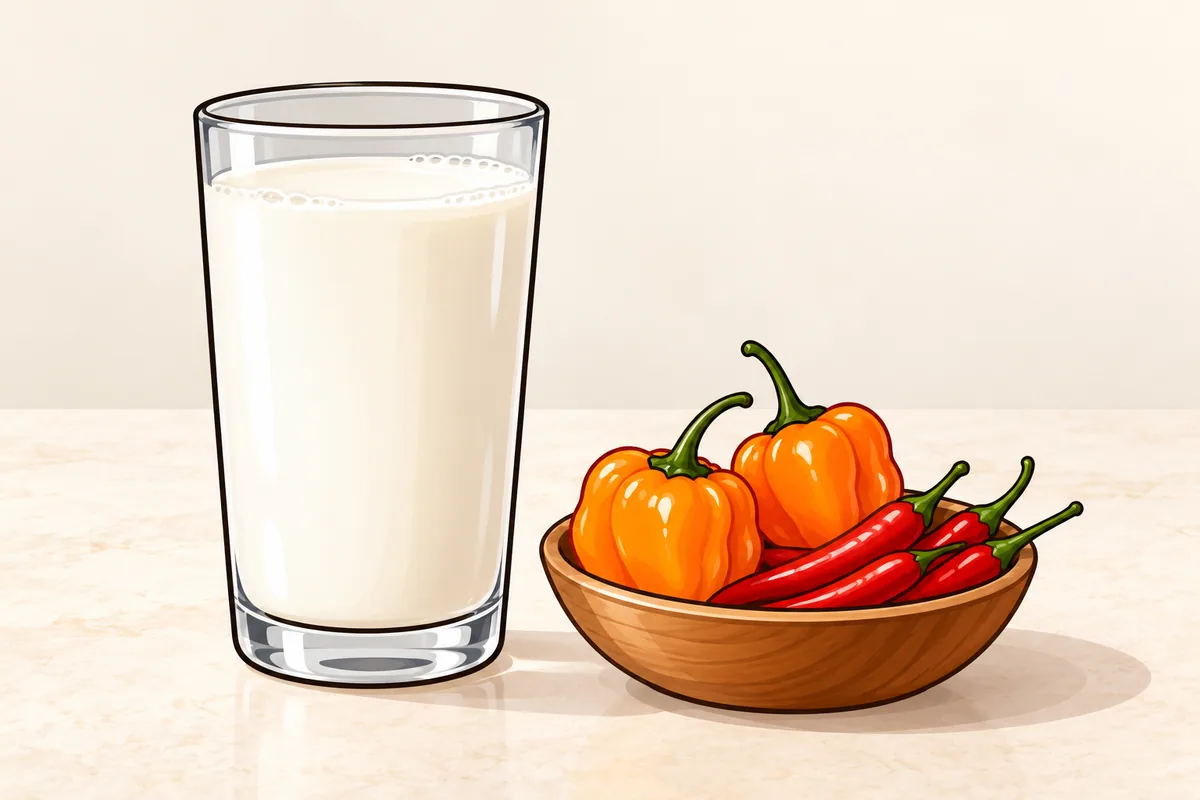
The other mistake is handling. Both pods are hot enough to sting your skin, so wear rubber, latex or nitrile gloves and keep your hands away from your eyes8. If a swap comes out too hot, milk helps more than water: in a 2019 test of seven drinks, whole and skim milk cut the burn the most9.
For the step above the habanero, a ghost pepper runs about 2.8 times hotter in a same-field trial10.
Related in Compare
-
Serrano vs Habanero, the Habanero Is About 13× Hotter
A salsa chile against a hot sauce chile.6 min read -
Bird's Eye vs Thai Chili, Usually 1 Pepper at 50,000+ SHU
Mostly one pepper, with a wild cousin that shares the name.5 min read -
Thai Chili vs Jalapeño, Why the Small Pod Is 15× Hotter
A one-inch pod with fifteen times the heat.5 min read -
Thai Chili vs Serrano, About 4× the Heat at Half the Size
A tiny Southeast Asian chili and a slim Mexican green one that cooks swap all the time.6 min read -
Ghost Pepper vs Habanero, Why the Ghost Is 2.8× Hotter
Same species, very different numbers.6 min read -
Habanero vs Jalapeño, About 45× the Heat by Midpoint
The pepper you know against the one that scares people.7 min read
Sources
· 10
- 1University of Florida IFAS Extension HS-859/TR010: Pepper Production in Miami-Dade County, Florida
- 2UF/IFAS Gardening Solutions Peppers by Scoville Units
- 3Texas AgriLife Extension Service (Joe Masabni) Jalapeño & Other Hot Peppers
- 4New Mexico State University, Chile Pepper Institute Heat
- 5Heliyon (Cell Press) A comprehensive review of capsaicin: Biosynthesis, industrial productions, processing to applications, and clinical uses
- 6University of Guam, College of Natural and Applied Sciences, Cooperative Extension and Outreach FPP-05: Hot Pepper (Capsicum spp.), Important Crop on Guam (Tuquero, Chargualaf, Marutani)
- 7University of Maryland Extension Growing Peppers in a Home Garden
- 8National Capital Poison Center (poison.org) Capsaicin: When the Chili Is Too Hot (Amanda McDaniel-Price, RN)
- 9Physiology & Behavior 208:112557 Putting out the fire: Efficacy of common beverages in reducing oral burn from capsaicin (Nolden, Lenart, Hayes)
- 10HortScience 42(2):222-224 'Bhut Jolokia', the world's hottest known chile pepper, is a putative naturally occurring interspecific hybrid (Bosland and Baral)