
Thai Chili vs Jalapeño, Why the Small Pod Is 15× Hotter
A one-inch pod with fifteen times the heat.
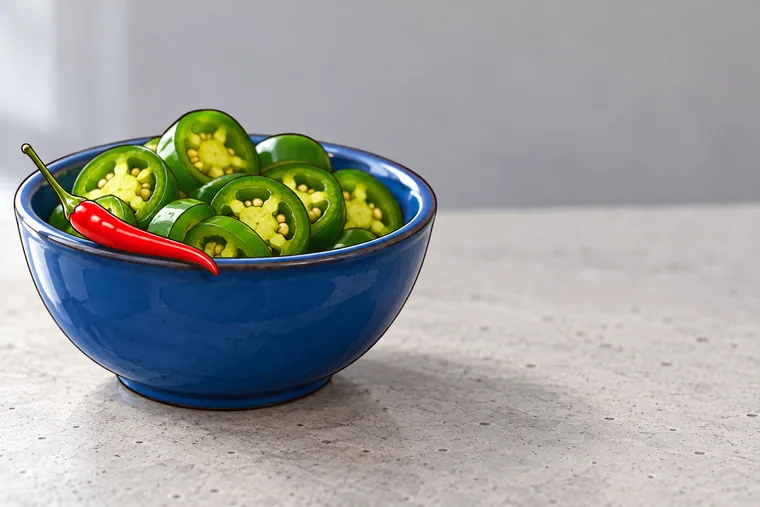
Yes, Thai chilis are much hotter: about 15 times a jalapeño by midpoint.
- Thai chili 50,000–100,000 SHU; jalapeño 2,000–8,000 SHU, about 5,000 on average
- Even NMSU's hottest jalapeño line, 25,000–30,000 SHU, stays below the Thai range
- By weight, start with about a fifteenth as much Thai chili
Log scale; bars are published ranges.1
On this page
- 1Are Thai chilis hotter than jalapeños?
- 2Does a second source make the gap bigger?
- 3Do hot jalapeño cultivars close the gap?
- 4How do the pods and their uses differ?
- 5How do you spot fresh Thai chilies and jalapeños in the bin?
- 6How do you use Thai chili in place of jalapeño?
- 7How do you keep each one fresh?
- 8Can you put Thai chilies in a jalapeño pickle?
- 9Which plant gives you more to pick?
- 10How do you dry each one?
- 11What if the dish is already too hot?
Are Thai chilis hotter than jalapeños?
Yes, by a lot. UF/IFAS gives the Thai chili 50,000 to 100,000 SHU and the jalapeño 2,000 to 8,000, with an average of about 5,0001. Against the Thai midpoint of 75,000, that makes the small pod about 15 times hotter.
No jalapeño on the extension range comes within six times of the mildest Thai chili.
Bred-hot jalapeños close some of the gap without crossing it. NMSU's NuMex Vaquero tests at 25,000 to 30,000 SHU, the hottest of its jalapeño lines2, and that is still half the bottom of the Thai range.
Does a second source make the gap bigger?
Yes. Texas AgriLife gives the jalapeño an average of only 3,500 to 4,500 SHU3. Against its midpoint of 4,000, the Thai midpoint of 75,000 comes out about 19 times hotter, not 15.
So think of the Thai chili as 15 to 19 jalapeños' worth of heat per gram. In your kitchen that means one finely chopped Thai pod does the work of a whole handful of jalapeño slices, and you start lower than you think.
Do hot jalapeño cultivars close the gap?
They shrink it, but none crosses it. NMSU's release report gives a heat figure for each jalapeño line it bred2, and the Thai midpoint of 75,000 SHU1 still sits above every one:
| Jalapeño line | Heat | Thai chili is |
|---|---|---|
| NuMex Primavera | 8,500–9,000 SHU | about 8.6 times hotter |
| NuMex Jalmundo | 17,000 SHU | about 4.4 times hotter |
| NuMex Lemon Spice | 25,000 SHU | 3 times hotter |
| NuMex Vaquero | 25,000–30,000 SHU | about 2.7 times hotter |
If you grow Vaquero or one of the Spice jalapeños, your swap moves from about 15 to 1 down to about 3 to 1. A 30 g handful of Vaquero becomes about 11 g of Thai chili rather than 2 g, which changes your dish a lot. Check the seed packet before you use the generic rule, and when you buy jalapeños at a store, assume the ordinary 2,000 to 8,000 SHU range.
How do the pods and their uses differ?
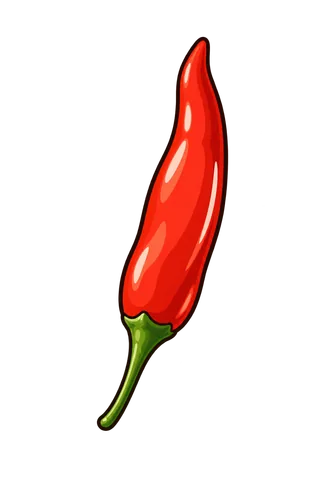
Thai chili
Hotter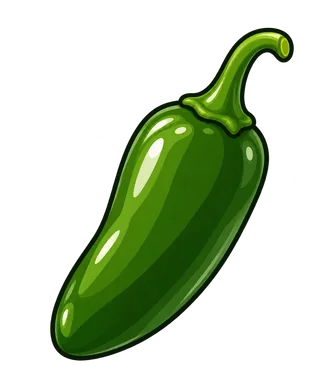
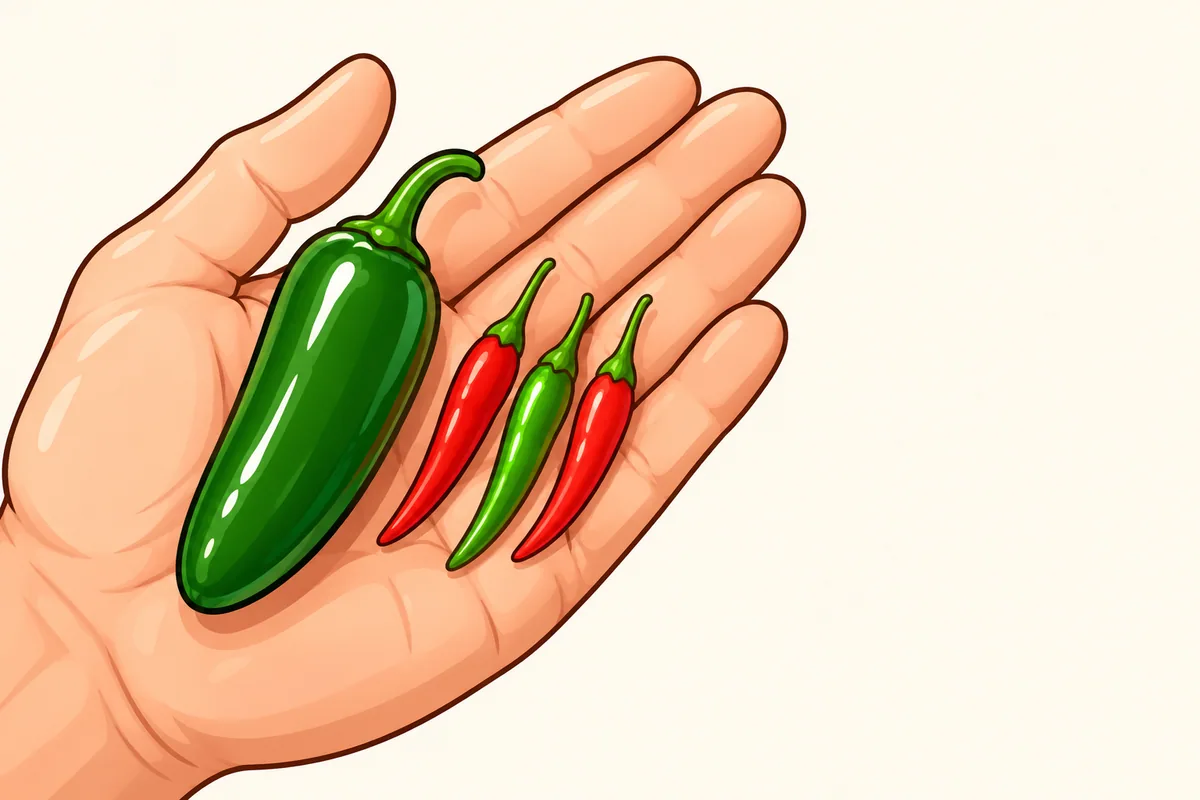
A jalapeño is two to three times longer, so it holds far more flesh per pod. That is why you can slice jalapeño rings over nachos by the handful, while a Thai chili goes in one finely chopped pod at a time. For the other name on the bag, the bird's eye against the Thai chili sorts out which plant is which.
How do you spot fresh Thai chilies and jalapeños in the bin?
The same freshness signs apply to both, with a few marks of their own. NMSU's rule for any green chile is a pod that feels heavy for its size, smooth, bright and crisp, with no soft spots or shriveled skin6.
Fresh Thai chilies
How do you use Thai chili in place of jalapeño?
Go by weight, not by pod count. Scoville figures describe how concentrated the heat is in the pepper (NMSU reports some figures on a dry weight basis)2, so a small hot pod and a big mild one only compare fairly gram for gram.
- 1
Weigh the jalapeño the recipe calls for
Or chop it and measure the volume; either way you get a number to divide.
- 2
Take about a fifteenth of that amount in Thai chili
At about 15 times the heat by midpoint, 30 g of jalapeño becomes about 2 g of Thai chili.1
- 3
Split the pod and scrape out the pale placenta if you want it milder
The placenta that holds the seeds carries about 89 % of a chili's capsaicin.8
- 4
Add it in two or three goes and taste between them
A single Thai pod covers a wide span, from 50,000 to 100,000 SHU, so two pods from one bag can differ by double.1
You lose the jalapeño's green crunch in the swap. If texture matters, keep a little jalapeño for body and let the Thai chili carry the heat. When you want a milder step instead, a mild poblano goes the other direction, and cayenne sits partway up to the Thai chili.
How do you keep each one fresh?
Both like cool, damp storage, but not a cold fridge shelf. Here are the figures the two extension sources give for hot peppers:
| Pepper | Temperature | Humidity | How long |
|---|---|---|---|
| Thai chili (hot peppers in general) | 45–50°F; below 45°F causes chilling injury | About 95 % | Short term; above 50°F the pods change color and decay |
| Jalapeño | 45–55°F | About 80 % | 2–3 weeks at most |
The crisper drawer is the closest you get at home. If you have more pods than you can use, Penn State Extension says you can freeze whole hot peppers raw once you wash them and remove the stems10, and both freeze the same way.
Can you put Thai chilies in a jalapeño pickle?
Only as a swap inside the recipe's pepper weight. The tested pickled jalapeño rings from the National Center for Home Food Preservation use 3 pounds of peppers to 7½ cups of 5 % cider vinegar for about 6 pints11.
Go easy on the Thai pods. At about 15 times the heat by midpoint1, replacing even a tenth of the jalapeño weight with Thai chili makes each jar far hotter, so you can test the heat on one jar before you change the batch.
Which plant gives you more to pick?
The jalapeño gives you a planned crop; the Thai chili gives you a plant that keeps going. Texas AgriLife harvests jalapeños on a 2 to 3 week interval once picking starts, 75 to 85 days after transplanting, while UF/IFAS describes the Thai pepper as a perennial up to 6 feet tall13.
If your winters bring frost, you grow both as annuals, since frost kills pepper plants9. In a frost-free garden, the Thai chili can keep you supplied for more than one season.
How do you dry each one?
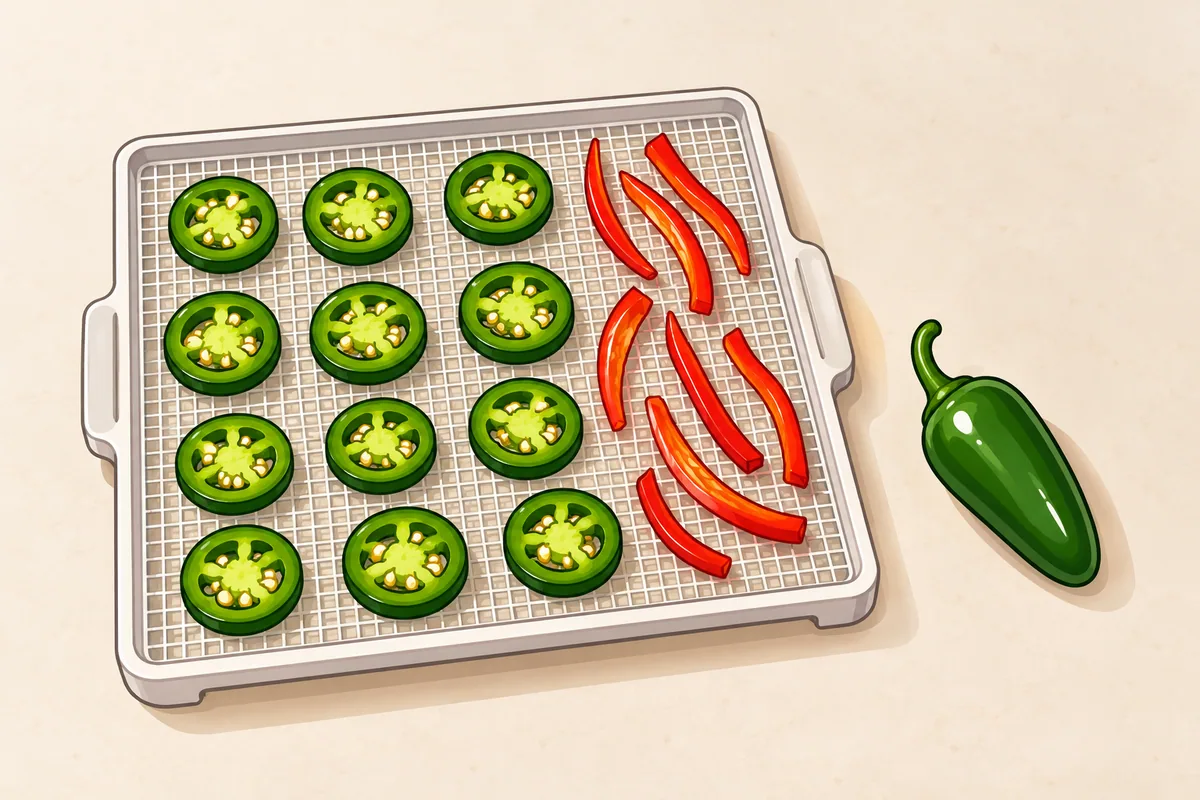
The Thai chili dries plain; the jalapeño's classic dried form is smoked. Colorado State's method for hot peppers is to cut the pods into strips or rings of 1/4 to 3/8 inch and dry them at 140°F for 8 to 12 hours in a dehydrator, or up to twice as long in an oven, until they are tough to brittle12. You can crush the dried Thai result into flakes about 15 times as hot as dried jalapeño by midpoint1.
A jalapeño takes a different road. Ripened red and smoke-dried, it becomes chipotle5, so a dried jalapeño brings smoke and medium heat. If your recipe wants chipotle and you only have dried Thai chilies, you get heat without smoke, and you need far less of it, since the fresh Thai pod starts out about 15 times hotter than the fresh jalapeño1. Weigh the flakes on a kitchen scale rather than spooning them in, and add them a little at a time.
Store both the same way: Colorado State keeps dried peppers 6 to 12 months in a cool, dark, airtight container12, and Penn State notes they fade quickly in light10.
What if the dish is already too hot?
If you swap the other way and a Thai recipe turns out too mild with jalapeños, the habanero, three times the Thai chili, shows the pods that sit above the Thai range instead.
Related in Compare
-
Habanero vs Thai Chili, Why the Habanero Is 3× Hotter
A tiny hot chili against a fruity extra-hot one.5 min read -
Bird's Eye vs Thai Chili, Usually 1 Pepper at 50,000+ SHU
Mostly one pepper, with a wild cousin that shares the name.5 min read -
Cayenne vs Jalapeño, 7.5× the Heat and Swaps
One usually ends up in a jar of powder, the other in a fresh salsa.6 min read -
Poblano vs Jalapeño, 3.3× the Heat and When to Use Each
The big mild one and the small hot one.5 min read -
Cayenne vs Thai Chili, Why the Smaller Pod Is 2× Hotter
Same species on most lists, double the heat, a sixth of the length.5 min read -
Hungarian Wax Pepper vs Jalapeño, 1.5× Hotter by Midpoint
A long yellow pickling pepper and the green chile everyone knows, closer in heat than they look.6 min read
Sources
· 14
- 1University of Florida IFAS Extension HS-859/TR010: Pepper Production in Miami-Dade County, Florida
- 2New Mexico State University, Agricultural Experiment Station (Research Report 792) The Chile Cultivars of New Mexico State University Released from 1913 to 2016 (Coon and Bosland)
- 3Texas AgriLife Extension Service (Joe Masabni) Jalapeño & Other Hot Peppers
- 4UF/IFAS Gardening Solutions Peppers by Scoville Units
- 5New Mexico State University, Chile Pepper Institute Chile Terminology
- 6New Mexico State University Cooperative Extension Service (Guide E-324) Processing Fresh Chile Peppers (revised by Nancy C. Flores)
- 7New Mexico State University Cooperative Extension Service Guide H-240: Growing Chile Peppers in New Mexico Gardens (Walker, Bosland)
- 8Heliyon (Cell Press) A comprehensive review of capsaicin: Biosynthesis, industrial productions, processing to applications, and clinical uses
- 9University of Guam, College of Natural and Applied Sciences, Cooperative Extension and Outreach FPP-05: Hot Pepper (Capsicum spp.), Important Crop on Guam (Tuquero, Chargualaf, Marutani)
- 10Penn State Extension Preserving Those Colorful Garden Peppers (Martha Zepp)
- 11National Center for Home Food Preservation (University of Georgia) Pickled Jalapeño Rings
- 12Colorado State University Extension, PreserveSmart Drying Peppers-Hot
- 13National Capital Poison Center (poison.org) Capsaicin: When the Chili Is Too Hot (Amanda McDaniel-Price, RN)
- 14Physiology & Behavior 208:112557 Putting out the fire: Efficacy of common beverages in reducing oral burn from capsaicin (Nolden, Lenart, Hayes)