
Pepper Growing Zones and the 50°F Nights That Matter More
Winter cold sets your zone; spring frost and summer heat set your season.
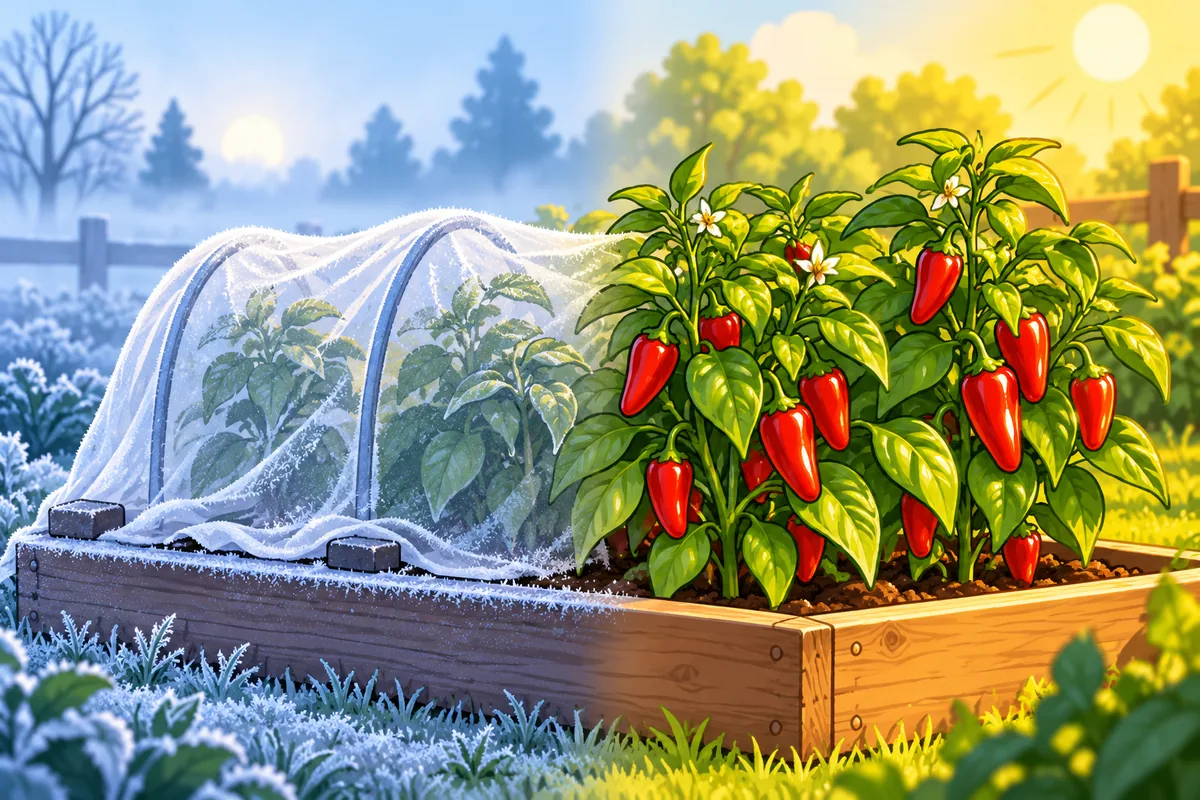
Peppers grow in any zone with a warm summer, because you plant them after frost and pick them before the next one.
- USDA zones measure the average coldest winter night, in 10°F steps
- Peppers want nights above 50°F to go out, and stall when nights stay above 75°F
The temperatures that matter
Night air, day air and soil on one scale. The colours show where peppers grow best, slow down or stop.
Night air
Day air
- Best
- Grows
- Slow or no fruit set
- Too cold or too hot
- 32°F: frost kills or damages the plant1
Nothing matches this filter yet.
Planting months in warm regions
Florida and California plant outside the worst heat, so their windows move well away from spring.
Florida18
California1
Warm spots and cold pockets
Your garden can run a few degrees off your zone. USDA names three places where it does.
- South-facing wallRuns warmA sheltered bed in front of it runs warmer, so peppers can go out a little earlier.2
- City blacktopRuns warmPaving and buildings hold heat, so city gardens run warmer than the zone map shows.2
- Low spotRuns coldCold air pools at the bottom of a slope, so a bed there stays colder than the rest of the garden.2
On this page
- 1What zone do peppers grow in?
- 2Which temperatures matter for peppers?
- 3Is it time to plant your peppers out?
- 4How do you measure soil temperature before you plant out?
- 5How long is your pepper season?
- 6How do you stretch a short or cool season?
- 7What should you do on a frost advisory night?
- 8How many degrees does each kind of cover buy you?
- 9When do you plant peppers in hot climates?
- 10How do you protect peppers in a heat wave?
- 11Does your microclimate change the dates?
- 12What goes wrong when the weather does not cooperate?
- 13Find your planting dates
What zone do peppers grow in?
All of them, as long as you get a warm stretch of summer. Peppers cannot take frost1, so in most of the country you grow them as a summer crop: planted after the spring frost and picked before the fall one. Your zone number says how cold your winter gets, which matters little to a plant that never sees your winter.
You can look yours up by typing your ZIP code into the USDA map2. Just know what the number leaves out, because the things it skips are the things your peppers care about.
What your zone tells you
For peppers, read your zone as a rough hint about season length and plan from your frost dates and summer temperatures instead.
Which temperatures matter for peppers?
Five lines on the thermometer decide most of your pepper season: the soil temperature at planting, the coldest night your plant can take outside, the comfortable middle, the hot nights that stop pods and the heat that ruins pollination.
The temperature chart at the top of the page puts them on one scale. Read the soil and night rows as your planting signal, and the hot end of the day row as the reason a plant in full flower can set nothing in a heat wave. At the cold end, UF/IFAS says pepper plants take cold injury once the air drops 2°F below freezing4.
The fruit-set limits deserve a closer look, because the sources draw them a few degrees apart. Here is each one as published.
| Too cold | Too hot |
|---|---|
| Nights below 60°F | Nights above 75°F, or days above 95°F |
| Below 60°F | Above 90°F |
| Nights below 55°F | Days above 90°F |
| No figure given | Days above 100°F cut pollination, fruit set and yield |
Put together, your pepper sets fruit most reliably with nights between about 60 and 75°F and days below 90°F56. Outside that band the plant keeps growing leaves and waits. UMN Extension adds that smaller-fruited peppers handle both cool and hot weather better than big bells8, which helps you at both ends of the scale.
Is it time to plant your peppers out?
Only when the soil and the nights both agree. One warm afternoon proves nothing; the plant reacts to cold soil and cold nights, and both lag behind the air in spring.
- yesDoes the soil read 60°F or more?Penn State's floor for transplanting
- yesDo nights stay above 50°F?UMN keeps plants inside until they do
- yesPlant outAt 65°F soil the plants start growing right away
- noWait a week and check againBelow 65°F soil, transplants just sit there
- yes
- noWait a week and check againBelow 65°F soil, transplants just sit there
- yes
- noWait a week and check againBelow 65°F soil, transplants just sit there
Sources for this line8. University of Minnesota Extension9. PlantVillage, Penn State University10. University of Maryland Extension
Penn State's floor is 60°F soil9; Maryland says plants set into soil below 65°F "just sit there"10; UMN keeps them inside until nights stay above 50°F8. If you can wait for 65°F, your plants lose no time sulking.
How do you measure soil temperature before you plant out?
Push a soil thermometer into the bed on three mornings in a row and plant once it reads 60°F or more. UW–Madison Extension takes the reading between 10 a.m. and noon, 4 to 6 inches deep for transplants and 2 inches for seed11.
- 1
Buy a thermometer for soil only
UW–Madison suggests a soil thermometer that you use for nothing else.11
- 2
Read it at the same time three days running
Take each reading between 10 a.m. and noon, so one warm afternoon cannot fool you.11
- 3
Push the probe to root depth
Go 4 to 6 inches down for a transplant, or 2 inches if you sow seed in the bed.11
- 4
Compare it with the number you trust
The services draw the line at different degrees, so pick one from the table and stick to it.Sources for this line9. PlantVillage, Penn State University10. University of Maryland Extension11. UW–Madison Extension, Wisconsin Horticulture (Lisa Johnson)12. South Dakota State University Extension
The numbers differ because each service answers a slightly different question. Here is what each one prints for peppers.
| Service | Soil temperature | What it means |
|---|---|---|
| Penn State PlantVillage | 60°F | The floor for transplanting |
| Maryland Extension | 65°F | Below this, transplants just sit there |
| South Dakota State Extension | 65°F | The minimum soil temperature for peppers, which people usually grow from transplants |
| UW–Madison Extension | 65°F minimum, 85°F best, 60–95°F range | For pepper seed sown in the bed, read at 2 inches |
Maryland says plants set into soil below 65°F just sit there10, so a few extra days of waiting cost you little. Set your own line at 65°F whenever the forecast lets you.
How long is your pepper season?
Count the days between your last spring frost and your first fall frost, then take off the 2 to 3 weeks Penn State waits before planting out9. What is left is the time your plants have to ripen, and Maryland gives most sweet and hot types 70 to 85 days from transplant against 90 to 120 for habanero types10.
| Last spring frost | First fall frost | Plant out (2–3 weeks after) | Days left to the fall frost | Most types (70–85 days) | Habanero types (90–120 days) |
|---|---|---|---|---|---|
| June 1 | September 15 | June 15–22 | 85–92 | Just fits | Too short outdoors |
| May 15 | September 30 | May 29 – June 5 | 117–124 | Fits | Tight; start them first |
| April 20 | October 20 | May 4–11 | 162–169 | Fits, with weeks to spare | Fits |
The short garden in the first row is the one to plan hardest. There you pick fast varieties, start the early-maturing peppers indoors on time, and give a habanero a pot you can carry inside before the first frost13.
How do you stretch a short or cool season?
Warm the soil early and keep the plant warm at night. UC IPM says a cool climate can stop plants growing, drop their blossoms and keep peppers from forming or ripening at all, and its only fix is to plant when the weather is warmer14. You can make that warmer weather arrive sooner in your own bed.
- Lay plastic mulch before planting to warm the soil, and keep the stem from touching it so the heat does not injure the transplant.7
- Use a row cover on cold spring nights, and open it once the air passes 80°F.7
- Put the bed in front of a south-facing wall, one of the warm spots USDA names.2
- Grow your slowest types in pots, which you can move to follow the weather.13
- Choose smaller-fruited peppers, which cope with cool weather better than big bells.8
A greenhouse is the bigger step. New Mexico State grows transplants to size in 6 to 8 weeks in a home greenhouse6, which shows how much faster peppers move when you keep them warm.
A thermometer, a cover and a roll of plastic do the checking and the warming from that list, so here is what each one is for.
Tools that warm a cold spring bed
A thermometer tells you when; plastic and a cover make the soil and the night warmer.
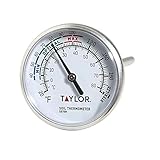
Soil thermometer
Our pickYou read it before planting so you do not set transplants into cold soil where they just sit there.
- Where
- 4 to 6 inches deep for transplants, 2 inches for seed
- How often
- Three mornings in a row, between 10 a.m. and noon
- Best for
- Checking for 65°F soil, UW–Madison's minimum
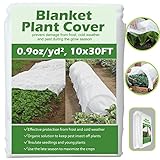
Floating row cover
You lay it over the bed on cold spring nights to hold a few degrees of warmth.
- Protection
- Up to 10°F of frost protection, by material and grade
- Where
- Over the bed, held up on wire hoops
- How often
- Open it for air above 80°F
Black plastic mulch
You lay it before planting to warm the soil early in the season.
- Where
- Over the bed before transplanting
- Best for
- Cool springs

As an Amazon Associate we earn from qualifying purchases. We choose product types from what their labels and extension sources say; the commission does not change what we recommend. Our affiliate disclosure
What should you do on a frost advisory night?
Cover the plants before sunset and water the soil. The National Weather Service office in Charleston, West Virginia, issues a Frost Advisory when it expects widespread frost during the growing season, usually with lows of 33 to 36°F on a clear, calm night, and it says minor damage to sensitive plants is possible16. Offices set their own cutoffs, so check your local forecast for the exact numbers.
- 1
Read the forecast low
A Frost Advisory means lows of 33 to 36°F. A Freeze Warning means 29 to 32°F, and the NWS says a freeze will likely kill unprotected sensitive plants.16
- 2
Water the soil in the afternoon
Wet soil holds heat better than dry soil, so a soak before dark helps the plants through the night.16
- 3
- 4
Take the cover off the next morning
Remove blankets and sheets in the daytime so the soil can recharge the heat it stores.15
- 5
Move pots indoors
If you can, carry potted peppers inside; a freeze will likely kill plants left out.16
Colorado State splits frosts into two kinds. A radiation frost comes on a calm, clear night and usually sits only a few degrees below the damage point, so covering is worth the effort; a cold front can drop temperatures far enough that protection is a long shot15.
How many degrees does each kind of cover buy you?
A floating row cover gives up to 10°F of protection, and the extras you add to a frame stack on top of that. Colorado State reports the frame numbers from Fort Collins trials on a plastic-covered cold frame, four feet wide and five feet long.
| Cover | Frost protection | The catch |
|---|---|---|
| Blankets and sheets | No figure given | Keep them dry and remove them each day |
| Floating row cover | Up to 10°F, by material and grade | Take it off for pollination on insect-pollinated crops |
| Plastic cover on a frame | 3°F to over 6°F | Vent it on sunny days; open it in a hot summer |
| Plastic frame plus a space blanket, aluminized side down | Held a frame above freezing when outside air fell to 0°F after a sunny day | Remove the blanket every day |
| Plastic frame plus a 25-light string of C-7 Christmas lights | 6°F to over 18°F | Lights on at dusk, off at dawn |
| Frame with lights and a space blanket | 18°F to over 30°F | The most work and the most protection |
| Water-filled ring around one plant | Down to the mid-teens | The plant outgrows the ring |
For a bed of peppers the row cover is the easy default, and the frame with lights is the move for the one cold night that threatens a whole season. Plastic mulch laid before planting, which the stretch-the-season checklist above covers, warms the soil the same way from underneath.
When do you plant peppers in hot climates?
In the hottest places you plant in late summer, fall or winter, so your plants flower outside the worst heat. UF/IFAS lists a spring and a late-summer window for north Florida and a window from August through February for south Florida18; the planting-month chart on this page shows every region. UF/IFAS Gardening Solutions adds that you can start seeds again in midsummer for an early fall planting in August and September19.
California splits by region the same way. UC IPM gives approximate dates and tells you to check with your local Master Gardener program for closer ones1.
Hot climates suit some peppers well. UF/IFAS says habanero thrives in hot places such as Miami-Dade County and south Florida4, so a southern garden that struggles with bells can still do well with your chinense types.
How do you protect peppers in a heat wave?
Shade the plants in the afternoon, keep the soil evenly wet and leave every leaf on. Peppers want at least 6 hours of direct sun, and 8 to 10 is better10, but a heat wave turns that sun against the pods.
- 1
Add late-afternoon shade
Maryland shades peppers in the late afternoon and says it can improve yields over the season.5
- 2
Cool the plants with water
Spray the plants with water during hot, dry spells, when nights stay above 75°F.10
- 3
Shade new transplants at midday
For a summer planting, UC IPM shades transplants in the middle of the day for their first week.1
- 4
Keep the leaf cover
Fruit exposed to hot sun after the leaves wilt turns brown and leathery; water and feed for a full canopy.20
Then wait. Flowers that drop in the heat come back once the weather eases, and New Mexico State notes that heat and water stress also change how hot your pods taste6.
Does your microclimate change the dates?
Yes, by a few degrees either way. USDA points to warm spots, such as a sheltered bed in front of a south-facing wall or the blacktop of a city, and to cold pockets where air pools in a low spot or between small hills2. A pepper bed against your south wall can go out a little earlier than one at the bottom of your slope.
The warm-spot cards on this page show the three places USDA names. Use them twice a year: in spring to choose where your earliest plants go, and in fall to know which bed the first frost will reach first.
What goes wrong when the weather does not cooperate?
Most climate trouble shows up as a plant that grows but will not set or ripen. Match what you see to its likely cause.
| What you see | Likely cause | What to do |
|---|---|---|
| Transplants sit still for weeks710 | Soil below 65°F at planting | Wait for warmer soil; warm it with plastic mulch next year |
| Blossoms drop all at once in midsummer57 | Nights above 75°F or days above 90–95°F | Shade in the afternoon, water evenly, wait for cooler nights |
| Plants stall and pods never ripen814 | A cool climate | Plant later into warm soil; grow smaller-fruited types |
| Brown, leathery patch on the sunny side of a pod20 | Sunburn after the leaves wilted | Keep the plant watered and fed for leaf cover |
| Blackened leaves after a clear, still night14 | Frost or a freeze | Pick every pod before the first fall frost; cover or move plants on cold nights |
Find your planting dates
Your county extension office knows the local frost dates; USDA sends you to extension services for exactly that kind of detail2. Write down your last spring frost and your first fall frost, then count the days between them as in the worked table above.
Once you have those two dates, the guide to when to plant peppers turns them into a sowing date, a planting-out date and a first-harvest window for your garden.
Quick answers
Can you grow peppers in zone 5 or colder?
Yes, as a summer crop. Peppers cannot take frost, so in cold zones you plant them after the spring frost and pick before the fall one; the zone number only tells you how cold your winter gets.12
How hot is too hot for pepper plants?
Fruit stops setting on days above 90°F and on nights above 75°F, and days above 100°F cut pollination and yield. Plants usually pick up again when the heat breaks.Sources for this line1. UC Statewide IPM Program, University of California7. Utah State University Extension10. University of Maryland Extension
More in Grow
The newest from Grow
-
How to Grow Carolina Reapers, Seed to Ripe Pod
A C. chinense on the longest clock in the garden.Oct 18, 2026 · Guide -
Best Fertilizer for Peppers and the 4- and 8-Week Feeds
A soil test, a starter feed and two light side-dressings.Oct 18, 2026 · Guide -
Pepper Plant Leaves Curling? 6 Causes and the Fix
Which way the leaf curls, and what sits under it, tells you the cause.Oct 18, 2026 · Guide -
Pepper Plant Spacing, 18 Inches Apart in Rows and Beds
18 inches is the middle; your bed, your summer and your variety move it.Oct 18, 2026 · Guide -
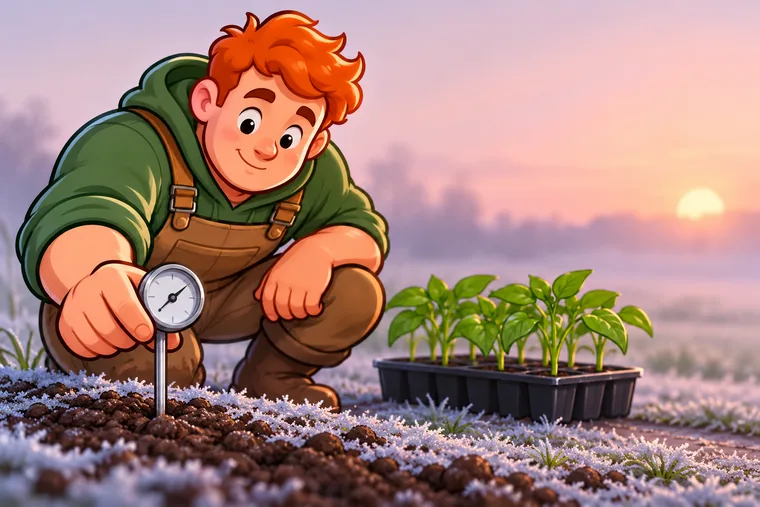
When to Plant Peppers, 2–3 Weeks After Your Last Frost
Three checks, one date to count from.Oct 18, 2026 · Guide -
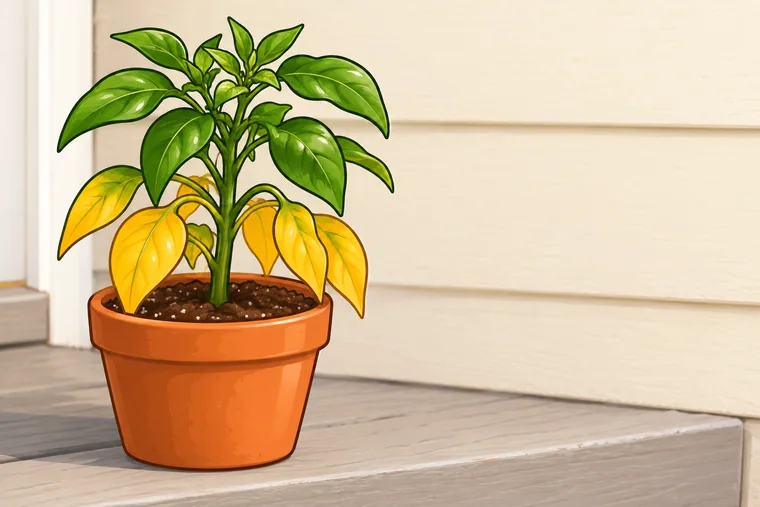
Pepper Plant Leaves Turning Yellow? 8 Causes and Fixes
Where the yellow starts tells you more than the yellow itself.Oct 18, 2026 · Guide
Sources
· 20
- 1UC Statewide IPM Program, University of California Cultural Tips for Growing Peppers
- 2USDA Agricultural Research Service 2023 USDA Plant Hardiness Zone Map: How to Use the Maps
- 3USDA Agricultural Research Service 2023 USDA Plant Hardiness Zone Map: Map Creation
- 4University of Florida IFAS Extension HS-859/TR010: Pepper Production in Miami-Dade County, Florida
- 5University of Maryland Extension Poor Blossom and Fruit Set in Vegetables
- 6New Mexico State University Cooperative Extension Service Guide H-240: Growing Chile Peppers in New Mexico Gardens
- 7Utah State University Extension How to Grow Peppers in Your Garden
- 8University of Minnesota Extension Growing peppers (Marissa Schuh, Cindy Tong)
- 9PlantVillage, Penn State University Chilli Pepper
- 10University of Maryland Extension Growing Peppers in a Home Garden
- 11UW–Madison Extension, Wisconsin Horticulture (Lisa Johnson) When Is the Right Time to Plant Vegetable Seeds? Check Soil Temperature
- 12South Dakota State University Extension When Should I Plant My Warm-Season Vegetables?
- 13University of Wisconsin–Madison Extension Growing Vegetables in Containers (Patti Nagai, Vijai Pandian), XHT1278
- 14UC Statewide IPM Program, University of California Cool Climate on Peppers and Eggplants
- 15Colorado State University Extension (GardenNotes 722; Whiting, O'Meara, Wilson) Frost Protection and Extending the Growing Season
- 16National Weather Service, Charleston West Virginia forecast office Frost/Freeze Information
- 17Illinois State Water Survey, Illinois State Climatologist Jack Frost Getting Closer to Illinois
- 18UF/IFAS Extension (EDIS) SP 103/VH021: Florida Vegetable Gardening Guide (Park-Brown, Saracino, Williams, Treadwell)
- 19UF/IFAS Gardening Solutions Peppers
- 20UC Statewide IPM Program, University of California Sunburn on Peppers and Eggplants
Your pocket pepper index.
Built from the same index as this site.
- Every entry offline
- Compare any two peppers
- Keep a list of peppers you have tried