On this page
- 1Why are my pepper leaves curling?
- 2How do you check a curled leaf?
- 3Is downward leaf curl on peppers harmful?
- 4Do broad mites cause leaf curl on peppers?
- 5Which fix fits your curl?
- 6Do whiteflies curl pepper leaves the way aphids do?
- 7How do you get rid of aphids and mites?
- 8How do you spray soap or oil so it reaches a curled leaf?
- 9What if it is a virus?
- 10Is it weed-killer drift or a virus that curled your leaves?
- 11Can heat, water or nutrients curl pepper leaves?
- 12Will curled pepper leaves flatten out again?
- 13Keeping new leaves flat
- 14Sources
Why are my pepper leaves curling?
Six causes cover most of the curled pepper leaves you will find: harmless leaf roll, aphids, broad mites, viruses, powdery mildew and weed-killer drift. The pattern across your plants sorts them fastest. Leaf roll shows on every one of your plants at once; pests and diseases start on one plant or one patch and spread from there.
| What you see | Cause | Confirm it | Fix |
|---|---|---|---|
| Leaves rolled downward on all plants; new leaves stay green, plants keep growing1 | Physiological leaf roll | No insects, no yellowing, no stunting | None needed; it does not harm the plant |
| Leaves crinkled or curled, shiny or sticky23 | Aphids | Soft green or black insects on the leaf undersides | Strong jet of water or insecticidal soap; neem or canola oil |
| Leaves turned downward, coppery or purplish4 | Broad mites | Mites about 0.2 mm long, seen only with a 10X hand lens | Insecticidal oils or soaps; predatory mites |
| Light and dark green mosaic, leaves distorted and curled, slow growthSources for this line3. PlantVillage, Penn State University5. UC Statewide IPM Program, University of California6. University of Minnesota Extension | Virus (cucumber mosaic, potato virus Y and others) | Often with misshapen fruit; aphids nearby | Pull the plant; it cannot be cured |
| Leaves curling with white powder underneath and yellow-brown patches3 | Powdery mildew | Powdery patches start under older leaves and spread | A fungicide if the disease is severe |
| New leaves pointed, cupped or twisted2 | Drift of 2,4-D or a similar weed killer | Someone sprayed a lawn nearby, or you mulched with treated grass clippings | Nothing for the damaged leaves; keep lawn sprayers and treated clippings out of the garden |
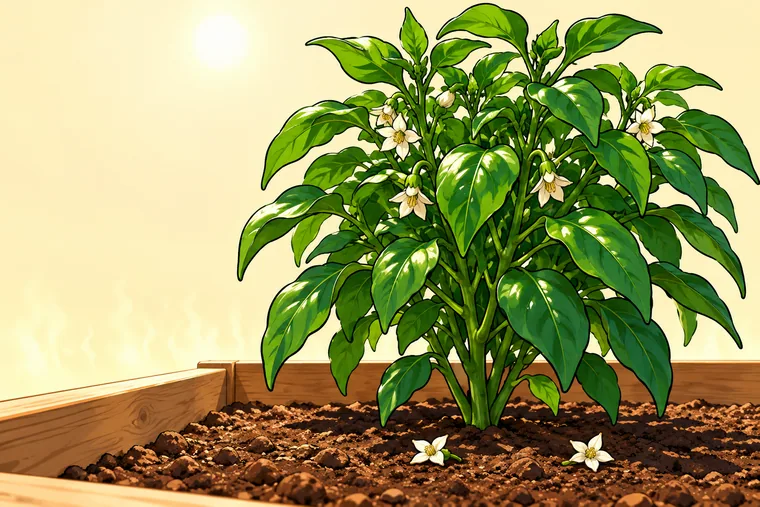
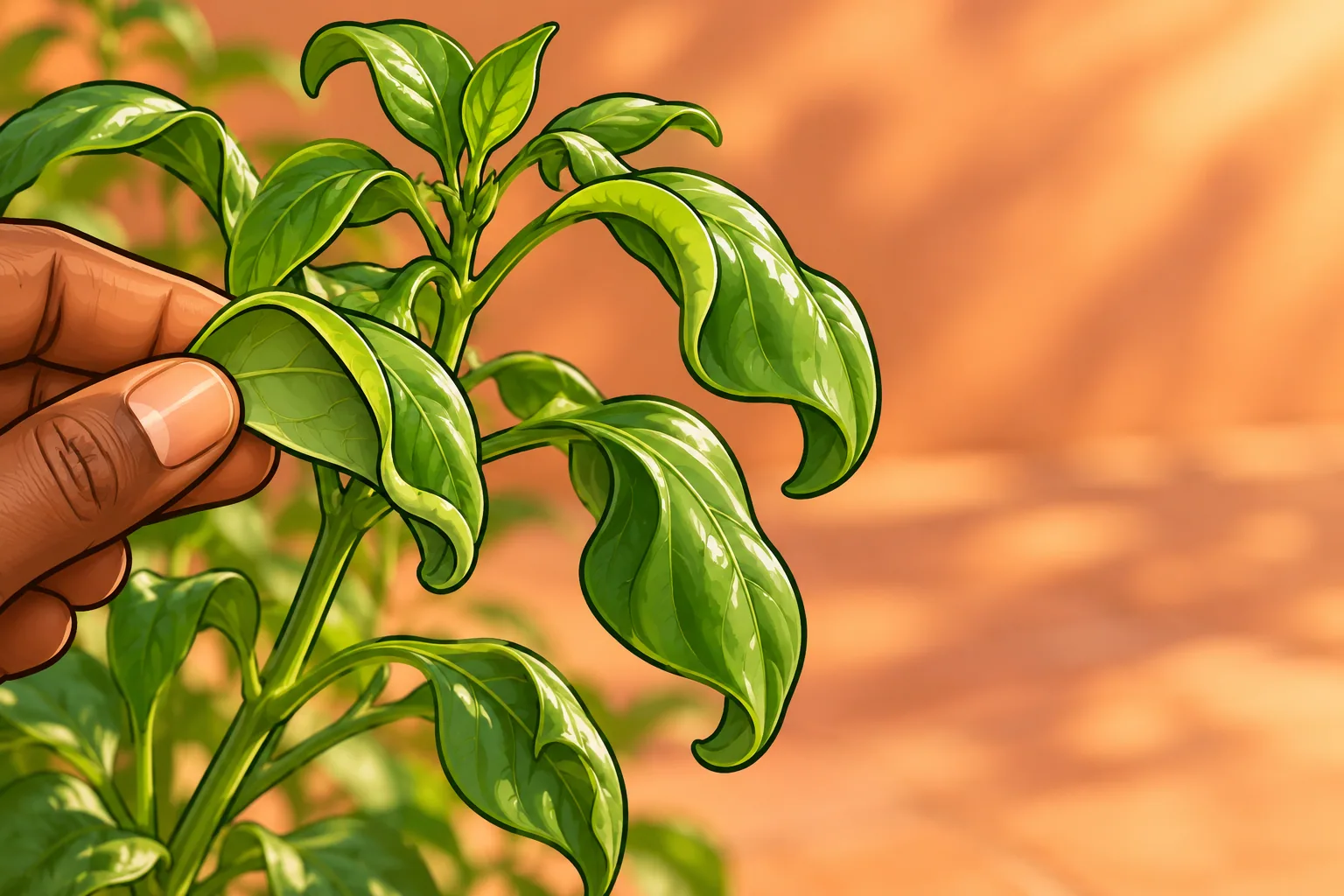
If you see the curl on every plant in the bed and nothing living under the leaves, leave it alone. UC IPM says physiological leaf roll is very common and has no pathogen behind it1.
How do you check a curled leaf?
Start wide and get closer. Each step rules out one or two causes before you need a lens, and the whole check takes you about five minutes per bed.
- 1
Look at the whole bed
Downward roll on every plant, with no yellowing of new leaves and no stunting, is leaf roll.1
- 2
Turn a leaf over
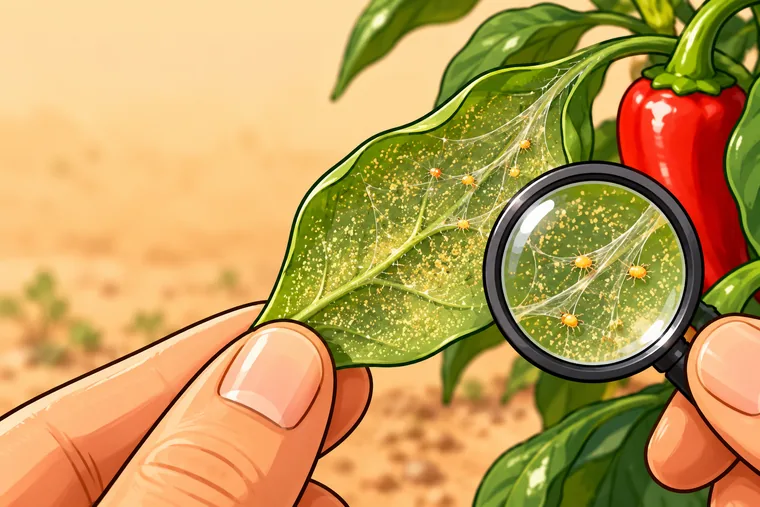
Aphids feed on the underside. They are soft-bodied, usually green or yellow but sometimes pink, brown, red or black, and leave a sticky honeydew.3
- 3
- 4
Use a 10X hand lens on the newest leaves
Broad mites are too small to see without one. Leaves that turn down and go coppery or purplish fit broad mites.4
- 5
Look for white powder
A white powdery growth under the leaves, spreading to the top, is powdery mildew.3
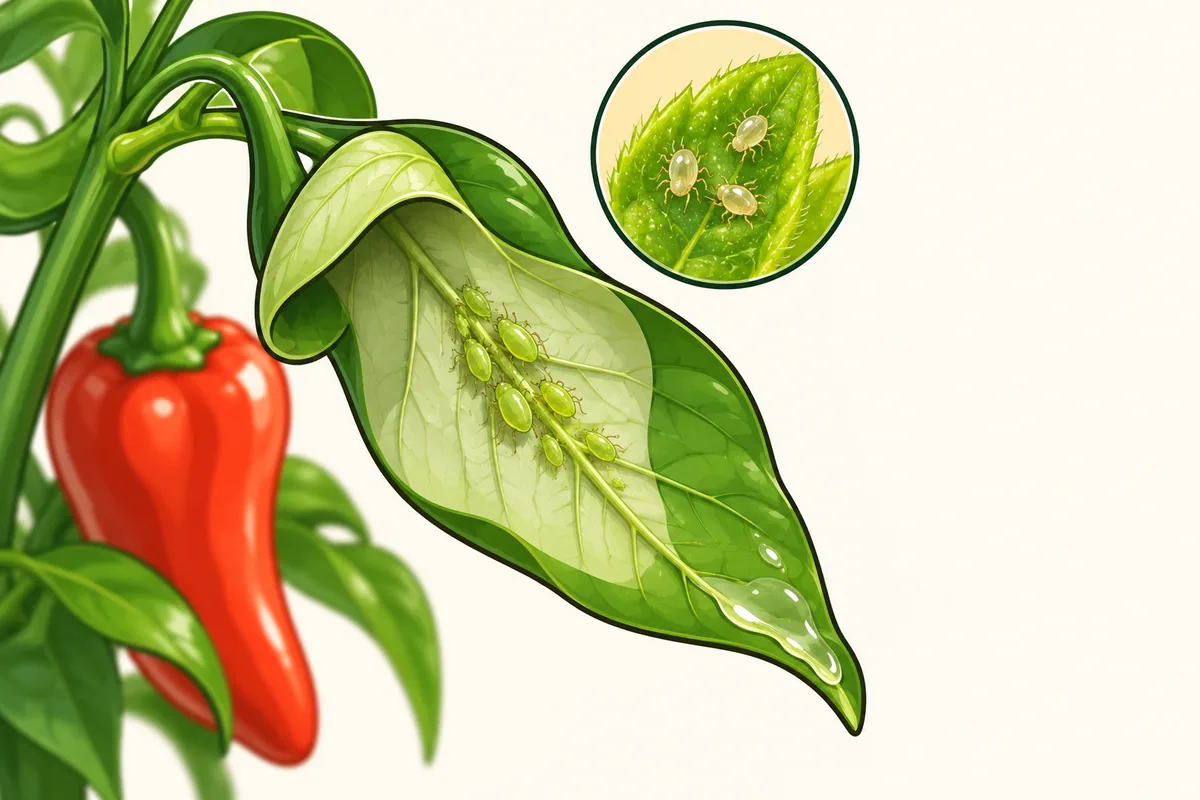
Broad mite damage has look-alikes that can fool you. UF/IFAS warns you not to confuse it with herbicide injury, boron deficiency or physiological disorders4, which is why the lens step matters before you spray. Utah State ties pointed, cupped or twisted pepper leaves to drift from 2,4-D and similar weed killers, and says to keep lawn-care sprayers out of the garden2.
If your leaves look silvery and speckled with tiny black dots, you have a different insect again. Penn State describes that damage from thrips, and suggests you keep peppers away from onions, garlic and cereals and use reflective mulch early in the season3.
Is downward leaf curl on peppers harmful?
Usually not, and you can relax if your plants match this. In peppers, UC IPM describes leaf roll as downward rolling on generally all plants, with no yellowing of new leaves and no stunting, and says it will not harm them1. UC IPM adds that once plants recover, the fruit that develops later shows no damage1.
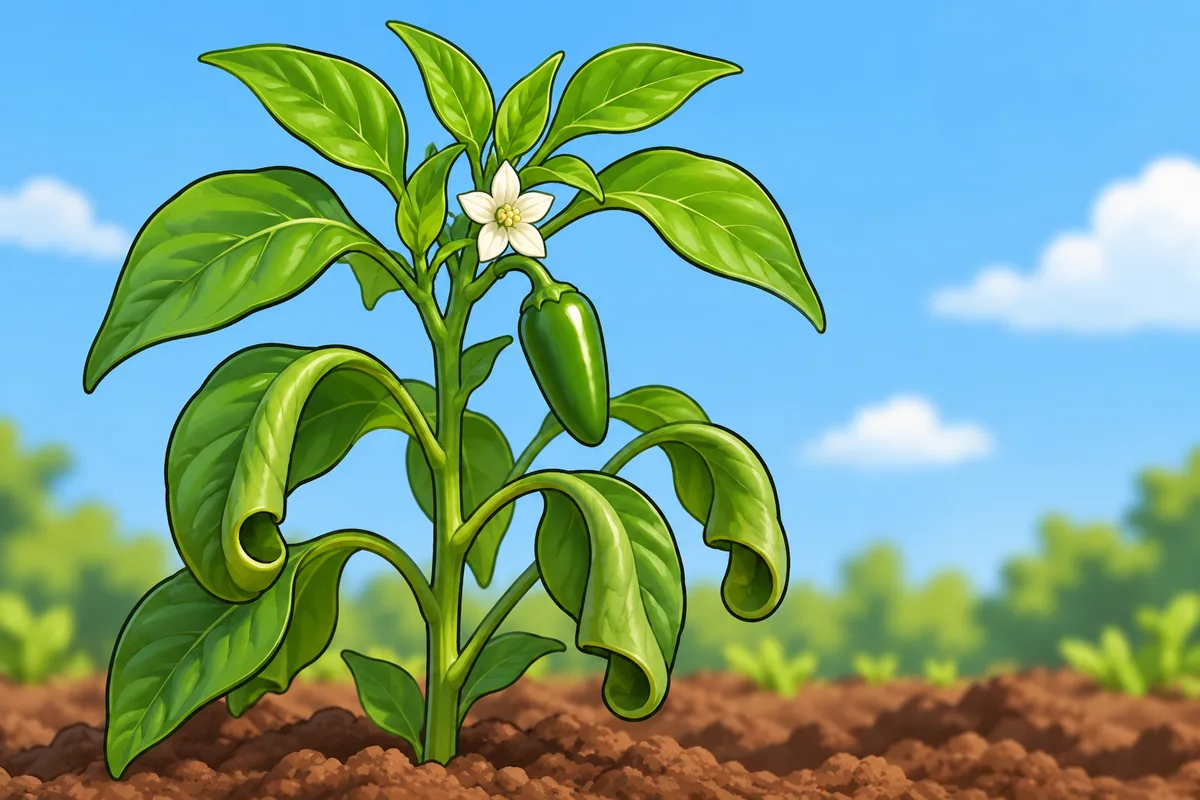
You should worry once the curl comes with something else: insects, sticky leaves, a mosaic, coppery color or plants that stop growing. Those signs move you down the table to a pest or a disease. If your plant rolls its leaves but keeps flowering and setting pods, you can take that as a sign it is fine.
Pepper Geek explains why pepper leaves curl and how to stop leaf roll, so you can hold your own plant up against a grower's examples, and UC IPM still says plain leaf roll needs no fix1.
Do broad mites cause leaf curl on peppers?
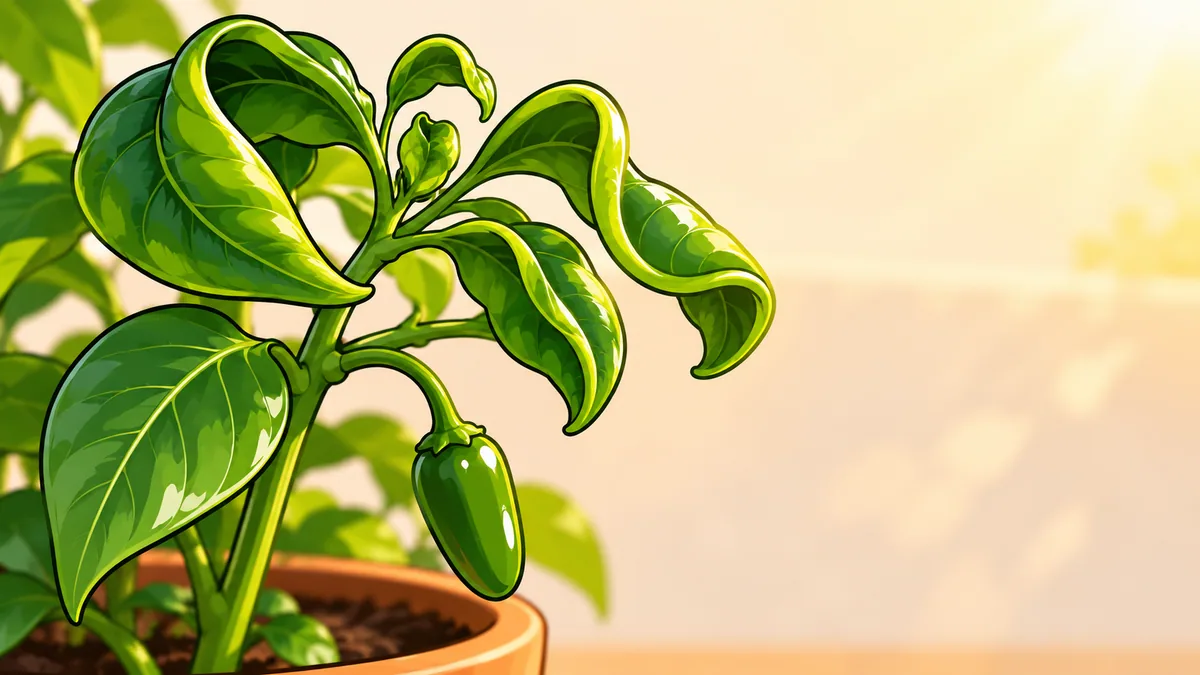
Yes, and they are the cause you are most likely to miss. UF/IFAS describes leaves that turn downward and go coppery or purplish, with the tip leaves and flower buds coming out malformed4. You will not see the mites themselves without a lens.
Those numbers explain why the damage seems to appear overnight on your plants. A female lays her eggs over 8 to 13 days, so a few mites on one transplant become a colony on the growing tips in a couple of weeks. UF/IFAS also reports that broad mites can ride on some whiteflies from plant to plant4, so a whitefly problem nearby raises your odds.
Their host list overlaps with the rest of your vegetable bed. UF/IFAS names chili, tomato, eggplant and potato among them4. If your tomatoes show twisted, bronzed tips too, check them with the same lens.
Which fix fits your curl?
Match your action to what you found, starting with the gentlest one. The tree below follows the checks above to the fix the extension guides give.
- Every plant, nothing under the leavesNo yellowing, no stunting
- Leave it alonePhysiological leaf roll does not harm the plant
- Soft insects or sticky honeydewAphids on the underside
- Water jet, then soap or oilMost plants tolerate low and medium aphid numbers
- Nothing visible, tips coppery and twistedCheck with a 10X lens
- mites seenInsecticidal oil or soapAs effective as miticides for broad mites, less toxic
- mites seen
- Light and dark green mosaicOften with misshapen fruit
- Pull the plantNo cure; remove nearby weeds too
Sources for this line1. UC Statewide IPM Program, University of California2. Utah State University Extension3. PlantVillage, Penn State University4. UF/IFAS Extension (EDIS), Featured Creatures
You will notice one branch is missing on purpose. Twisted new growth after someone sprayed a lawn needs no spray at all; the old leaves stay twisted and you wait for clean new ones2.
Do whiteflies curl pepper leaves the way aphids do?
They can, through the viruses they carry. UC IPM says some whiteflies transmit viruses to certain vegetable crops and lists peppers among the sweetpotato whitefly's hosts8. Mississippi State names tomato yellow leaf curl virus, which whiteflies spread, as one of the causes of curled tomato leaves9. So a curl plus insect colonies under the leaves is worth a close look before you blame the weather.
Whiteflies also leave honeydew, the sticky film that grows black sooty mold, and the honeydew draws ants that interfere with the insects that eat whiteflies8. Your fixes run from gentle to firm:
- 1
Look under the leaves
You will find large colonies on the undersides of leaves, along with their eggs.8
- 2
Hose the adults off
Use a strong stream of water to knock adults off your plant.8
- 3
Hang one yellow sticky trap per plant
UC IPM uses one trap for every medium-size vegetable plant, and says traps are most useful for monitoring and detecting whiteflies, not controlling them.8
- 4
Lay reflective mulch under young plants
It protects your young plants. Take it up when they get large and the weather turns hot.8
- 5
Leave the predators alone
Lacewings, bigeyed bugs, minute pirate bugs and lady beetles eat whiteflies, so UC IPM says to skip pesticides while you see them.8
How do you get rid of aphids and mites?
Start gentle; most home gardens like yours never need more. These come from Penn State, Utah State and UF/IFAS, from the mildest step up.
- Prune out a light aphid patch confined to a few leaves or shoots.3
- Hose sturdy plants with a strong jet of water to knock aphids off; the same jet helps hold spider mites down.23
- Spray insecticidal soap, or an oil such as neem or canola, which Penn State calls usually the best control for aphids. Read the label first.3
- For broad mites, insecticidal oils or soaps work about as well as miticides with less harm to the environment, and garden suppliers sell predatory mites that eat them.4
- Look for lady beetles and other natural enemies feeding on the aphids before you spray; they may already be doing the job.610
Penn State notes that plants tolerate low and medium aphid numbers, and you generally need insecticides only for very heavy infestations3. Go easy on nitrogen too: UF/IFAS says too much makes plants more inviting to aphids10, so the light side-dressings in the pepper feeding guide also help keep your leaves flat.
Fine yellow stippling and webbing belong to spider mites rather than broad mites. Penn State controls them in home gardens with the same strong jet of water, then insecticidal soap if they persist3.
How do you spray soap or oil so it reaches a curled leaf?
Prune first, then spray from below, because a contact spray only works on the aphids it touches. UC IPM says aphids hidden inside curled leaves are not affected by pesticides that work on contact11. A curled leaf is a shelter for them, which is why the spray you read about on the label often seems to fail on peppers. Here is the order that works:
- 1
- 2
Test on a few leaves
Spray a small part of your plant several days before you treat all of it, because some plants are sensitive to soaps and oils.11
- 3
Pick a cool day and water first
Do not spray soaps or oils on a water-stressed plant, or when your thermometer passes 90°F.11
- 4
Soak top and bottom
Use a high volume of water, usually a 1 to 2% oil solution, and hit the underside of the leaves as well as the top.11
- 5
Repeat as the label says
Soaps and oils kill only the aphids present on the day you spray, so you may need to spray again.11
- 6
Rinse early in the day
A water spray early in the day lets your plants dry fast in the sun and washes off the honeydew.11
Ants matter here too. UC IPM says ants protect aphids from their natural enemies, so a plant crawling with ants keeps its aphids longer than one without11.
What if it is a virus?
Then pull the plant. You cannot cure a virus6, and an infected plant stays unproductive while it can pass the virus to its neighbors5.
Aphids are not the only carriers you need to watch. New Mexico State lists leafhoppers, thrips and aphids as the insects that spread curly top, tomato spotted wilt, alfalfa mosaic and pepper mottle12. For curly top, which the beet leafhopper carries, New Mexico State covers young plants with row covers early in the season13.
Next season, look for resistant varieties when you buy seed; UC IPM suggests them where they are available5.
Is it weed-killer drift or a virus that curled your leaves?
Look at which of your leaves twist and which plants share the problem. Herbicide hits the growing tips of everything downwind at once; a virus starts on one plant and walks. Mississippi State and South Dakota State write about tomatoes, potatoes and grapes, and Utah State ties the same cupped, twisted leaves to 2,4-D on peppers2, so the clues carry over to your bed.
Weed-killer drift
A virus such as cucumber mosaic
- Only the leaves that grew after the exposure; older leaves look normal14Which leavesA light and dark green mosaic, distorted leaves and slow growth on the same plant35
- Several kinds of plant, including ones from different families, all at the same time9Which plantsSpreads from plant to plant, so you often find it on one plant first5
- Worse along the side nearest a field, road or fence line where someone sprayed9WhereFollows the aphids and the broadleaf weeds that hold the virus, not one edge of the bed25
- Droplets, vapor after the spray, or sprayer contamination; residues can also sit in hay or manure used as mulch9CarrierAphids. If a virus is the cause, aphids should be present and easy to see9
- Light exposure may be outgrown, at a lower yield; the twisted leaves stay twisted14RecoveryNone. You pull the plant6
Walk the fence line to sort them out. If your worst plants are the ones nearest the lawn or the road, and a tomato or squash beside them twists too, think drift. SDSU says phenoxy herbicides can drift up to a mile or more in a light wind, and that some ester formulations vaporize again for days when it is about 80 to 90°F14, so the source can sit farther away than you think.
If drift is your answer, write it down while it is fresh. SDSU asks you to note what was sprayed, the rate, the timing and the weather, to flag the affected plants and take photos, and to report the damage to your state department of agriculture14. Check the plants again every few days: new growth that comes in flat is a good sign the exposure was light.
Can heat, water or nutrients curl pepper leaves?
Sometimes, but the extension sources back only one of the usual suspects you read about. Here is what each one says, so you know how much weight to give the advice you read elsewhere.
- Magnesium shortage: supported. Iowa State describes yellowing between the veins on the older leaves first, which can go on to leaf curling, dead spots and early leaf drop15. Curl that follows that yellow pattern points here; a soil test confirms it.
- Wet spring weather: supported for leaf roll. UC IPM ties physiological leaf roll in tomatoes to wet spring conditions and has it fade as the soil dries and temperatures warm1; in peppers it gives no cause, only the harmless pattern.
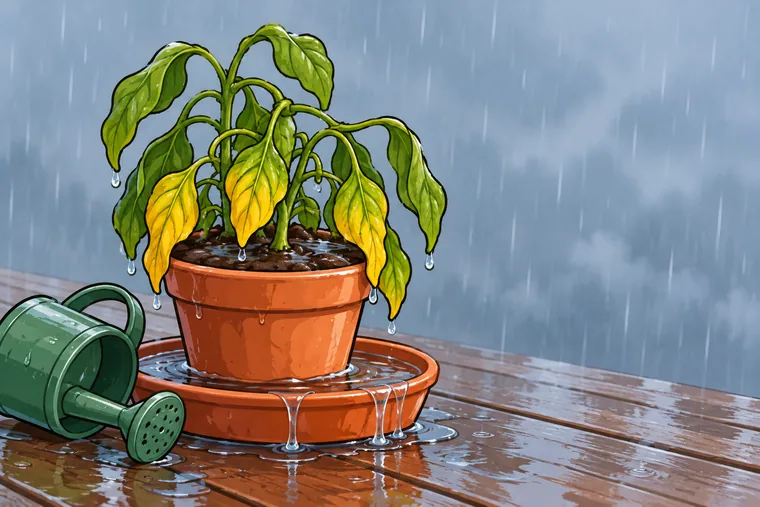
- Overwatering or underwatering: not stated. None of the extension pages read for this guide lists either one as a cause of curl. Soggy soil does cause wilting and yellowing through root rot, which the guide to overwatered peppers covers.
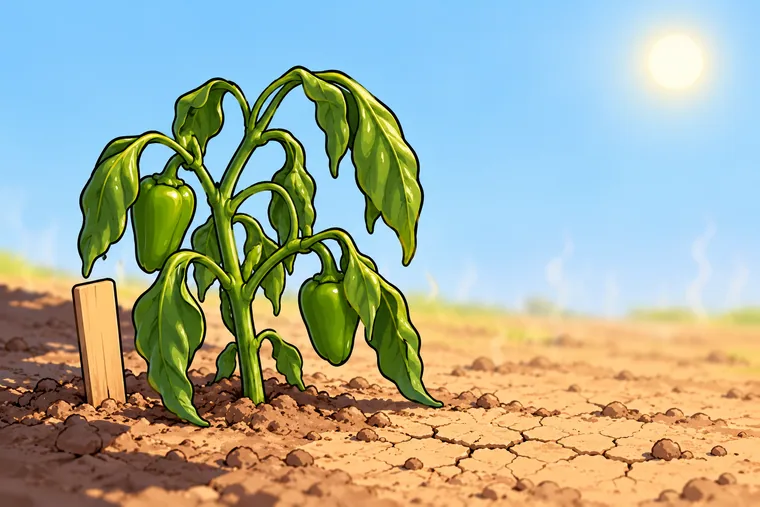
- Heat: not stated. Pepper sites often blame heat for cupped leaves, but no extension page read for this guide says so. Heat does drop flowers, which is a separate problem.
So if you find curl with none of the six causes in the table, look at the older leaves for the magnesium pattern before you change your watering.
Will curled pepper leaves flatten out again?
Do not count on the curled ones uncurling for you. Judge your fix by the new leaves at the tips, which grow after the pests or the drift are gone. UC IPM's harmless leaf roll is the exception: plants recover on their own and the later fruit shows no damage1.
None of the extension pages read for this guide gives a recovery time for pest damage. Give the plant a couple of weeks of new growth after the last spray, then check the tips again with your lens.
Keeping new leaves flat
Walk your bed once a week in this order. It takes you a few minutes and catches each cause while it is still small.
- 1
Check new transplants first
Look under the leaves of every new plant for aphids before it goes in the ground.3
- 2
- 3
Use the lens on the tips
Coppery, twisted tip leaves call for a 10X lens and a look for broad mites.4
- 4
Keep the feed light
Extra nitrogen makes plants more inviting to aphids and whiteflies.10
- 5
If your leaves are also turning yellow, the yellow pattern narrows the cause further. Your plants may also be dropping flowers, and the guide to a pepper plant with no fruit sorts out whether pests or the weather cause that.