On this page
- 1How do you know it is spider mites on your pepper?
- 2Spider mites or something else under the leaves?
- 3Could broad mites be curling your pepper's new leaves?
- 4Why mites explode on peppers in midsummer
- 5How to get rid of spider mites on peppers, gentlest first
- 6Is the orange dot on your leaf a predator or a mite?
- 7Which sprays make pepper mites worse?
- 8Do spider mites kill pepper plants?
- 9Can mites follow a pepper you bring indoors?
- 10Keeping mites off peppers next summer
- 11Sources
How do you know it is spider mites on your pepper?
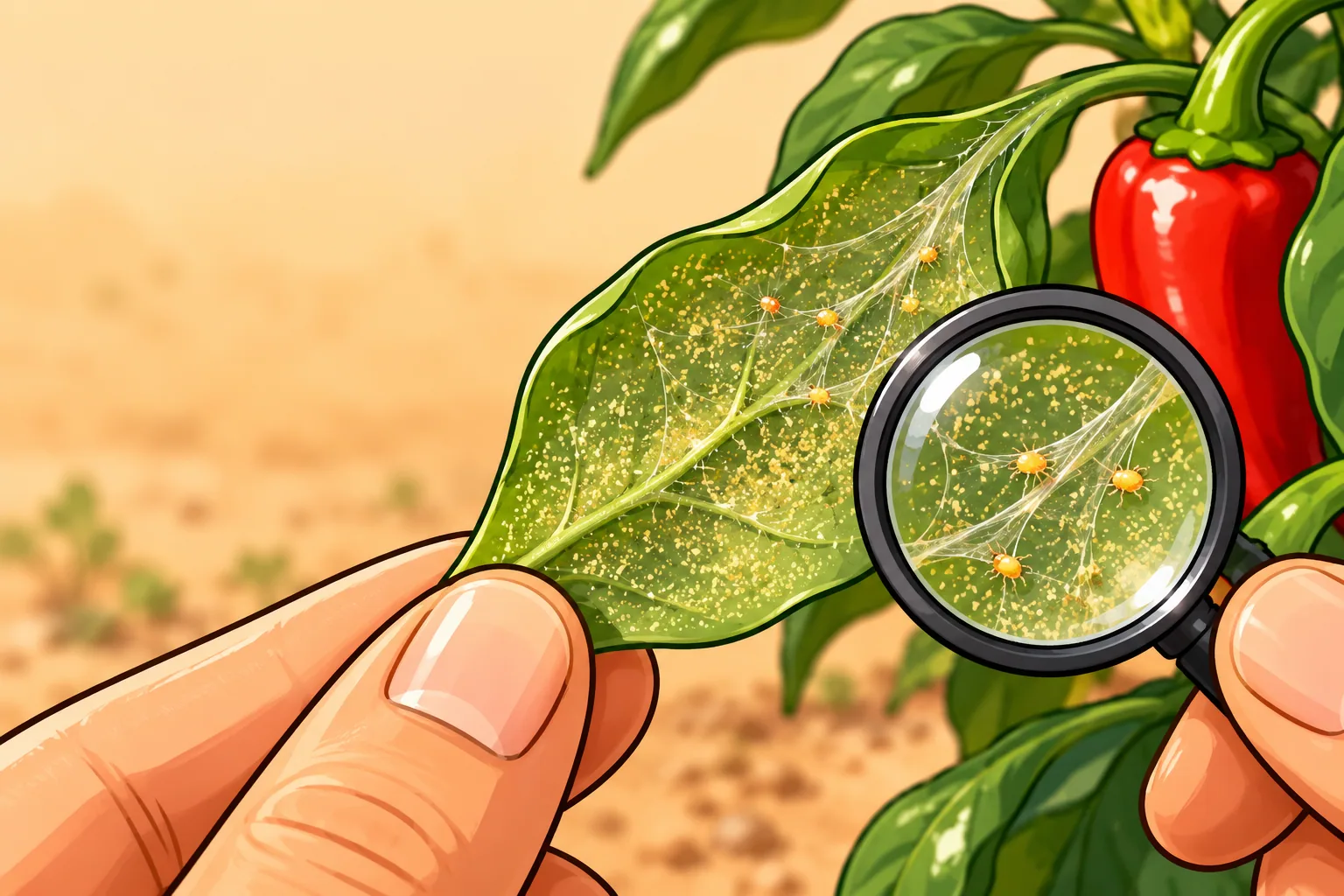
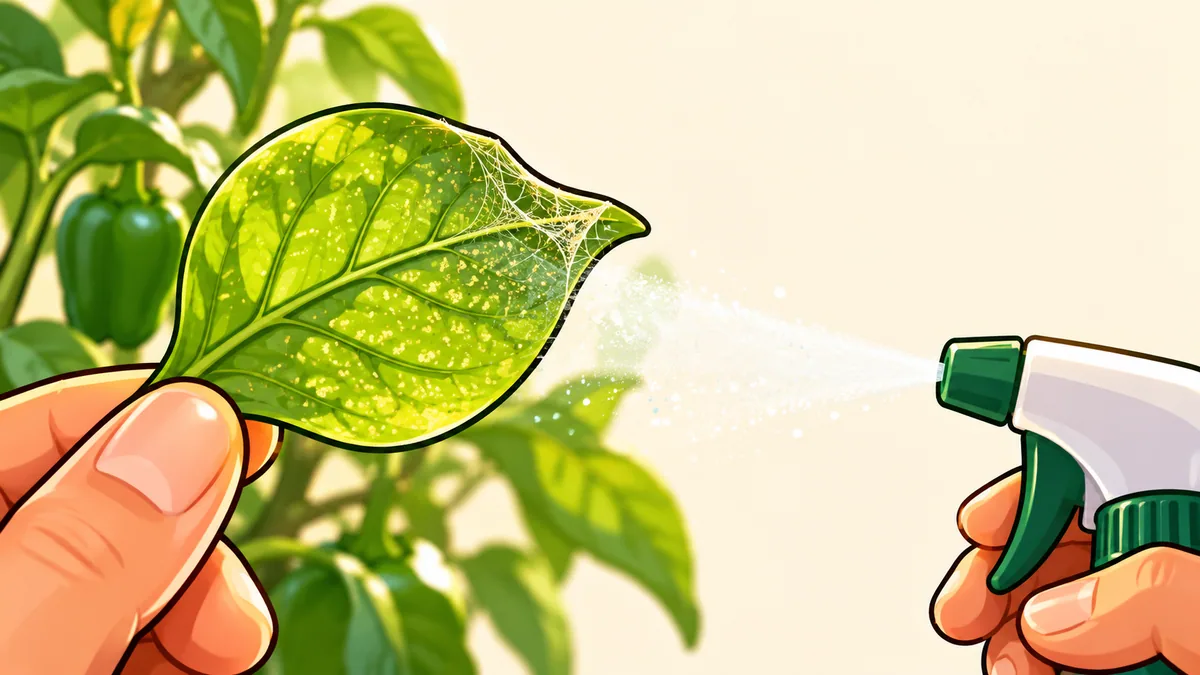
You usually see the damage before you see the mites. Your leaves pick up a stippling of light dots on top, sometimes with a bronze cast, and they turn yellow and drop once numbers run high1. In a bad case you also find webbing over your pepper leaves2.
The mites themselves sit underneath, where you rarely look. To your naked eye they are tiny moving dots: adult females run less than 1/20 inch long, and one colony on one leaf can hold hundreds of them1. Put a 10X hand lens on them and you see eight legs, an oval body and two red eyespots.
The two-minute mite check
- Turn over three or four of your leaves that show pale speckles on top.1
- Look for fine silk strung across the underside. Webbing sets spider mites apart from aphids and thrips.1
- Hold a sheet of white paper under a leaf and tap it. Disturbed mites drop and run around fast on the white.1
- Check for round, see-through eggs like tiny droplets, which turn cream before they hatch.1
- Note where your plant stands: next to a dusty path or at the dry edge of the bed is where mites show up first.1
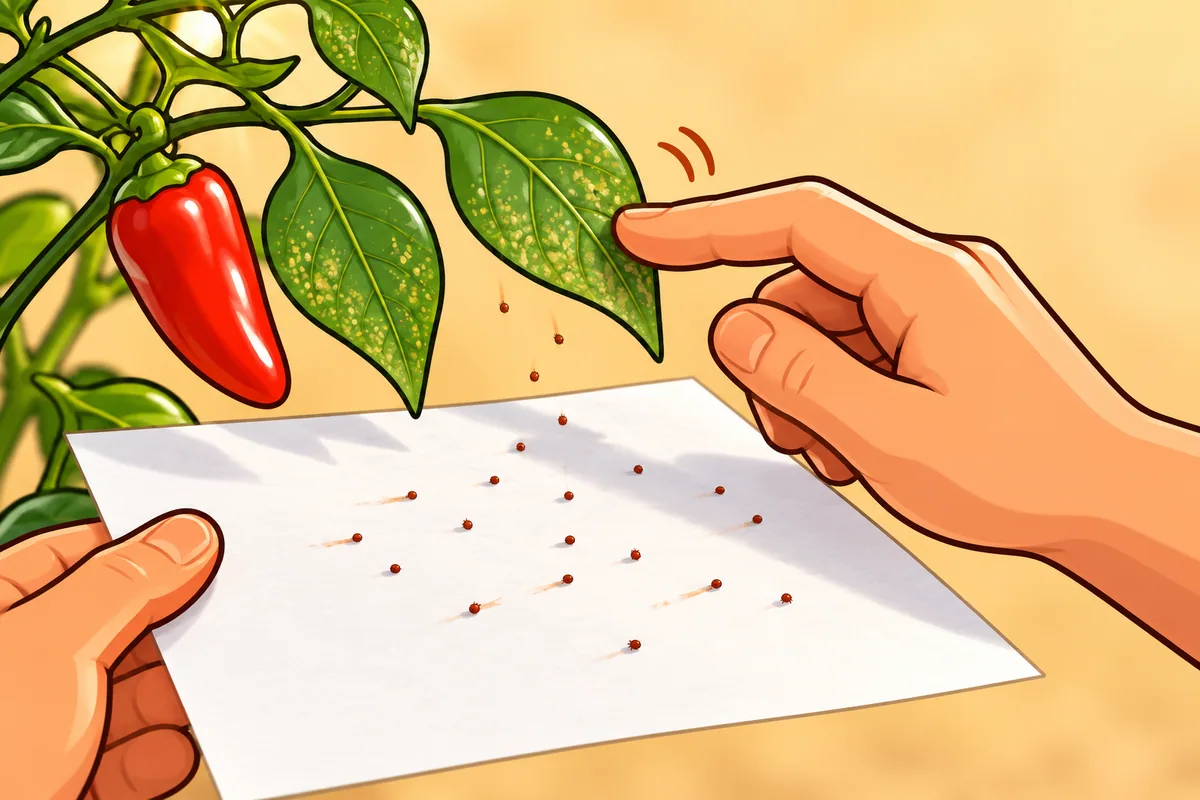
If your paper stays clean and you find no silk, hold off on any treatment. The mites are sometimes gone by the time you notice the damage, and UC IPM says your plant then recovers on its own1.
Spider mites or something else under the leaves?
Several pests hide under pepper leaves, and each one wants a different fix from you. Before you spray, hold what your lens shows against the rows below. Leaves that curl downward with a coppery shine on new growth point you somewhere else entirely.
Spider mites
Webbing is the one sign that settles it for you: no other common pest under a pepper leaf spins silk. UC IPM uses it to tell spider mites from aphids and thrips, which feed in the same spot1. If you find soft insects in clusters instead, your fixes are on the aphids on peppers page, and leaves that only turn yellow without speckles have other causes.
Could broad mites be curling your pepper's new leaves?
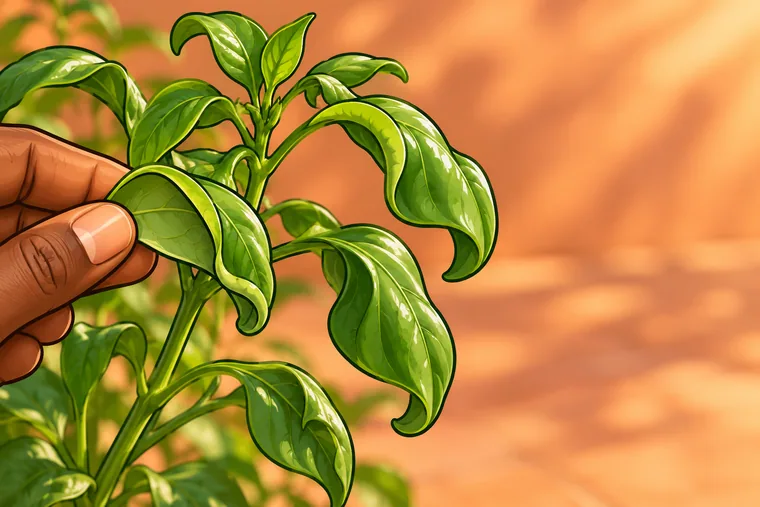
If the new growth at the top is twisting and the old leaves look fine, check for broad mites before you treat for spider mites. They are a different pest with a different pattern, and UF/IFAS says they are very difficult to see without a 10X or stronger hand lens4. A female is only about 0.2 mm (0.008 inch) long, a fraction of the size of the spider mite adult you can just make out with your eye4.
| Clue | Spider mites | Broad mites |
|---|---|---|
| Where the damage starts14 | Older and middle leaves, on top as pale dots | Newest leaves, buds and small fruit |
| Leaf shape14 | Flat, speckled, later bronze and yellow | New leaves turn downward and look coppery or purplish; tips are distorted |
| Webbing14 | Fine silk on the underside | None mentioned |
| Adult size14 | Under 1/20 inch | About 0.008 inch |
| Eggs14 | Round and see-through | 30 to 76 per female; they hatch in 2 to 3 days |
UF/IFAS Extension names the damage on pepper as distorted young leaves and buds, stunted growth, and fruit that drops or discolors5. It also warns that the injury looks like herbicide injury, a boron shortage or other physical disorders, so a plant with twisted tips and no pest on the paper tap is a good reason to look closer4. If the paper stays clean and the tips still curl, the cause is something other than mites.
For a home garden, UF/IFAS Extension lists horticultural oil, insecticidal soap, neem oil and sulfur, and it says to delay spraying until new growth appears, because mites feed in hidden spots and the old damage stays on the leaf after they are gone5. Spray the new growth where the mites hide, not the old leaves. The Featured Creatures page also says insecticidal oils or soaps are usually just as effective as the labeled miticides4.
Why mites explode on peppers in midsummer
Heat speeds them up. Spider mites breed fast in hot weather, build up from June through September, and can finish a generation in less than a week when food and temperature suit them1. So a leaf with a few dots on your Monday check can carry a colony by the weekend.
- EggRound and see-through, cream before it hatches
- LarvaHatches with six legs
- First nymphEight legs from here on
- Second nymphLooks like a small adult
- Adult femaleUnder 1/20 inch; lays the next eggs under the leaf
- Back to Egg
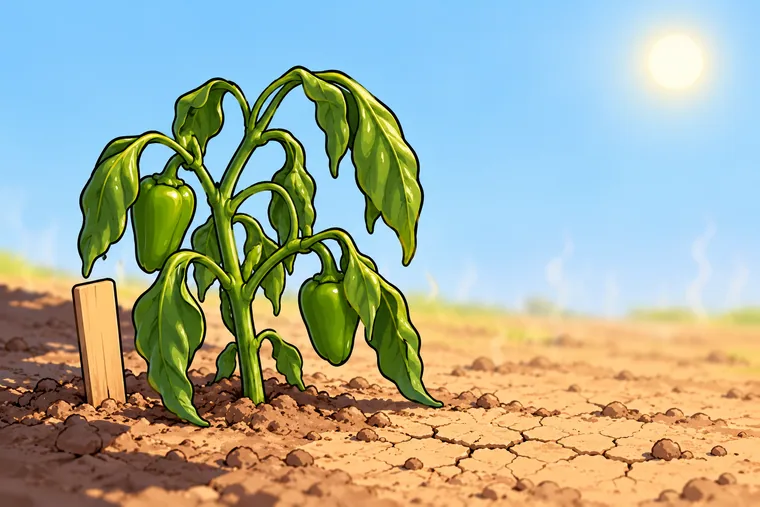
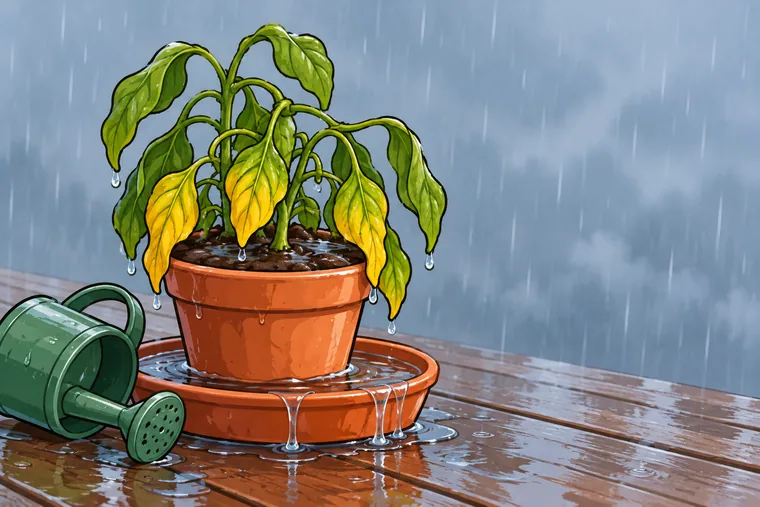
Dust and dry soil make it worse for you. UC IPM finds mites first on plants next to dusty roads and at the margins of gardens, and calls water-stressed plants highly susceptible1; Penn State says the same for peppers2. If you grow a pepper in a small pot on a hot balcony, it checks both boxes, so steady watering through the hot weeks is part of your mite control.
The colony also spreads itself. As your leaves decline, the females ride wind currents to the next plant1, so the pepper beside a bad one is the next one you check. Numbers often crash in late summer as predators catch up, the weather cools or rain falls1, which means your patience counts for something too.
How to get rid of spider mites on peppers, gentlest first
Start with water and give it a few days. UC IPM and Penn State both put a hard spray of water first, and UC IPM keeps soaps and oils for when water alone does not hold your numbers down12.
- 1
Confirm the mites
Do the paper tap. UC IPM asks you to be sure mites are present before you treat anything.1
- 2
- 3
Water the plant deeply
A pepper you keep out of drought stress suffers less mite damage.6
- 4
Leave the predators alone
Predatory mites, sixspotted thrips, lacewing larvae, minute pirate bugs and the spider mite destroyer lady beetle all feed on spider mites in your garden.1
- 5
Then soap or oil, if you need more
Insecticidal soap, or an oil such as neem, canola or a horticultural oil, sprayed so you cover the undersides completely; repeat as needed.1
- 6
Test before a full spray
Try the product on part of the foliage several days ahead, since soaps and oils can injure some plants.1
If water alone does not hold the mites down, these are the two spray types that step five names.
Sprays worth buying for spider mites
Try water first; these two are what UC IPM names when you need more.
Insecticidal soap spray
You spray it on the undersides of the leaves when water alone has not held the mites down.
- UC IPM prefers soap or insecticidal oil when a treatment is needed
- Kills only the mites it touches
- Do not use on water-stressed plants or above 90°F
- May injure some plants, so test a small part first
- Where: Undersides of the leaves
- Max temp: Not above 90°F
- Best for: Mites you can reach with the spray
- View on Amazon: Neem or horticultural oil spray
Neem or horticultural oil spray
You choose an oil when you want the other option UC IPM accepts, and you cover the undersides completely.

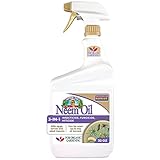
As an Amazon Associate we earn from qualifying purchases. We choose product types from what their labels and extension sources say; the commission does not change what we recommend. Our affiliate disclosure
Coverage is the whole game with soap or oil. Both kill only the mites they touch, so if your spray wets the tops of the leaves and misses the undersides, it does little1. Spray on a cool day, after your plant has had a good drink.

Hold the nozzle low and point it up, so your water hits the leaf from below and tips it over. A spray from above only rinses the tops, and the mites ride it out under the leaf. Early in the day is the easy time for it, because your leaves dry before night.
If you buy predatory mites, UC IPM's rule of thumb is one predator for every 10 spider mites, released where your damage is worst. In a heavy infestation, UC IPM knocks the pests down first with a soap spray, then releases the predators, which starve or leave if no pest mites remain1. For a few pepper plants, the predators already in your garden usually do that job once you stop broad sprays.
Pepper Geek covers how to spot, prevent and treat spider mites on pepper plants, so you get a second look at the problem next to the water-first order on this page.
Is the orange dot on your leaf a predator or a mite?
A bright orange, pear-shaped mite that races across the underside is more likely a predator than a pest. UC IPM describes the Phytoseiulus predatory mite as pear shaped, bright reddish to orange, and about 1/50 inch long, faster and slightly larger than its prey, with oval eggs about twice the size of spider mite eggs8. If you see one, leave it alone, because an adult eats 5 to 20 spider mite eggs or mites a day8.
Temperature decides whether they keep up with the mites. The same page gives egg to adult at about 25 days at 59°F and 5 days at 86°F8. A spider mite generation can take less than a week in hot weather1, so predators nearly match the pest in a heat wave and fall far behind in a cool spring.
| Temperature | Phytoseiulus predator | Spider mite |
|---|---|---|
| 59°F (cool spring)8 | About 25 days | Not given by temperature |
| 86°F (July afternoon)18 | About 5 days | Under 1 week in favorable heat |
What does this mean for your plants? When you buy predators, release them in warm weather, soon after a first spray has cut the pest numbers. UC IPM says these predators disperse or starve once the spider mites are gone, so you may need to release them again next year8. It also asks you to avoid broad-spectrum, persistent insecticides and miticides for every pest, not just mites8. That is the same reason the next section keeps harsh sprays out of your garden.
Which sprays make pepper mites worse?
The broad insecticides you might reach for against other pests. Spider mites frequently flare up after sprays of some organophosphates, some pyrethroids and carbaryl, because those kill the mites' enemies and can even speed up mite breeding1. Penn State warns that certain chemical insecticides raise mite numbers on peppers2.
So if your peppers also carry hornworms or beetles chewing holes, pick the narrow fix for that pest instead of a broad spray. Utah State has you pick hornworms off by hand and saves Bt for heavy infestations9, which leaves your mite predators alive.
Do spider mites kill pepper plants?
A light infestation does not, and a heavy one can. A few mites are usually no reason for you to worry, but numbers high enough to show leaf damage can hurt soft-stemmed plants, and on annual vegetables the lost leaves cut yield and leave fruit open to sunburn1. Your pepper is that kind of plant: its pods depend on leaf cover.
The good news comes from the same page: once the mites leave, plants often recover1. Your badly bronzed leaves stay marked, but new growth comes in clean. The fruit you might lose is the fruit that hung under stripped branches in a hot spell, which the sunscald guide covers.
Can mites follow a pepper you bring indoors?
Yes, if you carry them in on the leaves. In mild places spider mites keep feeding and breeding all year on plants that hold green leaves through winter, and houseplants sit on UC IPM's list of their hosts1. A pepper you dig up in fall and keep on a sunny sill is exactly that kind of plant.
Before you bring yours inside, do the paper tap on several leaves and rinse the plant hard with water, undersides included. Indoors you lose the rain and the predators that knock numbers down outside1, so a light case you ignore in September can be a webbed plant by midwinter. Check the undersides every week or two while it lives on your sill.
Keeping mites off peppers next summer
Most of this is the care you give your peppers anyway, aimed at the two things mites love: dust and drought.
- Keep your soil evenly moist through the hot months; drought-stressed plants draw mites.26
- Keep dust down with mulch or ground cover, and wet dusty paths now and then.1
- Rinse your plants with water in midseason to wash dust off the leaves.1
- Skip broad insecticides for other pests, so the predators stay.1
- From June on, turn over a few leaves on each plant once a week, starting with the plants nearest a path or a hot wall.1
Your next step is the weekly look under the leaves. Put it on the same day as your other summer jobs in the pepper care calendar, and use the pests and diseases picker if what you find under the lens is not a mite.