On this page
- 1Why are my pepper leaves turning yellow?
- 2Did the old leaves or the new leaves yellow first?
- 3How do you tell the yellow patterns apart?
- 4How do you fix a nitrogen shortage?
- 5Is your soil pH behind the yellow?
- 6Can overwatering turn pepper leaves yellow?
- 7Are yellow leaves with brown spots bacterial leaf spot?
- 8Could a virus be yellowing your plant?
- 9Why do potted peppers turn yellow?
- 10How do you take a soil sample for a yellowing plant?
- 11How much do you feed a yellowing plant?
- 12Why do pepper seedlings turn yellow or purple?
- 13Will yellow pepper leaves turn green again?
- 14Fixing yellow leaves, in order
- 15Sources
Why are my pepper leaves turning yellow?
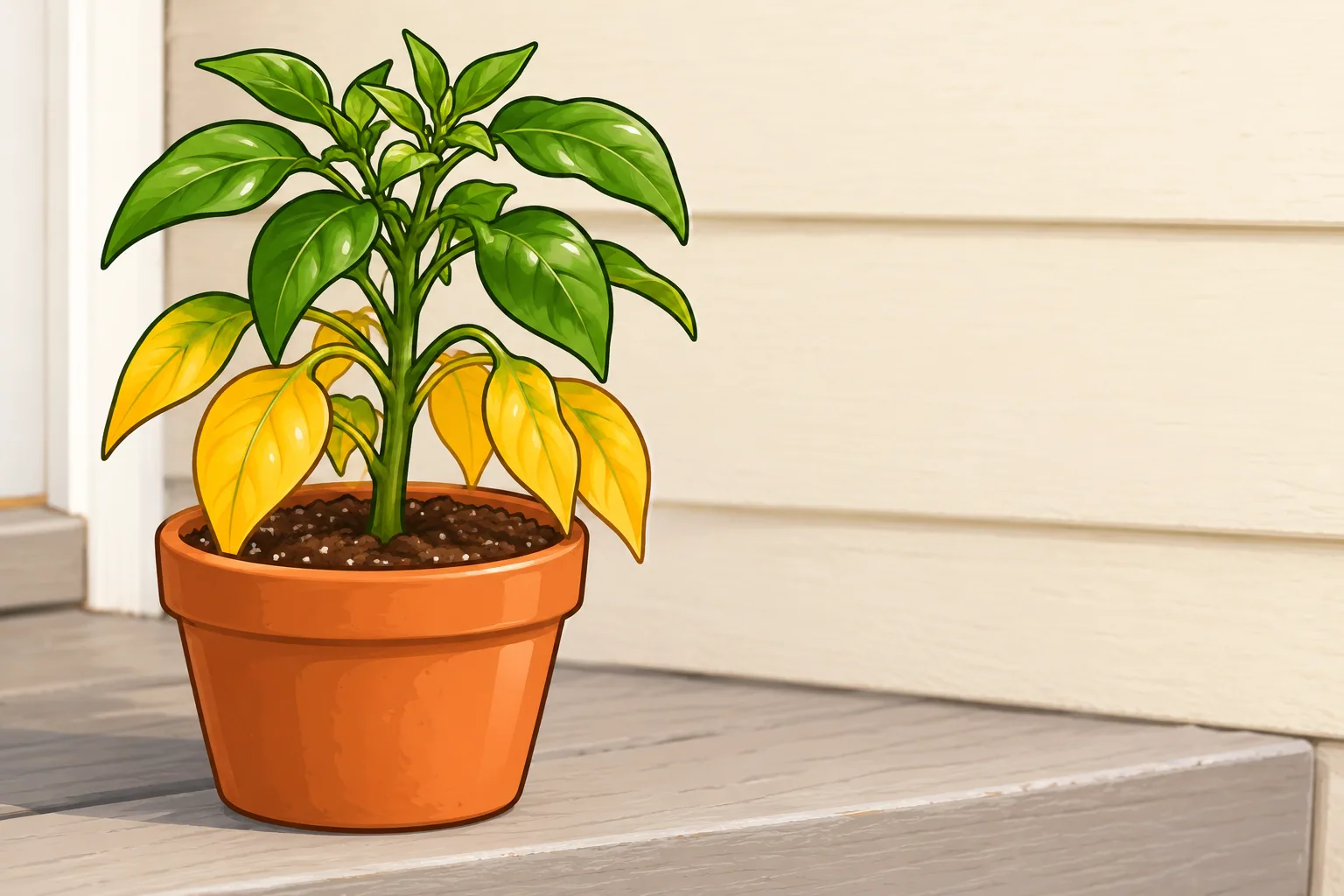
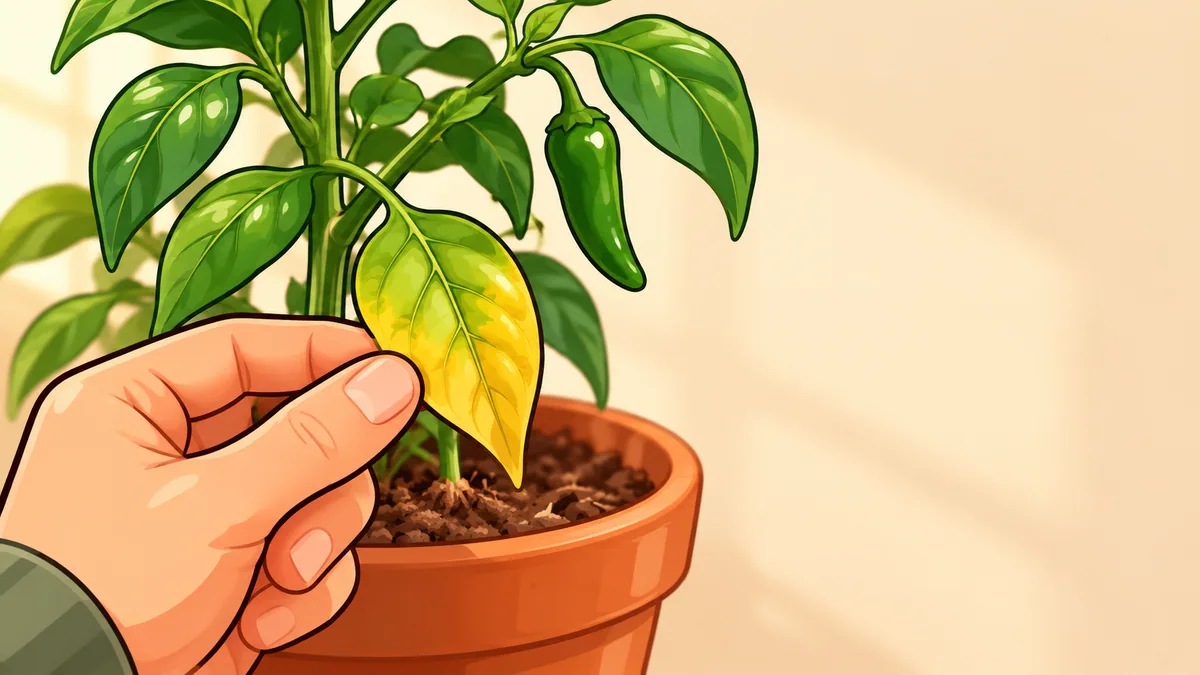
Look at where the yellow starts on your plant. On the lowest, oldest leaves first, it usually means your plant is short of nitrogen and is moving what it has to new growth1. Yellow in other places, or with other signs, points to the soil pH, a pest or the roots.
| Where the yellow shows | What else you see | Likely cause | Fix |
|---|---|---|---|
| Oldest, lowest leaves first, then upward12 | Slow, weak growth, thin stems | Nitrogen shortage | Liquid fertilizer at the base of each plant or on the leaves |
| Between the veins of older leaves, veins stay green3 | May go on to curling, dead spots and early leaf drop | Magnesium shortage | A soil test before you add anything |
| Between the veins of new leaves, veins stay green24 | Often on soil above pH 7.0 | Iron held back by high pH | Test the pH; a foliar spray of ferrous sulfate or chelated iron corrects it |
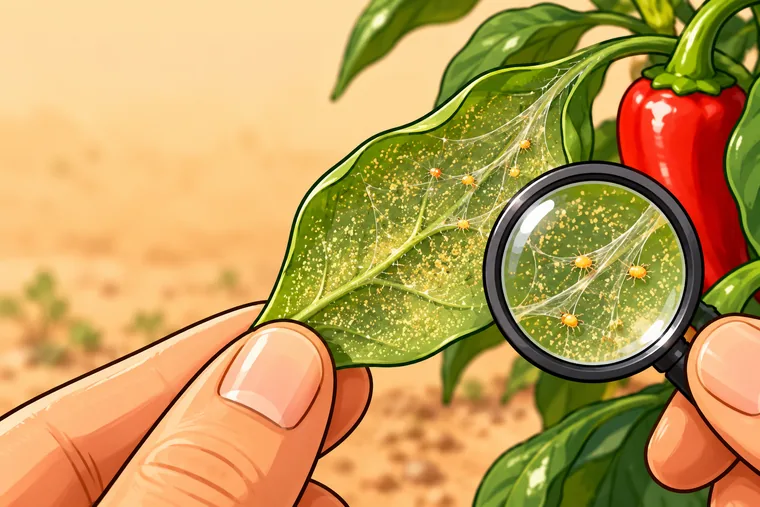
| Fine yellow dots, leaves may look bronzed5 | Webbing, tiny moving dots under the leaves | Spider mites | Strong water jet; insecticidal soap if they persist |
| Yellow and distorted leaves5 | Soft insects and sticky honeydew underneath | Heavy aphid infestation | Water jet, insecticidal soap or neem or canola oil |
| Yellowing foliage with the upper leaves wilting56 | Red-brown streaks inside the stem | Fusarium wilt, favored by wet soil | Well-drained soil, no waterlogging; rotate and choose resistant varieties |
| Light green, mottled, curled leaves6 | Stunted plant, misshapen fruit | Virus | Pull the plant; control aphids and weeds |
| Yellow leaves on a plant that has stopped growing6 | Stunted growth | Curly top virus or a wilt disease | No cure: pull the plant; set out a few spares next year |
Read the pattern before you feed: fertilizer fixes only the first row, and too much of it brings on the aphids in the fifth. UF/IFAS notes that too much nitrogen makes plants more inviting to aphids and whiteflies7.
Did the old leaves or the new leaves yellow first?
That one question splits the nutrient causes in half for you. Nitrogen and magnesium move inside the plant, so a short plant pulls them out of its old leaves to feed the new ones, and the old leaves yellow first13. Iron stays put, so its shortage shows on the young leaves3.
- Oldest, lowest leaves firstNutrients that move to new growth
- Even yellow, veins and allNitrogen shortage (Iowa State)
- Yellow between green veinsMagnesium shortage (Iowa State)
- Yellow and scorch along the edgesPotassium shortage (Iowa State)
- Newest leaves firstNutrients that stay put
- Yellow between green veinsIron held back by soil above pH 7.0 (UMD)
Sources for this line1. Iowa State University Extension and Outreach, Yard and Garden2. University of Maryland Extension3. Iowa State University Extension and Outreach, Yard and Garden
So two of your leaves with the same green-veined pattern can mean two different things. On your oldest leaves it points to magnesium; on the tip leaves, to iron and a high pH. Yellow that starts at the edges of your old leaves, with a scorched brown rim, fits potassium instead3; that one, too, calls for a soil test rather than a guess at the garden center. Iowa State also warns that the tissue between the veins can brown fast with magnesium shortage, often within about a day3, so look again tomorrow if you are unsure.
How do you tell the yellow patterns apart?
Hold one of your yellow leaves up to the light and look at the veins. A nitrogen-short leaf fades evenly, veins and all, while iron chlorosis leaves the tissue beside the veins green2. Mite damage looks different again: fine yellow stippling rather than a solid color5.
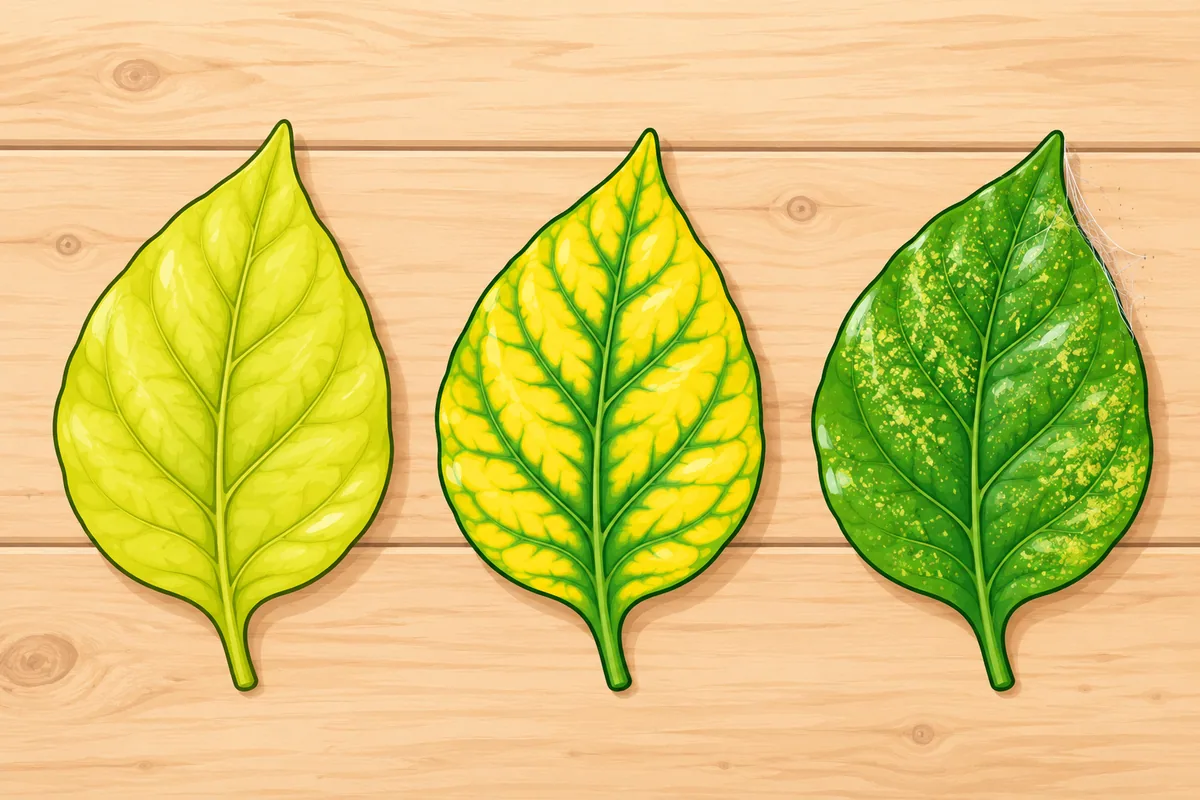
Spider mites hide until the damage shows. Penn State says you usually notice them only once the leaves show damage, that they thrive in dusty conditions and they hit water-stressed plants harder5. A sheet of white paper held under a branch while you tap it shows you the moving dots.
Pepper Geek walks through six reasons pepper leaves turn yellow and how to fix each, a handy second view of the patterns in the table above.
How do you fix a nitrogen shortage?
Feed your plant, lightly, and only once you have ruled out pests and wet roots. UMD Extension says to apply a liquid fertilizer at the base of each plant or on the foliage when you see deficiency signs, and to test the soil pH and nutrients every three years2. UMD adds that nitrogen in particular may run short early in the growing season.
Time a leaf spray well. UMD says the best time for a foliar feed is early morning or early evening, when the leaf pores stand open2, so you skip the midday sun.
Stop once the new growth comes in green. Too much nitrogen gives you a bushy, leafy plant that is slow to bear9; the pepper fertilizer guide has the side-dress amounts and timing. Iowa State notes that a long or severe shortage leads to leaf drop and lower yields1, so a light feed now beats a heavy one in August.
Is your soil pH behind the yellow?
Often, when the leaf veins on your plant stay green. UMD calls pH 6.5 ideal for vegetables and says plants still produce from 6.0 to 7.02; UC IPM keeps pepper soil at 6.0 to 6.510. Above 7.0, iron gets locked up and the new leaves yellow between their veins2.
For iron chlorosis, extra nitrogen will not help you. UF/IFAS corrects the yellowing with a foliar spray of ferrous sulfate or EDDHA-chelated iron4, and on naturally alkaline soil recommends a fertilizer with micronutrients7. To bring pH down over the longer run, UF/IFAS uses about 1 pound of sulfur per 100 square feet for one pH point7, but your soil test report sets the amount.
Magnesium has no fix in the sources we read for this guide. Iowa State describes the signs but gives no treatment, so a soil test that measures magnesium is your next step before you add Epsom salt or anything else3.
Can overwatering turn pepper leaves yellow?
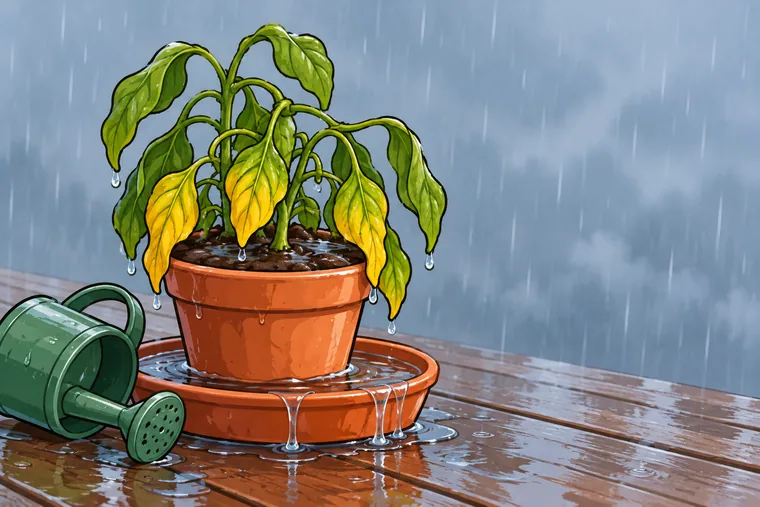
Yes, in two ways: through roots that run short of air, and through the root diseases that wet soil invites. Utah State's overwatering guide lists leaf yellowing, wilting and leaf loss among the signs of saturated soil, which pushes the air out and kills roots11. Utah State's own answer to yellow, stunted pepper plants names wilt disease and says to avoid overwatering to prevent it6.
Fusarium wilt
Phytophthora root and crown rot
- Yellowing foliage, upper leaves wilting, red-brown discoloration inside the stem5SignsRapid wilting and death; dark, water-soaked roots with few side roots12
- Favored by high soil moisture5WhenAfter a warm, wet spell; saturated soil for 5–6 hours can be enough12
- Well-drained soil and no waterlogging; rotation and resistant varieties56FixRaised beds, careful drip watering, a 2-year rotation away from peppers, tomatoes and eggplants12
Neither has a spray fix in these guides, so your work goes into the soil. Dig up a wilted plant and look at the roots: UC IPM describes rapid wilting above roots gone dark brown and water-soaked12. The prevention is the same for both: water deeply and less often, 1 to 2 inches a week in the ground, and let the soil drain between soaks, as the guide to watering peppers lays out6.
Are yellow leaves with brown spots bacterial leaf spot?
If your leaves have small brown spots with a yellow edge, check for bacterial spot before you feed. UF/IFAS says the first signs are water-soaked spots on the underside of the leaf, within 3 to 4 days of infection, with a dark-green halo around a tan lesion13. The spots then join up into large patches of yellow and brown tissue, and your leaves often drop early even when the damage looks moderate13.
A nutrient shortage
Bacterial spot
- An even or vein-patterned fade across a whole leafSources for this line1. Iowa State University Extension and Outreach, Yard and Garden2. University of Maryland Extension13. UF/IFAS Extension (EDIS), McAvoy, Roberts, JonesWhat you seeSpots with a halo, merging into yellow and brown patchesSources for this line1. Iowa State University Extension and Outreach, Yard and Garden2. University of Maryland Extension13. UF/IFAS Extension (EDIS), McAvoy, Roberts, Jones
- Oldest leaves for nitrogen and magnesium, newest for ironSources for this line1. Iowa State University Extension and Outreach, Yard and Garden3. Iowa State University Extension and Outreach, Yard and Garden13. UF/IFAS Extension (EDIS), McAvoy, Roberts, JonesWhere it startsUnderside of leaves, from the spots outwardSources for this line1. Iowa State University Extension and Outreach, Yard and Garden3. Iowa State University Extension and Outreach, Yard and Garden13. UF/IFAS Extension (EDIS), McAvoy, Roberts, Jones
- Cold soil in spring, or a pH above 7.0213Weather clueWarm, wet weather and nights above 65°F213
- Yes, once you match the nutrient213Will a feed help?No. Feeding a diseased leaf grows more leaf for the bacteria213
Water carries the bacteria from plant to plant, in rain, heavy dew and splashes, and the pathogen can also arrive on seed, so you can bring it home in a nursery tray13. You cannot cure the disease with a spray at home, and you may not need to try. UF/IFAS says copper bactericides have limited effect because many strains tolerate copper, and it points you to resistant varieties, crop rotation and staying out of the planting while the foliage is wet13. Water at the base, and pick or tie your plants only after the leaves dry.
Could a virus be yellowing your plant?
If your plant has stopped growing, yes. Utah State's answer to yellowing leaves with stunted growth names curly top virus or a wilt disease, says to destroy infected plants, and suggests you set out a few extra plants to cover the losses6.
Insects carry these viruses from plant to plant, so knowing the carriers tells you what to watch. New Mexico State names three groups for the pepper viruses common there14:
- Leafhoppers, including the beet leafhopper that carries curly top.
- Thrips, which spread tomato spotted wilt.
- Aphids, which spread alfalfa mosaic and pepper mottle.
For curly top, New Mexico State covers young pepper plants with row covers early in the season to keep the beet leafhopper off15. Utah State adds the habits that slow every virus: control aphids, pull nearby weeds, and avoid tobacco products while you handle the plants6.
Why do potted peppers turn yellow?
Usually because the pot ran out of food or stayed wet. Potting mix holds little fertilizer, so UW–Madison adds a slow-release fertilizer if your mix has none and follows the label from there16. Once a big plant carries fruit in summer heat, it needs water daily16, and every soaking that runs out of the drainage hole carries some of the feed with it.
A wet pot yellows for the opposite reason. UW–Madison wants a drainage hole and mix all the way to the bottom, because a layer of rocks slows drainage16. If your pot stays heavy and wet for days, fix the drainage before you add a feed, or the roots cannot take it up.
How do you take a soil sample for a yellowing plant?
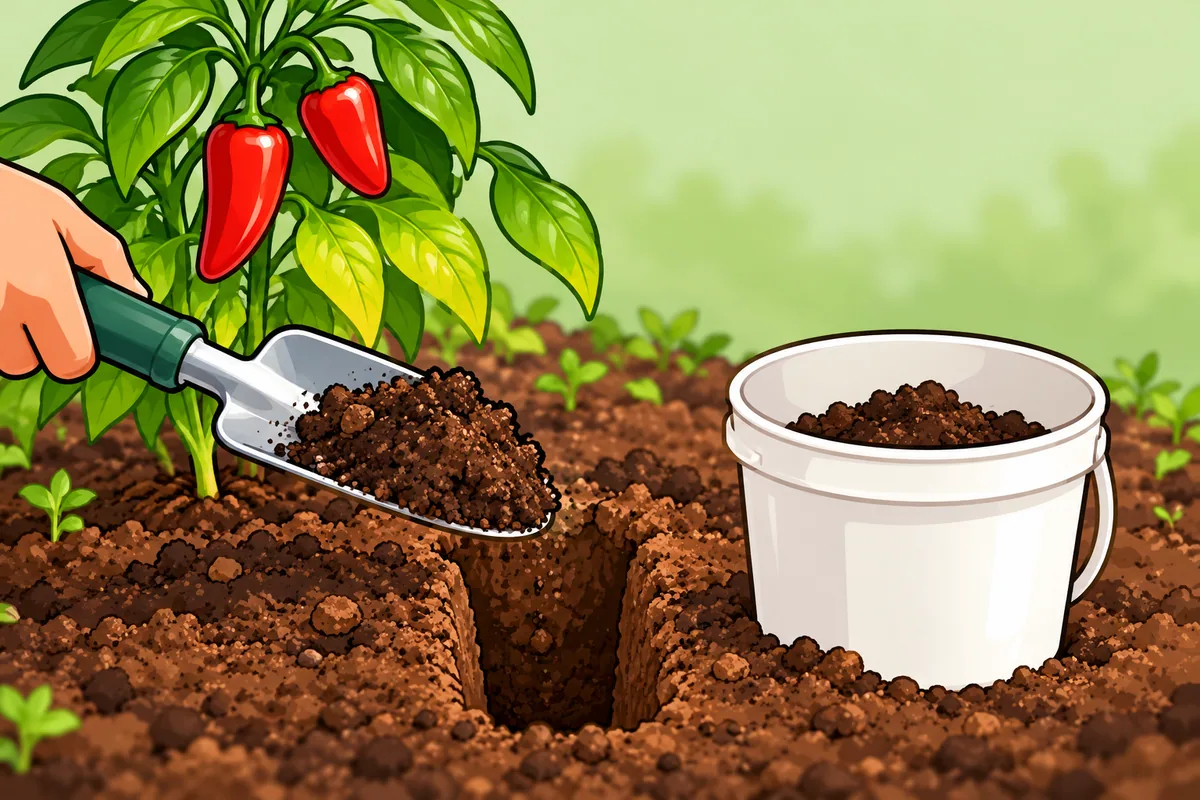
Five minutes of digging gets you a pH and nutrient report that settles most of your guesses above. Colorado State's soil lab gives the steps for a vegetable bed: take 10 to 15 small samples from the surface down to 6 or 8 inches, mix them in a clean bucket, and send about 1 pound of the mixed soil17.
- 1
Pick the area
Send a separate sample for any part of your garden with a different crop history, soil color or fertilizer history.17
- 2
Dig 10 to 15 small samples
Use a stainless steel trowel, spade or probe, and go 6 to 8 inches deep. Clear away litter such as crop residue, grass and wood chips first.17
- 3
Mix them in a clean bucket
Break up the clumps and stir your samples into one composite.17
- 4
Bag about 1 pound and label it
Write your name, the depth and a sample name on the bag, and match the name on the submission form.17
Ask the lab for pH, nitrogen, magnesium and iron if it offers them, and check your own state's extension lab for its forms and fees. The same page recommends sampling in early spring before planting or fertilizing17, so you can take a sample now to diagnose a sick plant and another in spring to plan next year. Compare your report with the pH range in the section above before you buy any amendment.
How much do you feed a yellowing plant?
Less than the yellow tempts you to give. Utah State side-dresses each plant with just 1/4 tablespoon of 21-0-0, placed 6 inches from the stem and watered in6. For a row of six plants that is 1 1/2 tablespoons in total, about one heaped spoonful.
A liquid feed works faster for a plant that already shows the yellow, which is why UMD uses one at the base of each plant or on the leaves2. Mix it to the label, give it once, and wait a week or two for green new growth before you give another. Extra nitrogen brings the aphids from row five of the table7, so a second heavy feed swaps one problem for another.
Why do pepper seedlings turn yellow or purple?
Usually cold soil, while your seedlings are still young. UMD Extension says seedlings and transplants often run short of nutrients in early spring because their roots are small and cool soil slows the release of nutrients2. It recommends a balanced soluble fertilizer at the base of each plant or sprayed on the leaves, mixed to the label.
Purple is the phosphorus version of the same problem you may see in spring. UMD sees purple leaves on young plants in cold spring soil and uses a starter fertilizer, which carries a higher share of phosphorus, at planting2. Your seedlings usually green up once the soil warms and the roots spread, so wait for soil of at least 60°F before you plant them out. Penn State germinates pepper seed at a soil temperature of 70 to 85°F5, so if your tray sits on a cold windowsill, you can warm it before you feed it.
Will yellow pepper leaves turn green again?
Do not judge your fix by your old leaves. None of the extension pages read for this guide says a yellow leaf greens up again, so watch the new growth at the tips instead.
- New leaves come in green after a feed. The fix worked. Stop feeding nitrogen and let the plant carry on; the yellow bottom leaves may drop on their own, as Iowa State expects with a long shortage1.
- New leaves come in yellow between green veins. Your feed did not reach the problem. Test the pH, because iron held back by soil above 7.0 needs a different fix2.
- The whole plant keeps yellowing and wilting. Look at the roots and the stem. Red-brown streaks inside the stem or dark, soft roots point to a wilt or root rot512, and no feed fixes those.
You can pick off badly yellowed leaves that touch the soil; it tidies the plant and costs it little. If the leaves are also curling, the pests and viruses in the guide to curling pepper leaves may be the cause.
Fixing yellow leaves, in order
Work down this list; each check costs you less than the next.
- Turn leaves over and look for aphids, mites or webbing before you add anything.5
- Feel the soil. If it stays soggy, stop watering and fix the drainage before you feed.512
- Yellow from the bottom up on drained soil: give one liquid feed at the base of each plant.2
- Yellow between green veins on new leaves: test the soil pH; above 7.0, treat for iron.2
- Yellow between green veins on old leaves: ask the soil lab to test magnesium too.3
- Mottled, twisted leaves: pull the plant so a virus cannot spread.6
Give each step a week or two before you move to the next one, and watch the newest leaves at the top of your plant. They show you first whether the change worked.