On this page
- 1Why is your pepper plant wilting?
- 2Three checks that sort a drooping pepper
- 3Heat wilt on hot afternoons
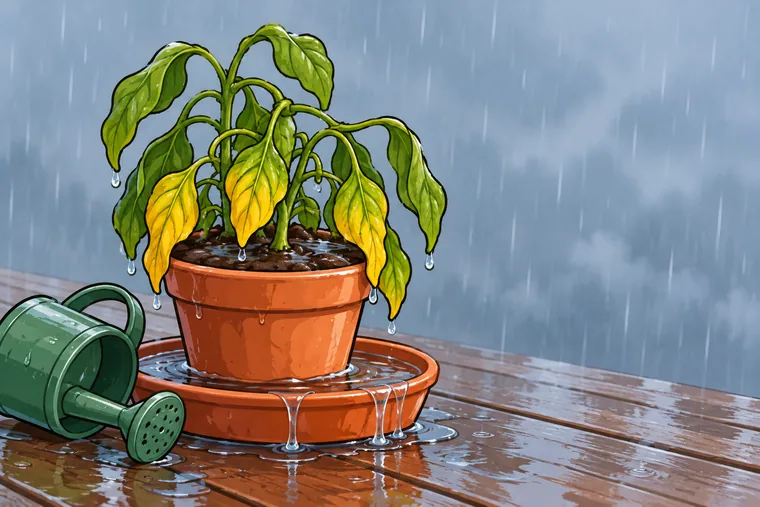
- 4Can a pepper wilt from too much water?
- 5Fusarium, Verticillium and other wilt diseases
- 6Is a glass of water enough to test for bacterial wilt?
- 7Could root-knot nematodes be wilting your pepper?
- 8Wilting right after transplanting
- 9Why a pepper in a pot wilts faster than one in the ground
- 10How to revive a wilting pepper plant
- 11Sources
Why is your pepper plant wilting?
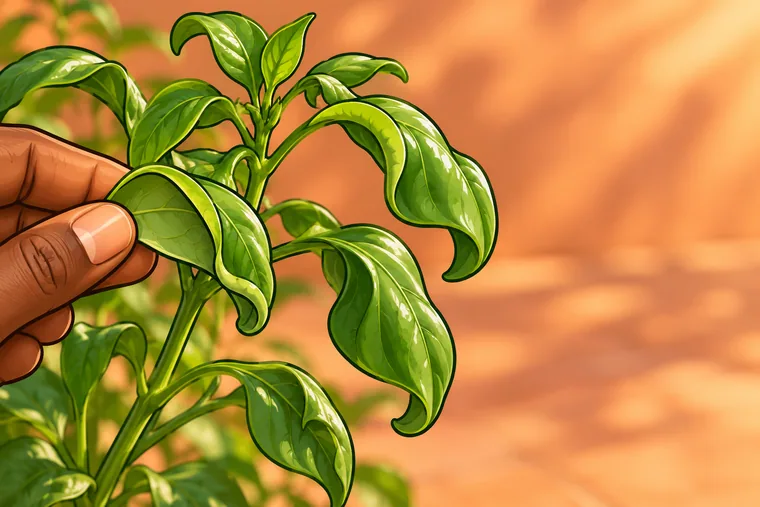
Your pepper wilts when its leaves lose water faster than its roots can send it up. That happens when your soil holds too little water, when the heat pulls it out faster than usual, or when the roots or the stem's water channels stop working. The table sorts the eight causes you are most likely to meet.
| Cause | Soil | When it shows | The clue | What to do |
|---|---|---|---|---|
| Dry soil12 | Dry below the surface | Any day, worst in heat | Soil dry a finger deep; light sprinkles only wet the top | Soak the root zone; about 1 inch a week if rain does not |
| Heat13 | Moist | Hot afternoons | Droops in the hottest hours; hot nights slow pods too | Afternoon shade and a cooling spray of water |
| Too much water, Phytophthora root rot45 | Wet or soggy | After a warm, wet spell | Dark, water-soaked roots; dark lesion at the soil line | Stop watering; raised bed, drip line |
| Fusarium wilt6 | Often moist | Spreads over days | Upper leaves wilt and yellow; red-brown streaks inside the stem | Well-drained soil; pull badly hit plants |
| Verticillium wilt5 | Moist | Through the season | A common wilt of chile in New Mexico | Rotate the bed, for example with sweet corn |
| Southern blight67 | Moist | Sudden | White fungal growth at the soil line, then tan to brown pellets | Remove the plant; the pellets survive in soil |
| Transplant shockSources for this line1. University of Minnesota Extension2. UC Statewide IPM Program, University of California5. New Mexico State University Cooperative Extension Service | Moist | First days after planting | Only new transplants droop | Plant in late afternoon or on a cloudy day; shade the first week |
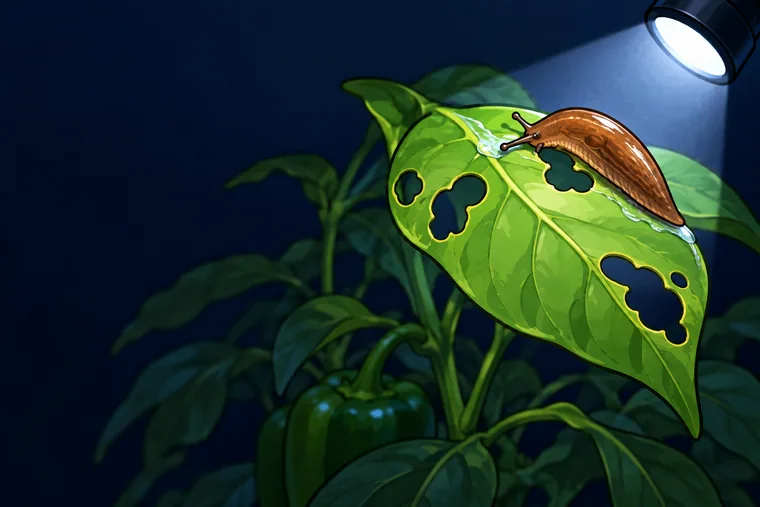
| Cutworms or flea beetles89 | Any | Spring, on young plants | A stem chewed at the soil, or leaves riddled with tiny holes | Collars; row covers |
Clemson adds bacterial wilt to the list and calls it, with bacterial leaf spot, one of the two most troublesome pepper diseases in home gardens7. It belongs in the same group as the fungal wilts: your soil is moist, your plant still droops, and you have no fix once a plant has it.
The last row matters most on young plants. UMN says severe flea beetle feeding can leave plants wilted or stunted9, so if your droopy seedling also has leaves full of tiny pits, the holes in the leaves are your lead, not the water.
Three checks that sort a drooping pepper
Do these in order, and stop when one gives you the answer. Each check takes you under a minute and splits your list in half.
- drySoil dry 2 inches downThirst, often made worse by heat
- wetSoil wet or soggyToo much water; look at the roots
- moistSoil evenly moistCheck the time of day and the stem
- Only on hot afternoonsHeat wilt; recovers by evening
- Droops morning and evening tooSplit a stem of a badly hit plant
- Brown streak inside the stemA wilt disease such as Fusarium
Sources for this line1. University of Minnesota Extension4. UC Statewide IPM Program, University of California6. PlantVillage, Penn State University10. Utah State University Extension
The first check is the one most people skip. A wilted leaf looks the same whether the soil is bone dry or soaking, so the soil, not the leaf, tells you which way to go. Push your finger in to the second knuckle at the base of the plant.
The time of day is your second check. If your plant droops at the hottest hour and stands up again after sunset, it is coping with heat; if it is still limp in the cool of the morning, you are looking at a root or stem problem.
The third check is the stem, and you do it only on a plant that keeps wilting in moist soil. Utah State describes wilt diseases as leaves wilting from the bottom of the plant up, with the plant often dying10, and Penn State describes the red-brown color inside the stem's water tissue in Fusarium wilt6.
Heat wilt on hot afternoons
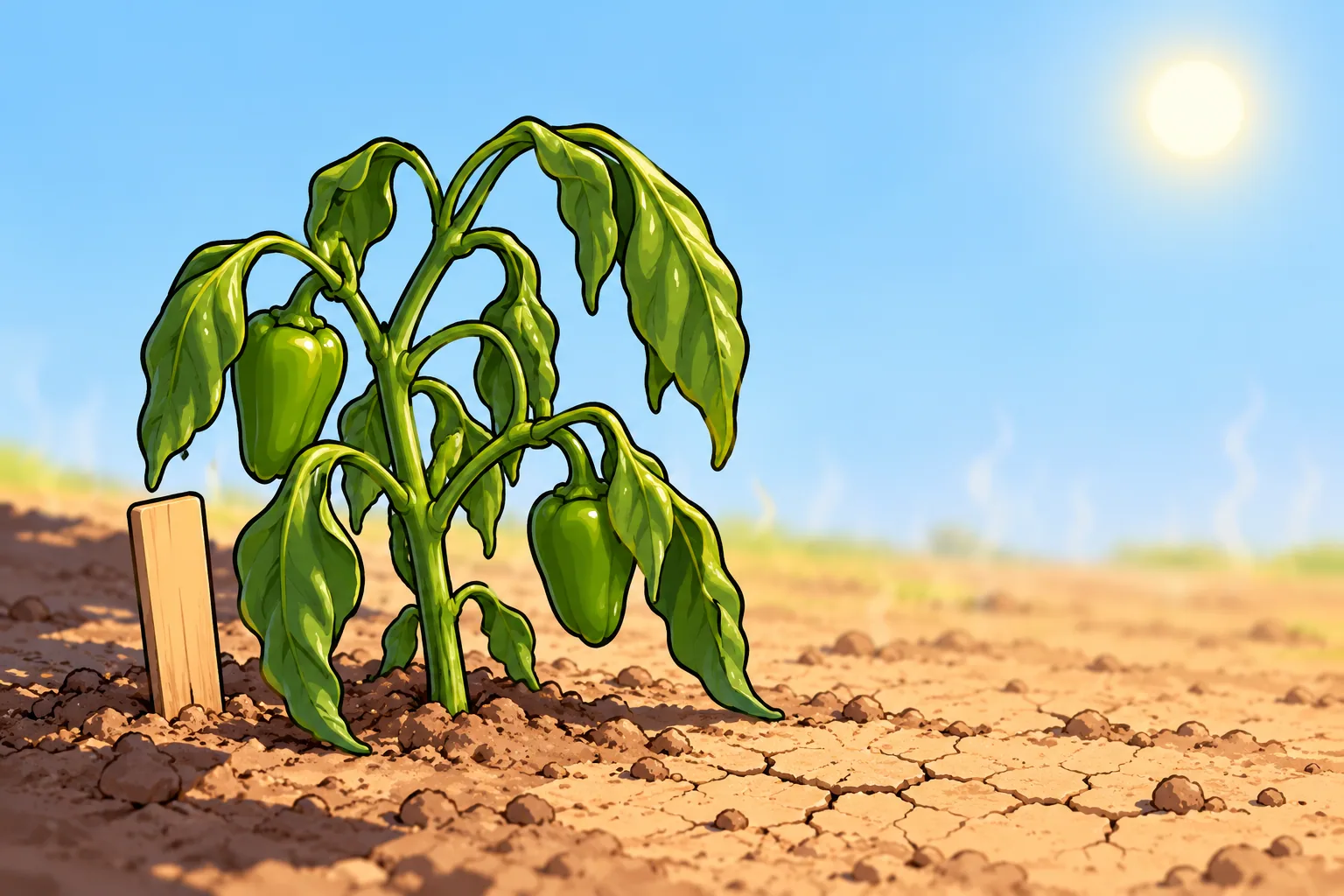
Some afternoon droop is normal in a heat wave, and you do not need to fix it. UMN says dry soil, temperatures above 90°F, or nights below 60°F or above 70°F can weaken pepper growth1, and Maryland notes that hot evenings above 75°F slow or stop pod production3.
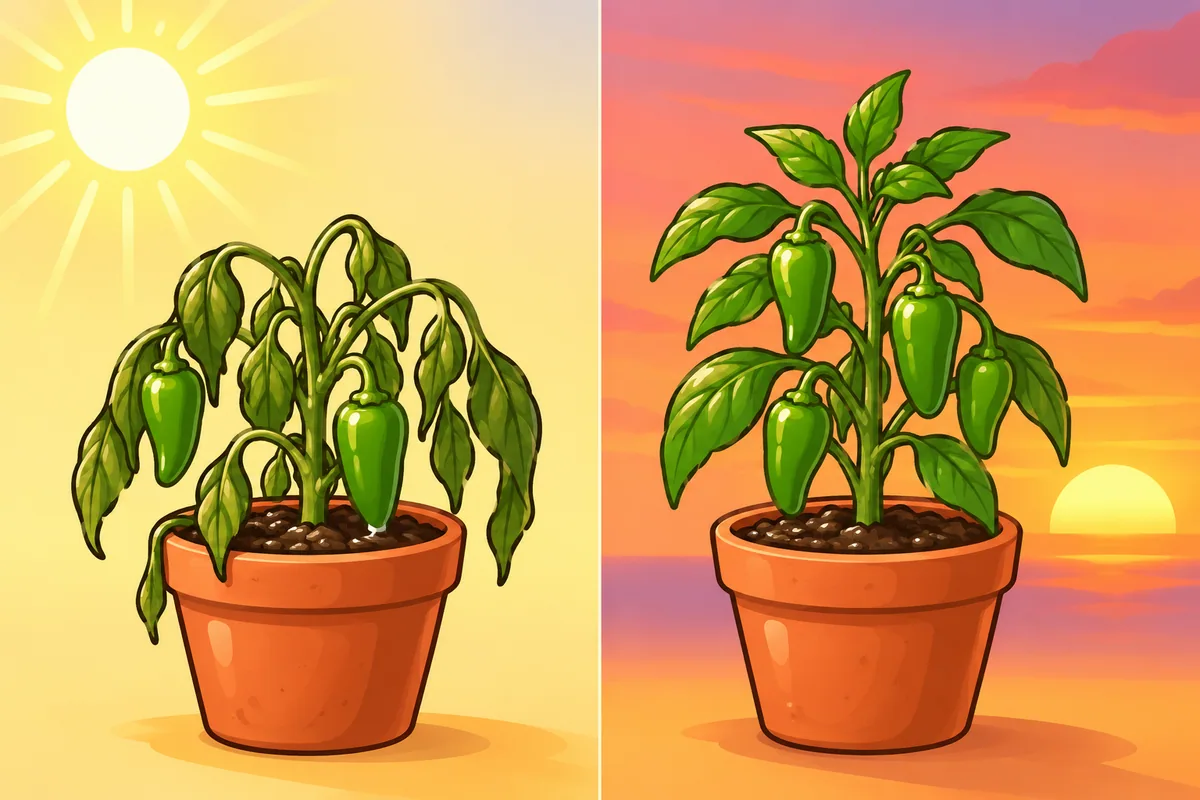
What helps your plant here is shade and water, not more fertilizer. Maryland plants peppers where they get some late afternoon shade and cools them with a water spray in hot, dry weather3. A shade cloth over your bed, or moving your pot to the east side of a wall for July, does the same job for you.
Keep your deep soil moist going into the heat. UC IPM says peppers root about 2 feet deep and warns that deep moisture is hard to put back later in the season without overwatering2, so your steady deep watering in June is what carries the plant through a July heat wave.
Can a pepper wilt from too much water?
Yes, and it is a common way to lose one. New Mexico State says overwatering can cause Phytophthora root rot, which makes a chile plant wilt and die suddenly5. UC IPM adds that soil saturated for as little as 5 to 6 hours can start the infection, with 75 to 92°F as the warmth it likes best4.
The trap is that your plant looks thirsty, so you water again. The full set of signs, the loop and the fix are on the overwatered peppers page; the short version for you is to stop watering and get the water out of the root zone.
Fusarium, Verticillium and other wilt diseases
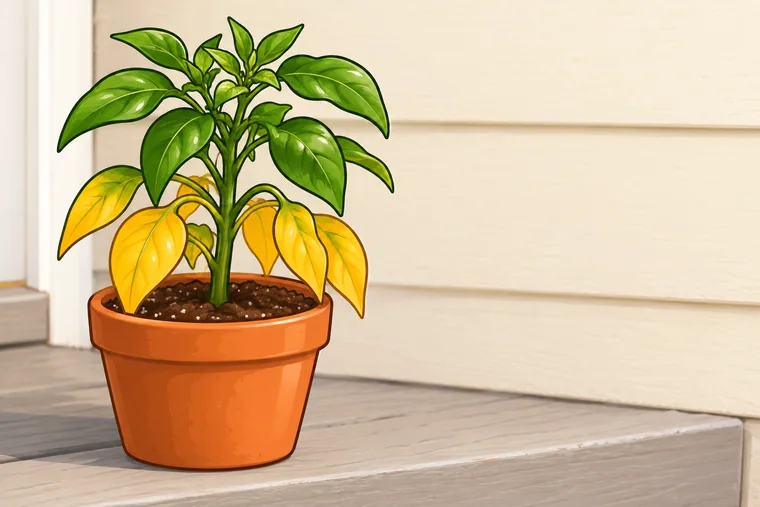
These are the wilts you cannot water away. A fungus or bacterium blocks your plant's water channels, so the leaves wilt even when your soil is fine. With Fusarium the wilting leaves also yellow, which can send you to the wrong page first: plain yellow leaves on a plant that stands upright have other causes.
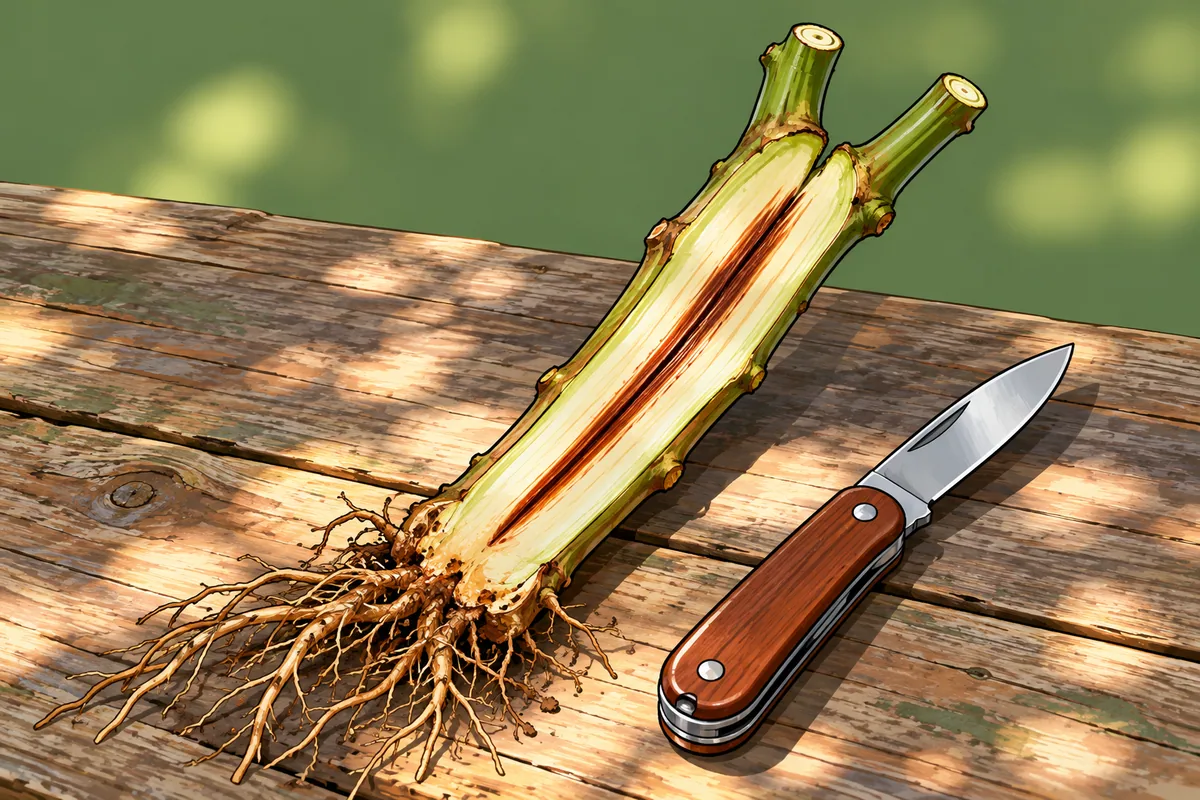
Each one leaves you a slightly different trail. Penn State describes Fusarium wilt as yellowing and wilting of the upper leaves that spreads to the whole plant, with red-brown discoloration inside and plant death, favored by high soil moisture6. Clemson describes southern blight as a white mass of fungal threads at the soil line that forms small tan to brown pellets, which drop into the soil and survive the winter7. New Mexico State names Verticillium wilt as a common chile disease there5.
Prevention is what you have, and you plan it a season ahead. Clemson keeps peppers, tomatoes, eggplant and potatoes out of the same spot more often than once every three years and buys disease-free transplants7; New Mexico State rotates with sweet corn against Verticillium5. Penn State's answer to Fusarium is well-draining soil without waterlogging6, which is one more reason to get your soil and drainage right before planting.
Is a glass of water enough to test for bacterial wilt?
It is a good first test, and it costs nothing. If your plant wilts fast while your soil is moist and the leaves are not yellow or spotted, cut a fresh stem and stand it in a clear glass of water. University of Arkansas Extension says a milky ooze should start streaming from the cut end in 3 to 5 minutes, and in a severe case the water turns milky in 10 to 15 minutes11.
- 1
Pick a plant that is wilting now
Wilting of the younger leaves, followed by rapid wilting of the whole plant, is the pattern Arkansas describes.11
- 2
Cut the stem and look inside
The core of an infected stem darkens and softens with decay. Use clean pruners and rinse them afterward.11
- 3
Hang the cut end in a glass of clear water
Suspend the stem so the cut end sits just under the surface.11
- 4
Watch for 3 to 5 minutes
A milky stream from the cut end means bacteria. If your glass stays clear, go back to the table above.11
The same note names pepper, tomato, potato and eggplant as hosts11. Once your glass turns milky, the plant has no cure, as the table above says7. Pull it, bag it, and keep the water from that glass away from your compost. Arkansas lists crop rotation, a full clean-up of crop debris and resistant cultivars as the prevention11.
Could root-knot nematodes be wilting your pepper?
If your plant stays small, yellow and limp in moist soil, dig it up and look at the roots before you blame the stem. Root-knot nematodes are microscopic worms, and UC IPM says their feeding leaves galls on the roots, which look like lumps on the root rather than the dark, soft rot of overwatering12. Severely galled roots end up malformed, shortened and thickened12.
Above ground the signs are vague. UC IPM lists patches of yellowed, stunted, dying or wilted plants in a severe infestation12, which is why the roots matter more than the leaves.
Root rot from wet soil
Root-knot nematodes
You cannot cure galled roots, so you work on your next planting. UC IPM says nematode-resistant bell pepper varieties have become available, but warns that resistance may decrease when soil runs between 82 and 90°F, and that you need care picking rotation crops because some are alternate hosts12. Soil solarization may lower nematodes in the top layers of the soil12. To confirm, UC IPM suggests you bag the suspect roots with some soil and send them to a diagnostic lab12.
Wilting right after transplanting
If your new transplant droops for its first day or two, it lost roots in the move and is catching up. You can cut that shock a lot by how and when you plant.
Planting day, to keep a transplant standing
- Water the plants well before you transplant them.1
- Plant in the late afternoon or on a cloudy, calm day, or in the early evening.15
- Move seedlings grown in separate containers without disturbing the roots.1
- With a peat pot, bury its top edge; an exposed rim wicks water out of the root ball.1
- Water right after planting, and press the soil to close air pockets.25
- In summer heat, shade the plants at midday for the first week or use a floating row cover.2
A plant that has been hardened off for a week or two before the move droops less, because its leaves are already used to sun and wind. If a transplant is still limp after several days in moist soil, go back to the three checks: the move may not be the cause.
Why a pepper in a pot wilts faster than one in the ground
Your pot holds a small tank of water, and a big plant in summer drains it in a day. UW–Madison says container peppers need little water while small, then daily water once they grow, the weather warms and the fruit sets13. A pepper that wilted at 4 p.m. after a morning soak is often simply outgrowing its pot.
Size and spot change how fast you run dry. Maryland notes that a large volume of mix holds more water than a small container, that plants need more as they grow and the heat climbs, and that pots next to a house or under a porch get no rain at all14. Moving up to a bigger pot is often the real fix for a plant that droops every afternoon.
Watch for the gap. When a pot goes too long without water, the mix shrinks away from the side, and your next watering runs straight down the gap and out of the hole while the root ball stays dry14. Maryland's fix is to sit the pot halfway into a bucket or sink of water until the surface turns moist, or to water several times in a row.
How to revive a wilting pepper plant
Start with your diagnosis, because the rescue for dry soil is the opposite of the rescue for wet soil. These steps cover the causes you can fix yourself, in the order you check them.
- 1
Feel the soil 2 inches down
Dry means water. Wet means stop. Moist means keep reading.1
- 2
- 3
If it is wet, let it drain
Hold the water, empty any saucer and, in heavy soil, plan a raised bed and a drip line.4
- 4
Give it shade through the hottest hours
Late afternoon shade and a cooling spray of water help in a heat wave.3
- 5
Mulch once the soil is warm
Straw or grass clippings 3–4 inches deep help hold soil moisture; Utah State waits until the soil reaches 75°F.Sources for this line1. University of Minnesota Extension7. Clemson Cooperative Extension, Home & Garden Information Center10. Utah State University Extension
- 6
Most of your wilting peppers bounce back, because most of them are thirsty or hot. Watch your plant at dawn the next day: if it stands up, you found the cause, and if it does not, you go back one step in the list.
Your next step is a steady watering rhythm that keeps the deep soil moist without soaking it. The pepper watering schedule gives you the amounts by setting, and the pests and diseases picker helps if the leaves also show spots, curls or holes.