On this page
- 1Pepper pot sizes in gallons and liters
- 2Which pot size fits your pepper?
- 3Why a bigger pot grows a better pepper
- 4How many fewer peppers does a small pot give you?
- 5From seed cell to final pot
- 6Depth, width and pot shape for peppers
- 7How many gallons is the pot you already own?
- 8Does a layer of gravel at the bottom help a pepper pot drain?
- 9When to move your pepper up a pot size
- 10How much potting mix fills each pot size?
- 11Can a pepper live in a pot smaller than 3 gallons?
- 12Sources
Pepper pot sizes in gallons and liters
Five gallons is the number most extension guides land on for you. Here is how the sizes step around it, with liters for pots sold in metric (1 US gallon is about 3.8 liters).
| Pot size | Liters | Depth | Suits |
|---|---|---|---|
| 3 gallons1 | About 11 | Not given | The smallest pot listed for any pepper; long, thin peppers do best |
| 4–6 gallons2 | About 15–23 | 8–12 inches | Dwarf pepper varieties |
| 5 gallons34 | About 19 | 12–18 inches | Most peppers; the common minimum |
| 8–10 gallons2 | About 30–38 | 12–16 inches | Full-size pepper plants |
| 1–3 gallons2 | About 4–11 | 4–6 inches | Herbs and greens, not peppers in Maryland's list |
Notice that the sources do not agree to the gallon. NC State's Onslow County office gives 3 gallons as the minimum for peppers1, UW–Madison and Maryland put the floor at 534, and Maryland's container guide places peppers with tomatoes in the 8 to 10 gallon class, with dwarf peppers in 4 to 62. Five gallons is the size every source accepts for an ordinary pepper, so it is your safe default.
The spread makes sense once you look at what each guide is sizing for. The 3-gallon figure comes from a list of easy container vegetables that favors slim chiles, while Maryland's 8 to 10 gallons is written for a full-size plant grown for a full harvest. If your goal is a few pods on a patio, the low end works; if you want a bush loaded with peppers, you go big.
Which pot size fits your pepper?
Size the pot for the grown plant. A seedling you bring home is 6 inches tall; by August the same plant may be 3 or 4 feet, since Maryland says bushy pepper plants can reach that height4. The heights below come from the sources; the pot column is our match to the size classes above.
| Pepper | Grown height | Pot to start with |
|---|---|---|
| Ornamental peppers56 | 10–20 inches; NMSU's ornamental chiles stay under 12 | 3–5 gallons, or the dwarf class |
| Dwarf and compact varieties2 | Not given; sold as dwarf or compact | 4–6 gallons |
| Cayenne7 | 2–4 feet | 5 gallons |
| Most bell and chile plants24 | Up to 3–4 feet | 5 gallons, or 8–10 for big plants |
| Tabasco7 | About 60 inches | 8–10 gallons |
| Serrano7 | Up to 5 feet | 8–10 gallons |
| Thai chili7 | Up to 6 feet, a perennial | 8–10 gallons or more |
Shape counts as much as height for your choice. NC State says long, thin peppers are easier to grow in pots than large bell types1, so a cayenne in 5 gallons is an easier first pot than a big bell. If you want a short list of peppers bred for small spaces, the guide to peppers for containers ranks them.
Our rule for the in-between cases: when your pepper sits between two classes, pick the larger pot. A pot that is a little big costs you a few dollars of mix; a pot that is too small costs you water every afternoon and part of the harvest.
Pepper Geek talks through the ideal pot size for pepper plants, so you can hear a grower's view next to the extension sizes in the tables above, which stay your numbers.
Why a bigger pot grows a better pepper
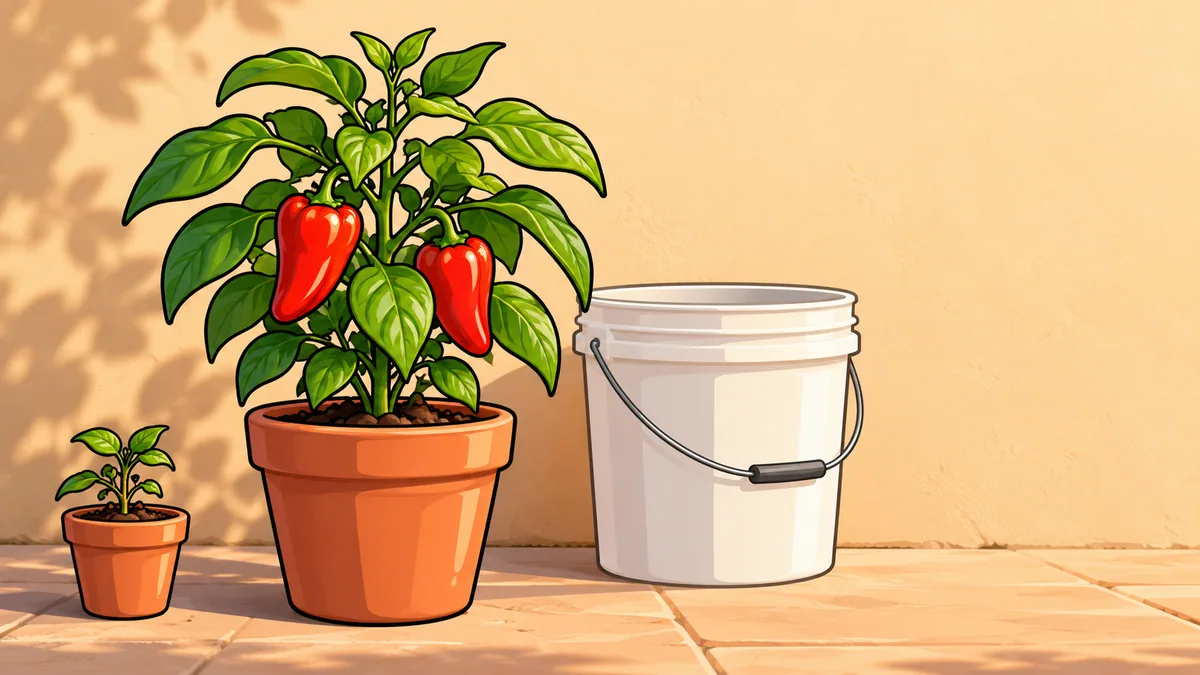
Your pot is the plant's whole water tank and root run. Maryland puts the reason directly: match the container to both the top growth and the roots, do not squeeze large plants into small containers, and if you restrict root growth too much, your plants will not grow well2.
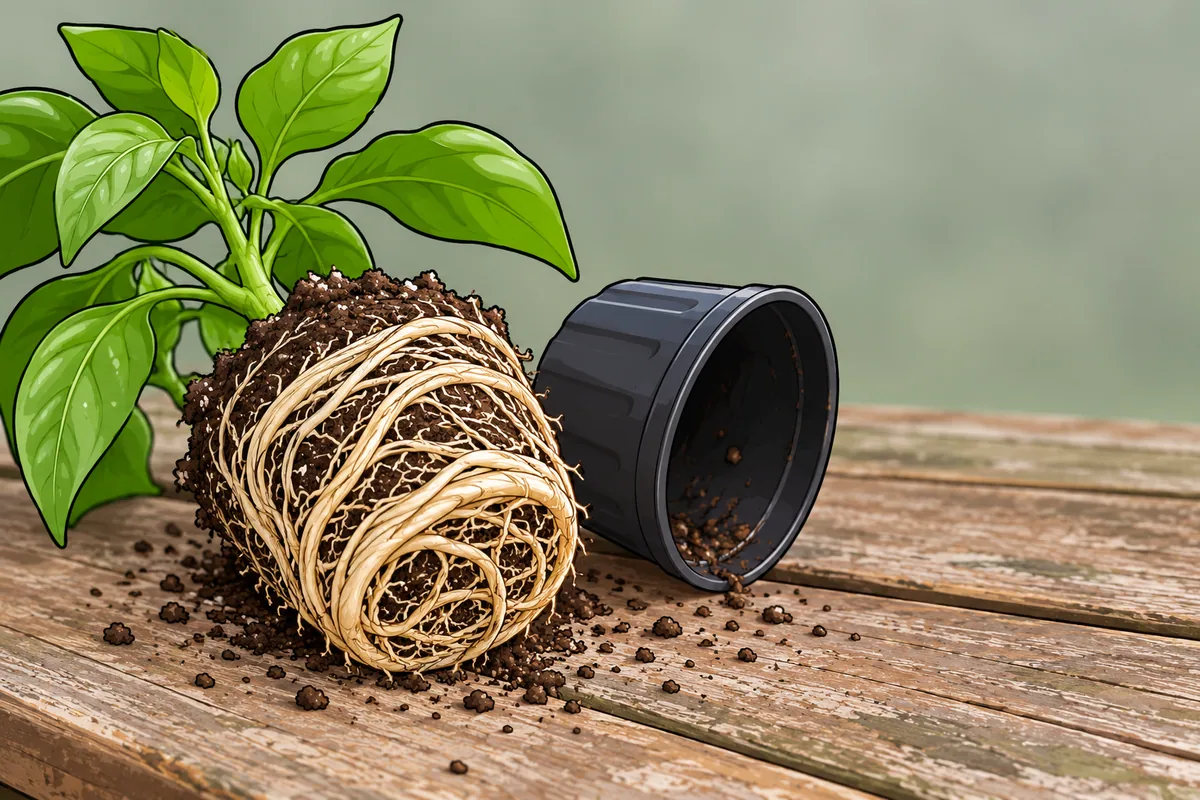
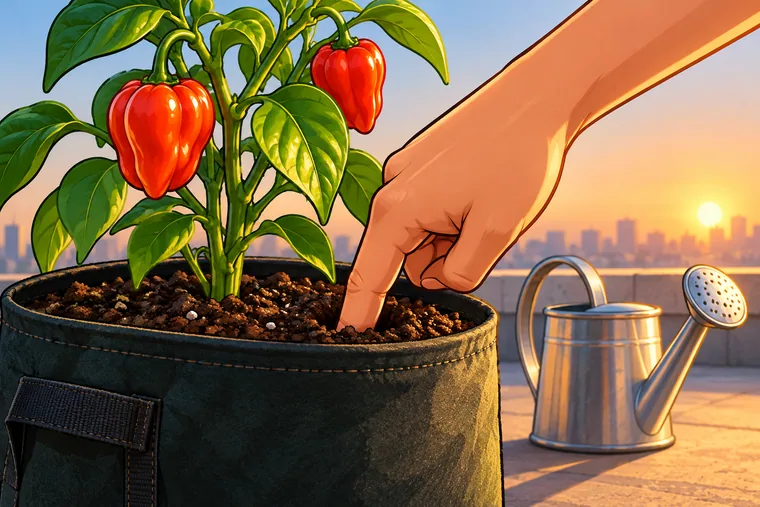
Water is the daily cost of a small pot. Maryland says larger volumes of mix hold more moisture and need watering less often than smaller containers9, and UW–Madison says fruiting container peppers need water every day in summer3. A 3-gallon pot on a hot balcony can dry out between your morning and evening checks; a 10-gallon pot gives you a day of slack. The watering schedule gives the rhythm for each setting.
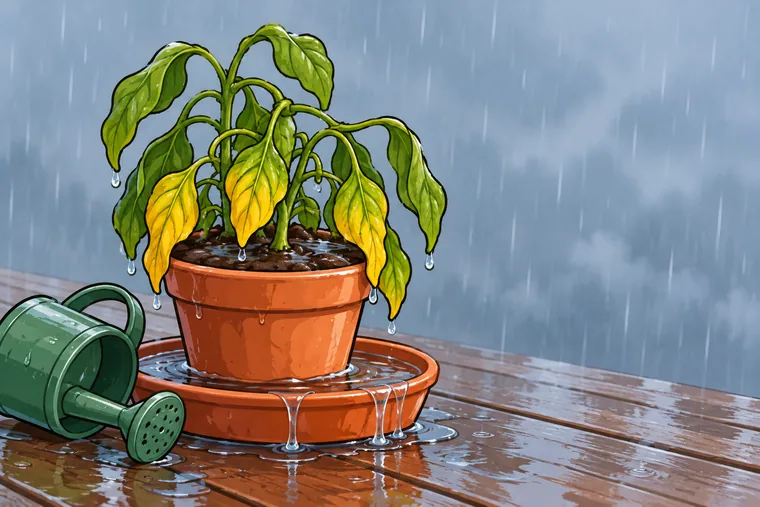
Too big has its own risk for you, though a smaller one. A huge pot of mix around a small young plant stays wet longer between drinks, so you water it less often until the roots fill it. If the mix still feels damp a few days after watering, wait; the signs of a pot that stays too wet are on the overwatered peppers page.
How many fewer peppers does a small pot give you?
You get about a fifth fewer pods in the one peer-reviewed trial we could read, and that trial compared two small pots. Zakaria and colleagues grew chilli plants (Capsicum annuum) in a 9.6 liter column and in a 2.4 liter column, then counted the harvest after 112 days10. In US gallons that is 2.5 against 0.6, so both pots were smaller than the pot you plan to use.
Take the direction from this and leave the exact figures to the researchers. The plants were one variety ('Kulai') in a coir and compost mix, watered by drip twice a day under a rain shelter in Malaysia10. Your balcony pepper gets none of that care, and the big pot in the trial was still under NC State's 3-gallon floor.
What the trial does tell you: the smaller root zone left the plants 14% shorter on day 98 and cut their leaf area by a quarter by the end10. It does not tell you where more soil stops paying, so the 5-gallon default from the table above stays your starting point. If you can only fit a 3-gallon pot, which NC State still lists for peppers, expect a lighter harvest from the same plant, not a dead one.
From seed cell to final pot
A pepper you start from seed moves up in steps, and each step gives the roots more room before they circle. The sources give the first moves; the final pot is the size class you chose above.
- Seed tray or cellSterile seedling mix
- Thin or transplantAfter true leaves; 2–3 inches apart
- 3–4 inch potThe first move up
- Final container5 gallons for most peppers; 8–10 for big ones
Sources for this line2. University of Maryland Extension3. University of Wisconsin–Madison Extension11. PlantVillage, Penn State University12. University of Minnesota Extension
Penn State sows pepper seed in flats or cell trays of sterile seedling mix and moves the seedlings to a larger 3 to 4 inch pot11. UMN thins or transplants after the true leaves appear, so seedlings stand 2 to 3 inches apart12. The seed starting guide covers the trays, heat and light for those first weeks.
From the small pot you can go straight to the final container. Every move tears a few fine roots, so one jump to 5 gallons beats two or three small steps once the plant is ready to live outside.
Depth, width and pot shape for peppers
Gallons alone do not tell you the whole story. Maryland asks you to consider both the depth and the total volume of a container2, and a few shape choices change how your pepper grows.
- Depth: 12 to 18 inches for most peppers, and 8 to 12 for dwarfs23. A wide, shallow tub of the same volume gives the roots less depth and dries faster on top.
- Grow bags and buckets: UW–Madison lists 5-gallon buckets, plastic pots, grow bags, wooden barrels and self-watering containers as workable3. Whatever you pick needs a drainage hole; Maryland adds that self-watering types are the only ones without holes in the bottom2.
- Color: a dark pot heats up in the sun and can injure young roots2. A light pot or one shaded on its sunny side keeps the roots cooler.
- Weight: a full 10-gallon pot is hard to move. UW–Madison points out that pots let you follow the weather3, so if you plan to carry the plant in on cold nights, choose the largest size you can still lift or put it on a plant dolly.
- Support: Maryland says peppers benefit from vertical support in containers13. A short stake goes in at planting, while the mix is loose.
How many gallons is the pot you already own?
Measure it, because a pot that looks like 5 gallons to you often holds 3. Most pots from the shed carry no label, and a US gallon is exactly 231 cubic inches14, so a ruler and four steps give you the volume of any round pot.
- 1
Measure the width inside
Take the inside width at the top of your pot and at the bottom of the mix, then average the two. A straight-sided bucket gives you one number.
- 2
Measure the mix depth
Run your ruler from the bottom of the pot to the mix line, which sits about an inch below the rim.13
- 3
Square the width and multiply
Width times width times depth times 0.785.14
- 4
Divide by 231
The answer is your pot's gallons. Multiply by 3.785 if you want liters.14
Here is the sum worked for six round pots, with the size class each one lands in:
| Average width | Mix depth | Volume | Where it lands |
|---|---|---|---|
| 10 inches114 | 10 inches | 3.4 gallons | NC State's 3-gallon floor, long and thin peppers only |
| 10 inches214 | 12 inches | 4.1 gallons | Dwarf class, 4–6 gallons |
| 12 inchesSources for this line2. University of Maryland Extension3. University of Wisconsin–Madison Extension14. National Institute of Standards and Technology | 10 inches | 4.9 gallons | Dwarf class, and too shallow for a full-size plant |
| 12 inches314 | 12 inches | 5.9 gallons | The 5-gallon default, at the 12-inch depth floor |
| 14 inches214 | 12 inches | 8.0 gallons | Full-size class, 8–10 gallons |
| 16 inches214 | 14 inches | 12.2 gallons | Above the full-size class |
The 12 by 12 pot in the fourth row is the shape you want to hunt for. It clears the 5-gallon default and the 12-inch depth in one pot3, while a pot 12 inches wide but only 10 deep looks big and still falls just short of both. A tapered pot holds less than its top width suggests, which is why the steps ask for the average.
Does a layer of gravel at the bottom help a pepper pot drain?
No, it does the opposite for you. David Trinklein at the University of Missouri says a gravel layer leaves your roots sitting in saturated, poorly drained mix15. The cause is the perched water table, the zone where water sits (perches) in the mix above a coarse layer. Adding a layer of non-capillary material shortens the water column in the pot, which cuts drainage and pushes the soggy zone up toward the roots15.
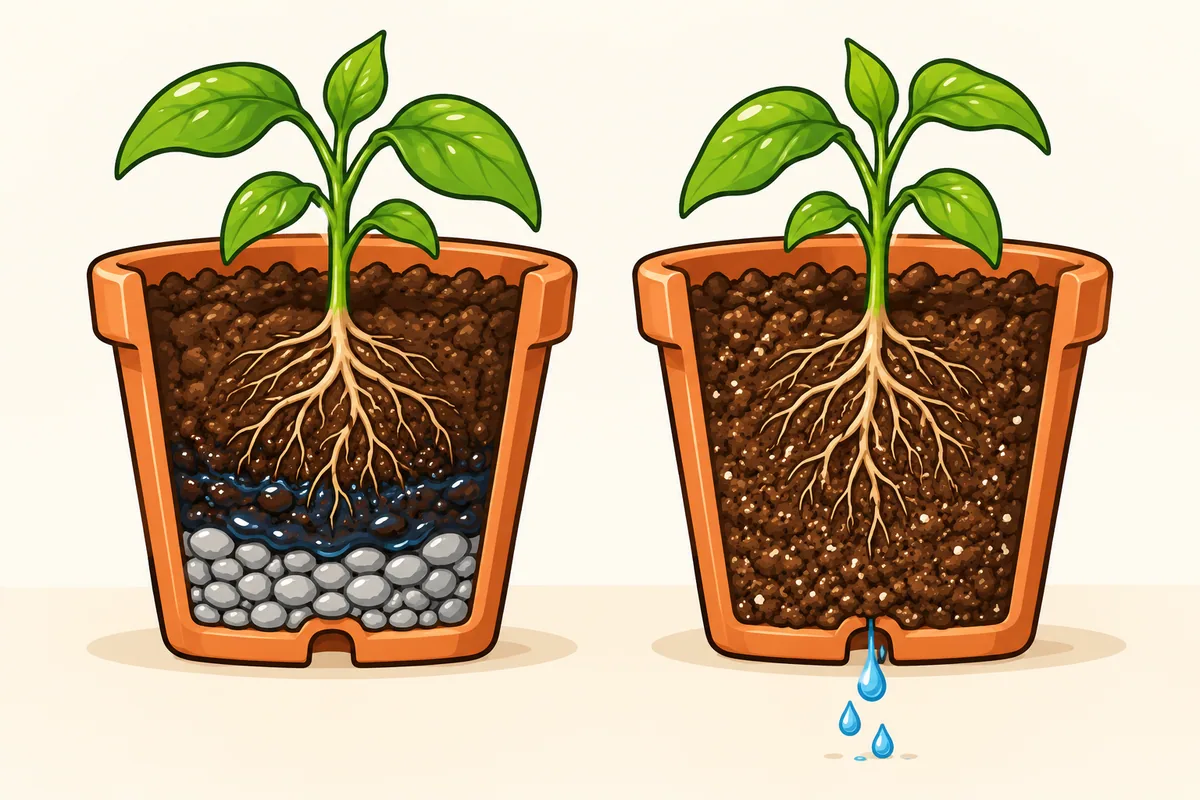
Maryland says the same about vegetable containers: rocks, gravel and broken pot shards in the bottom do not improve drainage2. Two habits do:
- Fill the pot with mix all the way down. Leave about an inch of headroom at the top and do not pack the mix down13.
- Pick the taller pot when two pots hold the same volume. With the same mix, Missouri says taller containers with deeper water columns drain better than shorter ones15. A 12-inch-deep pot beats a wide, shallow tub of the same gallons, and it matches the depth you need for roots.
The one job gravel has in a pepper pot is ballast for a tall plant that tips, and that comes up in the section on moving your pepper up a size.
When to move your pepper up a pot size
Your plant shows you when its pot is too small, and it rarely waits until fall to do it. Watch for these signs through early summer:
- Roots poke out of the drainage hole or circle the root ball. Maryland warns that restricted roots hold a plant back2; move it up before the roots wrap.
- It wilts every afternoon even after a morning soak. Small containers hold less water and need it more often than big ones9. If you already water daily, the pot is the problem, not your watering.
- It tips over in the wind. A tall pepper in a light pot of mix is top-heavy. Maryland only adds gravel to a container when you need the weight to stop it tipping13, and otherwise fills it with mix all the way down; a wider, heavier pot is the better answer.
- A clay pot dries out by midday. Porous clay, ceramic, concrete and wood dry out faster than plastic2. Going one size up, or switching to plastic, buys you the same slack.
Move your plant on a cool, cloudy day, water it well first, and set it at the same depth it grew at before. If it is already flowering, a single move to the final pot is kinder than a series of small ones.
How much potting mix fills each pot size?
UW–Madison gives bagged potting mix as 1, 2 or 2.8 cubic feet, which hold 7.5, 15 and 21 gallons3. From that you can work out your order for the sizes on this page:
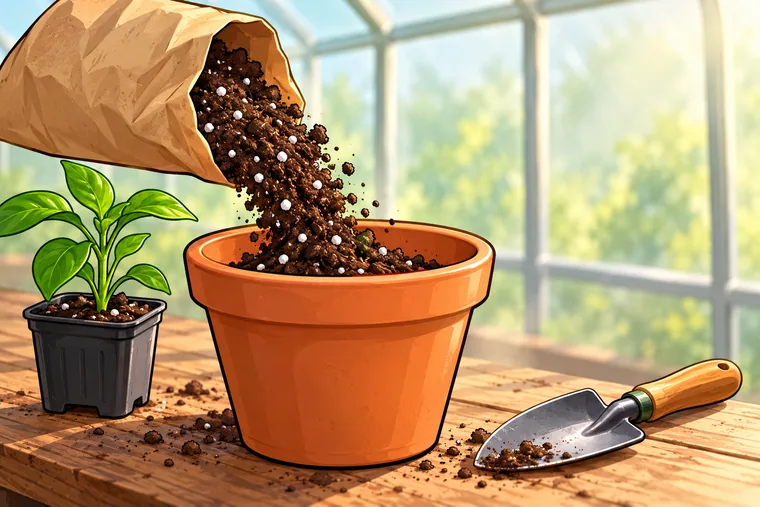
A 2.8 cubic foot bag fills two 10-gallon pots with a gallon to spare, or seven 3-gallon pots. A 2 cubic foot bag fills three 5-gallon pots exactly, or one 10-gallon pot and one 5-gallon pot. Maryland fills a container to within an inch or so of the top, without packing it down13, so the real amount runs a little under the pot's rated size.
Here is a worked setup for a sunny balcony with three plants. A Thai chili, which UF/IFAS says can reach 6 feet7, goes in 10 gallons; a cayenne goes in 5; an ornamental goes in 3. That is 18 gallons of pot, which one 2.8 cubic foot bag covers with about 3 gallons left for topping up after the mix settles.
For a mix of sizes, the potting soil calculator adds them up for you, and the guide to the best soil for peppers covers what goes in the bag.
Can a pepper live in a pot smaller than 3 gallons?
Some can, but no extension source read for this page recommends it for a normal garden pepper. Maryland's 1 to 3 gallon class lists herbs, greens and peas, not peppers2, and NC State's smallest pepper pot is 3 gallons1.
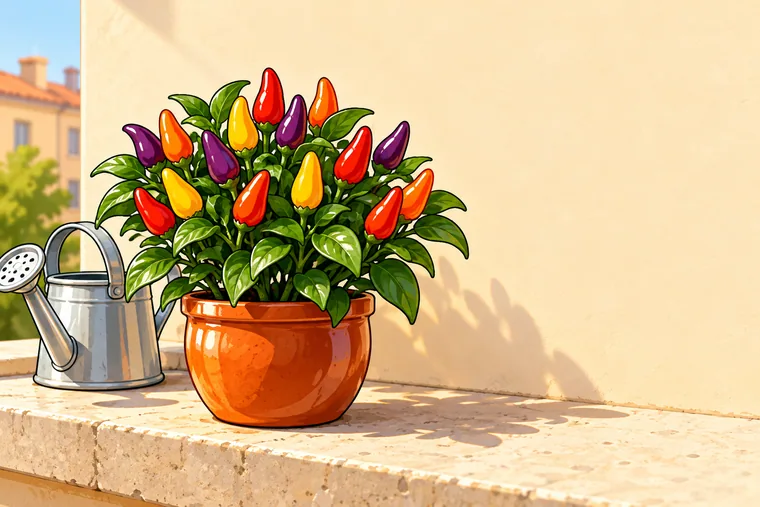
Ornamental peppers are the exception you might try. UF/IFAS says they stay 10 to 20 inches tall5, and Illinois Extension grows NMSU's ornamental chiles in patio pots, or indoors with 12 hours of strong light6. Expect to water a small pot often, sometimes twice on a hot day, and expect a smaller harvest than the same plant would give you in 5 gallons.
Your next step is to pick the pepper first, then the pot that fits it when grown. Check its grown height in the table above, buy one size up if in doubt, and fill it the day you plant out, after the last frost on the planting calendar.