On this page
- 1The 11 best peppers for containers, ranked
- 2Which container pepper should you pick?
- 3The ornamental picks for the smallest pots
- 4The hot picks for a 5-gallon pot
- 5The sweet picks, compact bells and cherries
- 6Peppers that outgrow a normal pot
- 7How hot is each big-pot pepper next to your compact picks?
- 8When can a potted pepper go outside?
- 9Where should a potted pepper sit on a hot July balcony?
- 10Picking from a pepper in a pot
- 11Getting a compact pepper off to a good start
- 12Sources
The 11 best peppers for containers, ranked
These are the peppers extension services name for pots or describe as compact, ranked from the smallest plant you can grow to the largest. The pot column uses the size classes on the container size page.
| Pepper | Type | Heat | Grown size | Pot |
|---|---|---|---|---|
| NuMex Easter1 | Ornamental chile (NMSU) | Hot, edible | Under 12 inches | 3–5 gallons |
| NuMex Halloween1 | Ornamental chile (NMSU) | Hot, edible | Under 12 inches | 3–5 gallons |
| NuMex Valentine's Day1 | Ornamental chile (NMSU) | Hot, edible | Under 12 inches | 3–5 gallons |
| Black Pearl2 | Ornamental pepper | Many ornamentals are very hot | 10–20 inches | 3–5 gallons |
| Red cherry3 | Sweet cherry pepper | Sweet | Compact, ever-bearing | 4–6 gallons |
| Cayennetta45 | Hot cayenne type | Hot | Compact (container list) | 5 gallons |
| Red Chili4 | Hot chile | Hot | Compact (container list) | 5 gallons |
| MariachiSources for this line2. UF/IFAS Gardening Solutions4. University of Wisconsin–Madison Extension6. UF/IFAS Extension (EDIS) | Chile | Mild; UF lists it as hot in one guide and sweet in another | Compact (container list) | 5 gallons |
| Cherry Stuffer4 | Sweet cherry type | Sweet | Compact (container list) | 5 gallons |
| Sweet Golden Baby Belle4 | Small bell | Sweet | Compact (container list) | 5 gallons |
| Lady Belle47 | Bell | Sweet | Compact (container list) | 5 gallons, or 8–10 for a full plant |
Seven of the eleven come from one list. UW–Madison's container variety table names 13 peppers for pots4; we picked the seven whose type is clear from the name and left out the rest, which you can find on the same page. The ornamentals come from UF/IFAS and Illinois Extension, and the red cherry from New Mexico State's Chile Pepper Institute.
If you want one pick for a first pot, grow an ornamental chile: it is the only group a source measures under 12 inches, and the pods are edible. Illinois Extension says NMSU's ornamental chiles max out below 12 inches and suit patio pots1.
Which container pepper should you pick?
Start from what you want your pot to give you. The tree sorts the picks into three groups; each group has its own section below.
- Color on a small ledgeOrnamental chiles, under 12 to 20 inches
- small spaceIndoors tooOrnamentals with 12 hours of strong light
- small space
- Heat for cookingSlim hot types: Cayennetta, Red Chili
- Sweet peppers to eatCompact bells and cherries
Sources for this line1. University of Illinois Extension2. UF/IFAS Gardening Solutions4. University of Wisconsin–Madison Extension5. N.C. Cooperative Extension, Onslow County Center (Emoni Burgess)
How we ranked them: by grown size, smallest first, because size is what decides whether a pepper fits your pot. Heat and taste come second, and the table gives you both so you can skip down to the group you want.
Shape is the tiebreaker. NC State says long, thin peppers are easier to grow in pots than large bell types5, so if two picks fit your space, take the slimmer pod. The hot picks in the middle of the table are the easiest food crop in a 5-gallon pot.
The ornamental picks for the smallest pots
Ornamental peppers are the compact end of the pepper world. UF/IFAS says they reach only 10 to 20 inches, fruit from May through fall, and that some are edible but many are very spicy2. Illinois Extension adds that they handle heat well and can grow indoors if you give them 12 hours of strong light1.
NuMex Easter
An NMSU ornamental chile with purple, yellow and orange pods, and the first of these picks to win an award: Illinois Extension notes it was named an All-America Selections winner in 2014 for its compact, uniform plant1. It is your pick for a windowsill pot.
NuMex Halloween
Another NMSU holiday chile, with pods that turn from black to orange as they ripen1. Grow it if you want a pot that changes color for you through the fall.
NuMex Valentine's Day
The red-to-white member of the same series1. NMSU has released more than a dozen of these holiday ornamentals since the 1990s, so if you find another NuMex name at the garden center, expect the same small, upright habit.
Black Pearl
UF/IFAS names it among the peppers grown almost only for looks, with Calico, Purple Flash and Sangria2. It sits at the taller end of the ornamental range, so give it 5 gallons if you can.
Water ornamentals by feel. Illinois Extension waters when the top half inch of soil is dry1, which in a small pot on a sunny ledge can mean every day in July.
The hot picks for a 5-gallon pot
These are your picks for cooking with heat. All three are on UW–Madison's container list, and none of them carries a published heat figure, so treat "hot" as the source's word, not a number.
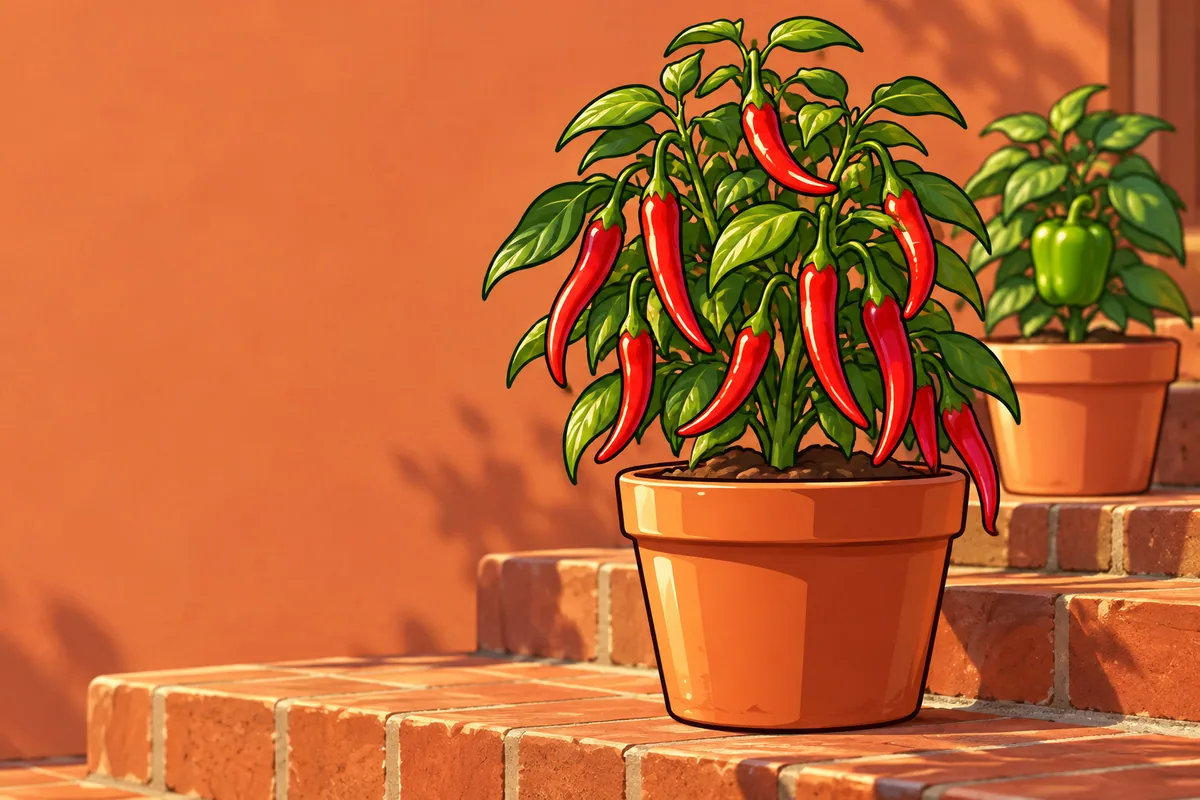
Cayennetta
A compact hot pepper of the cayenne type from UW–Madison's container list4. Cayenne as a type runs 25,000–50,000 SHU in UF/IFAS's figures8; the cayenne entry has the full profile, and the long, thin pod is exactly the shape NC State calls easy in a pot5.
Red Chili
The other plainly hot pepper on UW–Madison's list4. Choose it if you want small red chiles you can dry on a sunny sill. UW–Madison gives no heat figure or height for it, so treat it as a compact hot chile and give it the same 5-gallon pot and daily summer water as Cayennetta.
Mariachi
The sources do not agree on its heat. UF/IFAS lists Mariachi with the hot peppers in its Florida vegetable guide6 but with the sweet peppers on its Gardening Solutions page2; read that as mild. It is on UW–Madison's container list too4, and it suits a cook who wants a little warmth without the burn.
The sweet picks, compact bells and cherries
Your sweet peppers in pots do best when you pick a small-fruited, compact type. Big bells carry heavy fruit on a big plant, which is why NC State steers you toward slimmer types for pots5.
Red cherry
New Mexico State's Chile Pepper Institute describes its heirloom red cherry as compact and ever-bearing, with round fruit 1 to 1.5 inches across that turn from green to red3. It is the sweet pick for pickling; the cherry pepper entry covers flavor and uses.
Cherry Stuffer
A cherry type on UW–Madison's container list4, named for the job most people give cherry peppers: stuffing.
Sweet Golden Baby Belle
A small yellow bell from the same list4, and a good one for your first sweet pot. Small bells keep the plant lighter than full-size ones, which matters in a pot that can tip.
Lady Belle
A full bell on UW–Madison's container list4. It is the largest pepper of the eleven, so give it at least 5 gallons, or the 8 to 10 gallons Maryland sets for full-size peppers7.
Peppers that outgrow a normal pot
Some favorites, such as Thai chili, make poor container plants for you because of their height. UF/IFAS gives these figures, and each one needs at least the 8 to 10 gallon class:
- Thai chili: a perennial up to 6 feet tall, with small pods two or three to a node8.
- Serrano: up to 5 feet, happiest above 75°F and in soil of pH 7.0–8.58.
- Tabasco: about 60 inches tall, with pods that point straight up, and fast growth at 80–85°F8.
- Cayenne, as a type: 2 to 4 feet, with ripe fruit about 100 days after germination8, which is why a compact cayenne such as Cayennetta is the pot version.
You can still grow these in a big pot; just do not expect them on a windowsill. The hot pepper plants hub gives the season and height of each before you choose.
How hot is each big-pot pepper next to your compact picks?
Hot enough that the choice matters: a jalapeño tops out at 8,000 SHU, and a habanero starts at 100,000. UF/IFAS prints a heat range for each type8, so you can see what the extra feet of plant buy you.
Published ranges for the type, not for any named pick on the container lists. Log scale; bars are published ranges.8
| Pepper | Heat (SHU) | Grown height | Pot to start with |
|---|---|---|---|
| Jalapeño8 | 2,000–8,000, average about 5,000 | Not given | 5 gallons |
| Serrano8 | 10,000–25,000 | Up to 5 feet | 8–10 gallons |
| Cayenne8 | 25,000–50,000 | 2–4 feet | 5 gallons |
| Tabasco8 | 30,000–50,000 | About 60 inches | 8–10 gallons |
| Thai chili8 | 50,000–100,000 | Up to 6 feet | 8–10 gallons or more |
| Habanero8 | 100,000–350,000 | Not given | 5 gallons or more |
Read the table for the trade. A tabasco and a cayenne share almost the same range, but the tabasco grows about a foot taller than a 4-foot cayenne, so the cayenne gives you more heat for the pot you have. A serrano reaches the same 5 feet as the tabasco and gives you about half the heat at the middle of its range (17,500 against 37,500 SHU), which makes it the weakest trade of the three.
If you want the mildest hot pot, plant a jalapeño; its top range is below the bottom of the cayenne's. If you want the hottest, a habanero starts where the Thai chili stops. UF/IFAS gives no height for either, so give them the 5-gallon default and watch how they grow before you buy a bigger pot.
None of this is a heat figure for Cayennetta, Red Chili or Mariachi. No source we read measures those named picks, so treat the table as the type's range and the named pick as a compact plant of that type.
When can a potted pepper go outside?
Later than you might think, and that is where a pot helps you. Illinois Extension holds off planting ornamental chiles until several weeks after your area's average frost-free date, because they are frost tender1. UMN sets the bar for peppers in general at nights that stay above 50°F, and brings young plants back inside on nights below 55°F while they get used to the outdoors9.
A pot lets you cheat the calendar a little. UW–Madison points out that containers can move to follow the weather10, so you can set your compact pepper out on a warm May afternoon and carry it into the garage on a cold night. That is much harder with a 10-gallon pot than with a 5-gallon one, one more reason the compact picks suit a balcony.
Where should a potted pepper sit on a hot July balcony?
In full sun for the morning and in shade for the late afternoon. UMD wants peppers to get at least 6 hours of direct sun, with 8 to 10 preferred11, and UW–Madison sets the same 6-hour floor for container vegetables10. A ledge that gets 4 hours falls short for any pepper, and an ornamental on a windowsill needs 12 hours of strong light1.
The same sun turns on you in midsummer. UMD says night temperatures above 75°F or day temperatures above 95°F drop pepper flowers and small fruits, and that production picks up again in late summer12. The no-fruit guide sorts out every cause of a stalled plant. What a pot adds is that you can move it, so use that edge:
| Weather or problem | What the source says | What you do with the pot |
|---|---|---|
| Days above 95°F or nights above 75°F12 | Flowers and small fruits drop; late-afternoon shade helps; wetting the leaves in a hot, dry spell can ease heat stress | Slide the pot to a spot that shades it after mid-afternoon, and rinse the leaves in the morning so they dry before night |
| Hot, dry wind12 | Hot, dry winds can cause poor blossom set | Park the pot behind a wall or a railing screen |
| Leaves wilting in afternoon sun13 | Fruit exposed to hot sun after the leaves wilt turns brown and leathery on the exposed side | Water before the wilt, so the leaves stay up and shade the pods |
| Fewer than 6 hours of direct sun1112 | Excessive shade contributes to poor blossom and fruit set | Carry the pot to the sunniest spot you have, even if it is the less pretty one |
| A windowsill indoors1 | Ornamentals grow indoors with 12 hours of strong light | Use the brightest window, or add a grow light |
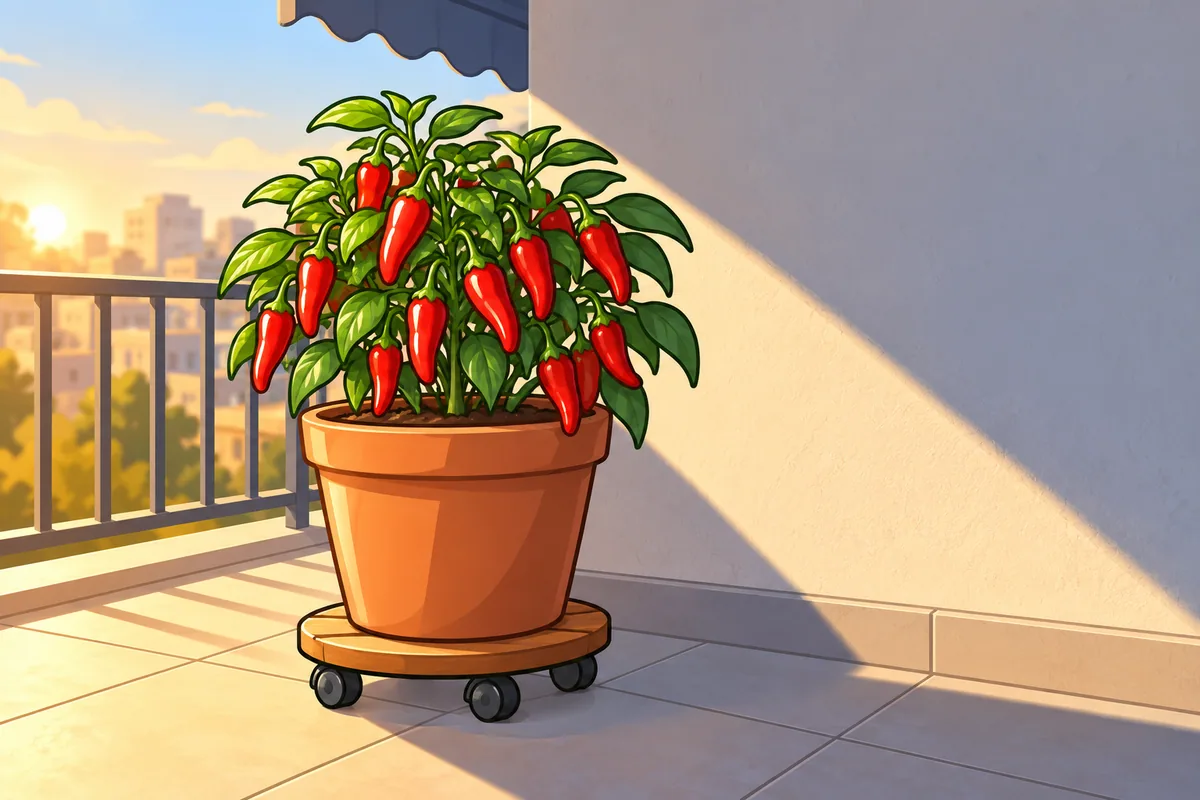
Weight is the catch. A full 10-gallon pot is hard to slide across a deck, which is one more reason to pick the largest pot you can still move. A 5-gallon pot on a plant caddy goes wherever the shade goes.
Picking from a pepper in a pot
You pick a pot pepper the same way you pick one in the ground. UMN harvests peppers once they reach mature size, clips them with sharp shears instead of pulling, and notes that the plant keeps flowering and setting fruit as you harvest9. On a compact plant that steady picking matters: a branch loaded with ripe pods is a branch that can snap.
Wear gloves for the hot picks. UMN asks you to wear gloves when you pick hot peppers and to wash your hands before you touch your eyes, and says even sweet peppers can carry enough capsaicin to irritate skin9. The ornamental chiles count here too; Illinois Extension calls them edible if you enjoy spicy flavors1.
Getting a compact pepper off to a good start
A compact pepper still needs the same basics as a big one. UW–Madison asks for full sun, at least 6 hours a day, and daily water once the plant is big and fruiting10; Maryland adds that peppers prefer 8 to 10 hours of sun11.
Fill the pot with a light soilless mix, as the guide to the best soil for peppers explains, and work out how many bags you need with the potting soil calculator.
Your next step is to pick one pepper from the table above, buy the pot in its row, and plant it out after your last frost. If you want an ornamental to live inside over winter, the guide to growing peppers indoors covers light and temperature.