On this page
- 1What soil do peppers like?
- 2Soil by spot, from a pot to a garden row
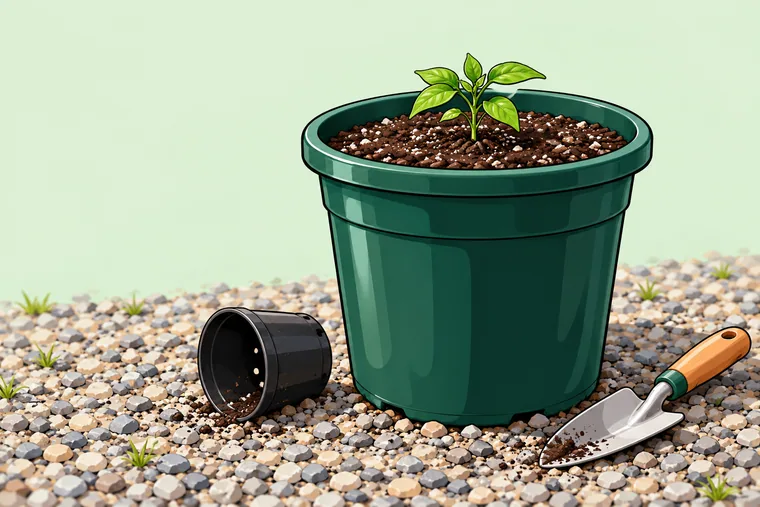
- 3Which potting mix for peppers in pots?
- 4How do you mix your own potting mix for one pepper pot?
- 5What pH do pepper plants need?
- 6How to raise or lower soil pH for peppers
- 7Is your garden soil ready? The squeeze test
- 8How fast does your pepper bed drain? A hole and a ruler
- 9What goes into a raised bed for peppers, and how much?
- 10Five signs your pepper soil is wrong, and the fix
- 11How much compost or manure to add
- 12Sources
What soil do peppers like?
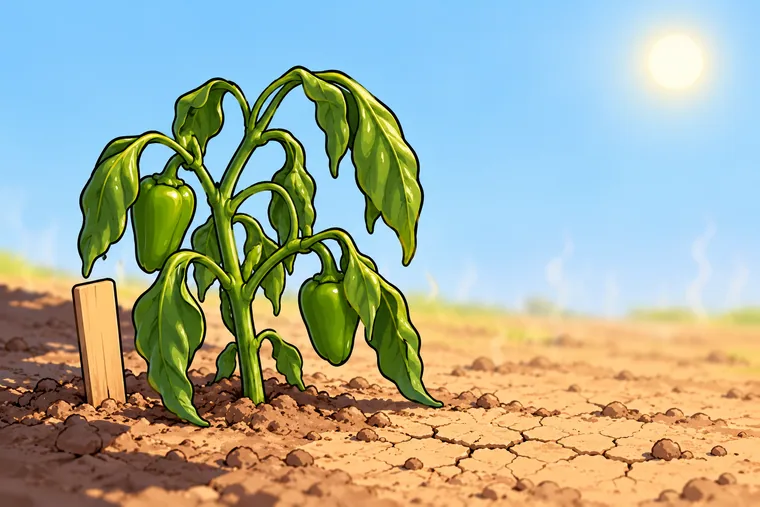
Soil that drains fast but does not dry out in an afternoon. Utah State says peppers need well-drained soil and do poorly in heavy, wet ground1, and Penn State adds that they will not tolerate soil saturated with water2. In beds, Clemson and New Mexico State both name loam or sandy loam as the soil to pick34.
Air in the soil is the part you might forget. Water moves through the pore spaces and pushes the air out, and if it cannot drain away, fresh air cannot get back in and your roots suffocate5. That is why the same peppers that sulk in clay do well in a light mix: the mix keeps its air.
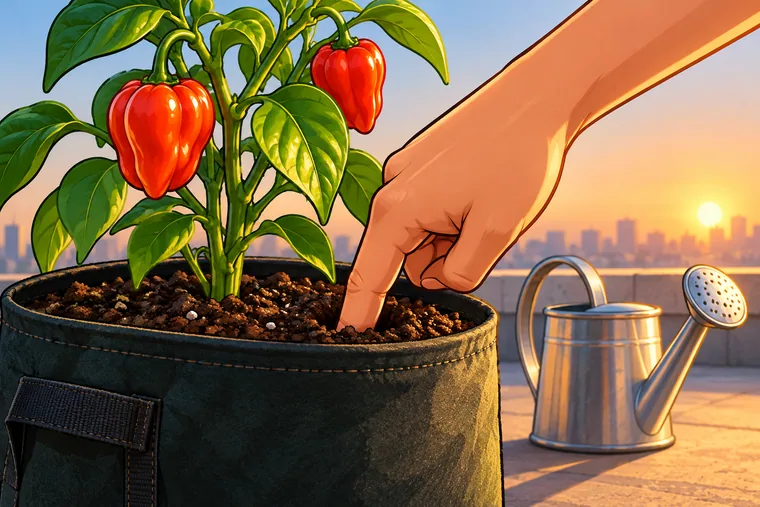
- In a potSoilless potting mix, with compost up to half
- In a raised bedNative soil heavily amended, raised above the old level
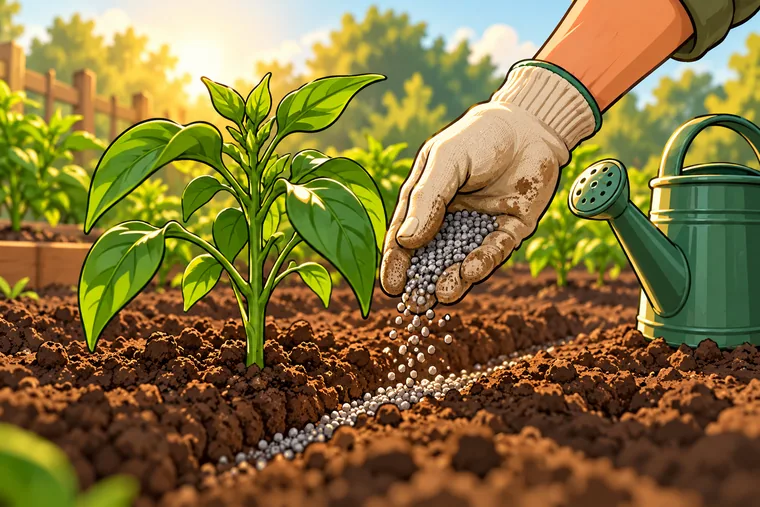
- In the groundTest it, then pick the next step
- drainsLoam or sandy loamWork in compost and plant
- stays wetHeavy or poorly drainedBuild a raised bed instead
- drains
Sources for this line1. Utah State University Extension3. Clemson Cooperative Extension, Home & Garden Information Center5. University of Maryland Extension6. University of Wisconsin–Madison Extension7. UC Statewide IPM Program, University of California
Sandy soil has one extra perk for you. It warms faster in spring, which Penn State says makes it good for early planting2. The cost is that it dries faster too, so you water a sandy bed more often.
Soil by spot, from a pot to a garden row
The right soil depends on where your plant lives. Garden soil that suits a bed can drown roots in a pot, and potting mix alone is a poor way to fill a big bed.
| Spot | Use | Avoid | Why |
|---|---|---|---|
| Pot or grow bag56 | Commercial soilless mix (peat or coir, perlite, vermiculite, bark, compost); up to 50% compost | Garden soil or topsoil beyond 5–10% of a very large pot; sedge peat; heavy, gritty or clumped mixes | Soil is too dense for good air and water movement in a container |
| Raised bed78 | Native soil with large amounts of amendments, built above the old soil level | Beds in a low spot where water stands | Raised beds drain, which protects against root and crown rot |
| Garden row, light soilSources for this line3. Clemson Cooperative Extension, Home & Garden Information Center4. New Mexico State University Cooperative Extension Service9. University of Minnesota Extension | Loam or sandy loam with compost worked in | Fresh manure | Compost raises the water-holding of sandy soil |
| Garden row, heavy claySources for this line1. Utah State University Extension4. New Mexico State University Cooperative Extension Service7. UC Statewide IPM Program, University of California | Compost and coarse organic matter, or move to a raised bed | Planting into soil that stays soggy | Peppers do poorly in heavy, wet soil |
For your pot, the mix is the whole root zone, so it matters most there. Maryland puts it plainly: your containerized plant cannot grow around obstacles or search wide for water and food the way a plant in the ground can5. The right pot size and the right mix go together, and the potting soil calculator works out how many bags you need.
Which potting mix for peppers in pots?
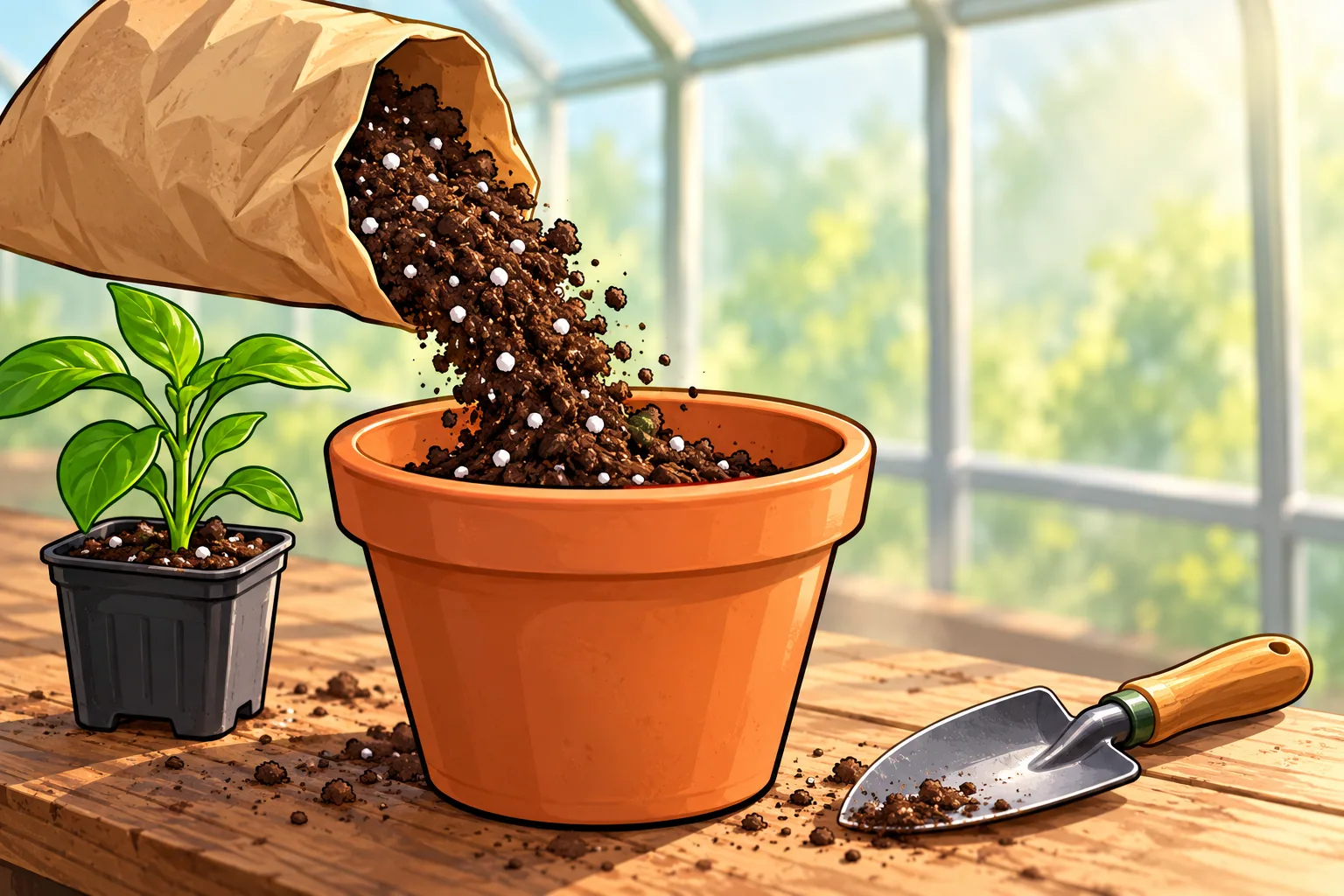
A light, fluffy soilless mix, ideally with some compost in it. UW–Madison says commercial potting mixes work well for most vegetables: light, high in organic matter and well-drained6. Maryland adds that these mixes usually sit around pH 6.2 and come with small amounts of lime and fertilizer5.
Reading the bag before you buy
- Look for sphagnum peat or coconut coir, perlite or vermiculite, composted bark and compost in the list.5
- Pick a pasteurized mix if you can, to cut the risk of soil-borne disease.6
- Check for fertilizer on the label; if it has none, mix in a slow-release one at planting.6
- Skip bags of sedge peat, and mixes that feel heavy or gritty, look very fine or come out in clumps.5
- A bag sold as topsoil or planting soil varies a lot in quality; read what is in it.5
Maryland's tested home blend for vegetables is 50% soilless mix and 50% compost, and it says vegetables can even grow in 100% compost or leaf mold5. Compost brings food that peat lacks, but it releases it slowly, so you still feed through the season5. The pepper fertilizer guide covers that rhythm.
That blend takes two bags off the shelf, and these are the two to look for.
Potting mix worth buying for peppers
A bagged mix and a bag of compost make the blend Maryland tested.
Bagged soilless potting mix, pasteurized
You fill your pots with this because commercial mixes are light, high in organic matter and well drained.
- A pasteurized mix lowers the risk of soil-borne disease
- Check the label for fertilizer, and add slow-release granules if there is none
- Ph: about 6.2
- Best for: Pots and containers
- View on Amazon: Bagged compost
Bagged compost
You mix it half and half with the potting mix to add the nutrients compost carries.


As an Amazon Associate we earn from qualifying purchases. We choose product types from what their labels and extension sources say; the commission does not change what we recommend. Our affiliate disclosure
Wet the mix before you plant. Soilless mixes repel water at first, so work water into them with your gloved hands until the whole batch is damp510. Fill the pot to within about an inch of the rim and do not pack it down10.
You can reuse last year's mix if your plants had no root disease. Maryland stores it in a trash can or heavy bag over winter and mixes it 50:50 with fresh mix or compost the next year, since old mix loses nutrients and breaks down5.
How do you mix your own potting mix for one pepper pot?
Mix equal parts compost, peat moss and vermiculite, then add a few ounces of fertilizer per gallon. That is Penn State's soilless mix: 1 part compost, 1 part vermiculite and 1 part peat moss, screened through a 1/4-inch screen, with 0.6 ounce of blood meal, 0.4 ounce of clay phosphate and 0.4 ounce of greensand in every gallon11. The 50:50 blend above is the shortcut; this one is for the days you want to control every ingredient.
Here is the recipe scaled to a 5-gallon pot, which is our arithmetic from Penn State's per-gallon amounts:
| Ingredient | For 5 gallons | What it does |
|---|---|---|
| Compost11 | 1 2/3 gallons | Adds organic matter and microbes that can suppress soilborne disease |
| Peat moss11 | 1 2/3 gallons | Holds water |
| Vermiculite (or perlite)11 | 1 2/3 gallons | Opens the mix for drainage and air |
| Blood meal11 | 3 ounces | A readily available form of nitrogen |
| Clay phosphate11 | 2 ounces | A phosphorus source |
| Greensand11 | 2 ounces | A mineral addition; Penn State names no role for it |
Mix the three bulk ingredients first in a tub or on a tarp, then sprinkle in the three fertilizers and fold them through. Wet the batch by hand before you fill your pot, because soilless mixes repel water at first5.
Two things stay out. Maryland does not recommend bark fines or wood mulch for container vegetables, and garden soil stays under 5 to 10% of the volume even in a very large pot5. This mix already carries fertilizer, so you skip the slow-release granules that UW–Madison adds to a bare mix6; the pepper fertilizer guide covers the feeds that come later.
What pH do pepper plants need?
Slightly acid to neutral, about 6.0 to 7.0, in most gardens you will grow in. The extension services do not agree on the exact range, and seeing them side by side shows you where they overlap.
| pH range | Note |
|---|---|
| 6.5–7.09 | Have your soil tested first |
| 6.0–7.02 | Peppers in general |
| 6.0–6.57 | Add lime or gypsum to soils low in calcium |
| 6.0–6.53 | Hold it there by your soil test results |
| Around 6.512 | Peppers are not too particular |
| 7.0–8.54 | Chile in New Mexico's alkaline soils |
| About 6.25 | Typical commercial soilless mix |
Aim for 6.5 and you sit inside almost every range on that table. The outlier is New Mexico State, which grows chile in a pH of 7.0 to 8.54, a reminder that peppers cope with alkaline soil better than many guides suggest. If your test reads 7.2, you do not need to chase it down.
The pH matters because it sets which nutrients your roots can take up. That link, and what yellow leaves at the wrong pH look like, is covered under yellow pepper leaves.
How to raise or lower soil pH for peppers
Test first, change second. Clemson calls a soil test the best way to know your fertilizer needs and to keep pH in range3, and UF/IFAS warns that lime you did not need can create nutrition problems of its own13.
- 1
- 2
Lime only below 5.5
UF/IFAS limes when the pH is below 5.5, at the rate a reliable soil lab recommends.13
- 3
Use the rule of thumb if you must
Two to three pounds of finely ground dolomitic limestone per 100 square feet usually raises the pH one point.13
- 4
Lime early
Apply it two to three months before planting if you can, or as late as one or two weeks before.13
- 5
Mix it in and water
Work the lime into the top 6–8 inches, then water to start the reaction.13
Here is the sum for a common bed. A 4 by 8 foot raised bed covers 32 square feet, about a third of 100, so raising it one point takes roughly 0.6 to 1 pound of dolomitic lime by that rule of thumb. Your soil lab's number beats this estimate every time.
To lower a high pH, follow the product your soil report names; no source read for this page gives a sulfur rate. In pots, change nothing: Maryland says never add lime, wood ashes or gypsum to commercial mix or compost, because lime is already in the mix14.
Is your garden soil ready? The squeeze test
Grab a handful and squeeze before you dig. UC IPM's test is simple: if the soil forms a clump when squeezed, it is too wet to work; if it crumbles easily, it is good to use7.
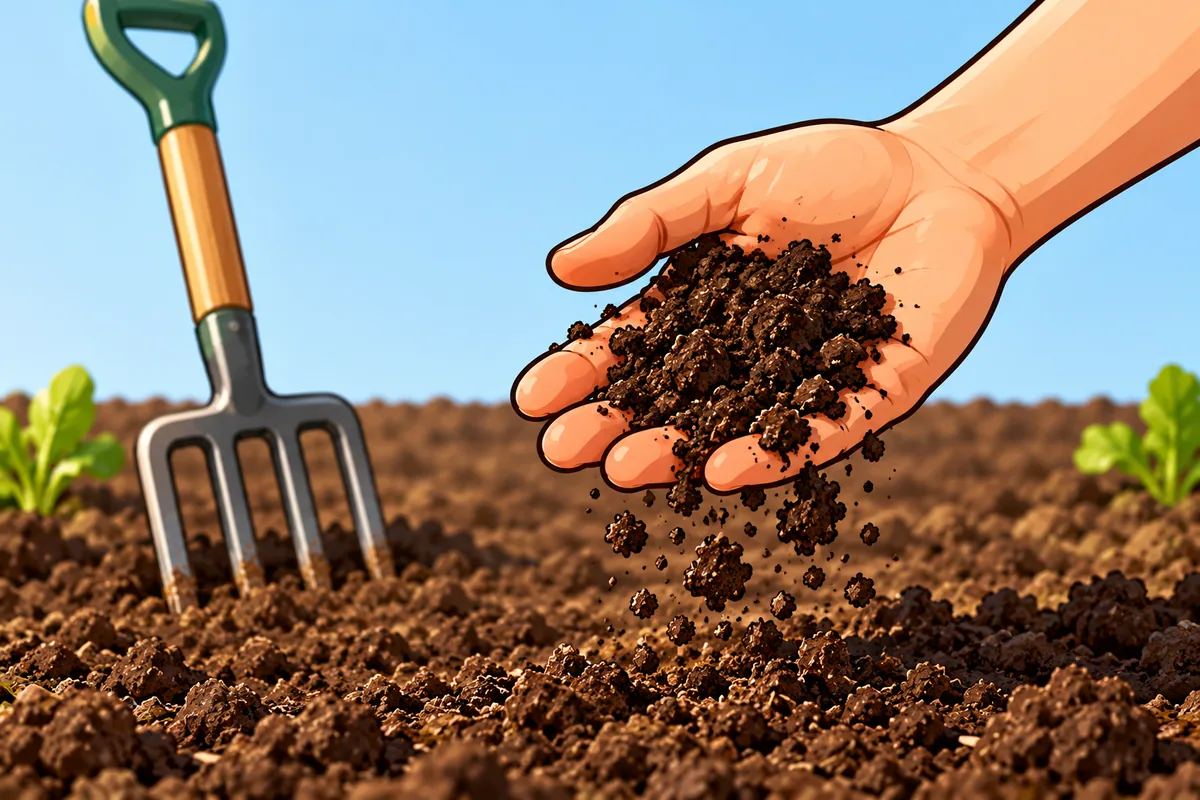
Working wet soil packs it, and packed soil drains slowly. UC IPM ties Phytophthora root rot to fine-textured, slow-draining and compacted soils8, so waiting a few dry days before you dig is part of disease control. UC IPM also wants the soil moist but not wet before you work it7.
Damp soil surfaces bring other trouble too. UC IPM says they draw snails, slugs, sowbugs and root diseases7, the night feeders behind many holes in pepper leaves.
How fast does your pepper bed drain? A hole and a ruler
Between 1 and 3 inches an hour is the range Iowa State calls desirable for most plants15. The squeeze test tells you when to dig; this test tells you whether the spot is worth digging at all. You need a shovel, a ruler and two fills of water, and you can do it in an afternoon.
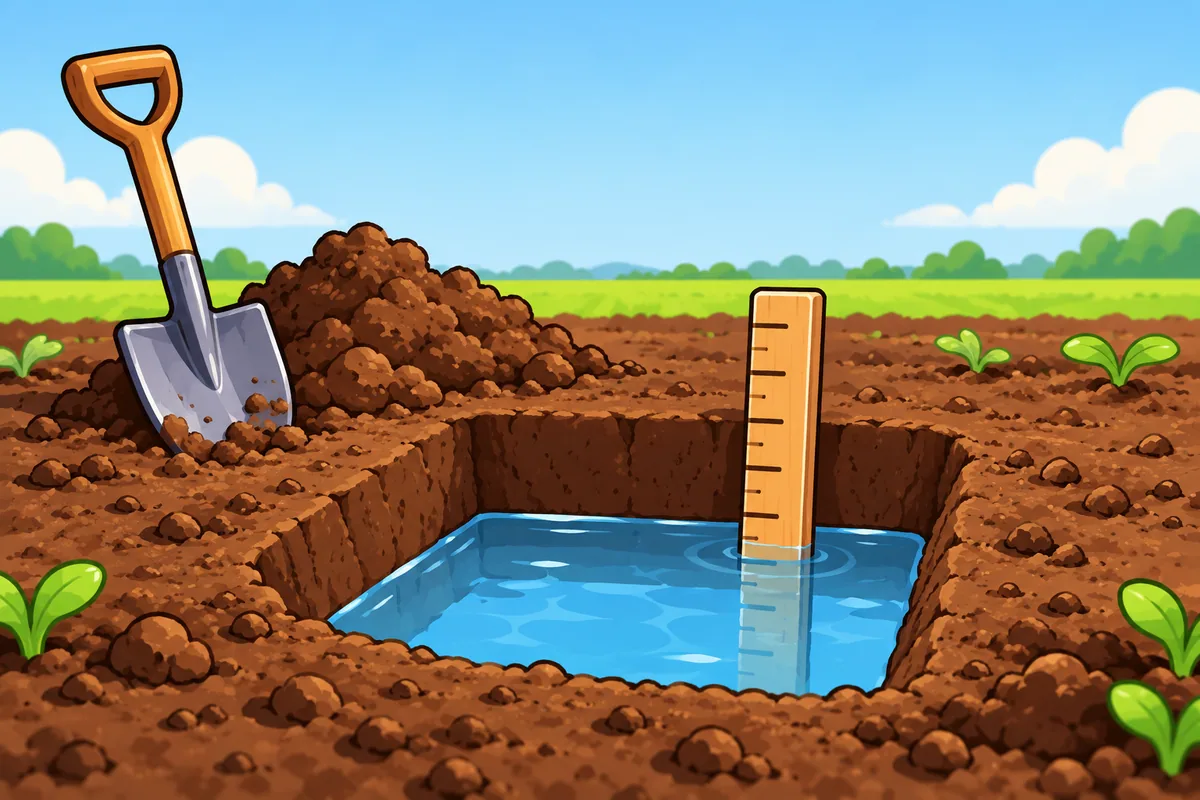
- 1
Dig a test hole
Make it at least 12 inches deep and 4 to 12 inches wide, on a day when the soil is not soggy. Digging wet soil smears and glazes the walls and gives false results.15
- 2
Pre-soak it
Fill the hole with water and let it drain completely. In heavy soil that can take a full day.15
- 3
Fill it again and measure
Refill right away, measure the water depth, wait 15 minutes and measure again.15
- 4
Multiply by four
The drop in 15 minutes times 4 is your rate in inches per hour. A drop of 1/2 inch means 2 inches an hour.15
| Inches per hour | What it means | What you do for peppers |
|---|---|---|
| Under 1115 | Poor drainage | Build a raised bed here, or fix the soil first |
| 1 to 315 | Desirable for most plants | Plant, and add compost as usual |
| 3 to 415 | Not rated by Iowa State | Treat it as the fast end of fine and water on the early side |
| Over 415 | Very well drained | Add compost to hold water, and expect to water often |
Work the numbers for a storm. At half an inch an hour, a 3-inch puddle takes 6 hours to clear, which is close to the 5 to 6 hours of saturated soil that UC IPM ties to the start of Phytophthora root rot8. That is the number you act on.
Iowa State's fixes for poor drainage fit a pepper bed well. Add compost instead of sand, break up compaction, stay off wet soil, and plant a cover crop between seasons so the roots loosen the ground15. If the rate stays under 1 inch an hour after that, build a raised bed. Fast ground is the opposite problem: it needs the rhythm on the watering schedule.
What goes into a raised bed for peppers, and how much?
About 70% topsoil and 30% compost, or a half-and-half blend if your compost is mature. Iowa State gives two recipes: equal parts topsoil, organic matter and coarse sand, or about 70% topsoil with 30% compost16. Ask Extension puts topsoil at one half to two thirds of the mix and compost at one third to one half17.
Here is what each recipe means for your order if you fill a 4 by 8 foot bed 12 inches deep, which is 32 cubic feet or about 1.2 cubic yards. Our arithmetic, at 27 cubic feet per cubic yard:
| Recipe | Topsoil | Compost | Coarse sand |
|---|---|---|---|
| 70% topsoil, 30% compost16 | 22.4 cu ft (0.83 cu yd) | 9.6 cu ft (0.36 cu yd) | None |
| 2/3 topsoil, 1/3 compost17 | 21.3 cu ft (0.79 cu yd) | 10.7 cu ft (0.40 cu yd) | None |
| Half topsoil, half compost17 | 16 cu ft (0.59 cu yd) | 16 cu ft (0.59 cu yd) | None |
| Equal thirds with sand16 | 10.7 cu ft (0.40 cu yd) | 10.7 cu ft (0.40 cu yd) | 10.7 cu ft (0.40 cu yd) |
Four mistakes spoil a good recipe. Leaving the sod in place, building distinct layers (which stop water moving and discourage roots), buying topsoil with lead or pesticides in it, and using immature or salty compost all show up on Iowa State's list16. Ask Extension adds that heavy, repeated compost builds phosphorus and soluble salts in the soil17, which is one more reason to test the bed before you feed it. The spacing guide shows how many plants that 32 square feet holds.
Five signs your pepper soil is wrong, and the fix
Your plant tells you when the soil is off, usually within a few weeks. These are the signs you are most likely to see, with what causes each one and what you do about it.
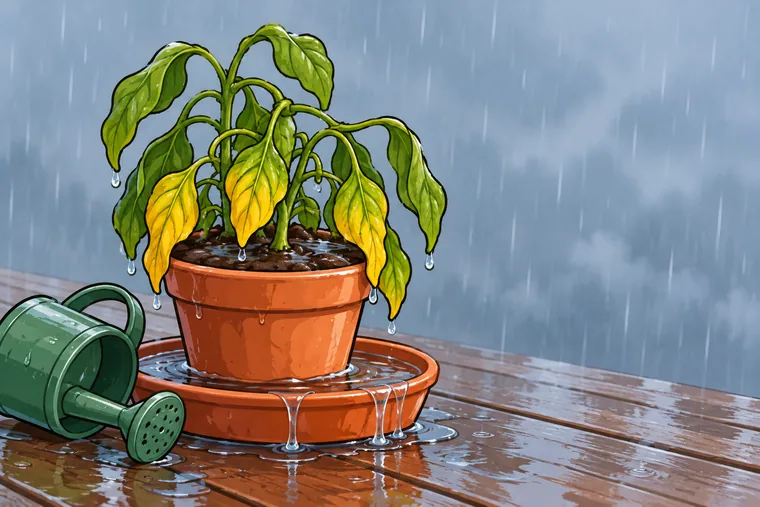
- The mix in your pot stays soggy for days. Garden soil in the pot, or a layer of gravel at the bottom, holds the water back. Maryland says soil drowns roots in containers, and UW–Madison says layers in a pot slow drainage56. Repot into soilless mix all the way down.
- Water beads up and runs off the top. The mix dried out and turned water-repellent. Work water in by hand until it is damp through5, and stand a small pot in a bucket of water if you need to.
- The plant just sits after planting. Maryland says peppers planted before the soil reaches 65°F stall18. Black plastic mulch over the bed warms it9; your plant starts growing once the soil does.
- A big, leafy plant with few pods. Too much nitrogen, often from a bed loaded with manure or rich compost9. Skip extra feeding until fruit sets.
- A plant that wilts in wet, heavy soil. Slow-draining, compacted soil is where Phytophthora root rot is worst8. Next season, plant that spot in a raised bed; the wilting guide helps you sort this season's plant.
Drainage also keeps your pot clean. Maryland notes that water running out of the hole carries excess fertilizer and salts out with it19, so a pot that drains well rarely builds a crust of salt on top.
How much compost or manure to add
Enough to improve your soil without overfeeding your plant. The sources give these rates and rules:
- Compost in a garden bed: Utah State applies no more than 1 inch of well-composted organic matter per 100 square feet1.
- Manure or compost by weight: UC IPM uses about 1 pound per 4 or 5 square feet, worked in several weeks before planting so it can break down7.
- What compost does: New Mexico State says ample compost improves almost any soil, raising the water-holding and nutrient-holding of sand and the air and drainage of clay4.
- Fresh manure: UMN skips it; it may carry harmful bacteria and add weeds. Use well-rotted manure or compost in spring or fall instead9.
More is not better for you here. A bed packed with rich organic matter feeds a lot of nitrogen, and UMN warns that too much nitrogen gives bushy, leafy plants that are slow to bear fruit9.
Your next step depends on your spot. For pots, buy a soilless mix by the checklist above and work out how many bags your pots take; for a bed, send a soil sample this week, so the result is back before planting day.