

Carolina Reaper Scoville, 1.64 Million SHU
A fruity, sweet superhot from South Carolina, bred from a habanero and a Naga Viper.
 Super-hot
Short answer
About 1,641,183 SHU on average
- About 330 times an average jalapeño, and about 1.6 times a ghost pepper
- Held the Guinness record from November 2013 until Pepper X in October 2023
- Call 911 for trouble breathing or chest pain after eating one; Poison Control is 1-800-222-1222
On this page
- 1How hot is a Carolina Reaper?
- 2Why do Carolina Reaper numbers differ?
- 3Where does the Carolina Reaper come from?
- 4What does a Carolina Reaper taste like?
- 5How do you spot a Carolina Reaper?
- 6What happens if you eat a whole Carolina Reaper?
- 7Why does a Reaper burn, and what cools it?
- 8How do you cook with a Reaper without ruining the dish?
- 9How do you handle a Carolina Reaper safely?
- 10Can you dry or freeze Carolina Reapers?
- 11Is the Carolina Reaper still the hottest pepper?
- 12Can you grow one or find a sauce made with it?
How hot is a Carolina Reaper?
The Carolina Reaper averages 1,641,183 Scoville heat units, the figure on the Guinness record page as quoted in the 2022 monograph on the genus1. When Pepper X took the title in 2023, Guinness gave the Reaper's average as 1.64 million6, and Clemson Extension prints the same 1.64 million7.
Log scale; bars are published ranges.Sources for this line1. PhytoKeys 200:1-423 (Pensoft)4. HortScience 42(2):222-2246. Guinness World Records8. University of Florida IFAS Extension
If you've had a habanero, picture a pod somewhere between 5 and 16 times hotter. That spread comes from the habanero's own wide range, worked out below.
How many times hotter than a habanero or a jalapeño?
| Against | Its heat | Reaper is | How we got it |
|---|---|---|---|
| Ghost pepper (trial mean) | 1,001,304 SHU | about 1.6 times hotter | 1,641,183 ÷ 1,001,304 |
| Habanero | 100,000–350,000 SHU | about 5–16 times hotter | 1,641,183 ÷ 350,000 and 1,641,183 ÷ 100,000 |
| Jalapeño (average) | about 5,000 SHU | about 330 times hotter | 1,641,183 ÷ 5,000 |
| Pepper X (average) | 2,693,000 SHU | about 0.6 times, so milder | 1,641,183 ÷ 2,693,000 |
The ghost pepper row is the one you're most likely to underrate. "1.6 times" sounds close, but it is about 640,000 SHU more per gram (1,641,183 − 1,001,304)14, more than the whole heat of the hottest habanero. The Reaper against the ghost pepper puts the two side by side.
Why do Carolina Reaper numbers differ?
Because the sources you read quote different tests. Guinness itself has printed two averages, one extension page prints a much higher single figure without saying where it comes from, and two lab studies landed at opposite ends.
| Figure | Kind of figure |
|---|---|
| 1,569,300 SHU | Average, Guinness announcement, November 2013 |
| 1,641,183 SHU | Average, Guinness record page as of October 2019 |
| about 1.64 million SHU | Same average, rounded, Guinness 2023 |
| 2,009,000 SHU | Single figure, method not stated |
| 1,999,058 SHU | One fresh Reaper paste in a European lab, figure tied to dry weight |
| 518,299 SHU | Backyard-grown Reapers in North Carolina, dry weight |
We print 1,641,183 because it is the newest full average Guinness published. The 2,009,000 figure may be one hot sample, but the page doesn't say, so we can't compare it with an average. Peak figures you see elsewhere, such as 2.2 million, we could not find on any primary source.
The backyard number is the one to remember if you grow your own. The North Carolina team tested peppers grown casually in urban yards, and their Reapers came in at under a third of the Guinness average9. Your home-grown pods may land anywhere in that spread, and even the low end sits about 100 times above a jalapeño8.
Where does the Carolina Reaper come from?
From Ed Currie of the PuckerButt Pepper Company in South Carolina. Guinness describes it as a cross between a Sweet Habanero and a Naga Viper, ten years in the making2.
Sweet HabaneroParent
- crossedCarolina ReaperAbout 1.64M SHUSuper-hot
Naga ViperParent
- crossedCarolina ReaperAbout 1.64M SHUSuper-hot
Ed CurrieBreeder, South Carolina
- bredCarolina ReaperAbout 1.64M SHUSuper-hot
- bredPepper XHis later record pepper, 2.69M SHUSuper-hot
Bars show published heat ranges. Sources for this line1. PhytoKeys 200:1-423 (Pensoft)2. Guinness World Records6. Guinness World Records
Currie's own story starts in the 1980s, growing peppers at home in Rock Hill, South Carolina, until he had 800 plants spread across the homes of family, friends and neighbors3. The company's address today is in Fort Mill, South Carolina. Guinness names the parents and nothing more, so we can't give you heat figures for either one.
- 1980s
Currie starts growing peppers at home in Rock Hill.3
- November 2013
Guinness confirms the Reaper as the hottest chilli at an average of 1,569,300 SHU.2
- By October 2019
The Guinness record page gives a higher average, 1,641,183 SHU.1
- October 2023
Pepper X, also bred by Currie, takes the record at 2,693,000 SHU.6
What does a Carolina Reaper taste like?
Fruity and sweet before the heat lands. Guinness describes a fruity, sweet taste with a hint of cinnamon and chocolate undertones2, and its breeder adds the honest part: painfully hot, with sweet, fruity undertones3. The UC Master Gardeners of Ventura County hear cherry in it as well as chocolate10.
You get maybe a second of that fruit on a raw bite. In a sauce, where you use a little, the fruit has room to show through.
- Fruity
- Sweet
- Cinnamon
- Chocolate
How do you spot a Carolina Reaper?
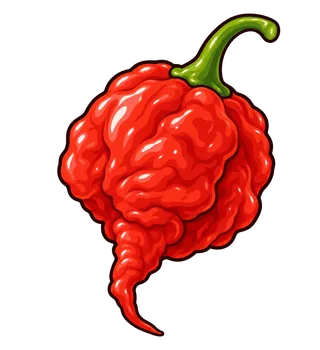
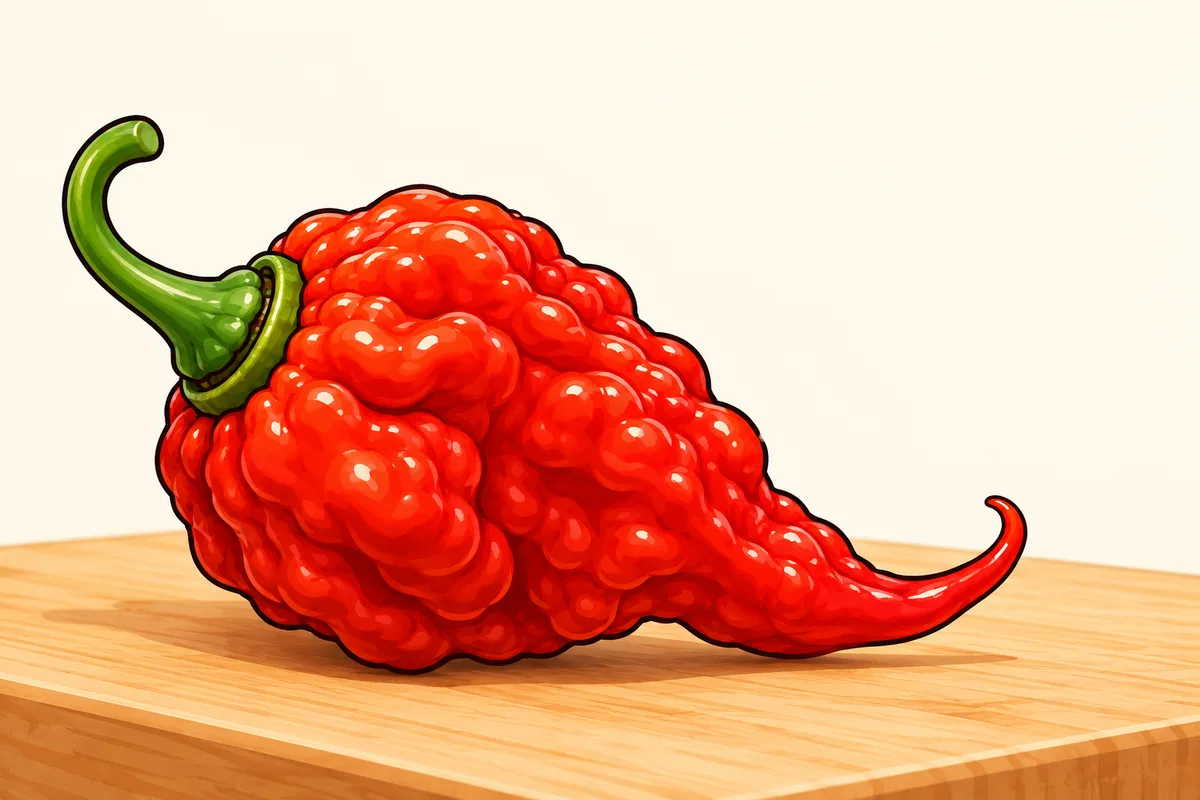
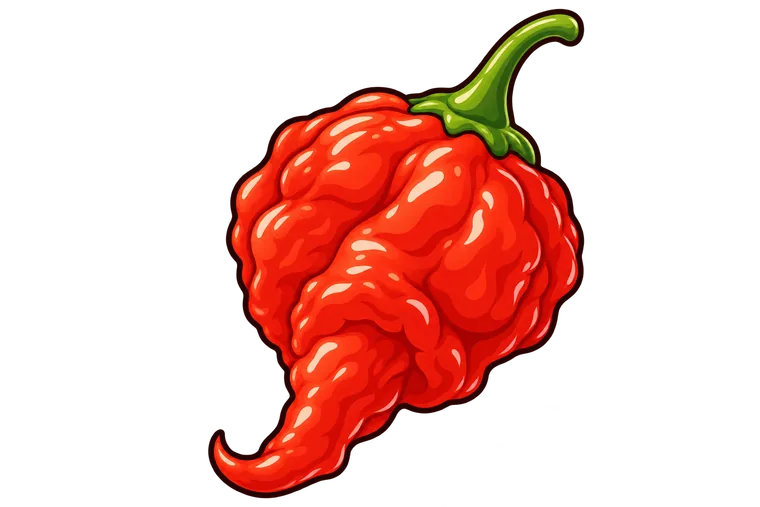
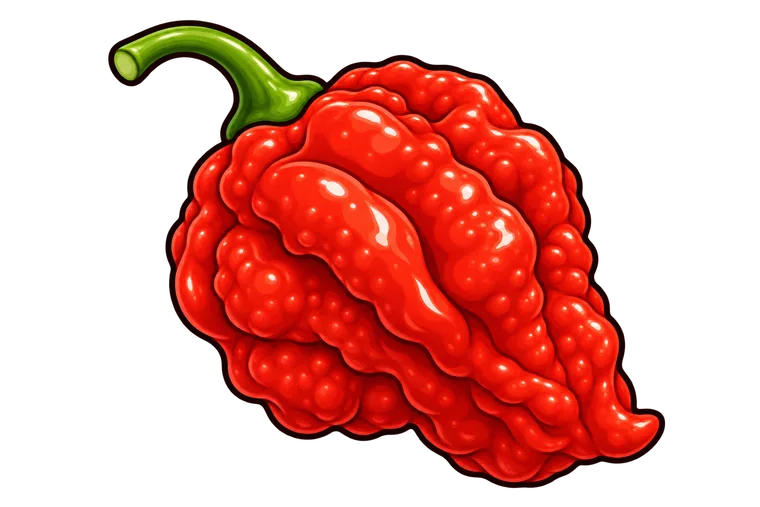
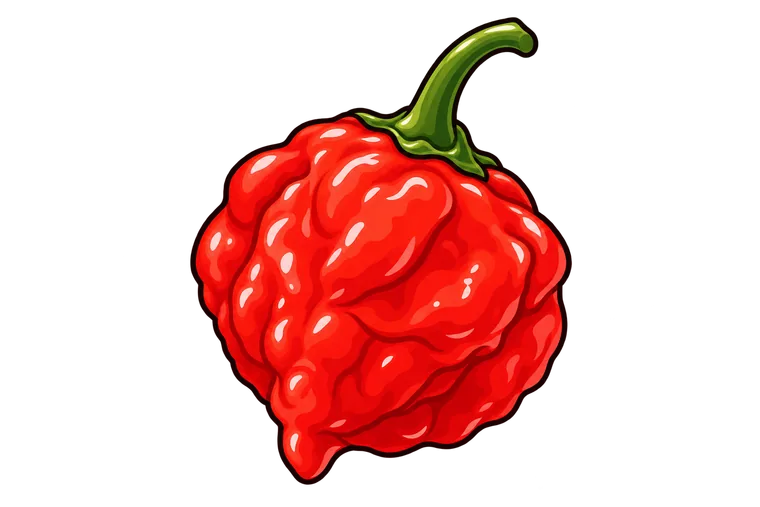
Look for a red, bumpy pod with a short pointed tail. Its breeder's own seed listing shows bright red pods with wrinkled, bumpy skin and pointed tips11. Under the cap you'll find the mark of its species.
A tail alone doesn't prove it. Other superhots carry a pointed tip too, among them the scorpion pepper from Moruga in Trinidad, so a pod from an unlabeled market bag could be any of several.
What happens if you eat a whole Carolina Reaper?
Usually a few miserable hours; rarely, a trip to the emergency room. Poison Control lists what too much hot pepper does when you swallow it12:
- Burning in the mouth and throat
- Nausea and vomiting
- Abdominal pain
- Diarrhea
One published case went further. A 34-year-old man with no medical history ate one Reaper at a hot pepper contest, started dry heaving at once, then had neck and head pain and, over the next days, several brief thunderclap headaches13. A CT angiogram showed narrowed arteries in his brain, his doctors diagnosed reversible cerebral vasoconstriction syndrome, and a scan 5 weeks later showed the arteries back to normal13. It's a single case, and the authors call the link plausible rather than proven. You can still take it as a reason not to treat a whole raw pod as a party trick.
For the ordinary burn, Poison Control suggests small sips of milk or water12. Its own case example mentions ice cream or an antacid helping12.
Why does a Reaper burn, and what cools it?
Capsaicin, the main heat compound, binds to a receptor on your nerve cells called TRPV1, and that binding raises calcium levels inside the cells14. You feel the result as burning, even though nothing in your mouth has changed temperature. A Reaper simply carries far more capsaicin per gram than other peppers, so more receptors fire, for longer.
- You bite the podMost capsaicin sits in the ribs
- Capsaicin binds TRPV1A receptor on nerve cells
- Calcium rises in the cellThe nerve fires
- You feel burningNo real heat involved
The same review explains why gulping water does so little. Capsaicin is fat-soluble but water-insoluble14, so water mostly moves it around your mouth. Milk carries fat, which is one reason Poison Control lists small sips of milk first12.
The heat also sits where the capsaicin forms: about 89 % of it builds up in the placenta, the white ribs, and only 5 to 6 % in the outer wall14. Cut the ribs out and you cut most of a pod's burn.
How do you cook with a Reaper without ruining the dish?
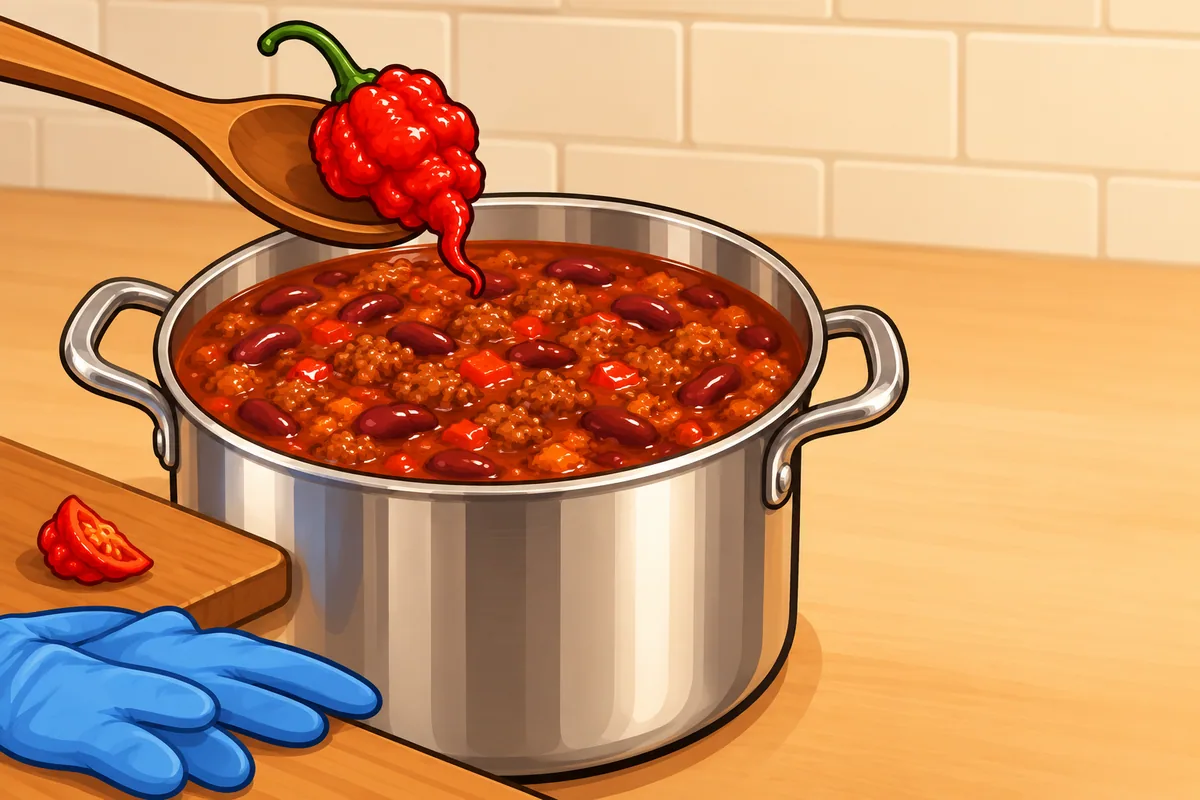
Treat it as a concentrate you measure, not a vegetable you chop in by the handful. Heat in SHU tracks capsaicin per unit of weight, so when you blend a Reaper into other ingredients that carry no heat, the mix comes out at roughly the Reaper's share times its heat. Here's that arithmetic for a batch of sauce, using the 1,641,183 SHU average1:
| Reaper share by weight | Rough sauce heat | About as hot as |
|---|---|---|
| 10 %18 | about 164,000 SHU | A hot habanero (100,000–350,000) |
| 2 %18 | about 33,000 SHU | A cayenne (25,000–50,000) |
| 0.5 %18 | about 8,200 SHU | The top of a jalapeño (2,000–8,000) |
So a single pod in a big pot of chili lands closer to jalapeño heat than you'd guess, while a tablespoon of Reaper mash in a small jar of sauce can match a habanero. Real pods vary, as the lab table above shows, so taste a drop on a spoon before you serve the batch.
If a recipe calls for "a superhot" and you're unsure, here's how the Reaper compares with the next step down:
Carolina Reaper
HotterThe ghost pepper entry has its own flavor notes, and the Reaper against the habanero helps when you're scaling a habanero recipe up.
How do you handle a Carolina Reaper safely?
Glove up before you touch a cut pod, and plan the cleanup before you start. Poison Control gives the fixes for each kind of exposure12:
- 1
Gloves first
Wear rubber, latex or nitrile gloves to cut a Reaper, and keep your hands off your face until you have washed them.12
- 2
Work with air moving
Breathing capsaicin can trigger an asthma attack or breathing trouble in some people, so cut and blend superhots with a window open or a fan on.12
- 3
If it gets on your skin
Flush with warm water; vegetable oil or a soak in diluted vinegar can ease the burn, and so can an antacid such as Maalox on the skin.12
- 4
If it gets in your eyes
Rinse with plenty of warm water for 15 minutes, then try cool compresses.12
Can you dry or freeze Carolina Reapers?
Yes, and both keep the heat for months. A healthy plant can leave you with more pods than you'll use fresh, so it pays to plan your storage before the late-season flush:
Before you dry or freeze a batch of Reapers
- Dry ripe red pods whole; red chiles need no blanching.
- In an oven, use the lowest setting but no lower than 140–150 °F, keep an electric oven door open at least an inch, and expect about 4 to 8 hours.
- Open a window or run a fan: capsaicin in the air can trigger an asthma attack in some people.
- Done pods look shrunken and dark red and still bend a little.
- Condition dried pods for a week in a covered clear jar; moisture beads mean they need more drying.
- To freeze, pack whole pods in containers no deeper than 2 inches with the air pressed out.
| How you keep them | Use within |
|---|---|
| Dried, sealed, room temperature15 | About 1 month |
| Dried, in the refrigerator15 | Up to 3 months |
| Dried, in the freezer15 | 3 months to 1 year |
| Fresh pods, frozen at 0 °F or below16 | Up to 12 months |
Wear gloves for every step, including when you crush dried pods into flakes. Dried pods break into fine dust, and Poison Control warns that breathing capsaicin can bring on breathing trouble12.
Is the Carolina Reaper still the hottest pepper?
No. It held the Guinness record from November 20132 until October 2023, when Pepper X took it at an average of 2,693,000 SHU, also bred by Currie6. That's about 1.6 times the Reaper, and the Reaper and Pepper X side by side works through the gap.
The Reaper is still easier for you to get hold of: its breeder sells Reaper seed and lists no Pepper X seed11.
Can you grow one or find a sauce made with it?
Yes to both. Seed is on its breeder's shop, and the Carolina Reaper growing guide covers the season. Plan for a long one: University of Maryland Extension gives habanero types, the line of one of the Reaper's parents, 90 to 120 days from transplanting to ripen17.
WIRED made this 2019 profile of breeder Ed Currie, so you can watch how his team grows Reapers and what the pods look like on the plant, and keep in mind that it predates Pepper X, which took the record in 2023.
That means you start seed indoors early. Virginia Extension sets out 6- to 8-week-old transplants once the soil has warmed19, and Clemson gives peppers their best growth at 70 to 85 °F by day and 60 to 70 °F at night7. Don't panic if flowers drop in a heat wave: Virginia Extension links blossom drop to nights above 75 °F19, and the plant sets again once nights cool.
One disease result works in your favor. In two years of field plots by Clemson and the USDA, Carolina Reaper fruit had significantly less green fruit anthracnose than 12 of the 16 cultivars tested20. The study calls that rot an emerging disease of peppers in the eastern US, so the Reaper is one of the safer picks if you've lost fruit to it before.
PuckerButt sells several sauces made with the Reaper5, and other makers have followed. The Carolina Reaper hot sauces list sorts them out, and when you'd rather bottle your own, the Reaper hot sauce recipe gives you a starting batch.
Related peppers
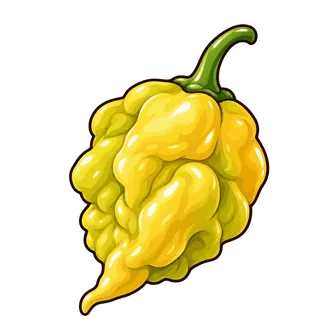 Pepper XSuper-hot2,693,000 SHU average
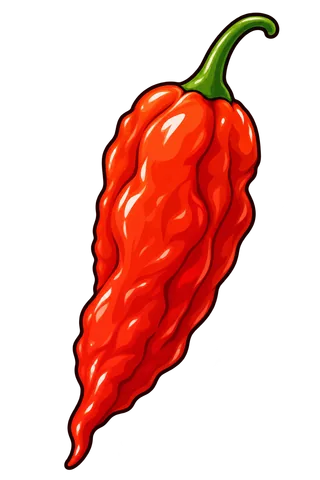 Ghost pepperSuper-hot1,001,304 SHU average
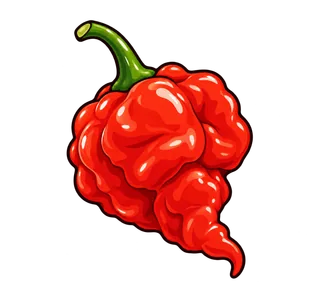 Trinidad Moruga ScorpionSuper-hot1,200,000–2,000,000 SHU
Published ranges.Sources for this line4. HortScience 42(2):222-2246. Guinness World Records21. New Mexico State University News Center
Related in Peppers
-
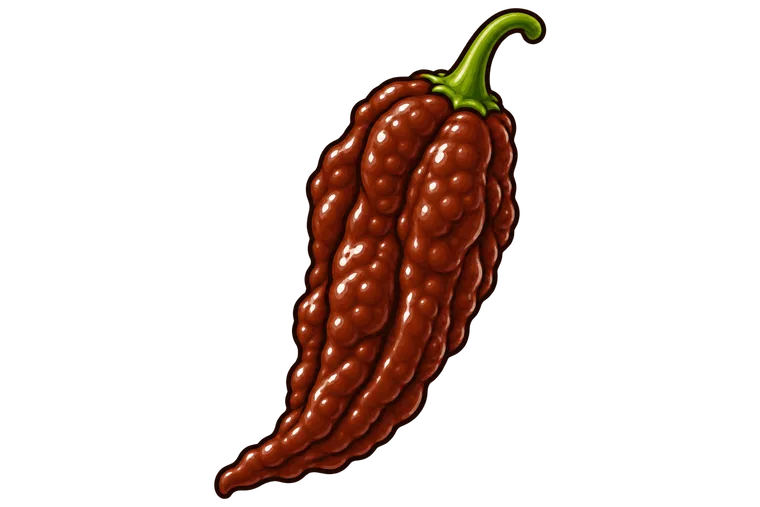
Chocolate Bhutlah Pepper, a Brown Superhot With No Lab Test
A lumpy chocolate-brown pod with smoky ghost-pepper flavor and a heat nobody has published a lab result for.6 min read -
Komodo Dragon Pepper, 1.4 Million SHU With a Slow Burn
A wrinkled red superhot from England whose burn arrives after you've already swallowed.5 min read -
Habanero Pepper Scoville, 100,000–350,000 SHU
A fruity, floral chile in the extra-hot band.7 min read -
Jalapeño Scoville, 2,000–8,000 SHU and Chipotle
The medium-heat chile most heat comparisons start from.6 min read -
Dragon's Breath Pepper, a 2.48M SHU Claim Never Verified
A small red superhot shown at the Chelsea Flower Show in 2017, whose famous number never came with a test report.6 min read -
Scotch Bonnet Scoville, 100,000–350,000 SHU
The squat, lobed Caribbean cousin of the habanero.6 min read
Sources
· 21
- 1PhytoKeys 200:1-423 (Pensoft) Monograph of wild and cultivated chili peppers (Capsicum L., Solanaceae)
- 2Guinness World Records Confirmed: Smokin Ed's Carolina Reaper sets new record for hottest chilli
- 3PuckerButt Pepper Company (breeder, own peppers) Our Roots
- 4HortScience 42(2):222-224 'Bhut Jolokia', the world's hottest known chile pepper, is a putative naturally occurring interspecific hybrid
- 5PuckerButt Pepper Company (breeder, own products) PuckerButt Pepper Company: home page and product listings
- 6Guinness World Records Pepper X dethrones Carolina Reaper as world's hottest chilli pepper
- 7Clemson Cooperative Extension, Home & Garden Information Center HGIC 1316: Pepper
- 8University of Florida IFAS Extension HS-859/TR010: Pepper Production in Miami-Dade County, Florida
- 9International Journal of Molecular Sciences 26(10):4916 (MDPI) Capsaicinoid Profiles, Phenolic Content, and Antioxidant Properties of Chili Peppers Grown in Urban Settings (Alghamdi, Rathinasabapathy, Komarnytsky)
- 10University of California Agriculture and Natural Resources, UC Master Gardeners of Ventura County Ventura Garden to Table Series: Peppers
- 11PuckerButt Pepper Company (breeder, own products) Seeds
- 12National Capital Poison Center (Poison Control) Capsaicin: When the chili is too hot (Amanda McDaniel-Price, RN)
- 13BMJ Case Reports 2018:bcr2017224085 An unusual cause of thunderclap headache after eating the hottest pepper in the world, 'The Carolina Reaper' (Boddhula, Boddhula, Gunasekaran, Bischof)
- 14Heliyon (Cell Press) A comprehensive review of capsaicin: Biosynthesis, industrial productions, processing to applications, and clinical uses
- 15New Mexico State University, Cooperative Extension Service (Guide E-322, Flores and Davies) Drying Foods
- 16New Mexico State University, Cooperative Extension Service (Guide E-324, Nancy C. Flores) Processing Fresh Chile Peppers
- 17University of Maryland Extension Growing Peppers in a Home Garden
- 18WIRED How This Guy Made the World's Hottest Peppers | Obsessed | WIRED
- 19Virginia Cooperative Extension (Relf, McDaniel; reviewed by Olsen) SPES-684: Peppers
- 20Plant Disease 110(5):1743-1749 (American Phytopathological Society) Resistance in Capsicum Species and Cultivars to Colletotrichum scovillei and Implications for Fungicide Applications (Keinath, Rutter)
- 21New Mexico State University News Center NMSU's Chile Pepper Institute names the Trinidad Moruga Scorpion hottest pepper on earth (Justin Bannister)