
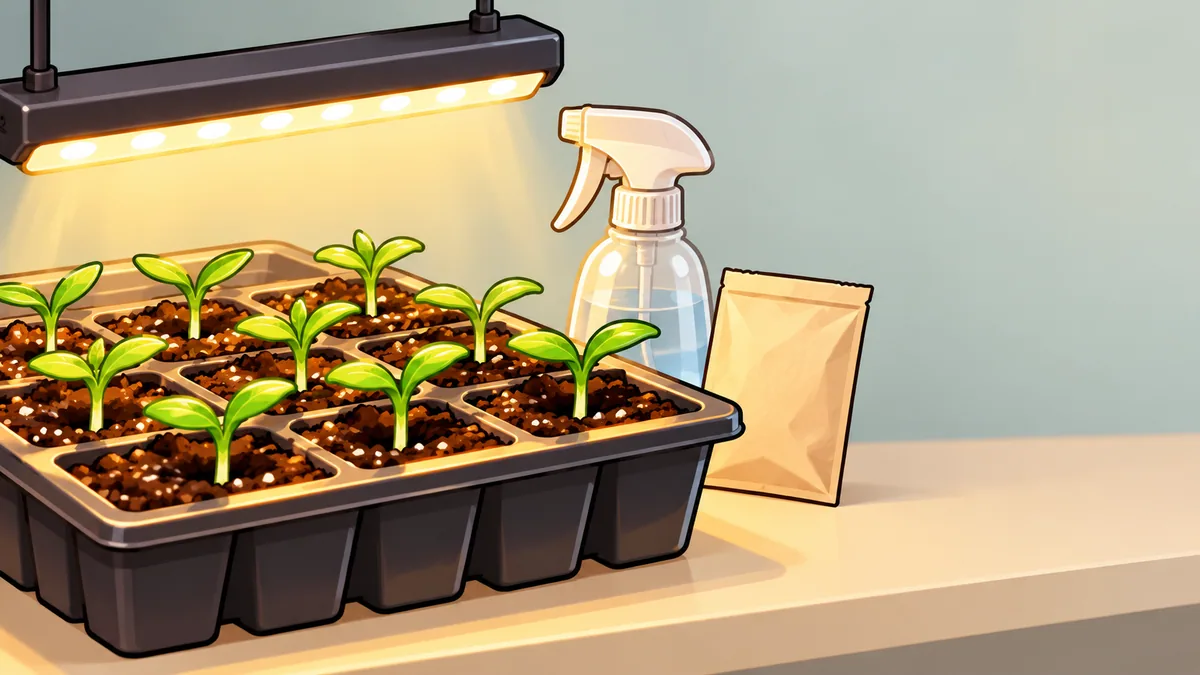
Growing Peppers From Seed, 8–10 Weeks Before Your Frost
Count back from your last frost, keep the mix warm, and the rest follows a calendar.
Short answer
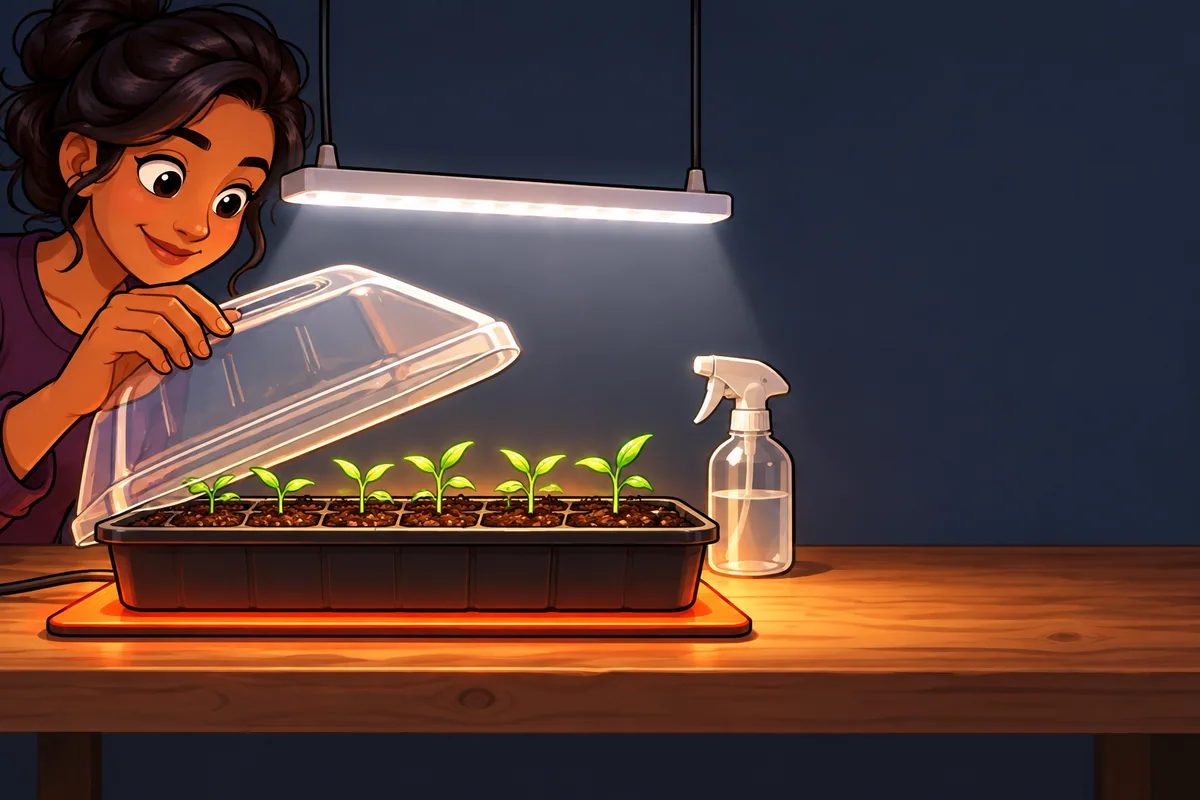
Sow indoors 8–10 weeks before your last spring frost, keep the mix near 80°F until the seeds sprout, then grow the seedlings cooler under bright light.
- At 77–86°F soil, pepper seed comes up in about 8 days; at 59°F it takes 25
- Pot up at the first or second set of true leaves, harden off for 7–10 days, plant out once the soil reaches 60°F
Seed starting at a glance
From seed tray to garden
Weeks counted from your last spring frost; minus means before it.
- Sow slow types12 weeks before1
- Sow on a heat mat10–8 weeks before, mix at 80°FSources for this line1. University of Maryland Extension2. PlantVillage, Penn State University7. Utah State University Extension
- Sprouts appear8–25 days after sowing2
- Grow on under lights65–75°F, 14–16 hours a day78
- Pot upAt the first or second set of true leaves28
- Start feedingAbout 6 weeks after sowing8
- Harden off7–10 days, a few hours more each day212
- Plant out2–3 weeks after frost, soil at 60°F or more2
Days to sprout by soil temperature
- 50°F (10°C)Little or none
- 59°F (15°C)25 days
- 68°F (20°C)12 days
- 77°F (25°C)8 days
- 86°F (30°C)8 days
- 95°F (35°C)9 days
- 104°F (40°C)Little or none
Seed sown 1/2 inch deep. UC Davis data published by Oregon State Extension5.
Moving outside
Hardening off, day by day
Seven to 10 days, starting in shade. Nebraska Extension sets the order.
- 1Start on a mild or cloudy daySet the plants in a shaded spot out of strong wind for 2–3 hours.12
- 2Add a few hours each dayLengthen their time outside and their sun a little more every day.12
- 3Water a bit less oftenSpace out watering, but never let them wilt. Hold the fertilizer until after planting.12
- 4Leave them out overnightAfter several days of 10–12 hours outside, leave them out day and night for a couple of days.12
- 5Plant out on warm nightsNebraska waits for nights of at least 60°F; Penn State for soil of at least 60°F.212
On this page
- 1How do you grow peppers from seed, week by week?
- 2How old can your pepper seed be, and how do you test it?
- 3How many seeds should you sow for 12 plants?
- 4How do you sow pepper seeds?
- 5How warm should pepper seeds be?
- 6How do you water a seed tray that sits on a heat mat?
- 7How long do superhot seeds take to sprout?
- 8What do seedlings need once they sprout?
- 9When should seedlings be potted up?
- 10Which mistakes stall pepper seeds?
- 11How do you harden off pepper seedlings?
- 12Your sowing date
How do you grow peppers from seed, week by week?
Pick your last spring frost date and count back. Maryland and Penn State both start peppers indoors 8 to 10 weeks before that date, and Maryland gives slow types 1212. Penn State then plants out 2 to 3 weeks after the frost date, so your whole indoor stretch runs about three months2. The timeline at the top of the page sets each job on that week count.
New Mexico State runs a shorter clock in a home greenhouse: 6 to 8 weeks from seeding to transplant size3. A warm greenhouse grows plants faster than your windowsill, so the 8–10 week window is the safer count for most homes. The when to start pepper seeds page goes deeper on the date itself.
How old can your pepper seed be, and how do you test it?
Pepper seed keeps about 2 years when you store it well. UW–Madison Extension Dane County lists corn and peppers at 2 years, against 1 year for onions and 3 for beans, carrots and peas4. Fresh seed germinates best, and the date on your packet is a best-used-by date; your seed often stays viable longer, but germination drops with age.
Store your leftover seed cool, dry and dark, ideally near 40°F. In a refrigerator, use an airtight container to keep moisture out, and keep the seeds away from fruit and vegetables that are going soft, because aging produce gives off ethylene gas that hurts germination4.
When the seed is old or the year is unknown, test ten seeds before you fill a tray.
- 1
Moisten a half sheet of paper towel
Use a paper towel or an undyed napkin, wet but not dripping, laid flat so it is longer than it is tall.4
- 2
Line up ten seeds and roll it
Place ten seeds along one edge and roll the towel into a loose cylinder so every seed touches the damp paper.4
- 3
- 4
Check every 2 to 3 days and count
Look for sprouts until the day the packet says peppers should be up, then count. Eight sprouted seeds out of ten means 80 percent.4
Below 40 percent, UW–Madison says you should buy fresh seed, because the few seeds that sprout may be stunted and unproductive4. At 50 percent you can still plant, but sow more seeds than you need.
How many seeds should you sow for 12 plants?
Divide the plants you want by your germination rate. Illinois Extension says a dozen plants may feed most families6, and Utah State plans 3 or 4 plants for each person who eats peppers fresh7. UMD starts pepper with one seed per cell, so every seed you sow takes one cell of the tray8.
| Seeds sprouted out of 10 | Germination rate | Cells to sow for 12 plants |
|---|---|---|
| 9 | 90% | 14 |
| 8 | 80% | 15 |
| 6 | 60% | 20 |
| 5 | 50% | 24 |
| 4 | 40% | 30 |
A tray with a spare cell or two costs you almost nothing, while a tray with too few plants leaves your bed half empty on planting day.
How do you sow pepper seeds?
Shallow, in a moist mix, somewhere warm. These are the steps the extension guides give you, in the order you do them at your tray.
- 1
Pick a container that drains
Any clean container works if it drains and is at least 2 inches deep.8
- 2
Wet the mix first
Moisten the seed-starting mix until it feels like a wrung-out sponge, then fill to within an inch of the top.8
- 3
- 4
- 5
Lift the cover at the first sprout
Take the humidity dome off as soon as sprouts appear, and move the tray under lights.8
Keep your mix from drying out before the seeds come up: Penn State says a dry spell lowers germination2. Soaking seeds and the paper-towel method get their own page, should you soak pepper seeds, because no extension source we read covers either one.
The University of Minnesota Extension yard and garden team walks through the basics of starting vegetable seeds indoors, which carries over to a pepper tray, while the heat and depth figures above stay the pepper-specific ones.
How warm should pepper seeds be?
Warm: about 77 to 86°F at the soil in your tray. In the germination data UC Davis researcher J. F. Harrington collected, which Oregon State Extension publishes, pepper seed takes 8 days at 77°F and at 86°F, 12 days at 68°F and 25 days at 59°F5. At 50°F and below, almost nothing comes up; the sprouting chart at the top of the page draws the whole curve.
The same data puts pepper's best soil temperature at 85°F and its useful range at 65 to 95°F5. Penn State gives a narrower 70 to 85°F2. A cool spare room in late winter often sits near 60°F, which is why your heat mat cuts the wait from weeks to days.
How do you water a seed tray that sits on a heat mat?
Check your tray every day, because a mat dries the mix faster than a cool shelf does. UMN Extension keeps the flat at 80 to 90°F until the seedlings emerge and warns you to watch the moisture, since heating mats dry the mix out faster10. After the sprouts show, UMN calls a soil temperature of 70°F ideal, so you can turn the mat down.
For the watering itself, UMD Extension says to wait until the top of the mix is nearly dry. You can water from the top, letting the water soak in and drain out of the bottom holes, or from below, by setting the tray in a pan with a shallow layer of water so the mix wicks it up through the drain holes8. A tray without drain holes acts like a saucer, so water it carefully; roots stop growing and die when the mix stays saturated, and UMD adds that mix kept too wet invites the water molds behind root rot and damping off8.
How long do superhot seeds take to sprout?
Longer than you expect, and they quit sooner in the cold. In a 2021 study of Capsicum chinense lines (the habanero species, which includes most superhots), no seed germinated at 9 to 15°C (48 to 59°F), and germination peaked at 24 and 27°C, about 75 and 81°F11.
That lower limit matters to you. The general pepper data still gives 25 days at 59°F5, but the chinense lines in the study did not sprout at all at that temperature11. For superhots, keep your mix between about 75 and 81°F and do not judge a tray until well past the 8–25 days Penn State gives for peppers in general.2
What do seedlings need once they sprout?
Your seedlings want less heat and a lot of light. Once the root emerges, Utah State moves pepper seedlings to a cooler 65 to 75°F and hangs the lights close7. Maryland keeps its lights 2 to 6 inches above the plants for 14 to 16 hours a day on a timer, and raises them as the plants grow so they stay stocky, not stretched8.
A bright south-facing window works too, in Penn State's guide2, but if your seedlings lean hard toward the glass and grow long and thin, they want more light than the window gives, the stretched growth Maryland sets its lights to prevent8. If you are choosing a fixture, the grow lights guide compares the options for your shelf.
On feeding, the sources give you two answers. Utah State feeds weekly with a half-strength soluble fertilizer before planting out7, while Maryland waits, since most mixes carry enough for at least 6 weeks8. Starting your half-strength feed around week six fits both. The pepper seedling care page covers watering and leggy stems.
Warmth, light and a tray that drains are the three things you buy for this stage, and here is what to look for in each.
Gear for starting pepper seeds indoors
Warmth, light and a tray that drains are the three purchases.
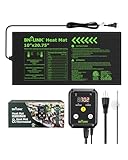
Seedling heat mat
Our pickYou buy this when your seed-starting room is cooler than the 77 to 86°F where pepper seed sprouts fastest.
- Temperature
- 77 to 86°F at the soil
- Days to sprout
- 8 days at 77°F and at 86°F; 25 days at 59°F
Seedling grow light with timer
You hang it just above your seedlings so they grow stocky and not stretched.
- Where
- 2 to 6 inches above the plants
- How often
- 14 to 16 hours a day on an outlet timer
Seed-starting tray with drainage holes
You water through the holes, from the top or by wicking from below, so the mix never stays soaked.
- Size
- 10 by 20 inches for a standard flat


2 sources
As an Amazon Associate we earn from qualifying purchases. We choose product types from what their labels and extension sources say; the commission does not change what we recommend. Our affiliate disclosure
When should seedlings be potted up?
When your first true leaves show. Maryland transplants shortly after the first true leaves appear, while the plant is small and recovers fast8; Penn State waits for two sets and moves seedlings to a 3 to 4 inch pot2.
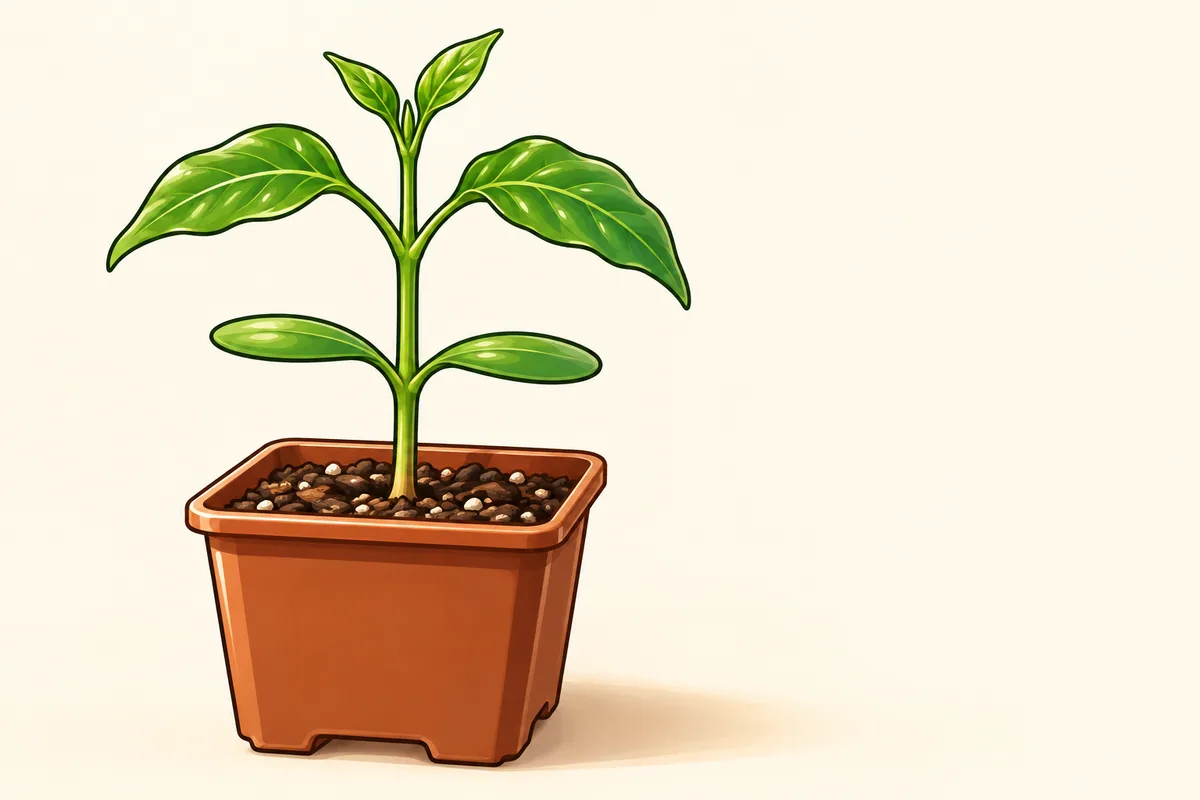
Either cue works for you. Waiting much longer is the risk: Maryland warns that seedlings kept too long in a tray end up tall and root-bound8. By planting day, Utah State wants transplants with 6 to 9 mature leaves and a well-developed root system7.
Which mistakes stall pepper seeds?
If your tray fails, the cause is usually temperature or water. These are the mistakes the sources name, superhots first.
- A mix colder than 59°F (15°C): the chinense lines in the 2021 study did not sprout at all.11
- A mix kept wet: damping off can kill a whole tray of seedlings. Water when the top is nearly dry.8
- A mix left to dry out before the seeds sprout, which lowers germination.2
- Sowing too early, so the plants are tall and root-bound by planting day.8
- Seedlings that collapse with dark, shriveled stems at the soil line: damping off. Use fresh mix and quick-sprouting seed.2
- Old seed stored warm. Use fresh seed or seed kept cool and dry, such as in a refrigerator.8
If damping off hit last year, clean your trays before you reuse them: Maryland soaks them 1 to 2 minutes in 1 part bleach to 10 parts water8. The seeds not germinating page works through a tray that stays bare, and the pepper growing mistakes page follows the same idea through the rest of the season.
How do you harden off pepper seedlings?
Over 7 to 10 days, and you start in shade. Penn State calls this step very important, because peppers suffer badly from transplant shock2. Nebraska Extension lays out the days12, and the hardening-off steps on this page follow them in order.
Hardening off pepper plants has the signs that your plant got too much sun too soon.
Your sowing date
Take your average last frost date and step back 8 and 10 weeks from it, or 12 for slow types1. Here is the arithmetic for three frost dates, with Penn State's planting-out window2:
| Last frost | Sow (10–8 weeks before) | Slow types (12 weeks) | Harden off from | Plant out (2–3 weeks after) |
|---|---|---|---|---|
| April 1 | Jan 21 – Feb 4 | Jan 7 | about April 5 | April 15–22 |
| April 20 | Feb 9 – Feb 23 | Jan 26 | about April 24 | May 4–11 |
| May 15 | Mar 6 – Mar 20 | Feb 20 | about May 19 | May 29 – June 5 |
Write your sowing date on the seed packet. If your soil is still cold on the planting-out date, wait; the when to plant peppers guide explains the soil temperature check.
Quick answers
Quick answers
How long do pepper seeds take to germinate?
About 8 days with the soil at 77 to 86°F, 12 days at 68°F and 25 days at 59°F. Below 50°F almost nothing comes up.5
When should you start pepper seeds indoors?
Eight to 10 weeks before your last spring frost, or 12 weeks for the slow types Maryland Extension singles out.1
Can you start pepper seeds too early?
Yes. Maryland Extension warns that seedlings kept too long in a tray end up tall and root-bound by planting day.8
More in Grow
The newest from Grow
-
How to Grow Carolina Reapers, Seed to Ripe Pod
A C. chinense on the longest clock in the garden.Oct 18, 2026 · Guide -
Best Fertilizer for Peppers and the 4- and 8-Week Feeds
A soil test, a starter feed and two light side-dressings.Oct 18, 2026 · Guide -
Pepper Plant Leaves Curling? 6 Causes and the Fix
Which way the leaf curls, and what sits under it, tells you the cause.Oct 18, 2026 · Guide -
Pepper Plant Spacing, 18 Inches Apart in Rows and Beds
18 inches is the middle; your bed, your summer and your variety move it.Oct 18, 2026 · Guide -
When to Plant Peppers, 2–3 Weeks After Your Last Frost
Three checks, one date to count from.Oct 18, 2026 · Guide -
Pepper Plant Leaves Turning Yellow? 8 Causes and Fixes
Where the yellow starts tells you more than the yellow itself.Oct 18, 2026 · Guide
Sources
· 12
- 1University of Maryland Extension Growing Peppers in a Home Garden
- 2PlantVillage, Penn State University Chilli Pepper
- 3New Mexico State University Cooperative Extension Service Guide H-240: Growing Chile Peppers in New Mexico Gardens
- 4UW–Madison Extension, Dane County (Lisa A. Johnson) Testing Seed Viability
- 5Oregon State University Extension Service Soil Temperature Conditions for Vegetable Seed Germination (data: J. F. Harrington, UC Davis)
- 6University of Illinois Extension Peppers (Home Vegetable Gardening)
- 7Utah State University Extension How to Grow Peppers in Your Garden
- 8University of Maryland Extension Starting Vegetable Seeds Indoors
- 9UMN Extension - Yard and Garden UMN Extension Basics of Starting Seeds
- 10University of Minnesota Extension Growing peppers (Marissa Schuh, Cindy Tong)
- 11Iğdır Üniversitesi Fen Bilimleri Enstitüsü Dergisi 11 (special issue): 3336–3346 The effect of temperature on seed germination in Capsicum chinense genotypes (Gökpınar, Balkaya, Şahin)
- 12Nebraska Extension in Lancaster County, University of Nebraska–Lincoln Hardening Off Transplants (Sarah Browning)
Coming soon
Your pocket pepper index.
Built from the same index as this site.
- Every entry offline
- Compare any two peppers
- Keep a list of peppers you have tried