
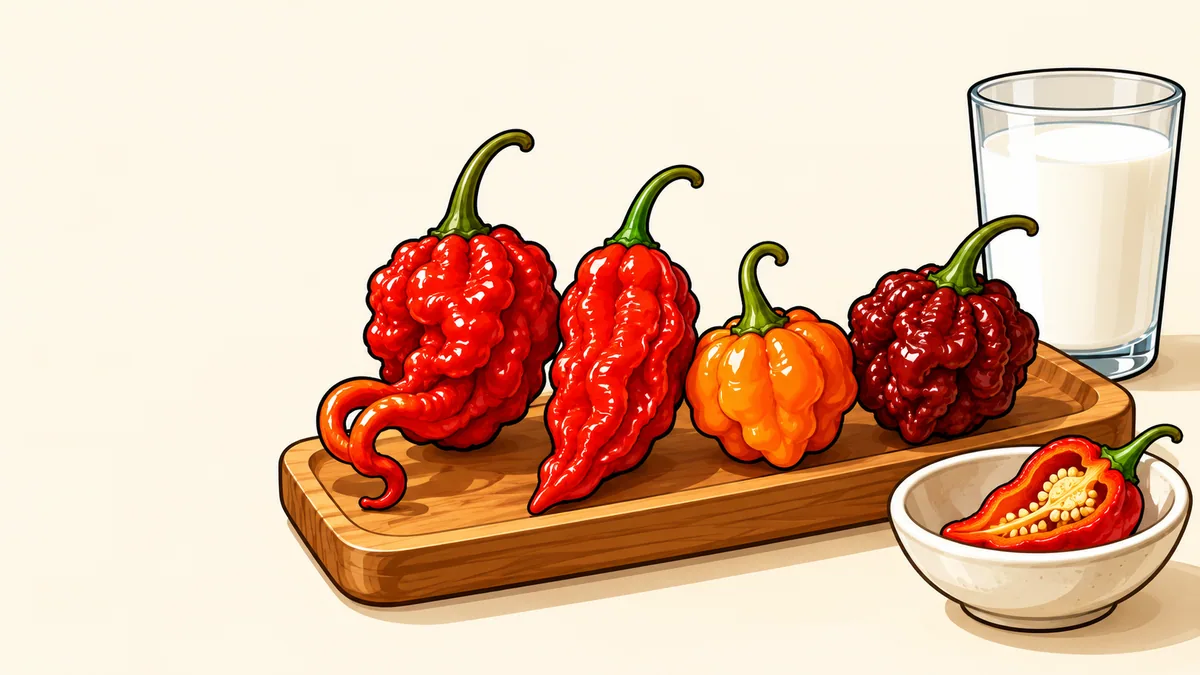
Superhot Peppers Over 1 Million SHU, Listed
The top band of the index: 1,000,000 Scoville heat units and above.
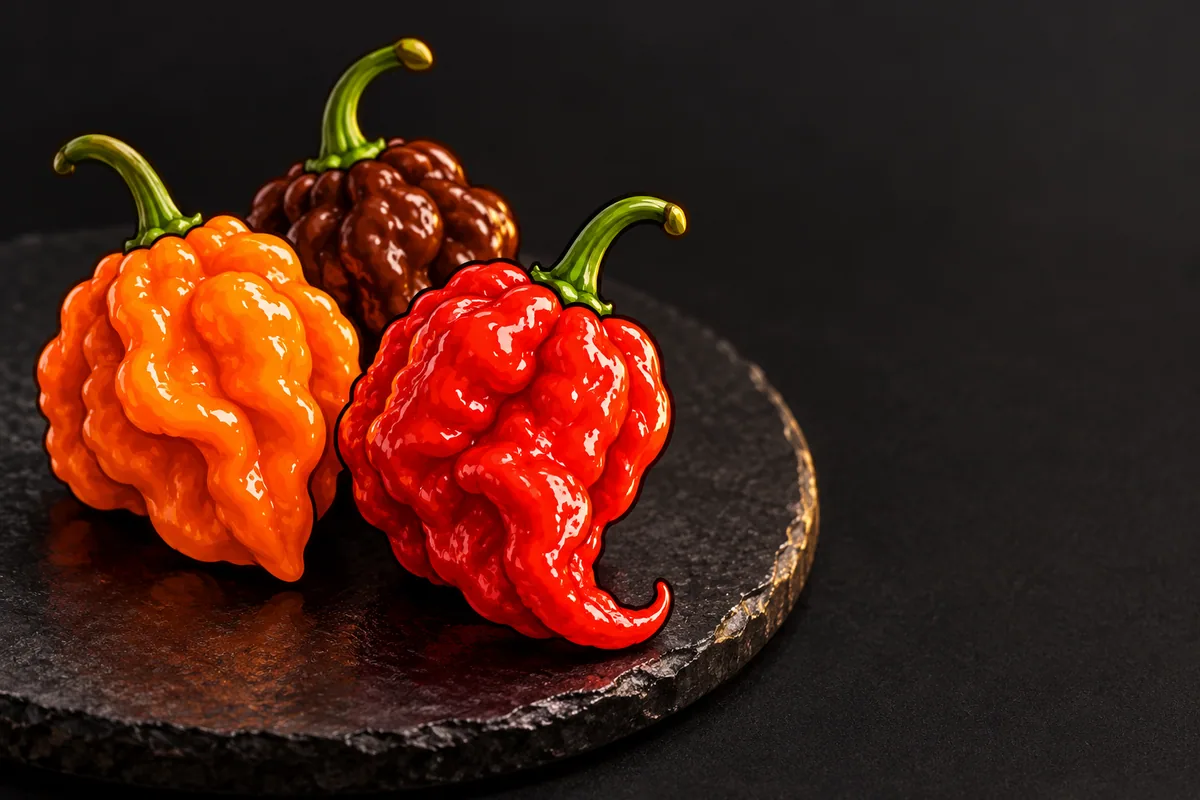
Short answer
A superhot pepper rates 1,000,000 SHU or more, about 200 times an average jalapeño.
- Pepper X tops the band at an average of 2,693,000 SHU
- Nearly all superhots are Capsicum chinense
Inside the superhot band
Every published figure above 1 million SHU
Each bar starts at the band's floor. The label under each name says what kind of figure it is, because a Guinness average and a field-trial mean are different measurements.
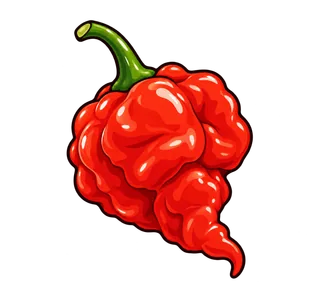
-
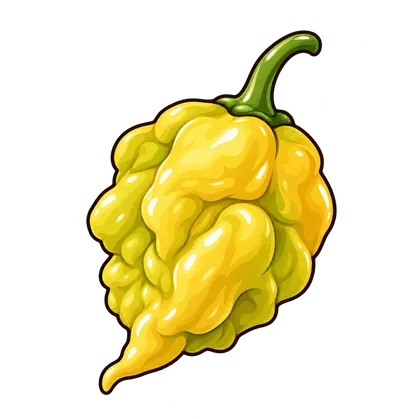
Pepper X
Super-hot2,693,000 SHU average -
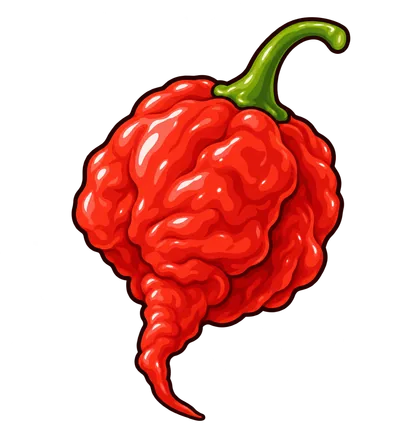
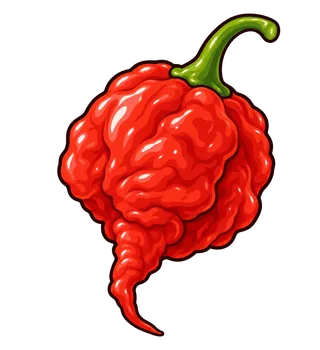
Carolina Reaper
Super-hot1,641,183 SHU average Capsicum chinense -
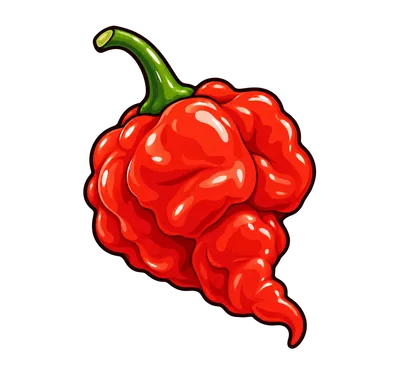
Trinidad Moruga Scorpion
Super-hot1,200,000–2,000,000 SHU Capsicum chinense -
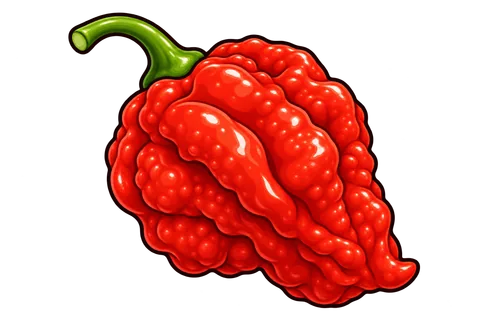
Komodo Dragon pepper
Super-hot1,400,000 SHU Capsicum chinense -
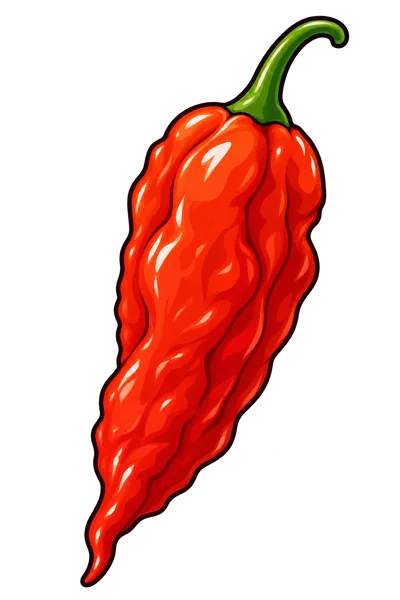
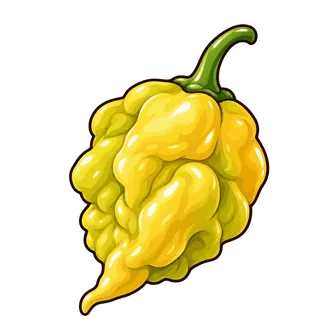
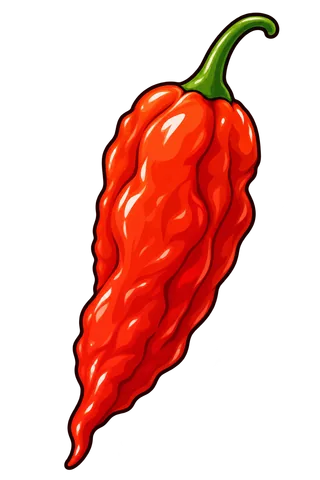
Ghost pepper
Super-hot1,001,304 SHU average Capsicum chinense
Nothing matches this filter yet.
Published heat ranges. Sources on each entry page.
The record run
Five hottest peppers since 2007
- 2007Bhut JolokiaIdentified by the NMSU Chile Pepper Institute and certified by Guinness World Records.2
- March 2011Trinidad Scorpion Butch TRated at 1,463,700 SHU and listed as the record holder.10
- February 2012Trinidad Moruga ScorpionNMSU names it the hottest pepper it has measured, at a mean of more than 1.2 million SHU.2
- November 2013Carolina ReaperGuinness confirms an average of 1,569,300 SHU for Ed Currie's pepper from South Carolina.10
- October 2023Pepper XGuinness confirms an average of 2,693,000 SHU, also from Ed Currie.5Record holder
Before you cut one
The safety routine
The same routine as for a habanero, with less room for a slip.
- Gloves onRubber, latex or nitrile gloves to cut, seed or blend the pods.1213
- Hands off your faceDon't touch your eyes or face until the gloves are off and your hands are washed.12
- Eyes: rinsePlenty of warm water for 15 minutes if pepper gets in your eyes.12
- Skin: flushWarm water, vegetable oil or a soak in diluted vinegar may help burning skin.12
- Mouth: sipSmall sips of milk or water for a mouth on fire.12
On this page
- 1What counts as a superhot pepper?
- 2How hot is each superhot pepper?
- 3Why do superhot numbers vary so much?
- 4Why are superhots so much hotter than a habanero?
- 5How has the hottest pepper changed over time?
- 6What do superhot peppers taste like?
- 7Which species are superhot peppers?
- 8Which superhot should you pick?
- 9How do you handle superhot peppers safely?
What counts as a superhot pepper?
In this index, a superhot is any pepper whose average or range midpoint reaches 1,000,000 Scoville heat units. That's about 200 times an average jalapeño, which UF/IFAS puts at about 5,000 SHU1.
The line sits at the top of the Scoville scale, and the label has history. When the NMSU Chile Pepper Institute ran its 2012 study, it called this group "super-hot" varieties and set out to measure their average heat, because no one had pinned it down in a field trial2.
Log scale; bars are published ranges.Sources for this line1. University of Florida IFAS Extension3. HortScience 42(2):222-2244. PhytoKeys 200:1-423 (Pensoft)5. Guinness World Records
Below the list you'll find the published lab numbers, why they swing so much, and the short safety routine for cutting these pods. The band just under this one, 100,000 to 1,000,000 SHU, has its own extra-hot list, and the full ranking with every record holder lives on the hottest peppers in the world page.
How hot is each superhot pepper?
The figures you see on the ladder come from labs and record bodies, and they don't all measure the same thing. A Guinness average, a field-trial mean and a single plant's reading can sit far apart for the same variety, which is why the ladder at the top labels each bar with its kind of figure.
Three of them have full entries: Pepper X and the Carolina Reaper, both from the same South Carolina grower, plus the ghost pepper.
The others, such as the Trinidad Moruga Scorpion and the 7-pot, get entries once we have read enough sourced fields for them. UF/IFAS Extension prints 2,009,000 SHU for the Carolina Reaper and 2,200,000 for the Trinidad Moruga Scorpion without saying what kind of figure they are1. We keep those two out of the ladder, because you can't compare a number without its method against the rest.
Why do superhot numbers vary so much?
Because heat changes from plant to plant, even in one field. The NMSU study grew every variety in the same research field and still found single plants far above the variety's mean2.
1,200,000+ SHUTrinidad Moruga Scorpion, mean across plants2
2,000,000+ SHUthe same variety, two single plants2
The same seed can give you a pod near the average or one almost twice as hot. The environment moves the number too: the researchers behind the ghost pepper trial point out that where a pepper grows changes its heat3. That's why every entry here prints a range or an average, never the hottest pod someone once measured.
Why are superhots so much hotter than a habanero?
They make heat in more of the pod. In most chiles, the jalapeño included, capsaicinoids come only from tiny vesicles on the placenta, the pale tissue that holds the seeds. An NMSU team found that superhots over 1 million SHU also grow extra vesicles on the fruit wall6.
That changes how you prep them. With a jalapeño, cutting out the ribs and seeds takes away the part that makes the heat. With a superhot, the wall you keep makes capsaicinoids too, so seeding the pod tames it far less than you'd expect.
- Made in the podVesicles on the placenta and, in superhots, on the wall tooSuper-hot
- Reaches youCapsaicin lands on your tongue, skin or eyes
- Opens a receptorA channel on sensory nerve cells
- Reads as heatThe same channel fires for painfully high temperatures
The receptor explains why it feels like a burn. The 1997 study that cloned it found that capsaicin causes burning pain by switching on sensory neurons, and that the same receptor responds to heat in the painful range7. Your nerves report a superhot the way they'd report a hot pan.
How has the hottest pepper changed over time?
Five peppers have held the title of hottest on earth since 2007, and if you follow the run, the last two came from the same grower in South Carolina. Pepper X's average sits about 1,050,000 SHU above the Reaper's 1,641,183, the biggest jump in the run45. The record strip above shows the five in order.
What do superhot peppers taste like?
You taste fruit first, then the burn. The UC Master Gardeners of Ventura County describe every superhot on their list with some fruit or sweetness, and a few with odder notes such as celery in the 7 Pot and chocolate in the Reaper8.
| Pepper | Flavor notes |
|---|---|
| Ghost pepper (Bhut Jolokia) | Smoky, fruity and slightly sweet |
| Carolina Reaper | Fruity and sweet aroma, with chocolate and cherry undertones |
| Trinidad Scorpion | Fruity, slightly sweet and citrus-like |
| 7 Pot (7 Pod) | Sweet and fruity, a hint of celery, a nutty undertone |
| Naga Viper | Fruity and sweet before the heat sets in |
Which species are superhot peppers?
Almost every superhot you can buy is Capsicum chinense, the habanero's species. The University of Guam lists ghost and scorpion types under it9, the genus monograph lists the Carolina Reaper4, and the ghost pepper paper notes that the hottest chiles have always come from this species3. Pepper X is the open question, since Guinness does not name its species.
Which superhot should you pick?
Start at the bottom of the band unless you already know your limit. The ladder gives you four steps:
- The ghost pepper: about 1,000,000 SHU in field trials, right on the line23. Smoky and fruity, and the gentlest way into the band.
- The Trinidad Moruga Scorpion: a mean of more than 1,200,000 SHU, with single plants past 2,000,0002. Expect big swings from one of your pods to the next.
- The Carolina Reaper: a Guinness average of 1,569,300 SHU in 201310, with the chocolate undertones the table lists.
- Pepper X: an average of 2,693,000 SHU, which Winthrop University measured on pods from four years of crops5. Nothing in the index will burn you more.
For a sauce, any of them works in small amounts; the heat you taste depends on how much of the pod goes into the bottle.
Epicurious made this 2023 video in which breeder Ed Currie tastes superhots from 11 countries, so you can see how different the pods look side by side before you pick one for your kitchen; records and heat figures change, so use the numbers on this page, not the ones in the video.
How do you handle superhot peppers safely?
Wear gloves, keep your hands away from your face and give the kitchen some air. The routine matches the one you'd use for a habanero; with a superhot, skipping it costs you a lot more. The safety band above gives you the short version; here is the full list from Poison Control12:
Before, during and after you cut
- Put on rubber, latex or nitrile gloves before you touch a cut pod.12
- Open the windows or get fresh air while you cook. Breathing in capsaicin can set off an asthma attack in people prone to one.12
- Keep your hands off your face and eyes until the gloves are off and your hands are clean.12
- Eyes: rinse with plenty of warm water for 15 minutes. A cool compress can ease the sting.12
- Skin: flush with warm water, rub with vegetable oil or soak in water with a little vinegar. An antacid such as Maalox on the skin may help.12
- Mouth: take small sips of milk or water.12
Eating too much brings its own trouble. Poison Control lists nausea, vomiting, belly pain, diarrhea and burning as the usual results, In the two cases it describes, a teenager felt normal again the next day and a woman with burned skin felt much better after five days12.
Quick answers
Quick answers

What is the hottest superhot pepper?
Pepper X, at an average of 2,693,000 SHU, confirmed by Guinness World Records in October 2023 from tests run at Winthrop University in South Carolina.5
Is the ghost pepper a superhot?
Yes, just. A replicated New Mexico field trial measured an average of 1,001,304 SHU, barely over the 1,000,000 line. Two commercial labs testing the same material got 927,199 and 879,953 SHU, which shows how close to the edge it sits.3
What does superhot mean on a hot sauce label?
There is no legal definition. On this site it means a pepper averaging 1,000,000 SHU or more. A sauce made from one rates far lower than the pod, because water, vinegar and salt dilute the heat.
Can a superhot pepper hurt you?
The burn is real and can be severe on skin and in the eyes. The National Capital Poison Center says to call 911 for any trouble breathing or chest discomfort, and to call Poison Control at 1-800-222-1222 for help with an exposure.12
More in Pepper Index
The newest from Pepper Index
-
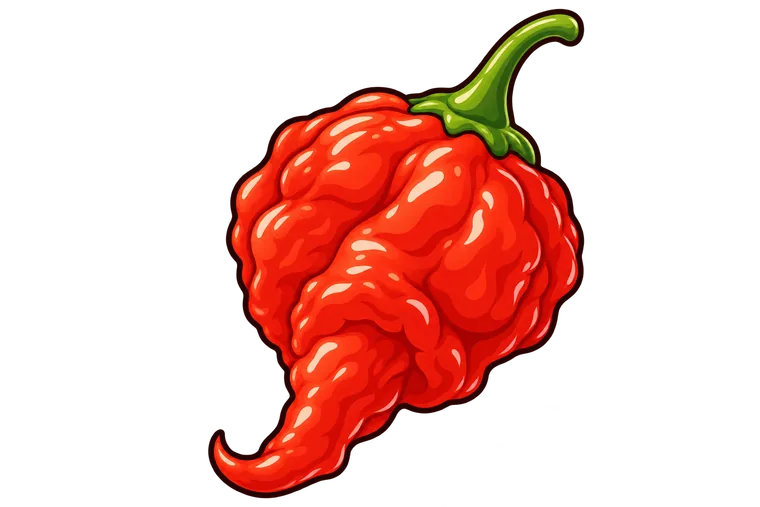
Carolina Reaper Scoville, 1.64 Million SHU
A fruity, sweet superhot from South Carolina, bred from a habanero and a Naga Viper.Oct 18, 2026 · Pepper -
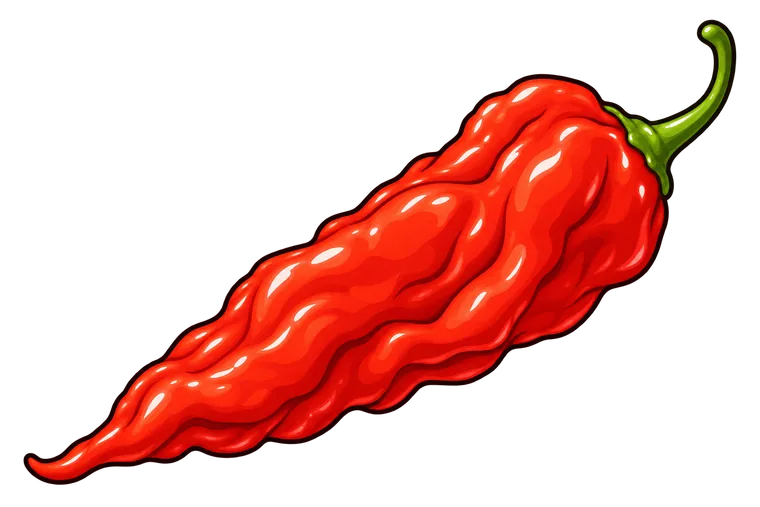
Ghost Pepper Scoville, About 1 Million SHU
The Bhut Jolokia of Assam, India: the first pepper measured at a million SHU.Oct 18, 2026 · Pepper -
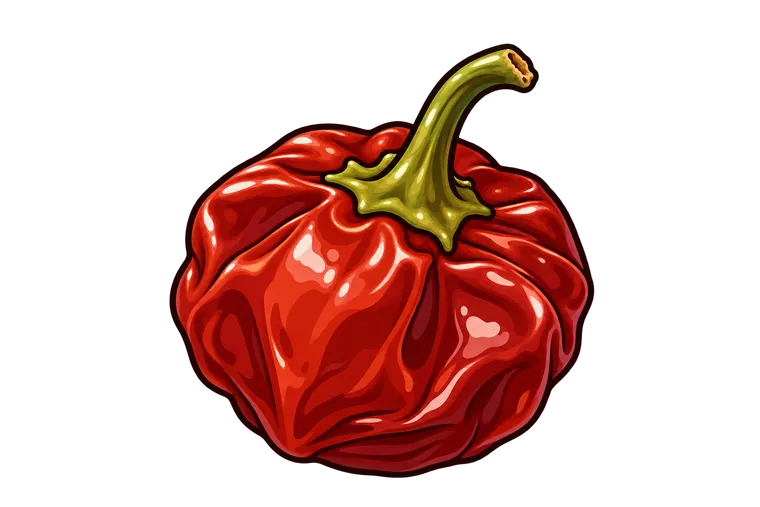
Ñora Pepper, Sweet Pimentón Pod Under 480 SHU
The small round sweet pepper behind Murcia's pimentón.Oct 18, 2026 · Pepper -
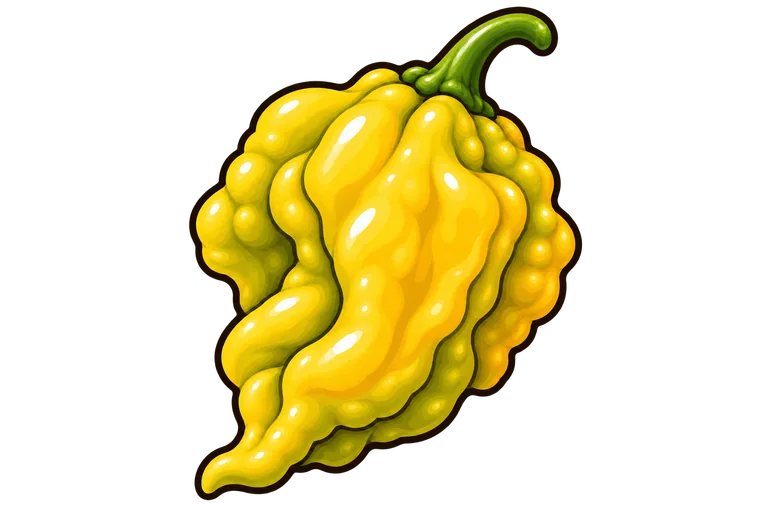
Pepper X Scoville, 2.69 Million SHU and Record
Ed Currie's record pepper from South Carolina, at an average of 2.69 million SHU.Oct 18, 2026 · Pepper -
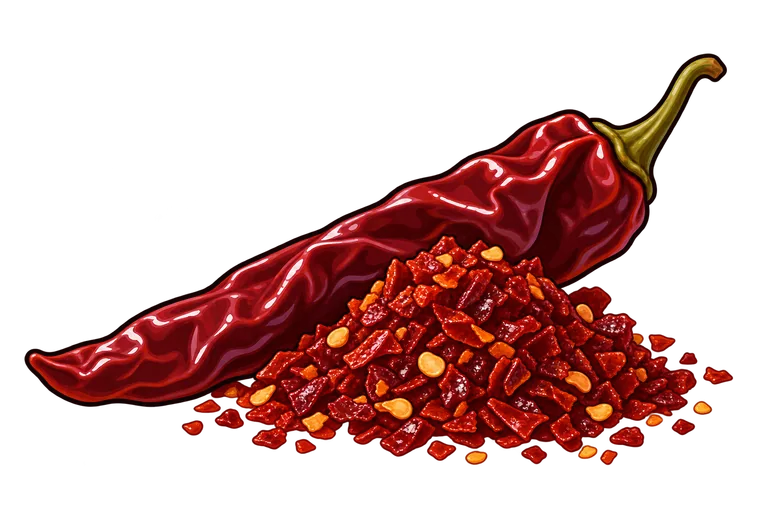
Aleppo Pepper, the Halaby Flake Cured With Oil and Salt
A burgundy flake from the old Silk Road city of Aleppo, sweet and fruity first, with a moderate heat behind it.Oct 18, 2026 · Pepper -
Calabrian Chili Heat, 5,000–70,000 SHU by EU Rule
Peperoncino di Calabria: the protected chili of Italy's toe, sold fresh, on strings, as flakes and as powder.Oct 18, 2026 · Pepper
Sources
· 13
- 1University of Florida IFAS Extension HS-859/TR010: Pepper Production in Miami-Dade County, Florida
- 2New Mexico State University News Center NMSU's Chile Pepper Institute names the Trinidad Moruga Scorpion hottest pepper on earth (Justin Bannister)
- 3HortScience 42(2):222-224 'Bhut Jolokia', the world's hottest known chile pepper, is a putative naturally occurring interspecific hybrid (Bosland and Baral)
- 4PhytoKeys 200:1-423 (Pensoft) Monograph of wild and cultivated chili peppers (Capsicum L., Solanaceae)
- 5Guinness World Records Pepper X dethrones Carolina Reaper as world's hottest chilli pepper
- 6Journal of the American Society for Horticultural Science 140(3):253-256 Novel formation of ectopic (nonplacental) capsaicinoid secreting vesicles on fruit walls explains the morphological mechanism for super-hot chile peppers (Bosland, Coon, Cooke)
- 7Nature 389(6653):816-824 The capsaicin receptor: a heat-activated ion channel in the pain pathway (Caterina, Schumacher, Tominaga, Rosen, Levine, Julius)
- 8University of California Agriculture and Natural Resources, UC Master Gardeners of Ventura County Ventura Garden to Table Series: Peppers
- 9University of Guam, College of Natural and Applied Sciences, Cooperative Extension and Outreach FPP-05: Hot Pepper (Capsicum spp.), Important Crop on Guam (Tuquero, Chargualaf, Marutani)
- 10Guinness World Records Confirmed: Smokin Ed's Carolina Reaper sets new record for hottest chilli
- 11Epicurious Smokin' Ed Currie Tastes The Hottest Peppers From 11 Countries
- 12National Capital Poison Center (Poison Control) Capsaicin: When the chili is too hot (Amanda McDaniel-Price, RN)
- 13University of Maryland Extension Growing Peppers in a Home Garden

Coming soon
Your pocket pepper index.
Built from the same index as this site.
- Every entry offline
- Compare any two peppers
- Keep a list of peppers you have tried