
Jalapeño Scoville, 2,000–8,000 SHU and Chipotle
The medium-heat chile most heat comparisons start from.
 Medium
2,000–8,000 SHU
- About 5,000 SHU on average, the yardstick other peppers get measured against
- Ready 75–85 days after transplanting; left on the plant, it ripens red
On this page
- 1How hot is a jalapeño?
- 2Why is one jalapeño hotter than the next?
- 3What happens when a jalapeño turns red?
- 4Which jalapeño should you pick?
- 5What does a jalapeño taste like?
- 6Where does the jalapeño come from?
- 7How do you pick and store jalapeños?
- 8How do you pickle jalapeños?
- 9Is a red jalapeño hotter than a green one?
- 10Can you freeze jalapeños or turn them into chipotles?
- 11What goes wrong with jalapeños?
- 12Is a habanero or a poblano a better match?
- 13Can you grow jalapeños or bottle them?
How hot is a jalapeño?
A jalapeño rates 2,000 to 8,000 Scoville heat units, with an average of about 5,000, according to UF/IFAS Extension1. That puts it in the medium band of the index, and it is the pepper most "times hotter" questions start from: when you read that a ghost pepper is about 200 times hotter (1,001,304 ÷ 5,000)5, the jalapeño is the yardstick.
Log scale; bars are published ranges.1
Other careful sources print slightly different numbers, so you'll see more than one figure. None of them is wrong; each one describes a different set of pods.
| Figure | Kind of figure |
|---|---|
| 2,000–8,000 SHU | Range, average about 5,000 |
| 2,000–8,000 SHU | Range on the extension's Scoville list |
| 3,500–4,500 SHU | Average heat level |
| around 3,000–8,000 SHU | Rounded range |
If a recipe just says "one jalapeño", plan for anything from mild to four times that heat. The top of the UF/IFAS range is four times its bottom: 8,000 ÷ 2,000 = 4.
Why is one jalapeño hotter than the next?
The plant and the season both move the number. The New Mexico team behind the 2007 ghost pepper study notes that growing conditions change a cultivar's heat5, so two pods from the same seed packet can taste different.
Where you cut matters more to you than which pod you buy. A capsaicin review puts about 89 % of a chile's capsaicin in the placenta and only 5–6 % in the outer flesh6.
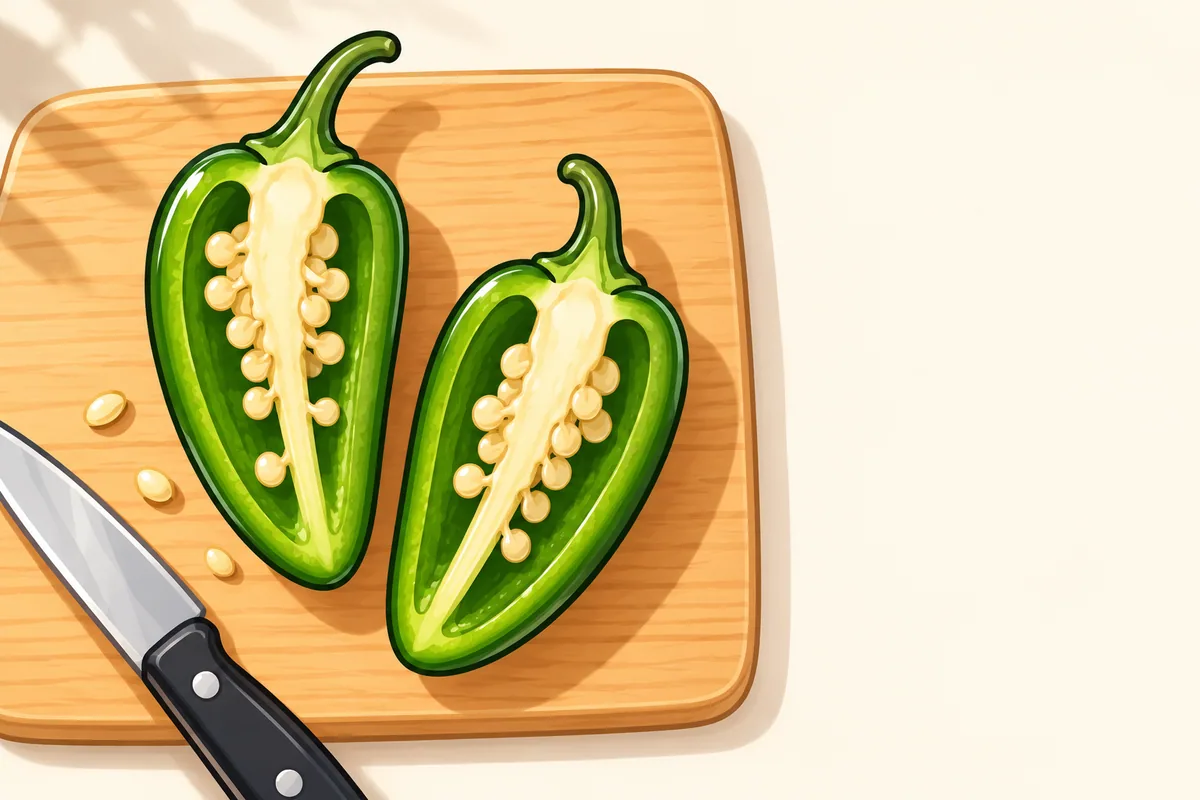
Scrape out the ribs with a teaspoon and you remove most of the capsaicin in the pod. Leave them in when you want your salsa to have the full kick.
What happens when a jalapeño turns red?
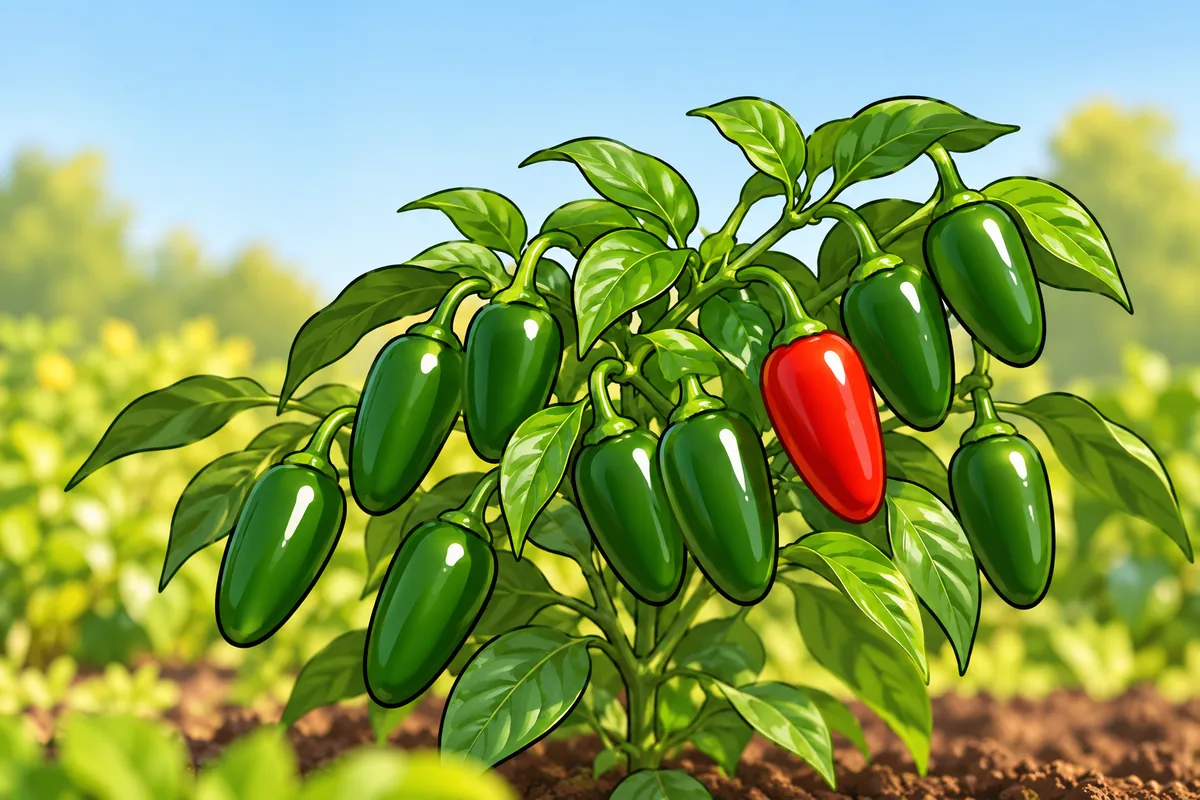
It keeps ripening on your plant. Jalapeños start green and turn red after maturity1, and growers usually pick them green: Texas AgriLife sets the harvest stage at firm green pods 2 to 2.5 inches long3.
| Stage | What it is |
|---|---|
| Green jalapeño | Picked fully grown but unripe, firm, 2–2.5 inches long |
| Red jalapeño | The same pod left on the plant until ripe |
| Chipotle | A red jalapeño dried over smoke |
Growers wait on purpose, and so can you in your garden. Texas AgriLife advises holding the first harvest until 5 to 10 % of the fruit shows red, because picking too early cuts the yield3. The smoky dried version has its own entry: what a chipotle is and how hot it gets.
Which jalapeño varieties are hotter, bigger or a different color?
New Mexico State University has bred seven jalapeños and published a heat figure for each. NuMex Orange Spice is the hottest at 79,000 SHU, and NuMex Jalmundo is the jumbo one its breeders call perfect for poppers7.
| Variety | Released | Heat | What sets it apart |
|---|---|---|---|
| NuMex Primavera | 1998 | 8,500–9,000 SHU | Uniformly mild; pods 2 inches long, 1 inch wide |
| NuMex Jalmundo | 2010 | 17,000 SHU | Jumbo pods 3.7 by 1.4 inches, green to red; bred for poppers |
| NuMex Pumpkin Spice | 2015 | 22,000 SHU | Ripens pumpkin orange; longer pods than Early Jalapeño |
| NuMex Lemon Spice | 2015 | 25,000 SHU | Ripens yellow |
| NuMex Vaquero | 1997 | 25,000–30,000 SHU | Pods 2.5 inches, green without purple blotches |
| NuMex Piñata | 1998 | 45,000–50,000 SHU | Light green, then yellow, orange and finally red |
| NuMex Orange Spice | 2015 | 79,000 SHU | Ripens orange; corky lines on the skin |
Those numbers run well above the 2,000 to 8,000 SHU fresh range because NMSU measures dried pods, on a dry weight basis. In the same three-year trial, the ordinary Early Jalapeño came out at 30,388 SHU that way8, so compare the varieties with each other, not with a fresh pod from the store.
The yellow, orange and pumpkin-orange colors came from a 1995 cross between a Permagreen bell pepper and Early Jalapeño; before these three, every jalapeño cultivar ripened green to red8. For Texas, AgriLife lists Delicias, Firenza, Grande, Mucho Nacho, Sonora, TAM Jalapeño, Telica, Tula and TAM Vera Cruz, without heat figures3. We found no primary source for purple jalapeños, so that row stays out.
Which jalapeño should you pick?
Start from what you're making. Poppers want size, a family dinner wants a steady mild pod, and a sauce can take the hot, colored ones. The tree below uses the NMSU figures from the table above, so compare the heat numbers with each other only78.
- Stuffed poppersYou need room for the filling
- NuMex JalmundoJumbo pods 3.7 by 1.4 inches, 17,000 SHU dry weight
- Salsa or nachos for a crowdYou want the same heat in every pod
- NuMex PrimaveraBred to be uniformly mild, 8,500–9,000 SHU dry weight
- A bright sauce or pickle jarYou want color and more heat
- warmNuMex Lemon SpiceRipens yellow, 25,000 SHU dry weight
- hottestNuMex Orange SpiceRipens orange, the hottest at 79,000 SHU dry weight
- warm
At a grocery store you rarely get a variety name, so pick by size and feel instead: firm, glossy, heavy pods with green caps. If your recipe needs a mild result, buy one extra pod and taste a sliver from each before you chop the batch.
What does a jalapeño taste like?
UF/IFAS sums it up as spicy but not overwhelming, which is why so many people like it1. You taste the green pepper first and the heat a second later. The UC Master Gardeners of Ventura County call the flavor vibrant and grassy9.
You'll find it in fresh salads, in salsa and all through Mexican cooking1. When the store is out, the jalapeño swap list gives replacements with amounts.
- Spicy
- Not overwhelming
Where does the jalapeño come from?
The jalapeño belongs to Capsicum annuum, the same species as your bell pepper; the genus monograph lists "Pimenta-jalapeño" among the common names of C. annuum var. annuum2. The same monograph says research puts the start of that species' domestication in central-east Mexico over 6,500 years ago2.
How do you pick and store jalapeños?
Choose fully grown, firm, solid green pods about 2 to 2.5 inches long, the stage Texas AgriLife gives growers for harvest3. A soft pod or a wrinkled skin means it has lost water and won't keep.
Your fridge runs colder than that range, so keep jalapeños in the crisper drawer, dry and in a loose bag, and use them within about two weeks. Red pods are simply older green ones; if a few redden in the bag, use them first, since they are further along.
How do you pickle jalapeños?
Use a tested recipe if you want jars that keep on the shelf. The National Center for Home Food Preservation's pickled hot pepper recipe makes about 9 pints from 4 pounds of hot peppers and 3 pounds of sweet ones, with 5 cups of 5 % vinegar, 1 cup of water, 4 teaspoons of pickling salt and 2 tablespoons of sugar10.
- 1
Put gloves on and prep the pods
The center tells you to wear rubber gloves or wash your hands with soap and water before you touch your face. Slash small whole peppers 2 to 4 times and quarter large ones.10
- 2
Blister and peel
Blister the skins in a 400°F oven or broiler for 6 to 8 minutes, cool the peppers, peel them and flatten the small ones.10
- 3
Pack and pour
Pack the jars with 1/2 inch of headspace. Boil the vinegar, water, salt and sugar with 2 garlic cloves, simmer 10 minutes, take out the garlic and pour the hot liquid over the peppers, keeping 1/2 inch headspace.10
- 4
Process in a boiling-water canner
Half-pints or pints: 10 minutes up to 1,000 feet, 15 minutes from 1,001 to 6,000 feet, 20 minutes above 6,000 feet.10
For fridge pickles you plan to eat within a few weeks, you can skip the canner, but the tested times are what make a pantry jar safe.
Is a red jalapeño hotter than a green one?
No primary source we read measured green and red pods from the same plants, so we can't give you a number for the difference. What the sources do settle is that red is the same pod, left on the plant after it matures1, and that heat varies from pod to pod with the growing conditions5.
Green jalapeño
Red jalapeño
- Fully grown, firm, 2–2.5 inches, picked before it colors3StageThe same pod left on the plant until ripe1
- Every supermarket; growers pick most of the crop green3Where you find itFarmers markets and your own plants
- Vibrant and grassy9TasteRiper and less grassy
- Salsa, poppers, picklesBest forHot sauce, drying, chipotle4
In your kitchen, treat a red jalapeño as the same heat range, 2,000 to 8,000 SHU1, and taste before you commit the whole pod. The color change tells you about ripeness, not about the burn.
Can you freeze jalapeños or turn them into chipotles?
Yes to both. New Mexico State University's chile guide says you can freeze chiles whole and unpeeled, pack them flat in containers no deeper than 2 inches, and keep them up to 12 months11. A thawed jalapeño goes soft, so save frozen ones for cooked salsa, chili and cornbread rather than poppers.
A chipotle is a red jalapeño dried over smoke4, which is why growers who want chipotles leave the pods on the plant until they redden. Smoking at home takes a smoker and most of a day; drying red pods in an oven or dehydrator gets you a dried red jalapeño without the smoke, using the oven or dehydrator methods. Grind a few into flakes and you have a mild red pepper for your pizza.
What goes wrong with jalapeños?
Most jalapeño trouble shows up on your hands or in the garden, not on the plate.
Problems and their fixes
- Your fingers burn hours after you chopped a dozen pods: capsaicin oil on the skin. Poison Control suggests gloves next time, and warm water flushes or a little vegetable oil on the skin now.12
- The salsa came out far too hot: stir in more tomato and onion to spread the heat, and serve milk on the side, the drink that cut the burn most in a 72-person Penn State study.13
- Flowers drop and no pods set in midsummer: Texas AgriLife notes that very high temperatures reduce fruit size and cause bloom drop, and that the plants cannot take any moisture stress during bloom. Water evenly and wait for cooler nights.3
- The first harvest is small: picking too early cuts the yield. Wait until 5 to 10 % of the fruit shows red, then pick every 2 to 3 weeks.3
The weather a jalapeño likes is hot days of 85 to 95°F with nights of 65 to 70°F3, so a June heat wave can pause your plants for a few weeks without anything being wrong with them.
Is a habanero or a poblano a better match?
Neither is close. A habanero runs 100,000 to 350,000 SHU, about 20 to 70 times an average jalapeño1, and the habanero and jalapeño side by side works through those numbers.
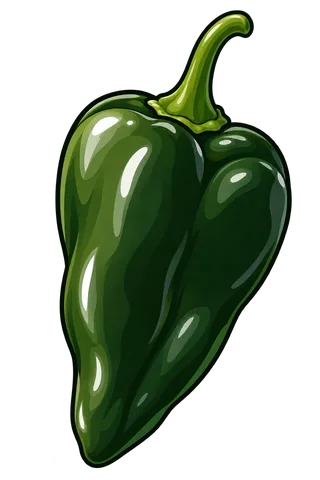
A poblano at 1,000 to 2,000 SHU sits below it1; the poblano against the jalapeño covers size and flavor too.
If you want the next step up, the serrano looks similar and runs 10,000 to 25,000 SHU1.
Can you grow jalapeños or bottle them?
Yes, and you get a crop fast. Transplants bear in 75 to 85 days, against 110 to 120 days if you sow seed straight in the ground3. Spacing, soil and watering are in the guide to growing jalapeño plants.
If your harvest is big, it often ends up in a bottle. The steps, ratios and safety numbers are in the recipe for jalapeño hot sauce at home.
Related peppers
Published ranges.1
Related in Peppers
-
Habanero Pepper Scoville, 100,000–350,000 SHU
A fruity, floral chile in the extra-hot band.7 min read -
Carolina Reaper Scoville, 1.64 Million SHU
A fruity, sweet superhot from South Carolina, bred from a habanero and a Naga Viper.7 min read -
Cayenne Pepper Scoville, 25,000–50,000 SHU
The long red chile behind most ground red pepper and a lot of vinegar hot sauce.6 min read -
Cherry Pepper Scoville, 0 SHU Sweet to Hot
A small round pepper, sweet or hot, grown for jars and stuffing.6 min read -
Pepper X Scoville, 2.69 Million SHU and Record
Ed Currie's record pepper from South Carolina, at an average of 2.69 million SHU.5 min read -
Thai Chili Pepper Scoville, 50,000–100,000 SHU
A small, sharp chile about an inch long, also sold as bird's eye.6 min read
Sources
· 13
- 1University of Florida IFAS Extension HS-859/TR010: Pepper Production in Miami-Dade County, Florida
- 2PhytoKeys 200:1-423 (Pensoft) Monograph of wild and cultivated chili peppers (Capsicum L., Solanaceae)
- 3Texas AgriLife Extension Service (Joe Masabni) Jalapeño & Other Hot Peppers
- 4New Mexico State University, Chile Pepper Institute Chile Terminology
- 5HortScience 42(2):222-224 'Bhut Jolokia', the world's hottest known chile pepper, is a putative naturally occurring interspecific hybrid
- 6Heliyon (Cell Press) A comprehensive review of capsaicin: Biosynthesis, industrial productions, processing to applications, and clinical uses
- 7New Mexico State University, Agricultural Experiment Station (Research Report 792) The Chile Cultivars of New Mexico State University Released from 1913 to 2016 (Coon and Bosland)
- 8HortScience 50(7):1104-1105 'NuMex Lemon Spice', 'NuMex Pumpkin Spice', and 'NuMex Orange Spice' Jalapeños (Bosland and Coon)
- 9University of California Agriculture and Natural Resources, UC Master Gardeners of Ventura County Ventura Garden to Table Series: Peppers
- 10National Center for Home Food Preservation, University of Georgia Pickled Hot Peppers
- 11New Mexico State University Cooperative Extension (Guide E-324) Processing Fresh Chile Peppers (revised by Nancy C. Flores and Cindy Schlenker Davies)
- 12National Capital Poison Center (Poison Control) Capsaicin: when the chili is too hot (Amanda McDaniel-Price, RN)
- 13Physiology & Behavior 208:112557 Putting out the fire: efficacy of common beverages in reducing oral burn from capsaicin (Nolden, Lenart and Hayes)