
Poblano vs Jalapeño, 3.3× the Heat and When to Use Each
The big mild one and the small hot one.
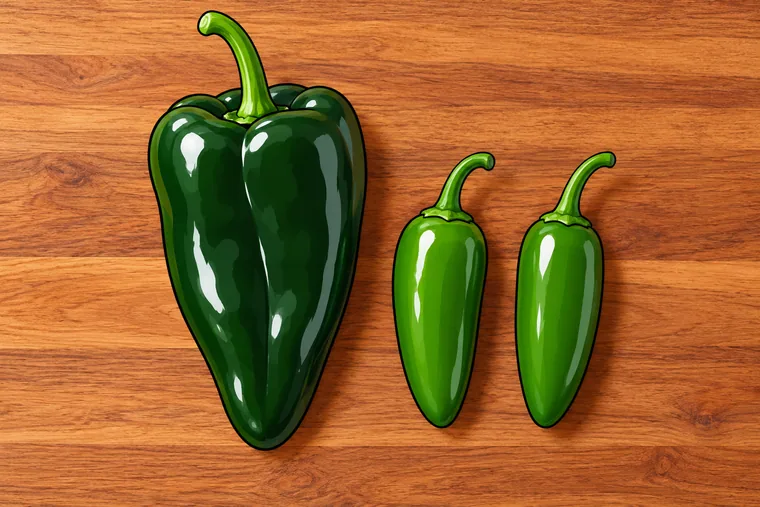
The jalapeño is hotter, about 3.3 times a poblano by midpoint.
- Jalapeño 2,000–8,000 SHU, poblano 1,000–2,000 SHU
- Poblano: about 4 by 2 inches with thick walls; jalapeño: 2–3 inches
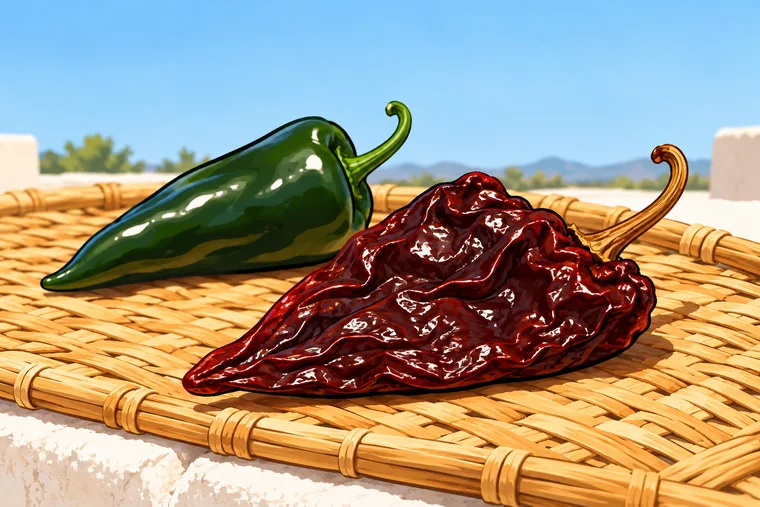
- Dried, the poblano becomes ancho and the smoked red jalapeño becomes chipotle
Log scale; bars are published ranges.1
On this page
- 1Is a poblano hotter than a jalapeño?
- 2How big is a poblano next to a jalapeño?
- 3How do you pick a stuffing poblano and a firm jalapeño?
- 4How do they taste and cook?
- 5Which one should you stuff?
- 6Is there a jalapeño big enough to stuff like a poblano?
- 7What do they become when you dry them?
- 8Why does one jalapeño burn more than the next?
- 9Which one should you grow?
- 10Can you swap a poblano for a jalapeño?
- 11Why does your pod-for-pod poblano swap overshoot the heat?
Is a poblano hotter than a jalapeño?
No, the jalapeño is the hotter one. UF/IFAS rates the poblano at 1,000 to 2,000 SHU and the jalapeño at 2,000 to 8,000 SHU, about 5,000 on average1. That puts the poblano in our mild band and the jalapeño in medium.
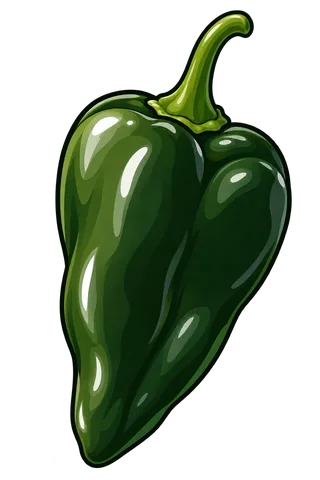
Poblano
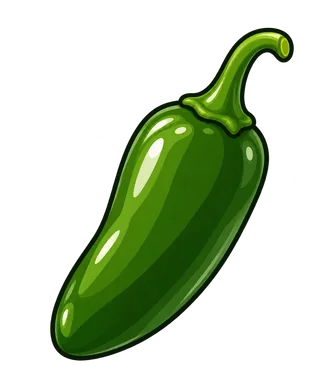
Jalapeño
HotterLog scale; bars are published ranges.1
The hottest poblano and the mildest jalapeño meet at 2,000 SHU; past that point the jalapeño you pick is always the hotter pod.
How many times hotter is a jalapeño than a poblano?
By midpoint the jalapeño sits at 5,000 SHU and the poblano at 1,500, so the jalapeño is about 3.3 times hotter. Depending on the pods you get, that runs from even to eight times.
| Comparison | Jalapeño | Poblano | Jalapeño is |
|---|---|---|---|
| Midpoints | 5,000 SHU | 1,500 SHU | about 3.3 times hotter |
| Mild jalapeño, hot poblano | 2,000 SHU | 2,000 SHU | the same |
| Hot jalapeño, mild poblano | 8,000 SHU | 1,000 SHU | 8 times hotter |
How big is a poblano next to a jalapeño?
A poblano runs about 4 inches long and 2 inches wide with thick walls, while a jalapeño is 2 to 3 inches long1. So one poblano holds about as much filling as several jalapeños, which is why you see it in stuffed-pepper recipes and the jalapeño in snack-size poppers.
How do you pick a stuffing poblano and a firm jalapeño?
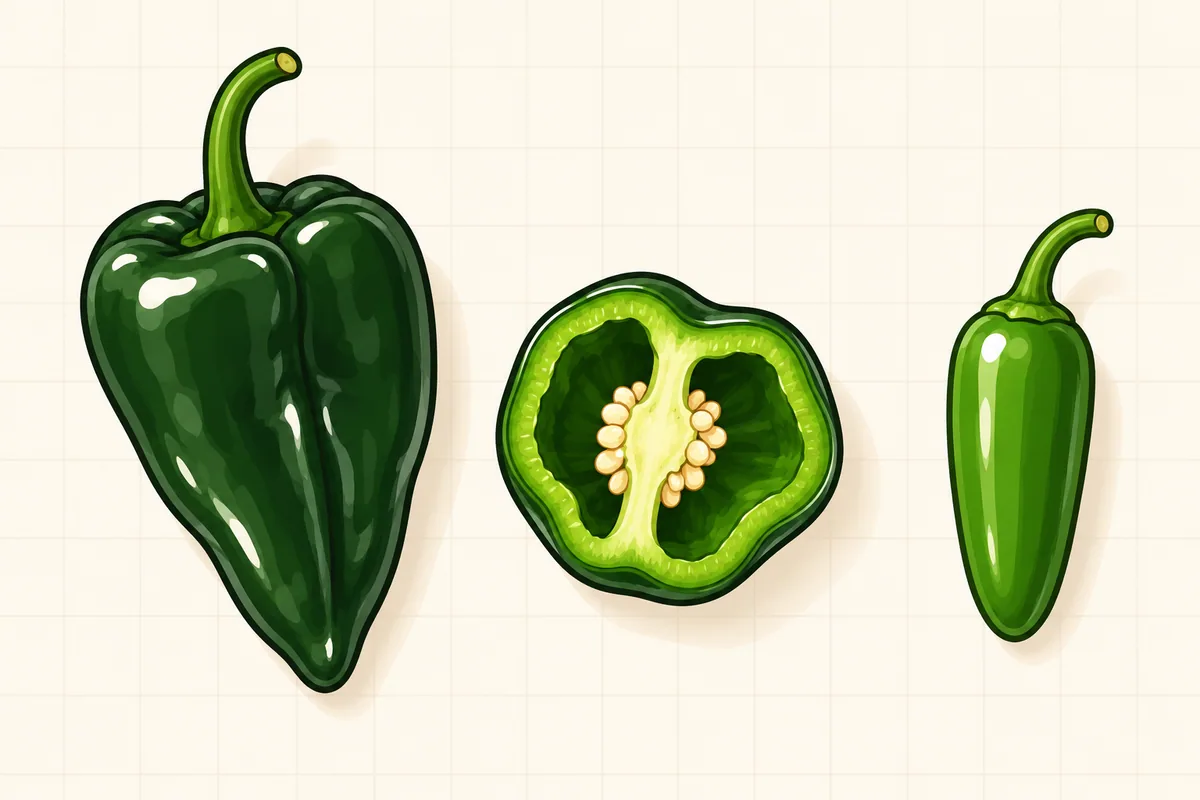
Pick by weight and skin. NMSU's processing guide tells you to choose chile that is heavy for its size, smooth, bright, crisp and free of soft spots or shriveled skin5. That rule holds for both peppers, but each one also has its own tells in the bin.
A good poblano
If the bin only has one poblano that passes, buy the jalapeños for heat and the Anaheim against the poblano gives you the closest stand-in for the big pod.
How do they taste and cook?
UF/IFAS gives the poblano a rich melon flavor and calls the jalapeño spicy but not overwhelming1. With about a third of the heat, you can use a lot more poblano before a dish turns hot.
That changes how you cook each one. A poblano works as a vegetable: you roast it, peel it and use whole strips or the whole pod, so its flavor carries the dish. A jalapeño works as a seasoning; UF/IFAS lists fresh salad, salsa and Mexican food as its usual jobs1, where you chop it fine and spread a small amount through the bowl.
Which one should you stuff?
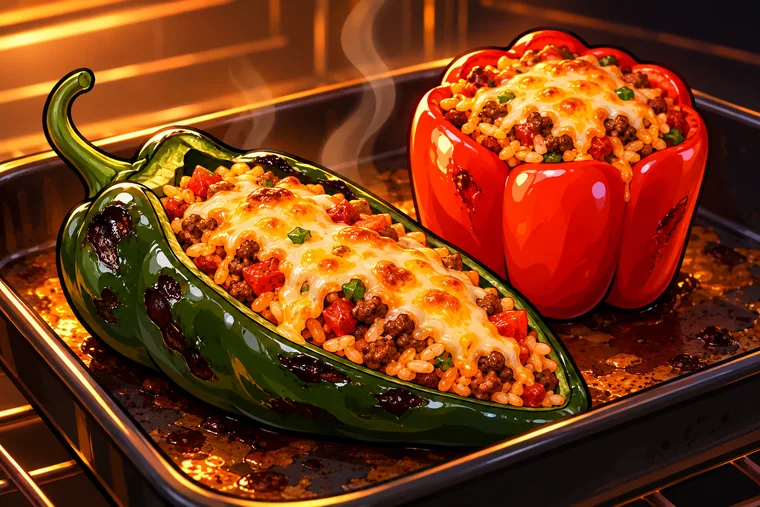
The poblano, for a main course. Its 4 by 2 inch pod and thick wall1 hold a filling of rice, cheese or meat and keep their shape in the oven. A jalapeño stuffs well too, but as a two-bite snack: split lengthwise, it gives you two small boats.
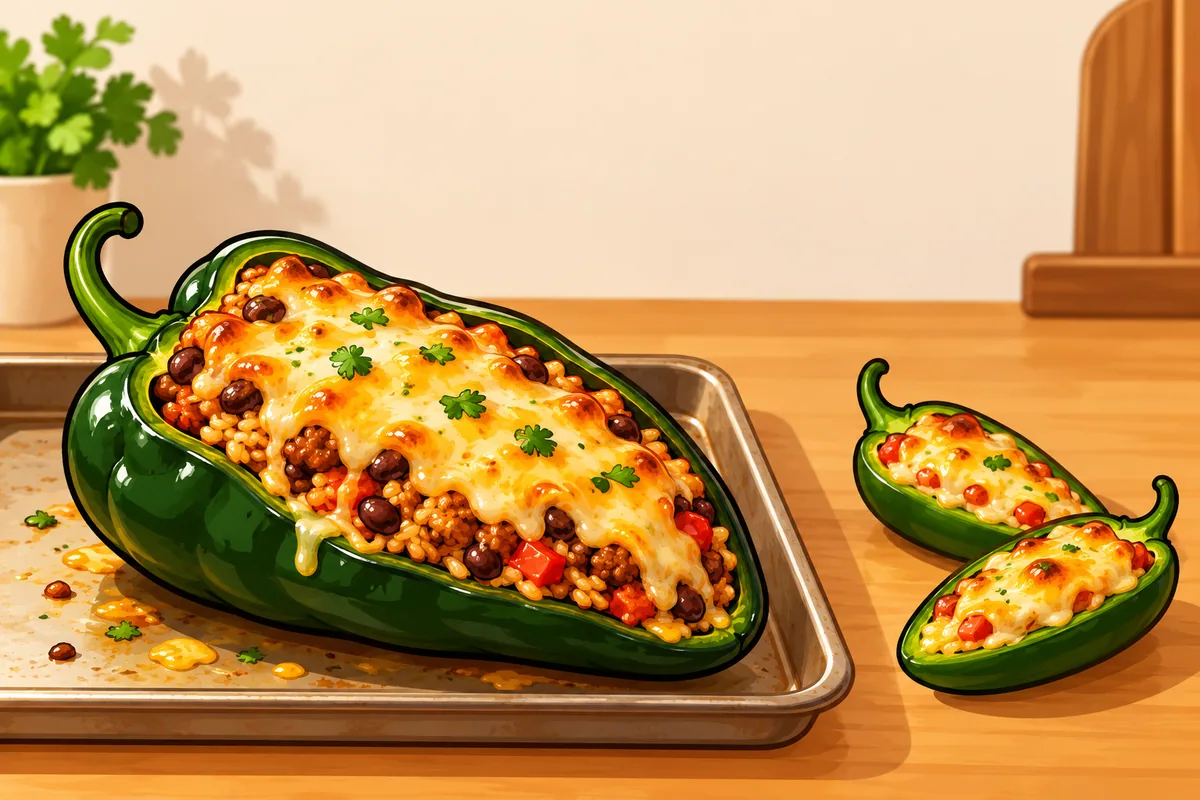
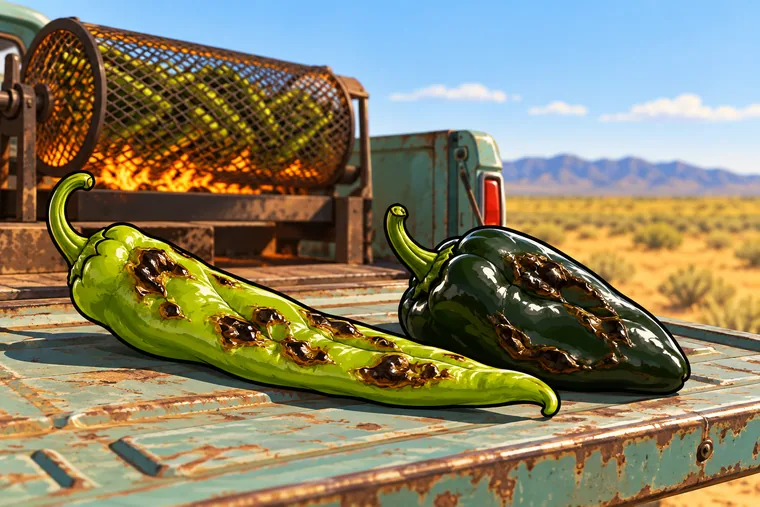
Roasting comes first for the poblano, because the skin is tough and you want it off. NMSU's method for green chile works on it:
- 1
Slit and heat
Wash and dry the pods, cut a small slit in the side so steam escapes, then set them in one layer under a broiler or in an oven at 400–450°F.5
- 2
Blister for 6 to 8 minutes
Turn the pods often so the skin blisters evenly without scorching; you know it is ready when the skin pulls away from the flesh.5
- 3
Steam, then peel
Close the hot pods in a covered heat-safe container until cool, and you can pull the skin off with a gentle tug and a quick rinse.5
- 4
Fill and bake
Slit one side, pull out the seed pod with the pale placenta, fill, and bake. Removing that placenta takes out most of the heat, since it holds about 89 % of a pepper's capsaicin.8
For jalapeño halves, skip the roasting. Scrape out the placenta with a teaspoon before you fill them, and you remove most of the bite at the same time8.
Is there a jalapeño big enough to stuff like a poblano?
Close, if you grow it yourself. NMSU bred NuMex Jalmundo as a jumbo jalapeño for poppers, and NuMex Primavera for uniformly mild heat9:
A Jalmundo comes close to a poblano in length but stays narrower, and at 17,000 SHU it runs about eleven times a poblano's 1,500 SHU midpoint19. So you get a bigger popper, not a stand-in for a relleno. If you want a jalapeño that a cautious eater can handle, Primavera at 8,500 to 9,000 SHU is NMSU's mild line, still about six times a poblano.
The poblano stays the only pepper here you can stuff as a main course and serve to everyone. Primavera also sits at the short end of the jalapeño range, 2 inches by 1 with a wall under a quarter inch9, so its mild heat comes in a pod that only suits snack-size halves, never a dinner plate.
What do they become when you dry them?
Each pepper turns into a pantry chile with its own name, and you get there by a different path for each:
- Poblano plantPods picked green, or left to ripen redMild
- picked greenGreen poblanoRoasted, peeled, stuffed
- ripened red and driedAnchoRipened red, then dried
- picked green
- Jalapeño plantDark green pods turn red when matureMedium
- picked greenGreen jalapeñoSalsa, salads, pickled rings
- ripened red and smoke-driedChipotleRipe red pods, smoke-dried
- picked green
Bars show published heat ranges. Sources for this line1. University of Florida IFAS Extension3. New Mexico State University, Chile Pepper Institute7. New Mexico State University Cooperative Extension Service
| Fresh pepper | Dried name | Method |
|---|---|---|
| Poblano | Ancho | Left to ripen red, then dried |
| Jalapeño | Chipotle | Ripe red pods, smoke-dried |
Why does one jalapeño burn more than the next?
Because the range is wide and the plant's season moves your pods around inside it. NMSU's garden guide names water stress (too much or too little), temperature extremes, disease and insects as things that change a pepper's heat7. A jalapeño from a dry August can bite harder than one from a mild June, even off the same plant.
Sources also disagree a little. Texas AgriLife gives the jalapeño an average of 3,500 to 4,500 SHU6, a bit under the UF/IFAS average of 5,000. Run the ratio on the Texas midpoint, 4,000 SHU, and the jalapeño comes out about 2.7 times a 1,500 SHU poblano instead of 3.3. Either way, you get the same answer at the cutting board: taste a thin slice of each pod before you decide how much goes in.
Which one should you grow?
If you want the earlier harvest, the poblano matures in about 75 to 80 days and keeps producing through most of the summer1. Jalapeño transplants give you pods in about 75 to 85 days6, so the two plants run close, and you can grow both in one bed.
- Day 0
Transplant after the last frost
Both plants are frost-tender, so you wait until your soil has warmed.7
- 75–80 days
First mature poblanos
Pick them green for roasting, or leave some to ripen red for drying into ancho.1
- 75–85 days
First jalapeños
Pick firm green pods of 2 to 2.5 inches; commercial growers get the best yield by waiting until 5 to 10 % of the fruit shows red.6
- Every 2–3 weeks after
Keep picking
Texas AgriLife harvests jalapeños on a 2 to 3 week interval once picking starts, and you can do the same at home.6
The two harvests differ in one way that matters for your kitchen: you pick a poblano when it is big enough to stuff, while a jalapeño gives you a steady handful every couple of weeks. Don't rush the first jalapeño picking, since Texas AgriLife says starting the harvest too early cuts the season's yield6.
Can you swap a poblano for a jalapeño?
If you use jalapeños in place of a poblano, you keep the heat and flavor in a sauce, but you lose the big pod for stuffing. If the dish is too hot, most of a pepper's capsaicin sits in the white ribs, about 89 %8, so scrape them out before chopping.
Here is the arithmetic for a pot of green chile stew that calls for 400 g of roasted poblano. At 3.3 times the heat by midpoint1, about 120 g of jalapeño brings the same heat, and you make up the missing 280 g of bulk with a mild green vegetable such as bell pepper. If the store is out of poblanos, the long green Anaheim is the closer swap: most Anaheims sit near 1,000 SHU1.
Why does your pod-for-pod poblano swap overshoot the heat?
Common mistakes and the fix
- Swapping pod for pod. One poblano weighs several jalapeños, and the jalapeño runs about 3.3 times hotter, so a one-for-one count overshoots badly. Go by weight.1
- Stuffing raw poblanos. The skin stays tough and chewy; blister and peel them first, 6 to 8 minutes under a 400–450°F broiler.5
- Leaving roasted chile out on the counter. NMSU says to refrigerate roasted, peeled chile within 2 hours and to use or freeze it within 3 days.5
- Calming a too-hot bite with water or soda. In a 2019 lab test of seven drinks, whole and skim milk cut the burn the most.10
If the jalapeño side of the swap still feels too tame, the cayenne against the jalapeño is the next step up in heat, about 7.5 times a jalapeño by midpoint1.
Related in Compare
-
Poblano vs Anaheim Pepper, Up to 2× the Heat
Two mild green chiles that cooks mix up all the time.6 min read -
Pasilla vs Poblano, 2 Different Chiles and 1 Mixed-Up Label
One long black dried chile, one broad green fresh one, and a label that blurs them.6 min read -
Cayenne vs Jalapeño, 7.5× the Heat and Swaps
One usually ends up in a jar of powder, the other in a fresh salsa.6 min read -
Hatch Chile vs Poblano, 10 NMSU Lines From 0 to 9,000 SHU
New Mexico's long green against Mexico's short, dark stuffing chile.7 min read -
Poblano vs Bell Pepper, 2,000 SHU Against Zero
One stuffing pepper with a little heat, one with none at all.6 min read -
Ancho vs Poblano, One Pepper Picked Green or Dried Red
Fresh green, ripe red, then dried: one plant, three stages, two names.6 min read
Sources
· 10
- 1University of Florida IFAS Extension HS-859/TR010: Pepper Production in Miami-Dade County, Florida
- 2UF/IFAS Gardening Solutions Peppers by Scoville Units
- 3New Mexico State University, Chile Pepper Institute Chile Terminology
- 4PhytoKeys 200:1-423 (Pensoft) Monograph of wild and cultivated chili peppers (Capsicum L., Solanaceae)
- 5New Mexico State University Cooperative Extension Service (Guide E-324) Processing Fresh Chile Peppers (revised by Nancy C. Flores)
- 6Texas AgriLife Extension Service (Joe Masabni) Jalapeño & Other Hot Peppers
- 7New Mexico State University Cooperative Extension Service Guide H-240: Growing Chile Peppers in New Mexico Gardens (Walker, Bosland)
- 8Heliyon (Cell Press) A comprehensive review of capsaicin: Biosynthesis, industrial productions, processing to applications, and clinical uses
- 9New Mexico State University, Agricultural Experiment Station (Research Report 792) The Chile Cultivars of New Mexico State University Released from 1913 to 2016 (Coon and Bosland)
- 10Physiology & Behavior 208:112557 Putting out the fire: Efficacy of common beverages in reducing oral burn from capsaicin (Nolden, Lenart, Hayes)