
Poblano vs Bell Pepper, 2,000 SHU Against Zero
One stuffing pepper with a little heat, one with none at all.
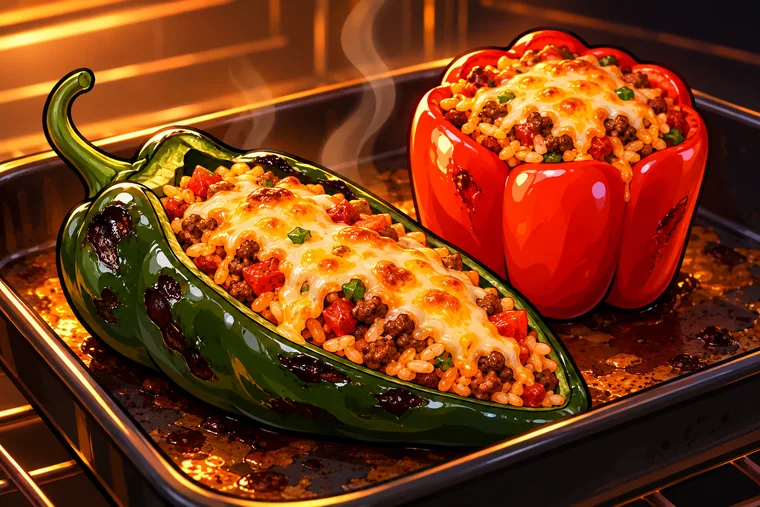
The poblano is the hotter one, 1,000–2,000 SHU against 0 for any bell, and it brings a rich, earthy flavor a bell lacks.
- Per 100 g, USDA measures 128 mg vitamin C in raw poblano and 80.4 mg in green bell
- A poblano runs about 4 inches long and 2 wide; a medium bell weighs 119 g
- Swap one for one by weight; add a pinch of heat if a bell stands in for a poblano
Log scale; bars are published ranges.1
On this page
- 1How much hotter is a poblano than a bell pepper?
- 2How do you tell the two pods apart in the store?
- 3What does a poblano taste like next to a green bell?
- 4Which one has more vitamin C, fiber and sugar?
- 5What happens when you dry a poblano, and can you dry a bell?
- 6Which one should you stuff, roast or eat raw?
- 7How do you roast a poblano so the skin slips off?
- 8How much bell pepper replaces a poblano, and the other way round?
- 9Will a poblano planted beside your bells make them hot?
How much hotter is a poblano than a bell pepper?
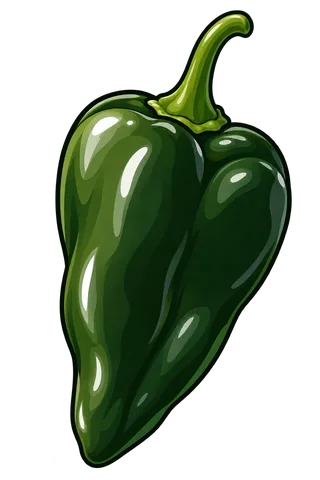
A poblano rates 1,000 to 2,000 SHU and a bell pepper rates 01. That makes it a pairing of mild against none: the chart above shows a short poblano bar at the bottom of the mild band and nothing at all for the bell.
Poblano
Hotter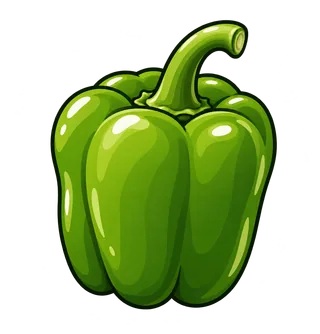
The bell's zero is real, not rounded. A 2013 HPLC study found no capsaicin and no dihydrocapsaicin in a red bell cultivar, while a dried ancho from the same trial, the poblano's dried form, tested at about 19,300 SHU on a dry-weight basis4. That dry-weight figure runs high because water no longer dilutes the heat, so read the fresh range for cooking.
So any heat you taste in a stuffed poblano comes from the pepper, and any heat you taste in a stuffed bell comes from your filling. If someone at your table finds even a jalapeño too much, the poblano is about the gentlest chile you can serve them, and the bell is the only pick with none.
How do you tell the two pods apart in the store?
By length. A poblano runs about 4 inches long and 2 inches wide, with thick walls1. A medium green bell measures about 2¾ inches long and 2½ across5, so it looks almost as wide as it is tall. Put one of each in your hand and the poblano feels long and flat, the bell round and hollow.
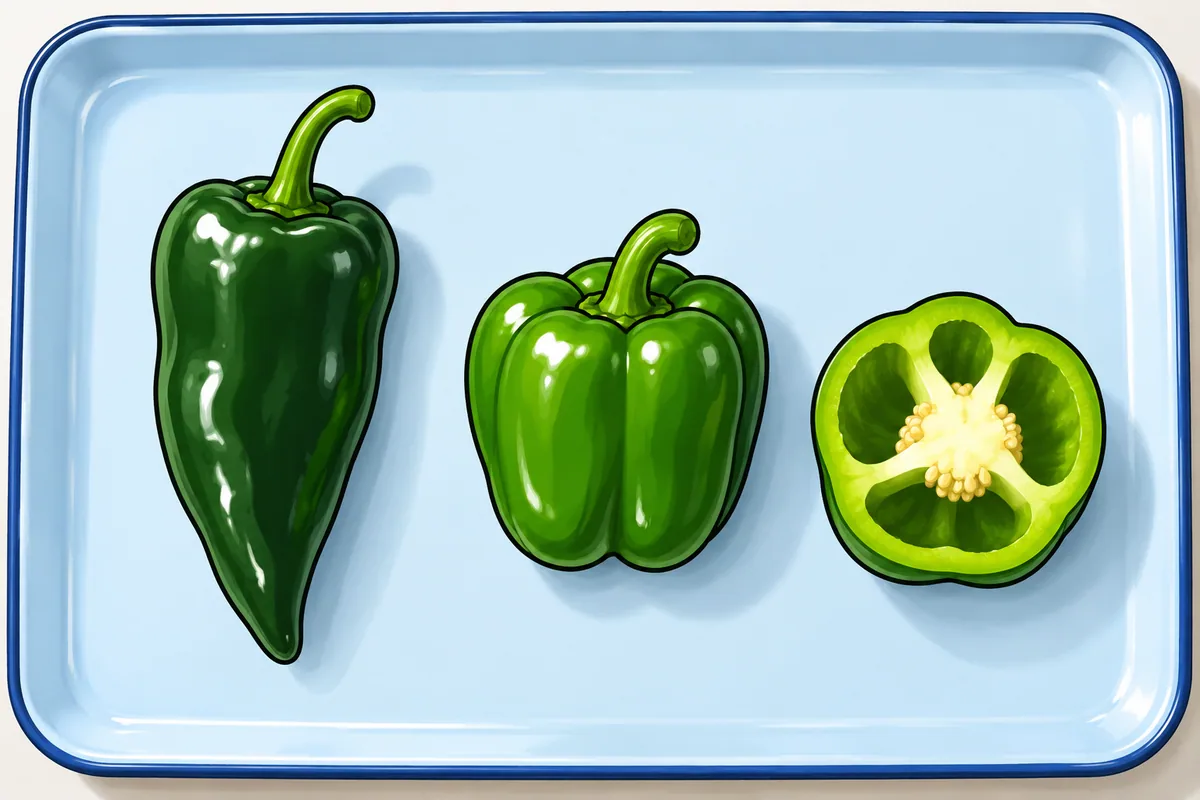
Color helps you too. A poblano at the store is dark green and turns red when ripe1; NMSU notes that US produce markets use the name poblano for a fresh green ancho or mulato6. A green bell is a lighter, glossier green and ripens to red, orange or yellow1.
Trust your eyes over the sign on the bin. If the pod in your hand is long, dark and pointed, you are holding a poblano; if it sits upright on three or four lobes, you have a bell13. Miniature bells exist too, only 1 to 2 inches long when ripe7, so size alone can fool you in a mixed bag.
What does a poblano taste like next to a green bell?
Deeper. UF/IFAS calls the poblano's flavor rich and melon-like1, and UC Master Gardeners describe it as earthy, smoky and fruity8. The bell brings you sweetness and crunch with no heat, and its green form is simply a red bell picked early8, which is why your green bells taste sharper than your red ones.
| Poblano | Bell pepper | |
|---|---|---|
| Flavor | Rich, melon-like; earthy, smoky and fruity | Non-spicy; green is simply an unripe red |
| Heat | Mildly hot | None |
| Colors | Dark green, ripening red | Green, ripening red, orange or yellow; black and purple types |
| Skin | Thick-walled | Thick flesh; yellow and orange types have thinner skin |
One detail from that UC sheet is worth knowing: the black and purple bells are slightly spicy8. If a recipe counts on zero heat, buy green, red, yellow or orange.
Which one has more vitamin C, fiber and sugar?
The poblano, on most counts. USDA's records give it more vitamin C, protein and fiber per 100 g than raw green bell, and slightly more sugar59.
| Nutrient | Poblano | Green bell | Poblano ÷ bell |
|---|---|---|---|
| Water | 92.8 g | 93.9 g | about the same |
| Energy | 28 kcal | 20 kcal | 1.4× |
| Protein | 1.43 g | 0.86 g | 1.7× |
| Fiber | 2.1 g | 1.7 g | 1.2× |
| Sugars | 2.68 g | 2.4 g | 1.1× |
| Vitamin C | 128 mg | 80.4 mg | 1.6× |
Put that on a plate. One medium green bell weighs 119 g5, so it carries about 96 mg of vitamin C (119 × 0.804). The same 119 g of seeded poblano carries about 152 mg (119 × 1.28)9. The two records come from different USDA datasets, so treat the gap as a fair guide, not a lab duel.
Leave either pepper on the plant to color up and Maryland Extension says the fruit gains vitamins A and C10. A red poblano or a red bell is the richer pick of each, so if your recipe works with either color, you lose nothing by choosing red.
What happens when you dry a poblano, and can you dry a bell?
A dried poblano becomes a new ingredient with its own name. Let a poblano ripen red, dry it, and you have an ancho1; NMSU calls the ancho a pre-Columbian pod type from Mexico that matures red, and the mulato a close relative that turns brown6. Iowa State keeps the ancho in the same 1,000 to 1,500 SHU band as the fresh pod3.
- Green poblanoSold fresh in US marketsMild
- Ripe red poblanoLeft on the plant to color
- Dried anchoSame 1,000–1,500 SHU bandMild
- Ripe pimientoA sweet, heart-shaped cousin of the bell
- Sweet paprikaPimientos dried and ground
Sources for this line1. University of Florida IFAS Extension3. Iowa State University Extension6. New Mexico State University, Chile Pepper Institute7. University of Kentucky, Center for Crop Diversification
The ancho also held its heat well under stress. In the 2013 trial a heat-stressed greenhouse crop of ancho tested about 20,300 SHU dry weight against 19,300 in the field, while the jalapeño in the same trial lost about 61 %4. That steadiness is one reason you can trust an ancho to stay mild from one bag to the next.
A bell has no famous dried form, but its sweet relative does. Kentucky's crop profile says pimientos, sweet heart-shaped peppers, become sweet paprika when dried and ground7. So if you want the color and sweetness of a bell in a dry rub, a spoon of the sweet kind gets you there, and you still add no heat.
Which one should you stuff, roast or eat raw?
Pick by the job. Both have thick walls and hold a filling1, and Iowa State notes that 'California Wonder' bells stuff well3. What changes is heat, flavor and whether you need to peel.
Dish to pepper
- Chiles rellenospoblanoroast and peel it first; the long shape folds around cheese.111
- Stuffed peppers for kidsbellstands upright on its lobes and adds no heat.12
- Raw in salads and sandwichesbellthe extension uses it fresh.1
- Stir-fry with rice or meatbellthe cooked use UF/IFAS names.2
- Rajas, soups and molepoblanogreen fresh, or red and dried as ancho.16
A good middle path for a mixed table: stuff half poblanos, half bells in the same tray, with the same filling. You serve one dinner, and each guest picks the heat they want. Mark the poblanos with a strip of cheese on top so nobody grabs the wrong one.
How do you roast a poblano so the skin slips off?
The poblano's skin is tough enough that most recipes peel it, and NMSU's blistering method works well for it11. A bell you can roast the same way, but it is optional, since you often eat it raw.
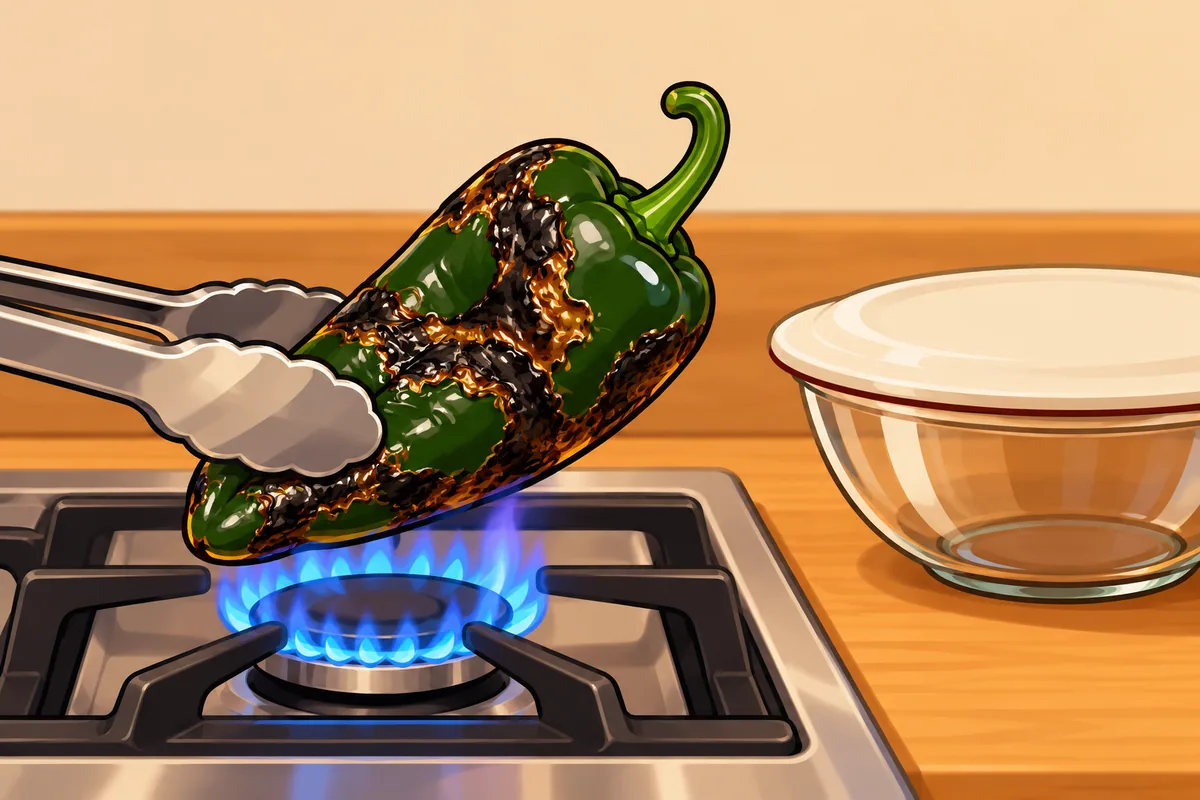
- 1
Slit and heat
Wash and dry the pods and cut a small slit so steam can escape. Heat the oven, broiler or gas grill to 400–450 °F.11
- 2
Blister for 6 to 8 minutes
Turn the pods often until the skin blisters all over and pulls away from the flesh.11
- 3
Steam in a covered bowl
Put the hot pods in a covered heat-safe bowl or a food-grade bag so the steam loosens the skin.11
- 4
Peel and chill
Pull the skin off with a gentle tug; scrape any stubborn patch. Refrigerate within 2 hours and use or freeze within 3 days.11
Frozen roasted poblanos keep up to 12 months11. If you roast a big bag, freeze them flat in packs no deeper than 2 inches so you can break off one pod at a time. NMSU also notes you can freeze whole pods unpeeled, and the skins come off more easily after thawing11, which saves you the steaming step on a busy day.
How much bell pepper replaces a poblano, and the other way round?
Weight for weight. Both pods have thick walls and similar water, 92.8 g against 93.9 g per 100 g59, so they cook down alike in your pan and you can keep your cooking times.
| Recipe calls for | Use instead | To match the dish |
|---|---|---|
| 2 poblanos for rajas | About 240 g green bell, two medium | Add a pinch of cayenne or half a jalapeño for the mild heat |
| 4 bells for stuffed peppers | Four large poblanos | Expect 1,000–2,000 SHU in each pepper |
| 100 g bell in a salad | 100 g raw poblano | Taste first; the flavor turns earthier |
If you want a pepper between the two, the Anaheim against the poblano covers a long, mild chile that peels the same way.
Will a poblano planted beside your bells make them hot?
No. Maryland Extension says planting sweet types near hot types will not make the sweet peppers hot10. Cross-pollination only shows up in the seed, so saved seed can give you an odd plant next year.
The two crops run on a similar clock. Maryland gives bells 70 to 80 days from transplanting to green maturity, plus 2 to 3 weeks more to color10; Iowa State lists bell cultivars from 63 to 80 days3. UF/IFAS says the poblano keeps producing through the summer2, so one or two plants feed a household.
Your next step: decide on the dish with the checklist above, then weigh your pods against the swap table before you shop. If the poblano's heat is the question, the poblano against the jalapeño shows the next step up, and the ancho entry covers the dried form.
Related in Compare
-
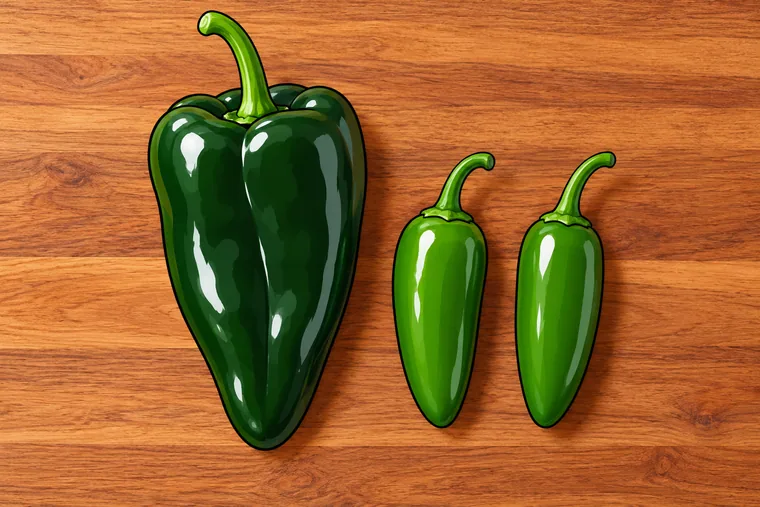
Poblano vs Jalapeño, 3.3× the Heat and When to Use Each
The big mild one and the small hot one.5 min read -
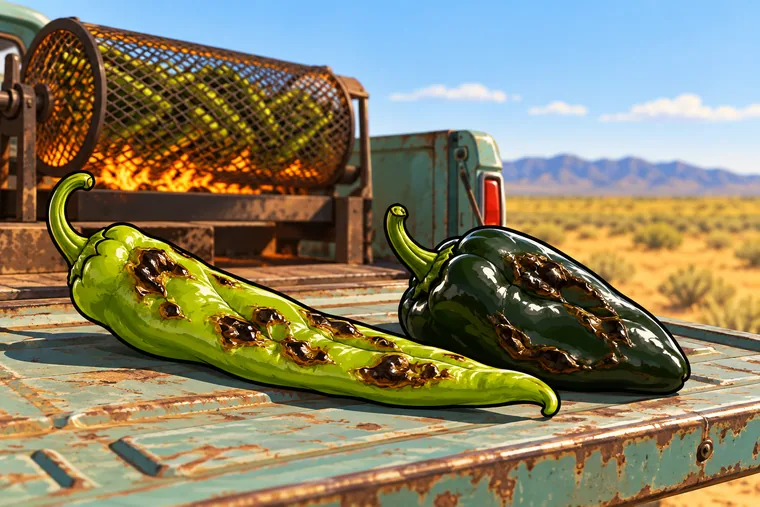
Hatch Chile vs Poblano, 10 NMSU Lines From 0 to 9,000 SHU
New Mexico's long green against Mexico's short, dark stuffing chile.7 min read -
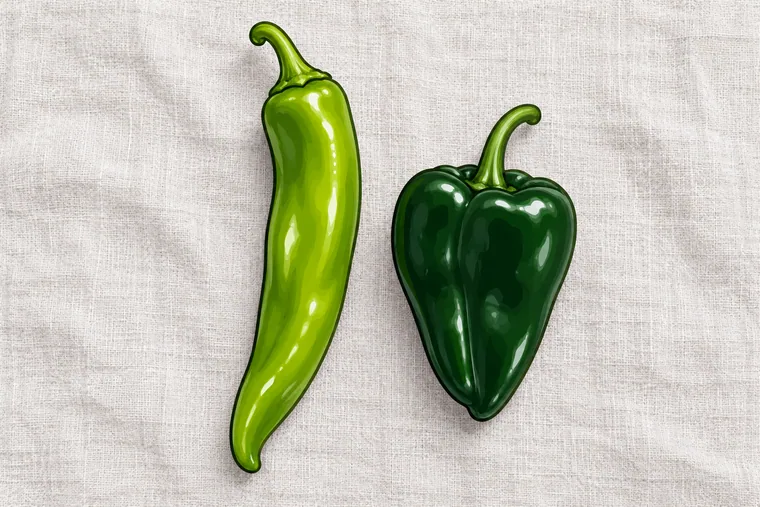
Poblano vs Anaheim Pepper, Up to 2× the Heat
Two mild green chiles that cooks mix up all the time.6 min read -
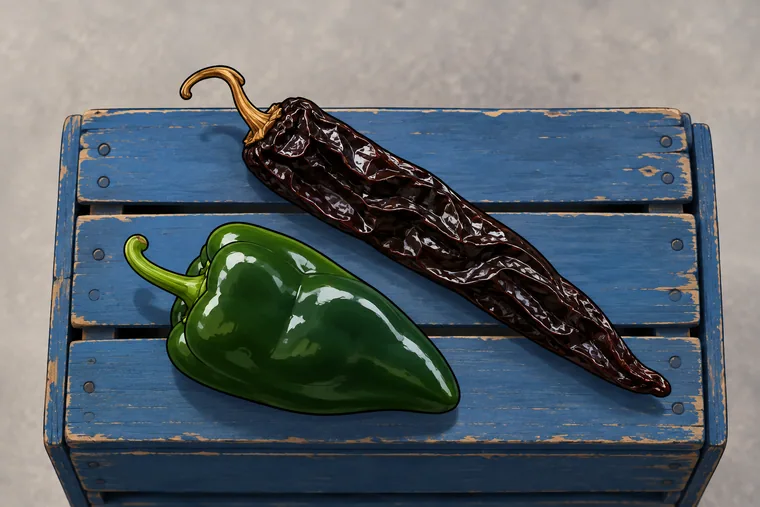
Pasilla vs Poblano, 2 Different Chiles and 1 Mixed-Up Label
One long black dried chile, one broad green fresh one, and a label that blurs them.6 min read -
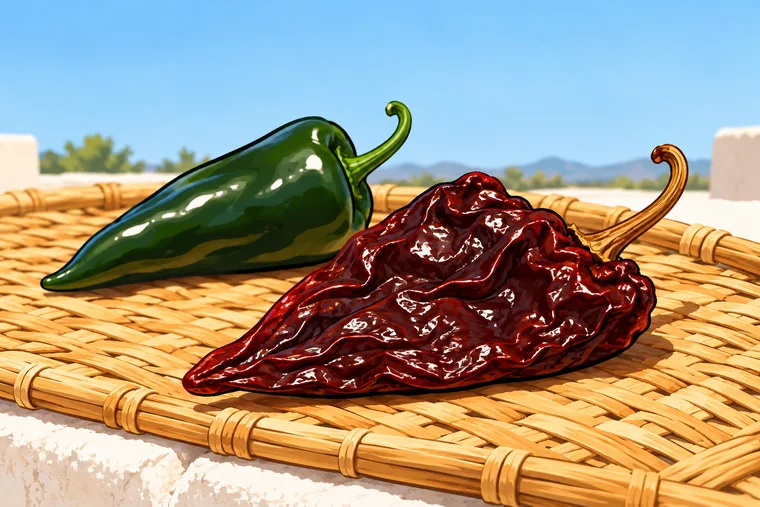
Ancho vs Poblano, One Pepper Picked Green or Dried Red
Fresh green, ripe red, then dried: one plant, three stages, two names.6 min read -
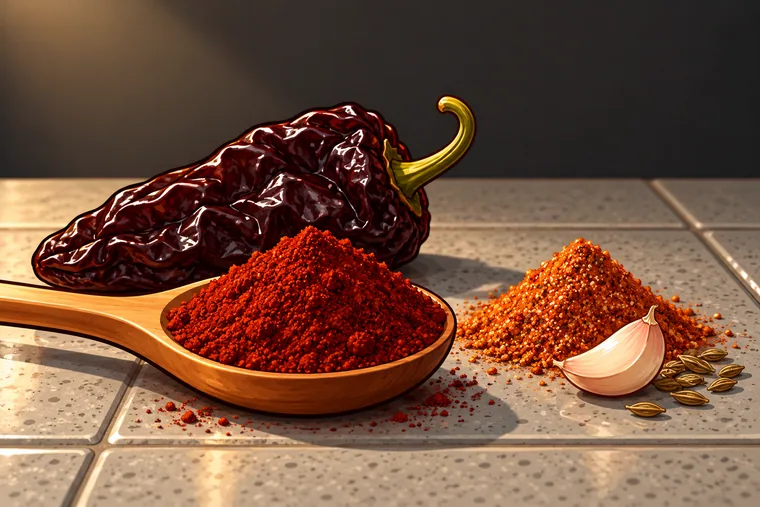
Ancho Chili Powder vs Chili Powder, One Chile or a Blend
Two red powders on the same shelf: a single chile and a seasoning mix.6 min read
Sources
· 11
- 1University of Florida IFAS Extension HS-859/TR010: Pepper Production in Miami-Dade County, Florida
- 2UF/IFAS Gardening Solutions Peppers by Scoville Units
- 3Iowa State University Extension PM 1888(S): Guía de Horticultura, El huerto doméstico, Chiles (Everhart, Haynes, Jauron)
- 4Molecules 18(11):13471 (MDPI) Characterization of different Capsicum varieties by evaluation of their capsaicinoids content by high performance liquid chromatography, determination of pungency and effect of high temperature (González-Zamora et al.)
- 5USDA Agricultural Research Service, FoodData Central (SR Legacy) Peppers, sweet, green, raw (FDC ID 170427)
- 6New Mexico State University, Chile Pepper Institute Chile Terminology
- 7University of Kentucky, Center for Crop Diversification Hot Peppers and Specialty Sweet Peppers, CCD-CP-101 (Kaiser, Ernst)
- 8University of California Agriculture and Natural Resources, UC Master Gardeners of Ventura County Ventura Garden to Table Series: Peppers
- 9USDA Agricultural Research Service, FoodData Central (Foundation Foods) Peppers, poblano, seeded, raw (FDC ID 2747662)
- 10University of Maryland Extension Growing Peppers in a Home Garden
- 11New Mexico State University Cooperative Extension Service (Guide E-324) Processing Fresh Chile Peppers (revised by Nancy C. Flores)