
Poblano vs Anaheim Pepper, Up to 2× the Heat
Two mild green chiles that cooks mix up all the time.
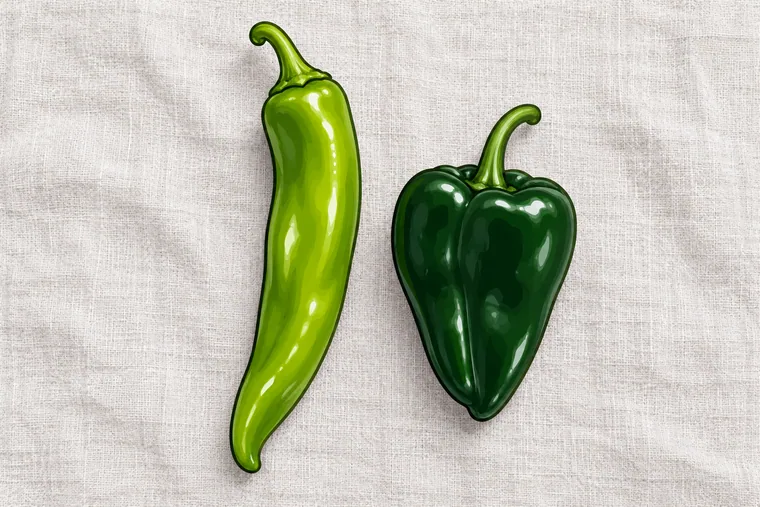
The Anaheim can run hotter, about 2 times a poblano by midpoint.
- Anaheim 1,000–5,000 SHU, poblano 1,000–2,000 SHU
- Poblano: thick walls, about 4 by 2 inches; Anaheim: long and skinny, up to 7 inches
- Swap them freely in a cooked dish; expect a thinner wall from the Anaheim
On this page
- 1Which is hotter, an Anaheim or a poblano?
- 2Are Anaheim and poblano the same pepper?
- 3How do you tell them apart in the store?
- 4How do they taste and cook differently?
- 5How do you roast and peel them?
- 6Can you freeze them before you peel them?
- 7Which Anaheim cultivar is closest to a poblano?
- 8Why are your poblanos hotter this year?
- 9How much of each do you need for a dish?
- 10Which one should you buy?
- 11Which one ripens first in a short summer?
- 12Can you use an Anaheim instead of a poblano?
- 13Why does a roasted batch peel badly or freeze mushy?
Which is hotter, an Anaheim or a poblano?
The Anaheim can be, but a lot of the time they land in the same place. UF/IFAS lists the Anaheim at 1,000 to 5,000 SHU and the poblano at 1,000 to 2,0001. Its extension guide adds that most Anaheims sit around 1,000 SHU and only some varieties reach 5,0002.
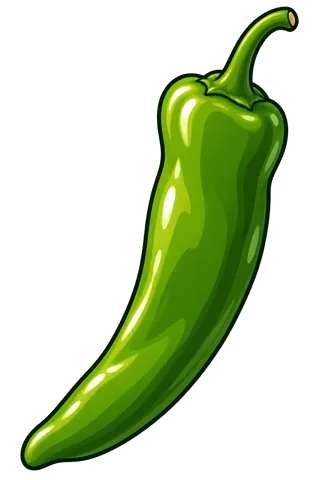
Anaheim
Hotter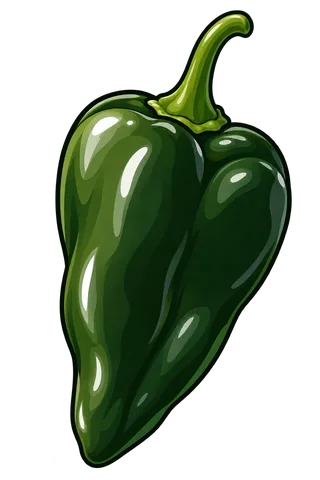
Poblano
- 1,000–5,000 SHU, usually about 1,00012Heat1,000–2,000 SHU12
- Long, skinny, slightly tapered, with a wrinkled or folded stem end; heirloom types up to 7 by 1.5 inches2PodThick-walled, about 4 inches long and 2 wide2
- Green, turning deep red or maroon12Ripe colorEaten green or ripened red12
- About 80 days to green, over 120 to red2DaysAbout 75–80 days2
- A cultivar of the New Mexican pod type3Pod typeThe fresh form of the ancho3
- Ground into powder2DriedRipened red and dried, it becomes ancho2
A mild Anaheim and a poblano taste about equally hot; only a hot Anaheim pulls ahead.
How many times hotter is an Anaheim?
We compare midpoints, the middle of each published range. The Anaheim's midpoint is 3,000 SHU and the poblano's is 1,500, so the Anaheim comes out about twice as hot. The full spread is wider, as the table shows.
| Comparison | Anaheim | Poblano | Result |
|---|---|---|---|
| Midpoints | 3,000 SHU | 1,500 SHU | Anaheim about 2 times hotter |
| Hot Anaheim, mild poblano | 5,000 SHU | 1,000 SHU | Anaheim 5 times hotter |
| Mild Anaheim, hot poblano | 1,000 SHU | 2,000 SHU | Poblano 2 times hotter |
That last row surprises people. A typical 1,000 SHU Anaheim next to a hot poblano is the milder pod of the two.
Are Anaheim and poblano the same pepper?
No. The Anaheim is a cultivar of the New Mexican pod type, a type Fabian Garcia developed at NMSU in the 1880s3, and its seed came from New Mexico before growers took it to Anaheim, California4. NMSU also points out that people often call any New Mexican chile "Anaheim" by mistake.
The poblano is the fresh, green form of the ancho, and in US produce markets it can also be a green mulato, a close relative that ripens brown instead of red3. Its name comes from the valley of Puebla, south of Mexico City2. When you let it ripen red and dry it, you get the wrinkled, dark dried ancho sold in bags.
How do you tell them apart in the store?
Look at the shape first and the label second, because the labels overlap. NMSU's garden guide says the New Mexican pod type is also called "Anaheim" or "Hatch"5, so a crate of Hatch chiles holds the same kind of pod your recipe calls Anaheim.
- Length and width. An Anaheim is long and skinny, up to 7 inches by 1.5 in heirloom types; a poblano is about 4 inches long and 2 wide2.
- Stem end. The Anaheim's stem end is often wrinkled or folded, and the pod tapers slightly toward the tip2.
- Walls. Press the side: a poblano feels thick and firm, while an Anaheim gives a little more2.
- The name on the sign. "Long green" also means the New Mexican type, with Big Jim, Joe E. Parker and Sandia among its cultivars3.
If the pod is longer than your hand and thin, you are holding an Anaheim type, whatever the sign says.
How do they taste and cook differently?
UF/IFAS describes the poblano as having a rich melon flavor and thick walls2. That thick wall gives you more flesh per pod to roast or stuff.
The Anaheim is long and skinny2, so you get more skin for the amount of flesh. NMSU breeders note that long New Mexican pods are a favorite for chile rellenos4, so a thin wall does not rule out stuffing.
How do you roast and peel them?
The same way, with one change in timing. NMSU's processing guide gives one method for green chile that suits both pods6:
- Wash, dry, slitA small slit lets steam escape
- Blister 6–8 minutesBroiler, oven or gas grill at 400–450°F, turning often
- Steam coveredA covered heat-safe container until cool
- PeelThe skin pulls off with a gentle tug and a rinse
- Refrigerate within 2 hoursUse or freeze within 3 days
- Freeze up to 12 monthsPacks no deeper than 2 inches, chilled below 40°F first
Watch the Anaheim more closely under the broiler. Its thin wall and long, narrow body2 blister fast at the tip and slower at the shoulders, so you turn it more often. The poblano's thick wall takes the full time and stays firm enough to stuff after peeling.
Can you freeze them before you peel them?
Yes, and you will find peeling easier that way. NMSU's freezing guide says the skin comes off more easily after freezing, so you can roast a whole case, cool it, bag the blistered pods unpeeled, and peel each pack as you thaw it7.
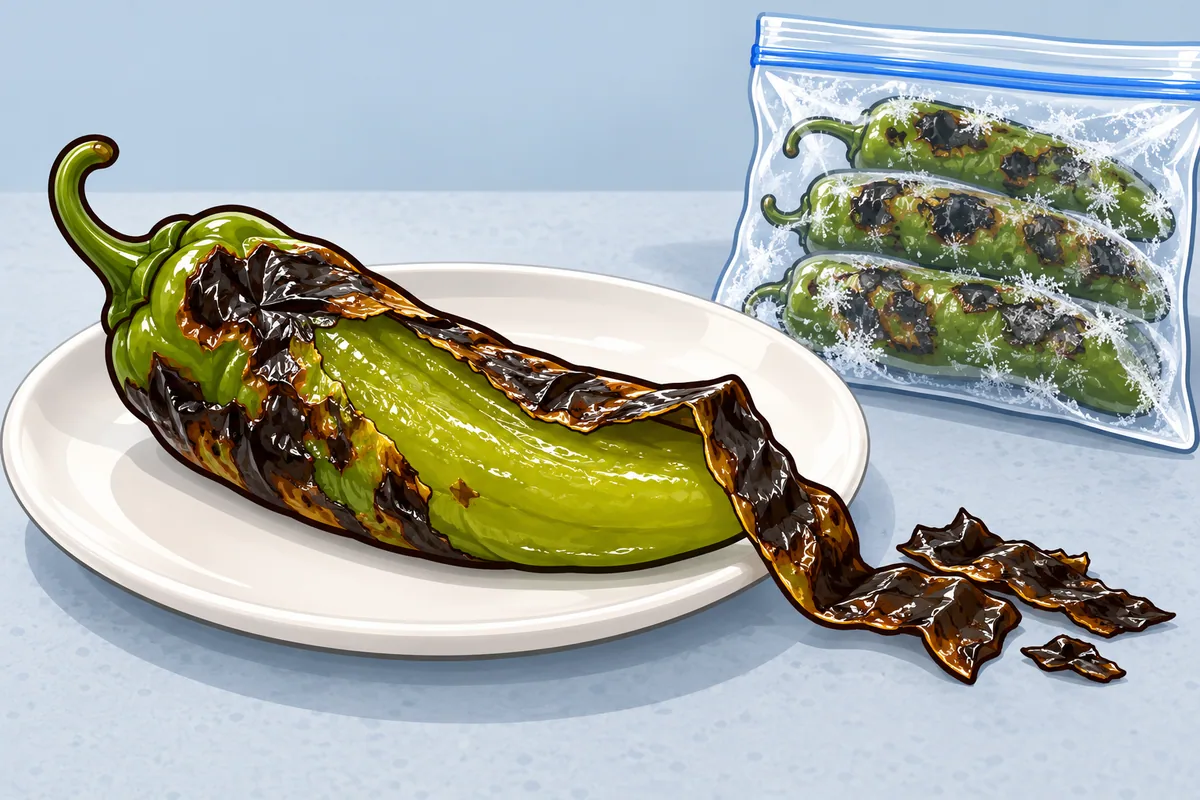
This helps you most with the Anaheim. Its long, skinny pod2 gives you less flesh to hold a filling, so you want it whole and in its skin until the day you stuff it, while a thick-walled poblano forgives a little rough handling. For diced chile, peel first and pack with half an inch of headspace7.
Which Anaheim cultivar is closest to a poblano?
It depends on what you need from the poblano. The New Mexican type has several named cultivars, and NMSU's release report gives each one's heat and pod4:
| Cultivar | Heat | Pod | Closest to a poblano in |
|---|---|---|---|
| NuMex Joe E. Parker | 800–900 SHU | 88 % of pods have two locules, good for canning whole | Heat: at or under a poblano's 1,000–2,000 SHU |
| Sandia | 1,500–2,000 SHU | Long, medium-wide, medium-thick walls; lacks the severe folds of Anaheim | Heat: the same as a hot poblano |
| NuMex Big Jim | 500–2,000 SHU | 7.68 × 1.89 inches; heat varies plant to plant | Size: the biggest pod for rellenos |
| NuMex Heritage Big Jim | 7,000–9,000 SHU | Large, flattened, thick-walled, round shoulders | Wall: thick like a poblano, but far hotter |
So if you want poblano heat in a long pod, pick Joe E. Parker or Sandia. If you want a big thick-walled pod to stuff and can take more heat, Heritage Big Jim runs about four to six times a poblano's 1,500 SHU midpoint. Big Jim gives you the largest pod, but you taste each one, since NMSU says its heat changes from plant to plant.
Why are your poblanos hotter this year?
Because heat is part genes and part weather. NMSU's heat guide says temperature and water both change a pepper's heat, and that a hot cultivar grown in ideal conditions turns out only moderately hot8. A poblano from a hot, dry summer can land at the top of its 1,000 to 2,000 SHU range, while the same plant in a mild, well-watered year sits near the bottom.
You can use that in your own garden. Even watering helps keep your poblanos mild, and NMSU's garden guide lists water stress, too much or too little, among the things that raise or lower heat5.
How much of each do you need for a dish?
Count pods for stuffing and weigh them for everything else. For rellenos, one pod is one serving either way, but the pods differ: a heirloom Anaheim runs up to 7 by 1.5 inches and a poblano about 4 by 22, so you fill a long, narrow tube in one case and a short, wide pocket in the other. Plan a little more filling per Anaheim and a little less per poblano.
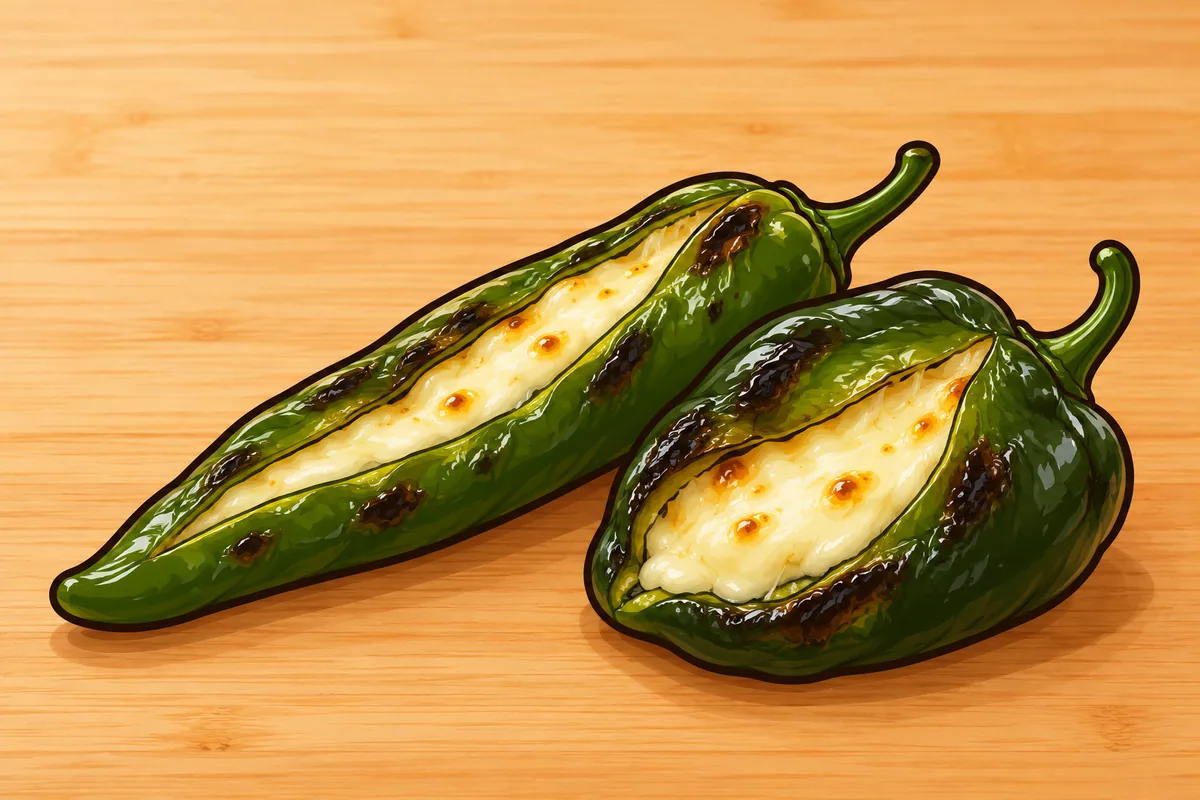
For diced green chile, weight is all that matters. If your stew calls for 450 g of roasted poblano, use 450 g of roasted Anaheim; at typical heat they land close, and only a hot Anaheim at 5,000 SHU would push the stew to two and a half times the heat of a hot poblano's 2,000 SHU1. Taste one strip from the batch and you will know which case you have.
Which one should you buy?
| You are making | Pick | Why |
|---|---|---|
| Stuffed peppers you bake upright | Poblano | Thick walls, about 4 by 2 inches |
| Long rellenos or strips for tacos | Anaheim | Long, skinny pods up to 7 inches |
| A dish for someone who avoids heat | Poblano | Tops out at 2,000 SHU |
| Red chile powder | Anaheim | Ripe red pods get dried into powder |
| A dried chile to keep in the pantry | Poblano (as ancho) | The ripened, dried poblano is ancho |
If you need a stand-in because the store has neither, our Anaheim swaps rank the options with their heat worked out.
Which one ripens first in a short summer?
The poblano, by a little. It matures in about 75 to 80 days and keeps producing through most of the summer, while the Anaheim needs about 80 days to give you green pods and more than 120 days for red2.
If your summer is short, plan to eat your Anaheims green. NMSU spaces garden transplants 8 to 14 inches apart in rows 24 to 30 inches wide5, and you can space both plants the same way. Where the season runs long enough for red pods, New Mexico gardeners string them into ristras to dry5.
Can you use an Anaheim instead of a poblano?
Going the other way works too. A poblano will never be hotter than 2,000 SHU1, so the risk is only that the dish comes out a little tamer. If you want more kick than either, a jalapeño runs 2,000 to 8,000 SHU2, and the jalapeño and poblano pair shows that step up, and the Anaheim against the jalapeño does the same from the long green side.
Why does a roasted batch peel badly or freeze mushy?
Most problems come from the roasting or the freezer, not the pepper you picked.
| Problem | Likely cause | Fix |
|---|---|---|
| Skin will not come off | Pods cooled in open air before steaming | Close hot pods in a covered container or food-grade bag, then peel once cool |
| Skin turns tough and brittle | Microwave roasting | Use the broiler or grill; NMSU notes microwaved skin comes out tougher |
| Chile turns mushy in the freezer | Packs deeper than 2 inches freeze too slowly | Freeze in flat, shallow packs |
| Hands sting after peeling | Capsaicin on bare skin | Wear rubber gloves; NMSU suggests soaking stung hands in vinegar |
| A batch tastes hotter than expected | Some Anaheims reach 5,000 SHU | Taste one strip before you add the whole batch |
The last row is the one people blame on the poblano. A poblano never passes 2,000 SHU1, so if your rellenos bite, the Anaheim side of the batch is the likely source.
Related in Compare
-
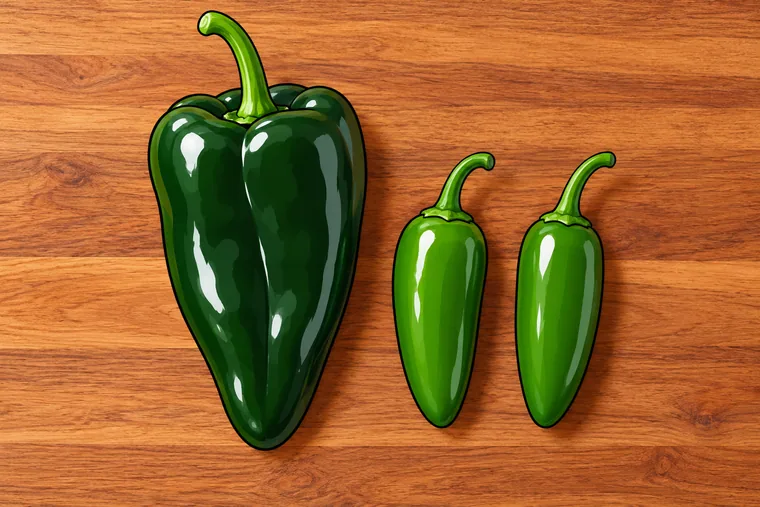
Poblano vs Jalapeño, 3.3× the Heat and When to Use Each
The big mild one and the small hot one.5 min read -
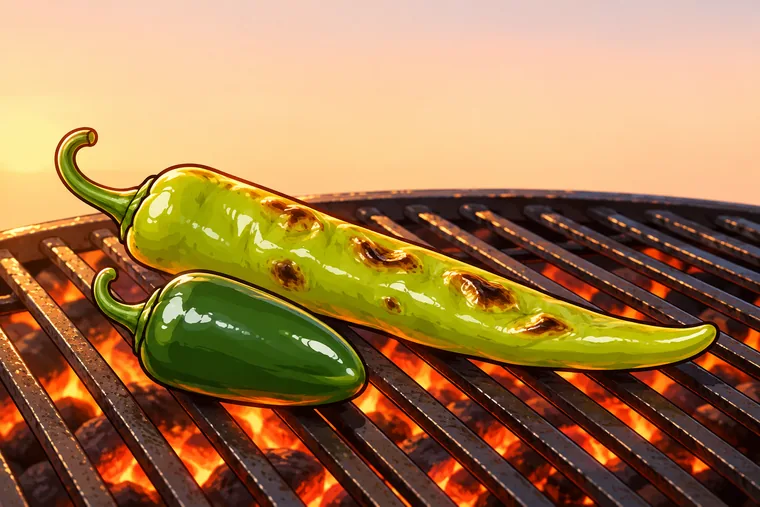
Anaheim Pepper vs Jalapeño, the 5× Heat Gap
Two Capsicum annuum pod types whose heat ranges overlap.5 min read -
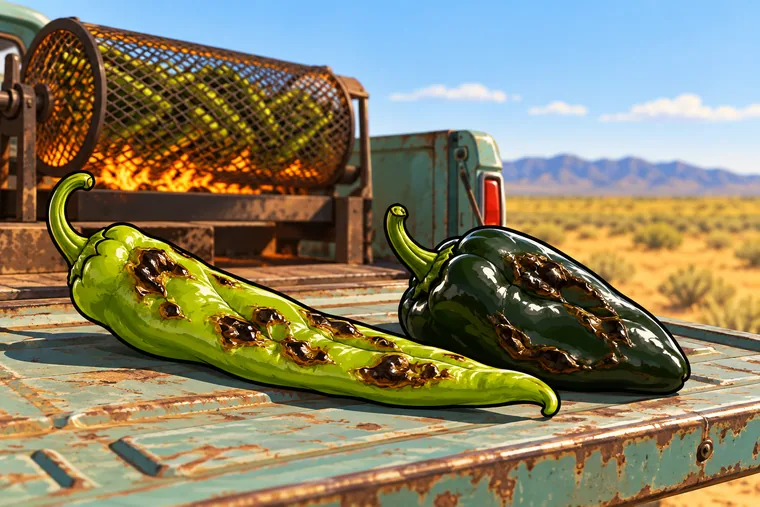
Hatch Chile vs Poblano, 10 NMSU Lines From 0 to 9,000 SHU
New Mexico's long green against Mexico's short, dark stuffing chile.7 min read -
Pasilla vs Poblano, 2 Different Chiles and 1 Mixed-Up Label
One long black dried chile, one broad green fresh one, and a label that blurs them.6 min read -
Poblano vs Bell Pepper, 2,000 SHU Against Zero
One stuffing pepper with a little heat, one with none at all.6 min read -
Ancho vs Poblano, One Pepper Picked Green or Dried Red
Fresh green, ripe red, then dried: one plant, three stages, two names.6 min read
Sources
· 8
- 1UF/IFAS Gardening Solutions Peppers by Scoville Units
- 2University of Florida IFAS Extension HS-859/TR010: Pepper Production in Miami-Dade County, Florida
- 3New Mexico State University, Chile Pepper Institute Chile Terminology
- 4New Mexico State University, Agricultural Experiment Station Research Report 792: The Chile Cultivars of New Mexico State University Released from 1913 to 2016 (Coon, Bosland)
- 5New Mexico State University Cooperative Extension Service Guide H-240: Growing Chile Peppers in New Mexico Gardens (Walker, Bosland)
- 6New Mexico State University Cooperative Extension Service (Guide E-324) Processing Fresh Chile Peppers (revised by Nancy C. Flores)
- 7New Mexico State University Cooperative Extension Service (Guide E-311) Freezing Green Chile (Flores, Schlenker Davies)
- 8New Mexico State University Cooperative Extension Service (Guide H-237) Measuring Chile Pepper Heat (Bosland, Walker)