
Hatch Chile vs Poblano, 10 NMSU Lines From 0 to 9,000 SHU
New Mexico's long green against Mexico's short, dark stuffing chile.
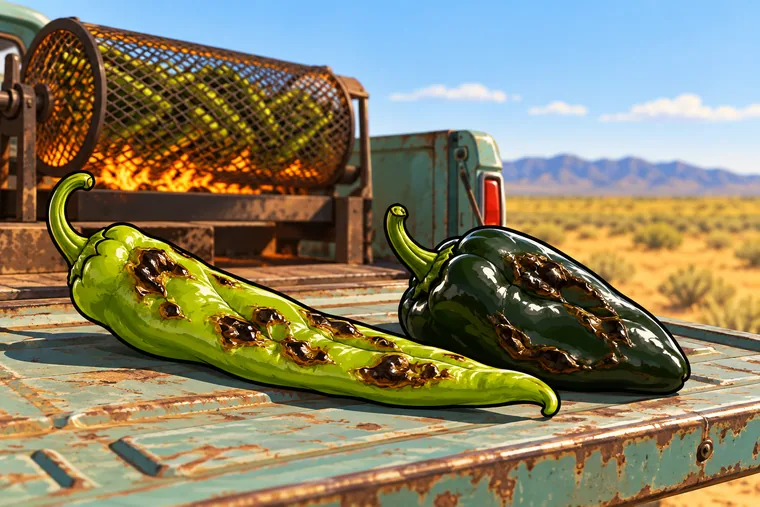
It depends on the Hatch cultivar: most NMSU lines sit at or below a poblano's 1,000–2,000 SHU, a few run up to about 4 times hotter.
- Poblano 1,000–2,000 SHU; NMSU's New Mexican lines run from almost 0 to 9,000 SHU
- Hatch pods: 4–10 inches long, 1–2 wide; poblano about 4 by 2
- Swap by weight in cooked dishes, and ask which cultivar the Hatch is
On this page
- 1Is Hatch chile hotter than poblano?
- 2Which Hatch cultivars run hotter than a poblano?
- 3What does "Hatch" mean on the label?
- 4How do a Hatch chile and a poblano look side by side?
- 5How much poblano replaces Hatch chile in green chile stew?
- 6Can ground ancho stand in for red Hatch powder?
- 7Are Hatch chiles and poblanos the same species?
- 8Why did this year's Hatch chile taste hotter?
- 9Can you grow Hatch-type chiles and poblanos in one garden?
- 10Hatch or poblano for rellenos, stew or rajas?
Is Hatch chile hotter than poblano?
Sometimes. It depends on which cultivar went into the sack you bought. The poblano rates 1,000 to 2,000 SHU on UF/IFAS's chart2. "Hatch" names no single cultivar: NMSU's garden guide says the New Mexican pod type is also called Anaheim or Hatch, with heat from none at all in paprika types to hot3, and NMSU's release report measures each of its lines.
Each bar is one NMSU release, heat as measured in its release report; NuMex Conquistador, with almost no capsaicinoids, sits at the zero edge. Poblano from its index entry (UF/IFAS). Log scale; bars are published ranges.12
Read the ladder from the top, and find the line you are holding. Five lines sit below the poblano's 1,000 SHU floor, four land inside its band, and only Heritage Big Jim clears it, at 7,000 to 9,000 SHU, about 4 to 6 times a poblano's 1,500 SHU midpoint1.
Most Hatch-type chiles taste as mild as a poblano or milder; ask for the cultivar if you want heat.
Iowa State's chart agrees from a different angle. It puts New Mexico chile and Big Jim in a 500 to 1,000 SHU band and poblano in 1,000 to 1,5004, so on that chart the typical Hatch is the milder of the two.
Which Hatch cultivars run hotter than a poblano?
Only the Heritage Big Jim, reliably. Sandia, Española Improved and Heritage 6-4 match a hot poblano; plain Big Jim can, depending on the plant. Here is the lookup for the names you will see on sacks and seed packets:
| Cultivar | Heat | Pod | Against a poblano |
|---|---|---|---|
| NuMex Conquistador | about 0 (<10 ppm) | 6.18 in, thick wall | Milder: no heat |
| NuMex Sweet | 200–300 SHU | Two locules, thinner wall | Milder |
| NuMex R Naky | 260–760 SHU | Slightly bigger than 6-4; a paprika type | Milder |
| New Mexico 6-4 | 300–500 SHU | Thick-fleshed | Milder |
| NuMex Joe E. Parker | 800–900 SHU | Thicker wall than 6-4 | Just below |
| NuMex Big Jim | 500–2,000 SHU | 7.68 × 1.89 in | Below to equal; varies by plant |
| NuMex Heritage 6-4 | 1,500 SHU | 6–8 in, smooth, thick flesh | Equal to the midpoint |
| Sandia | 1,500–2,000 SHU | Long, medium-wide, medium-thick | Equal to a hot poblano |
| Española Improved | 1,500–2,000 SHU | 6.18 × 1.23 in, early | Equal to a hot poblano |
| NuMex Heritage Big Jim | 7,000–9,000 SHU | Large, flattened, thick | About 4–6× hotter |
If your farmers market sells "hot" and "mild" Hatch, the hot sacks most likely hold a Sandia or Heritage Big Jim style chile and the mild ones a 6-4 or Joe E. Parker style. That is our reading of the table, not a labeling rule, so ask the grower which line they planted.
What does "Hatch" mean on the label?
It names the New Mexican pod type, not a separate pepper. NMSU's garden guide says the New Mexican type is also called "Anaheim" or "Hatch"3, and NMSU's Chile Pepper Institute traces that pod type to Fabian Garcia at NMSU in the 1880s and notes it is sometimes mislabeled "Anaheim"5.
So a Hatch chile and an Anaheim can be the same kind of pod under two names. The Anaheim and poblano pair covers that label from the Anaheim side; this page sticks to what the Hatch label means for heat, which comes down to the cultivar list above.
When you shop, the label tells you the pod type and the place it was sold, and the cultivar tells you the heat. The Hatch chile entry keeps the pod's own data, and it is worth a look before you buy a whole sack.
How do a Hatch chile and a poblano look side by side?
Long and slim against short and broad, which you see the moment you hold one of each. NMSU gives New Mexican pods 4 to 10 inches long and 1 to 2 inches wide3; UF/IFAS gives the poblano about 4 inches by 2, thick-walled2.
Hatch (New Mexican type)
Hotter
Poblano
- 4–10 inches long, 1–2 inches wide3PodAbout 4 inches long, 2 wide, thick-walled2
- Mild, sweet and slightly smoky (Anaheim, the same pod type)6FlavorRich melon flavor; earthy, smoky and fruity26
- Bright green to red fresh; brownish red dried7ColorEaten green or ripened red2
- Red pods strung into ristras35Dried formRipened red and dried, it becomes ancho25
The longest Hatch pods are more than twice a poblano's length, and the poblano is the wider of the two. That is why the poblano sits upright in a baking dish with a filling, while long green chile tends to get peeled and chopped into stews and sauces.
How much poblano replaces Hatch chile in green chile stew?
Use the same weight, then decide what to do about heat based on the Hatch you are replacing. Weight works because both are roasted, peeled and chopped in a stew; the flavor and heat are what shift.
Here is the arithmetic you can redo with your own sack. Your stew calls for 450 g of roasted Hatch, and you have poblanos. If the recipe writer used a mild Hatch like New Mexico 6-4 at 300 to 500 SHU1, your poblano at 1,000 to 2,000 SHU2 makes the stew about 3 to 4 times hotter by midpoint (1,500 ÷ 400 is about 3.8). If they used Heritage Big Jim at 7,000 to 9,000, the poblano makes it about 5 times milder (8,000 ÷ 1,500).
| Your dish | Calls for | Use instead | Heat result |
|---|---|---|---|
| Green chile stew for 6 | 450 g roasted mild Hatch | 450 g roasted poblano | About 3–4× hotter, still mild |
| Green chile stew for 6 | 450 g roasted hot Hatch | 450 g poblano plus 1 jalapeño, minced | Closer; poblano alone runs about 5× milder |
| Chiles rellenos | 6 long Hatch pods | 6 poblanos | Shorter, wider pockets; similar heat to a mid Hatch |
| Rajas with cream | 300 g Hatch strips | 300 g poblano strips | Richer, more melon flavor |
So before you swap, ask yourself which kind of Hatch the recipe had in mind. A New Mexico cook who writes "green chile" often means whatever the local sack held that fall, and you can't know its cultivar. Taste your stew halfway through, and if it needs more heat, add a minced jalapeño rather than more poblano.
Going the other way, a mild Hatch replaces a poblano in any chopped dish at equal weight, a little milder. For the whole menu of stand-ins on either side, the Hatch chile swap list and the poblano stand-ins rank the options with amounts.
Can ground ancho stand in for red Hatch powder?
Yes, with a change in color and flavor, since each powder comes from its own red pod. UF/IFAS calls a poblano that ripened red and then dried an ancho2, and NMSU's Chile Pepper Institute describes ancho as a pre-Columbian pod type from Mexico that matures red, adding that a "poblano" in US markets can be a green ancho or a green mulato5. The red New Mexican pod is what growers string into ristras to dry3.
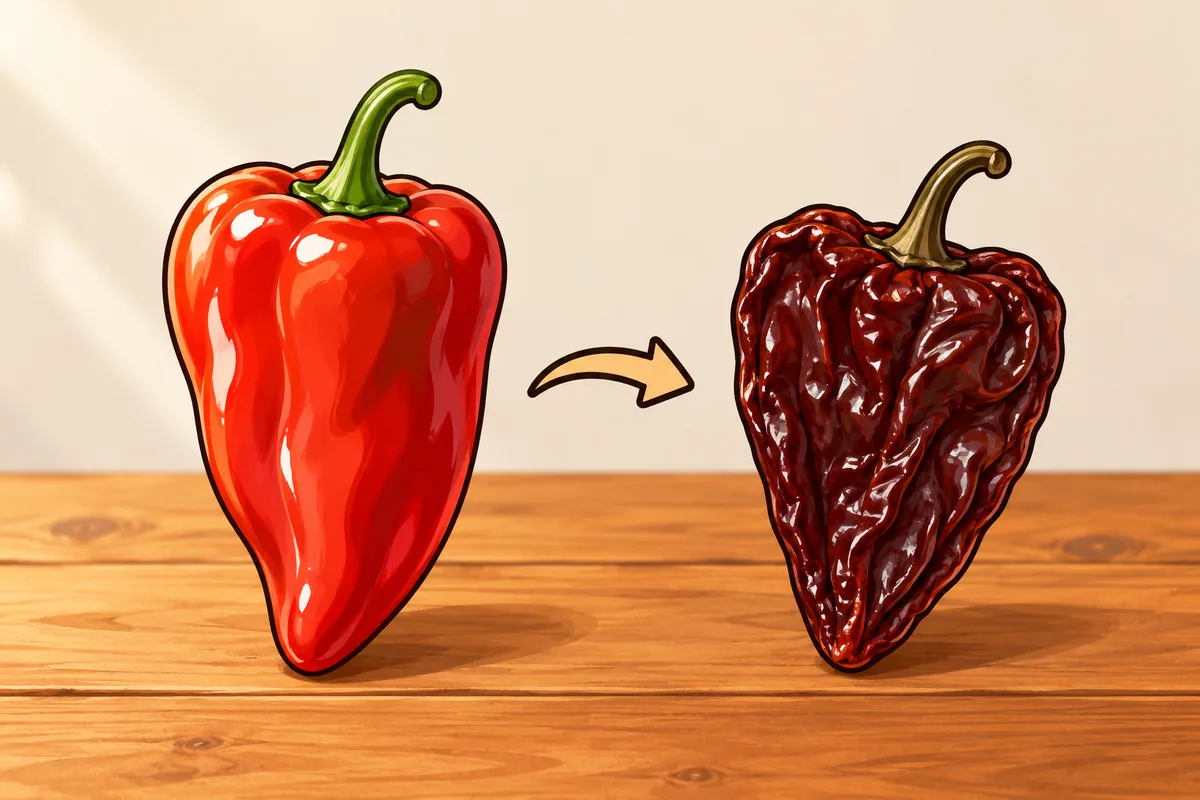
So if your recipe asks for ground ancho and you only have red New Mexico chile powder, you are swapping a broad, dark, raisiny pod for a long, brighter one. The heat stays in the same mild neighborhood for most cultivars, as the ladder above shows, but the color and flavor shift. Some New Mexican lines lean even milder: NMSU bred NuMex R Naky, at 260 to 760 SHU, for use as paprika1.
Use about the same amount by volume, taste, and add a pinch of a darker chile if you want the ancho's depth back. The dried ancho entry describes what you are aiming for.
Are Hatch chiles and poblanos the same species?
Yes. Kentucky's crop profile lists Anaheim, also known as New Mexican chile, and poblano and ancho among its peppers, and classifies them all as Capsicum annuum7. That is the same species as the bell pepper and the jalapeño.
So the differences you taste come from breeding and from where each pod type grew up, not from a split in the family tree. NMSU bred its New Mexican lines for size, yield and set heat levels1; the poblano descends from the ancho pod type of Mexico5. For you, that means one set of garden habits covers both plants, and a cross-pollinated seed you save could mix the two.
Why did this year's Hatch chile taste hotter?
Weather, water and the cultivar mix. NMSU's garden guide lists water stress, too much or too little, temperatures that are too cool or too hot, disease and insect pressure as things that change pungency3. NMSU's release report adds that the original Big Jim varies in heat from plant to plant, which is one reason the university bred a Heritage line with more even heat1.
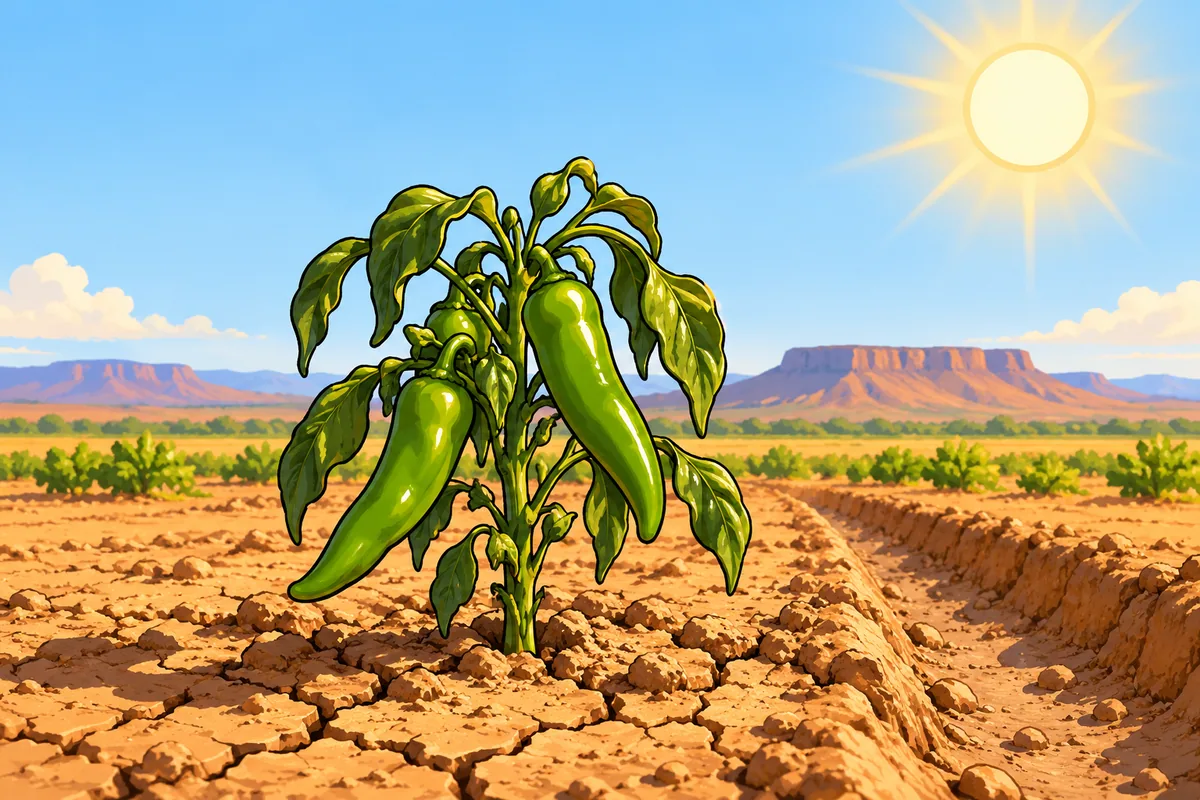
For your kitchen, that means two habits. Taste one roasted strip from each new sack before it goes into the pot. And if your poblanos run hot too, know that their whole range tops out at 2,000 SHU2, so a stew that bites probably owes it to the Hatch side.
Can you grow Hatch-type chiles and poblanos in one garden?
Yes, but give the Hatch the longer season. UF/IFAS gives the poblano about 75 to 80 days to mature, producing through most of the summer2. NMSU's release report lists NuMex Joe E. Parker at 149 days and Española Improved at 155 days as an early line for northern New Mexico1.
Those day counts measure different things, so don't add them up in your planting plan. The practical point: your poblanos give you a steady picking through summer, while a New Mexican line like Joe E. Parker or Big Jim asks for a long, warm season. In a short summer, pick your Hatch types green, since NMSU puts mature green fruit at 45 to 55 days after pollination3, and leave the red pods and ristras to growers with a longer fall.
Maryland Extension reminds you to wait for warm soil, since peppers planted before the soil reaches 65°F just sit there8. Space both plants the same way, and the Hatch chile growing guide covers the New Mexican lines in more depth.
Hatch or poblano for rellenos, stew or rajas?
- A stuffed pepper you bake
- PoblanoAbout 4 × 2 in, thick wall, 1,000–2,000 SHUMild
- Stew, sauce or salsa
- keep it mildMild Hatch line6-4 or Joe E. Parker, 300–900 SHU
- want heatHot Hatch lineSandia 1,500–2,000 or Heritage Big Jim 7,000–9,000 SHU
- keep it mild
Your next step: if you bought a sack of Hatch and want to roast it before it softens, the pepper roasting guide walks you through it. And if you want something hotter than either for your stew, the poblano and jalapeño pair shows how far a jalapeño lifts the heat.
Related in Compare
-
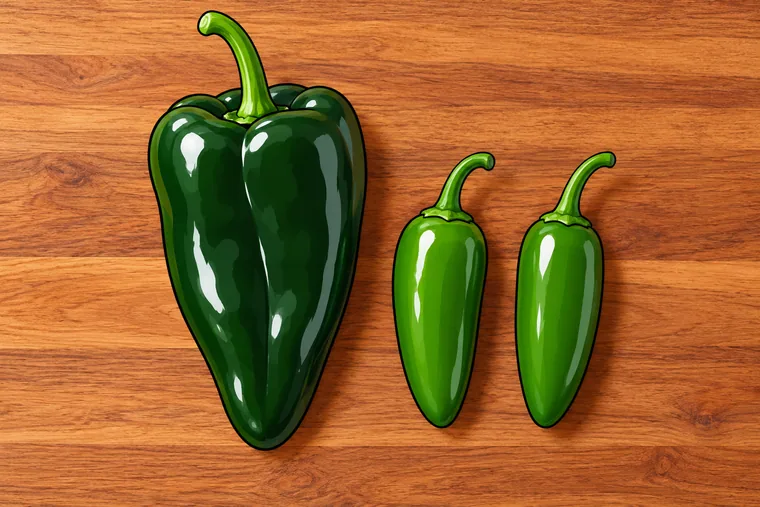
Poblano vs Jalapeño, 3.3× the Heat and When to Use Each
The big mild one and the small hot one.5 min read -
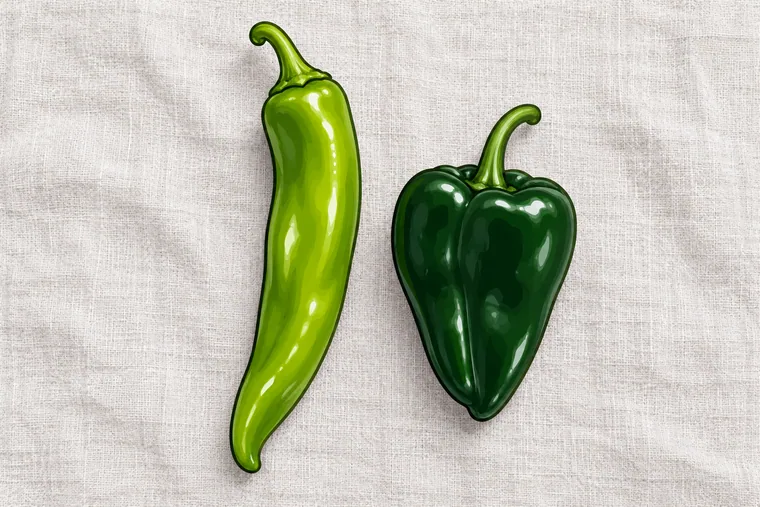
Poblano vs Anaheim Pepper, Up to 2× the Heat
Two mild green chiles that cooks mix up all the time.6 min read -
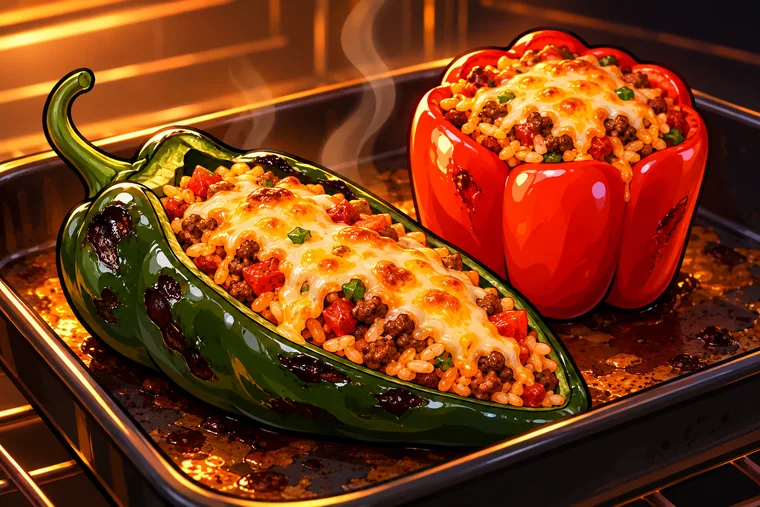
Poblano vs Bell Pepper, 2,000 SHU Against Zero
One stuffing pepper with a little heat, one with none at all.6 min read -
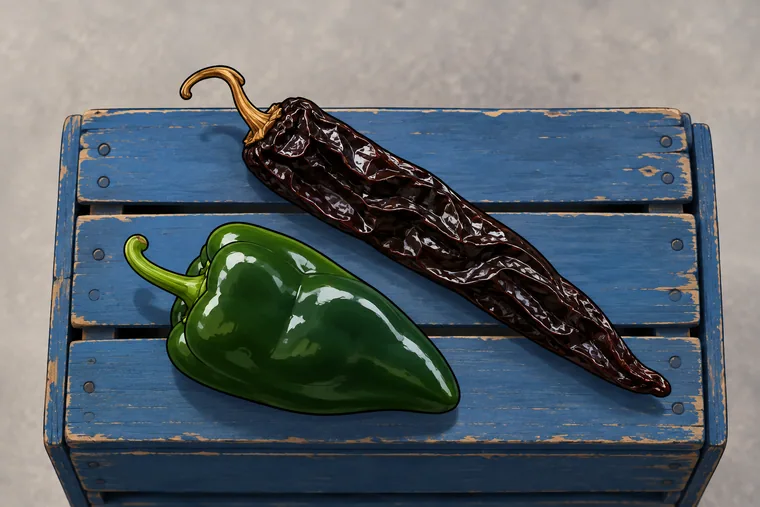
Pasilla vs Poblano, 2 Different Chiles and 1 Mixed-Up Label
One long black dried chile, one broad green fresh one, and a label that blurs them.6 min read -
Ancho vs Poblano, One Pepper Picked Green or Dried Red
Fresh green, ripe red, then dried: one plant, three stages, two names.6 min read -
Anaheim Pepper vs Jalapeño, the 5× Heat Gap
Two Capsicum annuum pod types whose heat ranges overlap.5 min read
Sources
· 8
- 1New Mexico State University, Agricultural Experiment Station (Research Report 792) The Chile Cultivars of New Mexico State University Released from 1913 to 2016 (Coon and Bosland)
- 2University of Florida IFAS Extension HS-859/TR010: Pepper Production in Miami-Dade County, Florida
- 3New Mexico State University Cooperative Extension Service Guide H-240: Growing Chile Peppers in New Mexico Gardens (Walker, Bosland)
- 4Iowa State University Extension PM 1888(S): Guía de Horticultura, El huerto doméstico, Chiles (Everhart, Haynes, Jauron)
- 5New Mexico State University, Chile Pepper Institute Chile Terminology
- 6University of California Agriculture and Natural Resources, UC Master Gardeners of Ventura County Ventura Garden to Table Series: Peppers
- 7University of Kentucky, Center for Crop Diversification Hot Peppers and Specialty Sweet Peppers, CCD-CP-101 (Kaiser, Ernst)
- 8University of Maryland Extension Growing Peppers in a Home Garden