On this page
- 1What can you use in place of Hatch green chile?
- 2How do you match a mild, medium or hot Hatch bag?
- 3Why does one Hatch bag burn and the next one not?
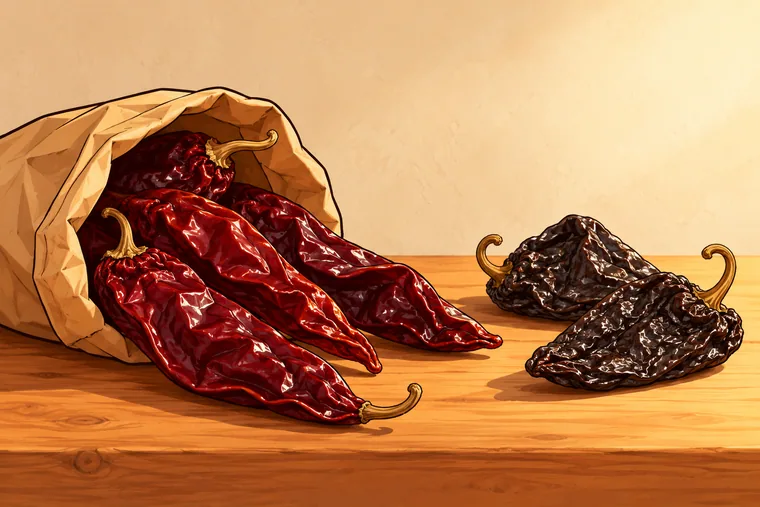
- 4What replaces dried red New Mexico chile pods?
- 5Which Hatch swap holds up in chile rellenos?
- 6How do you roast the swap so it tastes like a Hatch roast?
- 7Can canned or frozen chiles stand in for a fresh Hatch roast?
- 8Stock up for the year
- 9Sources
What can you use in place of Hatch green chile?
Another New Mexico long green, if you can get one, and an Anaheim if you cannot. NMSU's Chile Pepper Institute says there is no chile variety named Hatch: the Hatch chile is any chile grown in New Mexico and sold under the valley's name1. So you are really replacing a New Mexican pod of some heat, and the swaps below cover the full spread.
| Swap | Heat (SHU) | Amount | Best for | Note |
|---|---|---|---|---|
| Anaheim2 | 1,000–5,000 | 100 g | Mild Hatch, rellenos, green chile stew | A New Mexican pod-type cultivar |
| Poblano3 | 1,000–2,000 | 100 g | Mild Hatch, roasting | Thick-walled, rich melon flavor |
| Poblano plus jalapeño3 | Blend | 71 g + 29 g for medium | Medium Hatch in stews and sauce | See the mixer table |
| Poblano plus serrano3 | Blend | 69 g + 31 g for hot | Hot and extra-hot Hatch | See the mixer table |
| Canned green chiles4 | Not rated | About ¾ cup, drained | Casseroles, quick enchiladas | Taste before you add it all |
| Dried ancho pods5 | 1,000–1,500 | Same weight as red pods | Red chile sauce from pods | Darker, fruitier sauce |
| Guajillo pods6 | Mild to medium | Same weight as red pods | Red chile sauce, enchiladas | Sweet, fruity, slightly smoky |
Read the heat on your recipe's bag, or guess it from the dish, before you choose; a mild swap in a hot recipe tastes like a mistake. The mixer section turns that heat into grams.
Anaheim, a New Mexican pod by another name
NMSU defines the Anaheim as a cultivar of the New Mexican pod type7, and UF/IFAS rates it at 1,000–5,000 SHU2. It roasts, peels and stuffs the same way your Hatch would. The longer answer about Anaheims and Hatch labels sits in our Anaheim swaps.
Poblano, the stand-in every store carries
A poblano runs 1,000–2,000 SHU with thick walls and a rich melon flavor3. It roasts well and you can peel it easily. It is shorter and wider than a long green, so a relleno looks different, but a green chile stew made with poblanos still tastes like green chile stew.
Poblano with jalapeño, for a medium bag
When your recipe expects a medium Hatch, poblano alone falls short. Add a jalapeño, at 2,000–8,000 SHU3, and the mixer below tells you how much. Roast them together and chop them together, and nobody picks the jalapeño out.
Poblano with serrano, for hot and extra hot
A serrano carries 10,000–25,000 SHU3, enough to lift a poblano blend to the heat of NMSU's hottest long greens. USDA weighs one serrano at 6.1 g8, so the 31 g in the hot blend is about five pods.
Canned green chiles, for a weeknight
USDA weighs a cup of canned green chiles at 139 g4, so 100 g is about three quarters of a cup. The record does not name the pepper or the heat. Drain the can, add half, taste, then add the rest.
Ancho pods, for red chile sauce
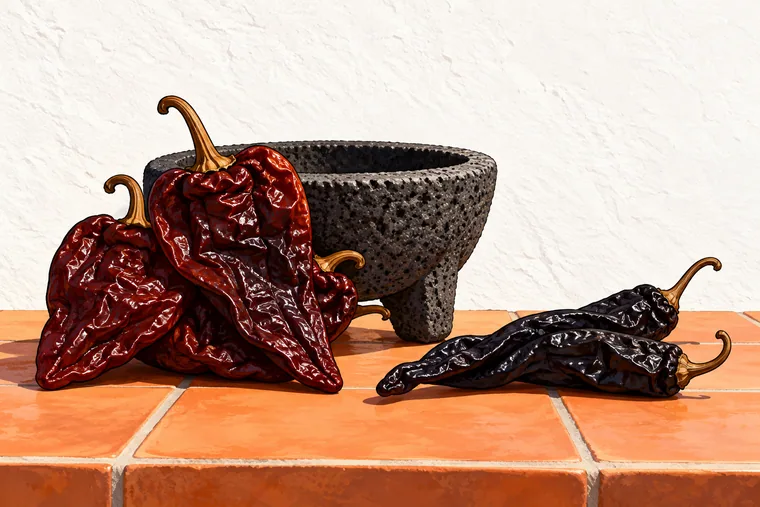
Iowa State puts ancho at 1,000–1,500 SHU5, close to a mild red New Mexico pod. USDA weighs one dried ancho at 17 g9. Your sauce comes out darker and a touch sweeter than red New Mexico chile, which many cooks like in enchiladas.
Guajillo pods, the red that stays red
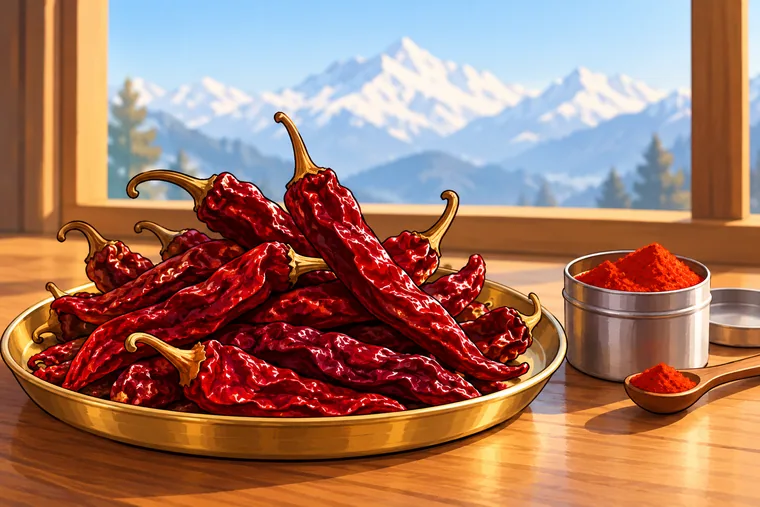
The UC Master Gardeners describe guajillo as a dried chile with a sweet, fruity, slightly smoky flavor and mild to medium heat6. Its long, smooth red pods make a bright red sauce closer in color to New Mexico red than ancho does.
How do you match a mild, medium or hot Hatch bag?
Find the heat level, then mix two peppers by weight. We pair each label with an NMSU cultivar average10, and blend poblano (midpoint 1,500 SHU), jalapeño (5,000) or serrano (17,500) from the UF/IFAS ranges3 to hit it.
| Bag says | Example NMSU cultivar | Target SHU | Blend for 100 g |
|---|---|---|---|
| Mild | NuMex Joe E. Parker, New Mexico 6-4 | 900 | 60 g poblano + 40 g green bell pepper |
| Medium | Española Improved | 2,500 | 71 g poblano + 29 g jalapeño |
| Hot | Sandia, NuMex Big Jim | 6,500 | 69 g poblano + 31 g serrano |
| Extra hot | NuMex Sandia Select, NuMex Heritage Big Jim | 9,500 | 50 g poblano + 50 g serrano |
The math is one line, so you can redo it for any target. For the hot row: (69 × 1,500 + 31 × 17,500) ÷ 100 = about 6,460 SHU, close to Sandia's 6,50010. Bell pepper rates zero3, which is why the mild row cuts the poblano with it.
Pick the blend by your recipe's source if the bag is unknown. A family green chile stew from New Mexico usually means mild or medium; a recipe that warns you about the heat means hot.
Why does one Hatch bag burn and the next one not?
Because the name tells you where the chile grew, not which cultivar it is. NMSU's own New Mexican cultivars, all candidates for a Hatch label when grown in the state, average anywhere from 160 to 9,500 SHU10. The dated rail shows how that spread built up over six decades of releases.
- 1956
Sandia
6,500 SHU, still a common hot long green10
- 1975
NuMex Big Jim
6,500 SHU, adapted for dry red chile products10
- 1984
Española Improved
2,500 SHU, adapted for dry red products10
- 1990
NuMex Joe E. Parker and NuMex Sweet
900 SHU and 300 SHU, the mild end10
- 2004
NuMex Garnet
160 SHU, bred mostly as a red colorant10
- 2008 and 2014
NuMex Heritage Big Jim and NuMex Sandia Select
9,500 SHU each, the hottest New Mexican averages10
NMSU adds that the New Mexican pod type was first grown commercially in the Hatch Valley before it spread across the state1. So the valley gave the type its fame, and a century of breeding gave it a wide heat range. When your recipe just says "Hatch", you are choosing a point on that range.
What replaces dried red New Mexico chile pods?
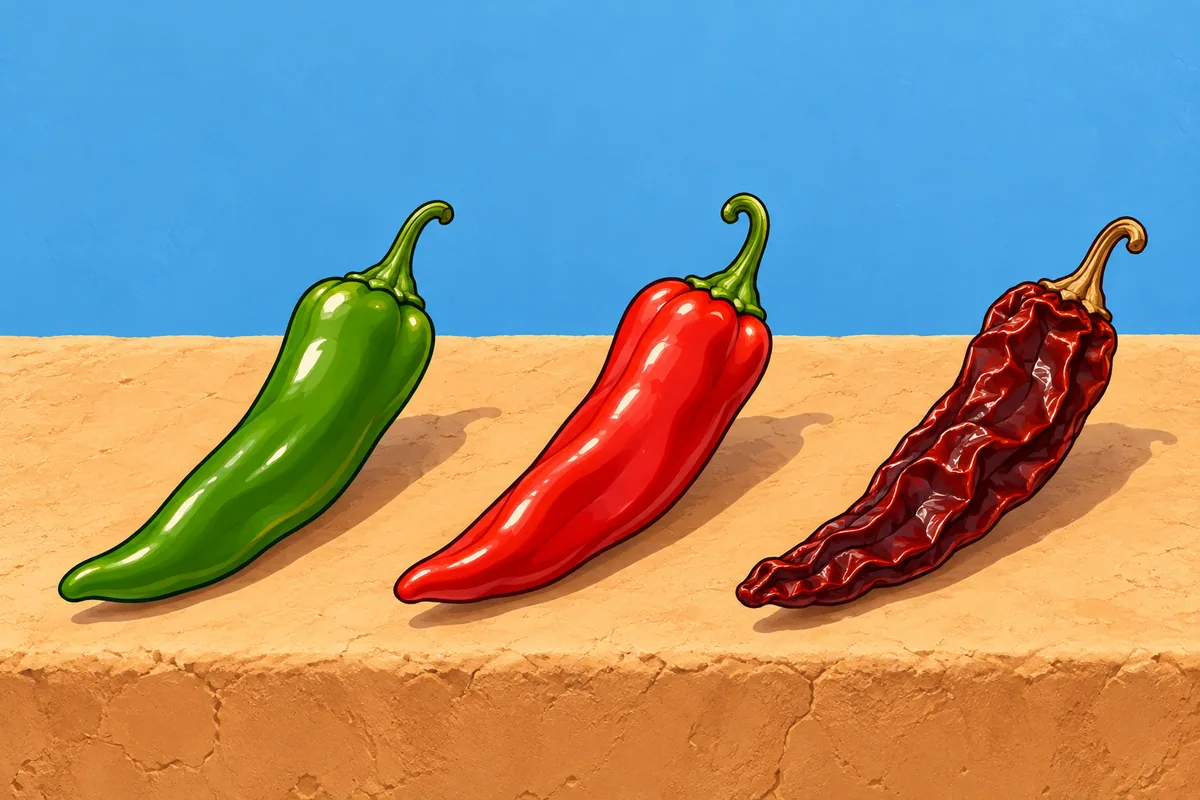
Ancho or guajillo pods, soaked and blended the same way NMSU makes red chile sauce from New Mexico pods. A red pod is the same chile left on the plant to ripen and then dried, which the figure shows.
NMSU's guide makes about a pint of purée from 12 to 14 large pods11. Use the same weight of ancho or guajillo pods, and follow its steps.
- 1
Pick sound pods
Skip any pod with mold, insects or decay, and never cook a decorative pod sprayed with shellac or insecticide.11
- 2
Stem, seed and wash
Remove stems and seeds, then wash the pods in warm water, changing it a few times.11
- 3
Soak in boiling water
Cover the pods with boiling water for 30 minutes, until the pulp slips off the skin.11
- 4
Blend and sieve
Blend with fresh hot water to a smooth purée and push it through a sieve to catch the peel.11
- 5
Simmer
Simmer the purée for 10 minutes before you use it or store it.11
Leftover purée goes into the fridge right away, and NMSU says to use it or freeze it within 3 days11. Other pods soak a little differently, and the steps for rehydrating dried chiles cover each one.
If you need dried green chile, NMSU calls that chile pasado: dehydrated green chiles you reconstitute for cooking7. Outside New Mexico you will rarely find it, so roasted poblano strips that you freeze yourself are your nearest pantry stand-in.
Which Hatch swap holds up in chile rellenos?
The one with a long, sturdy pod. A relleno needs a chile you can roast, peel, slit and stuff without it tearing, so shape and wall matter more than heat here.
An Anaheim gives you the classic long shape, and you can stuff it exactly the way your recipe shows. A poblano is the other easy choice: UF/IFAS calls its fruit thick-walled, about 4 inches long and 2 inches wide3, so it holds a generous filling and survives the batter, though your rellenos come out shorter and fatter.
Skip the blends for rellenos. Jalapeños and serranos are far too small to stuff as a Hatch stand-in, and your heat would land in a few bites instead of spreading through the dish. If your family wants a hotter relleno, mix a little minced jalapeño or serrano into the cheese filling instead, and you keep the poblano or Anaheim shell.
How do you roast the swap so it tastes like a Hatch roast?
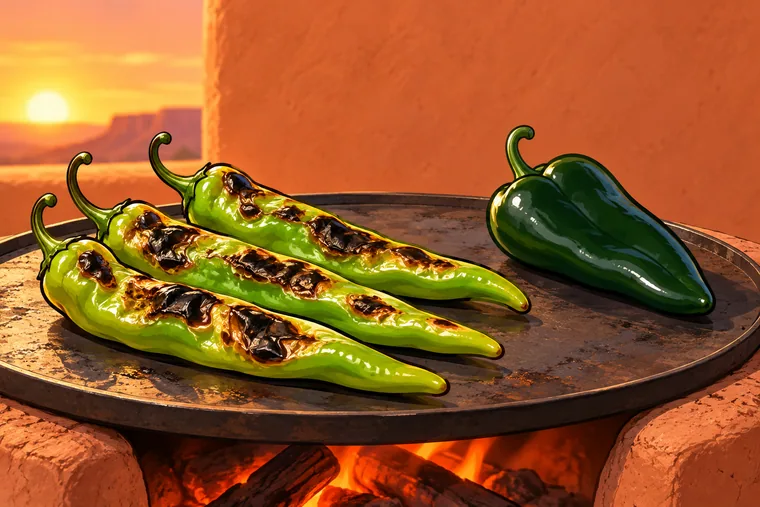
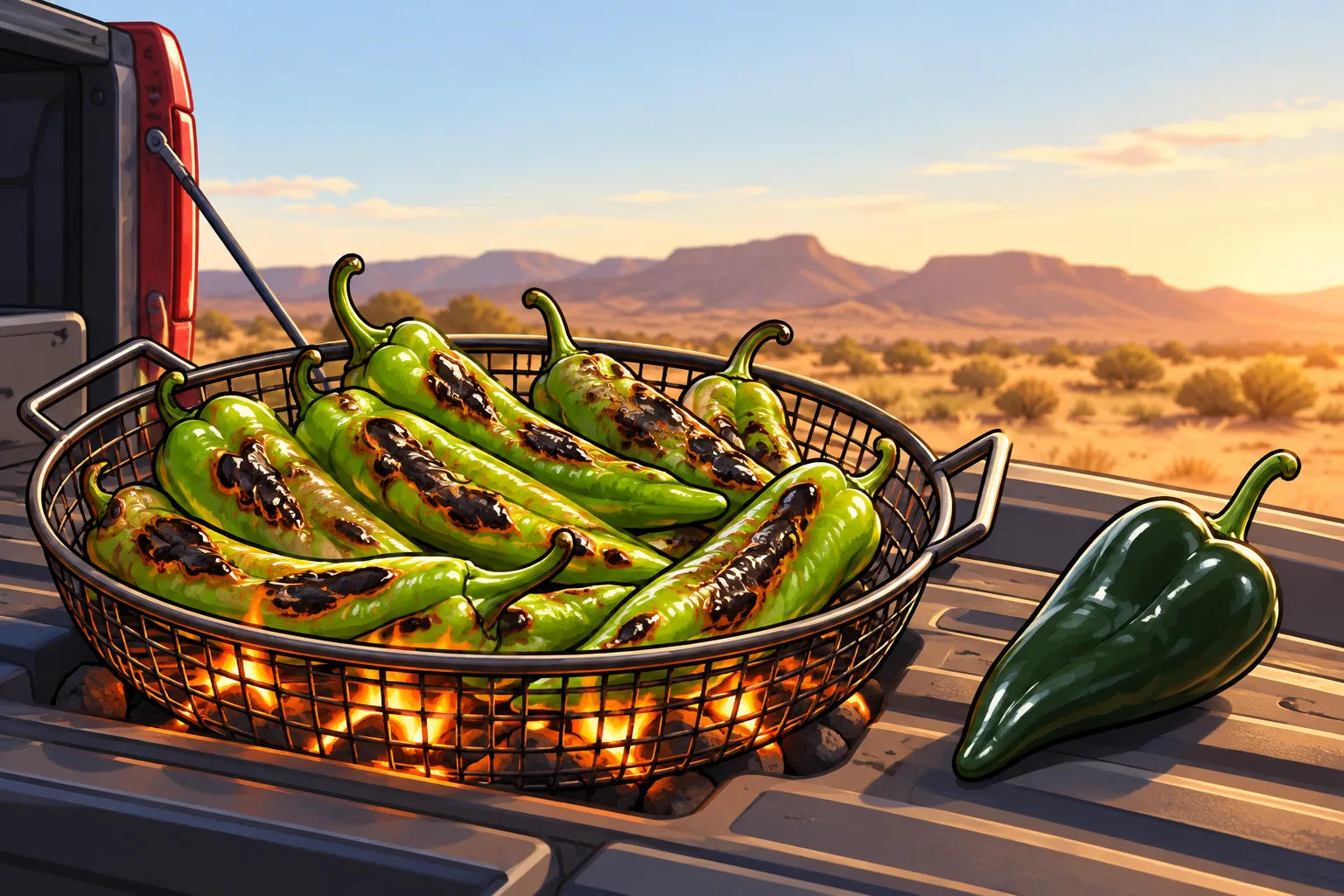
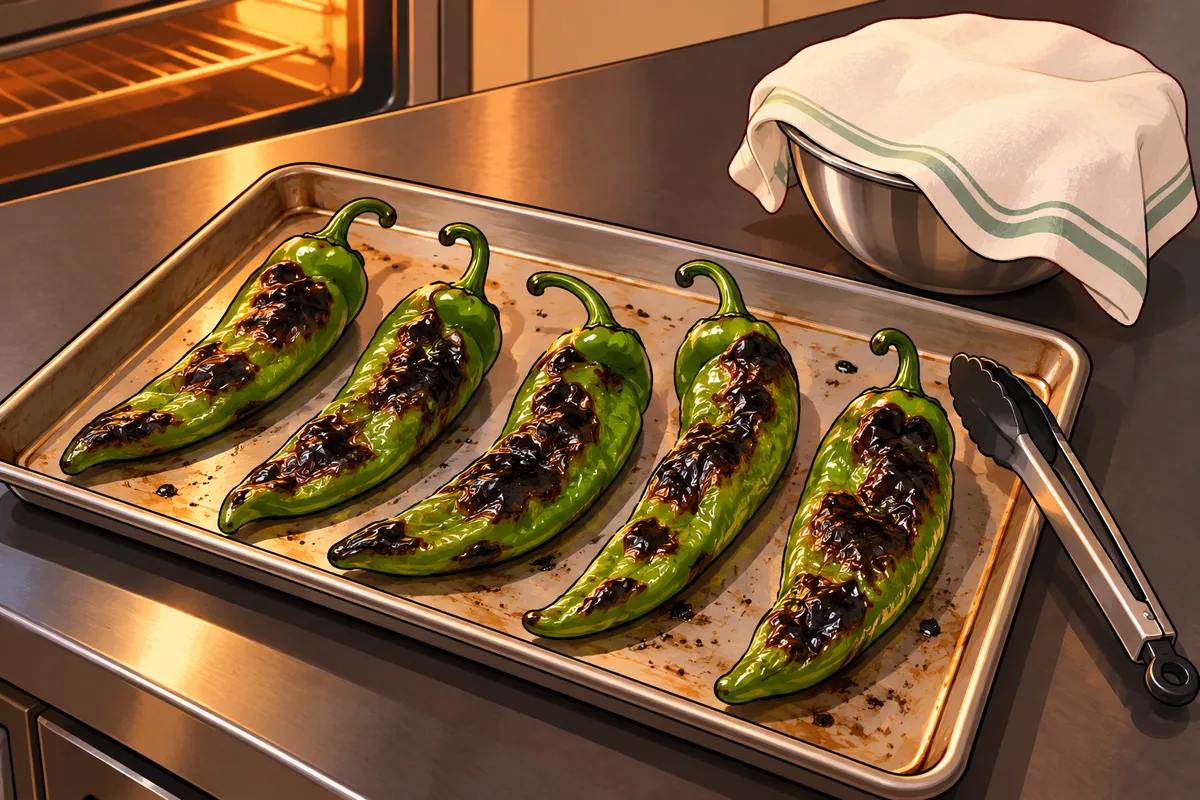
Char it hard and steam it. The smoky, blistered taste of Hatch green chile comes from the roast as much as the pepper, so every swap here gets closer once you treat it the same way.
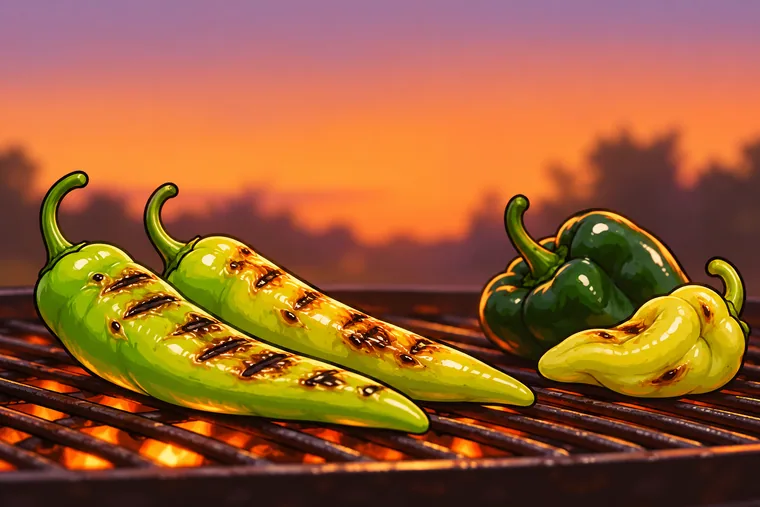
Roast your poblanos, Anaheims and any jalapeño or serrano in the blend on the same grill or under the same broiler, turning them until the skin is black and blistered all over. Then close them in a bowl or bag for a few minutes so the steam loosens the skins, and peel. The full method, including oven and gas-flame options, lives on the page about roasting peppers.
Can canned or frozen chiles stand in for a fresh Hatch roast?
Canned ones can, for cooked dishes. At 139 g per cup4, a standard can gives you enough for a casserole or a pot of enchilada sauce, though the label rarely tells you the heat, so taste a piece first.
Frozen roasted New Mexico green chile, where your store carries it, is often the best swap of all, because it is the real pepper. Thaw it in the fridge and use it exactly as you would fresh roasted pods. If the bag lists the heat, go back to the mixer table only if you want to change it.
Stock up for the year
Fresh New Mexico long greens show up in most shops for only part of the year, and the swaps above cover the rest. A little planning means you need them less.
Next, check the heat on the bag your recipe expects, pick your row in the mixer table, and roast the blend together. If poblanos are what you cannot find, the poblano swaps take it from there.