On this page
- 1What can you use instead of ancho chiles?
- 2How do the dried chiles that replace ancho compare?
- 3What can you substitute for ancho chili powder?
- 4How do you swap anchos in a recipe that counts pods?
- 5Can you use regular chili powder instead of ancho?
- 6Why is a gram of dried ancho hotter than a gram of poblano?
- 7Which ancho swap suits your sauce?
- 8Why does a sauce made with an ancho swap taste off?
- 9What is the next step once your swap is soaking?
- 10Sources
What can you use instead of ancho chiles?
A mulato, if your shop has one; a pasilla if not. NMSU describes the mulato as similar to the ancho but brown at maturity1, and Iowa State puts ancho and pasilla in the same 1,000–1,500 SHU band2. Both soak and blend the way an ancho does, so your sauce changes color a little and your method not at all.
| Swap | Heat vs ancho | How much for 1 ancho (17 g) | Best for | Flavor note |
|---|---|---|---|---|
| Mulato1 | Not published; treat as the same | 17 g, about 1 pod | Mole and dark sauces | Like ancho, but brown at maturity |
| Pasilla3 | Same band: 1,000–1,500 SHU | 17 g, about 2.4 pods (7 g each)4 | Mole, stews, rubs | Smoky, earthy, fruity; chocolate and raisin5 |
| New Mexico red chile pods3 | Same to milder: 500–2,500 SHU | 17 g | Red chile sauce, enchiladas | Brighter red; not described by the source |
| Cascabel2 | About 1.6 × warmer: 1,500–2,500 SHU | 17 g | Salsas and stews | Not described by the source |
| Guajillo2 | 2–3 × warmer: mirasol band 2,500–5,000 SHU | 11 g, plus 6 g of a milder pod | Brighter red sauces | Sweet, fruity, slightly smoky5 |
| Chipotle1 | About 4 × warmer: jalapeño 2,000–8,000 SHU | 4 g, plus 13 g of paprika or New Mexico red | Smoky chili and adobo | Smoke-dried; smoky where ancho is earthy |
| Sweet paprika plus cayenne1 | You set it; worked below | 16.4 g paprika plus 0.6 g cayenne | Powder recipes and rubs | Color without the ancho's fruit |
Weigh dried chiles, never count them: one ancho weighs as much as two and a half pasillas.46 A recipe that says "3 anchos" wants about 51 g of dried pepper, whatever pod you use.
Mulato, the closest relative
NMSU's market note explains why the mulato fits: the poblano you buy fresh is a green ancho or mulato1, so the two dried pods come from the same family of fresh peppers. The mulato ripens brown instead of red. Use it gram for gram, and expect a slightly darker sauce.
Pasilla, for mole and dark sauces
Arizona Extension describes pasilla as a dark brown pod, also called chile negro, used often in mole, at 1,000–1,500 SHU3. UC Master Gardeners give it notes of chocolate and raisin5. It is long and thin rather than wide, so you need about 2.4 pods for each ancho by USDA weights4.
New Mexico red, for a brighter sauce
Arizona Extension rates New Mexico chiles at 500–2,500 SHU and notes that the ripe red pods are dried for powder and ristras3. They swap by weight with a similar heat, and they turn your sauce brick red instead of the ancho's deep red-brown. Use them for red chile sauce and enchiladas.
Cascabel, a little warmer
Iowa State places cascabel at 1,500–2,500 SHU2, a step above ancho. It is small and round, so you break pods open to shake out the seeds before soaking. Use the same weight if your family likes a warmer sauce, or three quarters of it and fill the rest with paprika.
Guajillo, when you want red over brown
UC Master Gardeners call the guajillo a dried mirasol, sweet, fruity and slightly smoky with mild to medium heat5, and Iowa State's table puts mirasol at 2,500–5,000 SHU2. By band midpoints that is about three times an ancho. Use about two thirds of the weight and make up the rest with a milder pod.
Chipotle, for smoke
A chipotle is a smoke-dried red jalapeño1, and fresh jalapeños rate 2,000–8,000 SHU7. By midpoints that is four times an ancho, so a quarter of the weight gives you similar heat. Fill the remaining weight with paprika or New Mexico red, or your sauce turns thin and fiery.
Sweet paprika plus cayenne, for a pantry swap
Paprika is a non-pungent red chile used as a spice or for color1, so it gives you the red without the burn. A little cayenne, at 25,000–50,000 SHU7, brings the warmth back. The powder section below works out the ratio.
How do the dried chiles that replace ancho compare?
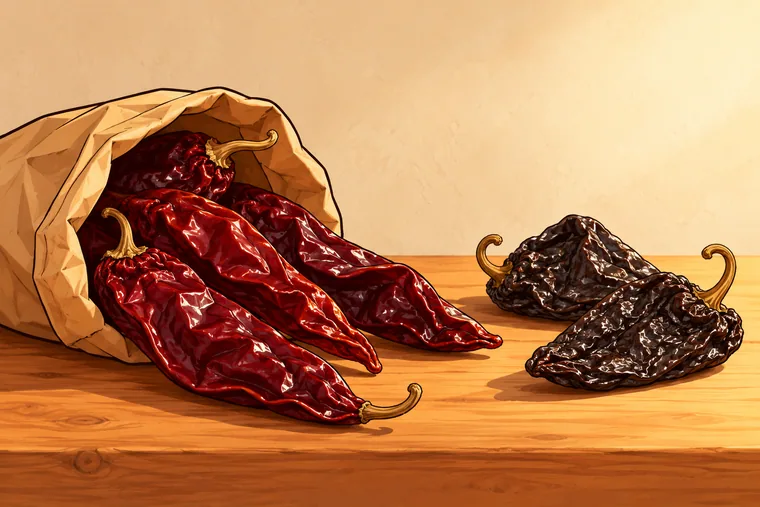
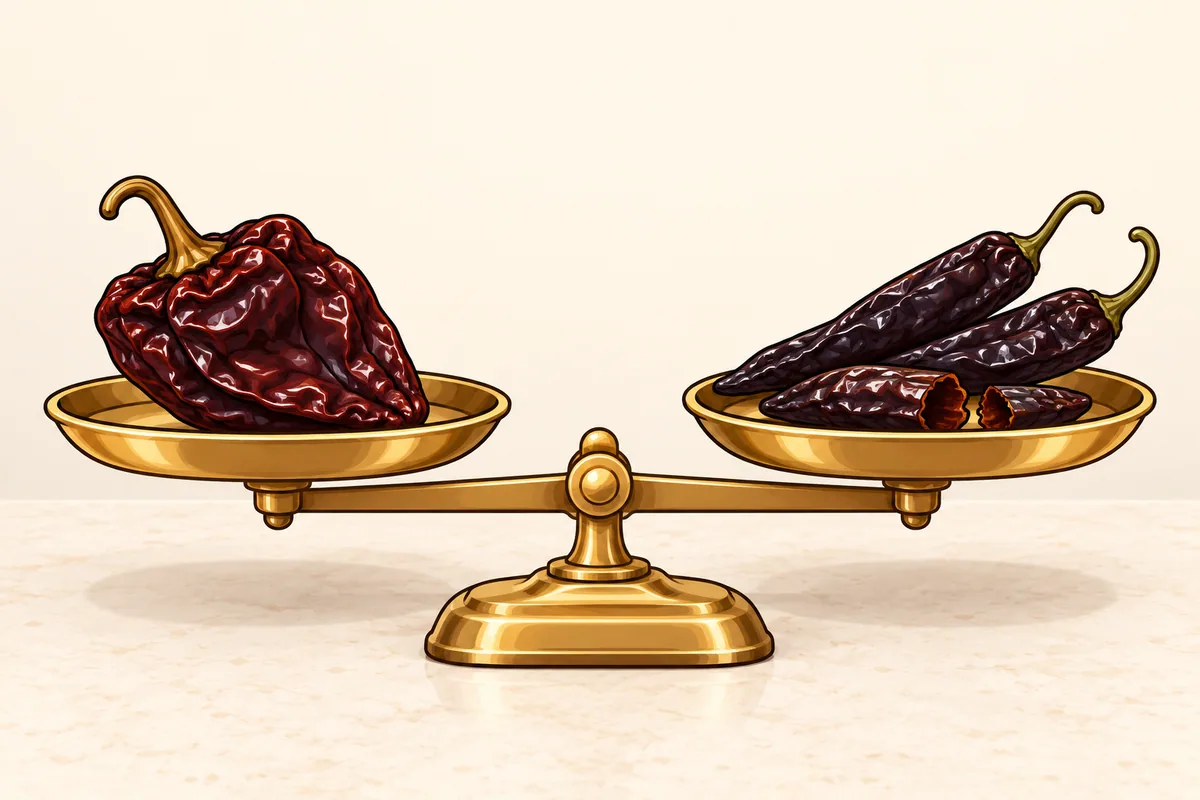
Side by side, the shapes tell you most of what you need. The wide, flat pods (ancho, mulato) carry the most flesh for a dark sauce; the long, smooth guajillo gives bright color; the round cascabel rattles with seeds.
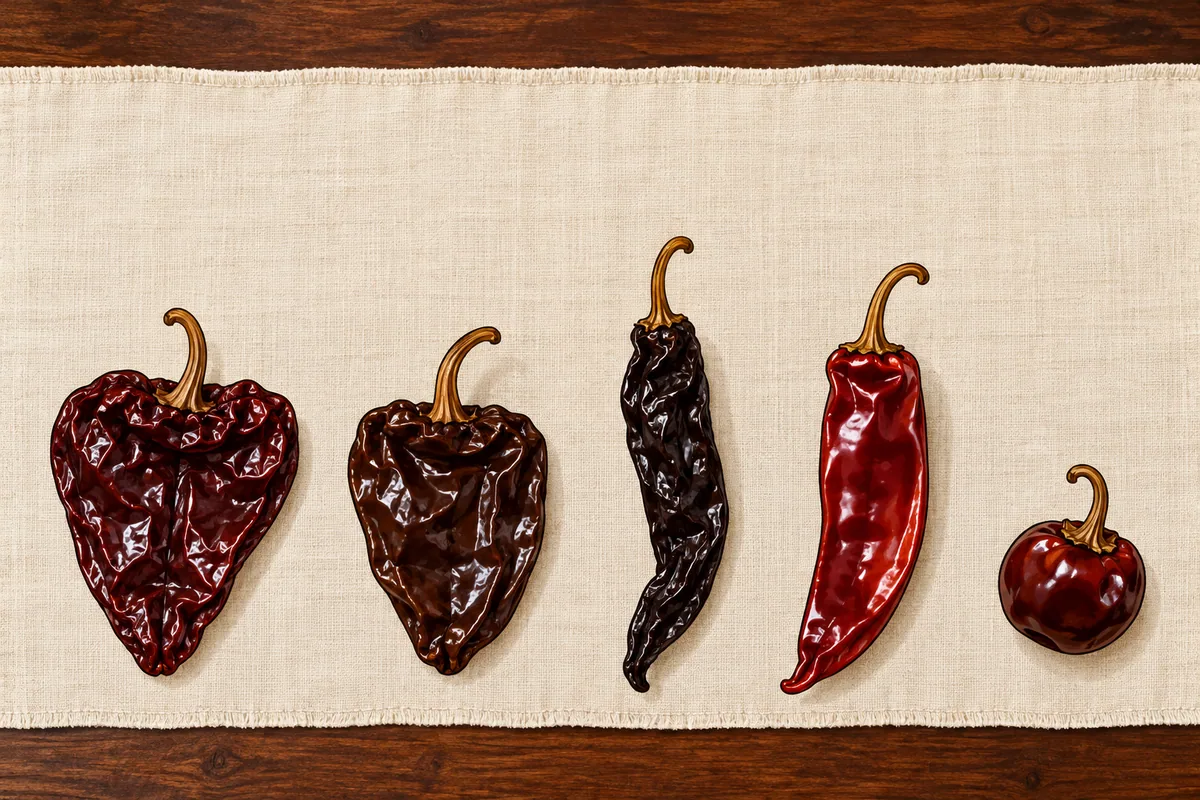
If your shop sells only one of these, buy by the dish: dark mole wants pasilla or mulato, a red enchilada sauce wants New Mexico red or guajillo. Each pod also has its own entry in the index, starting with the ancho itself, so you can check the heat and the fresh form before you buy.
What can you substitute for ancho chili powder?
Pure New Mexico red chile powder by weight, or sweet paprika with a pinch of cayenne. Pure powders swap gram for gram; the blend takes a little arithmetic, because paprika is non-pungent and cayenne runs about 30 times hotter than ancho.
A worked blend for 10 g of ancho powder
Use the band midpoints: ancho at 1,250 SHU2 and cayenne at 37,5007. To bring non-pungent paprika up to ancho's heat, cayenne must make up 1,250 ÷ 37,500 = 3.3 % of the blend by weight.
| Mix | Grams | In spoons | Heat of the mix |
|---|---|---|---|
| Sweet paprika plus cayenneSources for this line7. UF/IFAS Gardening Solutions8. USDA Agricultural Research Service, FoodData Central (SR Legacy)9. USDA Agricultural Research Service, FoodData Central (SR Legacy) | 9.7 g paprika + 0.33 g cayenne | About 4.2 tsp paprika + a fifth of a tsp cayenne | About 1,250 SHU |
| Pure New Mexico red chile powder3 | 10 g | Weigh it; no USDA spoon weight | 500–2,500 SHU |
| Ground pasilla3 | 10 g | Weigh it; no USDA spoon weight | 1,000–1,500 SHU |
USDA weighs a teaspoon of paprika at 2.3 g and a teaspoon of cayenne at 1.8 g89, which is where the spoon column comes from. If your recipe gives ancho powder in teaspoons, swap teaspoon for teaspoon of paprika, then add cayenne at about a twentieth of a teaspoon, 0.08 g, per teaspoon of ancho. Pasilla powder swaps the same way, since it shares ancho's band.
How do you swap anchos in a recipe that counts pods?
Turn the count into grams first, then into the swap. Say your mole or red chile recipe calls for 6 anchos. At 17 g each by USDA, that is 102 g of dried pepper6, and every swap below starts from that number.
| Swap | What you weigh out | Pods | What your sauce gains or loses |
|---|---|---|---|
| Mulato16 | 102 g | About 6 | A browner sauce |
| Pasilla45 | 102 g | 102 ÷ 7 = about 15 | Darker, with raisin and chocolate notes |
| Half pasilla, half New Mexico red34 | 51 g + 51 g | About 7 pasillas plus the red pods | Between dark and brick red |
| Guajillo with pasilla24 | 68 g guajillo + 34 g pasilla | About 5 pasillas plus the guajillos | Redder and about twice as warm |
| Chipotle with sweet paprika18 | 26 g chipotle + 76 g paprika | Weigh both | Smoky, about as warm |
The pasilla row shows why the count trips people up. Fifteen pasillas sounds like a lot against six anchos, but it is the same weight of pepper, and your sauce needs the weight. Soak them in the same amount of water you would use for the anchos; the long pods fold down under the surface if you weigh them with a plate.
If your recipe counts pods for a mix, say 3 anchos and 2 guajillos, swap only the anchos and keep the guajillos. You change one color and one flavor, not the whole sauce.
Can you use regular chili powder instead of ancho?
Yes, but cut the cumin, oregano and salt in the rest of your recipe. The USDA purchase spec for chili powder describes a blend that includes ground chili pepper, cumin, oregano, salt and garlic powder10, so a spoon of it is part seasoning.
Ancho powder
Chili powder blend
- One chile: dried ripe poblano7What's in itGround chili pepper, cumin, oregano, salt, garlic powder10
- Ancho band 1,000–1,500 SHU2HeatDepends on the chile; the spec does not set it here10
- None from the chileSaltIncluded in the blend10
- Color and earthy, fruity depth5Use it forA chili pot, where cumin and oregano belong anyway
In a pot of chili the blend fits, because NMSU's own definition of chili is a dish of chile powder, beans, tomato and ground beef1. In a mole or a red enchilada sauce the cumin takes over, so pick paprika and cayenne there instead.
Why is a gram of dried ancho hotter than a gram of poblano?
Because the water is gone and the heat stays. A Mexican HPLC study measured dried ancho at about 19,336 SHU on a dry-weight basis, far above the fresh poblano's 1,000–2,000, and the authors note their figures ran higher than other studies1112.
So when you read a five-figure SHU for ancho, it describes the dry pod per gram, not a hotter pepper. In your pot the heat spreads back out through the liquid, which is why a sauce made with 51 g of ancho still eats mild.
Which ancho swap suits your sauce?
The swap happens at the soak, so plan it with the rest of the chain. The flow below shows where each choice comes in.
- Weigh the pods17 g per ancho the recipe names
- Pick by colorDark: pasilla or mulato; red: New Mexico or guajillo
- Set the heatHotter pods at two thirds of the weight
- Stem, seed and soak
- Blend with the liquid
Once the weights are right, every pod on this page soaks and blends the same way, so you can keep your usual sauce method and change only the bag you open.
Why does a sauce made with an ancho swap taste off?
Each swap has one way to go wrong. These cover the ones you are most likely to meet.
- Your sauce came out bitter. You probably left the seeds and stems in; seed and stem every pod before soaking, the way you would an ancho.
- It turned much hotter than usual. Guajillo and chipotle run above the ancho band27. Next time, use two thirds or a quarter of the weight, as the table says, and add more of a mild pod.
- The color went brick red, not dark. You used New Mexico red or guajillo. Add a pasilla or two for the dark tone3.
- It tastes of cumin. You used a chili powder blend, which carries cumin and oregano10. Cut the cumin elsewhere in the recipe.
- It came out too salty. The same blend carries salt10. Hold back the salt your recipe lists until the end, then taste and add only what the sauce still needs.
- It is thinner than usual. Pasillas and guajillos are long, thin pods with less flesh than an ancho's wide one, so a sauce built on them can run thinner. Simmer it a few minutes longer, or blend in one more pod.
Is ancho the same as pasilla?
No. UF/IFAS names ancho as the dried poblano, and Arizona Extension describes pasilla as a separate dark brown pod, also called chile negro. They share a heat band, which is why one swaps for the other.Sources for this line2. Iowa State University Extension3. University of Arizona Cooperative Extension7. UF/IFAS Gardening Solutions
Can you use fresh poblano instead of dried ancho?
In a sauce, yes, at about 10.7 g of fresh poblano per gram of ancho, by USDA water figures, and with less added liquid. You lose the dried pod's darker, earthier taste.613
How much ancho powder equals one dried ancho?
By weight, one 17 g ancho gives you about 17 g of powder once ground, minus the stem and seeds you discard. Weigh your powder rather than counting spoons.6
What is the next step once your swap is soaking?
Blend it. Once your pods are soft and bend without cracking, follow the rehydrating guide steps from the soak onward, or go to the recipe that called for the ancho in the first place.
If your recipe also asked for a guajillo you do not have in your pantry, the guajillo swaps work with the same weights. For the fresh pepper an ancho starts as, the poblano entry has its heat, size and season.