On this page
- 1What can you use instead of guajillo chiles?
- 2Is guajillo hotter than ancho?
- 3Why does one bag of guajillos bite harder than the next?
- 4Which guajillo swap keeps your sauce red?
- 5How do you build a guajillo blend from New Mexico red?
- 6What can you use in place of guajillo powder?
- 7Which guajillo swap fits the dish on your stove?
- 8What turns a guajillo-swap sauce bitter, muddy or fiery?
- 9What should you soak next?
- 10Sources
What can you use instead of guajillo chiles?
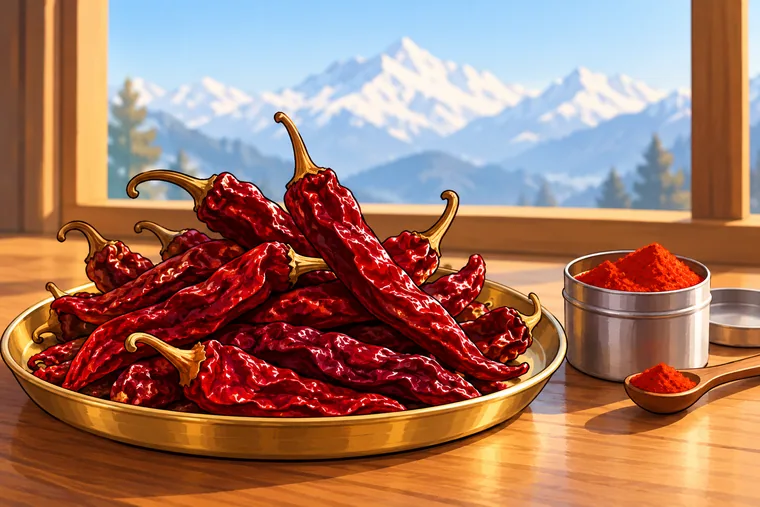
Dried New Mexico red pods, with a pinch of cayenne. They are long, smooth and brick red like a guajillo, and they soak and blend the same way. UC Master Gardeners describe the guajillo as a dried mirasol chile, sweet, fruity and slightly smoky with mild to medium heat1, and New Mexico red gets you the color and most of the fruit; the cayenne puts back the bite.
| Swap | Heat vs guajillo | How much for 30 g guajillo | Best for | Flavor note |
|---|---|---|---|---|
| New Mexico red pods plus cayenne2 | Pods alone 500–2,500 SHU, about 2.5 × milder | 28 g pods + 2 g cayenne | Red chile sauce, enchiladas, pozole | Not described by the source |
| Ají panca3 | Milder: low pungency | 30 g, plus a pinch of cayenne | Marinades, stews where color matters | Gives an intense color |
| Cascabel4 | About 2 × milder: 1,500–2,500 SHU | 30 g | Salsas and table sauces | Not described by the source |
| Ancho4 | About 3 × milder: 1,000–1,500 SHU | 28 g, plus 2 g cayenne | Mole, dark sauces | Earthy, smoky, fruity1 |
| Pasilla2 | About 3 × milder: 1,000–1,500 SHU | 28 g, plus 2 g cayenne | Mole, adobo | Smoky, earthy, fruity; chocolate and raisin1 |
| Chile de árbol, for heat4 | About 6 × hotter: 15,000–30,000 SHU | 5 g árbol + 25 g paprika | Thin salsas, hot table sauce | Fiery heat, smoky flavor1 |
| Sweet paprika plus cayenne5 | You set it; worked below | 27 g paprika + 3 g cayenne | When you only have powders | Red color, little fruit |
If your sauce has to stay bright red, only the first two rows and the paprika blend will do it; the rest turn it brown. Heat you can always add back with a pinch of cayenne; color you cannot take out of a dark pod.
New Mexico red pods, the color match
Arizona Extension rates New Mexico chiles at 500–2,500 SHU and says the ripe red pods get dried for chile powder and ristras2. By band midpoints that is about 1,500 SHU against a guajillo's 3,750, so on their own they make a milder sauce. The blend section below works out the cayenne that closes the gap.
Ají panca, the Peruvian cousin
Peru's native ají guide describes ají panca as eaten mainly dried, low in pungency and prized for the intense color it gives a dish3. That makes it a fine guajillo swap in a marinade or stew. It is milder, so add a pinch of cayenne if you miss the bite.
Cascabel, for salsas
Iowa State puts cascabel at 1,500–2,500 SHU4, below the mirasol band. The small round pods soak fast and blend smooth, so they suit a salsa or table sauce. Expect a browner red than guajillo gives you.
Ancho, when a dark sauce is fine
An ancho sits in Iowa State's 1,000–1,500 SHU band4 and tastes earthy, smoky and fruity1. Its wide pod carries more flesh than a guajillo, and it turns your sauce a deep red-brown. Swap 2 g of every 30 g for cayenne if you want the guajillo's warmth back.
Pasilla, for mole and adobo
Pasilla shares the ancho's heat at 1,000–1,500 SHU and makes a dark brown sauce, the reason Arizona Extension ties it to mole2. In a mole that already calls for guajillo among other chiles, a pasilla in its place barely shows. In a red enchilada sauce it does.
Chile de árbol, when you only miss the heat
Chile de árbol runs 15,000–30,000 SHU4, about six times a guajillo by midpoints. Use a sixth of the weight for the heat and fill the rest with paprika for color. UC Master Gardeners describe it as fiery with a smoky flavor1, so your sauce gains smoke too.
Sweet paprika plus cayenne, from the spice rack
Paprika is any non-pungent chile ripened red and used for color5. Mixed with cayenne at about 10 %, it reaches a guajillo's heat; the arithmetic sits in the blend table below. You lose most of the fruit, so keep this for rubs and quick sauces.
Is guajillo hotter than ancho?
Usually, by the extension bands; not always, by the lab. Iowa State lists mirasol, the fresh guajillo, at 2,500–5,000 SHU and ancho at 1,000–1,5004. A Mexican HPLC study of field-grown pods, though, measured its ancho above its guajillo on a dry-weight basis8.
Both can be true. The band describes the typical pod you buy; the lab measured one cultivar of each, grown in one place, and its authors note their numbers ran higher than other studies8. For your cooking, treat guajillo as a little warmer than ancho, and taste each new bag.
Why does one bag of guajillos bite harder than the next?
Growing heat. In the same study, guajillo grown under high greenhouse temperatures measured 69,211 SHU per dry gram, about five times the 13,705 of the field-grown pods8. Ancho barely moved under the same stress, from 19,336 to 20,275.
You cannot read that history off the bag, so the pods you buy can swing well above or below the band. NMSU's own mirasol cultivar shows the pod type's character: it is named for fruit that point up at the sun, and NMSU simply calls its fruit hot9.
Which guajillo swap keeps your sauce red?
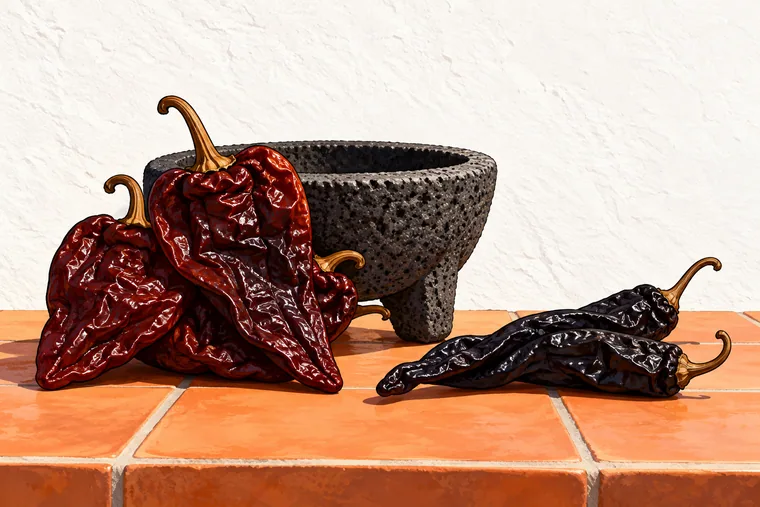
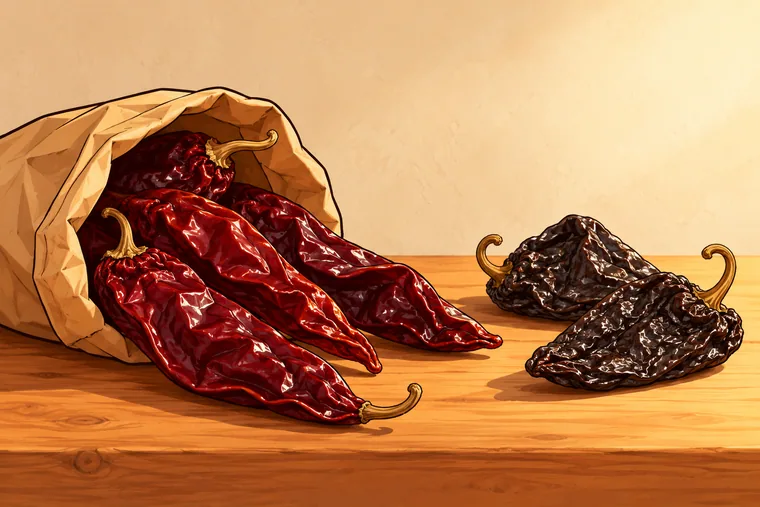
The smooth red pods. A guajillo, a New Mexico red and ají panca give you a bright brick-red sauce; ancho, mulato and pasilla give you a red so dark it reads almost black in the pot.
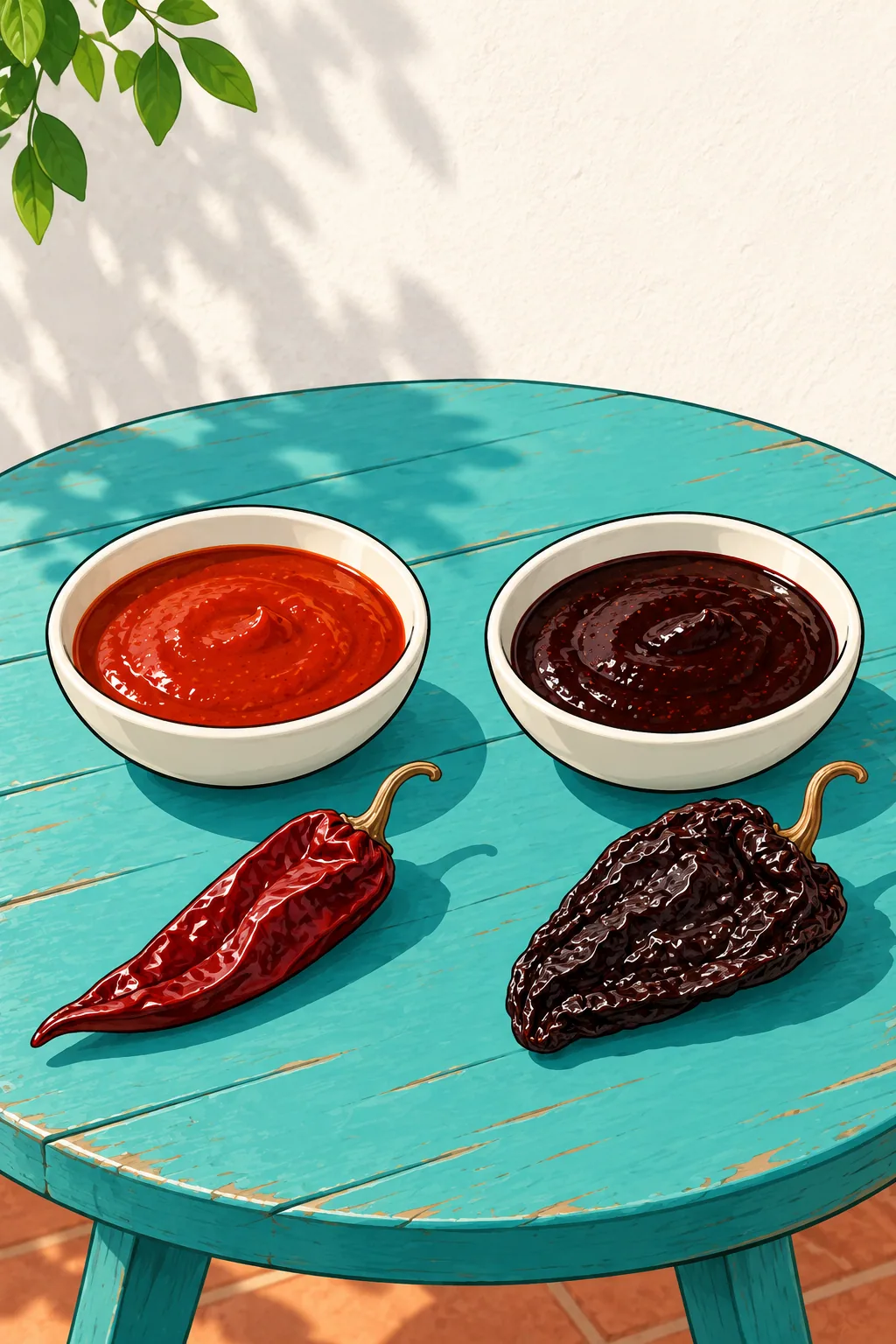
If your recipe is a red enchilada sauce or a pozole rojo, the color is part of the dish, so stay with the red pods. In a mole, where several dark chiles go into one pot, a guajillo is one voice among many, and any of the swaps works.
How do you build a guajillo blend from New Mexico red?
Mix in cayenne until the blend reaches a guajillo's midpoint. With New Mexico red at 1,500 SHU2, guajillo at 3,750 by its fresh band4 and cayenne at 37,50010, the cayenne share works out to (3,750 − 1,500) ÷ (37,500 − 1,500) = 6.25 % of the weight.
| Guajillo in the recipe | New Mexico red pods | Cayenne | Cayenne in teaspoons |
|---|---|---|---|
| 30 g26 | 28 g | 1.9 g | About 1 tsp (1.8 g) |
| 60 g26 | 56 g | 3.8 g | About 2 tsp |
| 100 g26 | 94 g | 6.3 g | About 3.5 tsp |
Stir the cayenne into the blended sauce rather than the soaking water, so you can stop early if your pods already run warm. The same formula works for ancho or pasilla: at 1,250 SHU, they need about 6.9 % cayenne to reach a guajillo's heat.
What can you use in place of guajillo powder?
Ground New Mexico red chile with cayenne, by the same 6.25 % rule. Arizona Extension notes that the ripe red New Mexico pods are what goes into chile powder2, so a jar labelled pure New Mexico red chile is the powder form of your closest swap. Check the label: you want one ingredient, not a chili powder blend.
If your recipe gives guajillo powder in teaspoons, you can use sweet paprika as the base, because USDA weighs both paprika and cayenne by the spoon. A teaspoon of paprika weighs 2.3 g and a teaspoon of cayenne 1.8 g67, so for each teaspoon of guajillo powder you take a level teaspoon of paprika and add about an eighth of a teaspoon of cayenne. That puts about 9 % cayenne in your mix, close to the 10 % share that brings a non-pungent base up to a guajillo's midpoint, and you can top it up after a taste.
Taste as you go, because your powders lose their aroma on the shelf faster than whole pods, and your fresh jar of cayenne can run hotter than the old one you finished.
Which guajillo swap fits the dish on your stove?
Pick by the dish's color and heat. The tree below gives one swap per common guajillo dish.
- color firstRed enchilada sauce or pozole rojoNew Mexico red plus 6 % cayenne
- soaking meatMarinade or adoboAjí panca, plus a pinch of cayenne
- dark and deepMole with several chilesAncho or pasilla in its place
- fresh and quickTable salsaCascabel, 1,500–2,500 SHU
- heat firstA hot, thin sauceÁrbol at a sixth of the weight, plus paprika
Sources for this line2. University of Arizona Cooperative Extension4. Iowa State University Extension10. UF/IFAS Gardening Solutions
For birria, where guajillo usually leads the chiles, follow the red branch: New Mexico red with cayenne keeps the broth's color.
What turns a guajillo-swap sauce bitter, muddy or fiery?
Three things go wrong most often, and each has a quick check before your sauce goes in the blender.
Before you blend
- Pull out every stem and shake out the seeds; a dry, papery bit left in the pod tastes bitter
- Taste one soaked strip; guajillo heat can swing about 5 times with growing heat8
- Use árbol at a sixth of the weight only; at full weight it runs about 6 times hotter4
- Keep dark pods out of a red sauce; ancho and pasilla make it brown12
A muddy color is the hardest to fix after the fact. If it happens, stir in a spoon of sweet paprika, which adds red without heat5, and keep the dark pods for your next mole.
Is guajillo the same as mirasol?
UC Master Gardeners describe guajillo as the dried form of the mirasol chile, so it is the same pepper in two states. NMSU took the name of its own mirasol cultivar from its fruit, which point up at the sun.19
Can you use guajillo powder instead of whole guajillos?
Yes, by weight. Use the same grams of powder as you would of dried pods, and add it to the liquid instead of soaking it. Your sauce comes out a little less fruity, because you skip the soaked flesh.
What should you soak next?
Your swap, by weight, in hot water until soft. The rehydrating guide gives the soak and blend for every pod on this page.
If your recipe also called for ancho and you are out of that too, the ancho swaps use the same weights and the same cayenne trick. Every other missing chile sits on the swap chart.