On this page
- 1What can you swap in when the cayenne jar is empty?
- 2How does cayenne's heat compare with its swaps?
- 3How much fresh chili replaces a teaspoon of cayenne powder?
- 4Can hot sauce stand in for cayenne powder?
- 5Does paprika or chili powder work as a cayenne swap?
- 6Which cayenne swap fits rubs, soups and eggs?
- 7Why does a cayenne swap come out bitter, gritty or flat?
- 8Grind your swap to the same powder
- 9Sources
What can you swap in when the cayenne jar is empty?
Reach for crushed red pepper flakes first. UF/IFAS describes cayenne as a red pepper that is generally dried and used as ground powder or dried flakes1, so the flake jar often holds the same kind of pepper, only coarser. After that, the swaps differ mostly in how many spoons you need.
| Swap | Heat (SHU) | Factor vs cayenne | Amount for 1 tsp cayenne | Best for | Flavor note |
|---|---|---|---|---|---|
| Crushed red pepper flakes1 | Often cayenne itself; varies by maker | About 1 | 1.8 g, ground fine | Anything, once ground | Same pepper, coarser |
| Piquín, ground2 | 30,000–50,000 | About 0.9 | 1.7 g, a scant teaspoon | Rubs and salsa | Not described by our sources |
| Tabasco pepper, dried1 | 30,000–50,000 | About 0.9 | 1.7 g | Vinegar sauces, eggs | Distinct smoky flavor, quite hot3 |
| Chile de árbol, ground2 | 15,000–30,000 | About 1.7 | 3 g, about 1¾ teaspoons | Mexican dishes, oils | Fiery heat, smoky3 |
| Thai chili, dried and ground1 | 50,000–100,000 | About 0.5 | 0.9 g, half a teaspoon | Curries, stir-fries | Fruity, a hint of citrus3 |
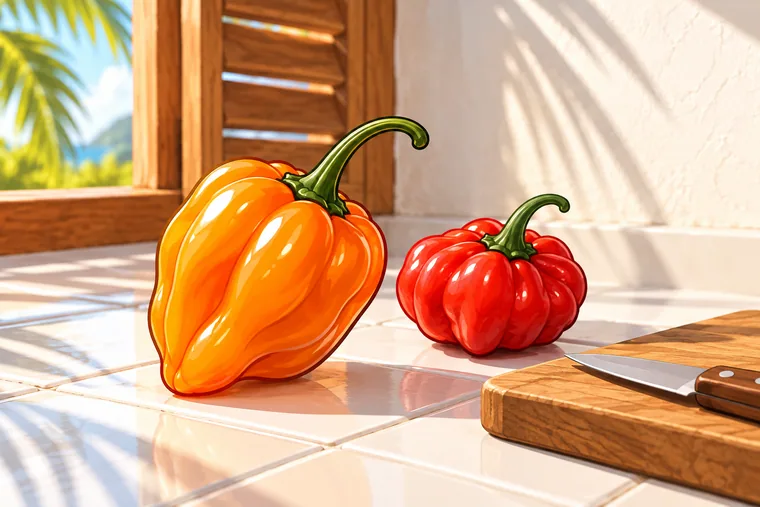
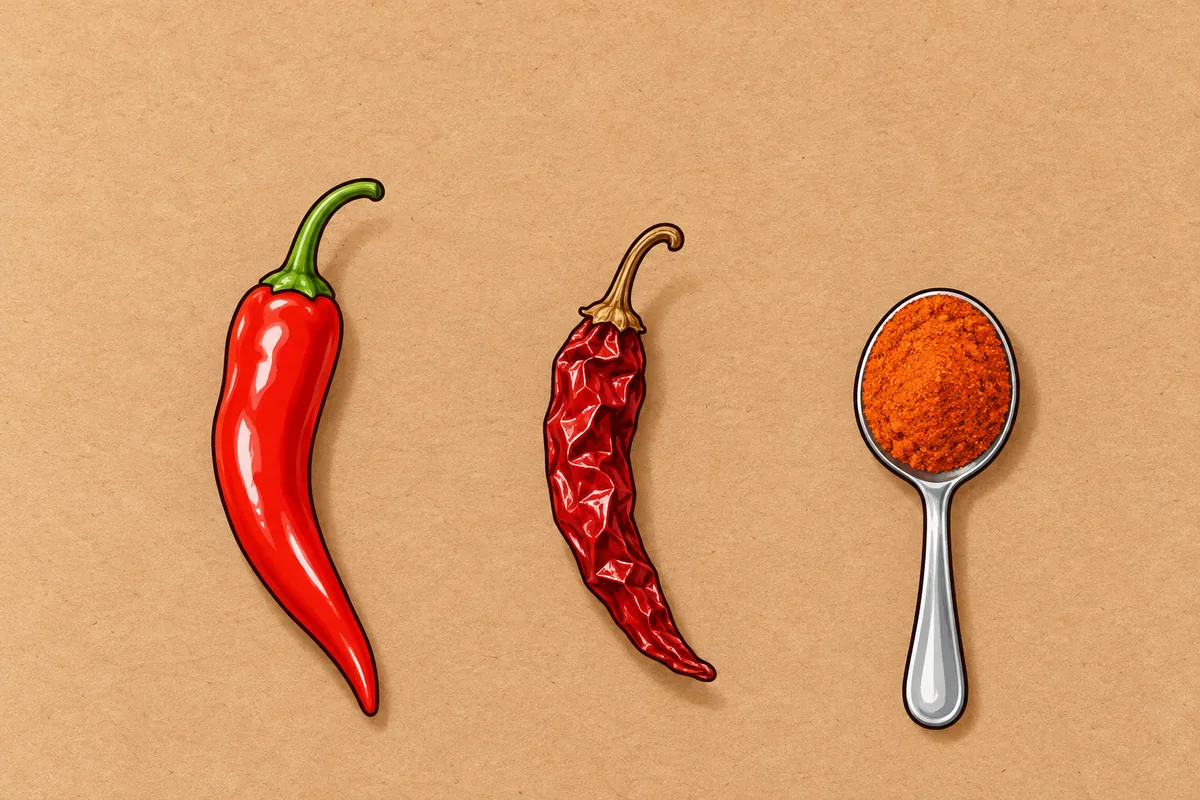
| Fresh hot red chili4 | Cayenne range if it is a fresh cayenne | By dry weight | About 14 g fresh, a third of a 45 g pod | Soups, stews, sauces | Fresher and grassier than powder |
| Tabasco sauce1 | 2,500–5,000 | About 10 | 18 g of sauce | Eggs, soups, Bloody Marys | Vinegar-sharp |
If you only remember one row, remember this: flakes swap by weight, and a coffee grinder turns them into cayenne in ten seconds. Every other row asks you to change the spoon count.
Crushed red pepper flakes, the same pepper coarser
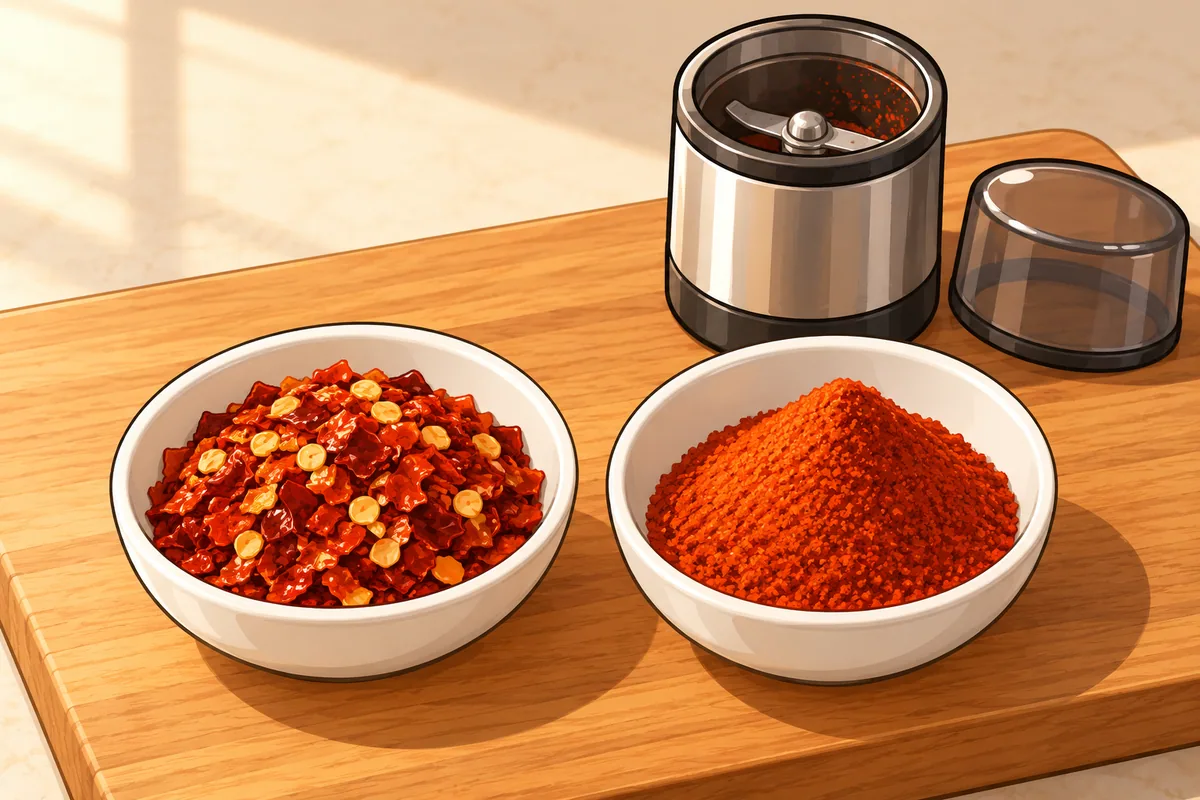
Because cayenne is often dried into flakes as well as powder1, your jar of crushed red pepper can carry nearly the same heat. Makers blend different peppers, though, so no single SHU figure fits every jar you buy. Grind your flakes fine, start with the same weight, and taste before you add the last pinch.
Ground piquín, almost a match
Iowa State puts piquín in its 30,000–50,000 SHU band2, close to cayenne's 25,000–50,0001. You use a little less than a level teaspoon. It is a small Mexican pod, so you may find it whole in your local Latin shop and grind it at home in a few seconds.
Dried tabasco peppers, if you grow them
The tabasco pepper rates 30,000–50,000 SHU1, a near twin of cayenne on heat. The UC Master Gardeners note a distinct smoky flavor3, so a rub picks up a slightly different edge. If you grow them, dry your pods whole and grind them as you need them, so your powder stays fresh.
Chile de árbol, for more pepper flavor
Iowa State rates the chile de árbol at 15,000–30,000 SHU2, so its 22,500 midpoint asks for about 1.7 times cayenne's weight. That means more red pepper flavor in your dish, which suits a Mexican pot where you want the chile to show. The UC Master Gardeners call it fiery and smoky3.
Thai chili, half the spoon
Dried Thai chili carries 50,000–100,000 SHU1, up to twice cayenne's heat. Use half the amount, about 0.9 g for each teaspoon of cayenne. Stir it into your curry and taste before you add more, because its heat lingers and you feel the full burn a minute later.
A fresh red chili, for a pot that simmers
Fresh pods carry most of their weight as water: USDA lists 88 g of water in 100 g of raw hot red chili4. That is why a teaspoon of powder stands for about 14 g of fresh pepper, worked out further down the page. Simmer your fresh pods into the dish; they do not belong in a dry rub, where you want no moisture.
Tabasco sauce, for a liquid dish
UF/IFAS rates Tabasco sauce at 2,500–5,000 SHU1, about a tenth of cayenne by the midpoints. So 1 teaspoon of cayenne becomes about 18 g of sauce, and with it a splash of vinegar. Use it where you want liquid and tang anyway: eggs, soup, a Bloody Mary.
How does cayenne's heat compare with its swaps?
Most swaps overlap cayenne's band, which is why the factors in the table stay between 0.5 and 1.7 for the dried peppers. The chart shows the swaps that have their own index entry, each as its published range on a log axis.
Log scale; bars are published ranges.1
The two outliers on the chart frame your choice. A jalapeño at 2,000–8,000 SHU1 would need about 7 times cayenne's weight, so if you reach for dried chipotle or jalapeño powder, you make a smoky, milder dish rather than a swap.
At the other end, a habanero at 100,000–350,000 SHU needs only a sixth of the weight. If you have habanero powder on hand, use a pinch where you would use a teaspoon, and the habanero swaps run the same math the other way.
How much fresh chili replaces a teaspoon of cayenne powder?
About 14 g of fresh hot red chili, or a third of an average 45 g pod. The chain below shows where that number comes from, using USDA's weights for fresh and dried hot chiles.
- 1 teaspoon of cayenne1.8 g of powder
- Pepper solids in that spoonDried chile is 7.15 % water, so about 1.67 g
- Fresh chili with the same solidsRaw red chili is 88 % water: 1.67 ÷ 0.12 = about 14 g
- In podsOne raw hot red chili averages 45 g: about a third
Sources for this line4. USDA Agricultural Research Service, FoodData Central (SR Legacy)5. USDA Agricultural Research Service, FoodData Central (SR Legacy)6. USDA Agricultural Research Service, FoodData Central (SR Legacy)
The math assumes your fresh pod is a cayenne or a pepper of the same heat. A fresh red chili from your shop can be anything from a mild Fresno type to a Thai, so you cut a sliver, taste it, and scale the 14 g up or down to suit what you tasted.
Going the other way works too, and it is the swap most people search for. If your recipe asks for fresh cayenne and you only have the jar, use about ⅛ teaspoon of powder for every 2 g of fresh pepper you were meant to chop. Add a squeeze of lemon or a little tomato to make up some of the fresh pod's juice, and you also get back a bit of its bright, raw taste.
Can hot sauce stand in for cayenne powder?
Yes, in dishes that already have liquid in them. Tabasco sauce rates 2,500–5,000 SHU1 against cayenne's 25,000–50,000, so you need about ten times the weight: roughly 18 g of sauce for each teaspoon of powder, or 4.5 g for the ¼ teaspoon most recipes ask for.
A thicker chili sauce such as sriracha carries garlic and sugar too, and no source we read rates its heat. If that is your only bottle, use it by taste, a little at a time, and treat it as a flavor change you choose rather than a straight swap.
Does paprika or chili powder work as a cayenne swap?
Not on their own. Both sit next to cayenne on the shelf and look alike, but one carries almost no heat and the other is a seasoning blend.
Paprika
Chili powder (the blend)
- Ground mild red pepper; NMSU's paprika cultivars stay under the industry's 500 SHU limitWhat it isA seasoning mix for the dish called chili; NMSU's glossary keeps chile (the pepper) and chili (the dish) apart
- At most a seventy-fifth of cayenne's midpoint, by those numbersHeat against cayenneLower and unrated; it depends on the maker
- 2.3 g in USDA's recordA teaspoon weighs2.7 g in USDA's record
- Color, with a pinch of the hotter swaps for heatUse it forChili and taco meat, where its cumin and herbs belong
Paprika does earn a place in your swap, though. Mix 1 teaspoon of paprika with 0.9 g (about half a teaspoon) of ground Thai chili and you get roughly the heat of 1 teaspoon of cayenne with more red color, an estimate from the midpoints. That blend works well in your rubs, where you care about color as much as fire.
Which cayenne swap fits rubs, soups and eggs?
Pick by what the dish can take: dry heat, liquid, or a new flavor. This table pairs the common cayenne jobs with the swap that does least harm.
| Dish | Best swap | Amount | Why |
|---|---|---|---|
| Dry rub for meat | Ground flakes or piquín | 0.45 g | Dry, the same heat, no liquid |
| Pot of chili or stew | Chile de árbol, ground | 0.75 g | More pepper flavor suits a long simmer |
| Curry | Thai chili, ground | 0.23 g | Half the spoon, fruity heat |
| Deviled eggs, mayo, dips | Tabasco sauce | 4.5 g | Liquid blends in; vinegar helps |
| Soup | Fresh hot red chili | About 3.5 g, minced | Simmers in; no gritty powder |
| Baking (cheese crackers) | Ground flakes | 0.45 g | Dry and fine, the closest texture |
The soup row comes from the flow chart: 0.45 g of powder is a quarter of the 14 g fresh figure, about 3.5 g. Mince it fine so the heat spreads through your pot instead of hiding in one spoonful.
If your recipe is a baked one, such as cheese straws or a spiced cornbread, keep to a dry, fine swap. Liquid sauces change your dough, and coarse flakes leave red specks you can see and seeds you can feel. Ground flakes at the same weight bake in the same way cayenne does.
Why does a cayenne swap come out bitter, gritty or flat?
Each of these has a cause you can fix at the counter. None of them means the swap was wrong, only that it needed one more step.
- The rub tastes gritty. Flakes and whole dried pods stay coarse, and the seeds crunch. Grind them to a powder and sift out the seeds if your grinder leaves them whole.
- The dish turned bitter or brown. Ground dried chile scorches fast in hot oil. Add the swap with the liquid, or bloom it in oil over low heat for a few seconds only.
- The heat seems flat. Chile de árbol rates lower than cayenne2, so a one-for-one swap gives you less fire. Use the 1.7 factor from the table.
- The sauce went thin and sour. Hot sauce brings vinegar with its heat. Reduce the sauce a little, or cut the recipe's other acid.
- It is suddenly much hotter. Ground Thai chili carries up to 100,000 SHU1. Start at half the spoon, as the table says.
Grind your swap to the same powder
Most cayenne swaps start whole or flaked, so a fine grind makes them behave like the powder your recipe expects. A small blade grinder kept for spices does the job.
- 1
Weigh what the recipe means
Convert the recipe's teaspoons of cayenne to grams: one teaspoon weighs 1.8 g.5
- 2
- 3
Stem and seed whole pods
Snap off the stems and shake out loose seeds; they grind poorly and add bitterness.
- 4
Grind in short bursts
Pulse until fine, then let the dust settle before you open the lid.
- 5
Season, then taste
Add two thirds of the amount, wait a minute, and add the rest only if you want it.
Next, weigh one teaspoon from your swap jar so you know its real weight, then try the table above on tonight's recipe. If the pepper you are short of is the Thai chili itself, the Thai chili swaps start from the same shelf, and the swap chart lists the rest.