On this page
- 1Which chilies can stand in for bird's eye?
- 2Why do bird's eye, Thai and chiltepin get mixed up?
- 3Which bird's eye swap should you grab first?
- 4How do you replace dried bird's eye chilies or powder?
- 5What does a bird's eye bring to a curry paste that a swap misses?
- 6Which swap suits a fish sauce dip, a sambal or a chili oil?
- 7How do you take the edge off a hot bird's eye swap?
- 8Pound the swap into your paste
- 9Sources
Which chilies can stand in for bird's eye?
Buy Thai chilies if you see them, because they are usually the same pepper. UF/IFAS describes the Thai pepper as "also called bird's eye chili or bird's chili" and rates it at 50,000–100,000 SHU1. Past that, you trade size and heat, and your kitchen scale does the rest.
| Swap | Heat (SHU) | Factor vs bird's eye | Grams for 5 g bird's eye | Best for | Flavor note |
|---|---|---|---|---|---|
| Thai chili1 | 50,000–100,000 | 1, usually the same pepper | 5 g | Everything a bird's eye does | Fruity, a hint of citrus, lingering heat2 |
| Chiltepin3 | 50,000–100,000 | About 1 | 5 g, dried or fresh | Salsas, table sauce, dried heat | Not described by our sources |
| Piri piri2 | Very hot; no SHU in our sources | Start at 1 and taste | 5 g, then adjust | Marinades, piri piri sauce | Very hot, subtle fruit |
| Tabasco pepper1 | 30,000–50,000 | About 1.9 | 9.5 g | Vinegar sauces, fish sauce dips | Distinct smoky flavor2 |
| Piquín, dried3 | 30,000–50,000 | About 1.9 | Dried: see the dried table | Dry rubs, chili oil | Not described by our sources |
| Cayenne, fresh1 | 25,000–50,000 | About 2 | 10 g | Stir-fries, curries, sambal | Strong, pungent2 |
| Serrano1 | 10,000–25,000 | About 4.3 | 21 g, or 5 g for a much milder dish | Fresh salsa, nam jim with less fire | Bright, biting2 |
Weigh what your recipe calls for, multiply by the factor, and add the last third only after you taste. Bird's eye recipes often count pods, so if yours says "10 chilies", weigh out the swap by how big your pods look and taste early.
Thai chili, the same pepper under its other name
UF/IFAS describes the Thai pepper's fruit as about 1 inch long and less than ⅕ inch wide at the shoulder, often two or three to a node1. That is the pod most recipes mean by bird's eye. You swap it one for one, and you get the same lingering heat the UC Master Gardeners describe2.
Chiltepin, the tiny round wild one
Iowa State puts the chiltepin at the top of its chart's 50,000–100,000 SHU band, beside the Thai pepper3. It is a round berry, not a slim pod, and you mostly buy it dried. Crush it with your fingers and use the same weight.
Piri piri, Africa's bird's eye
The UC Master Gardeners call the piri piri the African bird's eye chili, very hot with a subtle fruity flavor2. No source we read rates it in SHU, so start one for one and taste. Your marinade or sauce will tell you within a minute if you need more.
Tabasco peppers, for a vinegar dip
The tabasco pepper runs 30,000–50,000 SHU1. Its 40,000 midpoint asks for about 1.9 times the bird's eye weight. It carries a smoky edge, which you notice in a lime and fish sauce dip and lose in a curry.
Dried piquín, for the spice jar
Iowa State lists piquín at 30,000–50,000 SHU3, almost twice a bird's eye's weight for the same heat. You find it dried in Latin shops. It belongs in your dried-pod plans, and the table further down turns it into grams.
Fresh cayenne, the one in every shop
A fresh cayenne carries 25,000–50,000 SHU1, half a bird's eye by the midpoints. Use 10 g where your recipe means 5 g of bird's eye. Cayennes are longer and fleshier, so slice them thin and your stir-fry stays even.
Serrano, when you want it gentler
A serrano rates 10,000–25,000 SHU1. Matching a bird's eye takes about 4.3 times the weight; USDA weighs one serrano at 6.1 g4, so 21 g is about three and a half pods. Many cooks you feed will thank you for using fewer and taking the milder dish.
Why do bird's eye, Thai and chiltepin get mixed up?
Because "bird pepper" is a common name for more than one small chili. The pod in the shop is usually the Thai type that UF/IFAS describes, and these are its field marks.
UF/IFAS adds that the Thai pepper is often confused with cultivars of another species because they look alike1. The genus monograph shows why the name drifts: collectors recorded "bird pepper" for wild Capsicum annuum chiltepins in the United States and the Caribbean, and for Capsicum frutescens in the Antilles and Belize5.
So a recipe from Thailand, a recipe from Texas and one from Belize can all say bird pepper and mean three different pods. The heat bands overlap, which is why the first three rows of the table swap almost one for one. C. frutescens also covers the tabasco and the Brazilian malagueta6, which is why those pods show up on bird's eye swap lists too.
Which bird's eye swap should you grab first?
Start with two questions: is your recipe asking for fresh or dried pods, and does your table want the full heat? The tree gives you one swap for each answer.
- Fresh pods
- you like it hotFull heatThai chili 1:1, or cayenne at 2 times
- a mixed tableLess heatSerrano, the same weight, about a quarter of the heat
- you like it hot
- Dried pods or flakes
- Latin shopFull heat, driedChiltepin 1:1 by weight
- supermarketOnly the spice rackCayenne powder, about twice the weight
- Latin shop
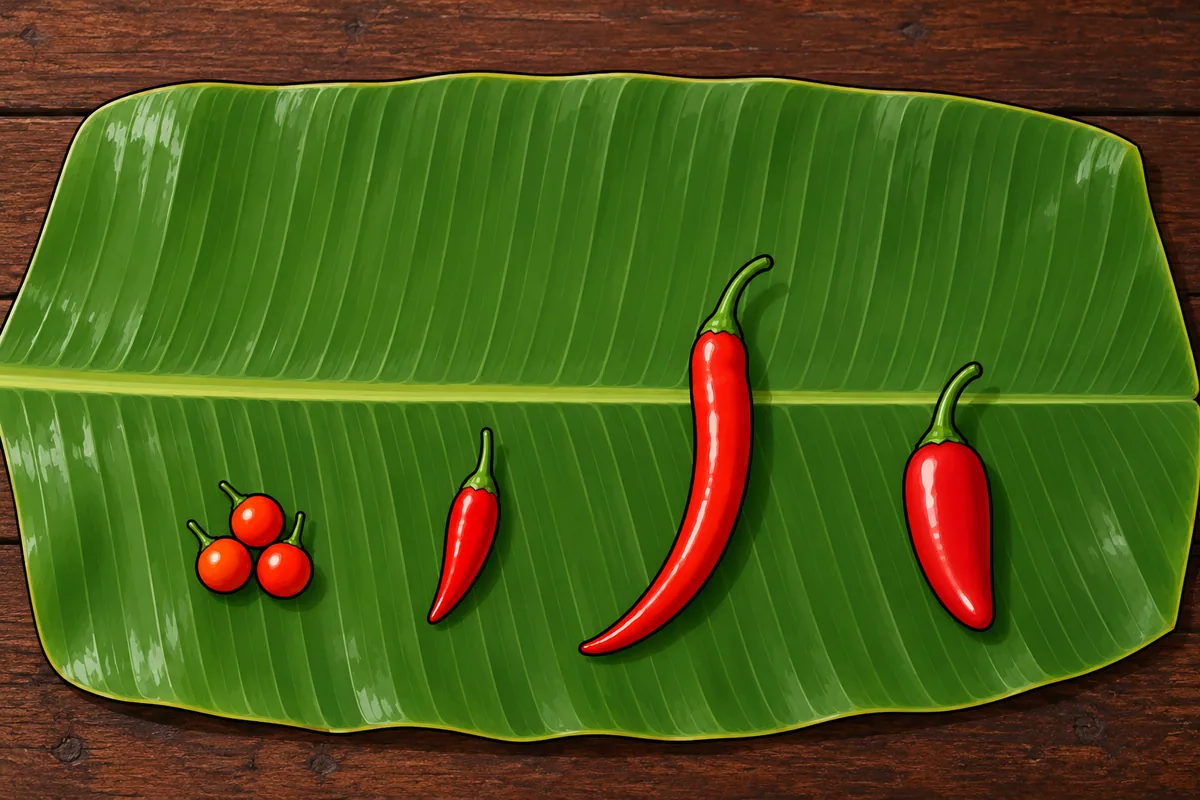
Size is part of the choice. A cayenne pod is many times longer than a bird's eye, so when your recipe says "3 chilies", three cayennes would bring far more pepper. Always go by weight, or by taste, never by count, when you switch pod sizes.
How do you replace dried bird's eye chilies or powder?
Count the dried pods your recipe asks for and convert to grams. USDA weighs one sun-dried hot chile at 0.5 g7, so ten small dried chilies come to about 5 g, a handy figure to work from.
| Dried swap | Heat (SHU) | Factor | Grams | In the jar |
|---|---|---|---|---|
| Chiltepin | 50,000–100,000 | 1 | 5 g | A small handful of berries |
| Piquín | 30,000–50,000 | 1.9 | 9.5 g | A large handful |
| Chile de árbol | 15,000–30,000 | 3.3 | 16.5 g | About 33 pods at 0.5 g each |
| Cayenne powder | 25,000–50,000 | 2 | 10 g | 10 ÷ 1.8 = about 5½ teaspoons |
The chile de árbol row shows the limit of a mild swap: 33 pods to match ten bird's eyes. For a chili oil that is fine, since the extra pods bring color, but in a stir-fry you would rather use fewer árbol pods and accept a gentler dish.
For powder, USDA weighs a teaspoon of cayenne at 1.8 g8. If your recipe asks for 1 teaspoon of ground bird's eye, use 2 teaspoons of cayenne, an estimate from the midpoints, and taste after the first one.
What does a bird's eye bring to a curry paste that a swap misses?
Mostly concentration. A bird's eye packs a lot of heat into a pod about an inch long1, so a curry paste gets its fire without much pepper bulk. A cayenne or serrano swap brings more flesh and water into your paste, which thins it and turns it a little greener or paler.
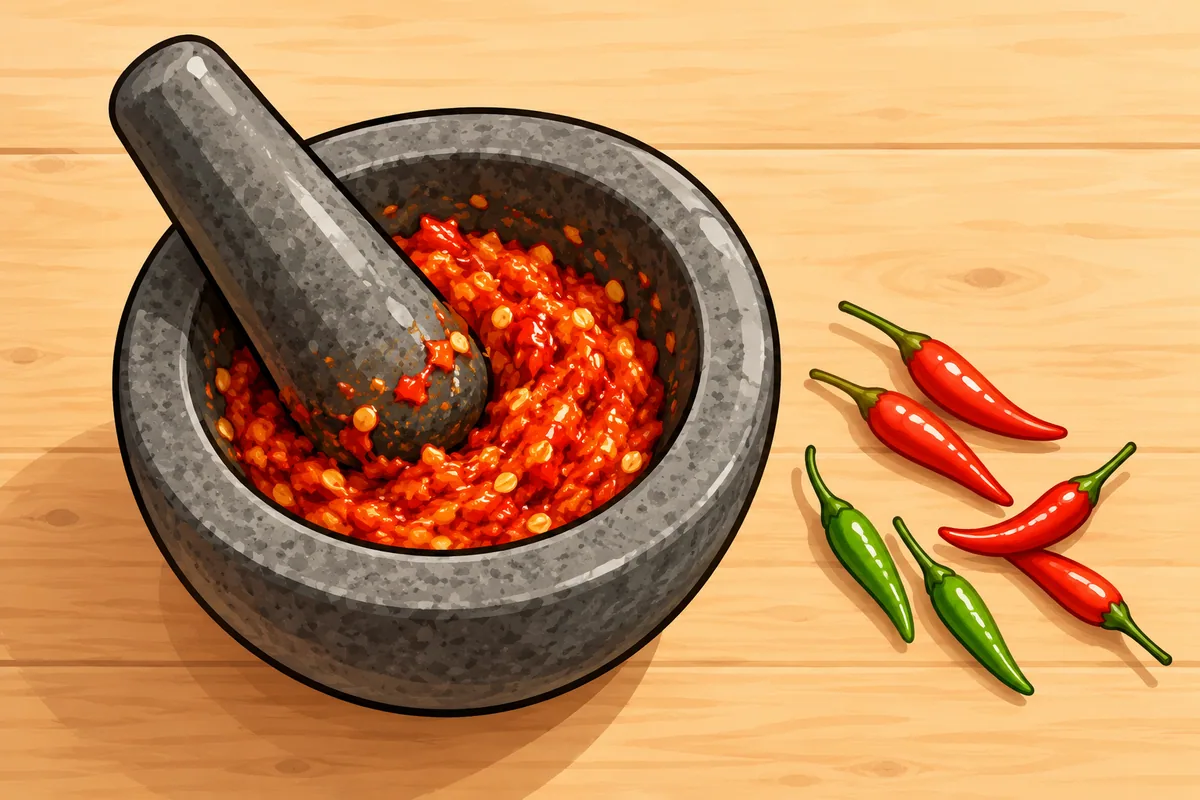
Flavor changes less than you might fear. The UC Master Gardeners describe Thai chilies as fruity with a hint of citrus2, and the lime, lemongrass and garlic in your paste carry most of that note anyway.
Which swap suits a fish sauce dip, a sambal or a chili oil?
Each of these uses the bird's eye differently, so your best swap changes with the jar in front of you. Think about whether the chili gets eaten raw, cooked into a paste, or only steeps.
For a raw dip of fish sauce, lime and sliced chilies, you see and bite every slice. Thai chilies keep the look; tabasco peppers at 1.9 times the weight work too, and their smoky edge sits well with lime. Avoid serrano rings here unless you want a much milder dip, since a bite of serrano carries a quarter of the heat.
For a cooked sambal or curry paste, the chili disappears into the paste, so cayenne at twice the weight is your easiest supermarket route. Cook the paste a little longer to drive off the extra water, as the callout above says.
For a chili oil, the pods only steep, so dried chiltepin, piquín or even árbol pods all work. The oil takes the color and heat; you strain the pods out or leave them in the jar, and your milder árbol batch still glows red.
How do you take the edge off a hot bird's eye swap?
Trim the part that holds the heat, and keep something cooling at the table. The UC Master Gardeners say capsaicin sits mostly in the thin fleshy parts that connect the pod's body to its seeds, and that milk products help neutralize the heat2.
Ways to calm a swap that came out hot
- Slit each pod and scrape out the pale ribs where the seeds attach
- Use the swap at two thirds of the table amount for a mixed table
- Serve yogurt, raita or coconut milk alongside
- Add more of the dish's other ingredients to dilute a pot that went too far
- Leave whole pods in a sauce and lift them out once the heat is right
Pound the swap into your paste
A mortar treats every swap the same way, as long as you cut bigger pods down first. Gloves help when you handle a lot of hot chilies.
- 1
Weigh the swap
Use the table: 5 g of Thai chili, 10 g of cayenne or 21 g of serrano for 5 g of bird's eye.1
- 2
Cut bigger pods small
Slice cayenne and serrano into thin rings so the pestle can break them.
- 3
Salt first
Pound the chilies with a pinch of salt and the garlic; the salt grips and grinds.
- 4
Add the rest by hardness
Add tough aromatics first, soft ones last, and pound until the paste holds together.
- 5
Taste a dab
Taste a tiny dab on a spoon, then add more chili if it needs it.
Next, look at the pods on sale near you and match them to the table, then pound your paste. If Thai chilies are what you cannot find, the Thai chili swaps work from the same numbers, and the piri piri swaps cover its African cousin.