On this page
- 1What can replace piri piri chilies?
- 2How hot is piri piri, if no lab number exists?
- 3How do you pick a piri piri swap for fresh, dried or jarred pods?
- 4How much of each swap goes into a peri-peri marinade?
- 5Can you make a piri piri sauce from the spice rack alone?
- 6Can jarred piri piri stand in for jarred Calabrian chilies?
- 7Which swaps flatten a peri-peri sauce?
- 8Blend the swap into a marinade
- 9Sources
What can replace piri piri chilies?
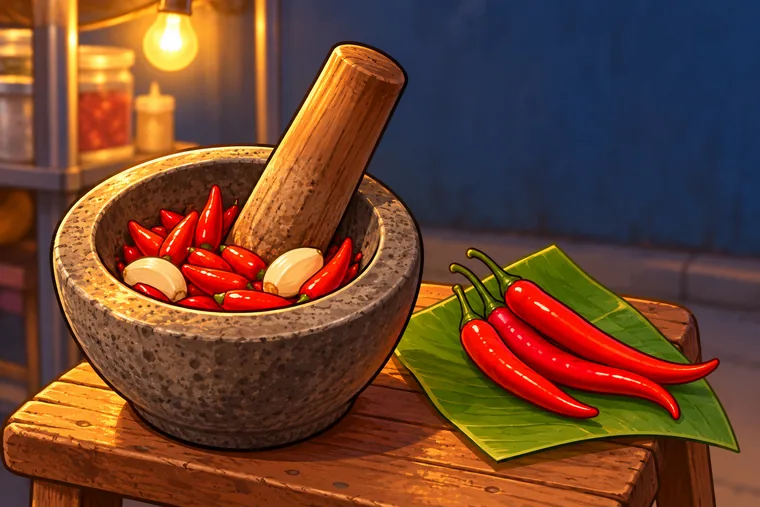
Thai bird's eye chilies come closest, and you use the same weight. The UC Master Gardeners call piri piri the "African Bird's Eye" chili, very hot with a subtle fruity flavor1, and UF/IFAS rates the Thai pepper, also called bird's eye, at 50,000–100,000 SHU2. That band is the working figure for every factor below.
| Swap | Heat (SHU) | Factor | Grams for 20 g piri piri | Best for | Flavor note |
|---|---|---|---|---|---|
| Thai (bird's eye) chili2 | 50,000–100,000 | 1 | 20 g | Marinades, sauce, everything | Fruity, a hint of citrus1 |
| Malagueta3 | About 37,000, our estimate from the study | About 2 | 40 g, or 20 g for a milder batch | Portuguese-style chicken and sauces | Not described by the study |
| Tabasco pepper2 | 30,000–50,000 | About 1.9 | 38 g | Vinegar-forward sauce | Distinct smoky flavor1 |
| Cayenne, fresh2 | 25,000–50,000 | About 2 | 40 g | Marinade from the supermarket | Strong, pungent1 |
| Scotch bonnet4 | 100,000–350,000 | About 0.33 | 7 g | Fruit-forward sauce | Fiery heat, fruity flavor1 |
| Chile de árbol, dried5 | 15,000–30,000 | About 3.3 | Dried route, see the tree | Dried piri piri in a rub | Fiery heat, smoky1 |
| Cayenne powder6 | 25,000–50,000 | About 2 by dry weight | About 1 teaspoon per 10 dried pods | Spice rubs and quick sauce | Strong, pungent |
Your marinade forgives a lot, so match the weight first and fix the fruit and acid with lemon after. Piri piri dishes lean on citrus and garlic as much as on the chili.
Thai bird's eye, the near twin
Both get called bird's eye, both are small and fiery, and both bring a little fruit. Use your recipe's weight in Thai chilies, stem them and blend, and you will struggle to taste the difference in your finished chicken. If you can only buy them dried, ten dried pods weigh about 5 g, from USDA's 0.5 g per sun-dried hot chile7.
Malagueta, the Portuguese-speaking cousin
The Brazilian malagueta is Capsicum frutescens, listed under the Portuguese name pimenta-malagueta8. A 2017 study notes it is widely eaten in Portugal, Angola and Mozambique and used in Portuguese poultry dishes3, the same world as peri-peri chicken. If you have a Brazilian shop near you, jarred malagueta is your best find after fresh piri piri.
Tabasco peppers, a little milder
The tabasco pepper shares the species with malagueta8 and rates 30,000–50,000 SHU2. You need almost twice the weight for full heat. Its smoky note shows through in a thin vinegar sauce, so add an extra squeeze of lemon if you want the brighter piri piri taste.
Fresh cayenne, from any supermarket
A fresh cayenne runs 25,000–50,000 SHU2, so you double the weight. The bigger pods bring more flesh, which makes your marinade thicker than you may want. That suits chicken; for a pouring sauce, add a splash of water or vinegar to loosen it.
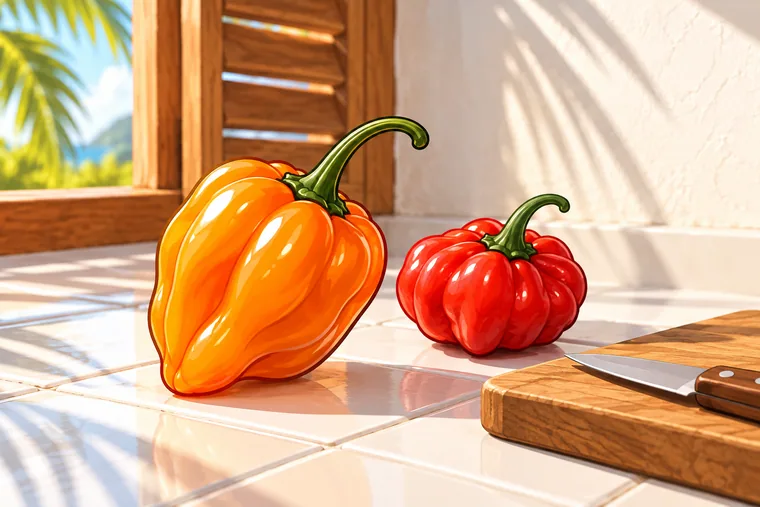
Scotch bonnet, for fruit with fire
A Scotch bonnet carries 100,000–350,000 SHU4, about three times the working band. Use a third of the weight. You get more fruit than piri piri gives, which some of your guests may love and others may find too tropical.
Chile de árbol, for a dried rub
Iowa State puts the chile de árbol at 15,000–30,000 SHU5, so you need about 3.3 times the dried weight for the same heat. Its color is deep red and its flavor smoky1, both welcome in a dry rub for grilled chicken.
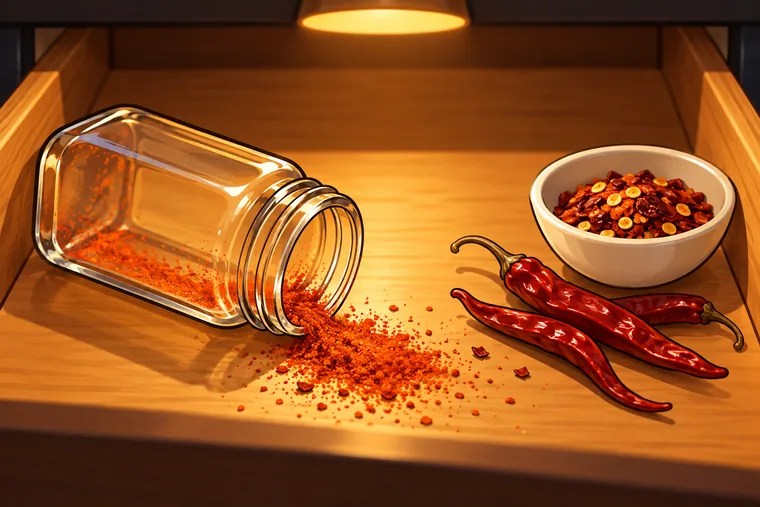
Cayenne powder, the jar fallback
For dried piri piri, cayenne powder works at about twice the dried weight. USDA weighs a teaspoon at 1.8 g6, so ten dried piri piri (about 5 g) become about 10 g of powder, a little over 5 teaspoons. Start with half of that and taste.
How hot is piri piri, if no lab number exists?
Very hot, in the words of the UC Master Gardeners1, but we found no primary source that measures it in SHU. That is why this page borrows the Thai bird's eye band and tells you so, instead of copying the 175,000 SHU figure that circulates on seller pages.
The closest measured cousin is the malagueta. In a greenhouse study, its capsaicinoids rose from 0.829 mg/g on day 12 to 2.328 mg/g by day 54 and 2.568 mg/g at day 753.
The same paper rates pure capsaicin at 16,000,000 SHU3. Multiply 2.328 mg/g by 16,000 SHU per mg/g and you get about 37,000 SHU for a ripening malagueta, a rough estimate since the mix of capsaicinoids differs. It also tells you something practical: pods picked ripe carry about three times the heat of very young green ones, so the red jar on your shelf is the hot one.
How do you pick a piri piri swap for fresh, dried or jarred pods?
Start with the form your recipe uses, since a dried rub, a fresh marinade and a jar of pickled pods each have a different best swap.
- marinade, sauceFresh piri piriThai bird's eye 1:1, or fresh cayenne at 2 times
- more fruit wantedA fruitier sauceScotch bonnet at a third of the weight
- more fruit wanted
- rub, oilDried piri piri or flakesDried Thai chilies 1:1, or cayenne powder at 2 times
- a jar on the shelfJarred or pickled piri piriJarred malagueta, then pickled Thai chilies
Sources for this line2. University of Florida IFAS Extension4. UF/IFAS Gardening Solutions6. USDA Agricultural Research Service, FoodData Central (SR Legacy)
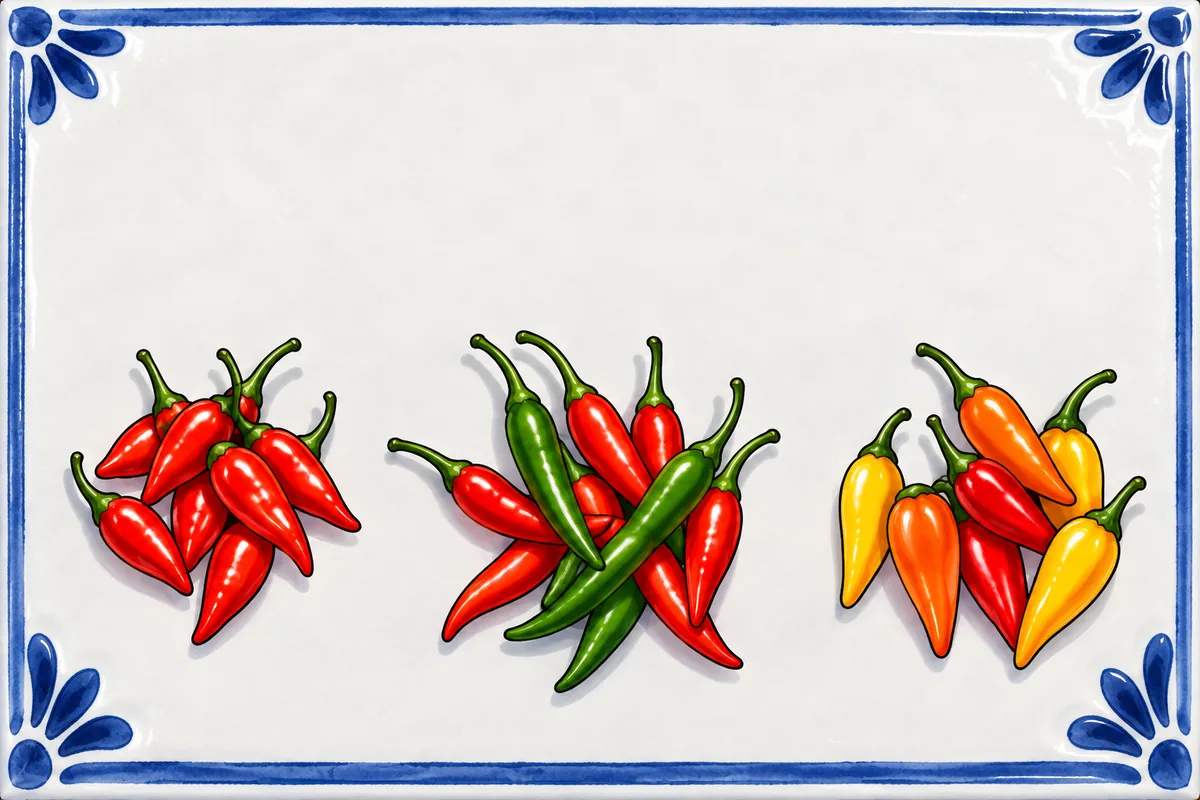
The genus monograph records malagueta as very popular in Brazil and tabasco as grown commercially in Louisiana9, which tells you where to look. A Brazilian grocery will have malagueta; a hot sauce aisle has tabasco peppers in vinegar.
How much of each swap goes into a peri-peri marinade?
Here is one batch worked through: a marinade for 1 kg of chicken pieces that calls for 20 g of fresh piri piri, blended with garlic, lemon, oil and salt. Only the chili changes; keep everything else the same.
| Swap | Grams | What else to change |
|---|---|---|
| Thai bird's eye chilies | 20 g | Nothing |
| Malagueta, fresh or jarred | 40 g | Drain jarred pods; cut the recipe's vinegar by a spoon |
| Fresh cayenne | 40 g | A splash of water to loosen |
| Scotch bonnet | 7 g | Extra lemon to sharpen the fruit |
| Cayenne powder | About 3 g | Blend it into the oil first |
The powder row works from dry weight: 20 g of fresh chili at about 12 % solids is about 2.4 g of dry pepper, so 3 g of powder lands close, an estimate. Rest the marinated chicken in the fridge, and taste the marinade itself before the raw chicken goes in, never after.
Can you make a piri piri sauce from the spice rack alone?
Yes, and it is a better plan than you might expect when the shop has no fresh chilies at all. You rebuild the three things the sauce needs: heat from cayenne powder, color and body from paprika, and the sharp lemon and garlic that you were going to add anyway.
For a small jar, enough for your 1 kg of chicken, stir about 3 g of cayenne powder into the oil first, the dry-weight figure from the marinade table. Add 1 teaspoon of paprika for color; USDA weighs that teaspoon at 2.3 g10, and its heat barely registers next to the cayenne. Then blend in your lemon juice, garlic and salt, and let the sauce sit for 15 minutes so the powder softens and you can taste it fairly.
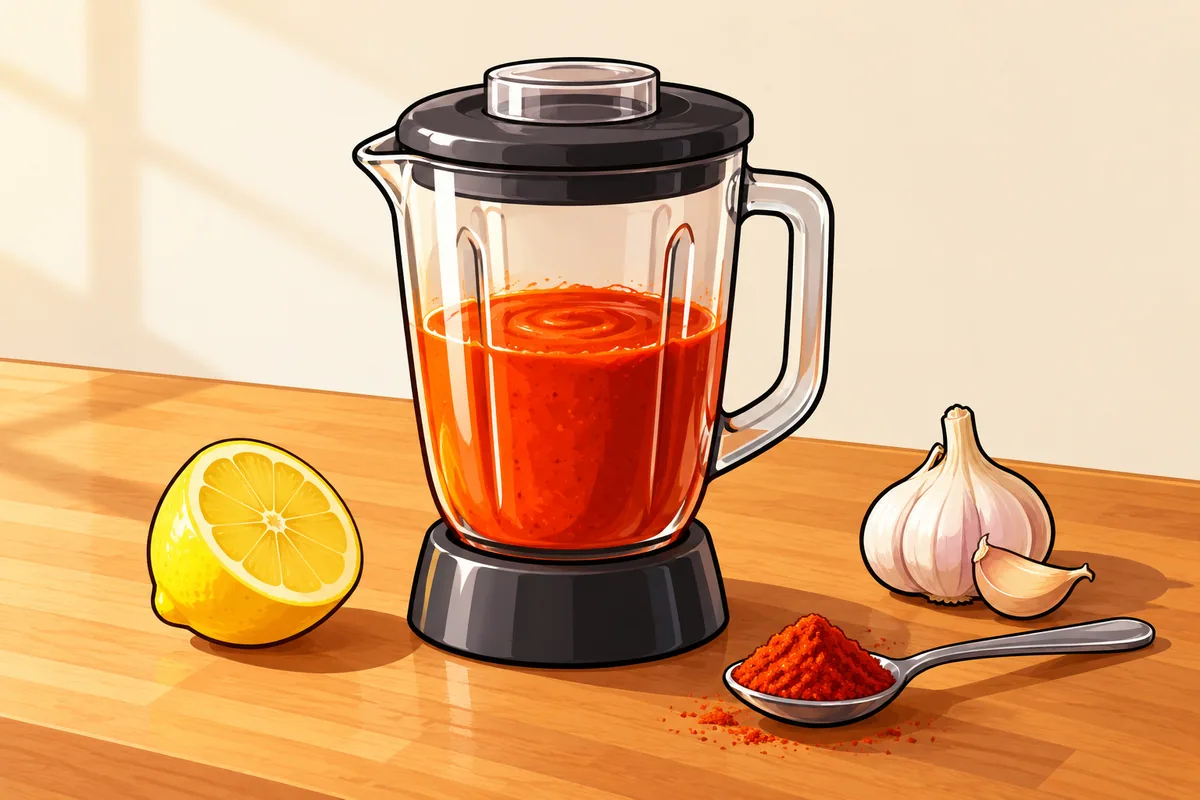
You will notice two differences from a fresh-chili sauce. Yours comes out smoother and a little darker, because powders carry no fresh flesh, and it tastes slightly toasted. If you want back some of the fresh bite, add a few drops of a plain vinegar hot sauce at the end, and if you want more fruit, a strip of roasted red bell pepper blended in does that without any heat.
Can jarred piri piri stand in for jarred Calabrian chilies?
Usually, at about half the amount, once you have read both labels. The EU's geographical-indication file for Peperoncino di Calabria puts Calabrian chilies at 5,000–70,000 SHU11, a midpoint of 37,500 against the 75,000 working band for piri piri. So your piri piri may run about twice as hot, and the checklist covers the other three things that change your dish.
Check both jars before you swap
- Packing liquid: oil-packed and vinegar-packed jars change the dish differently, so match the liquid if you can
- Whole or crushed: crushed pods spread heat fast, so use about two thirds as much
- Salt: brined pods add salt, so hold back the recipe's salt until the end
- Heat: taste one pod from each jar on a cracker, then swap by taste
If your recipe is a pasta sauce or pizza, the swap is easy, because the chili sits in oil and tomato. For a dish where the Calabrian chili is the main flavor, start with half the jarred piri piri and add the rest after tasting, since the Calabrian range is wide enough that your jar could sit anywhere in it.
The swap also works the other way. If your peri-peri recipe asks for jarred piri piri and you only have Calabrian chilies in oil, use the same checklist, drain the oil into the marinade instead of throwing it away, and add extra lemon, since peri-peri leans on citrus more than most Italian dishes do.
Which swaps flatten a peri-peri sauce?
Mild peppers and smoky ones. Peri-peri sauce lives on sharp heat, lemon and garlic, and a swap that brings smoke or sweetness changes its whole character.
Blend the swap into a marinade
The order below works for every fresh swap in the table. Wear gloves when you handle 20 g or more of very hot chilies.
- 1
Weigh the chilies
Weigh the swap from the marinade table: 20 g of Thai chilies, or 40 g of cayenne.2
- 2
Stem and roughly chop
Pull off the stems and chop bigger pods so the blender catches them.
- 3
Blend with the acid first
Blend the chilies with the lemon juice and garlic until smooth.
- 4
Stream in the oil
Add the oil and salt and blend again until the sauce looks glossy.
- 5
Taste before the chicken
Taste a drop now and add more chili while the marinade is still clean.
Next, buy the closest pod on the list and weigh it against the marinade table. For dried heat the cayenne swaps give you the spice-jar math, and the bird's eye swaps cover the Asian side of the same family.