On this page
- 1Which peppers can replace a habanero?
- 2How far apart are habanero and its swaps on the heat scale?
- 3How do you pick the right habanero swap for your dish?
- 4How do you work out the grams for a habanero swap?
- 5What is a mild substitute for habanero?
- 6What replaces ground habanero powder?
- 7Can you use a jalapeño instead of a habanero?
- 8Which habanero swaps ruin a dish?
- 9Handle the hot ones with gloves
- 10Sources
Which peppers can replace a habanero?
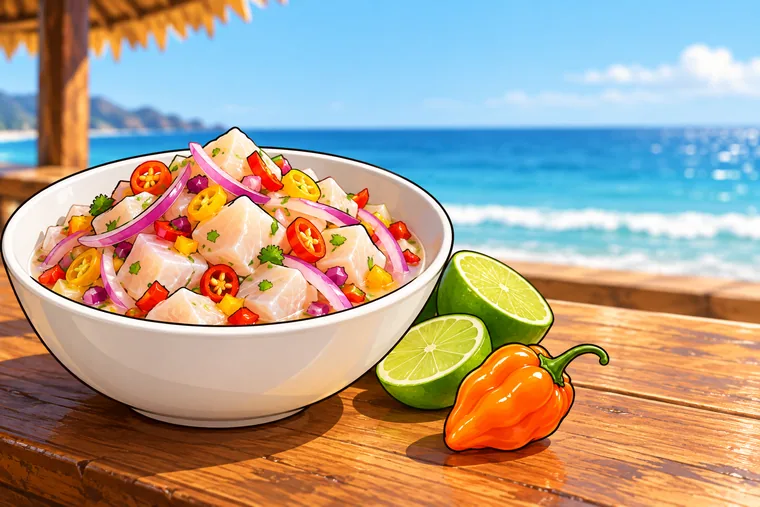
A Scotch bonnet is the swap to buy if the shop has one, because UF/IFAS rates it at the same 100,000–350,000 SHU as the habanero1. After that, every swap trades fruit for heat or heat for fruit, so you weigh it and adjust the grams.
| Swap | Heat (SHU) | Heat vs habanero | Grams for 10 g habanero | Best for | Flavor note |
|---|---|---|---|---|---|
| Scotch bonnet2 | 100,000–350,000 | The same range | 10 g | Jerk, pepper sauce, any Caribbean dish | Fiery heat, fruity flavor3 |
| Thai chili (bird's eye)1 | 50,000–100,000 | About a third | 30 g | Stir-fries, curries, fresh salsa | Fruity, a hint of citrus, lingering heat3 |
| Tabasco pepper1 | 30,000–50,000 | About a sixth | 56 g, or 10 g plus a hotter pod | Vinegar sauces | Smoky and quite hot3 |
| Cayenne, fresh1 | 25,000–50,000 | About a sixth | 60 g, or 10 g for a milder dish | Cooked sauces and stews | Strong, pungent3 |
| Serrano1 | 10,000–25,000 | About a thirteenth | Not practical at full heat; 30 g gives about a quarter | Salsa where less heat is fine | Bright, biting, a hint of sweetness3 |
| Ají dulce (cachucha)1 | 500–1,500 | Almost none | 10 g for the look and fruit, no heat | Sofrito, beans, mild dishes | Sweet, shaped like a habanero |
| Ghost pepper2 | 1,041,427 | About 4.6 times hotter | 2 g | Only when your crowd wants more | Smoky, fruity, slightly sweet3 |
Weigh the habanero you are replacing, multiply by the ratio in the table, and add the last third of the swap only after you taste. The pods in your bag differ in size and in heat, so your kitchen scale beats counting every time.
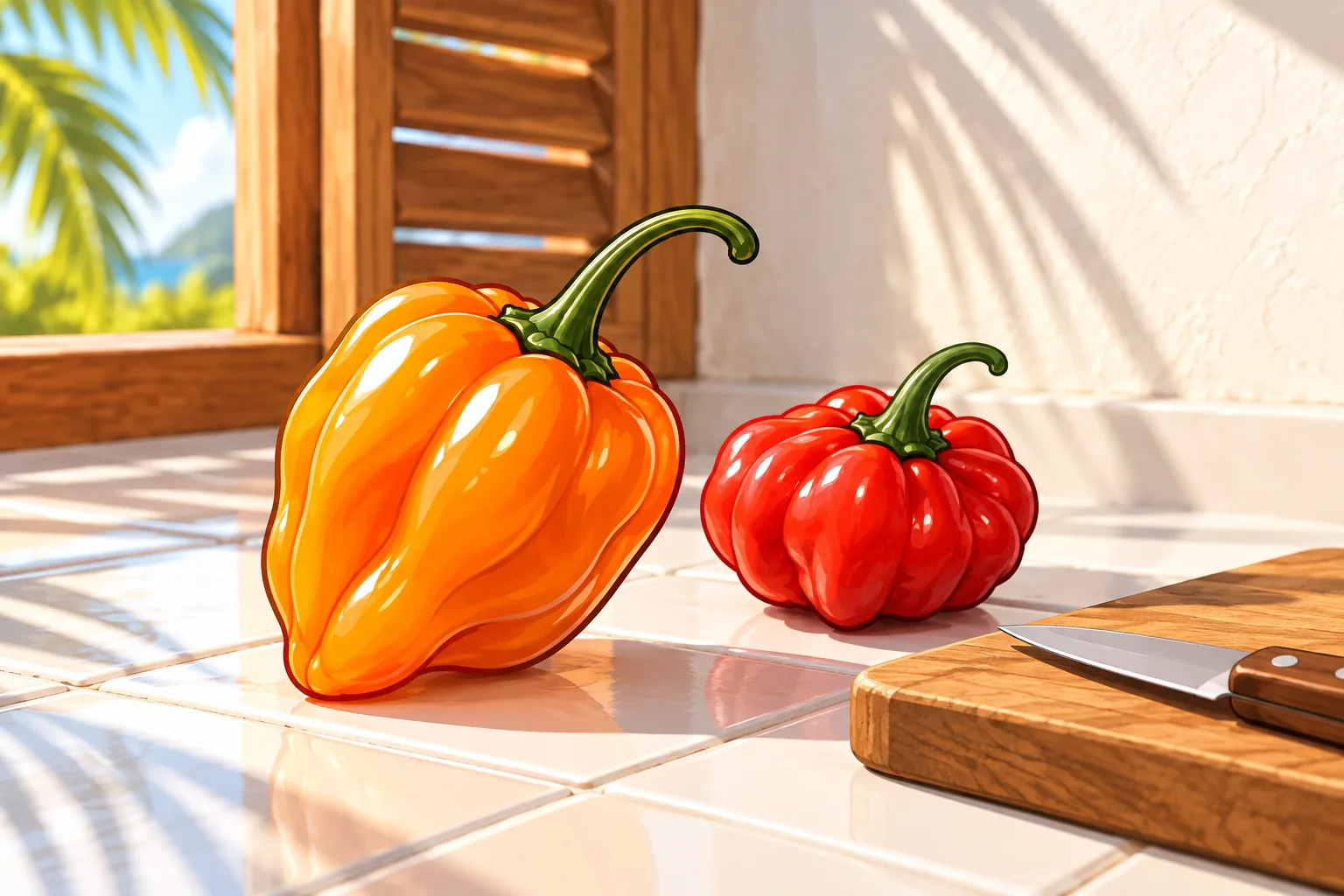
Scotch bonnet, the same heat in a squatter pod
UF/IFAS calls the Scotch bonnet a close relative of the habanero, with the same thin, waxy flesh and a slightly smaller fruit1. Swap it gram for gram. Iowa State prints a lower band for it, 80,000–260,000 SHU4, so a bonnet can come out a little gentler, never wildly hotter.
Thai chili, when fruit matters less than heat
The Thai chili, which UF/IFAS also calls bird's eye, rates 50,000–100,000 SHU1. Its 75,000 midpoint is a third of the habanero's, so 10 g of habanero becomes about 30 g of Thai chilies. You keep the fruity note the UC Master Gardeners describe and lose the habanero's floral aroma.
Tabasco peppers, for a vinegar sauce
The tabasco pepper sits at 30,000–50,000 SHU1, so matching a habanero's heat takes over five times the weight. That much pepper changes a dish, but in a vinegar sauce it is the whole point. Use it there and reach for a hotter pod elsewhere.
Cayenne, the one you can find anywhere
A fresh cayenne runs 25,000–50,000 SHU1. At a 37,500 midpoint you need six times the habanero's weight for the same heat, which floods a salsa with pepper. In a long-cooked stew it works, and in a dish where you wanted less fire anyway, the same 10 g is a gentler version.
Serrano, for a milder salsa
A serrano carries 10,000–25,000 SHU1, roughly a thirteenth of a habanero. USDA weighs one at 6.1 g5, so 30 g is about five pods and gives you about a quarter of the heat. Take that trade on purpose, when your table runs mild.
Ají dulce, for the look and the fruit
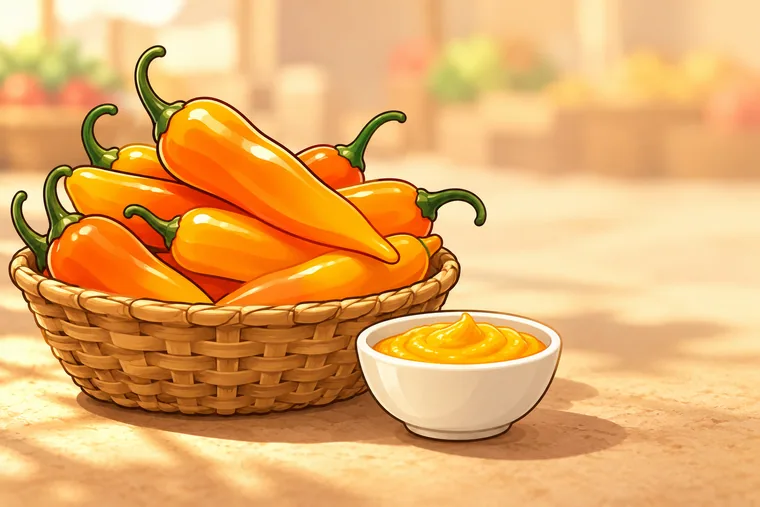
UF/IFAS describes the ají dulce, or cachucha, as a pepper that looks like a habanero with a spinning-top shape and semi-wrinkled skin, at only 500–1,500 SHU with a sweet flavor1. Use it gram for gram where the habanero is there for fruit and color. Add heat with a pinch of cayenne if you miss it.
Ghost pepper, only for heat seekers
UF/IFAS rates the ghost pepper at 1,041,427 SHU2, about 4.6 times a habanero's midpoint. Use about 2 g where the recipe says 10 g of habanero, and chop it very fine so the heat spreads instead of landing in one bite.
How far apart are habanero and its swaps on the heat scale?
Far enough that one swap needs a fifth of the weight and another six times it. The chart puts each published range on a log axis, where every step to the right is ten times hotter.
Log scale; bars are published ranges.Sources for this line1. University of Florida IFAS Extension2. UF/IFAS Gardening Solutions6. HortScience 42(2):222-224
Ranges also move from plant to plant. Iowa State splits its habanero group three ways, from 80,000 to 445,000 SHU across Scotch bonnet, red and red Caribbean types4. So a ratio from midpoints gets you close, and your tongue does the last 20 %.
Read the chart as a warning as much as a guide. The bars for Scotch bonnet and habanero sit on top of each other, the Thai bar starts where the cayenne bar ends, and the ghost pepper floats on its own far to the right. If your swap's bar does not touch the habanero's, plan on weighing it, because a one-for-one swap will miss by a factor of three or more.
How do you pick the right habanero swap for your dish?
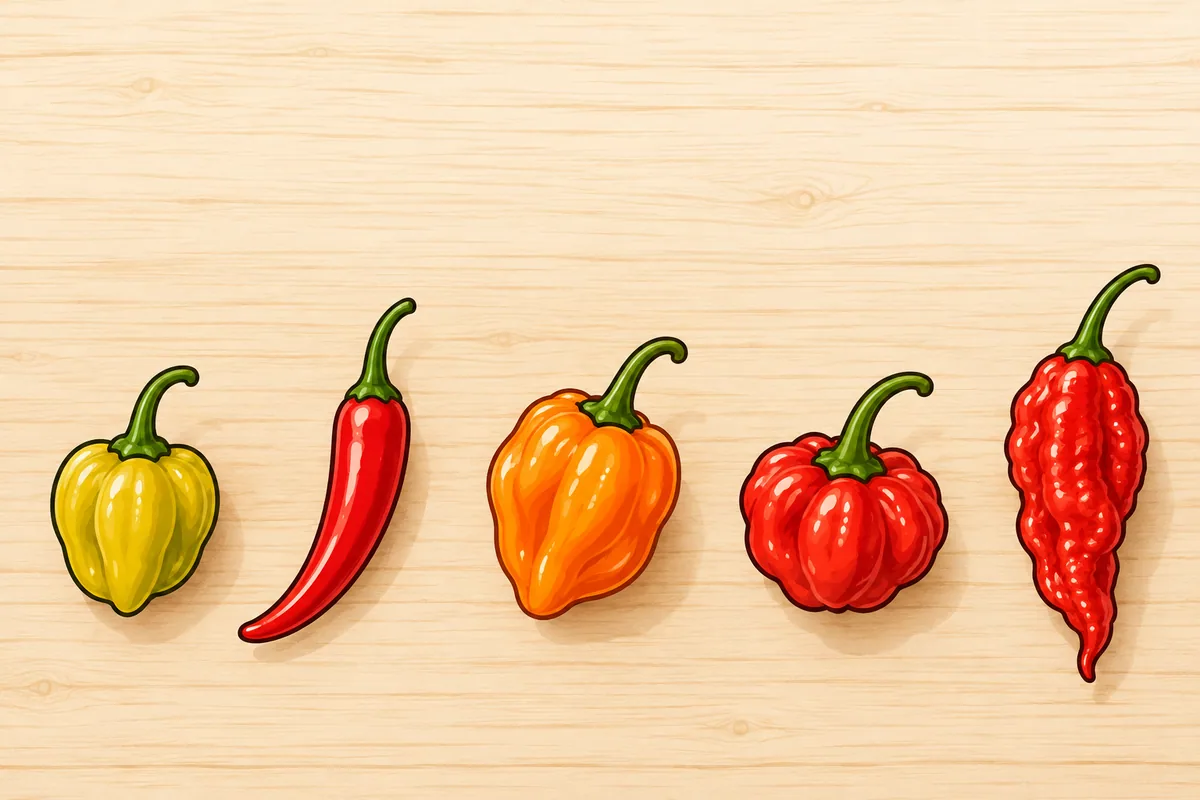
Ask what the habanero does in your recipe. In jerk or a Caribbean pepper sauce it brings fruit and heat together; in a curry it mostly brings heat; in beans or sofrito it may only bring fruit.
- jerk, pepper sauceFruit and full heatScotch bonnet, gram for gram
- curry, stir-fryHeat, fruit optionalThai chili, 3 times the weight
- stew, chiliHeat in a long-cooked potFresh cayenne, up to 6 times the weight
- beans, sofritoFruit and color, no fireAjí dulce, 500–1,500 SHU
- dry rubA ground habanero spiceCayenne powder plus a hotter sauce
If you land on cayenne or Thai chili and still want the habanero's perfume, add half a sweet orange bell pepper to the pot. It brings color and sweetness with no heat, since UF/IFAS rates bell peppers at zero1.
How do you work out the grams for a habanero swap?
Divide the habanero's midpoint by the swap's midpoint and multiply by the grams in your recipe. A habanero's midpoint is (100,000 + 350,000) ÷ 2 = 225,000 SHU1; a Thai chili's is 75,000, so the factor is 3.
A worked salsa with two habaneros' worth of heat
Say your mango salsa calls for 20 g of habanero. Here is the same heat from each swap, with the pod count where USDA weighs the pepper.
| Swap | Midpoint SHU | Factor | Grams | In pods |
|---|---|---|---|---|
| Scotch bonnet | 225,000 | 1 | 20 g | No USDA pod weight |
| Thai chili | 75,000 | 3 | 60 g | No USDA pod weight |
| Fresh cayenne | 37,500 | 6 | 120 g | No USDA pod weight |
| Serrano | 17,500 | 12.9 | 257 g | 257 ÷ 6.1 = about 42 pods |
| Ghost pepper | 1,041,427 | 0.22 | 4.3 g | A small piece |
That serrano row shows why the ratio has a ceiling. Forty-two serranos turn a mango salsa into a serrano salsa, so past a factor of about 3, you accept less heat or add a hotter pod beside the mild one. A good middle road: 20 g of cayenne plus 10 g of Thai chili.
What is a mild substitute for habanero?
Two kinds of pod give you the habanero's look and fruit with almost no burn. Both belong to the habanero's own species, which is why they taste closer than a sweet bell pepper.
Ají dulce (cachucha)
NuMex Suave Orange and Red
- 500–1,500 SHU, called mild with a sweet flavor by UF/IFASHeat335 SHU (Orange) and 774 SHU (Red) in NMSU tests
- Habanero-like spinning-top shape, semi-wrinkled skinLookHabanero pod type, orange or red
- Caribbean and Latin shops; grown more and more in Miami-DadeWhere you find itMostly from seed; NMSU bred them as mild C. chinense
- Beans, rice, sofrito, a salsa for kidsUse it forGrowing your own mild habaneros for salsa
NMSU calls the Suave lines significantly milder than other C. chinense cultivars, and its NuMex Trick-or-Treat habanero showed no discernible heat at all7. If you grow your own, those seeds give you the habanero smell with a heat you can feed anyone.
In the shop, the ají dulce is the one you will actually see. UF/IFAS notes its acreage rising fast in Miami-Dade County1, so Latin grocers in the south of the US carry it more often than they used to.
What replaces ground habanero powder?
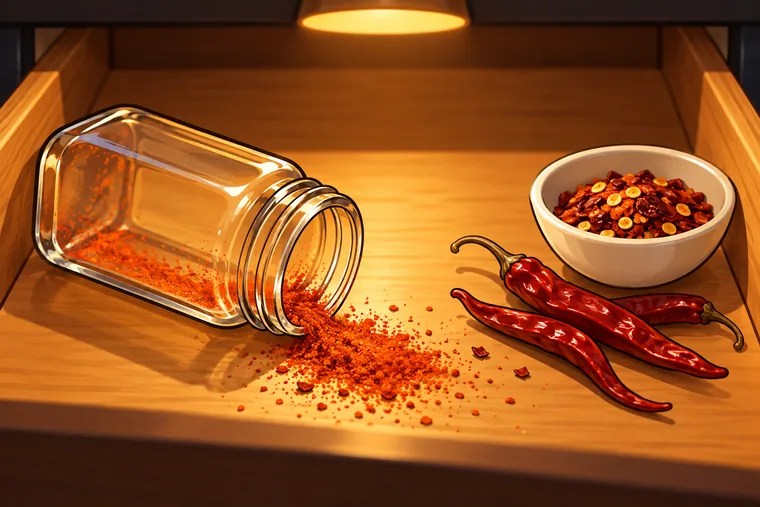
Cayenne powder is the closest jar most kitchens have, but it carries less heat per spoon. No source we read rates dried habanero powder, so we work from the fresh ranges and label the result an estimate.
USDA weighs a teaspoon of cayenne at 1.8 g8. If the dried powders kept the fresh ratio of about 6 to 1, a recipe's ¼ teaspoon of habanero powder would need 1½ teaspoons of cayenne for the same heat, which also brings a lot more red color and bitterness into a rub.
Can you use a jalapeño instead of a habanero?
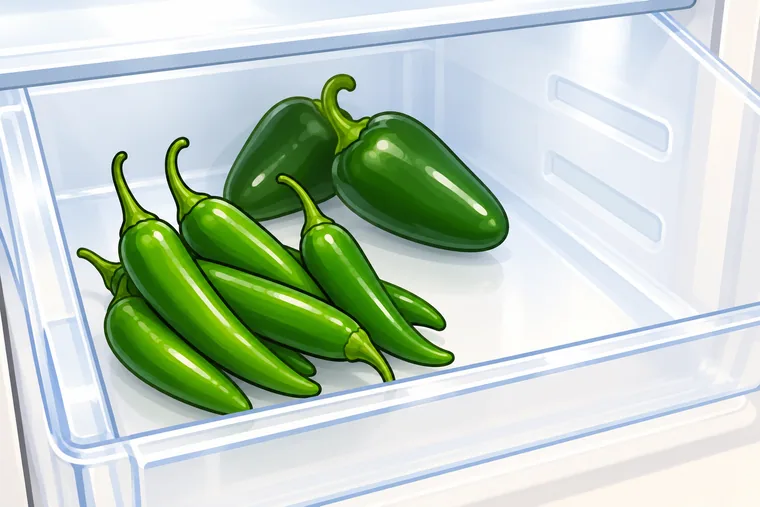
You can, but you get a different dish, not a milder copy. UF/IFAS puts the jalapeño at 2,000–8,000 SHU with a 5,000 average1, a forty-fifth of the habanero's midpoint. Matching 10 g of habanero would take about 450 g of jalapeño, which is a pound of pepper in your salsa.
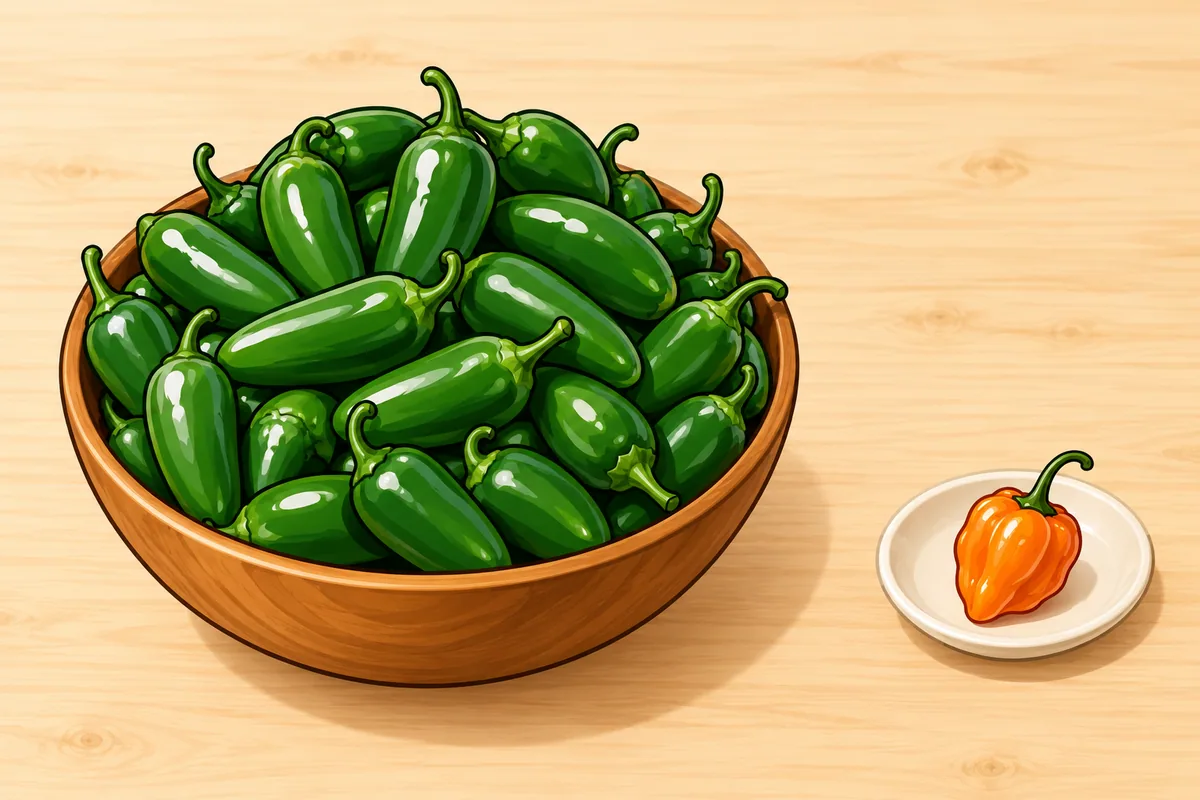
So treat the jalapeño as a choice to make the dish mild. Use your recipe's habanero weight in jalapeño, keep the fruit with a few cubes of mango or orange bell pepper, and tell your guests it is the gentle batch. If you want some of the habanero's bite back, add one Thai chili for every 10 g of habanero you left out; at 75,000 SHU by midpoint it brings a third of the missing heat in a pod you barely see.
A jalapeño also tastes different. The UC Master Gardeners call its flavor vibrant and grassy3, while they describe the habanero as fruity with a subtle smokiness. Your dish turns greener in taste, which suits a tomato salsa better than a mango one.
Which habanero swaps ruin a dish?
The ones at either end of the scale, swapped one for one. A jalapeño leaves a habanero recipe flat, and a superhot takes it past what most people can eat.
Swaps to skip, and why
- A jalapeño for a habanero in a hot dish, gram for gram: 45 times less heat, as the jalapeño section shows
- A ghost pepper, gram for gram: about 4.6 times the habanero's midpoint lands in the same spoon
- A whole bag of Thai chilies to match heat in a fruit salsa: 3 times the pepper drowns the mango
- Serranos at full heat: 42 pods for 20 g of habanero, so cap it and add a hotter pod
- Sweet bell pepper alone: zero SHU, so it copies the color and nothing else
A smaller trap: assuming every Scotch bonnet is sweet. UF/IFAS notes completely sweet Scotch bonnet varieties grown on some Caribbean islands1, so a bonnet from a specialty shop can surprise you in the other direction. Taste a sliver before it goes in.
Handle the hot ones with gloves
Every swap above 50,000 SHU deserves the same care as the habanero it replaces. Penn State's preserving guide says to wear plastic gloves when you handle hot peppers9, and the steps below follow that order.
- 1
Weigh the habanero amount
Write down the grams your recipe means, or weigh the habaneros you would have used.
- 2
Do the math
Multiply by the factor in the table: 1 for Scotch bonnet, 3 for Thai chili, 6 for fresh cayenne.1
- 3
Glove up and trim
Wear gloves, cut off the stems, and scrape out the pale ribs if you want the dish milder.
- 4
Add two thirds
Stir in two thirds of the swap, wait a minute, and taste from a spoon, not the knife.
- 5
Finish to taste
Add the last third only if you still want more heat.
Next, weigh what you have and run the salsa table above with your own grams. If the Scotch bonnet is the pod you cannot find, the Scotch bonnet swaps work from the same numbers, and every other missing pepper sits on the swap chart.